Dimitrie Berea Art

to
1
1
1
1
Overall Width
to
Overall Height
to
3
2
2
1
1
1
1
1
2
1

Use search to find more

3
11,863
2,887
2,541
1,621

Use search to find more

Artist: Dimitrie Berea
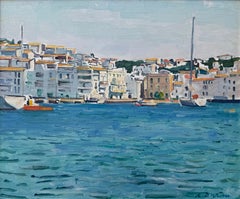
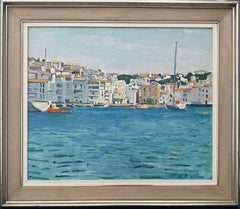
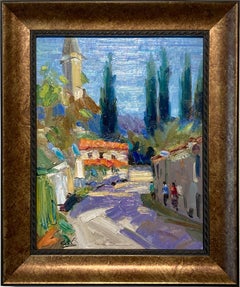
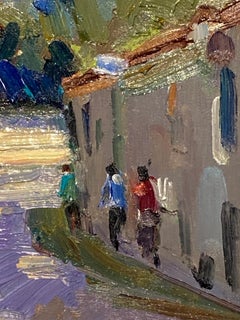
St. Paul de Vence, Large Impressionist painting by Dimitrie Berea 1957

St. Paul de Vence, Large Impressionist painting by Dimitrie Berea 1957

By Dimitrie Berea

Located in Long Island City, NY

Artist: Dimitrie Berea, Romanian (1908 - 1975) Title: St. Paul de Vence Year: 1957 Medium: Oil on Canvas, signed Size: 29 in. x 39 in. (73.66 cm x 99.06 cm) Frame Size: 41 x 47 ...

Category

1950s Post-Impressionist Dimitrie Berea Art

Materials

Oil

Paris, the docks and the Eiffel Tower Oil on canvas 38x46 cm

Paris, the docks and the Eiffel Tower Oil on canvas 38x46 cm

By Dimitrie Berea

Located in Riga, LV

Dimitri BEREA (1908-1975) Paris, the docks and the Eiffel Tower. Oil on canvas, signed, titled Paris and dated 59 (?) lower left High. : 38cm; width : 46cm

Category

20th Century Modern Dimitrie Berea Art

Materials

Canvas, Oil

Dimitri Berea Still Life

Dimitri Berea Still Life

By Dimitrie Berea

Located in San Francisco, CA

Dimitri Berea: 1908-1975. Very well listed Romanian artist with Auction results over $15,000, but sells for much higher in galleries He painted in the post impressionistic style. He ...

Category

1950s Post-Impressionist Dimitrie Berea Art

Materials

Watercolor

Related Items
Lovely Oakland California Historical House Painting, “Fruitvale” Albert Pennoyer

Lovely Oakland California Historical House Painting, “Fruitvale” Albert Pennoyer

Located in Baltimore, MD

Albert Sheldon Pennoyer was born in Oakland, California in 1888. He was the son of a prosperous merchant who owned a store known as Taft And Pennoyer. At a young age, the family mov...

Category

1940s Post-Impressionist Dimitrie Berea Art

Materials

Oil

Lovely Vintage French(?) Post-Impressionist Landscape Painting - Picking Poppies

Lovely Vintage French(?) Post-Impressionist Landscape Painting - Picking Poppies

Located in Baltimore, MD

This post-impressionist painting is signed, titled and dated 1955 by the artist, but the signature is difficult to decipher. It is oil on masonite board and is titled “Les Coquelico...

Category

1950s Post-Impressionist Dimitrie Berea Art

Materials

Oil

Fauvist Spanish Wildflower Landscape in Andalucia Mediterranean Oil Painting

Fauvist Spanish Wildflower Landscape in Andalucia Mediterranean Oil Painting

By Rafael Duran Benet

Located in Sitges, Barcelona

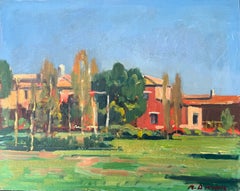
Fauvist Spanish Wildflower Landscape in Jaén, Mediterranean Oil Painting Artist: Rafael Duran Benet (Spanish, 1931–2015) Title: Campos de Jaén Medium: Oil on canvas board Dimensions...

Category

1990s Post-Impressionist Dimitrie Berea Art

Materials

Oil

Projet de Tissus - Fauvist Flowers Watercolor & Gouache by Raoul Dufy

Projet de Tissus - Fauvist Flowers Watercolor & Gouache by Raoul Dufy

By Raoul Dufy

Located in Marlow, Buckinghamshire

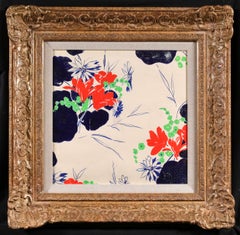
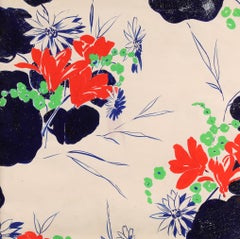
Botanical watercolour and gouache on paper circa 1920 by French fauvist painter Raoul Dufy. The work depicts flowers in red, blue and green. This work was executed by Dufy as a fabric design. Dimensions: Framed: 19.5"x19.5" Unframed: 12"x12" Provenance: Private collection of works by Raoul Dufy for Bianchini Ferier Bianchini Ferrier Collection - Christie's London - July 2001 SF Fall Show Raoul Dufy was one of a family of nine children, including five sisters and a younger brother, Jean Dufy, also destined to become a painter. Their father was an accountant in the employ of a major company in Le Havre. The Dufy family was musically gifted: his father was an organist, as was his brother Léon, and his youngest brother Gaston was an accomplished flautist who later worked as a music critic in Paris. Raoul Dufy's studies were interrupted at the age of 14, when he had to contribute to the family income. He took a job with an importer of Brazilian coffee, but still found time from 1892 to attend evening courses in drawing and composition at the local college of fine arts under Charles Marie Lhullier, former teacher of Othon Friesz and Georges Braque. He spent his free time in museums, admiring the paintings of Eugène Boudin in Le Havre and The Justice of Trajan in Rouen. A municipal scholarship enabled him to leave for Paris in 1900, where he lodged initially with Othon Friesz. He was accepted by the École des Beaux-Arts, where he studied under Léon Bonnat, whose innate conservatism prompted Dufy to remark later that it was 'good to be at the Beaux-Arts providing one knew one could leave'. And leave he did, four years later, embarking with friends and fellow students on the rounds of the major Paris galleries - Ambroise Vollard, Durand-Ruel, Eugène Blot and Berheim-Jeune. For Dufy and his contemporaries, Impressionism represented a rejection of sterile academism in favour of the open-air canvases of Manet, the light and bright colours of the Impressionists, and, beyond them, the daringly innovative work of Gauguin and Van Gogh, Seurat, Cézanne, Toulouse-Lautrec and others. Dufy was an out-and-out individualist, however, and was not tempted to imitate any of these artists. He produced, between 1935 and 1937, Fée Electricité (Spirit of Electricity), the emblem for the French utilities company Electricité de France (EDF). Dufy visited the USA for the first time in 1937, as a member of the Carnegie Prize jury. In 1940, the outbreak of war (and his increasingly rheumatic condition) persuaded him to settle in Nice. When he eventually returned to Paris 10 years later, his rheumatism had become so debilitating that he immediately left for Boston to follow a course of pioneering anti-cortisone treatment. He continued working, however, spending time first in Harvard and then in New York City before moving to the drier climate of Tucson, Arizona. The cortisone treatment was by and large unsuccessful, although he did recover the use of his fingers. He returned to Paris in 1951 and decided to settle in Forcalquier, where the climate was more clement. Within a short time, however, he was wheelchair-bound. He died in Forcalquier in March 1953 and was buried in Cimiez. Between 1895 and 1898, Raoul Dufy painted watercolours of landscapes near his native Le Havre and around Honfleur and Falaise. By the turn of the century, however, he was already painting certain subjects that were to become hallmarks of his work - flag-decked Parisian cityscapes, Normandy beaches teeming with visitors, regattas and the like, including one of his better-known early works, Landing Stage at Ste-Adresse. By 1905-1906 Friesz, Braque, Matisse, Derain, Vlaminck, Van Dongen and Rouault were described collectively as Fauves (the wild beasts). What they had in common was a desire to innovate, but they felt constrained nonetheless to meet formally to set out the guiding principles of what promised to be a new 'movement'. Dufy quickly established that those principles were acceptable; moreover, he was most impressed by one particular painting by Henri Matisse ( Luxury, Calm and Voluptuousness) which, to Dufy, embodied both novelty and a sense of artistic freedom. Dufy promptly aligned himself with the Fauves. Together with Albert Marquet in particular, he spent his time travelling the Normandy coast and painting views similar...

Category

1920s Fauvist Dimitrie Berea Art

Materials

Paper, Watercolor, Gouache
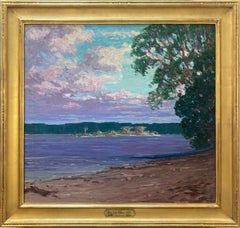
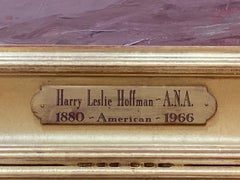
'Early Morning River Landscape, ' by Harry L. Hoffman, Oil on Canvas Painting

'Early Morning River Landscape, ' by Harry L. Hoffman, Oil on Canvas Painting

By Harry L. Hoffman

Located in Oklahoma City, OK

This 30" x 32" oil painting on canvas by the American Impressionist painter Harry Leslie Hoffman (b. 1871, d. 1964) depicts a calm, purple-toned waterscape and a semi-open sky. Light...

Category

1930s American Impressionist Dimitrie Berea Art

Materials

Canvas, Oil

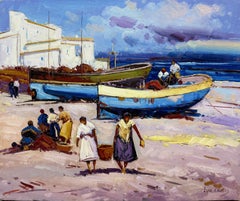
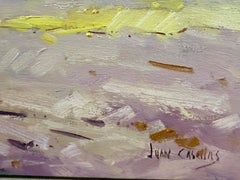
Mediterranean Harbor Scene with Boats and Figures Spanish Oil Canvas Painting

Mediterranean Harbor Scene with Boats and Figures Spanish Oil Canvas Painting

By Juan Casellas

Located in Sitges, Barcelona

Mediterranean Harbor Scene with Boats and Figures, Spanish Oil Painting Artist: Juan Casellas Martínez Title: Mediterranean harbor scene with boats and figures Technique: Oil on can...

Category

1990s Post-Impressionist Dimitrie Berea Art

Materials

Oil

Houses in Torcello, Venice, Colorful Italian Post-Impressionist Landscape Oil

Houses in Torcello, Venice, Colorful Italian Post-Impressionist Landscape Oil

By Rafael Duran Benet

Located in Sitges, Barcelona

Houses in Torcello, Venice, Colorful Italian Post-Impressionist Landscape Artist: Rafael Durán Benet (1931–2015) Original title: Casas de Torcello, Venecia Date: 1985 Medium: Oil on canvas board Dimensions: 13 × 16.1 in. 33x41 cm. Signature: Signed lower right Inscription: Titled and dated on the reverse Condition: Good vintage condition, with minor age-related wear consistent with a work from 1985 Frame: Unframed Period: 1980s Style: Post-Impressionist / Modern Mediterranean Description A vibrant 1985 view of Torcello, Venice, by Catalan painter Rafael Durán Benet, depicting the quiet architecture and lush vegetation of one of the most evocative islands of the Venetian Lagoon. Rather than portraying the monumental Venice of canals and palazzi, Durán Benet turns his attention to the more intimate atmosphere of Torcello. Red and ochre houses emerge between tall cypress trees and dense Mediterranean vegetation, while a broad foreground of luminous greens leads the eye toward the architecture. The painting is particularly striking for its color. Intense Venetian reds, coral, ochre, olive green and deep emerald are set against a large expanse of atmospheric blue sky. Durán Benet builds the landscape with broad, confident brushstrokes, allowing individual marks and areas of impasto to remain clearly visible. Architecture and vegetation are deliberately simplified into blocks of color and vertical rhythms. The result places the work within the European Post-Impressionist tradition while also revealing affinities with the expressive color of Fauvism and twentieth-century Mediterranean modernism. Painted in 1985, the work belongs to the mature period of Durán Benet's career. The original title, Casas de Torcello, Venecia, and the date are inscribed on the reverse. Its Venetian subject, compact dimensions and unusually rich palette make this an especially attractive example of Durán Benet's landscape painting. About Rafael Durán Benet Rafael Durán Benet (Terrassa, 1931 – Barcelona, 2015) was a Catalan painter particularly known for his landscapes, coastal scenes, urban views and still lifes. He was the nephew of painter, critic and art historian Rafael Benet i Vancells and began painting at an early age. During the 1950s he became closely associated with Cadaqués, whose intense Mediterranean light and artistic environment had an important influence on the development of his painting. Durán Benet held his first solo exhibition at Barcelona's Sala Vayreda in 1958 and subsequently developed a long exhibition career, including an important association with Barcelona's historic Sala Parés. His mature work is characterized by vigorous brushwork, simplified forms and a powerful chromatic language. Landscapes are frequently constructed through broad areas of saturated color rather than meticulous description, connecting his work to the traditions of Post-Impressionism, Fauvism and Mediterranean modernism. In 1980 he received the Henri Forman Prize from the Société Nationale des Beaux-Arts in Paris. In 2011 his native Terrassa honored him with a retrospective exhibition at the Sala Muncunill. Artistic context The painting will appeal particularly to collectors interested in: European Post-Impressionism Spanish and Catalan Modern Art Venice and Venetian Lagoon paintings Italian landscapes Mediterranean Modernism Fauvist-influenced color 20th-century European landscape painting Its chromatic intensity and simplified construction can be placed in dialogue with the broader Mediterranean landscape tradition associated with artists such as Raoul Dufy, André Derain, Maurice de Vlaminck and Joaquín Sorolla, while retaining Durán Benet's distinctly personal painterly language. Rafael Duran Benet, Venice Painting, Torcello Painting, Venetian Lagoon, Italian Landscape, Venice Landscape, Venetian Landscape, Post Impressionist Painting, Post Impressionism, Mediterranean Painting, Mediterranean Landscape, European Landscape Painting, Catalan Artist, Spanish Modern Art, Spanish Painting, Modern European Painting, Colorful Landscape, Fauvist Landscape, Fauvism, Italian Architecture Painting...

Category

1980s Post-Impressionist Dimitrie Berea Art

Materials

Oil

Projet de Tissus - Fauvist Still Life Study Gouache by Raoul Dufy

Projet de Tissus - Fauvist Still Life Study Gouache by Raoul Dufy

By Raoul Dufy

Located in Marlow, Buckinghamshire

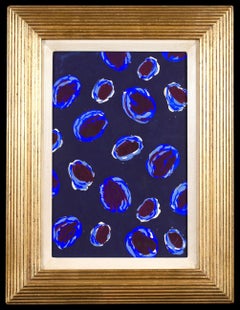
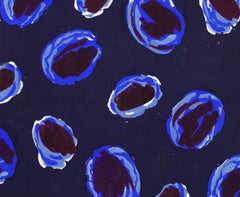
Gouache on paper fabric design circa 1920 by French fauvist painter Raoul Dufy executed in dark blues and a deep red. Dimensions: Framed: 16"x12.5" Unframed: 11"x7.5" Provenance: P...

Category

1920s Fauvist Dimitrie Berea Art

Materials

Paper, Gouache

Mediterranean Harbour in Cadaqués Costa Brava Post-Impressionist Oil Painting

Mediterranean Harbour in Cadaqués Costa Brava Post-Impressionist Oil Painting

By Rafael Duran Benet

Located in Sitges, Barcelona

Mediterranean Harbour in Cadaqués Costa Brava Post-Impressionist Oil Painting Artist: Rafael Duran Benet (1931–2015) Title: Cadaqués Harbour Medium: Oil on hardboard (Tablex) Dimens...

Category

1980s Post-Impressionist Dimitrie Berea Art

Materials

Oil

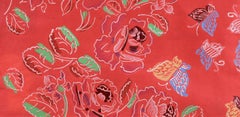
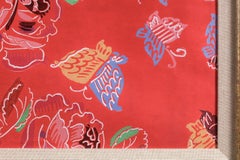
Fleurs et Papillons - Fauvist Flowers Watercolor & Gouache by Raoul Dufy

Fleurs et Papillons - Fauvist Flowers Watercolor & Gouache by Raoul Dufy

By Raoul Dufy

Located in Marlow, Buckinghamshire

Botanical watercolour and gouache on paper circa 1920 by French fauvist painter Raoul Dufy. The work depicts flowers in red and butterflies in blues, yellows, black and white. This work was executed by Dufy as a fabric design. Dimensions: Framed: 17"x27" Unframed: 10"x20" Provenance: Private collection of works by Raoul Dufy for Bianchini Ferier Bianchini Ferrier Collection - Christie's London - July 2001 SF Fall Show Raoul Dufy was one of a family of nine children, including five sisters and a younger brother, Jean Dufy, also destined to become a painter. Their father was an accountant in the employ of a major company in Le Havre. The Dufy family was musically gifted: his father was an organist, as was his brother Léon, and his youngest brother Gaston was an accomplished flautist who later worked as a music critic in Paris. Raoul Dufy's studies were interrupted at the age of 14, when he had to contribute to the family income. He took a job with an importer of Brazilian coffee, but still found time from 1892 to attend evening courses in drawing and composition at the local college of fine arts under Charles Marie Lhullier, former teacher of Othon Friesz and Georges Braque. He spent his free time in museums, admiring the paintings of Eugène Boudin in Le Havre and The Justice of Trajan in Rouen. A municipal scholarship enabled him to leave for Paris in 1900, where he lodged initially with Othon Friesz. He was accepted by the École des Beaux-Arts, where he studied under Léon Bonnat, whose innate conservatism prompted Dufy to remark later that it was 'good to be at the Beaux-Arts providing one knew one could leave'. And leave he did, four years later, embarking with friends and fellow students on the rounds of the major Paris galleries - Ambroise Vollard, Durand-Ruel, Eugène Blot and Berheim-Jeune. For Dufy and his contemporaries, Impressionism represented a rejection of sterile academism in favour of the open-air canvases of Manet, the light and bright colours of the Impressionists, and, beyond them, the daringly innovative work of Gauguin and Van Gogh, Seurat, Cézanne, Toulouse-Lautrec and others. Dufy was an out-and-out individualist, however, and was not tempted to imitate any of these artists. He produced, between 1935 and 1937, Fée Electricité (Spirit of Electricity), the emblem for the French utilities company Electricité de France (EDF). Dufy visited the USA for the first time in 1937, as a member of the Carnegie Prize jury. In 1940, the outbreak of war (and his increasingly rheumatic condition) persuaded him to settle in Nice. When he eventually returned to Paris 10 years later, his rheumatism had become so debilitating that he immediately left for Boston to follow a course of pioneering anti-cortisone treatment. He continued working, however, spending time first in Harvard and then in New York City before moving to the drier climate of Tucson, Arizona. The cortisone treatment was by and large unsuccessful, although he did recover the use of his fingers. He returned to Paris in 1951 and decided to settle in Forcalquier, where the climate was more clement. Within a short time, however, he was wheelchair-bound. He died in Forcalquier in March 1953 and was buried in Cimiez. Between 1895 and 1898, Raoul Dufy painted watercolours of landscapes near his native Le Havre and around Honfleur and Falaise. By the turn of the century, however, he was already painting certain subjects that were to become hallmarks of his work - flag-decked Parisian cityscapes, Normandy beaches teeming with visitors, regattas and the like, including one of his better-known early works, Landing Stage at Ste-Adresse. By 1905-1906 Friesz, Braque, Matisse, Derain, Vlaminck, Van Dongen and Rouault were described collectively as Fauves (the wild beasts). What they had in common was a desire to innovate, but they felt constrained nonetheless to meet formally to set out the guiding principles of what promised to be a new 'movement'. Dufy quickly established that those principles were acceptable; moreover, he was most impressed by one particular painting by Henri Matisse ( Luxury, Calm and Voluptuousness) which, to Dufy, embodied both novelty and a sense of artistic freedom. Dufy promptly aligned himself with the Fauves. Together with Albert Marquet in particular, he spent his time travelling the Normandy coast and painting views similar...

Category

1920s Fauvist Dimitrie Berea Art

Materials

Paper, Watercolor, Gouache
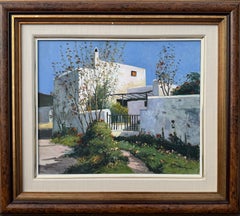
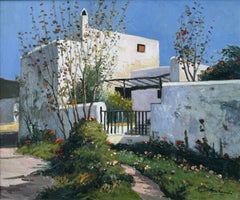
Original Mediterranean Mallorcan House and Garden Modernist Oil Painting Spain

Original Mediterranean Mallorcan House and Garden Modernist Oil Painting Spain

Located in Sitges, Barcelona

Original Mediterranean Mallorcan House and Garden Modernist Oil Painting Artist: Antoni Maria Sadurní i Albañà (1927–2014) Title: Casa Mallorquina Date: 1993 Medium: Oil on canvas Artwork dimensions: 54 × 65 cm / 21.26 × 25.59 in Framed dimensions: 84 × 95 cm / 33.07 × 37.40 in Signature: Signed lower right Frame: Framed Origin: Spain Subject: Mallorca, Mediterranean architecture and garden Provenance / Exhibition: Masters Art Galerie, Palma de Mallorca, 1993 Documentation: The painting is reproduced in the original catalogue of the artist’s 1993 exhibition at Masters Art Galerie, Palma de Mallorca. DESCRIPTION A particularly attractive Mediterranean landscape by Spanish painter Antoni Maria Sadurní i Albañà, depicting a traditional Mallorcan house surrounded by a lush flowering garden beneath an intense blue sky. Painted in 1993, the work is titled Casa Mallorquina and represents one of the subjects most closely associated with Sadurní’s mature production: the architecture, vegetation and brilliant light of the Mediterranean. The composition is built around the contrast between the luminous white walls of the house and the dense greens of the garden. Small accents of red, pink, orange and yellow animate the foreground, while the clear blue sky gives the scene an unmistakably Balearic atmosphere. Sadurní uses a confident and spontaneous brushstroke, alternating broad areas of colour with more energetic touches in the trees, flowers and vegetation. The restrained geometry of the architecture provides structure to the composition, while the garden introduces movement and texture. Of particular interest is the documented exhibition history of the painting. Casa Mallorquina was included in Antoni Sadurní’s exhibition at Masters Art Galerie in Palma de Mallorca in 1993 and is reproduced in the original exhibition catalogue, a copy of which accompanies the work and is visible in the photographs. This documented provenance adds considerable interest to an already highly decorative example of Spanish Mediterranean painting. ARTIST BIOGRAPHY Antoni Maria Sadurní i Albañà (Vic, 1927–2014) was a Catalan painter best known for his landscapes and Mediterranean scenes. He studied drawing in Vic and was influenced by artists connected with the celebrated Olot landscape tradition, developing his own increasingly personal interpretation of the Spanish and Catalan landscape. In 1947 he became part of Els 8, a group of young artists and intellectuals active in Vic who contributed to the renewal of Catalan cultural life during the post-war period. Throughout his career Sadurní concentrated especially on landscapes, villages, rural architecture and Mediterranean coastal subjects. Mallorca and the Balearic Islands provided particularly suitable material for his interest in strong sunlight, white architecture and intense Mediterranean colour. His mature paintings are characterised by assured brushwork, carefully balanced compositions and an ability to simplify architecture and landscape without losing their atmosphere or sense of place. ARTISTIC INSPIRATION Sadurní’s Mediterranean landscapes belong to the broader tradition of modern Spanish painting in which the visual experience of place is transformed through colour and direct brushwork. The luminous whites, clear blues and simplified architecture of Casa Mallorquina can be related to the Mediterranean sensibility found in painters such as Joaquín Sorolla and Joaquim Mir, while its freer construction through colour recalls aspects of Raoul Dufy and the Fauvist tradition. There is also an affinity with later Spanish landscape painters such as Benjamín Palencia and Godofredo Ortega Muñoz, particularly in Sadurní’s tendency to reduce the landscape to strong compositional masses while preserving its atmosphere. Rather than describing every botanical or architectural detail, Sadurní uses colour, light and abbreviated brushstrokes to convey the sensation of a Mediterranean garden in full sunlight. PROVENANCE AND DOCUMENTATION An especially important feature of this painting is its documented exhibition history. The reverse of the work retains documentation relating to Antoni Sadurní’s exhibition at Masters Art Galerie in Palma de Mallorca, held in 1993. The painting itself is reproduced in the original exhibition catalogue under the title Casa Mallorquina, Mallorca, confirming its title, date and participation in the exhibition. The survival of this contemporary documentation gives the work an unusually strong provenance for a Spanish landscape of this period. Spanish Modern Art, Mediterranean Painting, Mallorca Painting...

Category

1990s Post-Impressionist Dimitrie Berea Art

Materials

Canvas, Oil

Previously Available Items
Portrait of a Lady, Paris 1952

Dimitrie BereaPortrait of a Lady, Paris 1952, 1952

Sold

H 31.88 in W 27.25 in D 2.75 in

Portrait of a Lady, Paris 1952

By Dimitrie Berea

Located in Milford, NH

A fine impressionist portrait of a lady by Romanian / American artist Dimitrie Berea (1908-1975). Berea was born in Bacau, Romania, studied at the Academy of Architecture, Bucharest....

Category

1950s Impressionist Dimitrie Berea Art

Materials

Canvas, Oil

Portrait of a Woman
Portrait of a Woman

Portrait of a Woman

By Dimitrie Berea

Located in Long Island City, NY

An impressionist portrait of a young woman by Dimitrie Berea from 1950. Artist: Dimitrie Berea, Romanian (1908 - 1975) Title: Portrait of a Woman...

Category

1950s Impressionist Dimitrie Berea Art

Materials

Oil, Board

Dimitrie Berea art for sale on 1stDibs.

Find a wide variety of authentic Dimitrie Berea art available for sale on 1stDibs. You can also browse by medium to find art by Dimitrie Berea in oil paint, paint, canvas and more. Much of the original work by this artist or collective was created during the 20th century and is mostly associated with the Post-Impressionist style. Not every interior allows for large Dimitrie Berea art, so small editions measuring 19 inches across are available. Customers who are interested in this artist might also find the work of Lorraine Fox, Ernest Fiene, and Jacques Martin-Ferrières. Dimitrie Berea art prices can differ depending upon medium, time period and other attributes. On 1stDibs, the price for these items starts at $10,541 and tops out at $24,000, while the average work can sell for $17,270.