Eugene Bejot Art

French, 1867-1931

Eugène Béjot was a French etcher. He studied at the Académie Julian in Paris and learned to etch with Henri-Gabriel Ibels in 1891. Béjot's technical skills were already apparent in his 1892 first commissioned series, La Seine a Paris. He then firmly established his reputation with his widely acclaimed La Samaritaine, which was exhibited at the Peintres-Graveurs exhibition in Paris in 1893. Béjot’s work is inextricably linked to Paris. He made many etchings of the Seine, as well as of the quays and buildings of Paris. His delicate use of light evokes the city’s atmosphere. Béjot was very highly regarded in England. In 1908, he was elected to the Royal Society of Painter-Etchers and Engravers in London. He also became a Chevalier of the Legion of Honour in 1912.

to
1
Overall Width
to
Overall Height
to
1
1
1
1
1
1
1
1
1
1
1
10,159
2,807
2,503
1,398
1
Artist: Eugene Bejot
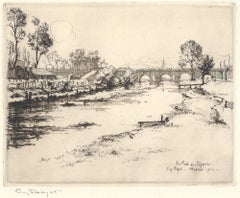
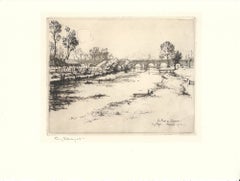
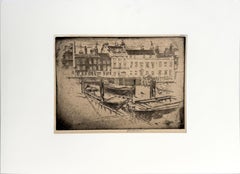
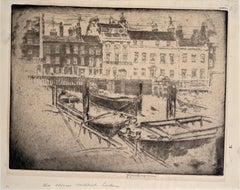
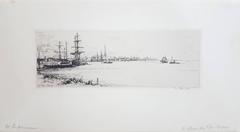
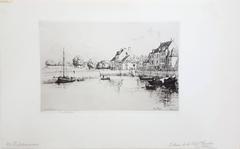
Le Pont de Segovie
Le Pont de Segovie

Le Pont de Segovie

By Eugene Bejot

Located in Middletown, NY

Etching on cream wove paper, 5 1/2 x 7 inches (138 x 176 mm), full margins. Signed in pencil in the lower margin. With minor mat tone, and two pin-point spots...

Category

Early 20th Century French School Eugene Bejot Art

Materials

Handmade Paper, Etching

Related Items
Early 20th Century British Street Scene - 1920s Figurative Landscape Etching

Early 20th Century British Street Scene - 1920s Figurative Landscape Etching

By E. Mary Shelley

Located in Soquel, CA

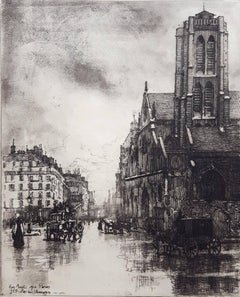
Highly detailed figurative landscape lithograph of a street in London with a towering cathedral, old buildings, and figures walking the street below by E. Mary Shelley (English, late...

Category

1920s Impressionist Eugene Bejot Art

Materials

Paper, Etching

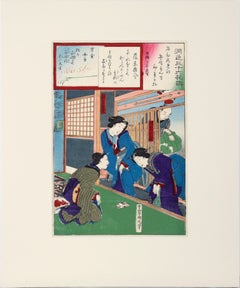
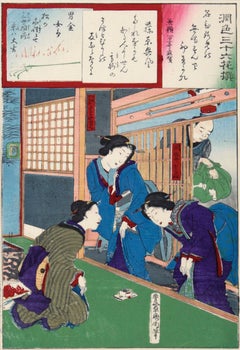
"Enshoku Sanju-roku Kasen" (Thirty-six Enchanting Flowers) Woodblock on paper

"Enshoku Sanju-roku Kasen" (Thirty-six Enchanting Flowers) Woodblock on paper

By Toyohara Kunichika

Located in Soquel, CA

"Enshoku Sanju-roku Kasen" (Thirty-six Enchanting Flowers) Woodblock on paper Elegant woodblock print by Toyohara Kunuchika (Japanese, 1835-1900). Three women are in talking with each other inside, while a man waits outside holding a bag of some kind. The colors in this piece are rich and saturated, primarily blues, greens, and purple. Mat size: 16"H x 20"W Paper size: 14.75"H x 9.88"W Born in 1835, Toyohara Kunichika grew up in the Kyobashi district of Edo in the midst of merchants and artisans. In 1848, at age 13, he was accepted as an apprentice into the studio of Utagawa Kunisada I...

Category

1880s Edo Eugene Bejot Art

Materials

Ink, Rice Paper, Woodcut
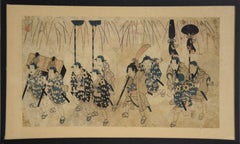
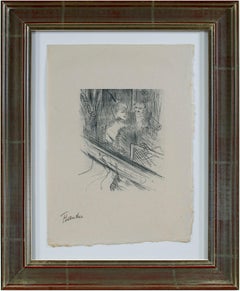
Toulouse Lautrec Original Lithograph Famous Political 1800s Collection Signed

Toulouse Lautrec Original Lithograph Famous Political 1800s Collection Signed

By Henri de Toulouse-Lautrec

Located in Milwaukee, WI

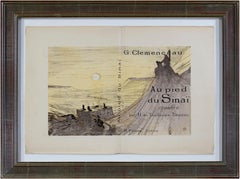
"Lautrec Book: From Au Pied du Sinai written by Georges Clemenceau" lithographs created by the legendary Henri de Toulouse-Lautrec. This book, Au Pied...

Category

1890s Post-Impressionist Eugene Bejot Art

Materials

Lithograph, Mulberry Paper

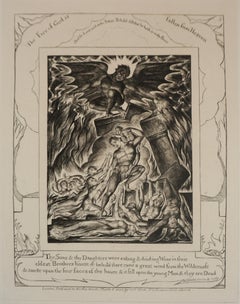
Illustrations From The Book of Job - "The Fire of God is Fallen From Heaven"

Illustrations From The Book of Job - "The Fire of God is Fallen From Heaven"

By William Blake

Located in Soquel, CA

"Illustrations of the Book of Job" Engraving "The Fire of God is Fallen From Heaven...And the Lord said unto Satan Behold All that he hath is in thy Power" Engraving, third printing...

Category

1870s Symbolist Eugene Bejot Art

Materials

Handmade Paper, Engraving

Kiyomi Barrier & Seiken Temple Near Okitsu- Japanese Woodcut Print on Rice Paper

Kiyomi Barrier & Seiken Temple Near Okitsu- Japanese Woodcut Print on Rice Paper

By Utagawa Hiroshige

Located in Soquel, CA

Kiyomi Barrier & Seiken Temple Near Okitsu - Japanese Woodcut Print on Rice Paper Woodblock print of boats in a harbor by Utagawa Hiroshige (Japanese, 1797-1858). Originally publish...

Category

1850s Impressionist Eugene Bejot Art

Materials

Rice Paper, Woodcut
Kiyomizu Temple, Scenes of Famous Places along Tôkaidô Road - Woodblock on Paper

Kiyomizu Temple, Scenes of Famous Places along Tôkaidô Road - Woodblock on Paper

By Utagawa Hiroshige II

Located in Soquel, CA

Kiyomizu Temple, Scenes of Famous Places along Tôkaidô Road - Woodblock on Paper Full Title: Kyoto: Kiyomizu Temple (Kyô Kiyomizudera), from the series Scenes of Famous Places along...

Category

1860s Edo Eugene Bejot Art

Materials

Ink, Rice Paper, Woodcut
Stage 48 of the 53 Stages of the Tokaido - Japanese Woodblock on Rice Paper

Stage 48 of the 53 Stages of the Tokaido - Japanese Woodblock on Rice Paper

By Utagawa Hiroshige

Located in Soquel, CA

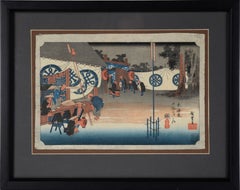
Stage 48 of the 53 Stages of the Tokaido - Japanese Woodblock on Rice Paper Woodblock print of clothing vendors by Utagawa Hiroshige (Japanese, 1797-1858). Originally printed in 183...

Category

1830s Impressionist Eugene Bejot Art

Materials

Rice Paper, Woodcut
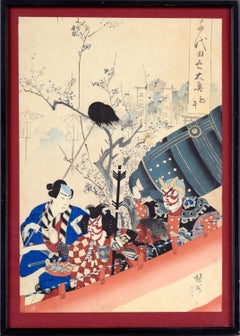
Page from "Spring View in Takanawa" Mid 18th Century Ukiyo-e Print

Page from "Spring View in Takanawa" Mid 18th Century Ukiyo-e Print

By Utagawa Kunisada (Toyokuni III)

Located in Soquel, CA

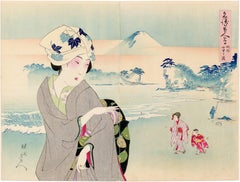
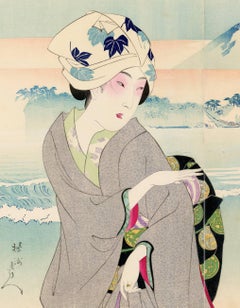
Page from "Spring View in Takanawa" Mid 18th Century Ukiyo-e Print Left page from the triptych print "Spring View in Takanawa" by Utagawa Kunisada (Toyokuni III) (Japanese b. 1786 d...

Category

1840s Edo Eugene Bejot Art

Materials

Printer's Ink, Mulberry Paper, Woodcut
Japanese Beauty Admiring Kirifuri Waterfall

Yoshu ChikanobuJapanese Beauty Admiring Kirifuri Waterfall, 1898

$940Sale Price|20% Off

H 14.02 in W 18.67 in

Japanese Beauty Admiring Kirifuri Waterfall

By Yoshu Chikanobu

Located in Burbank, CA

A beauty turns to admire the Kirifuri Waterfall in Nikko Province. She holds the handle of an umbrella and wears fashionable clothing that is beautifully printed. This series pairs f...

Category

1890s Edo Eugene Bejot Art

Materials

Handmade Paper, Mulberry Paper, Woodcut
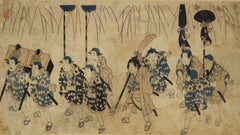
Mitate of a Daimyo's Procession Crossing Ryogoku Bridge - Woodblock Print

Mitate of a Daimyo's Procession Crossing Ryogoku Bridge - Woodblock Print

By Keisai Eisen

Located in Soquel, CA

Mitate of a Daimyo's Procession Crossing Ryogoku Bridge - Woodblock Print Woodblock print of a procession by Keisai Eisen (Japanese, 1790–1848). Terrific triptych of a procession of...

Category

Early 19th Century Edo Eugene Bejot Art

Materials

Ink, Rice Paper, Woodcut
"Various Himochi" Wagashi Festival Japanese Woodblock Print by Utagawa Toyokuni

"Various Himochi" Wagashi Festival Japanese Woodblock Print by Utagawa Toyokuni

By Utagawa Toyokuni

Located in Soquel, CA

"Various Himochi" Wagashi Festival Japanese Woodblock Print by Utagawa Toyokuni Rare oversized early 19th century 5-tiered woodblock by Utagawa Ichiyosai Toyokuni, (Japan, 1769-1825), a Japanese lord and wife oversee a sekku festival of food, music, and dolls or toys. '"oshi" is the first day of “Mi (Snake)” in the third month of the lunar calendar. This day, known in modern Japan as the Girls' Festival, originated in China as a form of purification ceremony in which water and drinking peach blossom wine were used to drive away evil. Many kinds of hishi-mochi appear in this picture of hina ningyo (dolls associated with Hinamatsuri, or the Girl’s Day) from Omochae. The custom of eating special dishes at events throughout the year and at milestones in people's lives has existed since ancient times. This paragraph specifically focuses on the annual event called sekku, and life events that involve eating sweets. Joshi is the first day of “Mi (Snake)” in the third month of the lunar calendar. This day, known in modern Japan as the Girls' Festival, originated in China as a form of purification ceremony in which water and drinking peach blossom wine were used to drive away evil. According to the Keiso saijiki, in ancient China, on the third day of the third lunar month, people ate “ryuzetsuhan,” which is the juice of gogyo (Jersey cudweed) mixed with rice flour and nectar. In Japan, there is a record in the Heian period history book Nihon Montoku tenno jitsuroku [839-5] that it was an annual event to make kusamochi using gogyo on the third day of the third month of the lunar calendar, which may have been influenced by Chinese customs. The tradition of eating kusamochi on the third day of the third month of the lunar calendar continued after that. By the Edo period, however, hishimochi had come to be used as a sweet to serve on the third day of the third month. A picture of a hishimochi is included in the Morisada manko , which we mentioned in Part 1. According to it, hishimochi in the Edo period were often three layers of green-white-green instead of the now common red-white-green. However, it is possible to see from our collection that not all hishimochi were made in this way. Omochae published in 1857, is a good example. Omochae is a type of ukiyoe print...

Category

1820s Edo Eugene Bejot Art

Materials

Ink, Rice Paper, Woodcut

Ôkubo Hikozaemon Protects the Hidden Shogun Triptych

Ôkubo Hikozaemon Protects the Hidden Shogun Triptych

By Taiso Yoshitoshi

Located in Burbank, CA

“War Chronicles of Osaka” (Osaka gunki no uchi). Okubo Hikozaemon, raising his sword, protects the hidden Tokugawa shogun from the spear of Gorô Matabei Mototsugu in a moonlit fores...

Category

1880s Other Art Style Eugene Bejot Art

Materials

Mulberry Paper, Woodcut

Previously Available Items
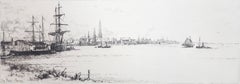
Le Quai du Rhin, Anvers

Le Quai du Rhin, Anvers

By Eugene Bejot

Located in Saint Augustine, FL

Artist: Eugene Bejot (French, 1867-1931) Title: "Le Quai du Rhin, Anvers" *Signed by Bejot in pencil lower right. It is also signed and titled in the plate (printed signature) lower ...

Category

1920s Impressionist Eugene Bejot Art

Materials

Drypoint, Etching

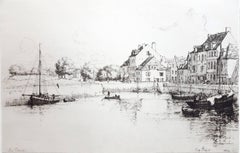
Le Quai de la Petite Chambre Le Croisic

Le Quai de la Petite Chambre Le Croisic

By Eugene Bejot

Located in Saint Augustine, FL

Artist: Eugene Bejot (French, 1867-1931) Title: "Le Quai de la Petite Chambre Le Croisic" *Signed by Bejot in pencil lower left. It is also signed and dated in the plate (printed si...

Category

1910s Impressionist Eugene Bejot Art

Materials

Drypoint, Etching

Paris, St. Nicholas
Paris, St. Nicholas

Paris, St. Nicholas

By Eugene Bejot

Located in Saint Augustine, FL

An original drypoint etching on wove paper by French artist Eugene Bejot (1867-1931) titled "Paris, St. Nicholas", c. 1920. Issued unsigned. Sheet size: 11.25" x 7.25". Image size: 7...

Category

1910s Impressionist Eugene Bejot Art

Materials

Drypoint, Etching

Eugene Bejot art for sale on 1stDibs.

Find a wide variety of authentic Eugene Bejot art available for sale on 1stDibs. You can also browse by medium to find art by Eugene Bejot in etching, drypoint, engraving and more. Much of the original work by this artist or collective was created during the 20th century and is mostly associated with the Impressionist style. Not every interior allows for large Eugene Bejot art, so small editions measuring 7 inches across are available. Customers who are interested in this artist might also find the work of Adolphe APPIAN, Achille-Émile Othon Friesz, and Edgar Chahine. Eugene Bejot art prices can differ depending upon medium, time period and other attributes. On 1stDibs, the price for these items starts at $450 and tops out at $500, while the average work can sell for $475.

Artists Similar to Eugene Bejot