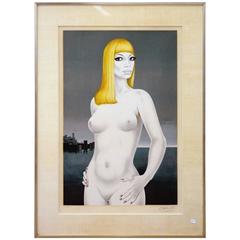
Felix Labisse Art

French, 1905-1982

Félix Labisse was a self-taught painter, illustrator and theater designer born in Douai, a small commune in France close to the Belgian border. In Douai, Labisse studied at the Collège Saint Jean and later enrolled at the École de Pêche in Ostend, a city on the Belgian coast. Labisse was closely associated with the Expressionist painter James Ensor, whom he met on a visit to Ostend in 1922. Subsequently, Labisse’s early works are anchored in Flemish Expressionism under the influence of Ensor. In his later works, Labisse developed his own aesthetic, exploring the boundaries between fantasy, ritual, magic and eroticism. He experimented with perspective and used motifs such as naked women and hybrid beasts in fantastical settings. Labisse also met the filmmaker Henri Storck, and they founded the Club du Cinéma d’Ostende, which disseminated avant-garde films by Man Ray, Carl Dreyer and Fritz Lang.

Beginning in 1927, Labisse divided his time between Paris and Ostend, becoming a major French painter. His first exhibition, which gained him critical acclaim, took place at the Ostend Gallery of Modern Art in July 1928. In 1933, Labisse settled in Paris and produced the set and costumes for Autour d’une Mère at the Théâtre de l’Atelier. In Paris, he became part of the Surrealist milieu, meeting André Masson, Max Ernst, Raymond Queneau, René Magritte and Paul Delvaux. It was in 1938 that Labisse fully established his career as a painter after his exhibition at the Palais des Beaux-Arts in Brussels. In 1947, the French filmmaker Alain Resnaise created a short film starring Labisse in his studio titled Visite à Félix. Labisse was also a successful illustrator, producing drawings for the books Le Bain avec Andromède (1944) and Histoire Naturelle (1948) by Robert Desnos. His subjects included creatures such as the cyclops and the medieval French Guivre — a serpentine creature.

By 1951, Labisse moved to Neuilly-sur-Seine, where he would later die. Closely linked to Surrealism — a movement to which he never completely adhered too — Labisse is perhaps most recognized for his 1960s series of austere, blue goddess-like women. Interestingly, his political differences estranged him from the writer André Breton, a communist who was the founder of Surrealism and author of the Surrealist Manifesto. Remaining on the sidelines of Breton’s movement, Labisse continued to explore the limits of his imagination through painting. In 1957, Labisse published his Le Sorcier des Familles: Almanach Fatidique, featuring texts and illustrations in the layout of a calendar. He earned the respect of Breton, who wrote to him: "Beyond what may have sometimes divided us, let me tell you that I greatly appreciate your Sorcier des Familles […] This is a surrealist book, as I see it. My warmest compliments."

Labisse had his first retrospective in July 1960 at Knokke Casino in Belgium, where he exhibited 105 paintings. In 1966, he was elected a member of the Académie des Beaux-Arts in France, and in 1974, he became a member of the jury at the Cannes festival. Labisse maintained a lifelong friendship with Ensor that is immortalized in the painting Bonjour M. Ensor (1964).

(Biography provided by Stern Pissarro Gallery)
to
2
4
2
6
5
4
1
1
1
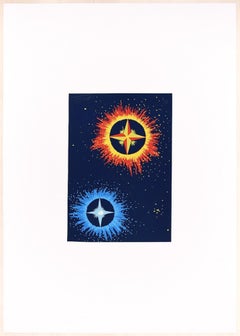
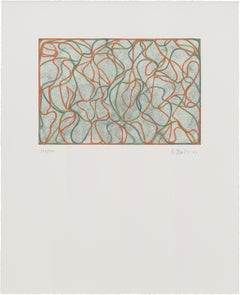
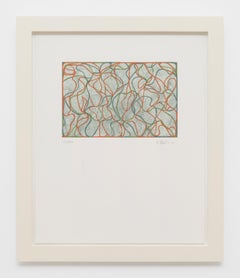
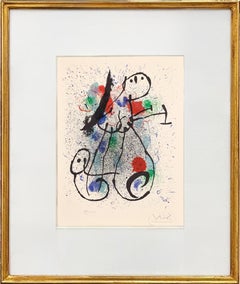
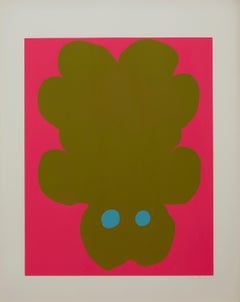
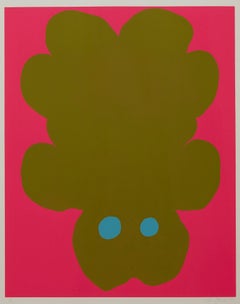
Composition, Variations sur l'imaginaire, Félix Labisse

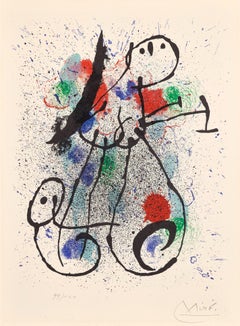
Composition, Variations sur l'imaginaire, Félix Labisse

By Felix Labisse

Located in Southampton, NY

Lithograph on vélin de Rives paper. Inscription: hand signed and unnumbered, as issued. Good condition. Notes: From the folio, Variations sur l'imaginaire, 1972. Published by Philipp...

Category

1970s Surrealist Felix Labisse Art

Materials

Lithograph

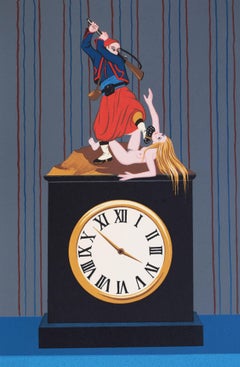
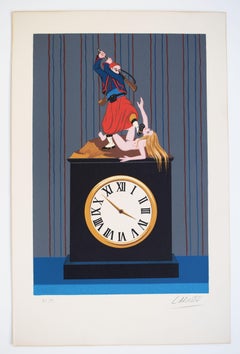
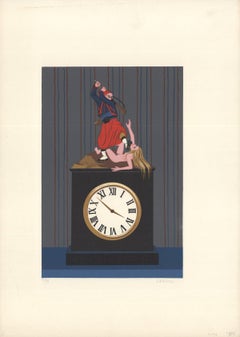
1980 Felix Labisse 'L'Horloge (The Clock)' Surrealism, France

1980 Felix Labisse 'L'Horloge (The Clock)' Surrealism, France

By Felix Labisse

Located in Brooklyn, NY

Paper Size: 24.5 x 17.5 inches ( 62.23 x 44.45 cm ) Image Size: 15.25 x 10.25 inches ( 38.735 x 26.035 cm ) Framed: No Condition: B-: Good Condition, Signs of Handling and Age ...

Category

1980s Contemporary Felix Labisse Art

Materials

Lithograph

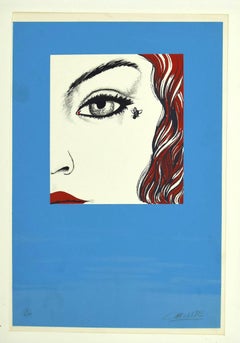
Fly - Original Serigraph by Félix Labisse - 1970s

Fly - Original Serigraph by Félix Labisse - 1970s

By Felix Labisse

Located in Roma, IT

Fly is a colored serigraph on paper realized by the French artist Félix Labisse. Hand-signed in pencil on the lower right margin. Numbered in pencil on the lower left margin. Editio...

Category

1970s Modern Felix Labisse Art

Materials

Screen

Festival Mondial Du Film Beau-Arts De Belgique

Festival Mondial Du Film Beau-Arts De Belgique

By Felix Labisse

Located in London, GB

Original Belgian film poster for the Festival Mondial du Film Beau-Arts de Belgique (La Naissance du Cinema Lumiere Melies) Mondial du Film et Des Beaux-Artsheld in Brussels, Belgiu...

Category

1940s Belgian Vintage Felix Labisse Art

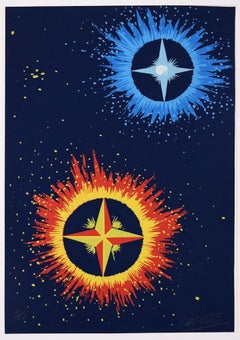
Stellar Composition - Screen Print y Félix Labisse - 1970s

Stellar Composition - Screen Print y Félix Labisse - 1970s

By Felix Labisse

Located in Roma, IT

Stellar Composition is a colored serigraph on paper realized by the French artist Félix Labisse. Hand-signed in pencil on lower right margin. Numbered in pencil and in Roman numerals on lower left margin. This is an artist's proof on a edition of 16 prints, on a total edition of 100 pieces. In very good conditions, this original print is glued on a white cardboard passepartout, cm 69.6 x 50. Félix Labisse (Douai 1905 - Paris 1982) The French painter, illustrator and scenographer (especially for J.-L. Barrault), Fèlix Labisse settled in Paris in 1933, after a period spent in Ostend during which he was in close contact with J. Ensor and supported by R Desnos. His works, influenced by surrealism, show a dreamlike and fantastic atmosphere of magical metamorphosis. In June 1951 he created the sets for Jean-Paul Sartre's play "Il diavolo e il buon Dio", staged by Louis Jouvet. During this time he spends his time between Paris and Knokke Le Zoute...

Category

1970s Contemporary Felix Labisse Art

Materials

Screen

Related Items
Spike, Affordable Contemporary Art, Silkscreen Prints, Colourful Abstract Prints

Spike, Affordable Contemporary Art, Silkscreen Prints, Colourful Abstract Prints

By Chris Keegan

Located in Deddington, GB

This handmade screen print depicts an imaginary spiked sphere shape in five colours including fluorescent Yellow, metallic Gold and Red. The Gold ink layer gives the abstract print an extra brilliance and shine showing off the multi layered liquid patterns on the surface of the object. Chris Keegan artist online and in Wychwood Art Gallery...

Category

21st Century and Contemporary Contemporary Felix Labisse Art

Materials

Paper, Screen

Barbet Schroeder 'More' Original Vintage Movie Poster, Japanese, 1971

Barbet Schroeder 'More' Original Vintage Movie Poster, Japanese, 1971

Located in Devon, GB

A bewitching full-bleed black and white photograph of a supine Mimsy Farmer confronts us on this scarce english-language poster for the first Japanese release of Barbet Schroeder's 1...

Category

1970s Japanese Post-Modern Vintage Felix Labisse Art

Materials

Paper, Linen

James Bond 'Goldfinger' Original Vintage Film Poster, Swedish, 1967

James Bond 'Goldfinger' Original Vintage Film Poster, Swedish, 1967

By Gosta Aberg

Located in Devon, GB

Considered the quintessential and definitive Bond film, the third instalment in EON Productions' James Bond series set the template for many of the subsequent films, with its tongue in cheek humour, extensive use of gadgets and technology and multiple foreign locations. The first Bond blockbuster, 1964s 'Goldfinger' was also the first Bond film to utilise a standalone pre-credits sequence, the first to employ a pop star to sing the theme song and the first to win an Academy Award. The plot saw 007 uncover a plot to contaminate the United States gold reserve at Fort Knox while investigating the smuggling activities of powerful gold magnate Auric Goldfinger. This stunning poster designed by prolific Swedish...

Category

1960s Swedish Mid-Century Modern Vintage Felix Labisse Art

Materials

Linen, Paper

The Stone Roses Original Vintage Concert Poster, Blackpool, 1989

The Stone Roses Original Vintage Concert Poster, Blackpool, 1989

Located in Devon, GB

A large and striking silkscreen concert poster for The Stone Roses' seminal gig at the Empress Ballroom in Blackpool, England, on Saturday 12th August 1989. Following the release of their eponymous debut album in May 1989, Manchester musicians Ian Brown...

Category

1980s British Post-Modern Vintage Felix Labisse Art

Materials

Paper

American Yachting Scene Salvador Dali Currier & Ives series  lithograph 1971

American Yachting Scene Salvador Dali Currier & Ives series lithograph 1971

By Salvador Dalí­

Located in Paonia, CO

American Yachting Scene is a vibrant explosion of ocean blue , whitecaps and strong yellow slashes to describe the ships sailing to their destination. There is an insert of a Currier and Ives print of sailing ships that Dali used as his inspiration. This original lithograph is from the series “The World Of Currier...

Category

1970s Surrealist Felix Labisse Art

Materials

Lithograph

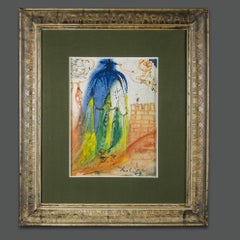
Marc Chagall - Inspiration - Original Lithograph from "Chagall Lithographe" v. 2

Marc Chagall - Inspiration - Original Lithograph from "Chagall Lithographe" v. 2

By Marc Chagall

Located in Collonge Bellerive, Geneve, CH

Marc Chagall Original Lithograph from Chagall Lithographe 1957-1962. VOLUME II. 1963 Dimensions: 32 x 24 cm From the unsigned edition of 10000 copies without margins Reference: Mourlot 398 Condition : Excellent Marc Chagall (born in 1887) Marc Chagall was born in Belarus in 1887 and developed an early interest in art. After studying painting, in 1907 he left Russia for Paris, where he lived in an artist colony on the city’s outskirts. Fusing his own personal, dreamlike imagery with hints of the fauvism and cubism popular in France at the time, Chagall created his most lasting work—including I and the Village (1911)—some of which would be featured in the Salon des Indépendants exhibitions. After returning to Vitebsk for a visit in 1914, the outbreak of WWI trapped Chagall in Russia. He returned to France in 1923 but was forced to flee the country and Nazi persecution during WWII. Finding asylum in the U.S., Chagall became involved in set and costume design before returning to France in 1948. In his later years, he experimented with new art forms and was commissioned to produce numerous large-scale works. Chagall died in St.-Paul-de-Vence in 1985. The Village Marc Chagall was born in a small Hassidic community on the outskirts of Vitebsk, Belarus, on July 7, 1887. His father was a fishmonger, and his mother ran a small sundries shop in the village. As a child, Chagall attended the Jewish elementary school, where he studied Hebrew and the Bible, before later attending the Russian public school. He began to learn the fundamentals of drawing during this time, but perhaps more importantly, he absorbed the world around him, storing away the imagery and themes that would feature largely in most of his later work. At age 19 Chagall enrolled at a private, all-Jewish art school and began his formal education in painting, studying briefly with portrait artist Yehuda Pen. However, he left the school after several months, moving to St. Petersburg in 1907 to study at the Imperial Society for the Protection of Fine Arts. The following year, he enrolled at the Svanseva School, studying with set designer Léon Bakst, whose work had been featured in Sergei Diaghilev's Ballets Russes. This early experience would prove important to Chagall’s later career as well. Despite this formal instruction, and the widespread popularity of realism in Russia at the time, Chagall was already establishing his own personal style, which featured a more dreamlike unreality and the people, places and imagery that were close to his heart. Some examples from this period are his Window Vitebsk (1908) and My Fianceé with Black Gloves (1909), which pictured Bella Rosenfeld, to whom he had recently become engaged. The Beehive Despite his romance with Bella, in 1911 an allowance from Russian parliament member and art patron Maxim Binaver enabled Chagall to move to Paris, France. After settling briefly in the Montparnasse neighborhood, Chagall moved further afield to an artist colony known as La Ruche (“The Beehive”), where he began to work side by side with abstract painters such as Amedeo Modigliani and Fernand Léger as well as the avant-garde poet Guillaume Apollinaire. At their urging, and under the influence of the wildly popular fauvism and cubism, Chagall lightened his palette and pushed his style ever further from reality. I and the Village (1911) and Homage to Apollinaire (1912) are among his early Parisian works, widely considered to be his most successful and representative period. Though his work stood stylistically apart from his cubist contemporaries, from 1912 to 1914 Chagall exhibited several paintings at the annual Salon des Indépendants exhibition, where works by the likes of Juan Gris, Marcel Duchamp and Robert Delaunay were causing a stir in the Paris art world. Chagall’s popularity began to spread beyond La Ruche, and in May 1914 he traveled to Berlin to help organize his first solo exhibition, at Der Sturm Gallery. Chagall remained in the city until the highly acclaimed show opened that June. He then returned to Vitebsk, unaware of the fateful events to come. War, Peace and Revolution In August 1914 the outbreak of World War I precluded Chagall’s plans to return to Paris. The conflict did little to stem the flow of his creative output, however, instead merely giving him direct access to the childhood scenes so essential to his work, as seen in paintings such as Jew in Green (1914) and Over Vitebsk (1914). His paintings from this period also occasionally featured images of the war’s impact on the region, as with Wounded Soldier (1914) and Marching (1915). But despite the hardships of life during wartime, this would also prove to be a joyful period for Chagall. In July 1915 he married Bella, and she gave birth to a daughter, Ida, the following year. Their appearance in works such as Birthday (1915), Bella and Ida by the Window (1917) and several of his “Lovers” paintings give a glimpse of the island of domestic bliss that was Chagall’s amidst the chaos. To avoid military service and stay with his new family, Chagall took a position as a clerk in the Ministry of War Economy in St. Petersburg. While there he began work on his autobiography and also immersed himself in the local art scene, befriending novelist Boris Pasternak, among others. He also exhibited his work in the city and soon gained considerable recognition. That notoriety would prove important in the aftermath of the 1917 Russian Revolution when he was appointed as the Commissar of Fine Arts in Vitebsk. In his new post, Chagall undertook various projects in the region, including the 1919 founding of the Academy of the Arts. Despite these endeavors, differences among his colleagues eventually disillusioned Chagall. In 1920 he relinquished his position and moved his family to Moscow, the post-revolution capital of Russia. In Moscow, Chagall was soon commissioned to create sets and costumes for various productions at the Moscow State Yiddish Theater...

Category

1960s Surrealist Felix Labisse Art

Materials

Lithograph

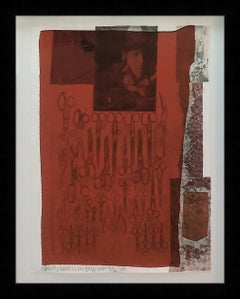
Most Distant Visible Part of the Sea, Hand Signed Silkscreen, Edition PP 2/6

Most Distant Visible Part of the Sea, Hand Signed Silkscreen, Edition PP 2/6

By Robert Rauschenberg

Located in Aventura, FL

Color silkscreen and collage. Framed. Hand signed, dated and numbered by the artist. Certificate of authenticity included. Edition PP 2/6. All reasonable offers will be considered.

Category

1970s Modern Felix Labisse Art

Materials

Color, Screen

Silver Flowers, March 3, 2011

Silver Flowers, March 3, 2011

By Donald Sultan

Located in New York, NY

Silver Flowers, March 3, 2011 Silkscreen with hand applied black Silica on Sauders Waterford paper, 410gm hot press 38 x 38 inches edition of 75 Print also available in Gold...

Category

21st Century and Contemporary Contemporary Felix Labisse Art

Materials

Screen

Shower Profile (White) Silkscreen on Canvas with Diamond Dust, Signed Edition

Shower Profile (White) Silkscreen on Canvas with Diamond Dust, Signed Edition

By Carole Feuerman

Located in Aventura, FL

Silkscreen on canvas with diamond dust. Hand signed, dated, and numbered on verso by the artist. Edition of 25. Canvas is stretched. Artwork is in excellent condition. Certificate ...

Category

21st Century and Contemporary Realist Felix Labisse Art

Materials

Canvas, Screen

Bruce Springsteen Original Concert Poster for LA Sports Arena, 1980

Bruce Springsteen Original Concert Poster for LA Sports Arena, 1980

Located in Devon, GB

A scarce oversized concert poster for a run of four shows by Bruce Springsteen and the E Street Band's at the Los Angeles Sports Arena from 30 October to 3 November 1980 in support o...

Category

1980s American Post-Modern Vintage Felix Labisse Art

Materials

Paper

Original Damien Hirst, 2022, Signed, Nūr Jahān (H10-2) from The Empresses

Original Damien Hirst, 2022, Signed, Nūr Jahān (H10-2) from The Empresses

By Damien Hirst

Located in Washington, DC

Artist: Damien Hirst Title: Nūr Jahān (H10-2) Medium: Laminated giclee print with screenprinted glitter on aluminum composite panel Date: 2022 Edition: 1946/3041 Sheet Size: 39 3/8" ...

Category

2010s Contemporary Felix Labisse Art

Materials

Glitter, Giclée, Screen

Previously Available Items
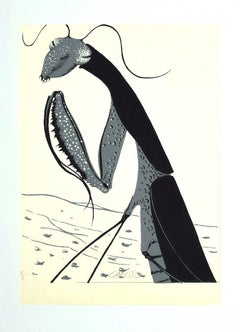
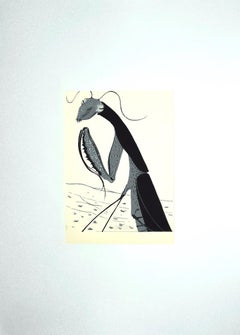
Mantis Religiosa - Original Screen Print by Félix Labisse - 1970s

Mantis Religiosa - Original Screen Print by Félix Labisse - 1970s

By Felix Labisse

Located in Roma, IT

Mantis religiosa is a colored screen print on paper realized by the French artist Félix Labisse. Hand-signed in pencil on the lower right margin. Numbered in pencil on the lower le...

Category

1970s Contemporary Felix Labisse Art

Materials

Screen

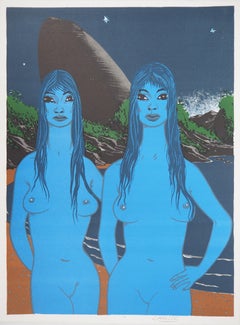
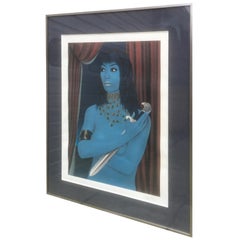
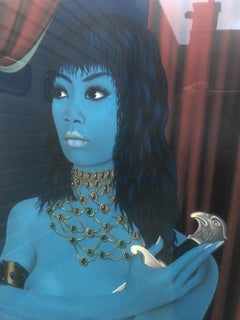
The Blue Twins - Original handsigned lithograph

The Blue Twins - Original handsigned lithograph

By Felix Labisse

Located in Paris, IDF

Felix LABISSE The Blue Twins, 1966 Original lithograph Handsigned in pencil On Rives vellum 37 x 28 cm (c. 15 x 11 inch) Excellent condition

Category

1960s Surrealist Felix Labisse Art

Materials

Lithograph

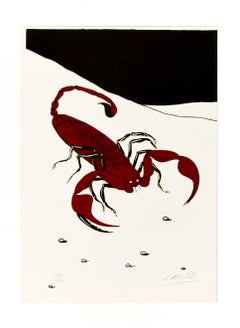
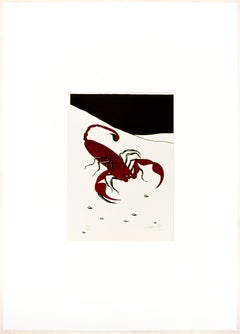
Scorpion - Original Screen Print y Félix Labisse - 1970s

Scorpion - Original Screen Print y Félix Labisse - 1970s

By Felix Labisse

Located in Roma, IT

Scorpion is a colored serigraph on paper realized by the French artist Félix Labisse. Hand-signed in pencil on lower right margin. Numbered in pencil on lower left margin. Edition of 100 pieces. In very good conditions, this original print is glued on a white cardboard passepartout, cm 69.6 x 50. This is a beautiful original print with superb graphic elegance, to collect at home. Félix Labisse (Douai 1905 - Paris 1982) The French painter, illustrator and scenographer (especially for J.-L. Barrault), Fèlix Labisse settled in Paris in 1933, after a period spent in Ostend during which he was in close contact with J. Ensor and supported by R Desnos. His works, influenced by surrealism, show a dreamlike and fantastic atmosphere of magical metamorphosis. In June 1951 he created the sets for Jean-Paul Sartre's play "Il diavolo e il buon Dio", staged by Louis Jouvet. During this time he spends his time between Paris and Knokke Le Zoute...

Category

1970s Contemporary Felix Labisse Art

Materials

Screen

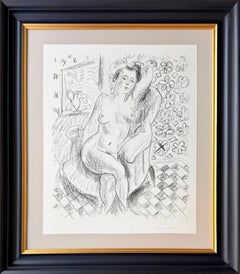
Labisse Felix Lithography Signed Labisse "Nu"

Labisse Felix Lithography Signed Labisse "Nu"

Sold

H 0.4 in W 0.4 in D 0.4 in

Labisse Felix Lithography Signed Labisse "Nu"

By Felix Labisse

Located in Saint-Ouen, FR

Labisse Felix (1905-1982) lithography signed Labisse "Nu" E.A épreuve d'artiste.  

Category

1970s French Modern Vintage Felix Labisse Art

Materials

Paper

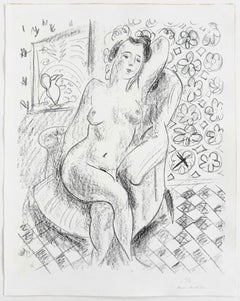
Labisse Felix Lithography Signed Labisse "Nu"

Labisse Felix Lithography Signed Labisse "Nu"

Sold

H 25.99 in W 16.54 in D 0.79 in

Labisse Felix Lithography Signed Labisse "Nu"

By Felix Labisse

Located in Saint-Ouen, FR

Labisse Felix (1905-1982) lithography signed Labisse "Nu" 141/180.

Category

1970s French Modern Vintage Felix Labisse Art

Felix Labisse art for sale on 1stDibs.

Find a wide variety of authentic Felix Labisse art available for sale on 1stDibs. If you’re browsing the collection of art to introduce a pop of color in a neutral corner of your living room or bedroom, you can find work that includes elements of blue and other colors. You can also browse by medium to find art by Felix Labisse in lithograph, screen print and more. Much of the original work by this artist or collective was created during the 20th century and is mostly associated with the modern style. Not every interior allows for large Felix Labisse art, so small editions measuring 9 inches across are available. Customers who are interested in this artist might also find the work of Jacques Beltrand, Pierre Quentin Chedel, and Charles Courtry. Felix Labisse art prices can differ depending upon medium, time period and other attributes. On 1stDibs, the price for these items starts at $77 and tops out at $334, while the average work can sell for $285.