Fritz Eichenberg. Art

American, German, 1901-1990
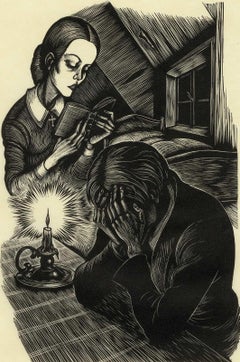
Fritz Eichenberg was one of the world's most sought-after illustrators of literary classics, including The Brothers Karamazov and Crime and Punishment, as well as works by Edgar Allan Poe, Dylan Thomas, the Brontë sisters, and others. Born in Cologne, Germany in 1901, he learned lithography, wood-engraving, and etching and by his early twenties had produced masterful illustrations for Gulliver's Travels and Till Eulenspiegel. He came to the United States in 1933 and over the next five decades produced an astonishing range of individual images and book illustrations. Throughout his life, he was preoccupied with the tragedy of war. He became a close friend and great supporter of Dorothy Day and The Catholic Worker and used his art to express his hope for more justice in the world.
to
1
Overall Width
to
Overall Height
to
1
1
1
1
1
11,411
2,864
2,494
1,538
1
Artist: Fritz Eichenberg.
original lithograph

original lithograph

By Fritz Eichenberg

Located in Henderson, NV

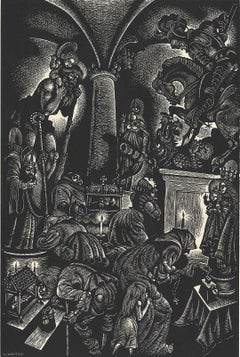
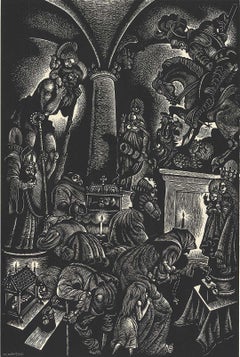
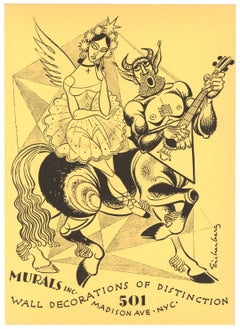
Medium: original lithograph. This lithograph was printed in 1953 for the "Improvisations" portfolio, published by the Artists Equity Association of New York on the occasion of the 19...

Category

1950s Fritz Eichenberg. Art

Materials

Lithograph

Related Items
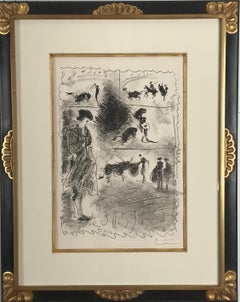
Pablo Picasso, "Carnet de la Californie", original lithograph

Pablo Picasso, "Carnet de la Californie", original lithograph

By Pablo Picasso

Located in Chatsworth, CA

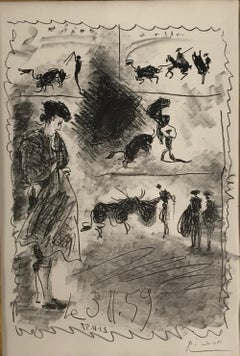
This piece is an original crayon lithograph on transfer paper created by Pablo Picasso in 1959. The zinc in this piece has been re-worked with crayon marks and this composition was u...

Category

1950s Surrealist Fritz Eichenberg. Art

Materials

Lithograph

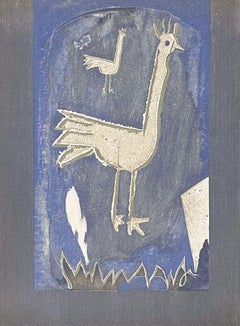
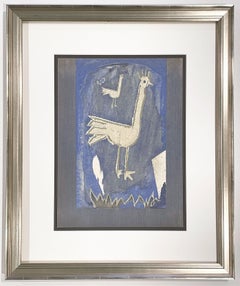
Georges Braque Lithograph, Modern Style, 1952, Le Coq from Verve Vol VII

Georges Braque Lithograph, Modern Style, 1952, Le Coq from Verve Vol VII

By Georges Braque

Located in Washington, DC

Artist: Georges Braque Title: Le Coq Portfolio: Verve Vol VII No. 27-28 Medium: Lithograph Date: 1952 Edition: 6000 Frame Size: 22" x 18 1/4" Sheet Size: 14" x 10" Signature: Unsigned

Category

1950s Modern Fritz Eichenberg. Art

Materials

Lithograph

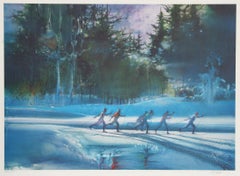
Cross Country Skiing, Signed Sports Art Lithograph by Robert Peak

Cross Country Skiing, Signed Sports Art Lithograph by Robert Peak

By Robert Peak

Located in Long Island City, NY

Considered "the father of the contemporary movie poster," Bob Peak totally transformed the approach to movie advertising from basic collages of film stills or head shots to flamboyan...

Category

1980s American Impressionist Fritz Eichenberg. Art

Materials

Lithograph

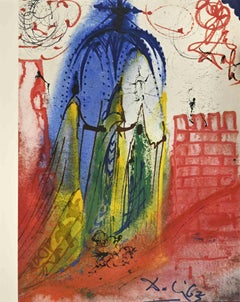
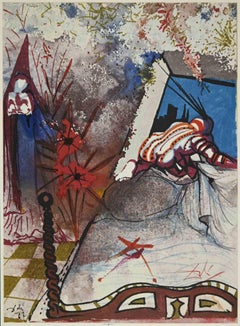
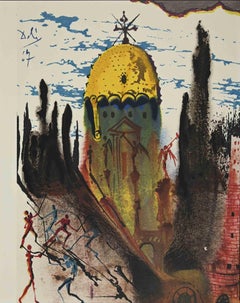
Act I, Scene I - From “Romeo and Juliet - Lithograph-1975

Act I, Scene I - From “Romeo and Juliet - Lithograph-1975

By Salvador Dalí­

Located in Roma, IT

Act I, Scene I - From “Romeo and Juliet”  is an artwork realized  in 1975. Mixed colored lithograph. Signed and dated in plate on the higher left margin. Perfect conditions. The ...

Category

1970s Surrealist Fritz Eichenberg. Art

Materials

Lithograph

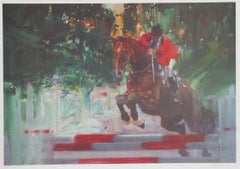
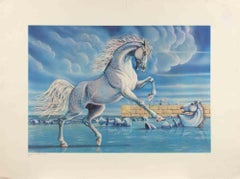
Horse Jumping from Visions of Gold, Signed Sports Art Lithograph by Robert Peak

Horse Jumping from Visions of Gold, Signed Sports Art Lithograph by Robert Peak

By Robert Peak

Located in Long Island City, NY

Considered "the father of the contemporary movie poster," Bob Peak totally transformed the approach to movie advertising from basic collages of film stills or head shots to flamboyan...

Category

1980s American Impressionist Fritz Eichenberg. Art

Materials

Lithograph

Act I, Scene IV - From “Romeo and Juliet” - Lithograph - 1975

Act I, Scene IV - From “Romeo and Juliet” - Lithograph - 1975

By Salvador Dalí­

Located in Roma, IT

Act I, Scene IV - From “Romeo and Juliet”  is an artwork realized by Salvador Dalí in 1975. Mixed colored lithograph. Signed and dated in plate on the lower right  margin. Perfect...

Category

1970s Surrealist Fritz Eichenberg. Art

Materials

Lithograph

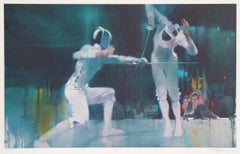
Fencing from Visions of Gold, Signed Sports Art Lithograph by Robert Peak

Fencing from Visions of Gold, Signed Sports Art Lithograph by Robert Peak

By Robert Peak

Located in Long Island City, NY

Considered "the father of the contemporary movie poster," Bob Peak totally transformed the approach to movie advertising from basic collages of film stills or head shots to flamboyan...

Category

1980s American Impressionist Fritz Eichenberg. Art

Materials

Lithograph

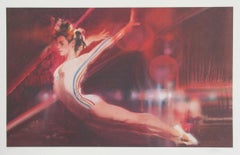
Pommel Horse from Visions of Gold, Signed Sports Art Lithograph by Robert Peak

Pommel Horse from Visions of Gold, Signed Sports Art Lithograph by Robert Peak

By Robert Peak

Located in Long Island City, NY

Considered "the father of the contemporary movie poster," Bob Peak totally transformed the approach to movie advertising from basic collages of film stills or head shots to flamboyan...

Category

1980s American Impressionist Fritz Eichenberg. Art

Materials

Lithograph

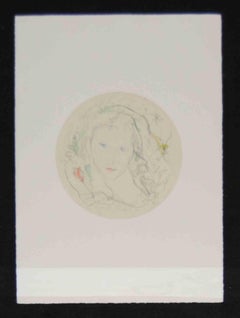
Untitled Lithograph by Ernesto Treccani, Contemporary, 1980s, Unframed

Untitled Lithograph by Ernesto Treccani, Contemporary, 1980s, Unframed

By Ernesto Treccani

Located in Roma, IT

Etching made on zinc plate on Magnani-Pescia paper 310 gr/m2, paper size 50cm x 70cm, round engraving diameter 31cm hand coloured. Excellent condition, no defects. Born in Milan on ...

Category

1980s Contemporary Fritz Eichenberg. Art

Materials

Lithograph

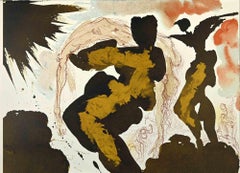
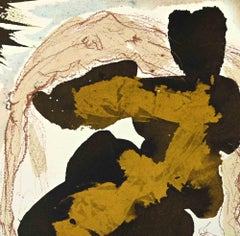
Animam et Corpus Trado pro Patriis Legibus - Lithograph - 1964

Animam et Corpus Trado pro Patriis Legibus - Lithograph - 1964

By Salvador Dalí­

Located in Roma, IT

Animam et Corpus Trado pro Patriis Legibus is a Color lithograph on heavy rag paper realized in 1964. It is part of Biblia Sacra vulgatæ edition is published by Rizzoli-Mediolani bet...

Category

1960s Surrealist Fritz Eichenberg. Art

Materials

Lithograph

Act III, Scene V - From “Romeo and Juliet” -Original Lithograph-1975

Act III, Scene V - From “Romeo and Juliet” -Original Lithograph-1975

By Salvador Dalí­

Located in Roma, IT

Act III, Scene V - From “Romeo and Juliet”  is an artwork realized  in 1975. Mixed colored lithograph. Signed and dated on plate on the lower left margin. Perfect conditions. The ...

Category

1970s Surrealist Fritz Eichenberg. Art

Materials

Lithograph

Previously Available Items
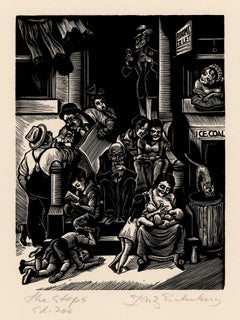
'The Steps' — WPA Era Graphic Modernism

'The Steps' — WPA Era Graphic Modernism

By Fritz Eichenberg

Located in Myrtle Beach, SC

Fritz Eichenberg, 'The Steps', wood engraving, 1933, edition 200. Signed, titled, and annotated 'Ed. 200' in pencil. Initialed in the block, lower right. A superb, richly-inked impr...

Category

1930s American Modern Fritz Eichenberg. Art

Materials

Woodcut

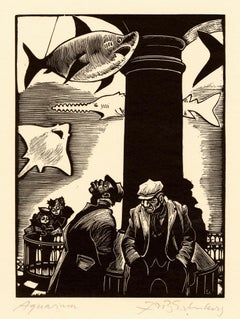
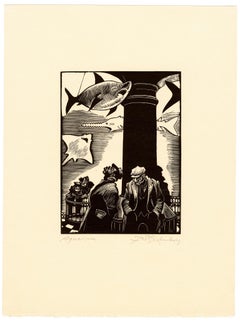
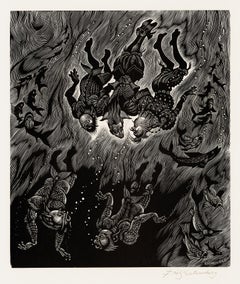
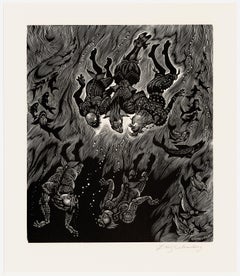
'The Aquarium' — WPA Era Graphic Modernism

'The Aquarium' — WPA Era Graphic Modernism

By Fritz Eichenberg

Located in Myrtle Beach, SC

Fritz Eichenberg, 'The Aquarium', wood engraving, 1933, edition 200. Signed and titled in pencil. Initialed in the block, lower right. A superb, richly-inked impression, on pale yel...

Category

1930s American Modern Fritz Eichenberg. Art

Materials

Woodcut

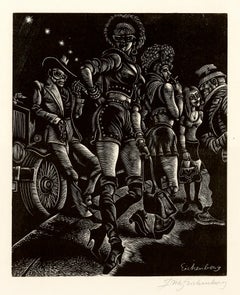
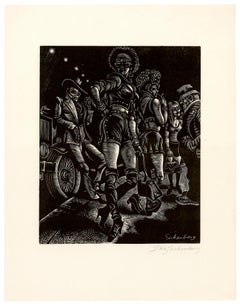
'The Pimp' — Graphic Modernism

'The Pimp' — Graphic Modernism

By Fritz Eichenberg

Located in Myrtle Beach, SC

Fritz Eichenberg, 'The Pimp', wood engraving, 1980, artist's proof before the edition. Signed in pencil. Signed in the block, lower right. A fine, richly-inked impression, on cream wove paper, with full margins (2 3/16 to 3 1/2 inches), in excellent condition. Archivally sleeved, unmatted. Image size 12 x 9 3/4 inches (305 x 248 mm); sheet size 18 x 14 inches (457 x 356 mm). ABOUT THE ARTIST Fritz Eichenberg (1901–1990) was a German-American illustrator and arts educator who worked primarily in wood engraving. His best-known works were concerned with religion, social justice, and nonviolence. Eichenberg was born to a Jewish family in Cologne, Germany, where the destruction of World War I helped to shape his anti-war sentiments. He worked as a printer's apprentice and studied at the Municipal School of Applied Arts in Cologne and the Academy of Graphic Arts in Leipzig, where he studied under Hugo Steiner-Prag. In 1923 he moved to Berlin to begin his career as an artist, producing illustrations for books and newspapers. In his newspaper and magazine work, Eichenberg was politically outspoken and sometimes wrote and illustrated his reporting. In 1933, the rise of Adolf Hitler drove Eichenberg, who was a public critic of the Nazis, to emigrate with his wife and children to the United States. He settled in New York City, where he lived most of his life. He worked in the WPA Federal Arts Project and was a member of the Society of American Graphic Artists. In his prolific career as a book illustrator, Eichenberg portrayed many forms of literature but specialized in works with elements of extreme spiritual and emotional conflict, fantasy, or social satire. Over his long career, Eichenberg was commissioned to illustrate more than 100 classics by publishers in the United States and abroad, including works by renowned authors Dostoyevsky, Tolstoy, Charlotte and Emily Brontë, Poe, Swift, and Grimmelshausen. He also wrote and illustrated books of folklore and children's stories. Eichenberg was a long-time contributor to the progressive magazine The Nation, his illustrations appearing between 1930 and 1980. Eichenberg’s work has been featured by such esteemed publishers as The Heritage Club, Random House, Book of the Month Club, The Limited Editions Club, Kingsport Press, Aquarius Press, and Doubleday. Raised in a non-religious family, Eichenberg had been attracted to Taoism as a child. Following his wife's unexpected death in 1937, he turned briefly to Zen Buddhist meditation, then joined the Religious Society of Friends in 1940. Though he remained a Quaker until his death, Eichenberg was also associated with Catholic charity work through his friendship with Dorothy Day...

Category

1980s American Modern Fritz Eichenberg. Art

Materials

Woodcut

'The Wolf and the Little Kids' — Graphic Modernism

'The Wolf and the Little Kids' — Graphic Modernism

By Fritz Eichenberg

Located in Myrtle Beach, SC

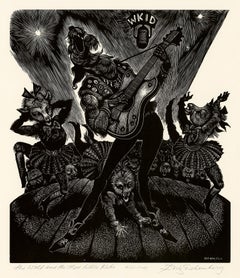
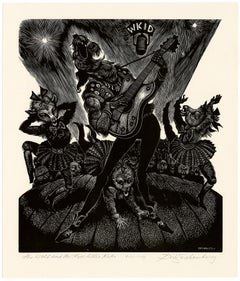
Fritz Eichenberg, 'The Wolf and the Little Kids' from the suite 'Fables with a Twist', wood engraving, 1975-76, artist's proof apart from the edition of c. 50. Signed, titled, and annotated 'Artist’s Proof' in pencil. Signed in the block, lower right. A fine, richly-inked impression, on cream wove paper, with full margins (7/8 to 1 1/2 inches), in excellent condition. Complete with vellum folder with descriptive text in red and black linotype. Printed by master printer Harold McGrath at The Gehenna Press, Northampton, MA. Image size 13 15/16 x 12 1/8 inches (354 x 308 mm); sheet size 16 1/2 x 14 inches (419 x 356 mm). Archivally sleeved, unmatted. Collection: Harvard Museums. ABOUT THE ARTIST Fritz Eichenberg (1901–1990) was a German-American illustrator and arts educator who worked primarily in wood engraving. His best-known works were concerned with religion, social justice, and nonviolence. Eichenberg was born to a Jewish family in Cologne, Germany, where the destruction of World War I helped to shape his anti-war sentiments. He worked as a printer's apprentice and studied at the Municipal School of Applied Arts in Cologne and the Academy of Graphic Arts in Leipzig, where he studied under Hugo Steiner-Prag. In 1923 he moved to Berlin to begin his career as an artist, producing illustrations for books and newspapers. In his newspaper and magazine work, Eichenberg was politically outspoken and sometimes wrote and illustrated his reporting. In 1933, the rise of Adolf Hitler drove Eichenberg, who was a public critic of the Nazis, to emigrate with his wife and children to the United States. He settled in New York City, where he lived most of his life. He worked in the WPA Federal Arts Project and was a member of the Society of American Graphic Artists. In his prolific career as a book illustrator, Eichenberg portrayed many forms of literature but specialized in works with elements of extreme spiritual and emotional conflict, fantasy, or social satire. Over his long career, Eichenberg was commissioned to illustrate more than 100 classics by publishers in the United States and abroad, including works by renowned authors Dostoyevsky, Tolstoy, Charlotte and Emily Brontë, Poe, Swift, and Grimmelshausen. He also wrote and illustrated books of folklore and children's stories. Eichenberg was a long-time contributor to the progressive magazine The Nation, his illustrations appearing between 1930 and 1980. Eichenberg’s work has been featured by such esteemed publishers as The Heritage Club, Random House, Book of the Month Club, The Limited Editions Club, Kingsport Press, Aquarius Press, and Doubleday. Raised in a non-religious family, Eichenberg had been attracted to Taoism as a child. Following his wife's unexpected death in 1937, he turned briefly to Zen Buddhist meditation, then joined the Religious Society of Friends in 1940. Though he remained a Quaker until his death, Eichenberg was also associated with Catholic charity work through his friendship with Dorothy Day...

Category

1970s American Modern Fritz Eichenberg. Art
Materials

Woodcut

'Simplicius' Farewell to the World' — Graphic Modernism

'Simplicius' Farewell to the World' — Graphic Modernism

By Fritz Eichenberg

Located in Myrtle Beach, SC

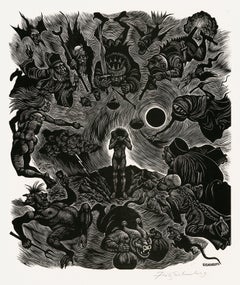
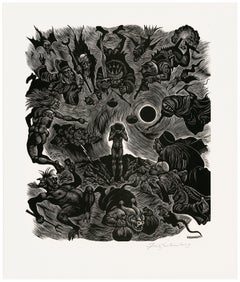
Fritz Eichenberg, 'Simplicius’ Farewell To The World' from the suite 'The Adventurous Simplicissimus', wood engraving, 1977, artist's proof apart from the edition of 50. Signed in pencil. Signed in the block, lower right. A fine, richly-inked impression, on cream wove paper, with full margins (1 1/2 to 2 inches), in excellent condition. Image size 14 x 12 inches (356 x 305 mm); sheet size 17 1/2 x 15 inches (445 x 381 mm). Archivally sleeved, unmatted. ABOUT THIS WORK 'Simplicius Simplicissimus' (German: Der abenteuerliche Simplicissimus Teutsch) is a picaresque novel of the lower Baroque style, written in five books by Hans Jakob Christoffel von Grimmelshausen published in 1668, with the sequel Continuatio appearing in 1669. The novel is told from the perspective of its protagonist Simplicius, a rogue or picaro typical of the picaresque novel, as he traverses the tumultuous world of the Holy Roman Empire during the Thirty Years' War. Raised by a peasant family, he is separated from his home by foraging dragoons. He is adopted by a hermit living in the forest, who teaches him to read and introduces him to religion. The hermit also gives Simplicius his name because he is so simple that he does not know his own name. After the death of the hermit, Simplicius must fend for himself. He is conscripted at a young age into service and, from there, embarks on years of foraging, military triumph, wealth, prostitution, disease, bourgeois domestic life, and travels to Russia, France, and an alternate world inhabited by mermen. The novel ends with Simplicius turning to a life of hermitage, denouncing the world as corrupt. ABOUT THE ARTIST Fritz Eichenberg (1901–1990) was a German-American illustrator and arts educator who worked primarily in wood engraving. His best-known works were concerned with religion, social justice, and nonviolence. Eichenberg was born to a Jewish family in Cologne, Germany, where the destruction of World War I helped to shape his anti-war sentiments. He worked as a printer's apprentice and studied at the Municipal School of Applied Arts in Cologne and the Academy of Graphic Arts in Leipzig, where he studied under Hugo Steiner-Prag. In 1923 he moved to Berlin to begin his career as an artist, producing illustrations for books and newspapers. In his newspaper and magazine work, Eichenberg was politically outspoken and sometimes wrote and illustrated his reporting. In 1933, the rise of Adolf Hitler drove Eichenberg, who was a public critic of the Nazis, to emigrate with his wife and children to the United States. He settled in New York City, where he lived most of his life. He worked in the WPA Federal Arts Project and was a member of the Society of American Graphic Artists. In his prolific career as a book illustrator, Eichenberg portrayed many forms of literature but specialized in works with elements of extreme spiritual and emotional conflict, fantasy, or social satire. Over his long career, Eichenberg was commissioned to illustrate more than 100 classics by publishers in the United States and abroad, including works by renowned authors Dostoyevsky, Tolstoy, Charlotte and Emily Brontë, Poe, Swift, and Grimmelshausen. He also wrote and illustrated books of folklore and children's stories. Eichenberg was a long-time contributor to the progressive magazine The Nation, his illustrations appearing between 1930 and 1980. Eichenberg’s work has been featured by such esteemed publishers as The Heritage Club, Random House, Book of the Month Club, The Limited Editions Club, Kingsport Press, Aquarius Press, and Doubleday. Raised in a non-religious family, Eichenberg had been attracted to Taoism as a child. Following his wife's unexpected death in 1937, he turned briefly to Zen Buddhist meditation, then joined the Religious Society of Friends in 1940. Though he remained a Quaker until his death, Eichenberg was also associated with Catholic charity work through his friendship with Dorothy Day...

Category

1970s American Modern Fritz Eichenberg. Art
Materials

Woodcut

'A Visit to the King of the Waters' — Graphic Modernism

'A Visit to the King of the Waters' — Graphic Modernism

By Fritz Eichenberg

Located in Myrtle Beach, SC

Fritz Eichenberg, 'A Visit to the King of the Waters' from the suite 'The Adventurous Simplicissimus', wood engraving, 1977, artist's proof apart from the edition of 50. Signed in pencil. Signed in the block, lower right. A fine, richly-inked impression, on cream wove paper, with full margins (1 1/2 to 2 inches), in excellent condition. Image size 14 x 12 inches (356 x 305 mm); sheet size 17 1/2 x 15 inches (445 x 381 mm). Archivally sleeved, unmatted. ABOUT THIS WORK 'Simplicius Simplicissimus' (German: Der abenteuerliche Simplicissimus Teutsch) is a picaresque novel of the lower Baroque style, written in five books by Hans Jakob Christoffel von Grimmelshausen published in 1668, with the sequel Continuatio appearing in 1669. The novel is told from the perspective of its protagonist Simplicius, a rogue or picaro typical of the picaresque novel, as he traverses the tumultuous world of the Holy Roman Empire during the Thirty Years' War. Raised by a peasant family, he is separated from his home by foraging dragoons. He is adopted by a hermit living in the forest, who teaches him to read and introduces him to religion. The hermit also gives Simplicius his name because he is so simple that he does not know his own name. After the death of the hermit, Simplicius must fend for himself. He is conscripted at a young age into service and, from there, embarks on years of foraging, military triumph, wealth, prostitution, disease, bourgeois domestic life, and travels to Russia, France, and an alternate world inhabited by mermen. The novel ends with Simplicius turning to a life of hermitage, denouncing the world as corrupt. ABOUT THE ARTIST Fritz Eichenberg (1901–1990) was a German-American illustrator and arts educator who worked primarily in wood engraving. His best-known works were concerned with religion, social justice, and nonviolence. Eichenberg was born to a Jewish family in Cologne, Germany, where the destruction of World War I helped to shape his anti-war sentiments. He worked as a printer's apprentice and studied at the Municipal School of Applied Arts in Cologne and the Academy of Graphic Arts in Leipzig, where he studied under Hugo Steiner-Prag. In 1923 he moved to Berlin to begin his career as an artist, producing illustrations for books and newspapers. In his newspaper and magazine work, Eichenberg was politically outspoken and sometimes wrote and illustrated his reporting. In 1933, the rise of Adolf Hitler drove Eichenberg, who was a public critic of the Nazis, to emigrate with his wife and children to the United States. He settled in New York City, where he lived most of his life. He worked in the WPA Federal Arts Project and was a member of the Society of American Graphic Artists. In his prolific career as a book illustrator, Eichenberg portrayed many forms of literature but specialized in works with elements of extreme spiritual and emotional conflict, fantasy, or social satire. Over his long career, Eichenberg was commissioned to illustrate more than 100 classics by publishers in the United States and abroad, including works by renowned authors Dostoyevsky, Tolstoy, Charlotte and Emily Brontë, Poe, Swift, and Grimmelshausen. He also wrote and illustrated books of folklore and children's stories. Eichenberg was a long-time contributor to the progressive magazine The Nation, his illustrations appearing between 1930 and 1980. Eichenberg’s work has been featured by such esteemed publishers as The Heritage Club, Random House, Book of the Month Club, The Limited Editions Club, Kingsport Press, Aquarius Press, and Doubleday. Raised in a non-religious family, Eichenberg had been attracted to Taoism as a child. Following his wife's unexpected death in 1937, he turned briefly to Zen Buddhist meditation, then joined the Religious Society of Friends in 1940. Though he remained a Quaker until his death, Eichenberg was also associated with Catholic charity work through his friendship with Dorothy Day...

Category

1970s American Modern Fritz Eichenberg. Art
Materials

Woodcut

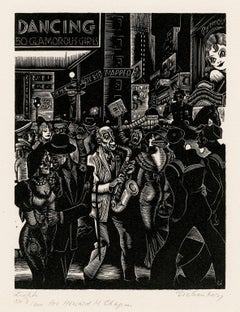
'City Lights' — Vintage Wood Engraving, New York City, 1934

'City Lights' — Vintage Wood Engraving, New York City, 1934

By Fritz Eichenberg

Located in Myrtle Beach, SC

Fritz Eichenberg, 'City LIghts', wood engraving, 1934, edition 200. Signed, titled 'Lights', and annotated 'No 2/200 for Howard M. Chapin' in pencil. Initialed in the block, lower right. A fine, richly-inked black impression, on cream wove paper, with full margins (1 1/4 to 1 7/8 inches); a small loss (5/8 inch) in the top right sheet corner, well away from the image, otherwise in excellent condition. Printed by master printer Ernest Roth...

Category

1930s American Modern Fritz Eichenberg. Art
Materials

Woodcut

Follies of the Monks  -- Erasmus

Follies of the Monks -- Erasmus

By Fritz Eichenberg

Located in New Orleans, LA

Trouble is not new to the church. Eichenberg illustrated In Praise Of Folly created this image called Folly of the Monks and Erasmus was writing in the 16th century. Erasmus was an...

Category

1970s American Modern Fritz Eichenberg. Art
Materials

Wood, Engraving

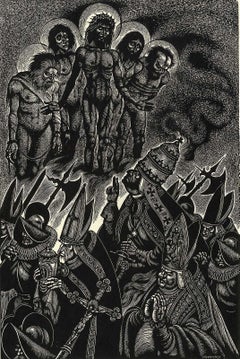
Follies of the Popes (1500 to 2019 - Erasmus

Follies of the Popes (1500 to 2019 - Erasmus

By Fritz Eichenberg

Located in New Orleans, LA

Trouble is not new to religion. Eichenberg illustrated In Praise Of Folly and created this image called Folly of the Popes and Erasmus was writing in the 16...

Category

1970s American Modern Fritz Eichenberg. Art
Materials

Wood, Engraving

Folly of Worshipping Idols

Folly of Worshipping Idols

By Fritz Eichenberg

Located in New Orleans, LA

Trouble is not new to religion. Eichenberg illustrated In Praise Of Folly and created this image called Folly of Worshipping Idols and Erasmus was writing in the 16th century. Eras...

Category

1970s American Modern Fritz Eichenberg. Art
Materials

Wood, Engraving

Folly of Worshipping Idols

Folly of Worshipping Idols

By Fritz Eichenberg

Located in New Orleans, LA

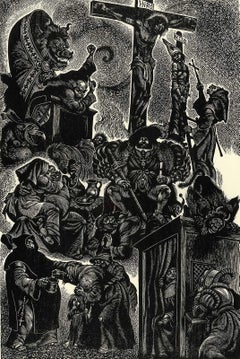
Trouble is not new to religion. Eichenberg illustrated In Praise Of Folly and created this image called Folly of Worshipping Idols and Erasmus was writing in the 16th century. Eras...

Category

1970s American Modern Fritz Eichenberg. Art
Materials

Wood, Engraving

Crime and Punishment

Crime and Punishment

By Fritz Eichenberg

Located in New Orleans, LA

In 1966, Fritz Eichenberg moved to Rhode Island and chaired the Art Department of the University of Rhode Island in Kingston. His wood engravings and lithographs are almost always as...

Category

Late 20th Century American Modern Fritz Eichenberg. Art
Materials

Wood, Engraving

Fritz Eichenberg. art for sale on 1stDibs.
Find a wide variety of authentic Fritz Eichenberg. art available for sale on 1stDibs. You can also browse by medium to find art by Fritz Eichenberg. in woodcut print, engraving, wood and more. Much of the original work by this artist or collective was created during the 20th century and is mostly associated with the modern style. Not every interior allows for large Fritz Eichenberg. art, so small editions measuring 4 inches across are available. Customers who are interested in this artist might also find the work of Charles Frederick William Mielatz, Harry Sternberg, and Jacques Monory. Fritz Eichenberg. art prices can differ depending upon medium, time period and other attributes. On 1stDibs, the price for these items starts at $125 and tops out at $1,800, while the average work can sell for $450.