Gisella Loeffler Art

American, Austrian, 1902-1977
Born in Austria, Gisella came to the United States with her family in 1908, settling in St. Louis, MO. After studying art at Washington University in St. Louis, she became a prominent member of the local art community, joining the St. Louis Art Guild as well as the Boston Society of Arts and Crafts. In addition to creating posters for the St. Louis Post Dispatch, Gisella won prizes from the Artists Guild of the Author’s League of America in 1919 and 1920 and from the Kansas City Art Institute in 1923. She also began working in textiles, including batik, to which she would return later in her career.  Having seen a local exhibition of paintings by Taos artists Oscar Berninghaus (who was from St. Louis) and Ernest Blumenschein, Gisella felt drawn to Taos, which reminded her of the villages of her native Austria. In 1933 the single mother with two daughters, Undine and Aithra, moved to Taos, where she lived off and on for the rest of her life. She traveled frequently, spending extended periods in Mexico, South America, and California, but always returned to New Mexico. Gisella initially applied an Austro-Hungarian folk-art style to the Indian and Hispanic subjects that she found in New Mexico. In her early work she covered her surfaces with decorative floral and faunal motifs, and her images were flat with no attempt at rendering traditional one-point perspective. Eventually, though, Gisella developed her own style, often using children or childlike figures as subjects. Still, the influence of her native country’s folk art remained evident in her New Mexican, Mexican, and South American images. In California, Gisella broadened her range of artistic pursuits. She taught art privately, created illustrations for Scripts Magazine, and did interior design for private homes. She also designed greeting cards, a practice she continued after her return to New Mexico, where she created a series of Christmas cards.  Gisella began illustrating children’s books in 1941 when she collaborated on Franzi and Gizi with author Margery Bianco. Eventually she wrote and illustrated her own book, El Ekeko, in 1964. She also designed ceramics—her Happy Time Dinnerware, marketed by Poppy Trail and manufactured by Metlox of Manhattan Beach, CA, is highly collectible today. As a painter, she worked on canvas or paper in oil, casein, and watercolor. She also painted furniture. Besides making her own clothing, Gisella worked in other fabric arts such as batik and embroidery. In fact, she received the top award in fabric arts in 1959 and again in 1967 from the Mus-eum of International Folk Art in Santa Fe. But perhaps Gisella’s greatest legacy is the murals she painted for children’s areas in hospitals across the United States. Gisella’s death in 1977 left a large hole in the fabric of the Taos Art Colony and the entire Taos community. Yet her work, so colorful and full of joy, remains an uplifting presence in Taos.
2
Overall Width
to
Overall Height
to
2
2
2
1
1
2
2
2
2
1
1
1
2
2
2
2
10,819
2,842
2,494
1,414
2
Artist: Gisella Loeffler
The Necklace and the Pot

The Necklace and the Pot

By Gisella Loeffler

Located in Missouri, MO

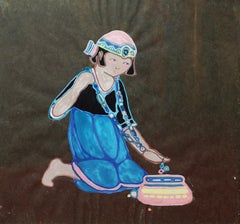
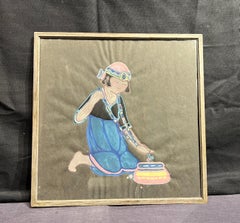
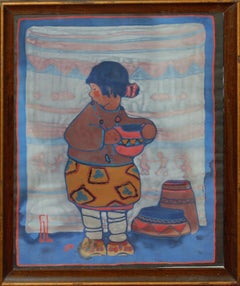
Gisella Loeffler "The Necklace and the Pot" c. 1919 Gouache on Paper Initialed Lower Left Framed Size: approx 15 x 15 inches In a village filled with colorful characters, few Taos artists were as colorful as Gisella Loeffler [1900-1977]. From her handmade Austrian clothing and hand-painted furniture to whimsical paintings and letters written in multicolored crayon, joyful color defined the artist, who early on chose to use simply Gisella as her professional name and was known as such to everyone in Taos. 

In spite of her fame there—the Taos News once labeled her a Taos legend—Gisella is rarely included in scholarly discussions of the Taos Art Colony. This oversight is likely due to the naive quality of her work, in which children or childlike adults inhabit a simple, brightly colored world filled with happiness. The macabre, the sad, the tortured, the offensive—all have no place in Gisella’s paintings. Her naive style of work looks very different from that of the better-known early Taos artists. Yet both Gisella’s artwork and her interesting life command attention. Born in Austria, Gisella came to the United States with her family in 1908, settling in St. Louis, MO. After studying art at Washington University in St. Louis, she became a prominent member of the local art community, joining the St. Louis Art Guild as well as the Boston Society of Arts and Crafts. In addition to creating posters for the St. Louis Post Dispatch, Gisella won prizes from the Artists Guild of the Author’s League of America in 1919 and 1920 and from the Kansas City Art Institute in 1923. She also began working in textiles, including batik, to which she would return later in her career.  In the early 1920s Gisella married writer and music critic Edgar Lacher. A difficult character, Lacher may have chafed under Gisella’s success, for the couple divorced in the 1930s. Having seen a local exhibition of paintings by Taos artists Oscar Berninghaus (who was from St. Louis) and Ernest Blumenschein, Gisella felt drawn to Taos, which reminded her of the villages of her native Austria. In 1933 the single mother with two daughters, Undine and Aithra, moved to Taos, where she lived off and on for the rest of her life. She traveled frequently, spending extended periods in Mexico, South America, and California, but always returned to New Mexico. Gisella initially applied an Austro-Hungarian folk-art style to the Indian and Hispanic subjects that she found in New Mexico. In her early work she covered her surfaces with decorative floral and faunal motifs, and her images were flat with no attempt at rendering traditional one-point perspective. Eventually, though, Gisella developed her own style, often using children or childlike figures as subjects. Still, the influence of her native country’s folk art remained evident in her New Mexican, Mexican, and South American images. In 1938 Gisella moved briefly to Los Griegos, north of Albuquerque, to be closer to medical facilities for her eldest daughter, who was suffering from rheumatic fever. Two years later, she moved to California to participate in the war effort, painting camouflage and decals on airplanes for Lockheed. In California, Gisella broadened her range of artistic pursuits. She taught art privately, created illustrations for Scripts Magazine, and did interior design for private homes. She also designed greeting cards, a practice she continued after her return to New Mexico, where she created a series of Christmas cards.  Gisella began illustrating children’s books in 1941 when she collaborated on Franzi and Gizi with author Margery Bianco. Eventually she wrote and illustrated her own book, El Ekeko, in 1964. She also designed ceramics—her Happy Time Dinnerware, marketed by Poppy Trail...

Category

1910s Modern Gisella Loeffler Art

Materials

Gouache

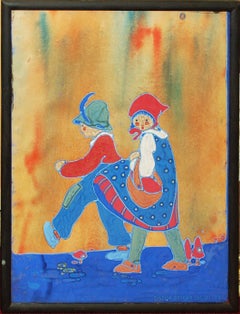
Going for a Stroll

Going for a Stroll

By Gisella Loeffler

Located in Missouri, MO

Gisella Loeffler "Going for a Stroll" c. 1919 Gouache on Paper Initialed Framed Size: approx 17 x 13 inches In a village filled with colorful characters, few Taos artists were as colorful as Gisella Loeffler [1900-1977]. From her handmade Austrian clothing and hand-painted furniture to whimsical paintings and letters written in multicolored crayon, joyful color defined the artist, who early on chose to use simply Gisella as her professional name and was known as such to everyone in Taos. 

In spite of her fame there—the Taos News once labeled her a Taos legend—Gisella is rarely included in scholarly discussions of the Taos Art Colony. This oversight is likely due to the naive quality of her work, in which children or childlike adults inhabit a simple, brightly colored world filled with happiness. The macabre, the sad, the tortured, the offensive—all have no place in Gisella’s paintings. Her naive style of work looks very different from that of the better-known early Taos artists. Yet both Gisella’s artwork and her interesting life command attention. Born in Austria, Gisella came to the United States with her family in 1908, settling in St. Louis, MO. After studying art at Washington University in St. Louis, she became a prominent member of the local art community, joining the St. Louis Art Guild as well as the Boston Society of Arts and Crafts. In addition to creating posters for the St. Louis Post Dispatch, Gisella won prizes from the Artists Guild of the Author’s League of America in 1919 and 1920 and from the Kansas City Art Institute in 1923. She also began working in textiles, including batik, to which she would return later in her career.  In the early 1920s Gisella married writer and music critic Edgar Lacher. A difficult character, Lacher may have chafed under Gisella’s success, for the couple divorced in the 1930s. Having seen a local exhibition of paintings by Taos artists Oscar Berninghaus (who was from St. Louis) and Ernest Blumenschein, Gisella felt drawn to Taos, which reminded her of the villages of her native Austria. In 1933 the single mother with two daughters, Undine and Aithra, moved to Taos, where she lived off and on for the rest of her life. She traveled frequently, spending extended periods in Mexico, South America, and California, but always returned to New Mexico. Gisella initially applied an Austro-Hungarian folk-art style to the Indian and Hispanic subjects that she found in New Mexico. In her early work she covered her surfaces with decorative floral and faunal motifs, and her images were flat with no attempt at rendering traditional one-point perspective. Eventually, though, Gisella developed her own style, often using children or childlike figures as subjects. Still, the influence of her native country’s folk art remained evident in her New Mexican, Mexican, and South American images. In 1938 Gisella moved briefly to Los Griegos, north of Albuquerque, to be closer to medical facilities for her eldest daughter, who was suffering from rheumatic fever. Two years later, she moved to California to participate in the war effort, painting camouflage and decals on airplanes for Lockheed. In California, Gisella broadened her range of artistic pursuits. She taught art privately, created illustrations for Scripts Magazine, and did interior design for private homes. She also designed greeting cards, a practice she continued after her return to New Mexico, where she created a series of Christmas cards.  Gisella began illustrating children’s books in 1941 when she collaborated on Franzi and Gizi with author Margery Bianco. Eventually she wrote and illustrated her own book, El Ekeko, in 1964. She also designed ceramics—her Happy Time Dinnerware, marketed by Poppy Trail...

Category

1910s Modern Gisella Loeffler Art

Materials

Gouache

Related Items
Mid-Century Modern Paris: A View of the Seine

Mid-Century Modern Paris: A View of the Seine

Located in Norwich, GB

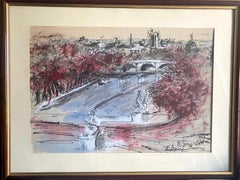
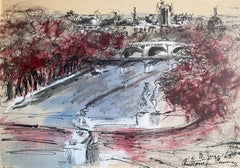
Experience the romance and abstraction of 1950s Paris through this striking original mixed media drawing by the acclaimed American Modernist, Frederick E. Conway (1900–1973). This c...

Category

Mid-20th Century American Modern Gisella Loeffler Art

Materials

Ink, Watercolor, Gouache

'Abstracted Figure', Sydney, Museum of Modern Art in Sao Paulo, Brazil

'Abstracted Figure', Sydney, Museum of Modern Art in Sao Paulo, Brazil

Located in Santa Cruz, CA

Signed lower right, 'Bonorat' and painted circa 1980 An elegant, modernist figural painting and early work by this Sydney-based Mexican artist who studied at the National School of Fine Arts in Mexico City (1982-84) and, subsequently, at the Museum of Modern Art in Sao Paulo, Brazil (1986). STUDIES 1982-1984 Painting and Drawing Ateliers – National School of Fine Arts, Mexico City 1985-1986 Artistic Experimentation – Carrillo Hill Museum, Mexico City 1986 Metal Engraving – Museum of Modern Art Sao Paulo Brazil SOLO EXHIBITIONS 1986 Art Gallery of Santos Municipal Cultural Centre, Sao Paulo, Brazil 1988 Art Gallery of Porto Alegre Municipal centre, R.S. Brazil 1991 Gallery Casa de la Cultura, Morelia Mexico 1994 The Beatty Gallery, Sydney 1996 The Beatty Gallery, Sydney 1996 Michael Burke Gallery, Brisbane 1997 The Beatty Gallery, Sydney 2019 ‘Golden Trinity’, Thienny Lee Gallery, Sydney 2019 ‘Continuous Thread, GAFFA Gallery, Sydney GROUP EXHIBITIONS 1985 Mail Art Network Kyoto City Museum, Kyoto Japan 1987 Banespa Cultural Centre, Sao Paulo Brazil 1988 IV National Contest of Fine Arts, Cubatao Brazil 1992 NCA Gallery, Sydney 1994 The Beatty Gallery, Sydney 1994/5/6 Selected for the “Fisher’s Ghost” Art...

Category

1980s Modern Gisella Loeffler Art

Materials

Paper, Ink, Watercolor, Gouache

Oil Pastel and Gouache Painting, Figurative, Circa 1950s, 14x17

Oil Pastel and Gouache Painting, Figurative, Circa 1950s, 14x17

By Donald Stacy

Located in Arp, TX

Donald Stacy "Mark" c.1950s Oil pastel and gouache paint on paper 14x17" unframed Unsigned Came from artist's estate Donald Stacy (1925-2011) New Jersey Studied: Newark School of ...

Category

Mid-20th Century Modern Gisella Loeffler Art

Materials

Paper, Oil Pastel, Gouache

Chicago Jewish Modernist Judaica Painting Simchat Torah WPA Artist Israeli Flags

Chicago Jewish Modernist Judaica Painting Simchat Torah WPA Artist Israeli Flags

By Alexander Raymond Katz

Located in Surfside, FL

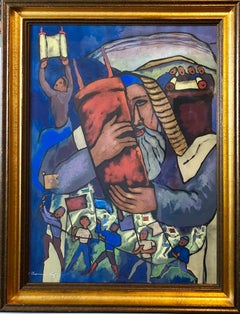
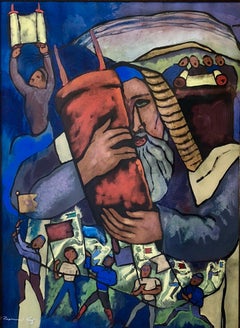
This has young ISraeli pioneers dancing with the flag as typical of works of the late British mandate Palestine era early state of Israel. Genre: Modern Subject: Figurative (stained glass style) Medium: Mixed media gouache on paper Hand signed lower left Alexander Raymond Katz, Hungarian / American (1895 – 1974) Alexander Raymond Katz was born in Kassa, Hungary, and came to the United States in 1909. He studied at the Art Institute of Chicago and the Chicago Academy of Fine Arts. In the late 1920s, he worked as a director of the Poster Department at Paramount Studios. He was appointed the Director of Posters for the Chicago Civic Opera in 1930. During the Great Depression, notable architect Frank Lloyd Wright urged Katz to become a muralist. In 1933, he was commissioned to paint a mural for the Century of Progress exposition in Chicago. In 1936, he painted the mural History of the Immigrant for the Madison, Ill., post office. Katz’s works were included in various exhibitions and now are part of several museum collections, including those of the Art Institute of Chicago; Corcoran Gallery of Art, Washington, D.C.; and the Jewish Museum, New York. His murals, bas-reliefs and stained glass designs adorn more than 200 Jewish synagogues in the United States. Katz and other Jewish artists in Chicago who expressed Jewish and Biblical themes were inspired by the artist Abel Pann (1883-1963). Pann, who is regarded as the leading painter of the Land of Israel, exhibited in the Art Institute of Chicago in 1920. Early in his career, Katz began to explore the artistic possibilities inherent in the characters of the Hebrew alphabet. He developed aesthetic and philosophical interpretations of each letter and became the leading innovator and pioneer in the field of Hebraic art. Katz applies this concept in the woodcut Moses and the Burning Bush. Hebrew letters appears in Moses’ head, his cane and inside the flame. The initial of Moses’ name crowns his head. The letter in the flame is the first letter of the name of God. A combination of images and Hebrew letters appeared commonly in illustrations of the scene Moses and the Burning Bush in the Haggadah, the book of Passover. The symbolism of the burning bush corresponds to the motifs of A Gift to Biro-Bidjan. Among the fourteen participating artists were notable Chicago modernists Todros Geller, Mitchell Siporin...

Category

Mid-20th Century Modern Gisella Loeffler Art

Materials

Paper, Gouache

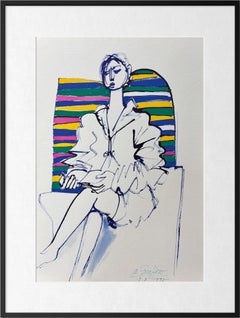
Pensive: Contemporary Mixed Media Figurative painting by John Emanuel

Pensive: Contemporary Mixed Media Figurative painting by John Emanuel

By John Emanuel

Located in Brecon, Powys

Less is more from the studio of John Emanuel Image 21" x 15" Originally from Bury, in the North of England, John Emanuel works in Porthmeor, Cornwall. He has received no formal art...

Category

21st Century and Contemporary Modern Gisella Loeffler Art

Materials

Gouache

WPA Mural Study Mid-Century Modern American Scene Social Realism Workers

WPA Mural Study Mid-Century Modern American Scene Social Realism Workers

By Anton Refregier

Located in New York, NY

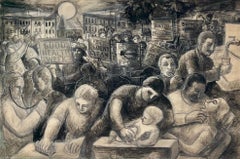
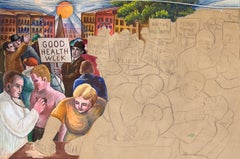
WPA Mural Study Mid-Century Modern American Scene Social Realism Workers Anton Refregier (1905-1979) Mural Study, Untitled 7 ¾ x 22 inches (sight) Gouache, pencil, and charcoal on board, c. 1940s Unsigned Provenance: Estate of Seymour Fogel, noted verso Thomas McCormick Gallery...

Category

1940s American Modern Gisella Loeffler Art

Materials

Charcoal, Gouache, Board, Pencil

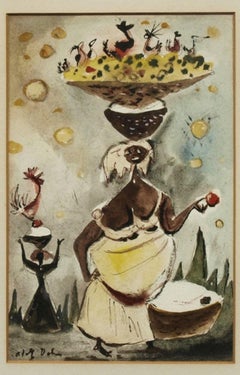
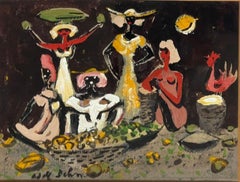
Adolf Dehn - Haitian Scene A signed painting, Associated American Artists, 1950s

Adolf Dehn - Haitian Scene A signed painting, Associated American Artists, 1950s

By Adolf Arthur Dehn

Located in New York, NY

Adolf Arthur Dehn Haitian Scene A, ca. 1951 Watercolor gouache on board Signed on the front Frame included: held in vintage modern frame Measurements: Framed: 11 inches vertical by ...

Category

1950s Modern Gisella Loeffler Art

Materials

Watercolor, Gouache, Board

Magazine Cover Illustration Mid 20th Century Modern Theatre Broadway Realism WPA

Magazine Cover Illustration Mid 20th Century Modern Theatre Broadway Realism WPA

By Ernest Hamlin Baker

Located in New York, NY

Magazine Cover Illustration Mid 20th Century Modern Theatre Broadway Realism WPA Ernest Hamlin Baker (1889 – 1975) “Today Magazine” Cover ...

Category

1930s American Modern Gisella Loeffler Art

Materials

Paper, Ink, Watercolor, Gouache

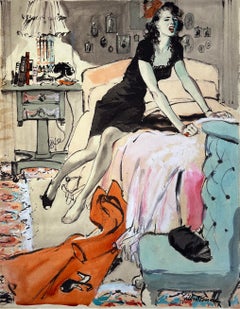
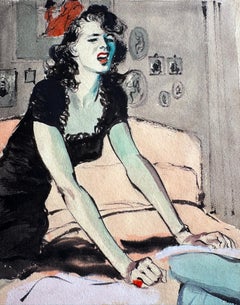
Love Hurts Mid Century Woman's Magazine Illustration Cosmopolitan Magazine

Love Hurts Mid Century Woman's Magazine Illustration Cosmopolitan Magazine

Located in Miami, FL

Love hurts. A young, attractive woman is captured in a moment of peak drama. She is leaning on her bed in her room, crying, her face grim with despair. A tear drop is seen below he...

Category

1940s American Modern Gisella Loeffler Art

Materials

Paper, Watercolor, Gouache, Pencil

'The Young Flute Player', Music, Woodwind Instrument

'The Young Flute Player', Music, Woodwind Instrument

By Julio Castillo

Located in Santa Cruz, CA

Signed lower right, "Julio Castillo" and painted circa 1960. A substantial, mid-century figural watercolor showing a boy playing the flute and a girl watching with rapt attention.

Category

1960s Modern Gisella Loeffler Art

Materials

Paper, Ink, Gouache

Three Boys, Modern Gouache Painting by Lucio Ranucci

Three Boys, Modern Gouache Painting by Lucio Ranucci

By Lucio Ranucci

Located in Long Island City, NY

Artist: Lucio Ranucci, Italian (1925 - ) Title: Three Boys Year: 1969 Medium: Gouache, signed and dated Image Size: 19 x 11.5 inches Frame Size: 29.5 x 22 inches

Category

1960s Modern Gisella Loeffler Art

Materials

Gouache

Modernist Judaica Jewish Ink Drawing Painting "New Immigrant" Off the Boat WPA

Modernist Judaica Jewish Ink Drawing Painting "New Immigrant" Off the Boat WPA

By Ben-Zion Weinman

Located in Surfside, FL

An ink drawing Judaic painting by modern artist Ben-Zion Weinman. It depicts a portrait of an old Jewish man. Coming over from Europe on a ship crossing. The work is signed "Ben-Zion". Born in 1897, Ben-Zion Weinman celebrated his European Jewish heritage in his visual works as a sculptor, painter, and printmaker. Influenced by Spinoza, Knut Hamsun, and Wladyslaw Reymont, as well as Hebrew literature, Ben-Zion wrote poetry and essays that, like his visual work, attempt to reveal the deep “connection between man and the divine, and between man and earth.” An emigrant from the Ukraine, he came to the US in 1920. He wrote fairy tales and poems in Hebrew under the name Benzion Weinman, but when he began painting he dropped his last name and hyphenated his first, saying an artist needed only one name. In 1920 he settled in America, where he found little interest in his writing. He began teaching Hebrew to support himself and then in the early 1930s returned to painting. He used his art to comment on the rise of fascism in Europe, events he felt could not be adequately explored with words. Largely self-taught, Ben-Zion visited the museums of New York City to learn his new trade. His first painting on a large scale, Friday Evening (1933, Jewish Museum, New York), depicts a Sabbath dinner table as recalled from his family home. Ben-Zion supported himself by working odd jobs until the establishment of the Works Progress Administration's Federal Art Project. Under the auspices of the wpa, Ben-Zion thrived and galleries began to show his work. In 1936, after his first one-man show at the Artists' Gallery in New York Ben-Zion was a founding member of “The Ten: An Independent Group” The Ten” a 1930’s...

Category

1940s American Modern Gisella Loeffler Art

Materials

Watercolor, Gouache

Previously Available Items
Little Native Girl
Little Native Girl

Little Native Girl

By Gisella Loeffler

Located in Missouri, MO

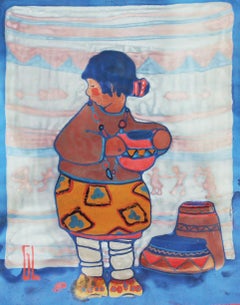
Gisella Loeffler "Little Native Girl" c. 1919 Gouache on Paper Initialed Lower Left Framed Size: approx 15 x 12 inches In a village filled with colorful characters, few Taos artists were as colorful as Gisella Loeffler [1900-1977]. From her handmade Austrian clothing and hand-painted furniture to whimsical paintings and letters written in multicolored crayon, joyful color defined the artist, who early on chose to use simply Gisella as her professional name and was known as such to everyone in Taos. 

In spite of her fame there—the Taos News once labeled her a Taos legend—Gisella is rarely included in scholarly discussions of the Taos Art Colony. This oversight is likely due to the naive quality of her work, in which children or childlike adults inhabit a simple, brightly colored world filled with happiness. The macabre, the sad, the tortured, the offensive—all have no place in Gisella’s paintings. Her naive style of work looks very different from that of the better-known early Taos artists. Yet both Gisella’s artwork and her interesting life command attention. Born in Austria, Gisella came to the United States with her family in 1908, settling in St. Louis, MO. After studying art at Washington University in St. Louis, she became a prominent member of the local art community, joining the St. Louis Art Guild as well as the Boston Society of Arts and Crafts. In addition to creating posters for the St. Louis Post Dispatch, Gisella won prizes from the Artists Guild of the Author’s League of America in 1919 and 1920 and from the Kansas City Art Institute in 1923. She also began working in textiles, including batik, to which she would return later in her career.  In the early 1920s Gisella married writer and music critic Edgar Lacher. A difficult character, Lacher may have chafed under Gisella’s success, for the couple divorced in the 1930s. Having seen a local exhibition of paintings by Taos artists Oscar Berninghaus (who was from St. Louis) and Ernest Blumenschein, Gisella felt drawn to Taos, which reminded her of the villages of her native Austria. In 1933 the single mother with two daughters, Undine and Aithra, moved to Taos, where she lived off and on for the rest of her life. She traveled frequently, spending extended periods in Mexico, South America, and California, but always returned to New Mexico. Gisella initially applied an Austro-Hungarian folk-art style to the Indian and Hispanic subjects that she found in New Mexico. In her early work she covered her surfaces with decorative floral and faunal motifs, and her images were flat with no attempt at rendering traditional one-point perspective. Eventually, though, Gisella developed her own style, often using children or childlike figures as subjects. Still, the influence of her native country’s folk art remained evident in her New Mexican, Mexican, and South American images. In 1938 Gisella moved briefly to Los Griegos, north of Albuquerque, to be closer to medical facilities for her eldest daughter, who was suffering from rheumatic fever. Two years later, she moved to California to participate in the war effort, painting camouflage and decals on airplanes for Lockheed. In California, Gisella broadened her range of artistic pursuits. She taught art privately, created illustrations for Scripts Magazine, and did interior design for private homes. She also designed greeting cards, a practice she continued after her return to New Mexico, where she created a series of Christmas cards.  Gisella began illustrating children’s books in 1941 when she collaborated on Franzi and Gizi with author Margery Bianco. Eventually she wrote and illustrated her own book, El Ekeko, in 1964. She also designed ceramics—her Happy Time Dinnerware, marketed by Poppy Trail...

Category

1910s Modern Gisella Loeffler Art

Materials

Gouache

Mother and Child In the Garden

Mother and Child In the Garden

By Gisella Loeffler

Located in Missouri, MO

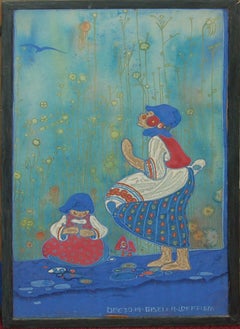
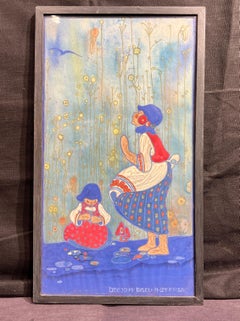
Gisella Loeffler "Mother and Child in the Gardenl" 1919 Gouache on Paper Initialed Lower Right Framed Size: approx 19 x 10 3/4 inches In a village filled with colorful characters, few Taos artists were as colorful as Gisella Loeffler [1900-1977]. From her handmade Austrian clothing and hand-painted furniture to whimsical paintings and letters written in multicolored crayon, joyful color defined the artist, who early on chose to use simply Gisella as her professional name and was known as such to everyone in Taos. 

In spite of her fame there—the Taos News once labeled her a Taos legend—Gisella is rarely included in scholarly discussions of the Taos Art Colony. This oversight is likely due to the naive quality of her work, in which children or childlike adults inhabit a simple, brightly colored world filled with happiness. The macabre, the sad, the tortured, the offensive—all have no place in Gisella’s paintings. Her naive style of work looks very different from that of the better-known early Taos artists. Yet both Gisella’s artwork and her interesting life command attention. Born in Austria, Gisella came to the United States with her family in 1908, settling in St. Louis, MO. After studying art at Washington University in St. Louis, she became a prominent member of the local art community, joining the St. Louis Art Guild as well as the Boston Society of Arts and Crafts. In addition to creating posters for the St. Louis Post Dispatch, Gisella won prizes from the Artists Guild of the Author’s League of America in 1919 and 1920 and from the Kansas City Art Institute in 1923. She also began working in textiles, including batik, to which she would return later in her career.  In the early 1920s Gisella married writer and music critic Edgar Lacher. A difficult character, Lacher may have chafed under Gisella’s success, for the couple divorced in the 1930s. Having seen a local exhibition of paintings by Taos artists Oscar Berninghaus (who was from St. Louis) and Ernest Blumenschein, Gisella felt drawn to Taos, which reminded her of the villages of her native Austria. In 1933 the single mother with two daughters, Undine and Aithra, moved to Taos, where she lived off and on for the rest of her life. She traveled frequently, spending extended periods in Mexico, South America, and California, but always returned to New Mexico. Gisella initially applied an Austro-Hungarian folk-art style to the Indian and Hispanic subjects that she found in New Mexico. In her early work she covered her surfaces with decorative floral and faunal motifs, and her images were flat with no attempt at rendering traditional one-point perspective. Eventually, though, Gisella developed her own style, often using children or childlike figures as subjects. Still, the influence of her native country’s folk art remained evident in her New Mexican, Mexican, and South American images. In 1938 Gisella moved briefly to Los Griegos, north of Albuquerque, to be closer to medical facilities for her eldest daughter, who was suffering from rheumatic fever. Two years later, she moved to California to participate in the war effort, painting camouflage and decals on airplanes for Lockheed. In California, Gisella broadened her range of artistic pursuits. She taught art privately, created illustrations for Scripts Magazine, and did interior design for private homes. She also designed greeting cards, a practice she continued after her return to New Mexico, where she created a series of Christmas cards.  Gisella began illustrating children’s books in 1941 when she collaborated on Franzi and Gizi with author Margery Bianco. Eventually she wrote and illustrated her own book, El Ekeko, in 1964. She also designed ceramics—her Happy Time Dinnerware, marketed by Poppy Trail...

Category

1910s Modern Gisella Loeffler Art

Materials

Gouache

Three Girls

Gisella LoefflerThree Girls, c. 1919

Sold

H 19 in W 13 in D 0.5 in

Three Girls

By Gisella Loeffler

Located in Missouri, MO

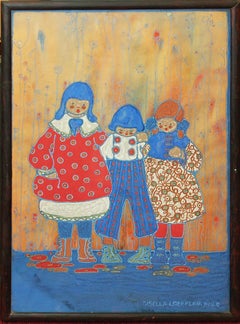
Gisella Loeffler "Three Girlsl" c. 1919 Gouache on Paper Initialed Lower Left Framed Size: approx 19 x 13 inches In a village filled with colorful characters, few Taos artists were as colorful as Gisella Loeffler [1900-1977]. From her handmade Austrian clothing and hand-painted furniture to whimsical paintings and letters written in multicolored crayon, joyful color defined the artist, who early on chose to use simply Gisella as her professional name and was known as such to everyone in Taos. 

In spite of her fame there—the Taos News once labeled her a Taos legend—Gisella is rarely included in scholarly discussions of the Taos Art Colony. This oversight is likely due to the naive quality of her work, in which children or childlike adults inhabit a simple, brightly colored world filled with happiness. The macabre, the sad, the tortured, the offensive—all have no place in Gisella’s paintings. Her naive style of work looks very different from that of the better-known early Taos artists. Yet both Gisella’s artwork and her interesting life command attention. Born in Austria, Gisella came to the United States with her family in 1908, settling in St. Louis, MO. After studying art at Washington University in St. Louis, she became a prominent member of the local art community, joining the St. Louis Art Guild as well as the Boston Society of Arts and Crafts. In addition to creating posters for the St. Louis Post Dispatch, Gisella won prizes from the Artists Guild of the Author’s League of America in 1919 and 1920 and from the Kansas City Art Institute in 1923. She also began working in textiles, including batik, to which she would return later in her career.  In the early 1920s Gisella married writer and music critic Edgar Lacher. A difficult character, Lacher may have chafed under Gisella’s success, for the couple divorced in the 1930s. Having seen a local exhibition of paintings by Taos artists Oscar Berninghaus (who was from St. Louis) and Ernest Blumenschein, Gisella felt drawn to Taos, which reminded her of the villages of her native Austria. In 1933 the single mother with two daughters, Undine and Aithra, moved to Taos, where she lived off and on for the rest of her life. She traveled frequently, spending extended periods in Mexico, South America, and California, but always returned to New Mexico. Gisella initially applied an Austro-Hungarian folk-art style to the Indian and Hispanic subjects that she found in New Mexico. In her early work she covered her surfaces with decorative floral and faunal motifs, and her images were flat with no attempt at rendering traditional one-point perspective. Eventually, though, Gisella developed her own style, often using children or childlike figures as subjects. Still, the influence of her native country’s folk art remained evident in her New Mexican, Mexican, and South American images. In 1938 Gisella moved briefly to Los Griegos, north of Albuquerque, to be closer to medical facilities for her eldest daughter, who was suffering from rheumatic fever. Two years later, she moved to California to participate in the war effort, painting camouflage and decals on airplanes for Lockheed. In California, Gisella broadened her range of artistic pursuits. She taught art privately, created illustrations for Scripts Magazine, and did interior design for private homes. She also designed greeting cards, a practice she continued after her return to New Mexico, where she created a series of Christmas cards.  Gisella began illustrating children’s books in 1941 when she collaborated on Franzi and Gizi with author Margery Bianco. Eventually she wrote and illustrated her own book, El Ekeko, in 1964. She also designed ceramics—her Happy Time Dinnerware, marketed by Poppy Trail...

Category

1910s Modern Gisella Loeffler Art

Materials

Gouache

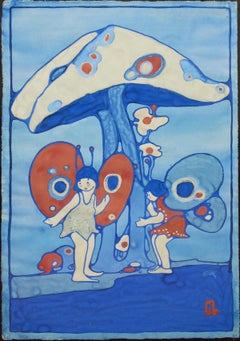
Mushroom Fairies

Gisella LoefflerMushroom Fairies, c. 1919

Sold

H 21 in W 13.75 in D 0.5 in

Mushroom Fairies

By Gisella Loeffler

Located in Missouri, MO

Gisella Loeffler "Mushroom Fairies" c. 1919 Gouache on Paper Initialed Lower Left Framed Size: approx 21 x 13 3/4 inches In a village filled with colorful characters, few Taos artists were as colorful as Gisella Loeffler [1900-1977]. From her handmade Austrian clothing and hand-painted furniture to whimsical paintings and letters written in multicolored crayon, joyful color defined the artist, who early on chose to use simply Gisella as her professional name and was known as such to everyone in Taos. 

In spite of her fame there—the Taos News once labeled her a Taos legend—Gisella is rarely included in scholarly discussions of the Taos Art Colony. This oversight is likely due to the naive quality of her work, in which children or childlike adults inhabit a simple, brightly colored world filled with happiness. The macabre, the sad, the tortured, the offensive—all have no place in Gisella’s paintings. Her naive style of work looks very different from that of the better-known early Taos artists. Yet both Gisella’s artwork and her interesting life command attention. Born in Austria, Gisella came to the United States with her family in 1908, settling in St. Louis, MO. After studying art at Washington University in St. Louis, she became a prominent member of the local art community, joining the St. Louis Art Guild as well as the Boston Society of Arts and Crafts. In addition to creating posters for the St. Louis Post Dispatch, Gisella won prizes from the Artists Guild of the Author’s League of America in 1919 and 1920 and from the Kansas City Art Institute in 1923. She also began working in textiles, including batik, to which she would return later in her career.  In the early 1920s Gisella married writer and music critic Edgar Lacher. A difficult character, Lacher may have chafed under Gisella’s success, for the couple divorced in the 1930s. Having seen a local exhibition of paintings by Taos artists Oscar Berninghaus (who was from St. Louis) and Ernest Blumenschein, Gisella felt drawn to Taos, which reminded her of the villages of her native Austria. In 1933 the single mother with two daughters, Undine and Aithra, moved to Taos, where she lived off and on for the rest of her life. She traveled frequently, spending extended periods in Mexico, South America, and California, but always returned to New Mexico. Gisella initially applied an Austro-Hungarian folk-art style to the Indian and Hispanic subjects that she found in New Mexico. In her early work she covered her surfaces with decorative floral and faunal motifs, and her images were flat with no attempt at rendering traditional one-point perspective. Eventually, though, Gisella developed her own style, often using children or childlike figures as subjects. Still, the influence of her native country’s folk art remained evident in her New Mexican, Mexican, and South American images. In 1938 Gisella moved briefly to Los Griegos, north of Albuquerque, to be closer to medical facilities for her eldest daughter, who was suffering from rheumatic fever. Two years later, she moved to California to participate in the war effort, painting camouflage and decals on airplanes for Lockheed. In California, Gisella broadened her range of artistic pursuits. She taught art privately, created illustrations for Scripts Magazine, and did interior design for private homes. She also designed greeting cards, a practice she continued after her return to New Mexico, where she created a series of Christmas cards.  Gisella began illustrating children’s books in 1941 when she collaborated on Franzi and Gizi with author Margery Bianco. Eventually she wrote and illustrated her own book, El Ekeko, in 1964. She also designed ceramics—her Happy Time Dinnerware, marketed by Poppy Trail...

Category

1910s Modern Gisella Loeffler Art

Materials

Gouache

Gisella Loeffler art for sale on 1stDibs.

Find a wide variety of authentic Gisella Loeffler art available for sale on 1stDibs. If you’re browsing the collection of art to introduce a pop of color in a neutral corner of your living room or bedroom, you can find work that includes elements of blue and other colors. You can also browse by medium to find art by Gisella Loeffler in gouache, paint, watercolor and more. Much of the original work by this artist or collective was created during the 1910s and is mostly associated with the modern style. Not every interior allows for large Gisella Loeffler art, so small editions measuring 11 inches across are available. Customers who are interested in this artist might also find the work of Daniel Ginsbourg, Jane Levy, and Florence E. Nosworthy.

Artists Similar to Gisella Loeffler