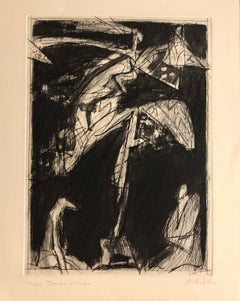
Will Petersen, a painter, master printer and a poet, was born in
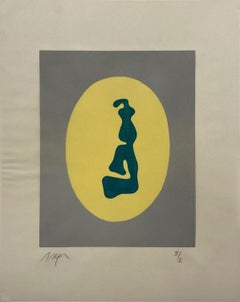
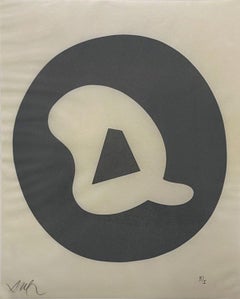
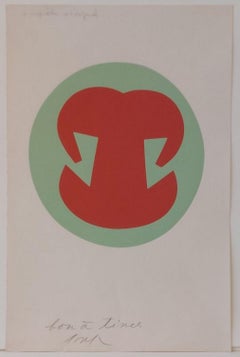
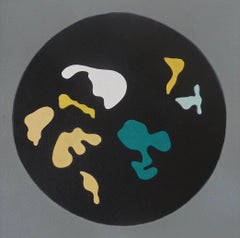
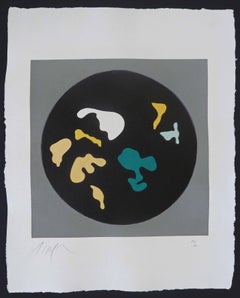
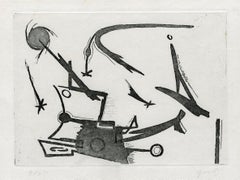
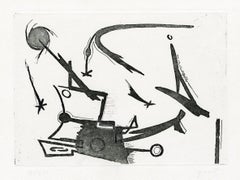
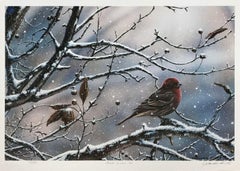
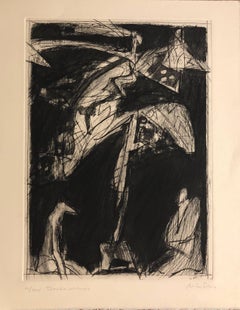
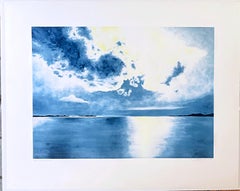
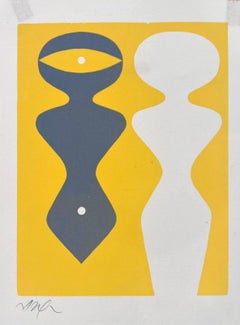
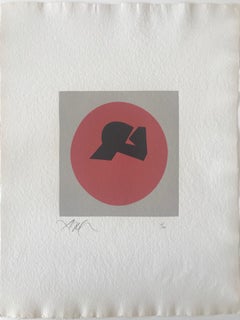
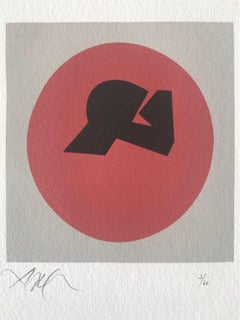
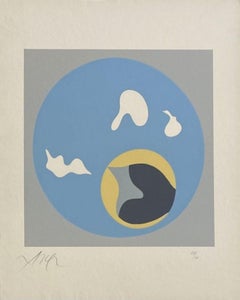
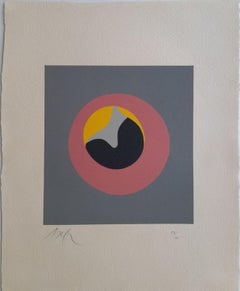
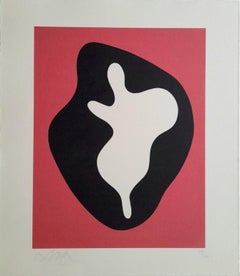
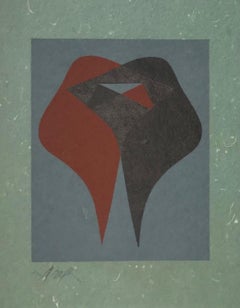
Chicago. (Amer. 1928-1994) created this limited edition Etching on Arches paper at
the Lakeside Studio.
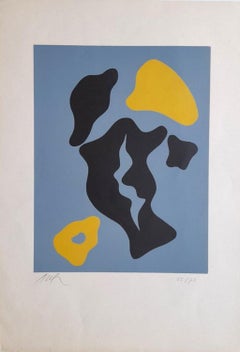
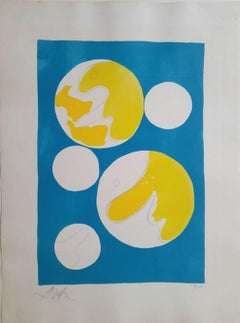
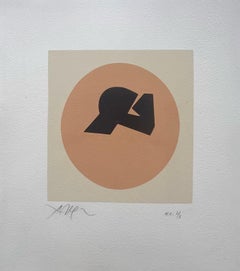
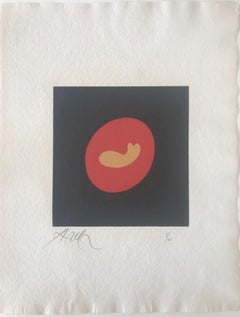
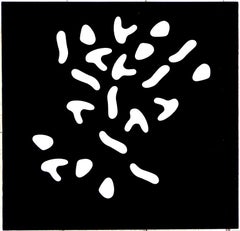
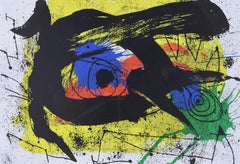
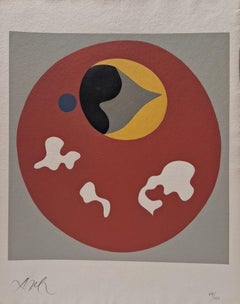
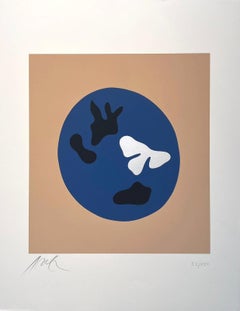
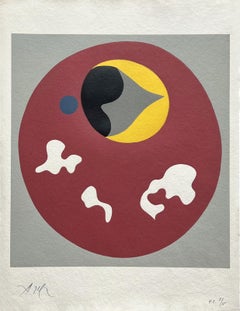
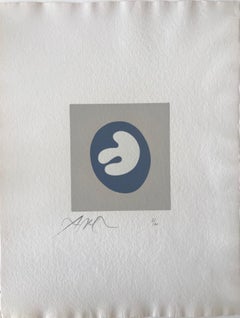
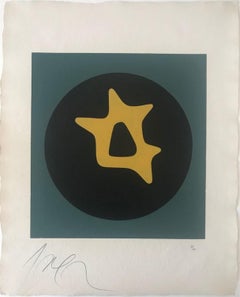
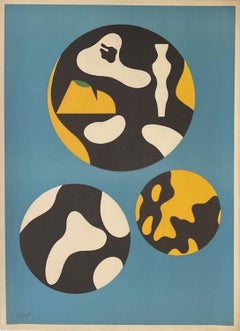
The LITHOGRAPH PRINT is from a limited edition of 25 (Roman Numerals),
printed in black on Arches Cover White (archival paper).
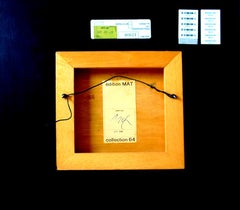
with chopmarks and blindstamps. published by The Lakeside Studio
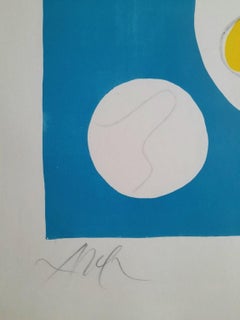
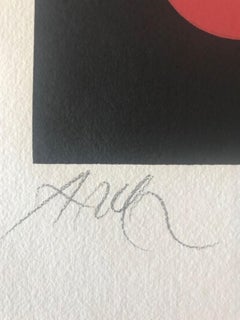
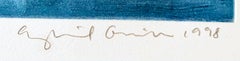
(chopmark lower right). THE LITHOGRAPH IS SIGNED TITLED AND ANNOTATED
BY THE ARTIST in pencil EXCELLENT condition.
Will's formal art education began with classes at the Chicago Academy
of Fine Arts. As a student at the city's Steinmetz High School,
Petersen succeeded Hugh Hefner (of Playboy magazine fame) as the HS
newspaper cartoonist, the Steinmetz Star. During this time, Petersen
recovered from polio.
In 1947 Petersen enrolled at Chicago's Wilbur Wright College. While
there, he painted with oils for the first time. Two years later he
enrolled at Michigan State University where he developed a strong
interest in literature and writing and began printmaking. By 1951 he
had begun to exhibit paintings and prints nationally. A year later he
completed his master's degree.
Petersen served in the United States Army from 1952-54, spending one
year as an education specialist in Japan. This encounter with the
Japanese culture affected his entire life. He became interested in
calligraphy and Noh, classical Japanese Buddhist performance that
combines elements of drama, music and poetry. Upon completion of his
military service in Japan in 1955, Will Petersen settled in Oakland,
California, where he met some of the most active poets of the Beat
Generation: Gary Snyder, Allen Ginsberg, Jack Kerouac, Phil Whalen,
Mike McClure and others. Petersen was attracted to the group by their
intelligence and belief in Zen Buddhism.
In 1956 in his small studio in Oakland, he printed the poems of Jack
Kerouac. He attended for the first time, the reading of Ginsberg's
Howl at Six Gallery. His relationship with Gary Snyder had begun when
both were in Kyoto, Japan; later Snyder wrote for the Plucked Chicken.
Petersen returned to Japan in 1957, pursuing painting, printmaking and
writing for eight years while living in Kyoto. In 1965 he accepted a
faculty appointment at Ohio State University, teaching drawing,
painting and printmaking. Four years later Petersen took his teaching
skills to West Virginia University in Morgantown, where he
concentrated on printmaking. He taught there until 1977 when he began
publishing Plucked Chicken, a journal of art and poetry. In 1978 in
Morgantown, Petersen and his wife, Cynthia Archer, established Plucked
Chicken Press, which they later moved to Chicago and then Evanston.
Petersen operated the Press until his death on April 1, 1994.
From 1955-57 Petersen along with Mel Strawn...
Category
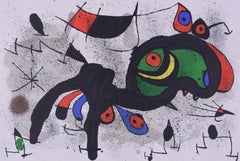
20th Century Abstract Expressionist Hans Arp Art
MaterialsEtching, Lithograph