Huong Paintings

3
Overall Width
to
Overall Height
to
3
3
2
3
2
2
2
1
1
1
3
3
3
3
3
789
759
754
665
3
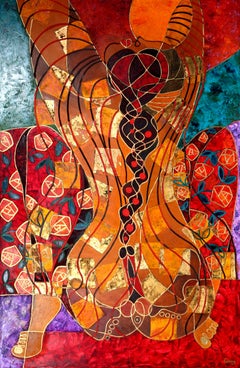
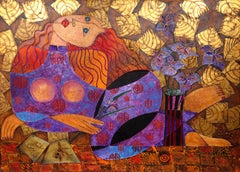
Artist: Huong
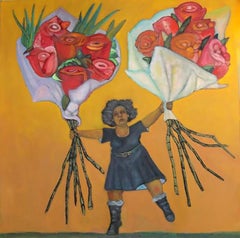
Lady Reaching for the Sun, Oil Painting by Huong

Lady Reaching for the Sun, Oil Painting by Huong

By Huong

Located in Long Island City, NY

Artist: Huong Title: Lady Reaching for the Sun Year: 1994 Medium: Oil on Canvas, signed Frame Size: 65 x 47 inches ; 119 x 165 cm

Category

1990s Folk Art Huong Paintings
Materials

Canvas, Oil

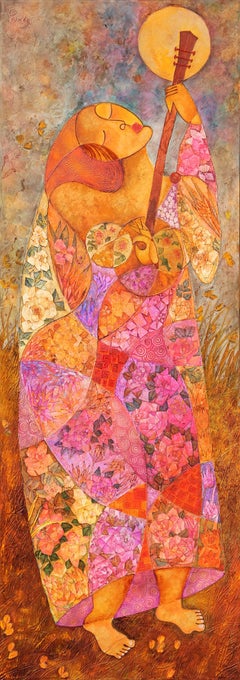
Woman with Instrument, Monumental Oil Painting by Huong

Woman with Instrument, Monumental Oil Painting by Huong

By Huong

Located in Long Island City, NY

Artist: Huong Title: Woman with Instrument Year: circa 1990 Medium: Oil on Canvas Size: 132 x 49 x 3 in. (335.28 x 124.46 x 7.62 cm)

Category

1990s Contemporary Huong Paintings

Materials

Canvas, Oil

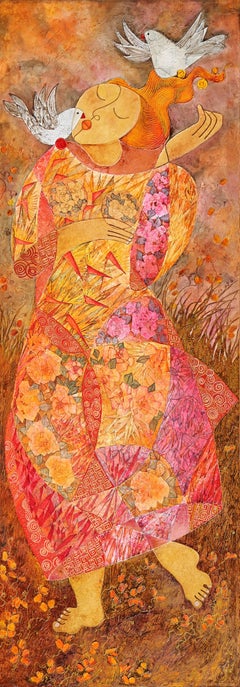
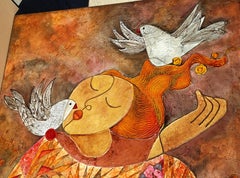
Woman with Doves, Monumental Oil Painting by Huong

Woman with Doves, Monumental Oil Painting by Huong

By Huong

Located in Long Island City, NY

Artist: Huong Title: Woman and Doves Year: circa 1990 Medium: Oil on Canvas Size: 132 x 49 x 3 in. (335.28 x 124.46 x 7.62 cm)

Category

1990s Contemporary Huong Paintings

Materials

Canvas, Oil

Related Items
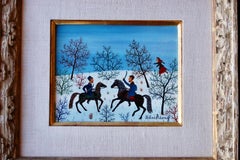
Large Naive European Folk Art Oil Painting Jovan Obican Klezmer Jazz Musician

Large Naive European Folk Art Oil Painting Jovan Obican Klezmer Jazz Musician

By Jovan Obican

Located in Surfside, FL

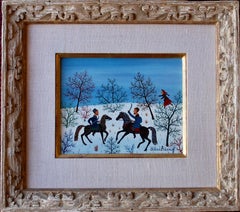
Genre: Other Subject: People Medium: Oil Surface: Canvas Dimensions: 35" x 16.5 Dimensions w/Frame: 35.5" x 17.25 This depicts a Jazz or Klezmer musician. This one is a banjo or guitar player. The last photo shows it in a group of three that I have available. This listing is for the one painting. The artist Jovan Obican iconic style is child-like yet masterfully adult; a style that tells a story with sociological overtones. His funny little people are always colorful, full of spirit, living with music and birds to bring them happiness. JOVAN OBICAN Cannes, France, b. 1918, d. 1986 Jovan Obican (1918-1986) artist, painter, sculpture and mosaic ceramic artisan was born in Cannes, France, to his Yugoslavian parents. From childhood on, Jovan practically devoted himself to art, scratching designs into the dirt when paper was unavailable. He trained with many recognized teachers and with many styles. He finished his training, imbued with the spirit of his native country, the people, their legends, and their philosophy. It has been said that his work has a "timeless quality" and a naive, folk art, outsider art brut quality, child-like primitive style. Obican is identified with his style the world over, a style that is simple yet sophisticated; child-like yet masterfully adult; a style that tells a story with psychological, philosophical or sociological overtones. His funny little people are always colorful, full of spirit, living with music and birds to bring them happiness. Best known for his depictions of folklore and traditional costumes rendered in a playful, childlike style and for his happy Jewish wedding scenes. He often used bright colors and black outlines in his renderings of figures and animals, giving his work an illustration-like quality. Thematically, the artist’s work is similar to Marc Chagall and Jean Dubuffet for its dreamlike images and so-called naïve style of painting. Over the course of his career, the artist maintained a studio in Boca Raton, Florida and Dubrovnik, Croatia—part of former Yugoslavia— where he developed an interest in Eastern Europe’s Jewish culture. Many of his mature works depict Jewish traditions and ceremonies, including traditional Jewish weddings, the dancing of the Hora, and traditional music. There is a display of his works in his former Dubrovnik studio. His style is a unique conglomerate of tradition, history, legends, heroes, old customs and folklore. It is a self-standing style, recognizable, cheerful, whimsical and a happy creation. Naïve art is any form of visual art that is created by a person who lacks the formal education and training that a professional artist undergoes (in anatomy, art history, technique, perspective, ways of seeing). Unlike folk art, naïve art does not necessarily evince a distinct cultural context or tradition. Naïve art is recognized, and often imitated, for its childlike simplicity and frankness. Paintings of this kind typically have a flat rendering style with a rudimentary expression of perspective. One particularly influential painter of "naïve art" was Henri Rousseau (1844–1910), a French Post-Impressionist who was discovered by Pablo Picasso. Naïve art is often seen as outsider art that is by someone without formal (or little) training or degree. While this was true before the twentieth century, there are now academies for naïve art. Naïve art is now a fully recognized art genre, represented in art galleries worldwide. Museums devoted to naïve art now exist in Kecskemét, Hungary; Riga, Latvia; Jaen, Spain; Rio de Janeiro, Brasil; Vicq France and Paris. "Primitive art" is another term often applied to art by those without formal training, but is historically more often applied to work from certain cultures that have been judged socially or technologically "primitive" by Western academia, such as Native American, sub saharan African or Pacific Island art (see Tribal art). This is distinguished from the self-conscious, "primitive" inspired movement primitivism. Another term related to (but not completely synonymous with) naïve art is folk art. There also exist the terms "naïvism" and "primitivism" which are usually applied to professional painters working in the style of naïve art (like Paul Gauguin, Mikhail Larionov, Paul Klee). At all events, naive art can be regarded as having occupied an "official" position in the annals of twentieth-century art since - at the very latest - the publication of the Der Blaue Reiter, an almanac in 1912. Wassily Kandinsky and Franz Marc, who brought out the almanac, presented 6 reproductions of paintings by le Douanier' Rousseau (Henri Rousseau), comparing them with other pictorial examples. However, most experts agree that the year that naive art was "discovered" was 1885, when the painter Paul Signac became aware of the talents of Henri Rousseau and set about organizing exhibitions of his work in a number of prestigious galleries. The Earth Group (Grupa Zemlja) were Croatian artists, architects and intellectuals active in Zagreb from 1929 to 1935. The group included the painters Krsto Hegedušić, Edo Kovačević, Omer Mujadžić, Kamilo Ružička, Ivan Tabaković, and Oton Postružnik, the sculptors Antun Augustinčić, Frano Kršinić, and the architect Drago Ibler. A term applied to Yugoslav (Croatian) naive painters working in or around the village of Hlebine, near the Hungarian border, from about 1930. Some of the best known naive artists are Dragan Gaži, Ivan Generalić, Josip Generalić, Krsto Hegedušić, Mijo Kovačić, Ivan Lacković-Croata, Franjo Mraz, Ivan Večenaj and Mirko Virius. Camille Bombois (1883–1970) Ferdinand Cheval, known as 'le facteur Cheval' (1836–1924) Henry Darger (1892–1973) L. S. Lowry (1887–1976) Grandma Moses, Anna Mary Robertson...

Category

20th Century Folk Art Huong Paintings
Materials

Canvas, Oil

Newlyn Harbour: Contemporary  Oil Painting

Newlyn Harbour: Contemporary Oil Painting

By Simeon Stafford

Located in Brecon, Powys

This is an archetypal Stafford painting. Cheery tugs and Cornish fishing boats bobbing about in the harbour as they busy themselves with their days routine and the townsfolk watching...

Category

21st Century and Contemporary Contemporary Huong Paintings

Materials

Canvas, Oil

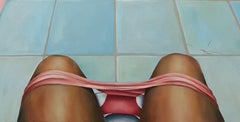
Large Naive European Folk Art Oil Painting Jovan Obican Klezmer Jazz Musician

Large Naive European Folk Art Oil Painting Jovan Obican Klezmer Jazz Musician

By Jovan Obican

Located in Surfside, FL

Genre: Other Subject: People Medium: Oil Surface: Canvas Dimensions: 35" x 16.5 Dimensions w/Frame: 35.5" x 17.25 This depicts a Jazz or Klezmer musician. This one is a bass player. The last photo shows it in a group of three that I have available. This listing is for the one painting. The artist Jovan Obican iconic style is child-like yet masterfully adult; a style that tells a story with sociological overtones. His funny little people are always colorful, full of spirit, living with music and birds to bring them happiness. JOVAN OBICAN Cannes, France, b. 1918, d. 1986 Jovan Obican (1918-1986) artist, painter, sculpture and mosaic ceramic artisan was born in Cannes, France, to his Yugoslavian parents. From childhood on, Jovan practically devoted himself to art, scratching designs into the dirt when paper was unavailable. He trained with many recognized teachers and with many styles. He finished his training, imbued with the spirit of his native country, the people, their legends, and their philosophy. It has been said that his work has a "timeless quality" and a naive, folk art, outsider art brut quality, child-like primitive style. Obican is identified with his style the world over, a style that is simple yet sophisticated; child-like yet masterfully adult; a style that tells a story with psychological, philosophical or sociological overtones. His funny little people are always colorful, full of spirit, living with music and birds to bring them happiness. Best known for his depictions of folklore and traditional costumes rendered in a playful, childlike style and for his happy Jewish wedding scenes. He often used bright colors and black outlines in his renderings of figures and animals, giving his work an illustration-like quality. Thematically, the artist’s work is similar to Marc Chagall and Jean Dubuffet for its dreamlike images and so-called naïve style of painting. Over the course of his career, the artist maintained a studio in Boca Raton, Florida and Dubrovnik, Croatia—part of former Yugoslavia— where he developed an interest in Eastern Europe’s Jewish culture. Many of his mature works depict Jewish traditions and ceremonies, including traditional Jewish weddings, the dancing of the Hora, and traditional music. There is a display of his works in his former Dubrovnik studio. His style is a unique conglomerate of tradition, history, legends, heroes, old customs and folklore. It is a self-standing style, recognizable, cheerful, whimsical and a happy creation. Naïve art is any form of visual art that is created by a person who lacks the formal education and training that a professional artist undergoes (in anatomy, art history, technique, perspective, ways of seeing). Unlike folk art, naïve art does not necessarily evince a distinct cultural context or tradition. Naïve art is recognized, and often imitated, for its childlike simplicity and frankness. Paintings of this kind typically have a flat rendering style with a rudimentary expression of perspective. One particularly influential painter of "naïve art" was Henri Rousseau (1844–1910), a French Post-Impressionist who was discovered by Pablo Picasso. Naïve art is often seen as outsider art that is by someone without formal (or little) training or degree. While this was true before the twentieth century, there are now academies for naïve art. Naïve art is now a fully recognized art genre, represented in art galleries worldwide. Museums devoted to naïve art now exist in Kecskemét, Hungary; Riga, Latvia; Jaen, Spain; Rio de Janeiro, Brasil; Vicq France and Paris. "Primitive art" is another term often applied to art by those without formal training, but is historically more often applied to work from certain cultures that have been judged socially or technologically "primitive" by Western academia, such as Native American, sub saharan African or Pacific Island art (see Tribal art). This is distinguished from the self-conscious, "primitive" inspired movement primitivism. Another term related to (but not completely synonymous with) naïve art is folk art. There also exist the terms "naïvism" and "primitivism" which are usually applied to professional painters working in the style of naïve art (like Paul Gauguin, Mikhail Larionov, Paul Klee). At all events, naive art can be regarded as having occupied an "official" position in the annals of twentieth-century art since - at the very latest - the publication of the Der Blaue Reiter, an almanac in 1912. Wassily Kandinsky and Franz Marc, who brought out the almanac, presented 6 reproductions of paintings by le Douanier' Rousseau (Henri Rousseau), comparing them with other pictorial examples. However, most experts agree that the year that naive art was "discovered" was 1885, when the painter Paul Signac became aware of the talents of Henri Rousseau and set about organizing exhibitions of his work in a number of prestigious galleries. The Earth Group (Grupa Zemlja) were Croatian artists, architects and intellectuals active in Zagreb from 1929 to 1935. The group included the painters Krsto Hegedušić, Edo Kovačević, Omer Mujadžić, Kamilo Ružička, Ivan Tabaković, and Oton Postružnik, the sculptors Antun Augustinčić, Frano Kršinić, and the architect Drago Ibler. A term applied to Yugoslav (Croatian) naive painters working in or around the village of Hlebine, near the Hungarian border, from about 1930. Some of the best known naive artists are Dragan Gaži, Ivan Generalić, Josip Generalić, Krsto Hegedušić, Mijo Kovačić, Ivan Lacković-Croata, Franjo Mraz, Ivan Večenaj and Mirko Virius. Camille Bombois (1883–1970) Ferdinand Cheval, known as 'le facteur Cheval' (1836–1924) Henry Darger (1892–1973) L. S. Lowry (1887–1976) Grandma Moses, Anna Mary Robertson...

Category

20th Century Folk Art Huong Paintings
Materials

Canvas, Oil

July Verge, Rupert Aker, Original painting, Landscape art, Cotswolds landscape

July Verge, Rupert Aker, Original painting, Landscape art, Cotswolds landscape

By Rupert Aker

Located in Deddington, GB

July Verge by Rupert Aker [2022] original and hand signed by the artist Oil on board Image size: H:30 cm x W:30 cm Complete Size of Unframed Work: H:30 cm x W:30 cm x D:2cm Frame Si...

Category

21st Century and Contemporary Contemporary Huong Paintings

Materials

Canvas, Oil

Great St Bernard N10 by Calo Carratalá - Mountain Landscape Painting, Alps

Great St Bernard N10 by Calo Carratalá - Mountain Landscape Painting, Alps

By Calo Carratalá

Located in Paris, FR

Great St Bernard N10 from the Snow collection is a painting by contemporary Spanish artist Calo Carratalá. Dimensions are 54 × 81 cm (21.2 × 31.8 in). The artwork is signed, sold un...

Category

2010s Contemporary Huong Paintings

Materials

Canvas, Oil

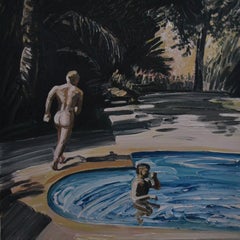
Don't let the sun blast your shadow- 21st Century Painting of a Nude Boy

Don't let the sun blast your shadow- 21st Century Painting of a Nude Boy

By David van der Linden

Located in Nuenen, Noord Brabant

David van der Linden 'Don't let the sun blast your shadow'' 100 x 100 cm Oil on canvas framed in a black wooden frame (included in price) 115x115 cm David van der Linden is a Dutch...

Category

2010s Contemporary Huong Paintings

Materials

Canvas, Oil

Fire, 120x90 cm, oil, acrylic, coal, canvas

Anastasia SavenkoFire, 120x90 cm, oil, acrylic, coal, canvas

$3,375Sale Price|25% Off

H 47.25 in W 35.44 in

Fire, 120x90 cm, oil, acrylic, coal, canvas

By Anastasia Savenko

Located in Yerevan, AM

Fire, 120x90 cm, oil, acrylic, coal, canvas

Category

2010s Contemporary Huong Paintings

Materials

Canvas, Oil, Acrylic

The Gift Of The Two Lines Small Oil Painting

The Gift Of The Two Lines Small Oil Painting

Located in Lake Worth Beach, FL

The Gift Of The Two Lines Born on March 21, 1906, in Moscow, she arrived as an emigrant to Paris at the age of 15, bearing in her young experience, the weight of the most transformi...

Category

1960s Folk Art Huong Paintings
Materials

Cotton Canvas, Oil

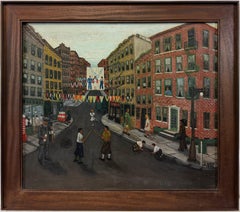
Naive European French Folk Art Jovan Lazar Obican Tapestry Wall Hanging Weaving

Naive European French Folk Art Jovan Lazar Obican Tapestry Wall Hanging Weaving

Located in Surfside, FL

Lazar Obican 1944-2004 Tapestry, mixed media applique on woven background Taking The Bird Away, Folk Art, Dimensions: H 80 cm (32.25 in.) x W 58 cm (23in.) The artist Lazar Obican iconic style is child-like yet masterfully adult; a style that tells a story with sociological overtones. His funny little people are always colorful, full of spirit, living with music and birds to bring them happiness. This is not an aubusson style but a pieced applique, quilt like style on a wool woven background. Mid century modern textile art...

Category

Mid-20th Century Folk Art Huong Paintings
Materials

Canvas, Oil

Previously Available Items
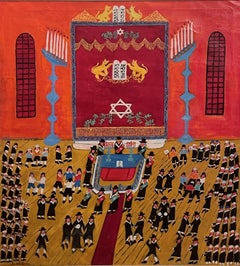
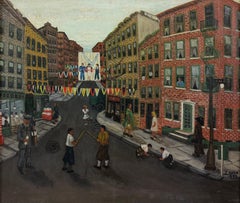
Woman and Vase
Woman and Vase

HuongWoman and Vase, 1993

Sold

H 47 in W 65 in

Woman and Vase

By Huong

Located in Long Island City, NY

Artist: Huong, Vietnamese/American Title: Woman and Vase Year: 1993 Medium: Oil on Canvas, signed Frame Size: 47 x 65 inches / 119 x 165 cm

Category

1990s Folk Art Huong Paintings
Materials

Canvas, Oil

Huong paintings for sale on 1stDibs.

Find a wide variety of authentic Huong paintings available for sale on 1stDibs. If you’re browsing the collection of paintings to introduce a pop of color in a neutral corner of your living room or bedroom, you can find work that includes elements of orange, red and other colors. You can also browse by medium to find art by Huong in canvas, fabric, oil paint and more. Much of the original work by this artist or collective was created during the 1990s and is mostly associated with the contemporary style. Not every interior allows for large Huong paintings, so small editions measuring 47 inches across are available. Customers who are interested in this artist might also find the work of Jaimendes, Wilson Bigaud, and Martine Barnard.