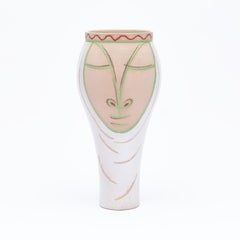
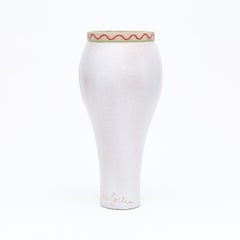
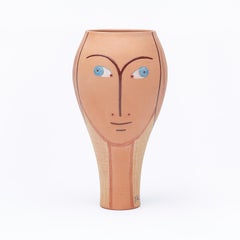
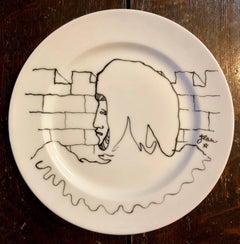
Jean Cocteau Figurative Sculptures

French

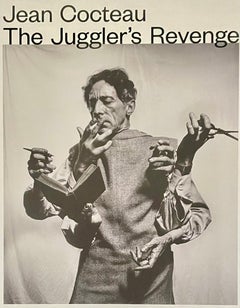
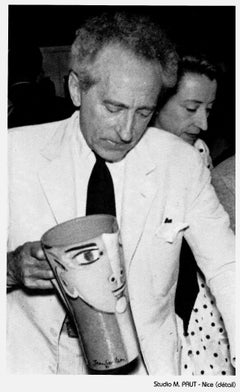
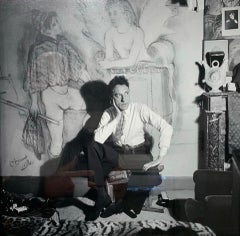
Jean Cocteau was a French painter, poet, designer, printmaker, playwright and filmmaker. He is one of the most important figures of French Surrealism, although he always denied being in any way connected to the movement.

Cocteau was born to a socially prominent Parisian family. His father, George Cocteau, was an amateur painter who committed suicide when Jean was only a child. Jean became famous in Bohemian circles as "The Frivolous Prince." In 1912, he collaborated with the Ballets Russes. After World War I, Cocteau met the poet Guillaume Apollinaire and the artist Pablo Picasso. In 1917, thanks to Sergei Diaghilev, a Russian impresario, Cocteau wrote a scenario for the ballet Parade — the set of this important ballet was realized by Pablo Picasso and the music was composed by Erik Satie. In the late 1920s, Cocteau wrote the libretto for Igor Stravinsky’s opera-oratorio Oedipus Rex. In 1918, he met the French poet Raymond Radiguet. They worked and went on many journeys together, and Cocteau promoted his friend's works in his artistic group.

Cocteau is well-known for his novel Les Enfants Terribles (1929) and the films The Blood of a Poet, Beauty and the Beast and Orpheus. During World War II, he created sets for the Théâtre de la Mode. In 1955, he was elected to the Académie Française and the Royal Academy of Science, Letters and Fine Arts of Belgium. He was commander of the Legion of Honour, a member of the Academié Mallarmé, the Academy of Arts (Berlin) and the American Academy of Arts and Sciences.

Find Jean Cocteau art today on 1stDibs.

to
3
9
Overall Width
to
Overall Height
to
9
1
7
1
6
1
1
5
2
2
2
2
2
2
1
1
1
1
1
1
1
1
1
1
1
1
1
8
1
320
141
113
91
72
9
Artist: Jean Cocteau
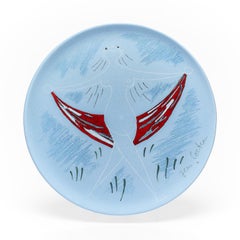
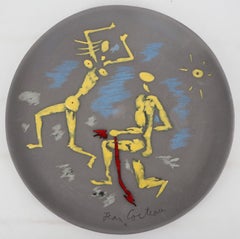
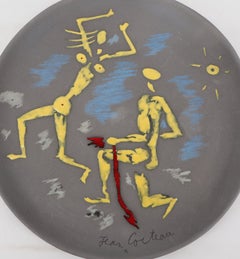
Atalanta and Hippomenes - Original signed ceramic, Certificate

Atalanta and Hippomenes - Original signed ceramic, Certificate

By Jean Cocteau

Located in Paris, IDF

Jean COCTEAU Atalanta and Hippomenes, 1958 Original ceramic plate Signed bottom middle Limited to 20 copies, numbered on the back 30 cm (c. 12 inch) diameter and about 3cm (c. 1.5 ...

Category

1950s Modern Jean Cocteau Figurative Sculptures

Materials

Ceramic

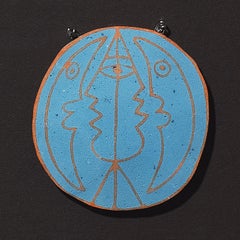
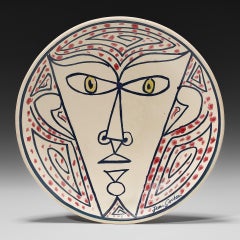
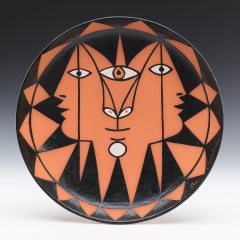
Trois Faces aux Triangles Ceramic Sculpture, Art Deco, Signed, 1959

Trois Faces aux Triangles Ceramic Sculpture, Art Deco, Signed, 1959

By Jean Cocteau

Located in CANNES, FR

Jean Cocteau ( 1889 -1963 ) " Trois faces aux triangles " signed Jean Cocteau . plat en terracotta et engobe partiellement émaillé . diamètre : 36cm . exécuté en 1959 dans une sér...

Category

1950s Art Deco Jean Cocteau Figurative Sculptures

Materials

Ceramic

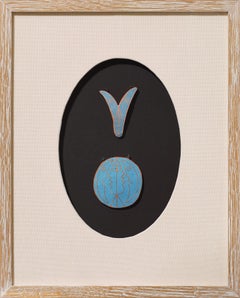
Vé et Astrology Ceramic Pendant, Art Deco, Signed, 1950s, 7x5.5 cm

Vé et Astrology Ceramic Pendant, Art Deco, Signed, 1950s, 7x5.5 cm

By Jean Cocteau

Located in CANNES, FR

Jean Cocteau ( 1889 - 1963 ) Vé and Astrology ceramic's pendant : Vé : signed underneath White 1ere variant ( Terre blanche en relief ). page 212 Size: 7 x5.5 cm catalogue rai...

Category

1950s Art Deco Jean Cocteau Figurative Sculptures

Materials

Ceramic

Tête d'Homme Ceramic Sculpture, Art Deco, Unique Prototype, 1961

Tête d'Homme Ceramic Sculpture, Art Deco, Unique Prototype, 1961

By Jean Cocteau

Located in CANNES, FR

Jean Cocteau ( 1889 - 1963 ) " Tête d'Homme " . 1961 . Coupe 36 cm . Terre blanche Emaux : Bleu nuit , jaune et bordeaux . Tirage : initialement prévu à 25 exemplaires modifié ...

Category

1960s Art Deco Jean Cocteau Figurative Sculptures

Materials

Ceramic

Centurion Dadaist Sculpture, Plaster, Circa 1928, Certified, Unframed

Centurion Dadaist Sculpture, Plaster, Circa 1928, Certified, Unframed

By Jean Cocteau

Located in CANNES, FR

Jean Cocteau ( 1889 - 1963 ) " Centurion " . " Unic work dadaist " circa 1928 . certifié par Madame Annie Guédras en décembre 2004 . ( certificat joint en photo )

Category

1920s Dada Jean Cocteau Figurative Sculptures

Materials

Plaster

Visage Ceramic Sculpture by Jean Cocteau, Art Deco, Signed, 6/30, 1958

Visage Ceramic Sculpture by Jean Cocteau, Art Deco, Signed, 6/30, 1958

By Jean Cocteau

Located in CANNES, FR

JEAN COCTEAU (1889 - 1963 ) " Visage " signed : " jean Cocteau "( lower left ) inscribed and numbered 6/30 édition originale de jean Cocteau . Atelier Madeline -Jolly ( undern...

Category

1950s Art Deco Jean Cocteau Figurative Sculptures

Materials

Ceramic

Ceramic Sculpture Pendant 'Vé & Astrology' Blue, Art Deco, 7cm

Ceramic Sculpture Pendant 'Vé & Astrology' Blue, Art Deco, 7cm

By Jean Cocteau

Located in CANNES, FR

Jean Cocteau ( 1889 -1963 ) Vé : (& Astrology ) ( Blue variant ) . 1958 . 4éme variante : terre incrustée blanche et bleue Size : 7 cm . Signed underneath . Astrology : Penden...

Category

1950s Art Deco Jean Cocteau Figurative Sculptures

Materials

Ceramic

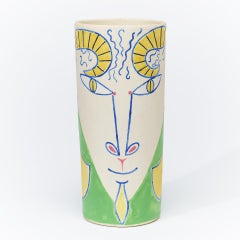
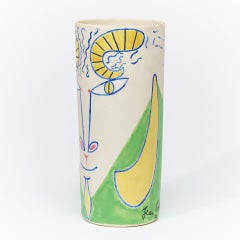
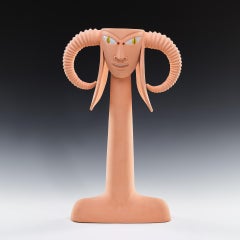
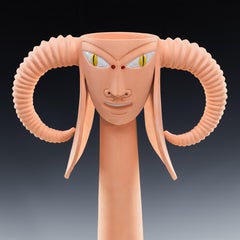
Bélier aux Cornes Jaunes Ceramic Sculpture, Art Deco, Signed, 1958

Bélier aux Cornes Jaunes Ceramic Sculpture, Art Deco, Signed, 1958

By Jean Cocteau

Located in CANNES, FR

Jean Cocteau ( 1889 - 1963 ) " Bélier aux cornes jaunes " vase cylindrique . Hauteur 24cm Année 1958 . ouverture 11 cm . Tirage à 15 exemplaires N° 13 / 15 . signé Jean Coc...

Category

1950s Art Deco Jean Cocteau Figurative Sculptures

Materials

Ceramic

Original Ceramic Pendant Set: Chèvre-Pied & Double Masque, 1958

Original Ceramic Pendant Set: Chèvre-Pied & Double Masque, 1958

By Jean Cocteau

Located in CANNES, FR

Jean Cocteau (1889-1963) céramiques originales de Jean Cocteau . Pendentifs : "Chèvre-pied " 1958. pendentif ovale (9cm x7cm) . variante terre blanche en relief. " double masque " 1...

Category

1950s Surrealist Jean Cocteau Figurative Sculptures

Materials

Ceramic

Related Items
An Evening in 1922, Erté

ErtéAn Evening in 1922, Erté, 1982

$3,000Sale Price|20% Off

H 17 in W 5 in

An Evening in 1922, Erté

By Erté

Located in Fairfield, CT

Artist: Erte, Romain de Tirtoff (1892-1990) Title: An Evening in 1922 Year: 1982 Medium: Bronze Edition: 61/250 Numbered, 12 AP, 9 HC Size: 17 inches Condition: Excellent Inscription...

Category

1980s Art Deco Jean Cocteau Figurative Sculptures

Materials

Bronze

Juggler / - Artistic naturalness -

Juggler / - Artistic naturalness -

Located in Berlin, DE

Claire Jeanne Robertine Colinet (1880 Brussels - 1950 Asnières-sur-Seine), Juggler, around 1920. Brownish patinated bronze with gilded balls on a round, multi-profiled stone base (10...

Category

1920s Art Deco Jean Cocteau Figurative Sculptures

Materials

Bronze

Marcel Duchamp - Estate Authorized Bicycle Wheel replica Philadelphia Art Museum

Marcel Duchamp - Estate Authorized Bicycle Wheel replica Philadelphia Art Museum

By Marcel Duchamp

Located in New York, NY

After Marcel Duchamp Bicycle Wheel replica from the Philadelphia Museum (estate authorized), 2002 Wheel and painted wood. In original box 11 × 6 1/2 × 3 4/5 inches In original box pr...

Category

Early 2000s Dada Jean Cocteau Figurative Sculptures

Materials

Metal

Elegance, Erté
Elegance, Erté

ErtéElegance, Erté, 1982

$13,200Sale Price|20% Off

H 15 in W 5 in

Elegance, Erté

By Erté

Located in Fairfield, CT

Artist: Erte, Romain de Tirtoff (1892-1990) Title: Elegance Year: 1982 Medium: Bronze Edition: 100/250 Numbered, 12 AP, 9 HC Size: 15 inches Condition: Excellent Inscription: Incised...

Category

1980s Art Deco Jean Cocteau Figurative Sculptures

Materials

Bronze

1920s Italian Art Decò Signed Bronze Sculpture Nude of Woman

1920s Italian Art Decò Signed Bronze Sculpture Nude of Woman

By Gaetano Martinez

Located in Roma, IT

Wonderful Italian sculpture representing a seated maiden. The artwork rests on a square marble base Signed on the base “Gaetano Martinez Roma” According a written opinion by Prof. Al...

Category

1920s Art Deco Jean Cocteau Figurative Sculptures

Materials

Marble, Bronze

Art Nouveau Relief Sculpture, Plaster, Signed, 1896, Woman in Mussel

Art Nouveau Relief Sculpture, Plaster, Signed, 1896, Woman in Mussel

Located in Stockholm, SE

A wall-mounted Art Nouveau relief by the Swedish sculptor Johannes Collin, signed “JC 96”, represents one of his earliest known works. Executed in plaster, the oval composition features a stylistically mussel shaped base from which emerges the finely modelled face of a young woman with long flowing hair. Her eyes are closed, conveying a sense of calm introspection and timeless beauty. The softly curved forms and delicate modelling create a serene harmony between natural rhythm and sculptural precision. The work is mounted on a later black-painted wooden plaque (26 × 33 cm), while the sculpture itself measures 21 × 18.5 cm. It is an unusually early piece by the artist, displaying craftsmanship and sensitivity. Born in Stockholm in 1873, Johannes Collin trained as a sculptor during the final years of the 19th century, a period marked by the transition from academic historicism to the organic, nature-inspired forms of Art Nouveau (Jugendstil). His early works, such as this 1896 relief, already reveal a refined awareness of contour, proportion, and the poetic interplay between human expression and natural form. Collin studied at the Royal Swedish Academy of Fine Arts (Kungliga Akademien för de fria konsterna) in Stockholm, where he was influenced by sculptors such as John Börjeson and Christian Eriksson. Over the following decades, he developed a personal style that combined naturalistic modelling with decorative rhythm and symbolic depth. He participated in exhibitions at the Konstakademien in Stockholm, in shows organized by the Swedish Artists’ Association (Svenska konstnärernas förening), and at the Baltic Exhibition in Malmö (1914)—one of the era’s major showcases of Scandinavian art and design. Throughout his career, Collin produced portraits, allegorical figures, and architectural sculpture in plaster, bronze, marble, and terracotta. His works are represented in several Swedish collections, including the Nationalmuseum in Stockholm and the Göteborgs konstmuseum, as well as in regional museums and private collections. About Art Nouveau / Jugend Art Nouveau, known in Sweden and Germany as Jugendstil, was an international artistic movement (c. 1890–1910) that sought to unite the arts under the guiding principle of nature’s harmony. Characterized by flowing lines, floral motifs, and organic rhythms, it aimed to dissolve the boundaries between fine and decorative art, bringing art into everyday life. In sculpture, this often meant a focus on the human body, sensual form, and the beauty of natural curves. Within this aesthetic, Collin’s relief of a woman’s face emerging from a mussel-shaped base carries both mythological and symbolic resonance. The motif recalls the classical image of Venus rising from the sea...

Category

1890s Art Nouveau Jean Cocteau Figurative Sculptures

Materials

Plaster

KAWS - Limited Edition Historic 1st Companion ever uniquely Hand Signed & Dated

KAWS - Limited Edition Historic 1st Companion ever uniquely Hand Signed & Dated

By KAWS

Located in New York, NY

KAWS VERY FIRST COMPANION - HISTORIC Uniquely Hand signed by the artist. (the regular edition was unsigned) KAWS Limited Edition 1st Companion (Hand Signed by KAWS), 1999 Painted Ca...

Category

1990s Street Art Jean Cocteau Figurative Sculptures

Materials

Resin, Mixed Media

Face, 1968-1969
Face, 1968-1969

Pablo PicassoFace, 1968-1969, 1968-69

$12,000Sale Price|20% Off

H 6.75 in W 6.75 in

Face, 1968-1969

By Pablo Picasso

Located in Palo Alto, CA

A whimsical portrait in vivid colors, this work appeals to our response to color, texture, depth and space. There is a wonderful interplay between ...

Category

1960s Modern Jean Cocteau Figurative Sculptures

Materials

Clay, Earthenware, Glaze

Woman's Head, Decorated with Flowers, Ceramic by Pablo Picasso 1954

Woman's Head, Decorated with Flowers, Ceramic by Pablo Picasso 1954

By Pablo Picasso

Located in Long Island City, NY

Pablo Picasso, considered the greatest artist of the 20th Century, was a master of all art mediums. He collaborated with Madoura to produce editions of his painted ceramic works beginning in the 1940’s...

Category

1950s Modern Jean Cocteau Figurative Sculptures

Materials

Ceramic

Relining Nude (WG6)
Relining Nude (WG6)

Waylande GregoryRelining Nude (WG6), 1950's

$2,000

H 12 in W 14 in D 8.5 in

Relining Nude (WG6)

By Waylande Gregory

Located in Wilton Manors, FL

Waylande Gregory (1905-1971). Nude Reclining, ca. 1950's. Painted composite cast from original sculpted in 1930's. Casting sanctioned and approved by the artist during his lifetime in partnership with MPI, Museum Pieces Incorporated. Very few examples were produced and even fewer survive. Waylande Gregory was considered a major American sculptor during the 1930's, although he worked in ceramics, rather than in the more traditional bronze or marble. Exhibiting his ceramic works at such significant American venues for sculpture as the Whitney Museum of American Art in New York City and at the venerable Pennsylvania Academy of the Fine Arts in Philadelphia, he also showed his ceramic sculptures at leading New York City galleries. Gregory was the first modern ceramist to create large scale ceramic sculptures, some measuring more than 70 inches in height. Similar to the technique developed by the ancient Etruscans, he fired his monumental ceramic sculptures only once. Gregory was born in 1905 in Baxter Springs, Kansas and was something of a prodigy. Growing up on a ranch near a Cherokee reservation, Gregory first became interested in ceramics as a child during a native American burial that he had witnessed. He was also musically inclined. In fact, his mother had been a concert pianist and had given her son lessons. At eleven, he was enrolled as a student at the Kansas State Teacher's College, where he studied carpentry and crafts, including ceramics. Gregory's early development as a sculptor was shaped by the encouragement and instruction of Lorado Taft, who was considered both a major American sculptor as well as a leading American sculpture instructor. In fact, Taft's earlier students included such significant sculptors as Bessie Potter Vonnoh and Janet Scudder. But, Taft and his students had primarily worked in bronze or stone, not in clay; and, Gregory's earliest sculptural works were also not in ceramics. In 1924, Gregory moved to Chicago where he caught the attention of Taft. Gregory was invited by Taft to study with him privately for 18 months and to live and work with him at his famed "Midway Studios." The elegant studio was a complex of 13 rooms that overlooked a courtyard. Taft may have been responsible for getting the young man interested in creating large scale sculpture. However, by the 1920's, Taft's brand of academic sculpture was no longer considered progressive. Instead, Gregory was attracted to the latest trends appearing in the United States and Europe. In 1928 he visited Europe with Taft and other students. "Kid Gregory," as he was called, was soon hired by Guy Cowan, the founder of the Cowan Pottery in Cleveland, Ohio, to become the company's only full time employee. From 1928 to 1932, Gregory served as the chief designer and sculptor at the Cowan Pottery. Just as Gregory learned about the process of creating sculpture from Taft, he literally learned about ceramics from Cowan. Cowan was one of the first graduates of Alfred, the New York School of Clayworking and Ceramics. Alfred had one of the first programs in production pottery. Cowan may have known about pottery production, but he had limited sculptural skills, as he was lacking training in sculpture. The focus of the Cowan Pottery would be on limited edition, table top or mantle sculptures. Two of the most successful of these were Gregory's Nautch Dancer, and his Burlesque Dancer. He based both sculptures on the dancing of Gilda Gray, a Ziegfield Follies girl. Gilda Gray was of Polish origin and came to the United States as a child. By 1922, she would become one of the most popular stars in the Follies. After losing her assets in the stock market crash of 1929, she accepted other bookings outside of New York, including Cleveland, which was where Gregory first saw her onstage. She allowed Gregory to make sketches of her performances from the wings of the theatre. She explained to Gregory, "I'm too restless to pose." Gray became noted for her nautch dance, an East Indian folk dance. A nautch is a tight, fitted dress that would curl at the bottom and act like a hoop. This sculpture does not focus on Gray's face at all, but is more of a portrait of her nautch dance. It is very curvilinear, really made of a series of arches that connect in a most feminine way. Gregory created his Burlesque Dancer at about the same time as Nautch Dancer. As with the Nautch Dancer, he focused on the movements of the body rather than on a facial portrait of Gray. Although Gregory never revealed the identity of his model for Burlesque Dancer, a clue to her identity is revealed in the sculpture's earlier title, Shimmy Dance. The dancer who was credited for creating the shimmy dance was also Gilda Gray. According to dance legend, Gray introduced the shimmy when she sang the Star Spangled Banner and forgot some of the lyrics, so, in her embarrassment, started shaking her shoulders and hips but she did not move her legs. Such movement seems to relate to the Burlesque Dancer sculpture, where repeated triangular forms extend from the upper torso and hips. This rapid movement suggests the influence of Italian Futurism, as well as the planar motion of Alexander Archipenko, a sculptor whom Gregory much admired. The Cowan Pottery was a victim of the great depression, and in 1932, Gregory changed careers as a sculptor in the ceramics industry to that of an instructor at the Cranbrook Academy in Bloomfield Hills, Michigan. Cranbrook was perhaps the most prestigious place to study modern design in America. Its faculty included the architect Eliel Saarinen and sculptor Carl Milles. Although Gregory was only at Cranbrook for one and one half years, he created some of his finest works there, including his Kansas Madonna. But, after arriving at Cranbrook, the Gregory's had to face emerging financial pressures. Although Gregory and his wife were provided with complimentary lodgings, all other income had to stem from the sale of artworks and tuition from students that he, himself, had to solicit. Gregory had many people assisting him with production methods at the Cowan Pottery, but now worked largely by himself. And although he still used molds, especially in creating porcelain works, many of his major new sculptures would be unique and sculpted by hand, as is true of Kansas Madonna. The scale of Gregory's works were getting notably larger at Cranbrook than at Cowan. Gregory left the surface of Kansas Madonna totally unglazed. Although some might object to using a religious title to depict a horse nursing its colt, it was considered one of Gregory's most successful works. In fact, it had a whole color page illustration in an article about ceramic sculpture titled, "The Art with the Inferiority Complex," Fortune Magazine, December, 1937. The article notes the sculpture was romantic and expressive and the sculpture was priced at $1,500.00; the most expensive sculpture...

Category

1950s Art Deco Jean Cocteau Figurative Sculptures

Materials

Plaster

Previously Available Items
"Grand Chèvre-cou"  Poem-object  MUSEUM piece

"Grand Chèvre-cou" Poem-object MUSEUM piece

By Jean Cocteau

Located in CANNES, FR

Jean Cocteau. ( 1889-1963 ) Grand Chèvre - Cou . " Poem -Objet " Signed Jean Cocteau at the base ; incised and dated Jean Cocteau 58. marked and numbered Edition originale de jean Co...

Category

1950s Surrealist Jean Cocteau Figurative Sculptures

Materials

Ceramic

original ceramic Vase  " Médiévale "  Menton's museum

original ceramic Vase " Médiévale " Menton's museum

By Jean Cocteau

Located in CANNES, FR

" Médievale " is a ceramic Vase signed Jean Cocteau at the base , marked and numbered Edition originale de Jean Cocteau Atelier Madeline -Jolly (Underneath ). partially glazed terrac...

Category

Mid-20th Century Art Deco Jean Cocteau Figurative Sculptures

Materials

Ceramic

original ceramic Vase " Iphigénie  " . signed .

original ceramic Vase " Iphigénie " . signed .

By Jean Cocteau

Located in CANNES, FR

" Iphigénie " is a red earthenware turned Vase painted in colored enamels with crayons d'oxyde additions . signed in black enamel at the base and inscribed "edition originale de Jean...

Category

1950s Art Deco Jean Cocteau Figurative Sculptures

Materials

Ceramic

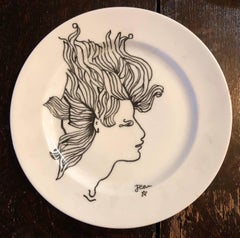
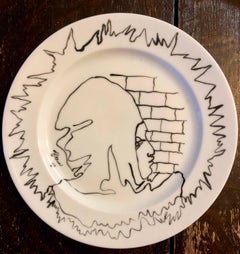
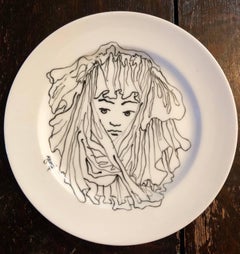
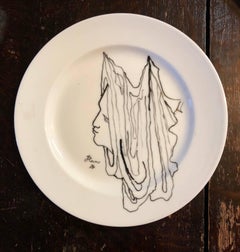
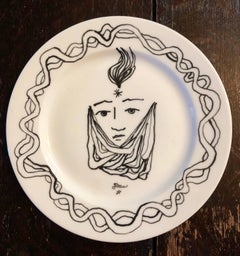
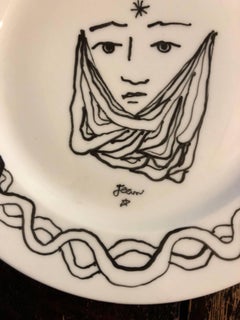
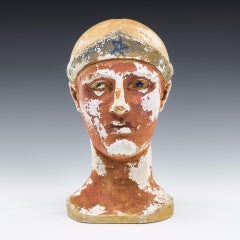
Porcelain Plate With Cocteau Art Deco Surrealist Design Drawing Christofle

Porcelain Plate With Cocteau Art Deco Surrealist Design Drawing Christofle

By Jean Cocteau

Located in Surfside, FL

Signed Edite par Christofle. They also did artist plate collaborations with Gio Ponti and Man Ray. Cocteay also did some with Limoges, France. This is just signed Jean with his trademark star. Jean Maurice Eugène Clément Cocteau (French, 1889 – 1963) was a French poet, writer, designer, playwright, artist, scuplture, painting, drawing, Photograph Aubusson Tapestry and ilIustration plus award winning filmmaker. Cocteau is best known for his novel Les Enfants Terribles (1929), and the films The Blood of a Poet (1930), Les Parents Terribles (1948), Beauty and the Beast (1946) and Orpheus (1949). His circle of associates, friends included Pablo Picasso, Joan Miró, Salvador Dalí, Gertrude Stein, Marlene Dietrich, Coco Chanel, Erik Satie, Albert Gleizes, Igor Stravinsky, Marie Laurencin, Edith Piaf, Colette, and Jean Genet. In his early twenties, Cocteau became associated with the writers Marcel Proust, André Gide, and Maurice Barrès. In 1912, he collaborated with Léon Bakst on Le Dieu bleu for the Ballets Russes; the principal dancers being Tamara Karsavina...

Category

1950s Surrealist Jean Cocteau Figurative Sculptures
Materials

Porcelain

Porcelain Plate With Cocteau Art Deco Surrealist Design Drawing Christofle

Porcelain Plate With Cocteau Art Deco Surrealist Design Drawing Christofle

By Jean Cocteau

Located in Surfside, FL

Signed Edite par Christofle. They also did artist plate collaborations with Gio Ponti and Man Ray. Cocteay also did some with Limoges, France. This is just signed Jean with his trademark star. Jean Maurice Eugène Clément Cocteau (French, 1889 – 1963) was a French poet, writer, designer, playwright, artist, scuplture, painting, drawing, Photograph Aubusson Tapestry and ilIustration plus award winning filmmaker. Cocteau is best known for his novel Les Enfants Terribles (1929), and the films The Blood of a Poet (1930), Les Parents Terribles (1948), Beauty and the Beast (1946) and Orpheus (1949). His circle of associates, friends included Pablo Picasso, Joan Miró, Salvador Dalí, Gertrude Stein, Marlene Dietrich, Coco Chanel, Erik Satie, Albert Gleizes, Igor Stravinsky, Marie Laurencin, Edith Piaf, Colette, and Jean Genet. In his early twenties, Cocteau became associated with the writers Marcel Proust, André Gide, and Maurice Barrès. In 1912, he collaborated with Léon Bakst on Le Dieu bleu for the Ballets Russes; the principal dancers being Tamara Karsavina...

Category

1950s Surrealist Jean Cocteau Figurative Sculptures
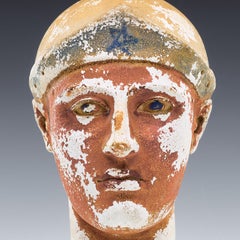
Materials

Porcelain

Porcelain Plate With Cocteau Art Deco Surrealist Design Drawing Christofle

Porcelain Plate With Cocteau Art Deco Surrealist Design Drawing Christofle

By Jean Cocteau

Located in Surfside, FL

Signed Edite par Christofle. They also did artist plate collaborations with Gio Ponti and Man Ray. Cocteay also did some with Limoges, France. This is just signed Jean with his trade...

Category

1950s Surrealist Jean Cocteau Figurative Sculptures

Materials

Porcelain

Porcelain Plate With Cocteau Art Deco Surrealist Design Drawing Christofle

Porcelain Plate With Cocteau Art Deco Surrealist Design Drawing Christofle

By Jean Cocteau

Located in Surfside, FL

Signed Edite par Christofle. They also did artist plate collaborations with Gio Ponti and Man Ray. Cocteay also did some with Limoges, France. This is just signed Jean with his trade...

Category

1950s Surrealist Jean Cocteau Figurative Sculptures

Materials

Porcelain

Porcelain Plate With Cocteau Art Deco Surrealist Design Drawing Christofle

Porcelain Plate With Cocteau Art Deco Surrealist Design Drawing Christofle

By Jean Cocteau

Located in Surfside, FL

Signed Edite par Christofle. They also did artist plate collaborations with Gio Ponti and Man Ray. Cocteay also did some with Limoges, France. This is just signed Jean with his trademark star. Jean Maurice Eugène Clément Cocteau (French, 1889 – 1963) was a French poet, writer, designer, playwright, artist, scuplture, painting, drawing, Photograph Aubusson Tapestry and ilIustration plus award winning filmmaker. Cocteau is best known for his novel Les Enfants Terribles (1929), and the films The Blood of a Poet (1930), Les Parents Terribles (1948), Beauty and the Beast (1946) and Orpheus (1949). His circle of associates, friends included Pablo Picasso, Joan Miró, Salvador Dalí, Gertrude Stein, Marlene Dietrich, Coco Chanel, Erik Satie, Albert Gleizes, Igor Stravinsky, Marie Laurencin, Edith Piaf, Colette, and Jean Genet. In his early twenties, Cocteau became associated with the writers Marcel Proust, André Gide, and Maurice Barrès. In 1912, he collaborated with Léon Bakst on Le Dieu bleu for the Ballets Russes; the principal dancers being Tamara Karsavina...

Category

1950s Surrealist Jean Cocteau Figurative Sculptures

Materials

Porcelain

Christofle Porcelain Plate With Cocteau Art Deco Design Drawing

Christofle Porcelain Plate With Cocteau Art Deco Design Drawing

By Jean Cocteau

Located in Surfside, FL

Signed Edite par Christofle. They also did artist plate collaborations with Gio Ponti and Man Ray. Cocteay also did some with Limoges, France. This is just signed Jean with his trade...

Category

1950s Surrealist Jean Cocteau Figurative Sculptures
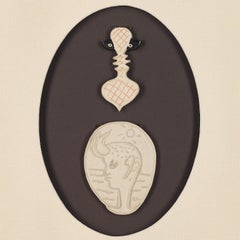
Materials

Porcelain

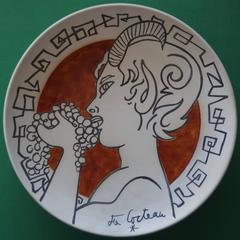
Faun Eating Grappes - Tall original ceramic dish - Signed, Ltd 15 copies

Faun Eating Grappes - Tall original ceramic dish - Signed, Ltd 15 copies

By Jean Cocteau

Located in Paris, IDF

Jean COCTEAU Faun Eating Grappes / Faune aux raisins (1962) Tall original ceramic dish Original designed created by Jean Cocteau Crafted under the control of Cocteau in Jolly &...

Category

1960s Realist Jean Cocteau Figurative Sculptures
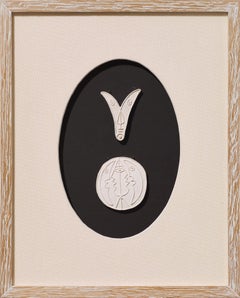
Materials

Ceramic

Danseuse - Tall original ceramic dish - Signed, Ltd 15 copies - Certificate 1961

Danseuse - Tall original ceramic dish - Signed, Ltd 15 copies - Certificate 1961

By Jean Cocteau

Located in Paris, IDF

Jean COCTEAU Danseuse (1961) Tall original ceramic dish Original designed created by Jean Cocteau Crafted under the control of Cocteau in Jolly & Madeline workshop in Villefran...

Category

1960s Realist Jean Cocteau Figurative Sculptures
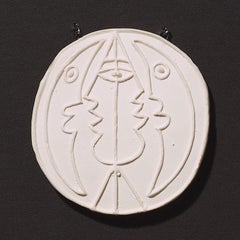
Materials

Ceramic

Jean Cocteau figurative sculptures for sale on 1stDibs.

Find a wide variety of authentic Jean Cocteau figurative sculptures available for sale on 1stDibs. You can also browse by medium to find art by Jean Cocteau in ceramic and more. Much of the original work by this artist or collective was created during the 1950s and is mostly associated with the Art Deco style. Not every interior allows for large Jean Cocteau figurative sculptures, so small editions measuring 3 inches across are available. Customers who are interested in this artist might also find the work of Arieh Merzer, Chaim Gross, and Robert Russin. Jean Cocteau figurative sculptures prices can differ depending upon medium, time period and other attributes. On 1stDibs, the price for these items starts at $5,391 and tops out at $10,440, while the average work can sell for $8,105.
Questions About Jean Cocteau Figurative Sculptures
  • 1stDibs ExpertAugust 8, 2024
    Yes, Jean Cocteau was a Surrealist. In fact, he is one of the most important figures of French Surrealism. However, the French painter, poet, designer, printmaker, playwright and filmmaker always denied being in any way connected to the movement. On 1stDibs, find a collection of Jean Cocteau art from some of the world's top dealers and galleries.
  • 1stDibs ExpertApril 5, 2022
    Jean Cocteau was a man of many talents and was known for his paintings, poetry, screenplays and novels. He also was a director and sometimes an actor. Considered some of his most important works are the poem L'Ange Heurtebise, the novel Les Enfants Terribles, the play Orphée, and the movie La Belle et la Bête. Find an assortment of Cocteau art from the world’s top sellers on 1stDibs.
  • 1stDibs ExpertMarch 15, 2024
    What movement Jean Cocteau was a part of is open to debate. The French artist and writer is today thought of as one of the most important figures of French Surrealism. However, he always denied being in any way connected to the movement. As a result, some people simply classify his work as modernism. On 1stDibs, explore an assortment of Jean Cocteau art.