Jim Dine Abstract Paintings

American, b. 1935

The Ohio-born artist Jim Dine brought his ever-shifting, multidisciplinary vision to New York in 1958, a time of transition in the American art world. Abstract Expressionism, which had dominated the scene for years, was on the wane, and a group of young artists, including Dine, Allan Kaprow, Jasper Johns and Robert Rauschenberg, was eager to replace it with a movement that flipped the traditional rules of art-making on their head.

Beyond dissolving the boundaries between mediums and genres, attaching found objects and detritus to their canvases, these revolutionaries began staging performative “happenings” in public spaces, redefining the very definition of a work of art. As Pop art took form, Dine used objects with personal significance, like his paintbrushes, to transform his paintings into two-dimensional sculptures. He was included in the Norton Simon Museum’s 1962 “New Painting of Objects,” often considered the first true Pop art exhibition in America, but he remained a chameleon, constantly changing his style, material and technique.

More than his contemporaries, Dine has forged new paths in drawing, scrawling words and names across the canvas to create graphic, abstract landscapes. He is obsessed by certain motifs — such as hearts and his own bathrobe — which recur in various forms throughout his oeuvre. He has occasionally worked in classical genres, such as portraiture, as exemplified by the 1980 aquatint Nancy Outside in July. He has also co-opted the bold, graphic vocabulary of advertising and commercials, as in the sleek 2010 composition Gay Laughter at the Wake.

Find Jim Dine prints and other art on 1stDibs.

to
1
Overall Width
to
Overall Height
to
1
1
1
1
1
1
1
1
1
158
670
644
560
336
1
1
Artist: Jim Dine
Double Silver Point Robes

Double Silver Point Robes

By Jim Dine

Located in Palm Desert, CA

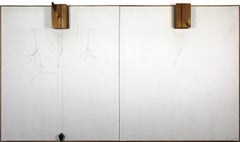
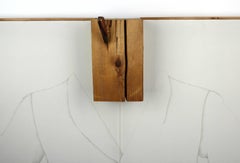
A mixed media artwork by Jim Dine. A silverpoint and acrylic on 2 joined canvases, wood, knife, and string in artist's frame work by Post War artist Jim Dine. "Double Silver Point Robes" depicts the outline of two robes in silverpoint on a white acrylic painted ground. Jim Dine's use of his favorite bathrobe, a frequent image in his works, is a self portrait which connects an everyday object and imbues it with meaning. This Robe painting was part of the first exhibition of Robe paintings at Sidney Janis...

Category

1960s Post-War Jim Dine Abstract Paintings

Materials

Canvas, Wood, Acrylic

Related Items
"Carmel California" Impressionist Landscape

"Carmel California" Impressionist Landscape

By Forrest Moses

Located in Austin, TX

By Forrest Moses (American, b. 1934) Carmel California, 1967 Medium: Oil on Canvas Size: 18" x 24" Framed Size: 22.5" x 28.5" Signed: front, bottom ...

Category

1960s Post-War Jim Dine Abstract Paintings

Materials

Canvas, Oil

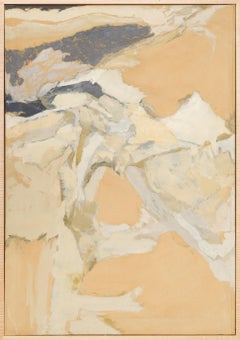
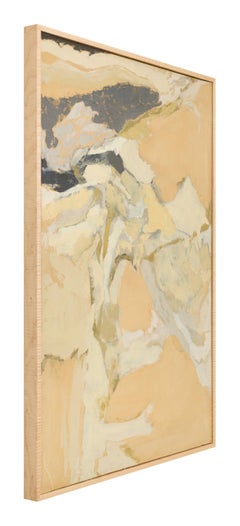
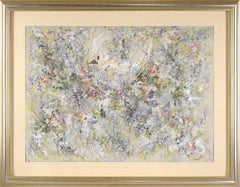
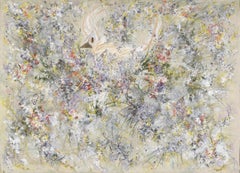
Heavily Textured Abstract Expressionist Composition in Oil on Canvas

Heavily Textured Abstract Expressionist Composition in Oil on Canvas

Located in Soquel, CA

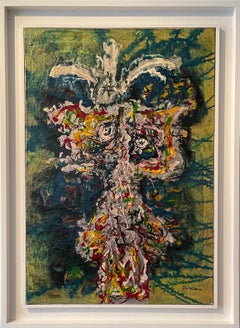
Heavily Textured Abstract Expressionist Composition in Oil on Canvas Bold, textured, abstract composition by California artist Harald "Harry" Dry Schmidt (American, 1933-1979). Brig...

Category

1970s Post-War Jim Dine Abstract Paintings

Materials

Canvas, Oil, Stretcher Bars

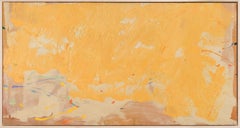
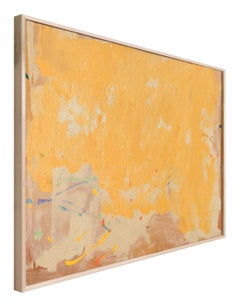
Yellow Tail I
Yellow Tail I

Sherron FrancisYellow Tail I, 1979

$24,000

H 40 in W 76.5 in

Yellow Tail I

By Sherron Francis

Located in Austin, TX

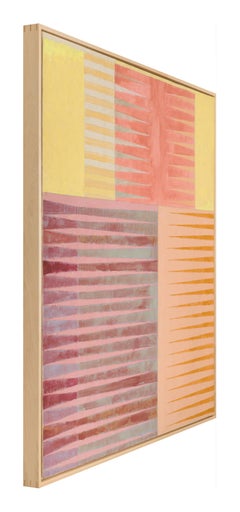
Waterline Fine Art, Austin, TX is pleased to present the following work: Acrylic and mixed media on canvas. Signed, titled, and dated verso. 40 x 76.5 in. 41.75 x 78.25 in. (framed) Custom framed in a solid, unfinished maple floater. Provenance Watson/de Nagy & Company, Houston Private Collection, New York Sherron Francis was born in 1940, in Downers Grove, IL outside of Chicago. She originally enrolled at the University of Oklahoma, but later transferred to the Kansas City Art Institute to focus more on art. Initially, Francis' practice was focused on figurative art, with visiting professor and renowned modern realist Philip Pearlstein remarking on Francis’ draftsman acumen. In the early 1960s, art dealers and gallerists from New York would visit the Institute to entice promising artists by offering scholarships and financial aid. Because such financial arrangements were only made for men, Francis had to persuade the school's leadership to allow for women to also be eligible for merit-based aid. Her advocacy was successful, and she ultimately graduated from the Kansas City Art Institute in 1963. She would then proceed to obtain her MFA from the University of Indiana, before assuming a teaching position at Eastern Michigan University. In 1968, with only $300 on hand, Francis moved to 16 Waverly Place in SoHo, New York. The neighborhood was a hotbed for young AbEx artists of the day, and she quickly befriended the likes of Peter Reginato, Walter Darby Bannard, Michael Steiner, Peter Young, Peter Bradley...

Category

1970s Post-War Jim Dine Abstract Paintings

Materials

Canvas, Mixed Media, Acrylic
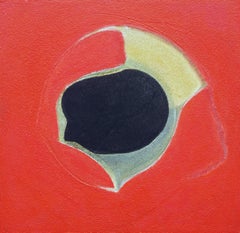
Warm Beach (#108)
Warm Beach (#108)

Joyce KozloffWarm Beach (#108), 1970

$48,000

H 59 in W 58.5 in

Warm Beach (#108)

By Joyce Kozloff

Located in Austin, TX

Acrylic and graphite on canvas. Signed and titled verso. 59 x 58.5 in. 61 x 60.25 in. (framed) Custom framed in a maple floater with a polyurethane clear coat finish. Provenance B...

Category

1970s Post-War Jim Dine Abstract Paintings

Materials

Canvas, Acrylic, Graphite

Color Block Geometric Abstract in Acrylic on Canvas

Color Block Geometric Abstract in Acrylic on Canvas

Located in Soquel, CA

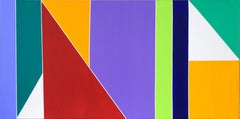
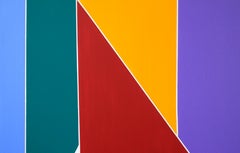
Color Block Geometric Abstract in Acrylic on Canvas Bright, balanced composition by an unknown artist (20th Century). This piece is minimalist in design but maximalist in color - bo...

Category

21st Century and Contemporary Post-War Jim Dine Abstract Paintings

Materials

Canvas, Acrylic, Stretcher Bars

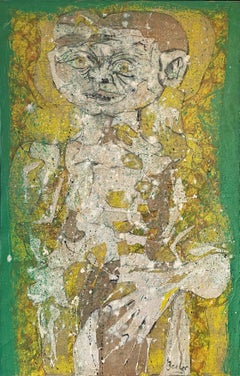
"Boy from Mansos, " Karl Zerbe, Green Figurative "Degenerate" Art Collage

"Boy from Mansos, " Karl Zerbe, Green Figurative "Degenerate" Art Collage

By Karl Zerbe

Located in New York, NY

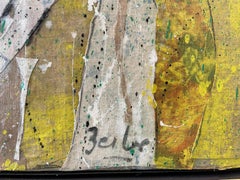
Karl Zerbe (1903 - 1972) Boy from Mansos, 1963 Collage and acrylic on canvas 35 x 23 inches Signed lower right Provenance: Lee Nordness Galleries, New York Karl Zerbe was born on September 16, 1903 in Berlin, Germany. The family lived in Paris, France from 1904–1914, where his father was an executive in an electrical supply concern. In 1914 they moved to Frankfurt, Germany where they lived until 1920. Karl Zerbe studied chemistry in 1920 at the Technische Hochschule in Friedberg, Germany. From 1921 until 1923 he lived in Munich, where he studied painting at the Debschitz School, mainly under Josef Eberz. From 1924 until 1926 Karl Zerbe worked and traveled in Italy on a fellowship from the City of Munich. In 1932 his oil painting titled, ‘’Herbstgarten’’ (autumnal garden), of 1929, was acquired by the National-Galerie, Berlin; in 1937, the painting was destroyed by the Nazis as "Degenerate art...

Category

1960s Post-War Jim Dine Abstract Paintings

Materials

Canvas, Acrylic

Elongated Abstract Landscape Oil on Canvas Painting by Andre-Louis Freymond

Elongated Abstract Landscape Oil on Canvas Painting by Andre-Louis Freymond

Located in Atlanta, GA

A stunning atmospheric elongated abstract landscape painting by Andre‑Louis Freymond, signed lower right and dated 1977. Rendered in richly saturated tones of red, orange, and warm e...

Category

1970s Post-War Jim Dine Abstract Paintings

Materials

Canvas, Acrylic

Green Center
Green Center

Kenneth LochheadGreen Center, ca. 1963

$48,000

H 62.25 in W 62.25 in

Green Center

By Kenneth Lochhead

Located in Austin, TX

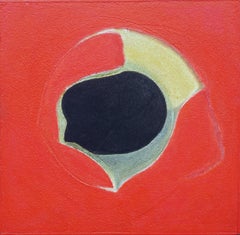
Waterline Fine Art, Austin, TX is pleased to present the following work: Acrylic on canvas. Signed, dated, and titled verso. 62.25 x 62.25 in. 63.75 x 63.5 in. (framed) Custom framed in a maple floater with a polyurethane clear coat finish. Provenance MacKenzie Art Gallery, Regina, Canada Private Collection, Lancaster, PA Exhibited "," June 2, 2003-July 15, 2004, The Edmonton Art Gallery, Edmonton, Canada. Publications "Kenneth Lochhead: Garden of Light...

Category

1960s Post-War Jim Dine Abstract Paintings

Materials

Canvas, Acrylic

Love in Black and Gold - Original Acrylic on Canvas with Quartz

Love in Black and Gold - Original Acrylic on Canvas with Quartz

Located in Soquel, CA

Love in Black and Gold - Original Acrylic on Canvas with Quartz Multicolored, iridescent abstract composition by Judith W Winslow (JW) (American, 1943-2023). This piece is textured ...

Category

Late 20th Century Post-War Jim Dine Abstract Paintings

Materials

Acrylic, Laid Paper

A Unique Abstract Surrealist Wall Assemblage, Chicago Imagist Tradition

A Unique Abstract Surrealist Wall Assemblage, Chicago Imagist Tradition

Located in Chicago, IL

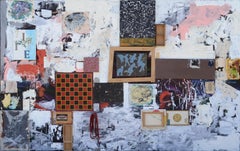
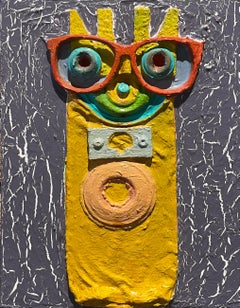
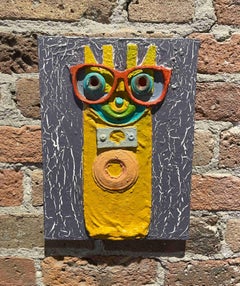
A Unique, Unusual and Striking Abstract Surrealist Wall Assemblage Painting in the Chicago Imagist Tradition by Notable Artist, Stanley Dean Edwards (Am. Born 1941). Titled "Maquete #3", the assemblage is a diminutive, mixed media collage composition of found objects and acrylic on canvas. The artwork shows a unique synthesis of American Machine Age aesthetics with Post-War Surrealist influences, including the avant-garde Italian artist Enrico Baj and the Chicago Imagist school (including H.C. Westermann and others experimenting with collage, assemblage and the integration of inanimate objects). Artwork size: 10 x 8 inches; Signed and dated "Edwards 2005" on the reverse and titled "Maquette #3". Provenance: The Artist; Private Collection, Chicago, IL (circa 2010). Born 1941 in Joliet, Illinois, Stanley Dean Edwards moved to Chicago early in life to pursue his life as an artist. His mother was a Chicago public school teacher, and his father was a Methodist minister. He studied painting and design at the School of the Art Institute of Chicago (SAIC), receiving a BFA in 1967. While at SAIC, Edwards was influenced by Vera Berdich's printmaking classes and Daniel Massen's design classes. After a brief stay in New York (1967-1970), where he was profoundly shaken by urban rioting and general upheaval of this time, Edwards returned to Chicago and later set up a studio in the Pilsen Neighborhood. Edwards is primarily a figurative painter whose work is informed by both Surrealism and Constructivism. Early hard-edge paintings from the mid-1960's feature a series of screaming babies set in brightly colored environments. These works offer religious suggestions, as the infants are paired with ecclesiastical figures presented atop an altar. Other protagonists of his series include dogs and faceless men. (1) In the early 1960's, Stan Edwards was part of a diverse group of artists that included George Kokines, Ray Siemanowski, Michael Hurson and Peter Holbrook among others. These artists and Edwards were part of that decade's vanguard and their work was included in an exhibition titled, "Twelve Chicago Artists" at the Walker Art Center. The curator was Jan Van der Marck. Edwards called his paintings of babies, dogs and erotic torsos from that period "image painting" because they were taken not from the model stand but cast off photo images. One painting from this period, Infant in Altar IV, is a 60" x 60" an oil and acrylic painting and was loaned by the National Museum of American Art at the Smithsonian to the Museum of Contemporary Art for its fifty year retrospective titled, "Art in Chicago, 1945 to 1995." The painting is part of the Martha Jackson memorial collection at the National Museum of American Art. (2.) Recent paintings, which Edwards calls "Icons for a New Era: Assembled Art Imagery," feature iconic images composed of items from popular culture; witty titles often allude to the materials from which they were made. The found objects, vibrant colors, and slick presentations of his works indicate their relationship to and a continuation of Pop art. Both humorous and sinister, Edwards' paintings reflect the psychological uneasiness associated with the close of the twentieth century. (3.) One painting of this series titled Surveyor is a 66" x 60" oil and acrylic painting and appears in the book Humor in Art by Nicholas Roukes, published by Davis Inc. The book is widely used as a text for art and design projects. (4.) In October of 2002 Edwards presented a retrospective exhibition of his work at the Illinois Institute of Art where he taught art and design in the foundation program. His lecture and exhibition were presented as part of "Chicago Artist's Month" sponsored by the Department of Cultural Affairs for the City of Chicago. In 2004 Edwards completed a major commission for the new Veterans' Administration building in Chicago. The commission centered on patriotic themes and one large 6 and 1/2' x 10' painting is dedicated to prisoners of war. Five others are 48" x 48" and depict the military branch seals, and four paintings 32" x 32" are based on 19th century patriotic engravings. Stan Edwards, who retired from the Illinois Institute of Art in 2009, lives and works in Chicago, Illinois. Sources: (2. & 4.) Press release (1. & 3.) "Art in Chicago 1945 1995, MCA.) COLLECTIONS: Selected corporate & institutional collections National Museum of American Art/Smithsonian Corcoran Gallery of Art Ceco Corporation Crain Communications Thrall Railcar Company American Hospital Association Plyzynski & Associates, Inc. NYC North American Jet Corporation Ball State University Illinois Institute of Art at Chicago State University of New York Harris Bank & Trust Dallas Theater Center Electronic Media Magazine Johnson Controls Central National Bank of Cleveland Associates Commercial Corporation Corporate Art Source Veterans' Administration Commission, Chicago, 2004 Ten site specific paintings Siemens Corporation COLLECTIONS: Selected private collections Walter & Dawn Clark Netsch Beatrice "Buddy" Mayer Douglas Ross Larry Aronson Marc & Ilana Platt Phil & Joan Krone Craig & Janet Duchossois Sally Fairweather Shirley Hardin Brian Boyer Pritzker collection James Speyer collection Michael Greany Ed & Lindy Bergman Collection Leigh Block Collection Professor Harold Platt Professors Lew Erenberg & Susan Hirsch Dr. David Gross Professor Mihaly Csiksentmihalyi Dr. Paula Young Dr. & Mrs. Imre Hidvegi EXHIBITIONS: Selected exhibitions Biennial Drawing Exhibition, Art Institute of Chicago, 1962 Momentum II, Lexington Hall, University of Chicago, 1964 The Sunken City Rises, Hermann Hall, Illinois Institute of Technology,1964 Eye on Chicago, Hermann Hall, Illinois Institute of Technology, 1964 29th Corcoran Biennial, 1965, Washington, D.C. Inaugural exhibition, Fairweather-Hardin, 1965 Society for Contemporary Art, Art Institute of Chicago, 1965 12 Chicago Painters...

Category

Early 2000s Post-War Jim Dine Abstract Paintings

Materials

Canvas, Mixed Media, Acrylic
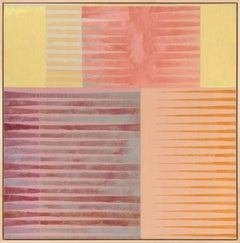
Untitled
Untitled

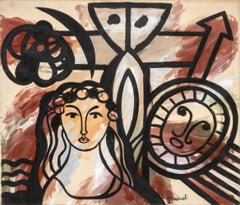
Tom GoldenbergUntitled, 1982

$24,000

H 68.25 in W 32.25 in

Untitled

By Tom Goldenberg

Located in Austin, TX

Waterline Fine Art, Austin, TX is pleased to present the following work: Oil on canvas (diptych). Signed and dated verso. 68.25 x 32.25 in. 69.75 x 33.5. (framed) Custom framed in...

Category

1980s Post-War Jim Dine Abstract Paintings

Materials

Canvas, Oil

Jim Dine abstract paintings for sale on 1stDibs.

Find a wide variety of authentic Jim Dine abstract paintings available for sale on 1stDibs. You can also browse by medium to find art by Jim Dine in paint, acrylic paint, board and more. Much of the original work by this artist or collective was created during the 20th century and is mostly associated with the post-war style. Not every interior allows for large Jim Dine abstract paintings, so small editions measuring 49 inches across are available. Customers who are interested in this artist might also find the work of Alexander Calder, Arne Hiersoux, and Jack Roth. Jim Dine abstract paintings prices can differ depending upon medium, time period and other attributes. On 1stDibs, the price for these items starts at $198,001 and tops out at $325,000, while the average work can sell for $261,500.
Questions About Jim Dine Abstract Paintings
  • 1stDibs ExpertAugust 15, 2024
    Jim Dine is famous for his work as an artist. He brought his multidisciplinary vision to New York in 1958, a time of transition in the American art world. Abstract Expressionism, which had dominated the scene for years, was waning, and a group of young artists, including Dine, Allan Kaprow, Jasper Johns and Robert Rauschenberg, was eager to replace it with a movement that flipped the traditional rules of art-making on its head. As Pop art took form, Dine used objects with personal significance, like his paintbrushes, to transform his paintings into two-dimensional sculptures. He was included in the Norton Simon Museum’s 1962 “New Painting of Objects,” often considered the first true Pop art exhibition in America, but he remained a chameleon, constantly changing his style. Dine has forged new paths in drawing, scrawling words and names across the canvas to create graphic, abstract landscapes. Some of his best-known works include his Tool Box series, Four Hearts, Tinsnip and The Robe. On 1stDibs, shop a range of Jim Dine art.
  • 1stDibs ExpertApril 5, 2022
    Jim Dine produced collages, paintings, prints, sculptures and photographs. He also gave art performances. His work reflects characteristics of Abstract Expressionism, Neo-Dadaism and Pop art. You'll find a collection of Jim Dine art from some of the world’s top sellers on 1stDibs.
  • 1stDibs ExpertFebruary 22, 2021
    Jim Dine painted hearts because he was a self-described romantic artist. He embraced the heart because he believed it was a shape with boundless possibilities and a complex meaning. He explored relationships of color, texture and composition through the heart.
  • 1stDibs ExpertFebruary 27, 2024
    Jim Dine drew tools for several reasons. He believes that tools connect humans with the past, and he is interested in capturing the history of humanity through the tools used by previous generations in his art. In addition, tools hold personal significance for Dine, whose family owned a hardware store in Cincinnati, Ohio. On 1stDibs, find a collection of Jim Dine art.
  • 1stDibs ExpertMarch 22, 2022
    Yes, Jim Dine is still making art as of December 2021. The American artist has created paintings, drawings, prints, sculptures and photographs over the past 60 years. In January 2021, the Galerie Templon in Paris, France, held a new exhibition of his work entitled “A Day Longer.” On 1stDibs, find a selection of Jim Dine art.
  • 1stDibs ExpertMarch 22, 2022
    Jim Dines' most famous piece of art is The Smiling Workman. It was one of the artist's short art performances known as Happenings. During the 30-second performance, he painted the words "I love what I'm doing, HELP" on a canvas while covered in paint and drinking tomato juice meant to symbolize paint from a glass. On 1stDibs, find a variety of Jim Dine art.