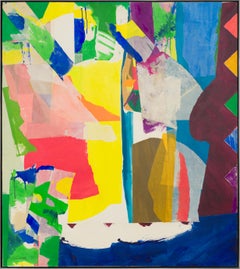
John Little Art

American, 1907-1984
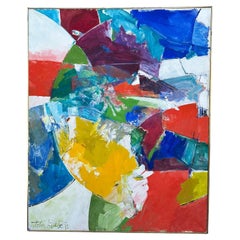
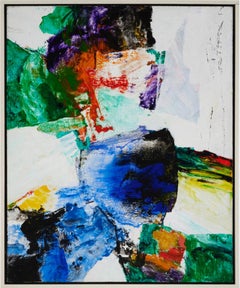
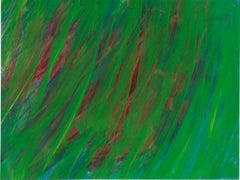
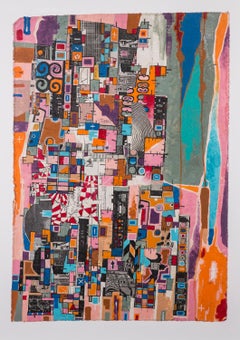
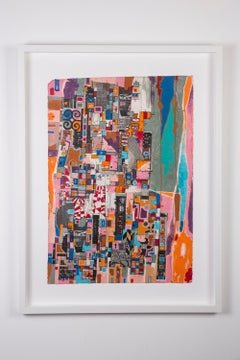
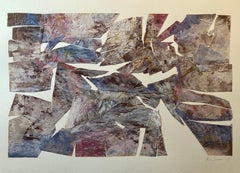
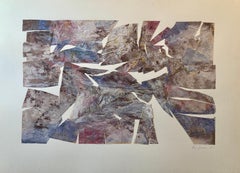
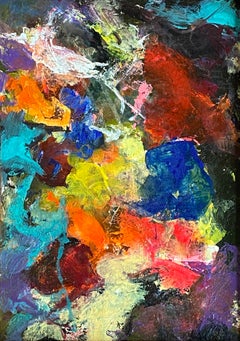
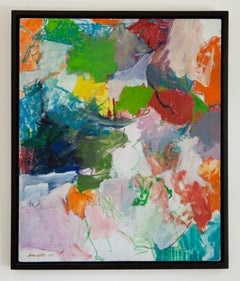
Born in Alabama, John Little attended the Buffalo (NY) Fine Arts Academy as a teenager, until 1927. Soon after, he moved to New York where he began operatic vocal training and opened what would become a very successful textile business designing fabric and wallpaper. In 1933, he enrolled at the Art Students League under the tutelage of George Grosz. Little’s early work consisted predominantly of landscapes, until 1937, when he began studying under Hans Hofmann and his work naturally shifted toward abstraction. During his time with Hofmann, he with artists such as Lee Krasner, George McNeil, Gerome Kamrowski, Giorgio Cavallon, and Perle Fine. Little entered the the service in 1942 as an aerial photographer for the Navy. Returning to New York after the war and with nowhere to stay, he reconnected with Hofmann and moved into his 8th Street studio, alongside his friend Lee Krasner and her husband Jackson Pollock. In 1946, Little earned his first solo exhibition at the California Palace of the Legion of Honor in San Francisco, with a subsequent solo exhibition at Betty Parsons Gallery in New York two years later. In the early 1950s, Little abandoned the flat, linear style in favor of a new aesthetic consisting of the thick, gestural buildup of paint. This stylistic change was concurrent with his move to East Hampton In 1951. This enabled him to continue a close friendship with Krasner and Pollock, who had already left the city in favor of the more rural area around East Hampton. Little and Pollock had a joint exhibition in 1955 at Guild Hall, one year before Pollock’s tragic death. John Little exhibited extensively during his career, with solo shows at Betty Parsons Gallery (1948), Bertha Schaefer Gallery (1957, 1958), Worth Ryder Gallery (1963), A.M. Sachs Gallery (1971), and a retrospective at the Guild Hall Museum (1982). His work can be found in many private, institutional, and corporate collections around the world, including the Metropolitan Museum of Art, Guild Hall Museum, Ball State University Museum of Art, and Galerie Beyeler.
to
1
2
2
4
4
Overall Width
to
Overall Height
to
12
1
3
2
1
7
4
7
5
1
1
1
1
1
1
1
1
1
1
1
1
1
1
1
12
5
5
4
4
12
10,415
2,808
2,500
1,414
10
11
Artist: John Little
“Untitled”
“Untitled”

“Untitled”

By John Little

Located in Southampton, NY

Early, original oil on canvas painting by the well known American abstract expressionist artist, John Little. Signed and dated lower right, 1958. Signed and dated verso. Rose Fried...

Category

1950s Abstract Expressionist John Little Art

Materials

Canvas, Oil

Modern Orange, Brown, Yellow, and Black Geometric Abstract Pattern Painting

Modern Orange, Brown, Yellow, and Black Geometric Abstract Pattern Painting

By John Little

Located in Houston, TX

Modern orange, brown, yellow, and black geometric abstract composition by textile designer John Little. The work was created as a proposed design for a wallpaper and features the original color codes in the front lower left corner. Currently hung in a solid black frame with a large white margin. Dimensions Without Frame: H 35.5 in. x W 33.5 in. Artist Biography: A painter and textile designer, John Little is best known for gestural works filled with boldly explosive color that reflect the influences of his teacher Hans Hofmann and for his involvement in the Abstract Expressionist movement in East Hampton, where he moved in the late 1940s. In East Hampton Little congregated with Jackson Pollock, Lee Krasner, and the other artists who were the leading innovators in the New York School. John Little was born in Sanford, Alabama. He left home at the age of fourteen to become an artist, and moved to Buffalo, New York, in 1923. After spending a year working as a stevedore on the docks to save money, he enrolled at the Buffalo Fine Arts Academy and developed an interest in singing. In 1927 he moved to New York City where he continued his vocal work and studied operatic literature. He also became involved in textile design, opening his own store in 1920, called John Little Studios: Fabric and Wallpaper Design. He ran the store until 1950. In 1933 John Little resumed his painting studies at the Art Students League in New York under the guidance of George Grosz (1893-1959). The following year he made his first visit to East Hampton, Long Island, which he would eventually call home. Later in the decade, he traveled to Paris where he became familiar with European modernism. On his return to America, he taught textile design at the Pratt Institute in Brooklyn. He hired Josephine Watkins to work for him; she later became his wife. Little's textile store and teaching job gave him a financial security that was rare during the Depression, and he never found it necessary to find employment with the Works Progress Administration. At the end of the decade, John Little studied with Hans Hofmann (1880-1966) in New York and Provincetown. Little was greatly influenced by Hofmann, particularly by his views on color theory. In 1942 John Little joined the Navy as an aerial photographer. In the late 1940s he purchased a rundown house on Three Mile Harbor...

Category

Early 20th Century Modern John Little Art

Materials

Paper, Gouache

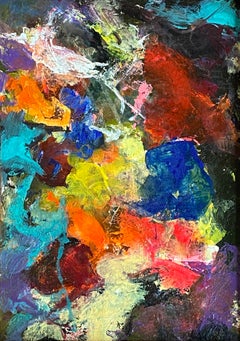
John Little "Blue Nocturne" Abstract Oil Painting

John Little "Blue Nocturne" Abstract Oil Painting

By John Little

Located in Detroit, MI

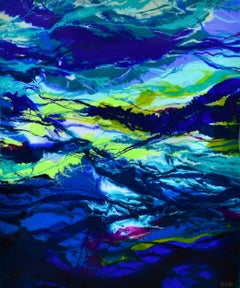
"Blue Nocturne" is full of rich deep blues contrasted by oranges, red, black and white. The abstract composition is bursting with energy that pours out of the painting and beyond the...

Category

Late 20th Century Abstract Expressionist John Little Art

Materials

Oil

Space Odyssey
Space Odyssey

Space Odyssey

By John Little

Located in Los Angeles, CA

Oil on canvas signed by American artist, John Little (1907-1984) and dated 1970-71 in gilded trimmed, wood frame. Little, who attended the Buffalo Fine Arts Academy and worked under ...

Category

1970s Abstract John Little Art

Materials

Canvas, Oil

Modern Light Blue, Brown, and Black Geometric Abstract Circle Pattern Painting

Modern Light Blue, Brown, and Black Geometric Abstract Circle Pattern Painting

By John Little

Located in Houston, TX

Modern light blue, brown, and black geometric abstract circle pattern painting by textile designer John Little. The work was created as a proposed design for a wallpaper and features the original color codes in the front lower left corner. Currently hung in a solid black frame with a large white margin. Dimensions Without Frame: H 32.75 in. x W 35.63 in. Artist Biography: A painter and textile designer, John Little is best known for gestural works filled with boldly explosive color that reflect the influences of his teacher Hans Hofmann and for his involvement in the Abstract Expressionist movement in East Hampton, where he moved in the late 1940s. In East Hampton Little congregated with Jackson Pollock, Lee Krasner, and the other artists who were the leading innovators in the New York School. John Little was born in Sanford, Alabama. He left home at the age of fourteen to become an artist, and moved to Buffalo, New York, in 1923. After spending a year working as a stevedore on the docks to save money, he enrolled at the Buffalo Fine Arts Academy and developed an interest in singing. In 1927 he moved to New York City where he continued his vocal work and studied operatic literature. He also became involved in textile design, opening his own store in 1920, called John Little Studios: Fabric and Wallpaper Design. He ran the store until 1950. In 1933 John Little resumed his painting studies at the Art Students League in New York under the guidance of George Grosz (1893-1959). The following year he made his first visit to East Hampton, Long Island, which he would eventually call home. Later in the decade, he traveled to Paris where he became familiar with European modernism. On his return to America, he taught textile design at the Pratt Institute in Brooklyn. He hired Josephine Watkins to work for him; she later became his wife. Little's textile store and teaching job gave him a financial security that was rare during the Depression, and he never found it necessary to find employment with the Works Progress Administration. At the end of the decade, John Little studied with Hans Hofmann (1880-1966) in New York and Provincetown. Little was greatly influenced by Hofmann, particularly by his views on color theory. In 1942 John Little joined the Navy as an aerial photographer. In the late 1940s he purchased a rundown house on Three Mile Harbor...

Category

Early 20th Century Modern John Little Art

Materials

Paper, Gouache

John Little "Wallpaper Studies" Eagles, Flowers, Bunting, Color Code Bar

John Little "Wallpaper Studies" Eagles, Flowers, Bunting, Color Code Bar

By John Little

Located in Detroit, MI

"Wallpaper Studies" is just that, a watercolor of a proposed design for a wallpaper with its's color code on the lower left. The painting is of a Nationalistic decorative theme with ...

Category

Mid-20th Century American Modern John Little Art

Materials

Paper, Watercolor

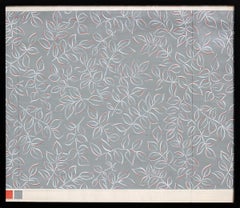
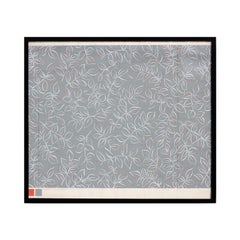
Modern Grey and Orange Geometric Abstract Leaf Pattern Painting

Modern Grey and Orange Geometric Abstract Leaf Pattern Painting

By John Little

Located in Houston, TX

Modern grey and white geometric abstract leaf pattern composition with orange accents by textile designer John Little. The work was created as a proposed design for a wallpaper and features the original color codes in the front lower left corner. Currently hung in a solid black frame with a large white margin. Dimensions Without Frame: H 27.13 in. x W 31.5 in. Artist Biography: A painter and textile designer, John Little is best known for gestural works filled with boldly explosive color that reflect the influences of his teacher Hans Hofmann and for his involvement in the Abstract Expressionist movement in East Hampton, where he moved in the late 1940s. In East Hampton Little congregated with Jackson Pollock, Lee Krasner, and the other artists who were the leading innovators in the New York School. John Little was born in Sanford, Alabama. He left home at the age of fourteen to become an artist, and moved to Buffalo, New York, in 1923. After spending a year working as a stevedore on the docks to save money, he enrolled at the Buffalo Fine Arts Academy and developed an interest in singing. In 1927 he moved to New York City where he continued his vocal work and studied operatic literature. He also became involved in textile design, opening his own store in 1920, called John Little Studios: Fabric and Wallpaper Design. He ran the store until 1950. In 1933 John Little resumed his painting studies at the Art Students League in New York under the guidance of George Grosz (1893-1959). The following year he made his first visit to East Hampton, Long Island, which he would eventually call home. Later in the decade, he traveled to Paris where he became familiar with European modernism. On his return to America, he taught textile design at the Pratt Institute in Brooklyn. He hired Josephine Watkins to work for him; she later became his wife. Little's textile store and teaching job gave him a financial security that was rare during the Depression, and he never found it necessary to find employment with the Works Progress Administration. At the end of the decade, John Little studied with Hans Hofmann (1880-1966) in New York and Provincetown. Little was greatly influenced by Hofmann, particularly by his views on color theory. In 1942 John Little joined the Navy as an aerial photographer. In the late 1940s he purchased a rundown house on Three Mile Harbor...

Category

Early 20th Century Modern John Little Art

Materials

Paper, Gouache

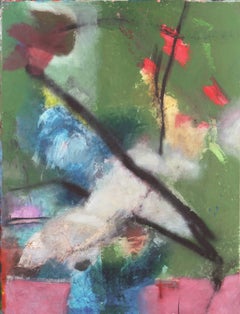
African Ancestor
African Ancestor

African Ancestor

By John Little

Located in Austin, TX

Waterline Fine Art, Austin, TX is pleased to present the following work: Acrylic and paper collage on canvas. Signed and dated lower left; signed, ...
Category

1970s Abstract Expressionist John Little Art

Materials

Acrylic, Laid Paper

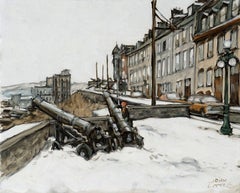
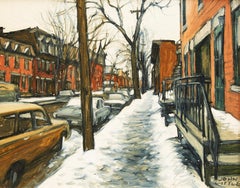
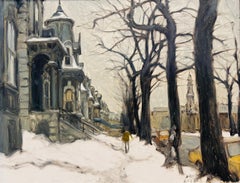
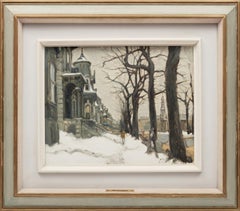
Rue des Seigneurs, Montreal

Rue des Seigneurs, Montreal

By John Little

Located in Westmount, QC

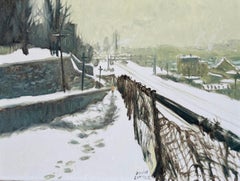
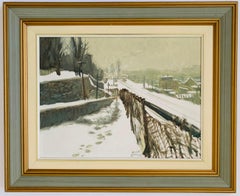
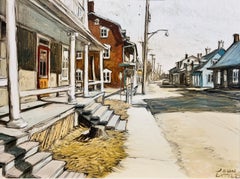
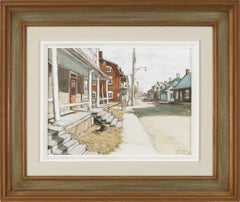
John Little, Canadian, b. 1928 Rue des Seigneurs, Montreal Oil on canvas panel 12 x 16 in Signed lower right ; signed and titled verso framed For our US customers: 1) The artwork i...

Category

1980s John Little Art

Materials

Oil

WHIGMARLEERIE Canadian Acrylic Mid-20th Century Abstract Canvas Painting
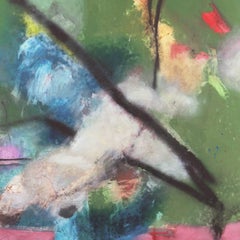
WHIGMARLEERIE Canadian Acrylic Mid-20th Century Abstract Canvas Painting
By John Little

Located in New York, NY

John Little 1907 – active in New York - 1984 Whigmarleerie 1966 Oil on canvas 33 x 27 inches (84 x 69 cm) Framed dimensions: 35 x 29 inches (89 x 73.6 cm) Signed, titled and dated v...

Category

1960s Abstract Expressionist John Little Art

Materials

Acrylic, Canvas

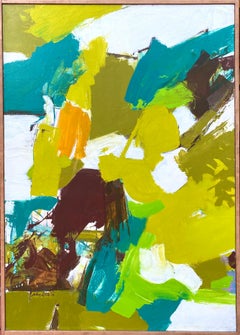
“Untitled”
“Untitled”

John Little“Untitled”, 1965

$9,600Sale Price|20% Off

“Untitled”

By John Little

Located in Southampton, NY

Original oil on canvas painting by the well known abstract expressionist artist, John Little. Signed lower right. Signed and dated 1965 on top stretcher bar verso. Betty Parsons Ga...

Category

1960s Abstract Expressionist John Little Art

Materials

Canvas, Oil

White Dawn
White Dawn

White Dawn

By John Little

Located in Austin, TX

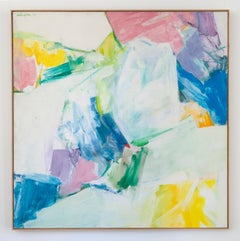
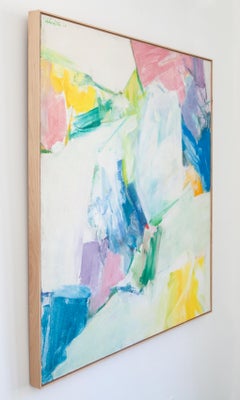
Waterline Fine Art, Austin, TX is pleased to present the following work: Egg emulsion on fiberglass. Signed and dated upper left and verso; titled verso. 49 x 48 in. 49.75 x 49 in. (framed) Custom framed in hickory. Provenance Albright-Knox Art Gallery, Buffalo, NY Born in Alabama, John Little attended the Buffalo (NY) Fine Arts Academy as a teenager, until 1927. Soon after, he moved to New York where he began operatic vocal training and opened what would become a very successful textile business designing fabric and wallpaper. In 1933, he enrolled at the Art Students League under the tutelage of George Grosz. Little’s early work consisted predominantly of landscapes, until 1937, when he began studying under Hans Hofmann and his work naturally shifted toward abstraction. During his time with Hofmann, he with artists such as Lee Krasner, George McNeil, Gerome Kamrowski, Giorgio Cavallon...

Category

1960s Abstract Expressionist John Little Art

Materials

Fiberglass, Egg Tempera

Related Items
Blue Grey
Blue Grey

Philippe HosiassonBlue Grey, 1960

$12,000

H 39.25 in W 31.75 in

Blue Grey

By Philippe Hosiasson

Located in Austin, TX

Waterline Fine Art, Austin, TX is pleased to present the following work: Oil on canvas. Signed and dated lower right and verso, titled verso. 39.25 x 31.75 in. 40.25 x 32.75 in. (f...

Category

1960s Abstract Expressionist John Little Art

Materials

Canvas, Oil

"Exuberance" by Rehfeld - Abstract Expressionism in Orange, Black, and Yellow

"Exuberance" by Rehfeld - Abstract Expressionism in Orange, Black, and Yellow

By Steven H. Rehfeld

Located in Carmel, CA

Steven H. Rehfeld (American, born 1954) "Exuberance" 2002 Oil paint, Canvas, Stretcher bars The artist signed the back of the painting. "Exuberance" by Steven Rehfeld is a visceral ...

Category

Early 2000s Abstract Expressionist John Little Art

Materials

Canvas, Oil, Stretcher Bars

Summer Afternoon Stroll Watercolor Lower Eastside - Urban Modernist 1936 Signed

Summer Afternoon Stroll Watercolor Lower Eastside - Urban Modernist 1936 Signed

By Bernard Von Eichman

Located in Soquel, CA

Summer Afternoon Stroll Watercolor Lower Eastside - Urban Modernist 1936 Signed Stunning New York City urban modernist watercolor titled "Summer Afternoon Stroll" by Society of Six...

Category

1930s American Modern John Little Art

Materials

Archival Paper, Watercolor

North on West Street (West Side Highway NYC Cityscape)

North on West Street (West Side Highway NYC Cityscape)

By De Hirsch Margules

Located in Wilton Manors, FL

De Hirsh Margules (1899-1965). North on West Street , 1939. Watercolor on Arches wove paper. Signed and dated in pencil by artist lower margin. Sheet measures 15 x 22 inches. Framed measurement: 27 x 34 inched. Incredibly vibrant and saturated color with no fading or toning of sheet. Provenance: Babcock Galleries, NYC De Hirsh Margules (1899–1965) was a Romanian-American "abstract realist" painter who crossed paths with many major American artistic and intellectual figures of the first half of the 20th century. Elaine de Kooning said that he was "[w]idely recognized as one of the most gifted and erudite watercolorists in the country". The New York Times critic Howard Devree stated in 1938 that "Margules uses color in a breath-taking manner. A keen observer, he eliminates scrupulously without distortion of his material." Devree later called Margules "one of our most daring experimentalists in the medium" Margules was also a well-known participant in the bohemian culture of New York City's Greenwich Village, where he was widely known as the "Baron" of Greenwich Village.[1] The New York Times described him as "one of Greenwich Village's best-known personalities" and "one of the best known and most buoyant characters about Greenwich Village. Early Life De Hirsh Margules was born in 1899 in the Romanian city of Iași (also known as Iasse, Jassy, or Jasse). When Margules was 10 weeks old, his family immigrated to New York City. Both of his parents were active in the Yiddish theater, His father was Yekutiel "Edward" Margules, a "renowned Jewish actor-impresario and founder of the Yiddish stage." Margules' mother, Rosa, thirty-nine years younger than his father, was an actress in the Yiddish theater and later in vaudeville. Although Margules appeared as a child actor with the Adler Family[11] and Bertha Kalich, his sister, Annette Margules, somewhat dubiously continued in family theater and vaudeville tradition, creating the blackface role of the lightly-clad Tondelayo (a part later played on film Hedy Lamarr) in Earl Carroll's 1924 Broadway exoticist hit, White Cargo. Annette herself faced stereotyping as an exotic flower: writing about her publicist Charles Bouchert stated that "Romania produces a stormy, temperamental type of woman---a type admirably fitted to portray emotion." His brother Samuel became a noted magician who appeared under the name "Rami-Sami." Samuel later became a lawyer, representing magician Horace Goldin, among others. A family portrait including a young De Hirsh, a portrait of Rosa and Annette together, and individual photos of Rosa and Edward can be found on the Museum of the City of New York website. At around age 9 or 10, Margules took art classes with the Boys Club on East Tenth Street, and his first taste of exhibition was at a student art show presented by the club. By age 11, he had won a city-wide prize (a box camera) at a children's art show presented by the department store Wanamakers. As a young teenager, Margules was already displaying a characteristic kindness and loyalty. Upon hearing that two friends (one of them was author Alexander King), were in trouble for breaking a school microscope, the nearly broke Margules gave them five dollars to repair the microscope . Margules had to approach a wealthy man that Margules had once saved on the subway from a heart attack. Margules didn't reveal the source of the five dollars to King until twenty-five years later. In his late teens, Margules studied for a couple of months in Pittsburgh with Edwin Randby, a follower of Western painter Frederic Remington. Thereafter he pursued a two-year course of studies in architecture, design and decoration at the New York Evening School of Art and Design, while working as a clerk during the day at Stern's Department Store. He was encouraged in these artistic pursuits by his neighbor, the painter Benno Greenstein (who later went by the name of Benjamin Benno). Artistic career In 1922, Margules began work as a police reporter for the City News Association of New York .Margules then considered himself something of an expert on art, and the painter Myron Lechay is said to have responded to some unsolicited analysis of his work with the remark "Since you seem to know so much about it, why don't you paint yourself?" This led to study with Lechay and a flurry of painting. Margules' first show was in 1922 at Jane Heap's Little Review Gallery. Thereafter Margules began to participate in shows with a group including Stuart Davis, Jan Matulka, Buckminster Fuller (exhibiting depictions of his "Dymaxion house") in a gallery run by art-lover and restaurateur Romany Marie on the floor above her cafe. Jane Heap, left, with Mina Loy and Ezra Pound During the 1920s, Margules traveled outside of the country a number of times. In 1922, with the intent of reaching Bali, he took a job as a "'wiper on a tramp steamer where [he] played nursemaid to the engine." He reached Rotterdam before he turned back. He would return to Rotterdam shortly thereafter. In 1927, Margules took a lengthy leave of absence from his day job as a police reporter in order to travel to Paris, where he "set up a studio in Montmartre's Place du Tertre, on the top floor of an almost deserted hotel, a shabby establishment, lacking both heat and running water." He studied at the Louvre and traveled to paint landscapes in provincial France and North Africa. Margules also joined the "Noctambulist" movement and experimented with painting and showing his artwork in low light.Jonathan Cott wrote that: the painter De Hirsch Margulies sat on the quays of the Seine and painted pictures in the dark. In fact, the first exhibition of these paintings, which could be seen only in a darkened room, took place in [ Walter Lowenfels'] Paris apartment. Elaine de Kooning remarked that studying the works of the Noctambulists confirmed Margules' "direction toward the use of primary colors for perverse effects of heavy shadow." It was also in Paris that Margules initially conceived his idea of "Time Painting", where a painting is divided into sectors, each representing a different time of day, with color choices meant to evoke that time of day. In Paris, his social circle included Lowenfels, photographer Berenice Abbott, publisher Jane Heap, composer George Anthiel, sculptor Thelma Wood, painter André Favory, writer Norman Douglas, writer and editor George Davis, composer and writer Max Ewing, and writer Michael Fraenkel. Upon his return to New York in 1929, Margules attended an exhibition of John Marin's paintings. While at the exhibition, he "launched into an eloquent explanation of Marin to two nearby women", and was overheard by an impressed Alfred Stieglitz. The famous photographer and art promoter invited Margules to dine with his wife, the artist Georgia O'Keeffe, and his assistant, painter Emil Zoler. Stieglitz thereafter became a friend and mentor to Margules, becoming for him "what Socrates was to his friends." Alfred Stieglitz Stieglitz introduced Margules to John Marin, who quickly became the most important painterly influence upon Margules. Elaine de Kooning later noted that Margules was "indebted to Marin and through Marin to Cézanne for his initial conceptual approach - for his constructions of scenes with no negative elements, for skies that loom with the impact of mountains." Margules himself said that Marin was his "father and ... academy." The admiration was by no means unreciprocated: Marin said that Margules was "an art lover with abounding faith and sincerity, with much intelligence and quick seeing." Stieglitz also introduced Margules to many other artistic and intellectual figures in New York. With the encouragement of Alfred Stieglitz, Margules in 1936 opened a two-room gallery at 43 West 8th Street called "Another Place." Over the following two years there were fourteen solo exhibitions by Margules and others, and the gallery was well-respected by the press. It was in this gallery that the painter James Lechay, Myron's brother, exhibited his first painting. In 1936, Margules first saw recognition by major art museums when both the Museum of Modern Art and the Museum of Fine Arts, Boston purchased his works. In 1942, Margules gave up working as a police reporter, and apparently dedicated himself thereafter solely to an artistic vocation. "The Baron of Greenwich Village"[edit] Margules made his mark not only as an artist, but also as an outsized personality known throughout Greenwich Village and beyond. To local residents, Margules was known as the "Baron", after Baron Maurice de Hirsch, a prominent German Jewish philanthropist. Margules was easily recognizable by the beret he routinely wore over his long hair. Writer Charles Norman said that he "dressed with a flair for sloppiness." He was said to "know everybody" in Greenwich Village, to the extent that when the novelist and poet Maxwell Bodenheim was murdered, Margules was the first one the police sought to identify the body. Margules' letters show him interacting with art world figures such as Sacha Kolin, John Marin and Alfred Stieglitz, as well as with prominent figures outside the art world such as polymath Buckminster Fuller and writer Henry Miller. Most of his friends and acquaintances found Margules a generous and voluble man, given to broadly emotionally expressive gestures and acts of kindness and loyalty. In 1929, he exhibited an example of this loyalty and fellow-feeling when he appeared in court to fight what the wrongful commitment of his friend, writer and sculptor Alfred Dreyfuss, who appeared to have been a victim of an illicit attempt to block an inheritance. The Greenwich Village chronicler Charles Norman described the bone-crushing hugs that Margules would routinely bestow on his friends and acquaintances, and speaks of the "persuasive theatricality" that Margules seemed to have inherited from his actor parents. Norman also wrote about Margules' routine acts of kindness, taking in homeless artists, constantly feeding his friends and providing the salvatory loan where needed. Norman also notes that Margules was blessed with a loud and good voice, and was apt to sing an operatic air without provocation. The writer and television personality Alexander King said I think the outstanding characteristics of my friend's personality are affirmation, emphasis, and overemphasis. He chooses to express himself predominantly in superlatives and the gestures which accompany his utterances are sometimes dangerous to life and limb. Of the bystanders, I mean. King also spoke with affectionate amusement about Margules' pride in his cooking, speaking of how "if he should ever invite you to dinner, he may serve you a hamburger with onions, in his kitchen-living room, with such an air of gastronomic protocol, such mysterious hints and ogliing innuendoes, as if César Ritz and Brillat-Savarin had sneaked out, only a moment before, with his secret recipe in their pockets." Margules was such a memorable New York personality that comic book writer Alvin Schwartz imagined him at the Sixth Avenue Cafeteria in a risible yet poignant debate with Clark Kent about whether Superman had the ability to stop Hitler. Margules' entrenchment in the Greenwich Village milieu can be seen in a photograph from Fred McDarrah's "Beat Generation Album" of a January 13, 1961 writers' and poets' meeting to discuss "The Funeral of the Beat Generation", in Robert Cordier [fr]'s railroad flat at 85 Christopher Street. Among the people in the same photograph are Shel Silverstein...

Category

1930s American Modern John Little Art

Materials

Watercolor, Rag Paper

Abstract Work on Paper Mid-Century Modernism Greek American Gouache Drawing

Abstract Work on Paper Mid-Century Modernism Greek American Gouache Drawing

By Jean Xceron

Located in New York, NY

Abstract Work on Paper Mid-Century Modernism Greek American Gouache Drawing. A modernist artist who emigrated to America from Greece in 1904, when he was fourteen years old, Jean Xceron is described as having a reputation as an artist that has mysteriously fallen into obscurity---especially since he was reportedly quite prominent during his lifetime. However, a partial explanation of that omission is the fact that many of his papers and early records have been lost. He was a painter of biomorphic abstractions and did collages, which were influenced by Dadaism. Xceron was active in New York City when modernism was gaining influence. Of him during this period, it was written that his artistic role was "a vital link between what is commonly termed as the first-generation (the Stieglitz group, the Synchromists, etc.) and second-generation, the American Abstract Artists, the Transcendental Painting...

Category

1940s American Modern John Little Art

Materials

Paper, Gouache

“Untitled, 1946” New Hope Modernist Small Abstract Bucks County Lambertville NJ

“Untitled, 1946” New Hope Modernist Small Abstract Bucks County Lambertville NJ

By Louis Stone

Located in Yardley, PA

“Untitled, 1946” by Louis K. Stone (1902-1984). A strong and charming example of mid-century American modernism by one of the most important artists working in New Hope, PA. This wa...

Category

1940s American Modern John Little Art

Materials

Paper, Watercolor

The Machine /// Margaux Halloran Contemporary Abstract Minimalist Female Women

The Machine /// Margaux Halloran Contemporary Abstract Minimalist Female Women

By Margaux Halloran

Located in Saint Augustine, FL

Artist: Margaux Halloran (American, 1999-) Title: "The Machine" *Monogram signed by Halloran lower right. It is also signed, dated, and titled on verso Year: 2021 Medium: Original Oi...

Category

2010s Abstract Expressionist John Little Art

Materials

Canvas, Paint, Oil

"Juliet" Abstract Figurative Oil Painting 59 x 33.5" in by Anastasiia Danilenko

"Juliet" Abstract Figurative Oil Painting 59 x 33.5" in by Anastasiia Danilenko

By Anastasiia Danilenko

Located in Culver City, CA

"Juliet" Abstract Figurative Oil Painting 59 x 33.5" in by Anastasiia Danilenko Ships rolled in a tube Anastasiia Danilenko is an artist and graphic designer. But the area of he...

Category

21st Century and Contemporary Abstract Expressionist John Little Art

Materials

Canvas, Oil

Colorful 1950s Standing Male Bather in South of France by Andre Delfau

Colorful 1950s Standing Male Bather in South of France by Andre Delfau

By Andre Delfau

Located in Chicago, IL

A vibrant 1950s Modern watercolor of a standing male bather in red & orange tones by notable French artist Andre Delfau. Painted in the south of France along the Cote d' azure (...

Category

1950s American Modern John Little Art

Materials

Paper, Watercolor

Composition
Composition

Erdal Alantar Composition, 1965

$4,768

H 18.12 in W 21.66 in D 0.79 in

Composition

Located in PARIS, FR

Signed by the artist, lower left. This expressive painting by Erald Alentar is characterized by a dense, tactile surface and a rich, earthy palette dominated by deep greens, browns,...

Category

1860s Abstract John Little Art

Materials

Canvas, Oil

Serie Pequeñas Vibraciones # 164. Abstract Color Study in Soft Tones

Serie Pequeñas Vibraciones # 164. Abstract Color Study in Soft Tones

Located in Ciudad Autónoma Buenos Aires, AR

Medium: Oil on canvas Dimensions: 35 x 25 cm (each) Framed: Yes Small size, calm palette. abstract painting, soft colors, minimalist, contemporary art, pastel, green, lilac, emotiona...

Category

2010s Abstract John Little Art

Materials

Canvas, Oil

Previously Available Items
Quebec
Quebec

John LittleQuebec

Sold

H 8 in W 10 in

Quebec

By John Little

Located in Westmount, QC

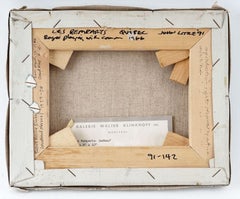
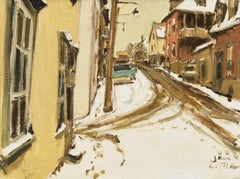
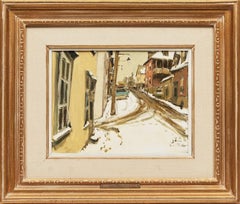
John Little, Canadian, b.1928 Quebec, 1991 Oil on canvas 8 x 10 Signed on the lower right: John Little Titled, dated and signed on the reverse: ’91 Provenance Galreie Walter Klinkho...

Category

1990s John Little Art

Materials

Oil

Quebec
Quebec

John LittleQuebec

Sold

H 8 in W 10 in

Quebec

By John Little

Located in Westmount, QC

John Little, Canadian, b.1928 Quebec Oil on canvas 8 x 10 10 1/2 in signed lower right; signed, titled and dated 1969 on the stretcher Provenance Continental Galleries, Montreal framed

Category

1980s John Little Art

Materials

Oil

“Double Play”
“Double Play”

John Little“Double Play”, 1963

Sold

H 51.25 in W 36.25 in D 2 in

“Double Play”

By John Little

Located in Southampton, NY

Strong, vibrant original oil on canvas painting titled “Double Play” by the well known American artist, John Little. Signed and dated lower left, 1963. Signed, dated and titled vers...

Category

1960s Post-Modern John Little Art

Materials

Canvas, Oil

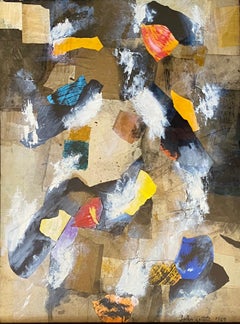
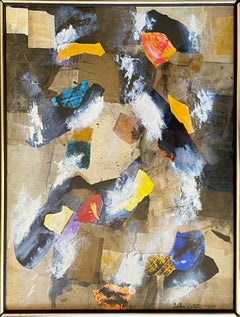
“Abstract Collage”
“Abstract Collage”

John Little“Abstract Collage”, 1969

Sold

H 24 in W 18 in D 1.75 in

“Abstract Collage”

By John Little

Located in Southampton, NY

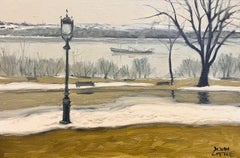
Original mixed media painting composed of acrylic paint and paper collage on heavy card stock by the well known American artist, John Little. Signed lower right and dated 1969. Cond...
Category

1960s Abstract Expressionist John Little Art

Materials

Paper, Acrylic, Cardboard

Untitled
Untitled

John LittleUntitled, 1965

Sold

H 36.25 in W 30.25 in

Untitled

By John Little

Located in Austin, TX

Waterline Fine Art, Austin, TX is pleased to present the following work: Oil on canvas. Signed and dated lower left. 36.25 x 30.25 in. 38.5 x 32.5 in. (framed) Custom hardwood frame with dark stain. FredEric’s Frame Studio, Chicago. Provenance McCormick Gallery, Chicago Born in Alabama, John Little attended the Buffalo (NY) Fine Arts Academy as a teenager, until 1927. Soon after, he moved to New York where he began operatic vocal training and opened what would become a very successful textile business designing fabric and wallpaper. In 1933, he enrolled at the Art Students League under the tutelage of George Grosz. Little’s early work consisted predominantly of landscapes, until 1937, when he began studying under Hans Hofmann and his work naturally shifted toward abstraction. During his time with Hofmann, he with artists such as Lee Krasner, George McNeil, Gerome Kamrowski, Giorgio Cavallon...
Category

1960s Abstract Expressionist John Little Art

Materials

Canvas, Oil

Montreal
Montreal

John LittleMontreal

Sold

H 8 in W 10 in

Montreal

By John Little

Located in Westmount, QC

John Little, Canadian, b.1928 Montreal Oil on canvas 8 x 10 in John Little b. 1928 UNTITLED 1987 Oil on canvas 8 x 10 in 20.3 x 25.4 cm signed lower right; signed, titled and dated ...

Category

1980s John Little Art

Materials

Oil

"Ground Pine" Modern Green, Grey, & Pink Abstract Leaf Pattern Textile Painting

"Ground Pine" Modern Green, Grey, & Pink Abstract Leaf Pattern Textile Painting

By John Little

Located in Houston, TX

Modern green, grey, and pink abstract leaf pattern painting by textile designer John Little. The work was created as a proposed design for a wallpaper and features the original color codes in the front lower left corner. Currently hung in a solid black frame with a large white margin. Dimensions Without Frame: H 27.25 in. x W 35.5 in. Artist Biography: A painter and textile designer, John Little is best known for gestural works filled with boldly explosive color that reflect the influences of his teacher Hans Hofmann and for his involvement in the Abstract Expressionist movement in East Hampton, where he moved in the late 1940s. In East Hampton Little congregated with Jackson Pollock, Lee Krasner, and the other artists who were the leading innovators in the New York School. John Little was born in Sanford, Alabama. He left home at the age of fourteen to become an artist, and moved to Buffalo, New York, in 1923. After spending a year working as a stevedore on the docks to save money, he enrolled at the Buffalo Fine Arts Academy and developed an interest in singing. In 1927 he moved to New York City where he continued his vocal work and studied operatic literature. He also became involved in textile design, opening his own store in 1920, called John Little Studios: Fabric and Wallpaper Design. He ran the store until 1950. In 1933 John Little resumed his painting studies at the Art Students League in New York under the guidance of George Grosz (1893-1959). The following year he made his first visit to East Hampton, Long Island, which he would eventually call home. Later in the decade, he traveled to Paris where he became familiar with European modernism. On his return to America, he taught textile design at the Pratt Institute in Brooklyn. He hired Josephine Watkins to work for him; she later became his wife. Little's textile store and teaching job gave him a financial security that was rare during the Depression, and he never found it necessary to find employment with the Works Progress Administration. At the end of the decade, John Little studied with Hans Hofmann (1880-1966) in New York and Provincetown. Little was greatly influenced by Hofmann, particularly by his views on color theory. In 1942 John Little joined the Navy as an aerial photographer. In the late 1940s he purchased a rundown house on Three Mile Harbor...

Category

Early 20th Century Modern John Little Art

Materials

Paper, Gouache

"New Yorker" Modern Minimal Blue & Tan Abstract Painting of Museum of Modern Art

"New Yorker" Modern Minimal Blue & Tan Abstract Painting of Museum of Modern Art

By John Little

Located in Houston, TX

Modern minimal blue and tan line drawing inspired the Museum of Modern Art in New York City by textile designer John Little. The work features renderings of Constantin Brancusi's "Ml...

Category

Early 20th Century Modern John Little Art

Materials

Paper, Gouache, Ink

Modern Purple, Light Blue, and Gray Geometric Abstract Leaf Pattern Painting

Modern Purple, Light Blue, and Gray Geometric Abstract Leaf Pattern Painting

By John Little

Located in Houston, TX

Modern purple, light blue, and gray geometric abstract painting of a leaf pattern by textile designer John Little. The work was created as a proposed design for a wallpaper. Currentl...

Category

Early 20th Century Modern John Little Art

Materials

Paper, Gouache

"Idioms" Modern Orange, Brown, Gray, and Black Geometric Abstract Painting

"Idioms" Modern Orange, Brown, Gray, and Black Geometric Abstract Painting

By John Little

Located in Houston, TX

Modern orange, brown, gray, and black geometric abstract composition by textile designer John Little. The work was created as a proposed design for a wallpaper. Titled in pencil along front lower margin. Currently hung in a solid black frame with a large white margin. Dimensions Without Frame: H 31.63 in. x W 31.63 in. Artist Biography: A painter and textile designer, John Little is best known for gestural works filled with boldly explosive color that reflect the influences of his teacher Hans Hofmann and for his involvement in the Abstract Expressionist movement in East Hampton, where he moved in the late 1940s. In East Hampton Little congregated with Jackson Pollock, Lee Krasner, and the other artists who were the leading innovators in the New York School. John Little was born in Sanford, Alabama. He left home at the age of fourteen to become an artist, and moved to Buffalo, New York, in 1923. After spending a year working as a stevedore on the docks to save money, he enrolled at the Buffalo Fine Arts Academy and developed an interest in singing. In 1927 he moved to New York City where he continued his vocal work and studied operatic literature. He also became involved in textile design, opening his own store in 1920, called John Little Studios: Fabric and Wallpaper Design. He ran the store until 1950. In 1933 John Little resumed his painting studies at the Art Students League in New York under the guidance of George Grosz (1893-1959). The following year he made his first visit to East Hampton, Long Island, which he would eventually call home. Later in the decade, he traveled to Paris where he became familiar with European modernism. On his return to America, he taught textile design at the Pratt Institute in Brooklyn. He hired Josephine Watkins to work for him; she later became his wife. Little's textile store and teaching job gave him a financial security that was rare during the Depression, and he never found it necessary to find employment with the Works Progress Administration. At the end of the decade, John Little studied with Hans Hofmann (1880-1966) in New York and Provincetown. Little was greatly influenced by Hofmann, particularly by his views on color theory. In 1942 John Little joined the Navy as an aerial photographer. In the late 1940s he purchased a rundown house on Three Mile Harbor...

Category

Early 20th Century Modern John Little Art

Materials

Paper, Gouache

"Untitled"
"Untitled"

John Little"Untitled", 1974

Sold

H 24 in W 29 in D 0.75 in

"Untitled"

By John Little

Located in Southampton, NY

Woodblock by the American artist John Little. Signed and dated in pencil lower right, 1974. Number 11/15. Inscribed "Merry Christmas to Alfred and Harold" in pencil lower right. Condition: excellent. In thin metal frame 29.25 by 33.25 inches. John Little was born in Sanford, Alabama. He left home at the age of fourteen to become an artist, and moved to Buffalo, New York, in 1923. After spending a year working as a stevedore on the docks to save money, he enrolled at the Buffalo Fine Arts Academy and developed an interest in singing. In 1927 he moved to New York City where he continued his vocal work and studied operatic literature. He also became involved in textile design, opening his own store in 1920, called John Little Studios: Fabric and Wallpaper Design. He ran the store until 1950. In 1933 John Little resumed his painting studies at the Art Students League in New York under the guidance of George Grosz (1893-1959). The following year he made his first visit to East Hampton, Long Island, which he would eventually call home. Later in the decade, he traveled to Paris where he became familiar with European modernism. On his return to America, he taught textile design at the Pratt Institute in Brooklyn. He hired Josephine Watkins to work for him; she later became his wife. Little’s textile store and teaching job gave him a financial security that was rare during the Depression, and he never found it necessary to find employment with the Works Progress Administration. At the end of the decade, John Little studied with Hans Hofmann (1880-1966) in New York and Provincetown. Little was greatly influenced by Hofmann, particularly by his views on color theory. In 1942 John Little joined the Navy as an aerial photographer. In the late 1940s he purchased a rundown house on Three Mile Harbor...

Category

1970s Abstract Expressionist John Little Art

Materials

Woodcut

"Untitled"
"Untitled"

John Little"Untitled", 1973

Sold

H 15 in W 11 in D 1 in

"Untitled"

By John Little

Located in Southampton, NY

Watercolor on paper laid down on panel. Executed in 1973 by the American artist John Little. Signed lower right in pencil and dated 1973. Inscribed verso "Merry Chrismas Harold and Alfred, John". A note on from the artist is included. See photo. The Watercolor on paper laid down on panel. Executed in 1973 by the American artist John Little. Signed lower right in pencil and dated 1973. Inscribed verso ' Merry Chrismas Harold and Alfred, John" A note from the artist is included. See photo. The artwork is in a handcrafted frame made by the artist. Condition is good. Has several small waves in paper. Slight fold lower right corner; slight natural toning of paper. No glass. Overall framed size 17.5 by 13.5 inches. John Little was born in Sanford, Alabama. He left home at the age of fourteen to become an artist, and moved to Buffalo, New York, in 1923. After spending a year working as a stevedore on the docks to save money, he enrolled at the Buffalo Fine Arts Academy and developed an interest in singing. In 1927 he moved to New York City where he continued his vocal work and studied operatic literature. He also became involved in textile design, opening his own store in 1920, called John Little Studios: Fabric and Wallpaper Design. He ran the store until 1950. In 1933 John Little resumed his painting studies at the Art Students League in New York under the guidance of George Grosz (1893-1959). The following year he made his first visit to East Hampton, Long Island, which he would eventually call home. Later in the decade, he traveled to Paris where he became familiar with European modernism. On his return to America, he taught textile design at the Pratt Institute in Brooklyn. He hired Josephine Watkins to work for him; she later became his wife. Little’s textile store and teaching job gave him a financial security that was rare during the Depression, and he never found it necessary to find employment with the Works Progress Administration. At the end of the decade, John Little studied with Hans Hofmann (1880-1966) in New York and Provincetown. Little was greatly influenced by Hofmann, particularly by his views on color theory. In 1942 John Little joined the Navy as an aerial photographer. In the late 1940s he purchased a rundown house on Three Mile Harbor...

Category

1970s Abstract Expressionist John Little Art

Materials

Paper, Watercolor

John Little art for sale on 1stDibs.

Find a wide variety of authentic John Little art available for sale on 1stDibs. If you’re browsing the collection of art to introduce a pop of color in a neutral corner of your living room or bedroom, you can find work that includes elements of purple and other colors. You can also browse by medium to find art by John Little in paint, oil paint, paper and more. Much of the original work by this artist or collective was created during the 20th century and is mostly associated with the abstract style. Not every interior allows for large John Little art, so small editions measuring 10 inches across are available. Customers who are interested in this artist might also find the work of Richard Andres, Robert Goodnough, and Norman Carton. John Little art prices can differ depending upon medium, time period and other attributes. On 1stDibs, the price for these items starts at $1,200 and tops out at $40,000, while the average work can sell for $7,700.

Artists Similar to John Little

Questions About John Little Art
  • 1stDibs ExpertOctober 24, 2024
    Whether John Corcoran paintings are worth anything depends on their size, condition and other factors. In 2021, one of his paintings entitled Trees sold for $100 at an auction in Carmel, Indiana. The work depicts a serene woodland landscape representative of the British artist's traditional style. A certified appraiser or experienced art dealer can help you determine how much a particular Corcoran painting in your collection may be worth. Find a large selection of landscape paintings on 1stDibs.
  • 1stDibs ExpertOctober 24, 2024
    How much John Piper paintings are worth varies based on their size, historical significance, condition and other factors. In 2013, his 1935 piece Painting sold for £482,500 at an auction in London. Piper is best known for his extensive studies of British architecture and landscape in oil, watercolor and print, and his photography, stained glass, ceramics, fabric design, murals, stage sets and costume design. His work is held in the collections of many major museums, including the Museum of Modern Art in New York and the Tate in London. If you are the owner of a Piper, a certified appraiser or experienced art dealer can assist you with the valuation process. On 1stDibs, shop a range of John Piper art.