John Mix Stanley Prints and Multiples

1814-1872

John Mix Stanley was an artist-explorer, an American painter of landscapes, and Native American portraits and tribal life. Born in the Finger Lakes region of New York, he started painting signs and portraits as a young man, but in 1842 he traveled to the American West to paint Native American life. In 1846, he exhibited a gallery of 85 of his paintings in Cincinnati and Louisville. During the Mexican-American War, he joined Colonel Stephen Watts Kearney's expedition to California and painted accounts of the campaign, as well as aspects of the Oregon territory. Stanley continued to travel and paint in the West, and mounted a major exhibit of more than 150 works at the Smithsonian Institution in 1852. Although he had some Congressional interest in purchasing the collection, he was unsuccessful in completing a sale, and never recovered his expenses for a decade of intensive work and travel. In 1854, he exhibited a 42-scene panorama of western scenes in Washington, DC, Baltimore, New York and London, but it has been lost. More than 200 of his paintings, maps and other work being held at the Smithsonian were lost in an 1865 fire. The irreparable loss of most of his works cast an eclipse over Stanley's reputation in American art history for some time, but today a few of his surviving works are held by national and numerous regional museums.

to
2
5
Overall Width
to
Overall Height
to
7
1,550
1,074
930
649
7
7
4
1
1
1
1
1
7
7
Artist: John Mix Stanley
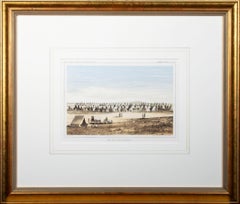
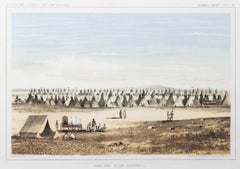
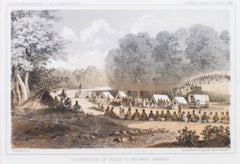
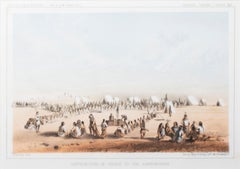
'Distribution of Goods to the Assiniboines' original John Mix Stanley lithograph

'Distribution of Goods to the Assiniboines' original John Mix Stanley lithograph

By John Mix Stanley

Located in Milwaukee, WI

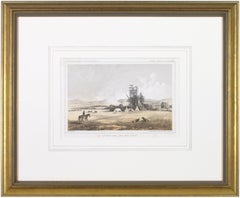
In the mid-nineteenth century, the United States government set out to survey and document its newly acquired lands and territories west of the Mississippi. The goals of these surveys were manifold: to produce topographical maps, to document flora and fauna, and to document natural resources to build the emerging US economy. These surveys, and the images from them, also functioned to build the new sense of American identity with the landscape, condensing vistas into the 'picturesque' tradition of European image making. Thus, the entire span of US territory could be seen as a single, cohesive whole. This lithograph comes from one of six surveys commissioned by the Army's Topographic Bureau in 1853, which sought to find the best route to construct a transcontinental railroad. The result was a thirteen-volume report including maps, lithographs, and technical data entitled 'Explorations and Surveys to ascertain the most practicable and economical route for a Railroad from the Mississippi river to the Pacific Ocean.' When it came to depicting the Assiniboine people, as seen in the present print, Stanley chose to juxtapose their encampment, marked by tipis in the distance, with the encampment of the Isaac Stevens survey party. In the foreground, commemorating this moment, Isaac Stevens can be seen presenting trade goods, which are known to include thirty two dressed skins and two robes. The survey leader Isaac Stevens noted being grateful for the generosity of the Assiniboine, commenting: "I felt very grateful indeed to those Indians, for their kindness to my men, their proffer of kind feeling and hospitality to myself and the survey." This description and this image, however, are arguably depicted through rose-colored glasses: to the Assiniboine people, this meeting may well have included stressful diplomatic relationships and have indicated a threat to the sovereignty over the territories agreed to be theirs by the 1851 Treaty of Fort Laramie. 5.75 x 8.75 inches, image 6.5 x 9.25 inches, stone 17 x 19.75 inches, frame Artist 'Stanley Del.' lower left Entitled 'Distribution of Goods to the Assiniboines' lower center margin Publisher 'Sarony, Major & Knapp. Lith.s 449 Broadway N.Y.' lower right Inscribed 'U.S.P.R.R. EXP. & SURVEYS — 47th & 49th PARALLELS' upper left Inscribed 'GENERAL REPORT — PLATE XIV' upper right Framed to conservation standards using 100 percent rag matting with French accents; glazed with UV5 Plexiglas to inhibit fading; housed in a gold reverse ogee moulding. Print in overall good condition; some localized foxing and discoloration; frame in excellent condition. John Mix Stanley...

Category

1850s Romantic John Mix Stanley Prints and Multiples

Materials

Lithograph
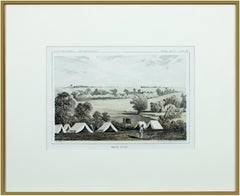
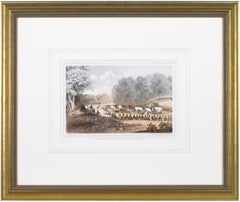
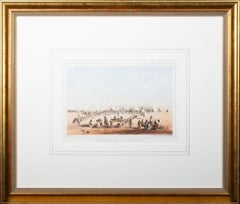
'Camp Red River Hunters' original lithograph by John Mix Stanley

'Camp Red River Hunters' original lithograph by John Mix Stanley

By John Mix Stanley

Located in Milwaukee, WI

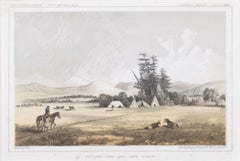
In the mid-nineteenth century, the United States government set out to survey and document its newly acquired lands and territories west of the Mississippi. The goals of these surveys were manifold: to produce topographical maps, to document flora and fauna, and to document natural resources to build the emerging US economy. These surveys, and the images from them, also functioned to build the new sense of American identity with the landscape, condensing vistas into the 'picturesque' tradition of European image making. Thus, the entire span of US territory could be seen as a single, cohesive whole. This lithograph comes from one of six surveys commissioned by the Army's Topographic Bureau in 1853, which sought to find the best route to construct a transcontinental railroad. The result was a thirteen-volume report including maps, lithographs, and technical data entitled 'Explorations and Surveys to ascertain the most practicable and economical route for a Railroad from the Mississippi river to the Pacific Ocean.' In particular, the print comes from the northern survey, commanded by Isaac Stevens, which explored the regions between the 47th and 49th parallels. In this image, Stanley shows an encampment of the people known as the Red River of the North hunters. They were generations of European and mixed-race trappers who lived on the frontier and had Indian wives and mixed-race children. They had come to the area for bison hunting, as the herds were still vast on the prairies. In the image, the figures and their encampment are dwarfed by the vast landscape around them, indicating the sublimity of these new American territories. 5.75 x 8.75 inches, image 6.5 x 9.25 inches, stone 17 x 20 inches, frame Artist 'Stanley Del.' lower left Entitled 'Camp Red River Hunters' lower center margin Publisher 'Sarony, Major & Knapp. Lith.s 449 Broadway N.Y.' lower right Inscribed 'U.S.P.R.R. EXP. & SURVEYS — 47th & 49th PARALLELS' upper left Inscribed 'GENERAL REPORT — PLATE XII' upper right Framed to conservation standards using 100 percent rag matting with French accents; glazed with UV5 Plexiglas to inhibit fading; housed in a gold reverse ogee moulding. Print in overall good condition; some localized foxing and discoloration; minor surface abrasions to frame. John Mix Stanley...

Category

1850s Romantic John Mix Stanley Prints and Multiples

Materials

Lithograph
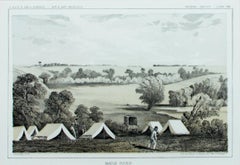
'Maple River' original color lithograph by John Mix Stanley

'Maple River' original color lithograph by John Mix Stanley

By John Mix Stanley

Located in Milwaukee, WI

In the mid-nineteenth century, the United States government set out to survey and document its newly acquired lands and territories west of the Mississippi. The goals of these surveys were manifold: to produce topographical maps, to document flora and fauna, and to document natural resources to build the emerging US economy. These surveys, and the images from them, also functioned to build the new sense of American identity with the landscape, condensing vistas into the 'picturesque' tradition of European image making. Thus, the entire span of US territory could be seen as a single, cohesive whole. This lithograph comes from one of six surveys commissioned by the Army's Topographic Bureau in 1853, which sought to find the best route to construct a transcontinental railroad. The result was a thirteen-volume report including maps, lithographs, and technical data entitled 'Explorations and Surveys to ascertain the most practicable and economical route for a Railroad from the Mississippi river to the Pacific Ocean.' Along with the image, Stanley also noted in the report of the Maple River: "It would be an excellent plan for an emigrant travelling through the country, before reaching one of these rivers on which he expects to camp, to catch a few frogs, for the purpose of fishing in these streams, which abound pike, picarel, and large catfish. Frogs are by far the best bait that can be used." This note from the artist perhaps describes some of the actions of the figures in the camp in the foreground of the image. 5.75 x 8.75 inches, image 6.5 x 9.25 inches, stone 13.25 x 16.25 inches, frame Artist 'Stanley Del.' lower left Entitled 'Maple River' lower center margin Publisher 'Sarony, Major & Knapp. Lith.s 449 Broadway N.Y.' lower right Inscribed 'U.S.P.R.R. EXP. & SURVEYS — 47th & 49th PARALLELS' upper left Inscribed 'GENERAL REPORT — PLATE VIII' upper right Framed to conservation standards using 100 percent rag matting and Museum Glass to inhibit fading; housed in a brass-surface aluminium moulding. John Mix...

Category

1850s Romantic John Mix Stanley Prints and Multiples

Materials

Lithograph
'Victor's Camp - Hell Gate Ronde' original John Mix Stanley lithograph
'Victor's Camp - Hell Gate Ronde' original John Mix Stanley lithograph
By John Mix Stanley

Located in Milwaukee, WI

In the mid-nineteenth century, the United States government set out to survey and document its newly acquired lands and territories west of the Mississippi. The goals of these surveys were manifold: to produce topographical maps, to document flora and fauna, and to document natural resources to build the emerging US economy. These surveys, and the images from them, also functioned to build the new sense of American identity with the landscape, condensing vistas into the 'picturesque' tradition of European image making. Thus, the entire span of US territory could be seen as a single, cohesive whole. This lithograph comes from one of six surveys commissioned by the Army's Topographic Bureau in 1853, which sought to find the best route to construct a transcontinental railroad. The result was a thirteen-volume report including maps, lithographs, and technical data entitled 'Explorations and Surveys to ascertain the most practicable and economical route for a Railroad from the Mississippi river to the Pacific Ocean.' In particular, the print comes from the northern survey, commanded by Isaac Stevens, which explored the regions between the 47th and 49th parallels. Stanley shows here the stop the Stanley Party made at the junction of the Bitterroot and Hell Gate, in present day Montana. While there, the Party met with the Flathead Chief by the name Victor, as is shown in the image. The figures and their encampment are dwarfed by the vast landscape around them, indicating the sublimity of these new American territories. 5.75 x 8.75 inches, image 6.5 x 9.25 inches, stone 17 x 20 inches, frame Artist 'Stanley Del.' lower left Entitled 'Victor's Camp - Hell Gate Ronde' lower center margin Publisher 'Sarony, Major & Knapp. Lith.s 449 Broadway N.Y.' lower right Inscribed 'U.S.P.R.R. EXP. & SURVEYS — 47th & 49th PARALLELS' upper left Inscribed 'GENERAL REPORT — PLATE XXXI' upper right Framed to conservation standards using 100 percent rag matting with French accents; glazed with UV5 Plexiglas to inhibit fading; housed in a gold reverse ogee moulding. Print in overall good condition; some localized foxing and discoloration; minor surface abrasions to frame. John Mix Stanley...
Category

1850s Romantic John Mix Stanley Prints and Multiples

Materials

Lithograph
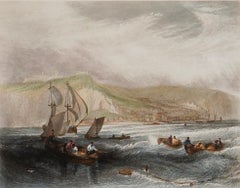
'Lieutenant Crovers Despatch – Return of Governor Stevens to Fort Benton'

'Lieutenant Crovers Despatch – Return of Governor Stevens to Fort Benton'

By John Mix Stanley

Located in Milwaukee, WI

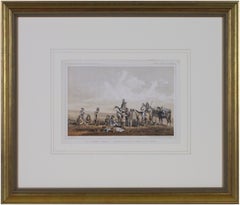
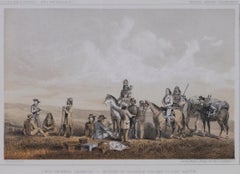
In the mid-nineteenth century, the United States government set out to survey and document its newly acquired lands and territories west of the Mississippi. The goals of these surveys were manifold: to produce topographical maps, to document flora and fauna, and to document natural resources to build the emerging US economy. These surveys, and the images from them, also functioned to build the new sense of American identity with the landscape, condensing vistas into the 'picturesque' tradition of European image making. Thus, the entire span of US territory could be seen as a single, cohesive whole. This lithograph comes from one of six surveys commissioned by the Army's Topographic Bureau in 1853, which sought to find the best route to construct a transcontinental railroad. The result was a thirteen-volume report including maps, lithographs, and technical data entitled 'Explorations and Surveys to ascertain the most practicable and economical route for a Railroad from the Mississippi river to the Pacific Ocean.' In particular, the print comes from the northern survey, commanded by Isaac Stevens, which explored the regions between the 47th and 49th parallels. 5.75 x 8.75 inches, image 6.5 x 9.25 inches, stone 17 x 20 inches, frame Artist 'Stanley Del.' lower left Entitled 'Lieutenant Crovers Despatch – Return of Governor Stevens to Fort Benton' lower center margin Publisher 'Sarony, Major & Knapp. Lith.s 449 Broadway N.Y.' lower right Inscribed 'U.S.P.R.R. EXP. & SURVEYS — 47th & 49th PARALLELS' upper left Inscribed 'GENERAL REPORT — PLATE XXXVII' upper right Framed to conservation standards using 100 percent rag matting with French accents; glazed with UV5 Plexiglas to inhibit fading; housed in a gold reverse ogee moulding. Print in overall good condition; some localized foxing and discoloration; minor surface abrasions to frame. John Mix Stanley...

Category

1850s Romantic John Mix Stanley Prints and Multiples

Materials

Lithograph

'Distribution of Goods to the Gros Ventres' lithograph by John Mix Stanley

'Distribution of Goods to the Gros Ventres' lithograph by John Mix Stanley

By John Mix Stanley

Located in Milwaukee, WI

In the mid-nineteenth century, the United States government set out to survey and document its newly acquired lands and territories west of the Mississippi. The goals of these surveys were manifold: to produce topographical maps, to document flora and fauna, and to document natural resources to build the emerging US economy. These surveys, and the images from them, also functioned to build the new sense of American identity with the landscape, condensing vistas into the 'picturesque' tradition of European image making. Thus, the entire span of US territory could be seen as a single, cohesive whole. This lithograph comes from one of six surveys commissioned by the Army's Topographic Bureau in 1853, which sought to find the best route to construct a transcontinental railroad. The result was a thirteen-volume report including maps, lithographs, and technical data entitled 'Explorations and Surveys to ascertain the most practicable and economical route for a Railroad from the Mississippi river to the Pacific Ocean.' In particular, the print comes from the northern survey, commanded by Isaac Stevens, which explored the regions between the 47th and 49th parallels. In this image, Stanley documented the encounter with the Gros Ventre people at Milk River. The explorers were invited to the Gros Ventres camp and the two groups exchanged gifts in friendship. The Stevens Party provided "... blankets, shirts, calico, knives, beads, paint, powder, shot, tobacco, hard bread, etc." The image likewise alludes to how, in 1855, Isaac Stevens, concluded a treaty (Stat., L., XI, 657) to provide peace between the United States and the Blackfoot, Flathead and Nez Perce tribes. The Gros Ventres signed the treaty as part of the Blackfoot Confederacy, whose territory near the Three Fork area became a common hunting ground for the Flathead, Nez Perce, Kootenai, and Crow Indians. 5.75 x 8.75 inches, image 6.5 x 9.25 inches, stone 17 x 20 inches, frame Artist 'Stanley Del.' lower left Entitled 'Distribution of Goods to the Gros Ventres' lower center margin Publisher 'Sarony, Major & Knapp. Lith.s 449 Broadway N.Y.' lower right Inscribed 'U.S.P.R.R. EXP. & SURVEYS — 47th & 49th PARALLELS' upper left Inscribed 'GENERAL REPORT — PLATE XXI' upper right Framed to conservation standards using 100 percent rag matting with French accents; glazed with UV5 Plexiglas to inhibit fading; housed in a gold reverse ogee moulding. Print in overall good condition; some localized foxing and discoloration; minor surface abrasions to frame. John Mix...

Category

1850s Romantic John Mix Stanley Prints and Multiples

Materials

Lithograph

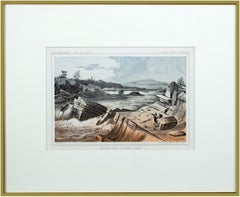
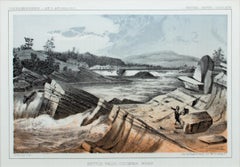
'Kettle Falls, Columbia River' original color lithograph by John Mix Stanley

'Kettle Falls, Columbia River' original color lithograph by John Mix Stanley

By John Mix Stanley

Located in Milwaukee, WI

In the mid-nineteenth century, the United States government set out to survey and document its newly acquired lands and territories west of the Mississippi. The goals of these surveys were manifold: to produce topographical maps, to document flora and fauna, and to document natural resources to build the emerging US economy. These surveys, and the images from them, also functioned to build the new sense of American identity with the landscape, condensing vistas into the 'picturesque' tradition of European image making. Thus, the entire span of US territory could be seen as a single, cohesive whole. This lithograph comes from one of six surveys commissioned by the Army's Topographic Bureau in 1853, which sought to find the best route to construct a transcontinental railroad. The result was a thirteen-volume report including maps, lithographs, and technical data entitled 'Explorations and Surveys to ascertain the most practicable and economical route for a Railroad from the Mississippi river to the Pacific Ocean.' When it came to depicting the Columbia River, as seen in the present print, Stanley chose to depict the river's characteristic rock formations and choppy waters. The figures in the image give the viewer a sense of the vase scale of the imposing landscape. Other explorers that reached the site years before the Pacific Railroad Survey, such as Lewis and Clark, observed this scene with wonder and awe – and it is clear Stanley felt the same way. 5.75 x 8.75 inches, image 6.5 x 9.25 inches, stone 13.25 x 16.25 inches, frame Artist 'Stanley Del.' lower left Entitled 'Kettle Falls, Columbia River' lower center margin Publisher 'Sarony, Major & Knapp. Lith.s 449 Broadway N.Y.' lower right Inscribed 'U.S.P.R.R. EXP. & SURVEYS — 47th & 49th PARALLELS' upper left Inscribed 'GENERAL REPORT — PLATE XLVII' upper right Framed to conservation standards using 100 percent rag matting and Museum Glass to inhibit fading; housed in a brass-surface aluminium moulding. Print in overall good condition; wrinkles in upper margin and upper right corner; frame in excellent condition. John Mix Stanley...

Category

1850s Romantic John Mix Stanley Prints and Multiples

Materials

Lithograph

Related Items
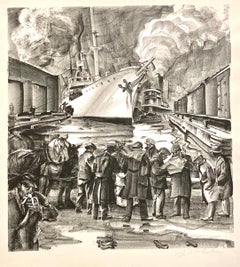
Joseph Webster Golinkin, On the Dock, Banana Boat, New Orleans

Joseph Webster Golinkin, On the Dock, Banana Boat, New Orleans

By Joseph Webster Golinkin

Located in New York, NY

Chicago-born Golinkin studied at the Artist Students League with George Luks. After working as an illustrator for New York papers he joined the Navy in 1939 and retired as a Rear Adm...

Category

1930s Ashcan School John Mix Stanley Prints and Multiples

Materials

Lithograph

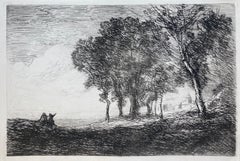
PAYSAGE D’ ITALIE
PAYSAGE D’ ITALIE

PAYSAGE D’ ITALIE

By Jean-Baptiste-Camille Corot

Located in Santa Monica, CA

JEAN-BAPTISTE CAMILLE COROT (1876 - 1875) PAYSAGE D’ ITALIE 1866 (Melot 7 iii/iii) Etching, plate 6 ¼ x 9 inches, Third state after the removal of the text but before the random scr...

Category

1860s Romantic John Mix Stanley Prints and Multiples

Materials

Etching

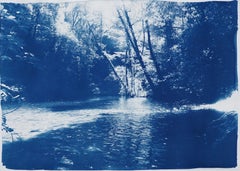
Romantic Landscape of Scandinavian Enchanted Forest, Large Lake Print Cyanotype

Romantic Landscape of Scandinavian Enchanted Forest, Large Lake Print Cyanotype

By Kind of Cyan

Located in Barcelona, ES

This is an exclusive handprinted limited edition cyanotype. Lovely scene of a hidden pond in a Scandinavian forest. Details: + Title: Scandinavian Enchanted Forest + Year: 2026 + ...

Category

2010s Romantic John Mix Stanley Prints and Multiples

Materials

Photographic Film, Emulsion, Watercolor, Monotype, Photogram

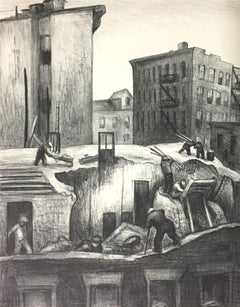
Ann Nooney, (Demolition with Windows, NYC)

Ann Nooney, (Demolition with Windows, NYC)

By Ann Nooney

Located in New York, NY

The dimensions are for the image; there are large margins. This lithograph is signed in pencil. A native New Yorker, Ann Nooney (1900-1970) recorded the urban scene while on the Wo...

Category

1930s American Realist John Mix Stanley Prints and Multiples

Materials

Lithograph

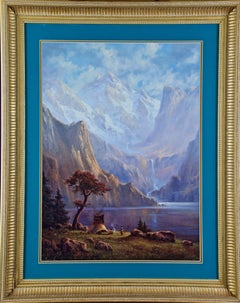
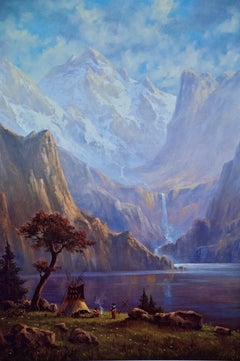
Native American Camp by a Lake & Waterfall, Limited Edition Signed Hartwig Print

Native American Camp by a Lake & Waterfall, Limited Edition Signed Hartwig Print

By Heine Hartwig

Located in Alamo, CA

Limited edition Heine Hartwig print from a painting by the same artist, signed & numbered in gold in the lower right, 722/800. This beautiful, colorful a...

Category

Late 20th Century Romantic John Mix Stanley Prints and Multiples

Materials

Other Medium

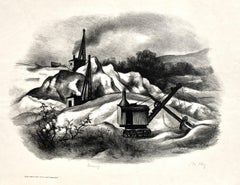
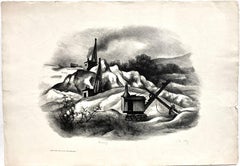
Moses Oley, Quarry
Moses Oley, Quarry

Moses OleyMoses Oley, Quarry, 1937

$1,200

H 11.25 in W 16 in

Moses Oley, Quarry

Located in New York, NY

Moses Oley drew an industrial scene, but one very much in isolation. The quarry equipment looks both imposing and busy. There appears to be smoke coming fro...

Category

1930s Ashcan School John Mix Stanley Prints and Multiples

Materials

Lithograph

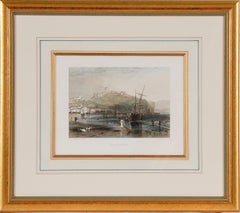
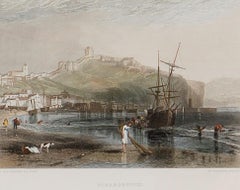
A View of Scarborough, England: A Framed 19th C. Engraving After J. M. W. Turner

A View of Scarborough, England: A Framed 19th C. Engraving After J. M. W. Turner

By J.M.W. Turner

Located in Alamo, CA

This beautiful 19th century framed engraving "Scarborough" by W. Chapman is based on an original painting by the renowned British artist J.M.W. Turner. It was published in London by ...

Category

Mid-19th Century Romantic John Mix Stanley Prints and Multiples

Materials

Engraving

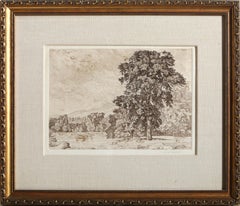
Stony Pasture, Romantic Etching by Luigi Lucioni

Stony Pasture, Romantic Etching by Luigi Lucioni

By Luigi Lucioni

Located in Long Island City, NY

Luigi Lucioni, American (1900 - 1988) - Stony Pasture, Year: 1943, Medium: Etching, signed in pencil, Image Size: 7.75 x 11 inches, Frame Size: 15.75 x 18.5 inches

Category

1940s Romantic John Mix Stanley Prints and Multiples

Materials

Etching

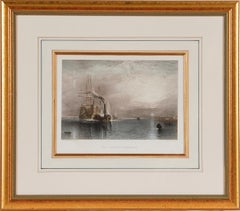
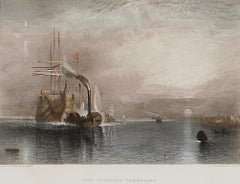
The Fighting Temeraire: A Framed 19th C. Engraving After J. M. W. Turner

The Fighting Temeraire: A Framed 19th C. Engraving After J. M. W. Turner

By J.M.W. Turner

Located in Alamo, CA

This beautiful 19th century framed engraving "The Fighting Temeraire" by James Tibbetts Willmore is based on an original painting by the renowned British artist J.M.W. Turner. It was published by James S. Virtue & Co. in London between 1859-1875. It depicts the once mighty British warship the HMS Temeraire being towed away down the river Thames by a much smaller steamboat to a ship-breaking yard to be broken up for scrap. The Temeraire was first launched in 1798 and represented the pinnacle of British ship-building. 180-feet long, constructed of English oak and armed with 98 guns, she was one of the largest warships of the period. The Temeraire became a symbol of British pride and military power that endured throughout the 19th century. The man-of-war served during the French Revolutionary and Napoleonic Wars and was among the last serving ships to have been at the Battle of Trafalgar in 1805. It became one of the many older ships put out of service in the 1830s and 1840s. The once mighty and feared ship symbolizes a once magnificent, but now obsolete, technology. Turner seems to lament her inglorious final journey, being towed by a less magnificent, but modern steam powered tugboat. The Turner painting was created in 1838 and is now held in the National Gallery in London. Willmore's engraving, created in 1859, captures the dramatic scene with great detail and skill. The image has become an iconic representation of the decline of Britain's naval power and the transition from sail to steam in the 19th century. The sunset in the background is symbolic of the sun going down on British naval power and tradition. The painting conveys profound and diverse themes that are central to the human experience: those of mortality and change, technology and progress, heroism and brutality. The painting demonstrates Turner’s skill as an artist. His ability to produce scenes of great beauty that are dramatic, but are also symbolic, stimulating both thoughtful analysis, as well as emotion. Turner's painting was voted by the British public in a 2005 BBC radio sponsored survey to be the British people's favorite painting of all time. In 2020 it was included on a new British banknote...

Category

Mid-19th Century Romantic John Mix Stanley Prints and Multiples

Materials

Engraving

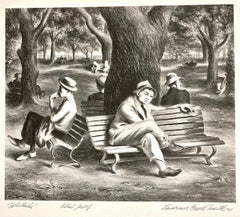
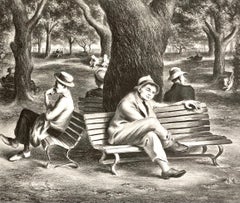
Lawrence Beall Smith, Solitude

Lawrence Beall Smith, Solitude

By Lawrence Beall Smith

Located in New York, NY

Lawrence Beall Smith draws four men in a park, each with his back to a giant, strong tree. The year is 1938 and the country is coming out of the Depression but World War II is alread...

Category

Mid-20th Century Ashcan School John Mix Stanley Prints and Multiples

Materials

Lithograph

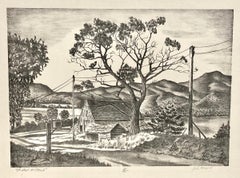
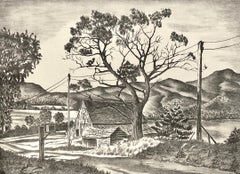
John Muench, The Road to Stow

John Muench, The Road to Stow

Located in New York, NY

John Muench was a master at drawing on a lithographic stone. He was a New Englander and this is a classic subject both for him and for the area. The...

Category

Mid-20th Century American Modern John Mix Stanley Prints and Multiples

Materials

Lithograph

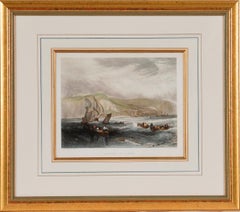
Fishing Off Hastings, England: A Framed 19th C. Engraving After J. M. W. Turner

Fishing Off Hastings, England: A Framed 19th C. Engraving After J. M. W. Turner

By J.M.W. Turner

Located in Alamo, CA

This beautiful 19th century framed engraving "Line Fishing Off Hastings" by William Miller is based on an original painting by the renowned British artist J.M.W. Turner, which depicts a scene of fishermen at work off the coast of the town of Hastings in East Sussex, England. The Miller engraving faithfully reproduces Turner's painting, capturing the same atmospheric quality and sense of motion. In the foreground of the image, a group of fishermen are shown in a small boat, with one man using a fishing line to catch fish. In the background, there is a larger ship, along with a view of the town of Hastings and the cliffs beyond. Overall, the Miller engraving "Line Fishing Off Hastings" is a beautiful and detailed representation of Turner's original painting, and provides a glimpse into life in a 19th century fishing community. This colorful 19th century engraving is presented in a gold-colored wood frame and a cream-colored French mat highlighted with a light blue band and thinner mustard and gold-colored bands. There is a gold-colored fillet which further embellishes the engraving. The frame measures 18" high, 20.5" wide and 1" deep. The engraving, frame and mat are in excellent condition. Joseph Mallord William (J.M.W.) Turner (1775-1851) was an English painter who is widely considered one of the greatest landscape painters in Western art history. Born in London, he showed a remarkable talent for art from a young age, and studied at the Royal Academy of Arts from the age of 14. He quickly gained recognition for his watercolor landscapes, which were highly innovative and expressive. Turner's style evolved over time, and he became increasingly interested in the effects of light and color. He traveled extensively throughout Europe, and his experiences of the natural world, particularly the sea and the sky, had a profound influence on his art. His paintings are known for their luminosity, atmospheric effects, and dramatic use of color. Despite facing criticism and ridicule from some of his contemporaries, Turner continued to push the boundaries of art, experimenting with new techniques and styles throughout his career. He was a prolific artist, creating thousands of paintings, sketches, and watercolors, and his legacy continues to inspire artists today. William Miller (1796-1882) was an English engraver and publisher, best known for his work in reproducing the paintings of J.M.W. Turner. Miller was born in Bristol and began his career as an engraver at a young age, working for a variety of publications and artists. In the early 1820s, Miller began working with Turner, engraving many of the artist's most famous works, including "The Fighting Temeraire...

Category

Mid-19th Century Romantic John Mix Stanley Prints and Multiples

Materials

Engraving

John Mix Stanley prints and multiples for sale on 1stDibs.

Find a wide variety of authentic John Mix Stanley prints and multiples available for sale on 1stDibs. You can also browse by medium to find art by John Mix Stanley in lithograph and more. Not every interior allows for large John Mix Stanley prints and multiples, so small editions measuring 17 inches across are available. Customers who are interested in this artist might also find the work of Nathaniel Currier, Hippolyte Bellangé, and Eugene Delacroix. John Mix Stanley prints and multiples prices can differ depending upon medium, time period and other attributes. On 1stDibs, the price for these items starts at $950 and tops out at $1,150, while the average work can sell for $1,150.