By John Taylor Arms
Located in Myrtle Beach, SC
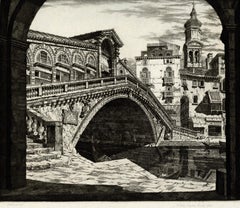
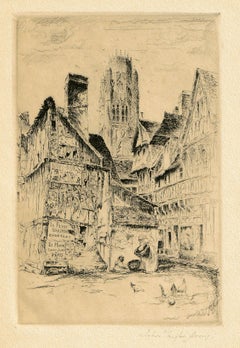
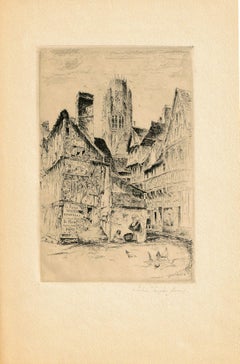
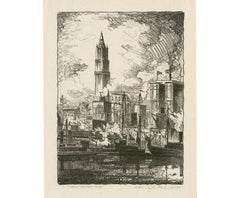
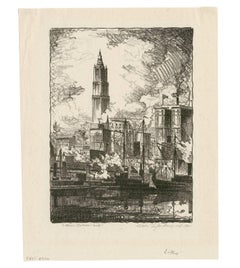
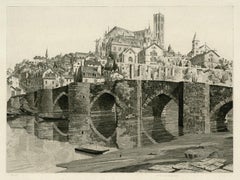
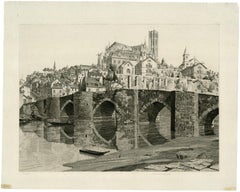
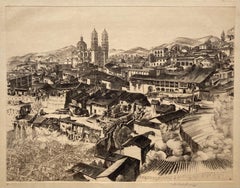
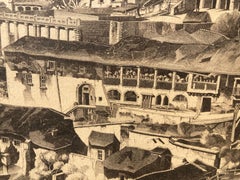
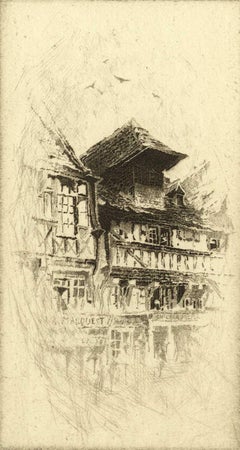
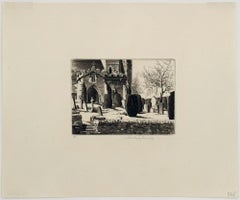
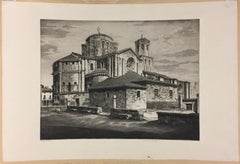
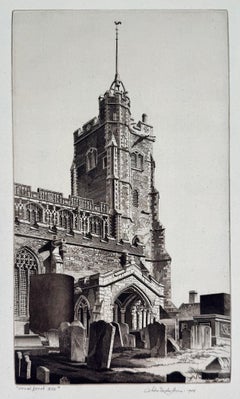
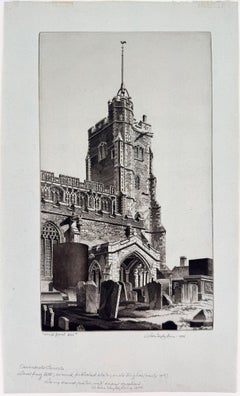
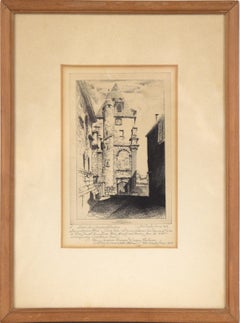
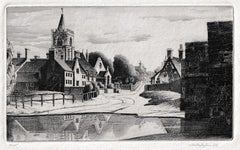
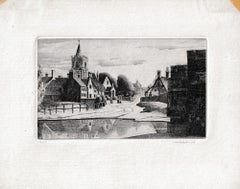
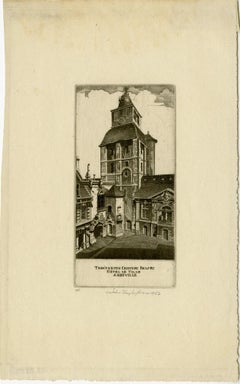
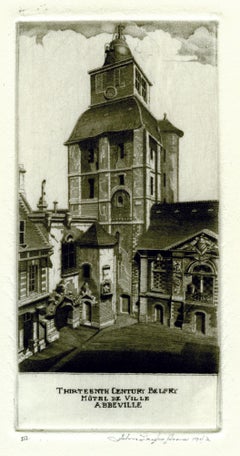
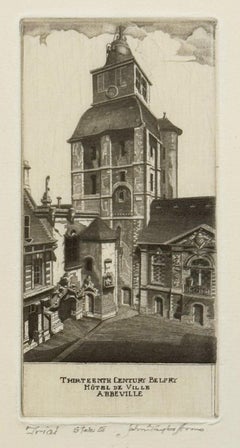
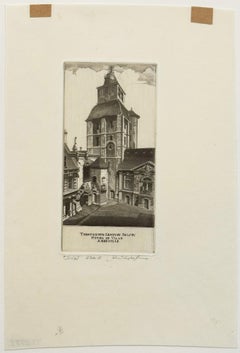
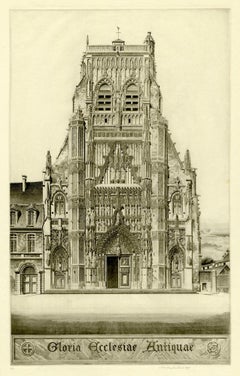
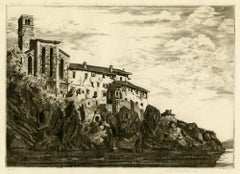
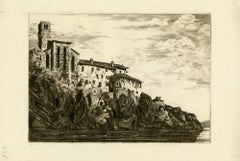
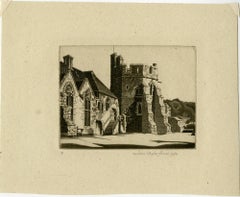
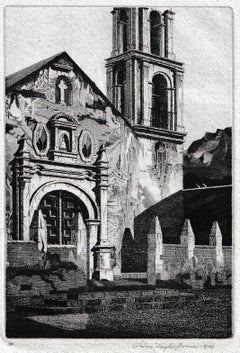
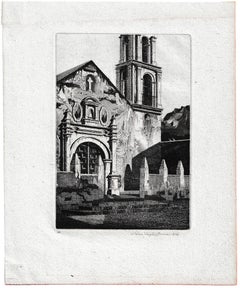
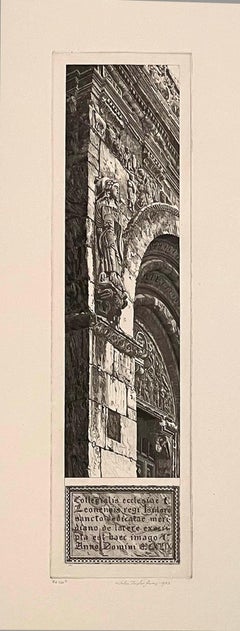
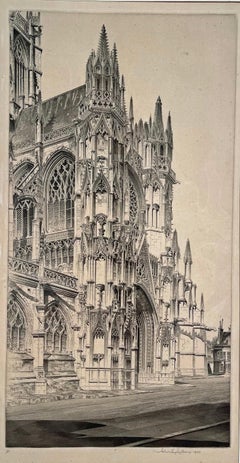
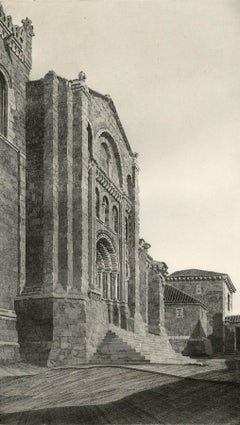
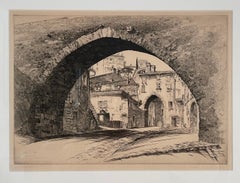
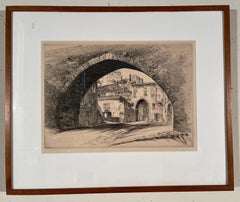
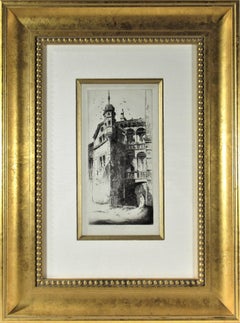
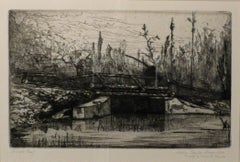
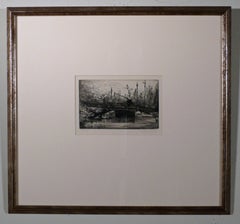
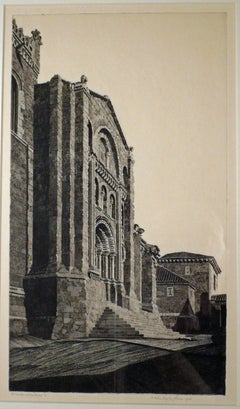
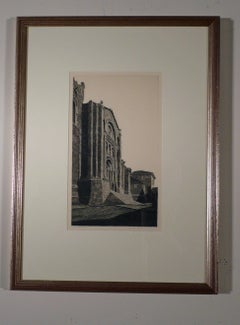
John Taylor Arms, 'Limoges (French Church Series #32)', etching, 1932, edition 142, third (final) state impressions, Fletcher 244. Signed, dated, and annotated 'Ed 100 III' in pencil. A superb, finely detailed impression, in warm black ink, on antique, pale gray laid paper, with full margins (1 1/16 to 1 1/2 inches); adhesive stains in the bottom left and right sheet corners, well away from the image, otherwise in excellent condition. Matted to museum standards, unframed.
A view of Limoges, France and the Saint-Martial Bridge from the far side of the Vienne river. According to Fletcher, author of the catalogue raisonné on the artist's graphic work, this etching is among the artist’s preferred plates.
Published references: "An Appreciation to John Taylor Arms 1887-1953", in PRINT, Vol. VIII #5 P. viii, Feb.-March 1954.
Impressions of this print are in the permanent collections of the Davis Museum at Wellesley College, National Gallery of Art, Saint John’s University, Smithsonian Institution, and Wake Forest University.
ABOUT THE ARTIST
“John Taylor Arms will live on and on and future generations centuries from now will marvel at his work... . As a friend and as a man, he fully matched his superb work.” —John Winkler, printmaker
Born in Washington, D.C. in 1887, John Taylor Arms attended the Lawrenceville School and began the study of law at Princeton University. In 1907, he transferred to the Massachusetts Institute of Technology and took up the study of architecture. Arms evolved his unique drafting style, with its highly realistic, precise detail and exquisitely rendered effects of light, from his experience and practice as an architectural student. He graduated in 1911 and completed a master’s degree the following year. He then worked as a draftsman with the well-known Carrere and Hastings Company in New York.
In 1913 Arms was given a hobbyist’s etching set, and he began to dabble with copperplate and acid. In 1915, after copying a handful of prints by Jongkind and other Etching Revivalists, Arms created his first original etching. His early experiments were picturesque views of European villages, reflecting the influence of Whistler. He inked and printed several of these plates in color in the manner of Charles Mielatz...
Category
1930s American Realist John Taylor Arms Art