Jules Pascin Art

Bulgarian, French, 1885-1930
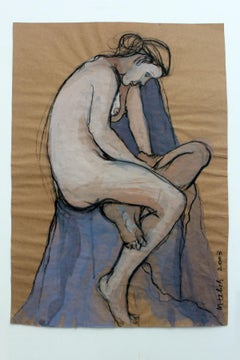
Jules Pascin was born Julius Mordecai Pincas, in Widdin, Bulgaria to a Spanish-Sephardic Jewish father and a Serbian-Italian mother. His early artistic training was in Vienna and Munich. In 1905, at the age of 20, he adopted the pseudonym Pascin (an anagram of Pincas). About the same time, he began contributing drawings to Simplicissimus, a satirical magazine published in Munich. In December 1905, Pascin moved to Paris, becoming part of the great migration of artists to that city at the start of the 20th century. In 1907, Pascin met Hermine Lionette Cartan David, also a painter, and they became lovers. They lived together until Pascin left for America on October 3, 1914. A few weeks later on October 31, Hermine David sailed for the United States to join Pascin. Pascin lived in the United States from 1914 to 1920, sitting out World War I. He taught at the Telfair Academy in Savannah, Georgia, associated with the Telfair Art Museum. He and Hermine painted in New York City as well as in Miami, New Orleans, and Cuba. Despite his social life, Pascin created thousands of watercolors and sketches, plus drawings and caricatures, which he sold to various newspapers and magazines. He studied the art of drawing at the Académie Colarossi and, like Henri de Toulouse-Lautrec, he drew upon his surroundings and his friends, both male and female, as subjects. He wanted to become a serious painter, but in time, he became deeply depressed over his inability to achieve critical success with his efforts. During the 1920s, Pascin mostly painted fragile petites filles, prostitutes waiting for clients, or models waiting for the sitting to end. His fleetingly rendered paintings sold readily, but the money he made was quickly spent. Famous as the host of numerous large parties in his flat, whenever he was invited elsewhere for dinner, he arrived with as many bottles of wine as he could carry. He frequently led a large group of friends on summer picnics beside the River Marne, where their excursions lasted all afternoon. Ernest Hemingway's chapter titled "With Pascin At the Dôme," in A Moveable Feast, recounted a night in 1923 when he had stopped off at Le Dôme and met Pascin escorted by two models. Hemingway's portrayal of the evening is considered one of the defining images of Montparnasse at the time. Pascin struggled with depression and alcoholism. "[D]riven to the wall by his own legend," according to art critic Gaston Diehl, he committed suicide at the age of 45 on the eve of a prestigious solo show. He slit his wrists and hung himself in his studio in Montmartre. On the wall he left a message written in blood, to a former lover, Cecile (Lucy) Vidil Krohg In his last will and testament, Pascin left his estate equally to his wife, Hermine David, and his mistress Lucy Krohg.
to
1
12
11
23
14
8
5
3
2
2
1
1
1
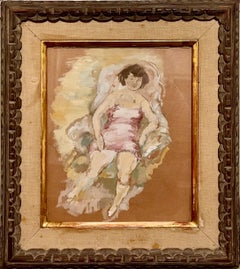
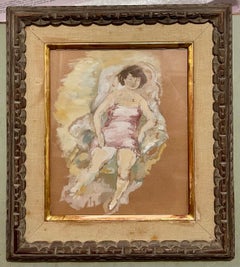
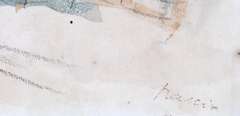
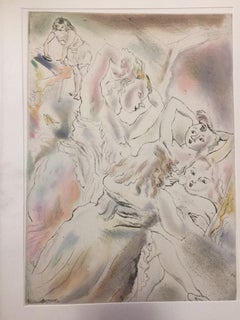
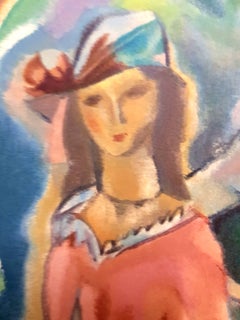
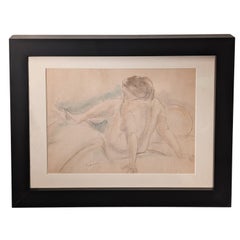
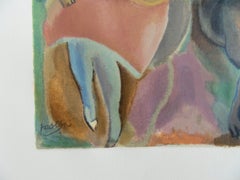
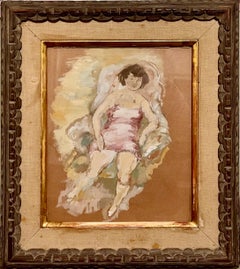
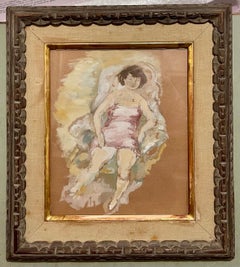
Gouache Painting Jules Pascin Hand Signed Woman in Boudoir German Expressionism

Gouache Painting Jules Pascin Hand Signed Woman in Boudoir German Expressionism

By Jules Pascin

Located in Surfside, FL

Genre: German Expressionist Subject: Woman Medium: gouache paint Surface: Paper board This is hand signed lower right. Framed it measures 17.25 X 15.5, sheet 12 X 10 This came from ...

Category

Early 20th Century Expressionist Jules Pascin Art

Materials

Paper, Gouache, Cardboard

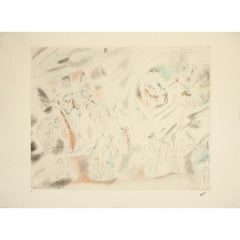
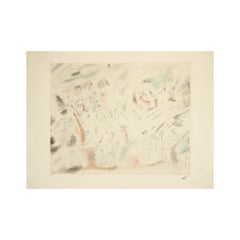
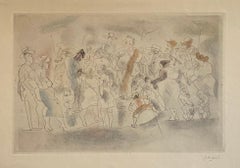
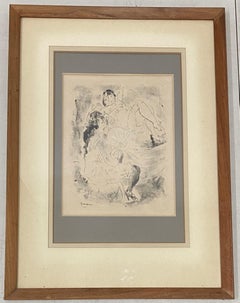
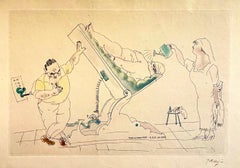
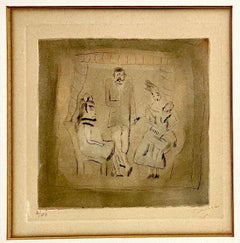
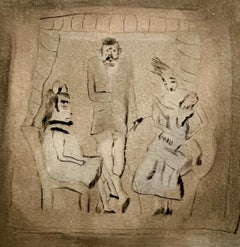
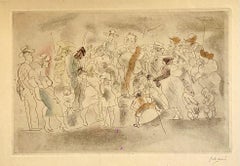
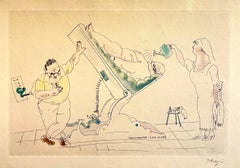
Etching with Hand Watercolor Painting Jules Pascin Pencil Signed

Etching with Hand Watercolor Painting Jules Pascin Pencil Signed

By Jules Pascin

Located in Surfside, FL

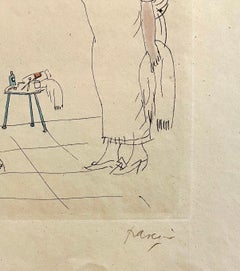
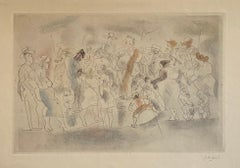
Genre: German Expressionist Subject: Figures Medium: etching, watercolor paint Surface: Paper This is hand signed lower right.. there does not seem to be an edition size although th...

Category

Early 20th Century Expressionist Jules Pascin Art

Materials

Paper, Watercolor, Etching
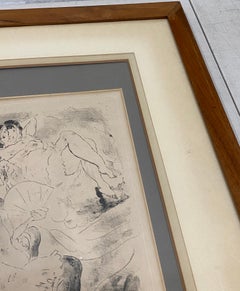
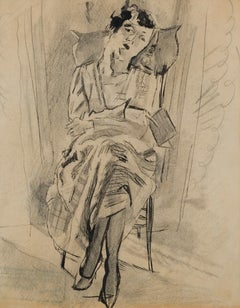
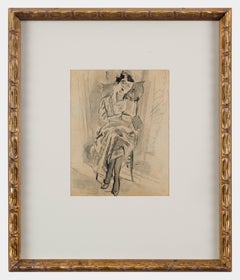
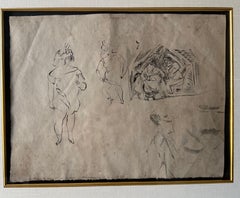
Femme assise by Jules Pascin - Mixed media, work on paper, portrait

Femme assise by Jules Pascin - Mixed media, work on paper, portrait

By Jules Pascin

Located in London, GB

Femme assise by Jules Pascin (1885-1930) Ink and brush, pen and pencil on paper 25 x 20.1 cm (9 ⁷/₈ x 7 ⁷/₈ inches) Stamped with the estate stamp on the reverse Provenance: Estate o...

Category

1920s Jules Pascin Art

Materials

Paper, Ink, Pen, Pencil

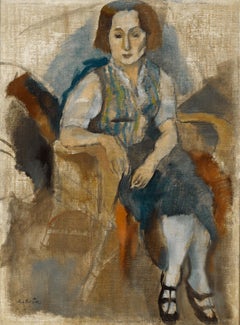
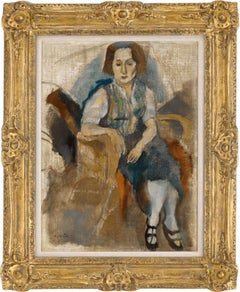
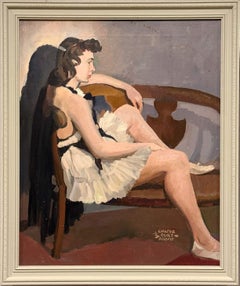
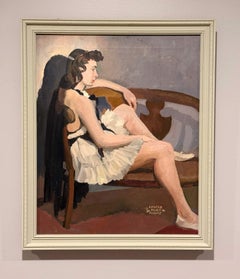
Femme aux Souliers Noir (Woman in Black Shoes)

Femme aux Souliers Noir (Woman in Black Shoes)

By Jules Pascin

Located in New Orleans, LA

This intimate portrait was composed by the Bulgarian-born French Expressionist painter Jules Pascin. Known as the "Prince of Montparnasse," Pascin made a name for himself throughout ...

Category

Early 20th Century Modern Jules Pascin Art

Materials

Canvas, Oil

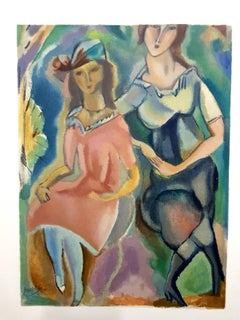
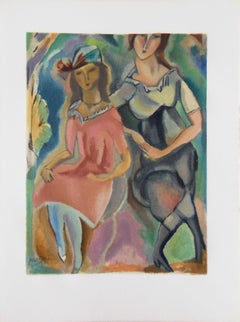
The Sisters - Original woodcut - 1965

The Sisters - Original woodcut - 1965

By Jules Pascin

Located in Paris, IDF

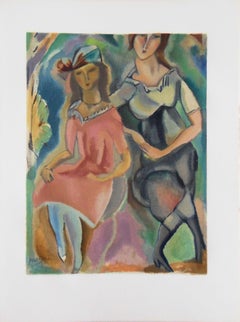
Jules Pascin The Sisters Original woodcut in colors Printed signature in the plate On Arches vellum 38 x 28 cm (c. 15 x 11 in) INFORMATION : Edited for the portfolio Les Peintres ...

Category

1960s Modern Jules Pascin Art

Materials

Woodcut

"Dame de la Nuit, " Jules Pascin, hand-colored etching, 1920-30, figurative

"Dame de la Nuit, " Jules Pascin, hand-colored etching, 1920-30, figurative

By Jules Pascin

Located in Wiscasset, ME

Born Julius Pincas in 1885 in Bulgaria, the artist adopted the name Jules Pascin under which his paintings are known. Pascin studied in Vienna and Munich, and traveled and painted regularly in Paris and Berlin. Pascin came to the United States in 1914 and in 1920 became a US citizen. He returned later...

Category

1920s Modern Jules Pascin Art

Materials

Etching

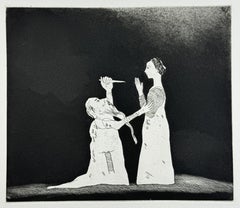
1930 aquatint by Jules Pascin titled Salomé dansant devant le roi Hérode

1930 aquatint by Jules Pascin titled Salomé dansant devant le roi Hérode

By Jules Pascin

Located in PARIS, FR

This refined 1930 aquatint by Jules Pascin, titled Salomé dansant devant le roi Hérode, offers a poetic and dream-like interpretation of the biblical scene of Salome before King Hero...

Category

1930s Jules Pascin Art

Materials

Paper, Aquatint, Lithograph

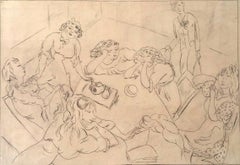
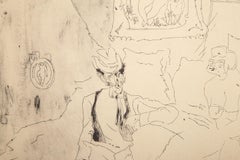
Around the Table -  Ecole de Paris

Around the Table - Ecole de Paris

By Jules Pascin

Located in London, GB

The drawing is signed by the artist in the lower left part "Pascin" Provenance: Stern Gallery, Tel Aviv Sotheby's, Tel Aviv, 27th April 2003, lot 19. Condition: Good condition. Un...

Category

1910s Jules Pascin Art

Materials

Ink, Pen, Pencil

Cendrillon - Rare Book illustrated by Jules Pascin - 1920

Cendrillon - Rare Book illustrated by Jules Pascin - 1920

By Jules Pascin

Located in Roma, IT

Edition of 88 copies including a preface by André Salmon and 5 original full-pagecoloured etchings by Pascin. Includes jacket and slipcase on blue cardboard. Copy on papier d'Arches. One of the most beautiful illustratedversionof this novel and probably the most famous illustrated book by Pascin. Copy in perfect conditions with original softcover on light pink paper.

Category

1920s Modern Jules Pascin Art

Materials

Paper, Etching

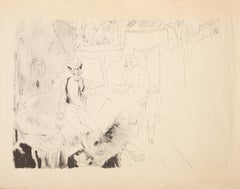
Interior Bedroom, Modern Etching by Jules Pascin

Interior Bedroom, Modern Etching by Jules Pascin

By Jules Pascin

Located in Long Island City, NY

Jules Pascin, Bulgarian/French (1885 - 1930) - Interior Bedroom, Medium: Etching on thin woven paper, Image Size: 11.75 x 16 inches, Size: 14.5 x 18.5 in. (36.83 x 46.99 cm), Descr...

Category

Mid-20th Century Modern Jules Pascin Art

Materials

Etching

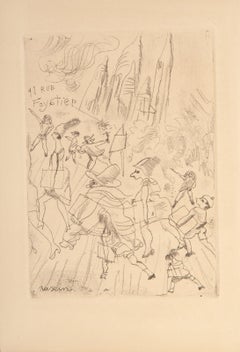
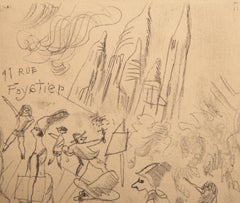
11 Rue Foyatier, Modern Etching by Jules Pascin

11 Rue Foyatier, Modern Etching by Jules Pascin

By Jules Pascin

Located in Long Island City, NY

Jules Pascin, Bulgarian/French (1885 - 1930) - 11 Rue Foyatier, Medium: Etching, signed in the plate, Image Size: 6.5 x 4.5 inches, Size: 8.75 x 6 in. (22.23 x 15.24 cm), Descripti...

Category

Mid-20th Century Modern Jules Pascin Art

Materials

Etching

Etching with Hand Watercolor Painting Jules Pascin Pencil Signed

Etching with Hand Watercolor Painting Jules Pascin Pencil Signed

By Jules Pascin

Located in Surfside, FL

Genre: German Expressionist Subject: Figures Medium: etching, watercolor paint Surface: Paper This is hand signed lower right.. there does not seem to be an edition size although th...

Category

Early 20th Century Expressionist Jules Pascin Art

Materials

Paper, Watercolor, Etching
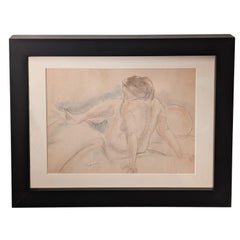
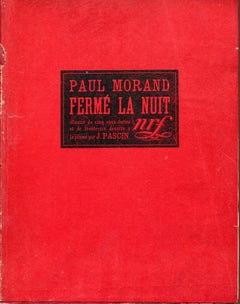
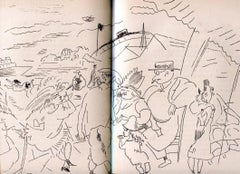
Fermé la Nuit - Rare Book illustrated by Jules Pascin - 1925

Fermé la Nuit - Rare Book illustrated by Jules Pascin - 1925

By Jules Pascin

Located in Roma, IT

Edition of 400 copies. One of the 350 copies on Pur Fil Lafuma-Navarre paper. Includes 5 original etchings and many illustrations by Jules Pascin. Original paperback cover. Perfect c...

Category

1920s Surrealist Jules Pascin Art

Materials

Paper

Ein Sommer - Original Rare Book Illustrated by Jules Pascin - 1920

Ein Sommer - Original Rare Book Illustrated by Jules Pascin - 1920

By Jules Pascin

Located in Roma, IT

Ein sommer is an original Rare Book engraved by Jules Pascin (March 31, 1885 – June 5, 1930) in 1920. Original First Edition. Published by Bruno Cassirer, Berlin. Format: in Folio...

Category

1920s Modern Jules Pascin Art

Materials

Paper, Photogravure

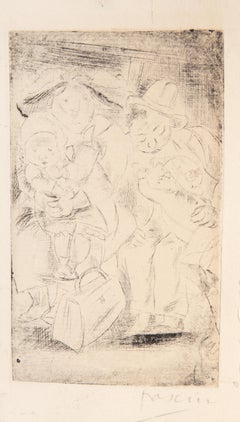
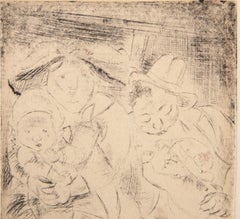
Women and Children, Modern Etching by Jules Pascin

Women and Children, Modern Etching by Jules Pascin

By Jules Pascin

Located in Long Island City, NY

Jules Pascin (1885 - 1930) - Women and Children, Medium: Etching, signed in pencil lower right and dedicated on verso, Image Size: 4.75 x 2.75 inches, Size: 5.75 x 3.25 in. (14.61 ...

Category

Mid-20th Century Modern Jules Pascin Art

Materials

Etching

Femininity - Lithograph

Femininity - Lithograph

By Jules Pascin

Located in Collonge Bellerive, Geneve, CH

(after) Jules Pascin Title: Femininity Signed in the plate Dimensions: 38 x 28 cm from the edition of 250 as issued in Warnod, Andre, "Les Peintres mes amis" (Paris: Les Heures Claires, 1965) Jules Pascin, born Julius Mordechai Pincas, was a Bulgarian Jewish painter sometimes referred to as "the Prince of Montparnasse." He was born on March 31, 1885 in Vidin, Bulgaria to a Spanish-Sephardic Jewish father and a Serbian-Italian mother, the eighth of eleven children. The Pincas family moved to Bucharest, Romania in 1892 and Pascin was raised there until he left for boarding school in Vienna in 1896. While briefly working for his father’s grain merchant firm in Bucharest at fifteen, Pascin spent much of his time completing his earliest drawings in the local bordello, where he was residing under the Madame’s protection. In 1902, at the age of seventeen, Pascin moved to Vienna to study painting. The next year, he studied at the Heymann Art School in Munich. There, he supported himself by selling satirical drawings to Simplicissimus and other German magazines. Pascin would contribute drawings to a Munich daily through 1929. Pascin’s contributions were widely recognized for their wit and insight, and upon his arrival in Paris in 1905 he was welcomed at the Gare Montparnasse by an international group of artists and writers who gathered at the Café du Dôme, which Pascin soon began to frequent regularly. The group included Grossman, Grosz, William Howard, Levy, and Emil Orlik. Pascin was also a close friend of Amadeo Modigliani. Upon his arrival in Paris, Julius Mordechai Pincas changed his name to Jules Pascin and soon became the symbol of the Montparnasse artist community. Always in his bowler hat, he was a witty presence at Le Dôme café, Le Jockey club, and the others haunts of the area’s bohemian society, and was known for hosting legendary all-night parties. In his story, A Moveable Feast, Ernest Hemingway wrote a chapter titled With Pascin At the Dôme, recounting a night in 1923 when he had stopped off at Le Dôme and met Pascin escorted by two models. Hemingway's depiction of the events of that night is considered one of the defining images of Montparnasse at the time. In 1907, Pascin had his first solo exhibition at Paul Cassirer Gallery in Berlin. Three years later, Cassirir commissioned Pascin to illustrate Heinrich Heine's Aus den Memoiren des Herrn von Schnabelewopski. In 1911, Pascin exhibited his work at Berlin Secession and a year later at the Sonderbund-Aussstellung in Cologne. The artist’s first exhibition in the United States was at the Armory Show in New York, where he exhibited twelve of his works. Upon the outbreak of World War I, Pascin left Paris for London in order to avoid conscription in the Bulgarian Army. In October 1914, he immigrated to New York, where he stayed through 1920 and would later return again in 1927. Pascin was immediately welcomed into an artists circle based around the Penguin Club and became acquainted with John Quinn, an important art collector. A short time after his arrival in New York, Pascin was given a one-man show by the Berlin Photographic Company, a Madison Avenue gallery. While in New York, Pascin became associated with several progressive painters, including Walt Kuhn, Yasuo Kuniyoshi, and Max Weber. Many of these painters were influenced by Pascin’s unique style, in which he combined elements from Expressionism and Cubism with his own personal view of his environment. Pascin used his time in the United States to travel extensively, especially in the southern states and the Caribbean islands, recording his travels in sketches that were widely acclaimed. Pascin married Hermine David in 1918. In 1920, Pascin was awarded American citizenship with support from Alfred Stieglitz and Maurice Sterne. He returned to Paris in October of that same year and met his future mistress, Lucy Krohg, the wife of the Norwegian painter Per Krohg...

Category

1960s Modern Jules Pascin Art

Materials

Lithograph

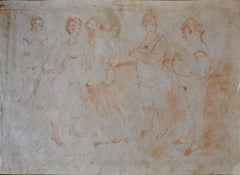
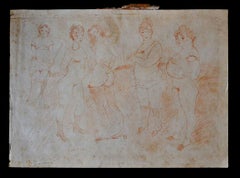
A Group of Prostitutes

A Group of Prostitutes

By Jules Pascin

Located in London, GB

JULES PASCIN 1885-1930 Vidin, Bulgaria 1885-1930 Paris ( Bulgarian / French / American) Title: A Group of Prostitutes Technique:Original Hand Signed Sanguine Crayon Drawing on Chi...

Category

1970s Impressionist Jules Pascin Art

Materials

Crayon

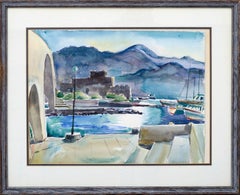
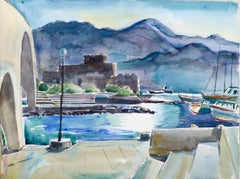
Paysage d’Alger, French early 20th Century watercolor and ink on paper

Paysage d’Alger, French early 20th Century watercolor and ink on paper

By Jules Pascin

Located in New York, NY

Provenance Estate of the artist David Bunim Perls Gallery, NY Private Collection, USA Literature This work will be inclued in the forthcoming supplement to the catalogue raisonne in...

Category

Early 20th Century Post-Impressionist Jules Pascin Art

Materials

Ink, Watercolor, Paper

Two Dancing Figures
Two Dancing Figures

Two Dancing Figures

By Jules Pascin

Located in London, GB

JULES PASCIN 1885-1930 Vidin, Bulgaria 1885-1930 Paris (Bulgarian/French/American) Title: Two Dancing Figures Technique: Original Stamp Signed and Ins...

Category

Early 1900s Contemporary Jules Pascin Art

Materials

Pencil

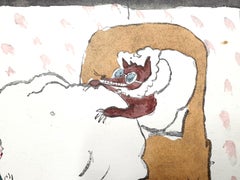
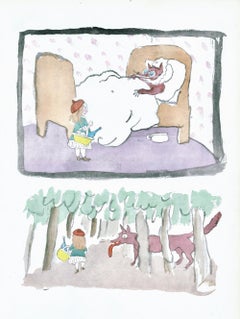
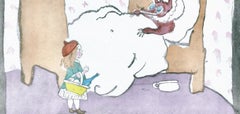
Jules Pascin, Little Red Riding Hood, from XXe siecle, 1938 (after)

Jules Pascin, Little Red Riding Hood, from XXe siecle, 1938 (after)

By Jules Pascin

Located in Southampton, NY

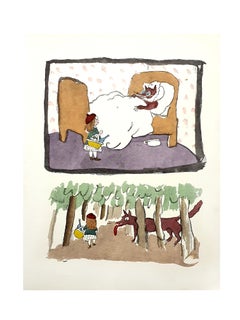
This exquisite lithograph after Jules Pascin (1885–1930), titled Le Petit Chaperon Rouge (Little Red Riding Hood), from the album XXe siecle, Sommaire du No. 1, 1er Mars 1938, Chroni...

Category

1930s Modern Jules Pascin Art

Materials

Lithograph

Related Items
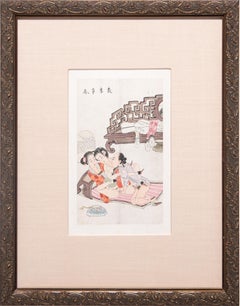
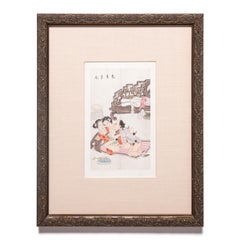
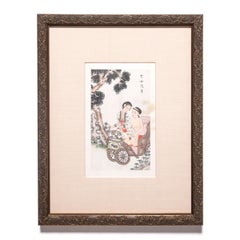
Chinese Erotic Album Leaf, c. 1850

Chinese Erotic Album Leaf, c. 1850, c. 1850

$980

H 14.75 in W 11.75 in D 1 in

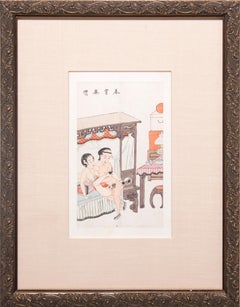
Chinese Erotic Album Leaf, c. 1850

Located in Chicago, IL

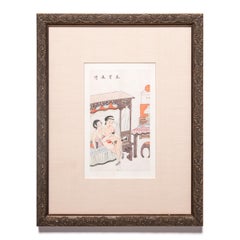
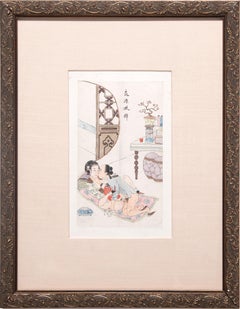
Despite its explicit content, this intimate scene conveys a sense of tenderness and romantic love characteristic of Chinese erotic art. Known as “spring palace paintings,” these ink and watercolor illustrations imagined the sensual delights of courtly life. Taken from an album of erotic paintings, this framed leaf departs from a tradition of depicting lovers in risqué outdoor settings by picturing an amorous coupling in a distinctly Qing-dynasty interior. The uniquely detailed surroundings shed light on the prevailing aesthetic tastes in decor and furniture of 19th-century China. Note the carved wooden headrest, blue and white censer...

Category

Mid-19th Century Qing Jules Pascin Art

Materials

Paper, Ink, Watercolor

“Mascara (Mask)" 2000 by Justino Alves Portuguese Contemporary Abstract Portrait

“Mascara (Mask)" 2000 by Justino Alves Portuguese Contemporary Abstract Portrait

By Justino Alves

Located in Yardley, PA

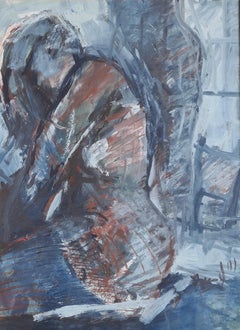
About this work: “Mascara (Mask)" 2000 by Justino Alves (Portuguese, 1940-2015). A magnetic work by one of Portugal’s most distinguished postwar painters. This painting has all of t...

Category

Early 2000s Modern Jules Pascin Art

Materials

Canvas, Oil

A Fine, Stylish 1930s Modern Figure Study Drawing of a Standing Male Nude Model

A Fine, Stylish 1930s Modern Figure Study Drawing of a Standing Male Nude Model

By Francis Chapin

Located in Chicago, IL

A Fine, Stylish 1930s Modern Figure Study Drawing of a Standing Male Nude Model by Famed Chicago Artist Francis Chapin (Am. 1899-1965). A wonderful, early example of Chapin's figura...

Category

1930s American Modern Jules Pascin Art

Materials

Paper, Ink, Watercolor

"Lendas Africanas Da Bahia" from the suite.

"Lendas Africanas Da Bahia" from the suite.

Located in San Francisco, CA

This artwork titled " Lendas Africanas Da Bahia" from the suite, 1978, is an original colors woodcut by renown Brazilian/Argentinian artist Hector Julio Paride Barnabo Carybe, 1911-1997. It is hand signed and numbered 83/200 in pencil by the artist. The Wood block mark (image) is 23.65 x 15.75 inches, sheet size is 26.75 x 19 inches. It is in excellent condition, has never been framed. It will be shipped in a 8 inches diameter heavy duty tube. About the artist: Héctor Julio Páride Bernabó (7 February 1911 – 2 October 1997) was an Argentine-Brazilian artist, researcher, writer, historian and journalist. His nickname and artistic name, Carybé, a type of piranha, comes from his time in the scouts. He died of heart failure after the meeting of a candomblé community's lay board of directors, the Cruz Santa Opô Afonjá Society, of which he was a member. Quick Facts Born, Died ... Carybé Born Héctor Julio Páride Bernabó 7 February 1911 Lanús, Argentina Died 2 October 1997 (aged 86) Salvador, Bahia, Brazil Nationality Brazilian Known for Painter, engraver, draughtsman, illustrator, potter, sculptor, mural painter, researcher, historian and journalist Close He produced thousands of works, including paintings, drawings, sculptures and sketches. He was an Obá de Xangô, an honorary position at Ilê Axé Opô Afonjá. Orixá Panels in the Afro-Brazilian Museum in Salvador Some of Carybé's work can be found in the Afro-Brazilian Museum in Salvador: 27 cedar panels representing different orixás or divinities of the Afro-Brazilian religion candomblé. Each panel shows a divinity with their associated implements and animal. The work was commissioned by the former Banco da Bahia S.A., now Banco BBM S.A., which originally installed them in its branch on Avenida Sete de Setembro in 1968. Murals at Miami International Airport American Airlines, Odebrecht and the Miami-Dade Aviation Department partnered to install two of Carybé's murals at Miami International Airport. They have been displayed in the American Airlines terminal at John F. Kennedy International Airport in New York since 1960. The 16.5 x 53-foot murals were accredited when Carybé won the first and the second prize in a contest of public art pieces for JFK airport. As its terminal at that airport was due for demolition, American Airlines donated the murals to Miami-Dade County, and Odebrecht invested in a project to remove, restore, transport and install the murals at Miami International Airport. The mural "Rejoicing and Festival of the Americas" portrays colorful scenes from popular festivals throughout the Americas, and "Discovery and Settlement of the West" depicts the pioneers’ journey into the American West. Carybé's Woodcuts in Gabriel García Márquez's Books Carybé illustrated four books by the Colombian writer Gabriel García Márquez, including One Hundred Years of Solitude, The Autumn of the Patriarch, Chronicle of a Death Foretold, and Love in the Time of Cholera "Carybé: um mestre da cultura baiana". ArqBahia Arquitetura, design, arte e lifestyle (in Brazilian Portuguese). 26 April 2023.. In particular, the woodcuts in One Hundred Years of Solitude are well-known for providing a visual image of the fictional town of Macondo, where the story takes place. The illustrations depict the colorful and winding houses, the railway bridge, and the hot and humid climate of the region, contributing to the reader's immersion in the story. Carybé's woodcuts are, therefore, an important part of Gabriel García Márquez's literary legacy, bringing a visual dimension to his stories that further enriches the reader's experience. Timeline 1911 — Birth in Lanús, Argentina. 1919 — Moved to Brazil. 1921 — The name Carybé is first given to him by the Clube do Flamengo scouts group, in Rio de Janeiro. 1925 — Beginning of his artistic endeavours, going to the pottery workshop of his elder brother, Arnaldo Bernabó, in Rio de Janeiro. 1927–1929 — Studies at the National School of Fine Arts, in Rio de Janeiro. 1930 — Worked for the newspaper Noticias Gráficas, in Buenos Aires, Argentina. 1935–1936 — Works with the writer Julio Cortázar and as a draughtsman for the El Diario newspaper. 1938 — Sent to Salvador by newspaper Prégon. 1939 — First collective exhibition, with the artist Clemente Moreau, at the Buenos Aires City Museum of Fine Arts, Argentina; illustrates the book Macumba, Relatos de la Tierra Verde, by Bernardo Kardon, published by Tiempo Nuestro. 1940 — Illustrates the book Macunaíma, by Mário de Andrade. 1941 — Draws the Esso Almanach, the payment for which allows him to set on a long journey through Uruguay, Brazil, Bolivia, and Argentina. 1941–1942 — Study trip around several South American countries. 1942 — Illustration for the book La Carreta by Henrique Amorim, published by El Ateneo (Buenos Aires, Argentina). 1943 — Together with Raul Brié, translates the book Macunaíma, by Mário de Andrade, into Spanish; produces the illustrations for the works Maracatu, Motivos Típicos y Carnavalescos, by Newton Freitas, published by Pigmaleon, Luna Muerta, by Manoel Castilla, published by Schapire, and Amores de Juventud, by Casanova Callabero; also publishes and illustrates Me voy al Norte, for the quarterly magazine Libertad Creadora; awarded First Prize by the Cámara Argentina del Libro (Argentine Book Council) for the illustration of the book Juvenília, by Miguel Cané (Buenos Aires, Argentina). 1944 — Illustrates the books The Complete Poetry of Walt Whitmann and A Cabana do Pai Tomás, both published by Schapire ; as well as and Los Quatro Gigantes del Alma by Mira y Lopez, Salvador BA; attends capoeira classes, visits candomblé meetings and makes drawings and paintings. 1945 — Does the illustrations for Daniel Defoe's Robinson Crusoe, for the Viau publishing house. 1946 — Helps in setting up the Tribuna da Imprensa newspaper, in Rio de Janeiro. 1947 — Works for the O Diário Carioca newspaper, in Rio de Janeiro. 1948 — Produces texts and illustrations for the book Ajtuss, Ediciones Botella al Mar (Buenos Aires, Argentina). 1949–1950 — Invited by Carlos Lacerda to work at the Tribuna da Imprensa, in Rio de Janeiro. 1950 — Invited by the Education Secretary Anísio Teixeira, moves to Bahia, and produces two panels for the Carneiro Ribeiro Education Center (Park School), in Salvador, Bahia. 1950–1997 — Settles in Salvador, Bahia. 1950–1960 — Actively participate in the plastic arts renewal movement, alongside Mário Cravo Júnior, Genaro de Carvalho, and Jenner Augusto. 1951 — Produces texts and illustrations for the works of the Coleção Recôncavo, published by Tipografia Beneditina and illustrations for the book, Bahia, Imagens da Terra e do Povo, by Odorico Tavares, published by José Olímpio in Rio de Janeiro; for the latter work he receives the gold medal at the 1st Biennial of Books and Graphic Arts. 1952 — Makes roughly 1,600 drawings for the scenes of the movie O Cangaceiro, by Lima Barreto; also works as the art director and as an extra on the film (São Paulo, SP). 1953 — Illustrations for the book A Borboleta Amarela, by Rubem Braga, published by José Olímpio (Rio de Janeiro, RJ). 1955 — Illustrates the work O Torso da Baiana, edited by the Modern Art Museum of Bahia. 1957 — Produces etchings, with original designs, for the special edition of Mário de Andrade's Macunaíma, published by the Sociedade dos 100 Bibliófilos do Brasil. 1958 — Makes an oil painting mural for the Petrobras Office in New York, USA; illustrates the book As Três Mulheres de Xangô, by Zora Seljan, published by Editora G. R. D. (Rio de Janeiro, RJ); Receives a scholarship grant in New York, USA. 1959 — Takes part in the competition for the New York International Airport panels project, in New York, USA, winning first and second prizes. 1961 — Illustrates the book Jubiabá, by Jorge Amado, published by Martins Fontes (São Paulo, SP). 1963 — Awarded the title of Honorary Citizen of Salvador, Bahia. 1965 — Illustrates A Muito Leal e Heróica Cidade de São Sebastião do Rio de Janeiro, published by Raymundo Castro Maya (Rio de Janeiro, RJ). 1966 — With Jorge Amado, co-authors Bahia, Boa Terra Bahia, published by Image (Rio de Janeiro, RJ); writes and illustrates the book Olha o Boi, published by Cultrix (São Paulo, SP). 1967 — Receives the Odorico Tavares Prize – Best Plastic Artist of 1967, in a competition ran by the state government to stimulate the development of plastic arts in Bahia; makes the Orixás Panels for the Banco da Bahia (currently at the UFBA Afro-Brazilian Museum) (Salvador, BA). 1968 — Illustrates the books Carta de Pero Vaz de Caminha ao Rei Dom Manuel, published by Sabiá (Rio de Janeiro) and Capoeira Angolana, by Waldeloir Rego, published by Itapoã (Bahia). 1969 — Produces the illustrations for the book Ninguém Escreve ao Coronel, by Gabriel Garcia Marquez, published by Sabiá (Rio de Janeiro, RJ). 1970 — Illustrates the books O Enterro do Diabo and Os Funerais de Mamãe Grande, published by Sabiá (Rio de Janeiro, RJ), Agotimé her Legend, by Judith Gleason, published by Grossman Publishers (New York, USA). 1971 — Illustrates the books One Hundred Years of Solitude, by Gabriel Garcia Marquez and A Casa Verde by Mario Vargas Llosa, both published by Sabiá (Rio de Janeiro, RJ); produces texts and illustrations for the book Candomblé da Bahia, published by Brunner (São Paulo, SP). 1973 — Illustrations for Gabriel Garcia Marquez's A Incrível e Triste História de Cândida Erendira e sua Avó Desalmada (Rio de Janeiro, RJ); paints the mural for the Legislative Assembly and the panel for the Bahia State Secretary of the Treasury. 1974 — Produces woodcuts for the book Visitações da Bahia, published by Onile. 1976 — Illustrates the book O Gato Malhado e a Andorinha Sinhá: uma história de amor, by Jorge Amado (Salvador, BA); receives the title of Knight of the Order of Merit of Bahia. 1977 — Certified with the Honor for Afro-Brazilian Cult Spiritual Merit, Xangô das Pedrinhas ao Obá de Xangô Carybé (Magé, RJ). 1978 — Makes the concrete sculpture Oxóssi, in the Catacumba Park; illustrates the book A Morte e a Morte de Quincas Berro D´Água, by Jorge Amado, published by Edições Alumbramento (Rio de Janeiro, RJ). 1979 — Produces woodcuts for the book Sete Lendas Africanas da Bahia, published by Onile. 1980 — Designs the costumes and scenery for the ballet Quincas Berro D´Água, at the Teatro Municipal in Rio de Janeiro. 1981 — Publication of the book Iconografia dos Deuses Africanos no Candomblé da Bahia (Ed. Raízes), following thirty years of research. 1982 — Receives the title of Honorary Doctor of the Federal University of Bahia. 1983 — Makes the panel for the Brazilian Embassy in Lagos, Nigeria. 1984 — Receives the Jerônimo Monteiro Commendation – Level of Knight (Espírito Santo); receives the Castro Alves Medal of Merit, granted by the UFBA Academy of Arts and Letters; makes the bronze sculpture Homenagem à mulher baiana (Homage to the Bahian woman), at the Iguatemi Shopping Center (Salvador, BA). 1985 — Designs the costumes and sets for the spectacle La Bohème, at the Castro Alves Theater; illustrates the book Lendas Africanas dos Orixás, by Pierre Verger, published by Currupio. 1992 — Illustrates the book O sumiço da santa: uma história de feitiçaria, by Jorge Amado (Rio de Janeiro, RJ). 1995 — Illustration of the book O uso das plantas na sociedade iorubá, by Pierre Verger (São Paulo, SP). 1996 — Making of the short film Capeta Carybé, by Agnaldo Siri Azevedo, adapted from the book O Capeta Carybé, by Jorge Amado, about the artist Carybé, who was born in Argentina and became the most Bahian of all Brazilians. 1997 — Illustration of the book Poesias de Castro Alves. Exhibitions ммIndividual Exhibitions: 1943 — Buenos Aires (Argentina) — First individual exhibition, at the Nordiska Gallery 1944 — Salta (Argentina) — at the Consejo General de Educacion 1945 — Salta (Argentina) — Amigos del Arte, Buenos Aires (Argentina) — Motivos de América, at the Amauta Gallery, Rio de Janeiro RJ — individual exhibition at the IAB/RJ 1947 — Salta (Argentina) — Agrupación Cultural Femenina 1950 — Salvador BA — First individual exhibit in Bahia, at the Bar Anjo Azul; São Paulo SP — MASP. 1952 — São Paulo SP — MAM/SP 1954 — Salvador BA — Oxumaré Gallery 1957 — New York (USA) — Bodley Gallery; Buenos Aires (Argentina) — Bonino Gallery * 1958 - New York (USA) — Bodley Gallery 1962 — Salvador BA - MAM/BA 1963 — Rio de Janeiro RJ — Bonino Gallery 1965 — Rio de Janeiro RJ — Bonino Gallery 1966 — São Paulo SP — Astrea Gallery 1967 — Rio de Janeiro RJ — Santa Rosa Gallery 1969 — London (England) — Varig Airlines 1970 — Rio de Janeiro RJ — Galeria da Praça 1971 — Rio de Janeiro RJ — MAM/RJ, São Paulo SP — A Galeria; Belo Horizonte MG, Brasília DF, Curitiba PR, Florianopolis SC, Porto Alegre RS, Rio de Janeiro RJ and São Paulo SP — The Orixás Panel (exhibition tour), at the Casa da Cultura in Belo Horizonte, MAM/DF, the Public Library of Paraná, the Legislative Assembly of Santa Catarina State, the Legislative Assembly of Rio Grande do Sul, MAM/RJ and MAM/SP 1972 — The Orixás Panel in Fortaleza CE — at the Ceará Federal University Art Museum, and in Recife PE — at the Santa Isabel Theater 1973 — São Paulo SP — A Galeria 1976 — Salvador BA — at the Church of the Nossa Senhora do Carmo Convent 1980 — São Paulo SP — A Galeria 1981 — Lisbon (Portugal) — Cassino Estoril 1982 — São Paulo SP — Renot Art Gallery, São Paulo SP — A Galeria 1983 — New York (USA) — Iconografia dos Deuses Africanos no Candomblé da Bahia, The Caribbean Cultural Center 1984 — Philadelphia (USA) — Art Institute of Philadelphia; Mexico — Museo Nacional de Las Culturas; São Paulo SP — Galeria de Arte André 1986 — Lisbon (Portugal) — Cassino Estoril; Salvador BA — As Artes de Carybé, Núcleo de Artes Desenbanco 1989 — Lisbon (Portugal) — Cassino Estoril; São Paulo SP — MASP 1995 — São Paulo SP — Documenta Galeria de Arte, São Paulo SP — Casa das Artes Galeria, Campinas SP — Galeria Croqui, Curitiba PR — Galeria de Arte Fraletti e Rubbo, Belo Horizonte MG — Nuance Galeria de Arte, Foz do Iguaçu PR — Ita Galeria de Arte, Porto Alegre RS — Bublitz Decaedro Galeria de Artes, Cuiabá MT — Só Vi Arte Galeria, Goiânia GO — Época Galeria de Arte, São Paulo SP — Artebela Galeria Arte Molduras, Fortaleza CE — Galeria Casa D'Arte, Salvador BA — Oxum Casa de Arte Collective Exhibitions: 1939 — Buenos Aires (Argentina) — Carybé and Clemente Moreau Exhibition, at the Museo Municipal de Belas Artes 1943 — Buenos Aires (Argentina) — 29th Salon de Acuarelistas y Grabadores — first prize 1946 — Buenos Aires (Argentina) — Drawings by Argentine Artists, at the Kraft Gallery 1948 — Washington (USA) — Artists of Argentina, at the Pan American Union Gallery 1949 — Buenos Aires (Argentina) — Carybé and Gertrudis Chale, at the Viau Gallery; Salvador BA — Bahian Showroom of Fine Arts, at the Hotel Bahia 1950 — Salvador BA — 2nd Bahian Showroom of Fine Arts; São Paulo SP — MAM/SP 1951 — São Paulo SP — 1st São Paulo Art Biennial, Trianon Pavilion. 1952 — Salvador BA — 3rd Bahian Showroom of Fine Arts, at Belvedere da Sé; São Paulo SP — MAM/SP 1953 — Recife PE — Mario Cravo Júnior and Carybé, at the Santa Isabel Theater; São Paulo SP — 2nd São Paulo Art Biennial, at MAM/SP 1954 — Salvador BA — 4th Bahian Showroom of Fine Arts, at the Hotel Bahia. — Bronze medal 1955 — São Paulo SP — 3rd São Paulo Art Biennial, at MAM/SP — first prize for drawing 1956 — Salvador BA — Modern Artists of Bahia, at the Oxumaré Gallery; Venice (Italy) — 28th Venice Biennial 1957 — Rio de Janeiro RJ — 6th National Modern Art Show — exemption from the jury; São Paulo SP — Artists from Bahia, at the MAM/SP 1958 — San Francisco (USA) — Works by Brazilian Artists, at the Fine Arts Museums of San Francisco, Washington and New York (USA) — Works by Brazilian Artists, at the Pan American Union and the MoMA 1959 — Seattle (USA) — 30th International Exhibition, at the Seattle Art Museum; Salvador BA — Modern Artists of Bahia, at the Dentistry School. 1961 — São Paulo SP — 6th São Paulo Art Biennial, at MAM/SP — special room 1963 — Lagos (Nigeria) — Brazilian Contemporary Artists, at the Nigerian Museum; São Paulo SP — 7th São Paulo Art Biennial Bienal, at the Fundação Bienal 1964 — Salvador BA — Christmas Exhibition, at the Galeria Querino 1966 — Baghdad (Iraq) — collective exhibition sponsored by the Calouste Gulbenkian Foundation; Madrid (Spain) — Artists of Bahia, at the Hispanic Culture Institute; Rome (Italy) — Piero Cartona Palace; Salvador BA — 1st National Biennial of Plastic Arts (Bienal da Bahia) — special room; Salvador BA — Draughtsmen of Bahia, at the Convivium Gallery 1967 — Salvador BA — Christmas Exhibition at the Panorama Art Gallery; São Paulo SP — Artists of Bahia, at the A Gallery 1968 — São Paulo SP — Bahian Artists, at the A Gallery 1969 — London (England) — Tryon Gallery; São Paulo SP — 1st Panorama of Current Brazilian Art at the MAM/SP; São Paulo SP — Carybé, Carlos Bastos...

Category

Late 20th Century Modern Jules Pascin Art

Materials

Woodcut

A Fine, Stylish 1930s Modern Figure Study Drawing of a Standing Male Nude Model

A Fine, Stylish 1930s Modern Figure Study Drawing of a Standing Male Nude Model

By Francis Chapin

Located in Chicago, IL

A Fine, Stylish 1930s Modern Figure Study Drawing of a Standing Male Nude Model (Back) by Famed Chicago Artist Francis Chapin (Am. 1899-1965). A wonderful, early example of Chapin's...

Category

1930s American Modern Jules Pascin Art

Materials

Paper, Ink, Watercolor

'The Workers (No. 1)' — 1930s WPA Signed Modernist Woodcut

'The Workers (No. 1)' — 1930s WPA Signed Modernist Woodcut

By Charles Turzak

Located in Myrtle Beach, SC

Charles Turzak, 'The Workers (No. 1)', woodcut, edition c. 50, c. 1935. Signed and titled in pencil. Signed in the block, lower right. A fine, richly-inked impression, on cream wove...

Category

1930s American Modern Jules Pascin Art

Materials

Woodcut

Pensando & recordando a Luis Caballero, Nude Watercolor on paper

Pensando & recordando a Luis Caballero, Nude Watercolor on paper

By Celso José Castro Daza

Located in Miami Beach, FL

Drawing on paper is his basic work tool, some are sketches of his surviving works, and others are sketches of moments he documents. Throughout his artistic career, Castro has exalt...

Category

2010s Contemporary Jules Pascin Art

Materials

Paper, Ink, Pastel, Watercolor

A Large, Captivating 1930s Modern Portrait of a Jamaican Man in a Linen Suit

A Large, Captivating 1930s Modern Portrait of a Jamaican Man in a Linen Suit

By Francis Chapin

Located in Chicago, IL

A Large, Captivating 1930s Modern Portrait of a Jamaican Man in a Linen Suit by famed Chicago artist, Francis Chapin (Am. 1899-1965). A skilled and colorful portrait of a black man seated in a white linen suit, most likely completed during Chapin's trip to Kingston, Jamaica in the 1930s. Chapin exhibited examples of his Jamaican paintings...

Category

1930s American Modern Jules Pascin Art

Materials

Oil, Canvas

Interspecies Communication, colorful mythological swirling pattern orange tones

Interspecies Communication, colorful mythological swirling pattern orange tones

By Janet Morgan

Located in Brooklyn, NY

Watercolor, mixed media, using resists and metalic paints and old pastels. For Octopus and cephalopod fans. Janet Morgan’s explosive art captures the exu...

Category

2010s Expressionist Jules Pascin Art

Materials

Mixed Media, Watercolor, Archival Paper

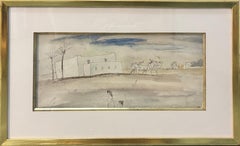
'Woman in Blue', Danish Royal Academy, Brooklyn Museum, Kolding

'Woman in Blue', Danish Royal Academy, Brooklyn Museum, Kolding

Located in Santa Cruz, CA

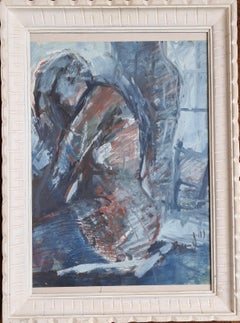
Initialed lower left, 'A.S.' for Anton Schroder (Danish, 1893-1965) and dated 1953. A substantial, modernist oil painting of a young woman, shown seated and gazing to her left with ...

Category

1950s Modern Jules Pascin Art

Materials

Canvas, Oil

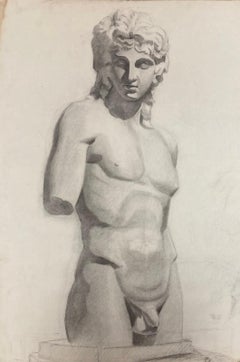
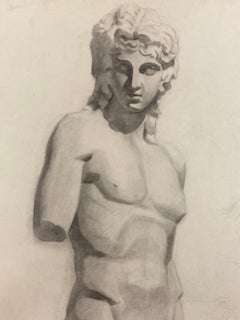
1900s French Atelier Life Drawing Academic Sculpture of Male Nude Figure

1900s French Atelier Life Drawing Academic Sculpture of Male Nude Figure

By Jeanne Nachat

Located in Cirencester, Gloucestershire

Life study drawing original atelier drawing by the French artist, Jeanne Nachat (1898-1984) Nachat attended the prestigious Académie des Beaux-Arts in Pa...

Category

Early 20th Century Academic Jules Pascin Art

Materials

Charcoal, Pencil

Chinese Erotic Album Leaf, c. 1850

Chinese Erotic Album Leaf, c. 1850, 1850

$980

H 14.75 in W 11.75 in D 1 in

Chinese Erotic Album Leaf, c. 1850

Located in Chicago, IL

Despite its explicit content, this intimate scene conveys a sense of tenderness and romantic love characteristic of Chinese erotic art. Known as “sp...

Category

Mid-19th Century Qing Jules Pascin Art

Materials

Paper, Ink, Watercolor

Previously Available Items
French Expressionist Original Colored Drawing Painting Seated Nude Young Woman

French Expressionist Original Colored Drawing Painting Seated Nude Young Woman

By Jules Pascin

Located in Portland, OR

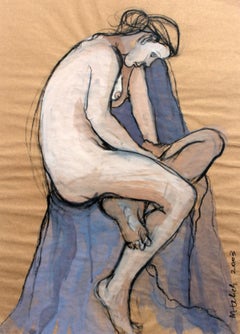
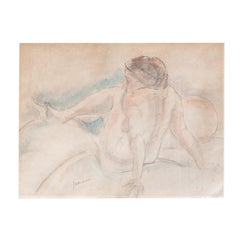
An important French Expressionist original colored sketch painting of a young nude female by Jules Pascin (1885-1930). This thoughtful original artwork, a sketch circa 1920 done in ...

Category

1920s Expressionist Jules Pascin Art

Materials

Paper, Pencil, Color Pencil

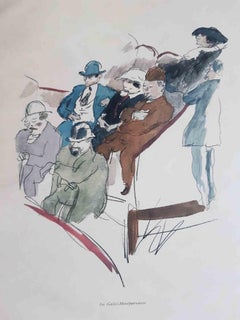
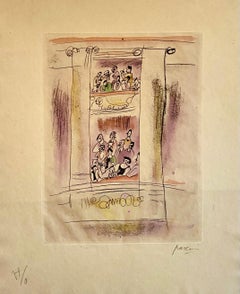
Jules Pascin "La Loge" Etching, 1925

Jules Pascin "La Loge" Etching, 1925

Sold

H 18 in W 15 in D 1 in

Jules Pascin "La Loge" Etching, 1925

By Jules Pascin

Located in Astoria, NY

Jules Pascin (Bulgarian/French, 1885-1930), "La Loge" [The Theater Box], Etching in Colors, 1925, signed in pencil lower right, Wolseley Fine Arts Gallery label to verso, giltwood fr...

Category

Early 20th Century Jules Pascin Art

Materials

Paper

Cendrillon, Impressionist Etching by Jules Pascin

Cendrillon, Impressionist Etching by Jules Pascin

By Jules Pascin

Located in Long Island City, NY

Jules Pascin, Bulgarian/French (1885 - 1930) - Cendrillon, Year: 1929, Medium: Etching with Aquatint, signed in the plate, Image Size: 10 x 14 inches, Size: 13 x 17.5 in. (33.02 x ...

Category

1920s Impressionist Jules Pascin Art

Materials

Etching, Aquatint

The Sisters - Original woodcut - 1965

The Sisters - Original woodcut - 1965

By Jules Pascin

Located in Paris, IDF

Jules Pascin The Sisters Original woodcut in colors Printed signature in the plate On Arches vellum 38 x 28 cm (c. 15 x 11 in) INFORMATION : Edited for the portfolio Les Peintres ...

Category

1960s Modern Jules Pascin Art

Materials

Woodcut

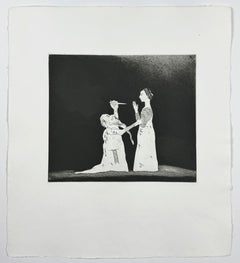
Aquatint Etching with Hand Watercolor Painting Jules Pascin Signed

Aquatint Etching with Hand Watercolor Painting Jules Pascin Signed

By Jules Pascin

Located in Surfside, FL

Genre: German Expressionist Subject: Three Noble figures, Noblesse Medium: etching, watercolor paint (I have seen this described as an aquatint and have seen this without color, so i am assuming it is watercolor paint applied to it) Surface: Paper Circa 1920's This is hand signed lower right. the edition is 7/100 Mat measures 15 X 11. window opening about 7 x 7 Julius Mordecai Pincas (March 31, 1885 – June 5, 1930), known as Pascin Jules Pascin, or the "Prince of Montparnasse", was a Bulgarian artist known for his paintings and drawings. He later became an American citizen. His most frequent subject was women, depicted in casual poses, usually nude or partly dressed. Pascin was educated in Vienna and Munich. He traveled for a time in the United States, spending most of his time in the South. He is best known as a Parisian painter, who associated with the artistic circles of Montparnasse, and was one of the emigres of the School of Paris. Having struggled with depression and alcoholism, he committed suicide at the age of 45. Julius Mordecai Pincas was born in Vidin, Bulgaria, the eighth of eleven children, to the Sephardic Jewish family of a grain merchant named Marcus Pincas. Originally from Ruse, the Pincas family was one of the wealthiest in Vidin; they bought and exported corn, rice, maize and sunflower. His mother, Sofie (Sophie) Pincas, belonged to a Sephardic family, Russo, which had moved from Trieste to Zemun, where she and her husband lived before moving to Vidin and where their older children were born. The family spoke Ladino Judaeo-Spanish at home. In 1892, he moved with his parents to Bucharest, where his father opened a grain company, "Marcus Pincas & Co". Pascin worked briefly for his father’s firm at the age of fifteen, but also frequented a local brothel where he made his earliest drawings. His first artistic training was in Vienna in 1902 at age seventeen. In 1903 he relocated to Munich, where he studied at Moritz Heymann's academy. He studied briefly in Berlin where he befriended the Dada artist George Grosz. In 1905 he began contributing drawings to Simplicissimus, a satirical magazine published in Munich. Some portraits recall Otto Dix and Balthus. Because his father objected to the family name being associated with these drawings, the 20-year-old artist adopted the pseudonym Pascin (an anagram of Pincas). He continued to contribute drawings to a Munich daily until 1929. In December 1905, Pascin moved to Paris becoming part of the great migration of Jewish and Eastern European artists to that city (Marc Chagall. Chaim Soutine and Modigliani amongst others) at the start of the 20th century. In 1907 he met Hermine Lionette Cartan David, also a painter, and they became lovers. In that same year he had his first solo exhibition at Paul Cassirer Gallery in Berlin. Despite his social life, Pascin created thousands of watercolors and sketches, plus drawings and caricatures that he sold to various newspapers and magazines. He exhibited his works in commercial galleries and in the Salon d’Automne, the Salon des Indépendants, and the exhibitions of the Berlin Secession and at the Sonderbund-Aussstellung in Cologne. Between 1905 and 1914 he exhibited drawings, watercolors, and prints, but rarely paintings. It was not until about 1907–1909 that he produced his first paintings, which were portraits and nudes in a style influenced by Fauvism and Cézanne. He wanted to become a serious painter, but in time he became deeply depressed over his inability to achieve critical success with his efforts. Dissatisfied with his slow progress in the new medium, he studied the art of drawing at the Académie Colarossi, and painted copies after the masters in the Louvre. He exhibited in the United States for the first time in 1913, when twelve of his works were shown at the Armory Show in New York. Pascin relocated to London at the outbreak of World War I to avoid service in the Bulgarian army and left for the United States on October 3, 1914. A few weeks later on October 31, Hermine David sailed for the United States to join him. Pascin and David lived in the United States from 1914 to 1920, sitting out World War I. They visited New York City, where David had an exhibit. Pascin frequented nightclubs, and met artists such as Yasuo Kuniyoshi and Guy Pene du Bois, but most of his time in America was spent traveling throughout the South. He also visited Cuba. He made many drawings of street life in Charleston, New Orleans, and other places he visited. Some of his works of 1915 and 1916 are in a Cubist style, which he soon abandoned. In 1918 Pascin married Hermine David at City Hall in New York City. Their witnesses were Max Weber and Maurice Sterne, friends and painters who both lived in New York. In September 1920, Pascin became a naturalized United States citizen, with support from Alfred Stieglitz and Maurice Sterne, but returned to Paris soon afterward. There he began a relationship with Lucy Vidil Krohg, who had been his lover ten years earlier but had married the Norwegian painter Per Krohg...

Category

Early 20th Century Expressionist Jules Pascin Art

Materials

Paper, Watercolor, Etching
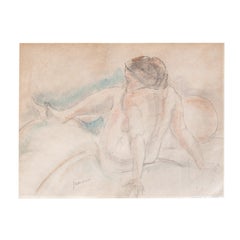
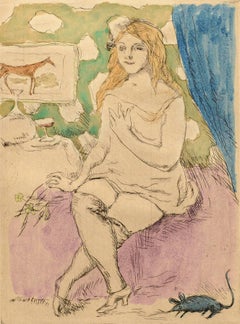
Gouache Painting Jules Pascin Hand Signed Woman in Boudoir German Expressionism

Gouache Painting Jules Pascin Hand Signed Woman in Boudoir German Expressionism

By Jules Pascin

Located in Surfside, FL

Genre: German Expressionist Subject: Woman Medium: gouache paint Surface: Paper board This is hand signed lower right. Framed it measures 17.25 X 15.5, sheet 12 X 10 This came from a Jewish estate. there was no additional paperwork or provenance. Julius Mordecai Pincas (March 31, 1885 – June 5, 1930), known as Pascin Jules...

Category

Early 20th Century Expressionist Jules Pascin Art

Materials

Paper, Gouache, Cardboard

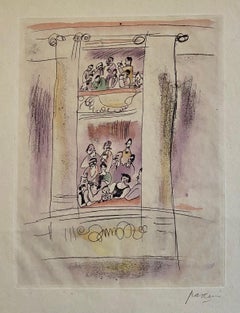
Etching with Hand Watercolor Painting Jules Pascin Pencil Signed

Etching with Hand Watercolor Painting Jules Pascin Pencil Signed

By Jules Pascin

Located in Surfside, FL

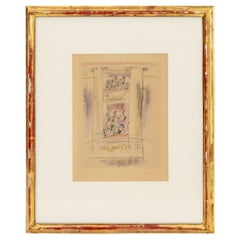
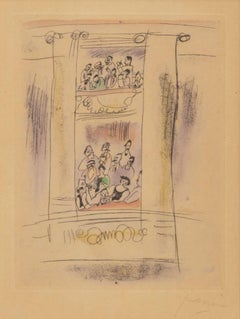
Genre: German Expressionist Subject: Figures in the balcony of a theatre Medium: etching, watercolor paint Surface: Paper This is hand signed lower right. there does not seem to be an edition size. sheet measures 13 X 10. plate size about 9 x 6.5 Julius Mordecai Pincas (March 31, 1885 – June 5, 1930), known as Pascin Jules...

Category

Early 20th Century Expressionist Jules Pascin Art

Materials

Paper, Watercolor, Etching
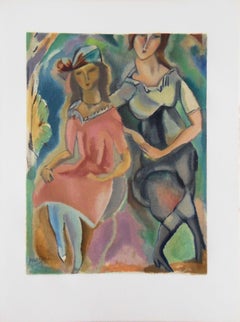
Etching with Hand Watercolor Painting Jules Pascin Pencil Signed

Etching with Hand Watercolor Painting Jules Pascin Pencil Signed

By Jules Pascin

Located in Surfside, FL

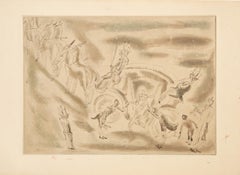
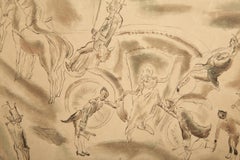
Genre: German Expressionist Subject: Figures Medium: etching, watercolor paint Surface: Paper This is hand signed lower right.. there does not seem to be an edition size although there is a handwritten number lower left sheet measures 12.5 x 19.88. plate size about 9 x 13.5 Julius Mordecai Pincas (March 31, 1885 – June 5, 1930), known as Pascin Jules...

Category

Early 20th Century Expressionist Jules Pascin Art

Materials

Paper, Watercolor, Etching
Etching with Hand Watercolor Painting Jules Pascin Pencil Signed

Etching with Hand Watercolor Painting Jules Pascin Pencil Signed

By Jules Pascin

Located in Surfside, FL

Genre: German Expressionist Subject: Figures Medium: etching, watercolor paint Surface: Paper This is hand signed lower right.. there does not seem to be an edition size although there is a handwritten number lower left sheet measures 12.5 x 19.88. plate size about 9 x 13.5 Julius Mordecai Pincas (March 31, 1885 – June 5, 1930), known as Pascin Jules...

Category

Early 20th Century Expressionist Jules Pascin Art

Materials

Paper, Watercolor, Etching
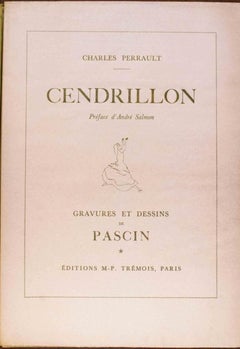
School of Paris etching, 'At the Cafe' by the Prince of Montparnasse

School of Paris etching, 'At the Cafe' by the Prince of Montparnasse

By Jules Pascin

Located in Santa Cruz, CA

Signed lower right, 'Pascin' (French, 1885-1930) with number and limitation, '5/100' lower left; additionally inscribed verso, 'Pascin: Hommes et Femmes au Cafe'. Born Julius Mordec...

Category

1910s Jules Pascin Art

Materials

Paper, Etching
The Sisters - Original woodcut - 1965

The Sisters - Original woodcut - 1965

By Jules Pascin

Located in Paris, IDF

Jules Pascin The Sisters Original woodcut in colors Printed signature in the plate On Arches vellum 38 x 28 cm (c. 15 x 11 in) INFORMATION : Edited for the portfolio Les Peintres ...

Category

1960s Modern Jules Pascin Art

Materials

Woodcut

Jules Pascin art for sale on 1stDibs.

Find a wide variety of authentic Jules Pascin art available for sale on 1stDibs. If you’re browsing the collection of art to introduce a pop of color in a neutral corner of your living room or bedroom, you can find work that includes elements of orange and other colors. You can also browse by medium to find art by Jules Pascin in paint, etching, paper and more. Much of the original work by this artist or collective was created during the 20th century and is mostly associated with the modern style. Not every interior allows for large Jules Pascin art, so small editions measuring 3 inches across are available. Customers who are interested in this artist might also find the work of Bela Kadar, Parmis Sayous, and Ben-Zion Weinman. Jules Pascin art prices can differ depending upon medium, time period and other attributes. On 1stDibs, the price for these items starts at $377 and tops out at $98,500, while the average work can sell for $2,500.
Artists Similar to Jules Pascin