Jules Pascin Prints and Multiples

Bulgarian, French, 1885-1930
Jules Pascin was born Julius Mordecai Pincas, in Widdin, Bulgaria to a Spanish-Sephardic Jewish father and a Serbian-Italian mother. His early artistic training was in Vienna and Munich. In 1905, at the age of 20, he adopted the pseudonym Pascin (an anagram of Pincas). About the same time, he began contributing drawings to Simplicissimus, a satirical magazine published in Munich. In December 1905, Pascin moved to Paris, becoming part of the great migration of artists to that city at the start of the 20th century. In 1907, Pascin met Hermine Lionette Cartan David, also a painter, and they became lovers. They lived together until Pascin left for America on October 3, 1914. A few weeks later on October 31, Hermine David sailed for the United States to join Pascin. Pascin lived in the United States from 1914 to 1920, sitting out World War I. He taught at the Telfair Academy in Savannah, Georgia, associated with the Telfair Art Museum. He and Hermine painted in New York City as well as in Miami, New Orleans, and Cuba. Despite his social life, Pascin created thousands of watercolors and sketches, plus drawings and caricatures, which he sold to various newspapers and magazines. He studied the art of drawing at the Académie Colarossi and, like Henri de Toulouse-Lautrec, he drew upon his surroundings and his friends, both male and female, as subjects. He wanted to become a serious painter, but in time, he became deeply depressed over his inability to achieve critical success with his efforts. During the 1920s, Pascin mostly painted fragile petites filles, prostitutes waiting for clients, or models waiting for the sitting to end. His fleetingly rendered paintings sold readily, but the money he made was quickly spent. Famous as the host of numerous large parties in his flat, whenever he was invited elsewhere for dinner, he arrived with as many bottles of wine as he could carry. He frequently led a large group of friends on summer picnics beside the River Marne, where their excursions lasted all afternoon. Ernest Hemingway's chapter titled "With Pascin At the Dôme," in A Moveable Feast, recounted a night in 1923 when he had stopped off at Le Dôme and met Pascin escorted by two models. Hemingway's portrayal of the evening is considered one of the defining images of Montparnasse at the time. Pascin struggled with depression and alcoholism. "[D]riven to the wall by his own legend," according to art critic Gaston Diehl, he committed suicide at the age of 45 on the eve of a prestigious solo show. He slit his wrists and hung himself in his studio in Montmartre. On the wall he left a message written in blood, to a former lover, Cecile (Lucy) Vidil Krohg In his last will and testament, Pascin left his estate equally to his wife, Hermine David, and his mistress Lucy Krohg.
to
1
7
1
2
Overall Width
to
Overall Height
to
10
1
3
2
7
1
1
8
6
4
3
3
2
1
1
1
6
4

Use search to find more

27
1,623
1,147
936
716

Use search to find more

Artist: Jules Pascin
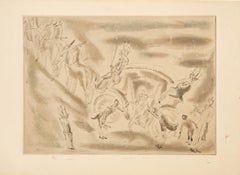
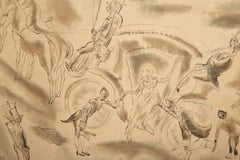
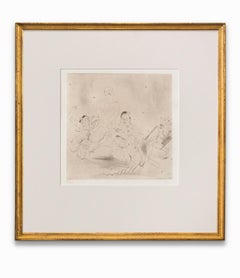
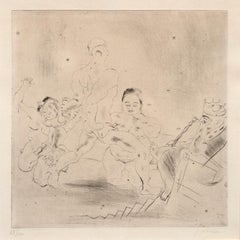
1930 aquatint by Jules Pascin titled Salomé dansant devant le roi Hérode

1930 aquatint by Jules Pascin titled Salomé dansant devant le roi Hérode

By Jules Pascin

Located in PARIS, FR

This refined 1930 aquatint by Jules Pascin, titled Salomé dansant devant le roi Hérode, offers a poetic and dream-like interpretation of the biblical scene of Salome before King Hero...

Category

1930s Jules Pascin Prints and Multiples

Materials

Paper, Aquatint, Lithograph

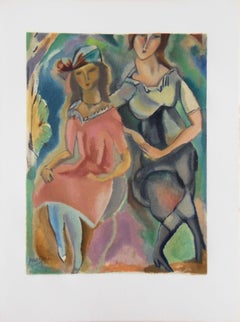
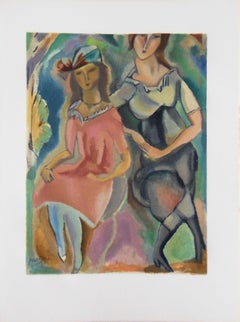
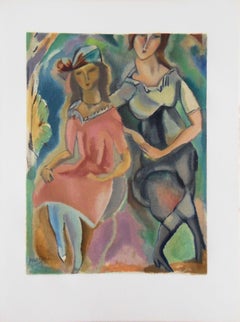
The Sisters - Original woodcut - 1965

The Sisters - Original woodcut - 1965

By Jules Pascin

Located in Paris, IDF

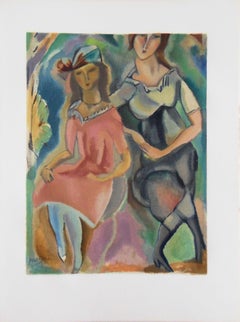
Jules Pascin The Sisters Original woodcut in colors Printed signature in the plate On Arches vellum 38 x 28 cm (c. 15 x 11 in) INFORMATION : Edited for the portfolio Les Peintres ...

Category

1960s Modern Jules Pascin Prints and Multiples

Materials

Woodcut

Jules Pascin (French, 1885-1930) "Two Women Reclining" Original Etching C.1920

Jules Pascin (French, 1885-1930) "Two Women Reclining" Original Etching C.1920

By Jules Pascin

Located in San Francisco, CA

Jules Pascin (French, 1885-1930) "Two Women Reclining" Original Etching C.1920 Plate dimensions 9" wide x 12" high Frame dimensions 19.5" wide x 26.5" high Plate signed The etchi...

Category

Early 20th Century Impressionist Jules Pascin Prints and Multiples

Materials

Etching

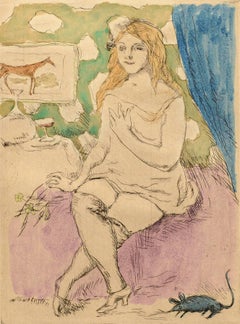
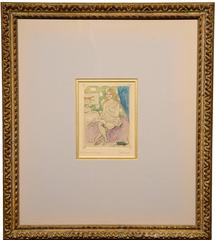
"Dame de la Nuit, " Jules Pascin, hand-colored etching, 1920-30, figurative

"Dame de la Nuit, " Jules Pascin, hand-colored etching, 1920-30, figurative

By Jules Pascin

Located in Wiscasset, ME

Born Julius Pincas in 1885 in Bulgaria, the artist adopted the name Jules Pascin under which his paintings are known. Pascin studied in Vienna and Munich, and traveled and painted regularly in Paris and Berlin. Pascin came to the United States in 1914 and in 1920 became a US citizen. He returned later...

Category

1920s Modern Jules Pascin Prints and Multiples

Materials

Etching

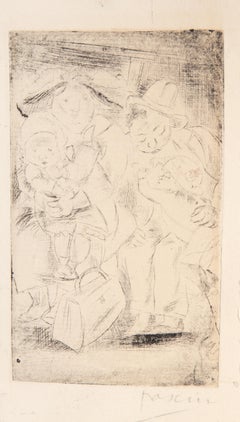
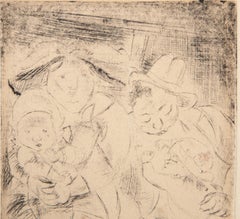
Women and Children, Modern Etching by Jules Pascin

Women and Children, Modern Etching by Jules Pascin

By Jules Pascin

Located in Long Island City, NY

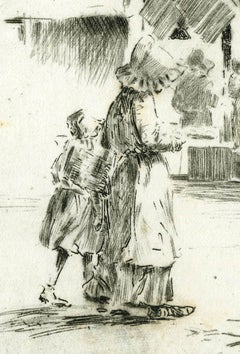
Jules Pascin (1885 - 1930) - Women and Children, Medium: Etching, signed in pencil lower right and dedicated on verso, Image Size: 4.75 x 2.75 inches, Size: 5.75 x 3.25 in. (14.61 ...

Category

Mid-20th Century Modern Jules Pascin Prints and Multiples

Materials

Etching

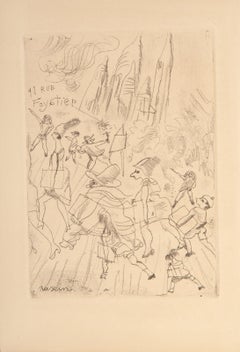
11 Rue Foyatier, Modern Etching by Jules Pascin

11 Rue Foyatier, Modern Etching by Jules Pascin

By Jules Pascin

Located in Long Island City, NY

Jules Pascin, Bulgarian/French (1885 - 1930) - 11 Rue Foyatier, Medium: Etching, signed in the plate, Image Size: 6.5 x 4.5 inches, Size: 8.75 x 6 in. (22.23 x 15.24 cm), Descripti...

Category

Mid-20th Century Modern Jules Pascin Prints and Multiples

Materials

Etching

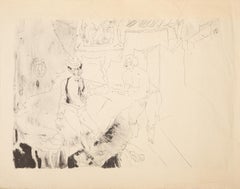
Interior Bedroom, Modern Etching by Jules Pascin

Interior Bedroom, Modern Etching by Jules Pascin

By Jules Pascin

Located in Long Island City, NY

Jules Pascin, Bulgarian/French (1885 - 1930) - Interior Bedroom, Medium: Etching on thin woven paper, Image Size: 11.75 x 16 inches, Size: 14.5 x 18.5 in. (36.83 x 46.99 cm), Descr...

Category

Mid-20th Century Modern Jules Pascin Prints and Multiples

Materials

Etching

Femininity - Lithograph

Femininity - Lithograph

By Jules Pascin

Located in Collonge Bellerive, Geneve, CH

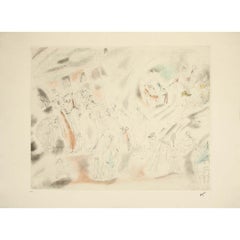
(after) Jules Pascin Title: Femininity Signed in the plate Dimensions: 38 x 28 cm from the edition of 250 as issued in Warnod, Andre, "Les Peintres mes amis" (Paris: Les Heures Claires, 1965) Jules Pascin, born Julius Mordechai Pincas, was a Bulgarian Jewish painter sometimes referred to as "the Prince of Montparnasse." He was born on March 31, 1885 in Vidin, Bulgaria to a Spanish-Sephardic Jewish father and a Serbian-Italian mother, the eighth of eleven children. The Pincas family moved to Bucharest, Romania in 1892 and Pascin was raised there until he left for boarding school in Vienna in 1896. While briefly working for his father’s grain merchant firm in Bucharest at fifteen, Pascin spent much of his time completing his earliest drawings in the local bordello, where he was residing under the Madame’s protection. In 1902, at the age of seventeen, Pascin moved to Vienna to study painting. The next year, he studied at the Heymann Art School in Munich. There, he supported himself by selling satirical drawings to Simplicissimus and other German magazines. Pascin would contribute drawings to a Munich daily through 1929. Pascin’s contributions were widely recognized for their wit and insight, and upon his arrival in Paris in 1905 he was welcomed at the Gare Montparnasse by an international group of artists and writers who gathered at the Café du Dôme, which Pascin soon began to frequent regularly. The group included Grossman, Grosz, William Howard, Levy, and Emil Orlik. Pascin was also a close friend of Amadeo Modigliani. Upon his arrival in Paris, Julius Mordechai Pincas changed his name to Jules Pascin and soon became the symbol of the Montparnasse artist community. Always in his bowler hat, he was a witty presence at Le Dôme café, Le Jockey club, and the others haunts of the area’s bohemian society, and was known for hosting legendary all-night parties. In his story, A Moveable Feast, Ernest Hemingway wrote a chapter titled With Pascin At the Dôme, recounting a night in 1923 when he had stopped off at Le Dôme and met Pascin escorted by two models. Hemingway's depiction of the events of that night is considered one of the defining images of Montparnasse at the time. In 1907, Pascin had his first solo exhibition at Paul Cassirer Gallery in Berlin. Three years later, Cassirir commissioned Pascin to illustrate Heinrich Heine's Aus den Memoiren des Herrn von Schnabelewopski. In 1911, Pascin exhibited his work at Berlin Secession and a year later at the Sonderbund-Aussstellung in Cologne. The artist’s first exhibition in the United States was at the Armory Show in New York, where he exhibited twelve of his works. Upon the outbreak of World War I, Pascin left Paris for London in order to avoid conscription in the Bulgarian Army. In October 1914, he immigrated to New York, where he stayed through 1920 and would later return again in 1927. Pascin was immediately welcomed into an artists circle based around the Penguin Club and became acquainted with John Quinn, an important art collector. A short time after his arrival in New York, Pascin was given a one-man show by the Berlin Photographic Company, a Madison Avenue gallery. While in New York, Pascin became associated with several progressive painters, including Walt Kuhn, Yasuo Kuniyoshi, and Max Weber. Many of these painters were influenced by Pascin’s unique style, in which he combined elements from Expressionism and Cubism with his own personal view of his environment. Pascin used his time in the United States to travel extensively, especially in the southern states and the Caribbean islands, recording his travels in sketches that were widely acclaimed. Pascin married Hermine David in 1918. In 1920, Pascin was awarded American citizenship with support from Alfred Stieglitz and Maurice Sterne. He returned to Paris in October of that same year and met his future mistress, Lucy Krohg, the wife of the Norwegian painter Per Krohg...

Category

1960s Modern Jules Pascin Prints and Multiples
Materials

Lithograph

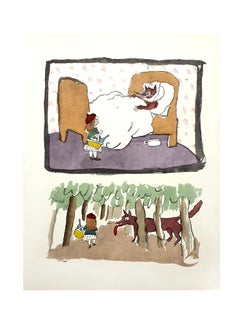
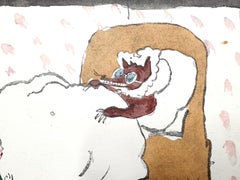
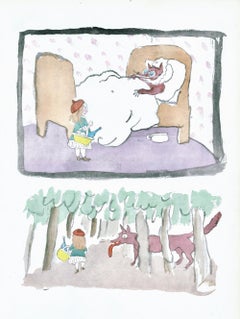
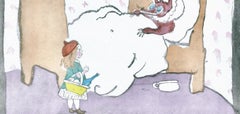
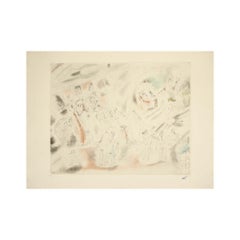
Jules Pascin, Little Red Riding Hood, from XXe siecle, 1938 (after)

Jules Pascin, Little Red Riding Hood, from XXe siecle, 1938 (after)

By Jules Pascin

Located in Southampton, NY

This exquisite lithograph after Jules Pascin (1885–1930), titled Le Petit Chaperon Rouge (Little Red Riding Hood), from the album XXe siecle, Sommaire du No. 1, 1er Mars 1938, Chroni...

Category

1930s Modern Jules Pascin Prints and Multiples
Materials

Lithograph

Related Items
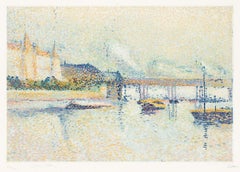
Londres (London)

Maximilien LuceLondres (London), 1929

$3,900

H 14.25 in W 20.25 in

Londres (London)

By Maximilien Luce

Located in New York, NY

Pencil signed by both Luce and Jacques Villon (Villon etched the image) and numbered 120/200 in pencil, lower margin. Published by Galerie Bernheim-Jeune, Paris. Catalogue Raisonne:...

Category

1920s Pointillist Jules Pascin Prints and Multiples

Materials

Etching, Aquatint, Color

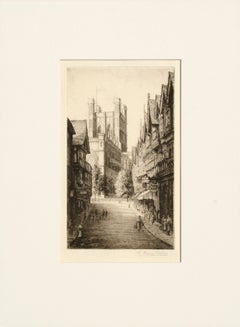
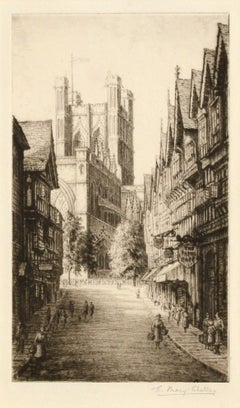
Early 20th Century British Street Scene - 1920s Figurative Landscape Etching

Early 20th Century British Street Scene - 1920s Figurative Landscape Etching

By E. Mary Shelley

Located in Soquel, CA

Highly detailed figurative landscape lithograph of a street in London with a towering cathedral, old buildings, and figures walking the street below by E. Mary Shelley (English, late...

Category

1920s Impressionist Jules Pascin Prints and Multiples

Materials

Paper, Etching

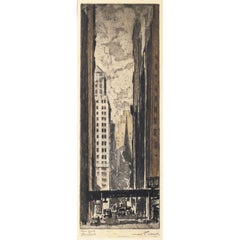
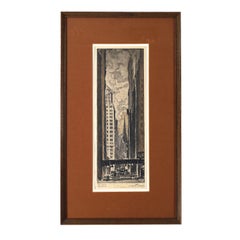
Etching and aquatint of Wall Street, New York, 1920s

Etching and aquatint of Wall Street, New York, 1920s

By Max Pollak

Located in Colfax, CA

Etching and aquatint of Wall Street, New York circa 1928 by Max Pollak. Painter and printmaker Max Pollak, (1886-1970), was born in Prague, Czechoslovakia and was raised in Vienna, A...

Category

1920s American Modern Jules Pascin Prints and Multiples
Materials

Etching, Aquatint

Le Chapeau Epingle or La fille de Berthe Morisot et sa Cousine (1e planche)

Le Chapeau Epingle or La fille de Berthe Morisot et sa Cousine (1e planche)

By Pierre Auguste Renoir

Located in Fairlawn, OH

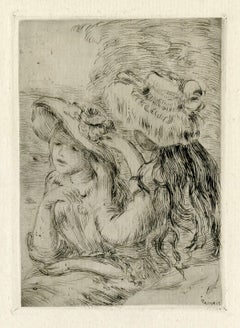
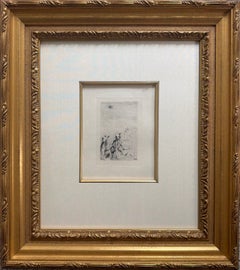
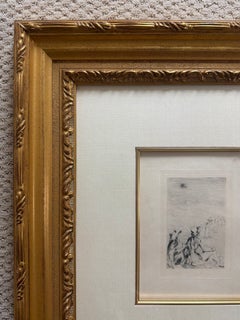
Le Chapeau Epingle or La fille de Berthe Morisot et sa Cousine (1e planche) Etching with drypoint, 1904 Signed in the plate (see photo) This is the first etched version of "Pinning the Hat" Depicts Julie Manet and her cousin Jeanne. Exceptional impression printed with burr and selective inking with plate tone. Very rare. Published in 1910 in the first edition of Druet, "Manet annd the French Impressionists" A lifetime impression, printed prior to 1912. The etching comes with the original Herman Wunderlich & Co. (Kennedy Galleries label), which dates this impression to 1912 when Wunderlich changes names to Kennedy Galleries. Very rare image in an early lifetime impression. Printed with plate tone With pencil inscription stating first printing in French (see photo) Condition: very good No issue as seen from the front Soft horizontal creases visible from reverse Provenance: Kennedy Galleries, NY Reference: Stella 4, prior to Druet edition Delteil 4, published state Pierre-Auguste Renoir was a famous French painter whose paintings are some of the most popular, well-recognized, and frequently reproduced images in the history of art. His work presents a vision of a forgotten world, full of sparkling color and light. He once said: “Why shouldn’t art be pretty? There are enough unpleasant things in the world.” Born at Limoges on February 25, 1841, Renoir died at Cagnes-sur-Mer on December 17, 1919. When he was 13, Renoir entered a Paris porcelain painter’s workshop as an apprentice and developed a fine brush technique and facility with color. At 21, he attended courses at the École des Beaux-Arts and subsequently at Glyre’s. He made friends with Cezanne, Pissarro, Sisley, Monet, Bazille, and Diaz. In 1873, the artists Durand Ruel, Caillebotte, and Duret took an interest in his work. Renoir was involved in “The Society of Painters, Engravers and Sculptors,” which was founded in 1874, and witnessed the birth of Impressionism. From there, Renoir was immersed and able to spend time with his fellow artists of the day. He did not take up original printmaking until he was 50 years old, first with two small soft-ground etchings after his painting, “The Rustic Ball,” followed by an etching of Venus for the frontispiece of Mallarme’s Pages. Most of his engravings were done after his own pictures. In 1892, he did his first lithograph – a portrait of his son Pierre. In 1894, he met Ambroise Vollard, who played an important part in the production of Renoir’s and Cezanne’s lithographs...

Category

Early 1900s Impressionist Jules Pascin Prints and Multiples

Materials

Etching

Venice, Orro Bacher, Bead Stringers, etching, 1881, famous image

Venice, Orro Bacher, Bead Stringers, etching, 1881, famous image

By Otto Bacher

Located in Fairlawn, OH

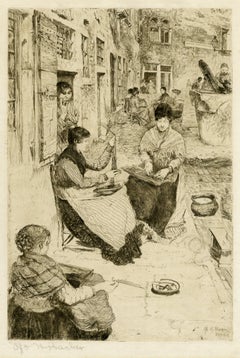
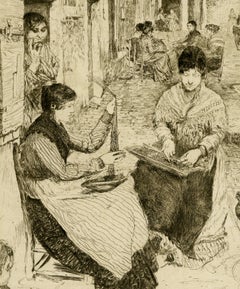
Otto Bacher (1856-1909) Perleria (Bead Stringers), Venice Etching, 1881 Signed in pencil lower left (see photo) From: Etchings of Venice Reference: Andrew Venice 1 Condition: Excellent Image/Plate size: 13 x 8 7/8 inches Sheet size: 14 1/2 x 10 1/16 inches Comes with a very ncie original Kenneday Gallery frame Perleria, also known as Bead Stringers, presents Venice through the working lives of its inhabitants. Women gather in an enclosed courtyard, absorbed in their tasks, while doorways and receding architectural spaces connect the foreground group with figures farther within. The composition’s intimate scale of observation shifts attention from the city’s celebrated monuments to the daily activities that sustained it. The Cleveland Museum of Art holds an impression under the title Etchings of Venice: Bead Stringers, identifying it as Andrew 7. Bacher organizes the scene through the relationship between seated figures, worn masonry, and shadowed openings. Fine etched lines describe the women’s clothing and the surrounding architecture, while denser passages of hatching establish depth and enclosure. The workers’ concentrated poses give the composition a quiet rhythm: its interest rests in repeated gestures and shared occupation rather than dramatic incident. Bead stringing, a traditional Venetian women’s trade, provides both the subject and the organizing human activity of the image. Born in Cleveland, Bacher developed his art through European study and close association with Frank Duveneck. In 1880 he traveled to Venice with the American artists known as “Duveneck’s boys,” entering the circle of James McNeill Whistler. Already an accomplished etcher, Bacher became Whistler’s collaborator as well as an attentive student of his methods. Whistler used Bacher’s printing press and inks during the summer of 1880, placing the younger artist directly within the practical production of the Venetian etchings. Bacher later recalled their association in With Whistler in Venice (1908). Perleria belongs to this formative Venetian context. Its attention to an ordinary working environment accords with the interest in overlooked corners and everyday subjects shared by artists of the etching revival. Yet the substantial figures and closely articulated setting give Bacher’s scene its own character. The print combines architectural observation with a sustained interest in people, recording Venice as an inhabited and productive city. The composition is represented in the Cleveland Museum of Art, where the impression entered as a gift of Charles W. Bingham in 1920, and at the Indianapolis Museum of Art at Newfields, which catalogs it as Perleria. These institutional holdings provide useful reference impressions for the work. Otto H. Bacher (1856-1909) Otto Henry Bacher was born in Cleveland, Ohio, to a family of German descent. He first studied art at the age of sixteen with local genre trompe l'oeil still-life artist, DeScott Evans. Although he studied with Evans for less than one year, Bacher's early work, comprised mainly of still lifes, betrays Evans's influence. After a short period in Philadelphia, where he studied at the Pennsylvania Academy of the Fine Arts, Bacher returned to Cleveland and met Willis Seaver Adams...

Category

1880s American Impressionist Jules Pascin Prints and Multiples

Materials

Etching

Sur la Plage, A Berneval

Pierre Auguste RenoirSur la Plage, A Berneval, 1892

$8,500

H 21.125 in W 18.875 in D 1.75 in

Sur la Plage, A Berneval

By Pierre Auguste Renoir

Located in Hinsdale, IL

Delteil 5, Stella 5 Etching in Black Ink, c. 1892 Third State of Three, Plate is bevelled First Edition, Signed in the Plate As Published in Loys Delteil’s Le Peintre Graveur Ill...

Category

1890s Impressionist Jules Pascin Prints and Multiples

Materials

Etching

Charleston, South Carolina, Louis Oscar Griffith, 1930's, Noon Time Lull

Charleston, South Carolina, Louis Oscar Griffith, 1930's, Noon Time Lull

By Louis Oscar Griffith

Located in Fairlawn, OH

Louis Oscar Griffith (1875-1956) Noon Time Lull (Charleston, South Carolina) Etching & drypoint, c. 1930 Signed in pencil (see photo) Annotated: "2nd State" (of three?) Image/Plate s...

Category

1930s American Impressionist Jules Pascin Prints and Multiples

Materials

Etching

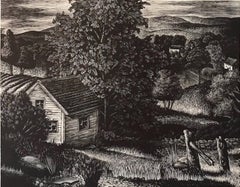
Oscar Weissbuch, Westchester Hills (NY), New Deal, WPA-era wood engraving

Oscar Weissbuch, Westchester Hills (NY), New Deal, WPA-era wood engraving

Located in New York, NY

New York City native Oscar Weissbuch (1904-1948), attended the Yale University School of Fine Arts and the Art Students League, NY. He participated in the NYC-WPA printmaking project...

Category

1930s American Modern Jules Pascin Prints and Multiples
Materials

Woodcut

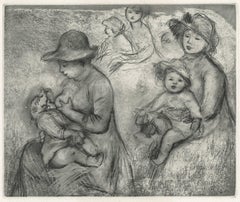
Trois Esquisses de maternite (Three Studies of Maternity)

Trois Esquisses de maternite (Three Studies of Maternity)

By Pierre Auguste Renoir

Located in Fairlawn, OH

After Pierre Auguste Renoir (1841-1919) Trois Esquisses de maternite (Three Studies of Maternity) Heliogravure with etching on velin paper, 1893 Unsigned as issued Edition 1000, ther...

Category

1890s Impressionist Jules Pascin Prints and Multiples

Materials

Etching

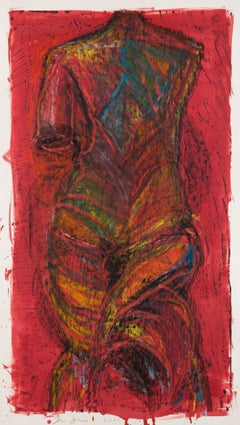
Singing and Printing XIII

Jim DineSinging and Printing XIII, 2001

$28,000

H 69.75 in W 39.63 in

Singing and Printing XIII

By Jim Dine

Located in New York, NY

JIM DINE Singing and Printing XIII. Unique color woodblock relief print with hand coloring in oil, acrylic, and charcoal and mechanical abrasion on cream wove paper, 2001. 69 3/4 x ...

Category

Early 2000s Modern Jules Pascin Prints and Multiples
Materials

Charcoal, Oil, Acrylic, Color, Woodcut

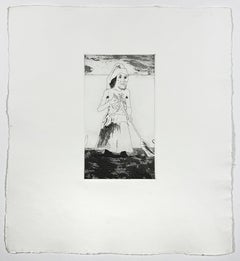
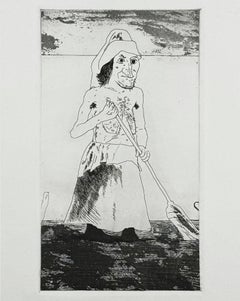
The Enchantress in her Garden David Hockney Fairy Tales from the Brothers Grimm

The Enchantress in her Garden David Hockney Fairy Tales from the Brothers Grimm

By David Hockney

Located in New York, NY

From David Hockney’s celebrated Six Fairy Tales from the Brothers Grimm portfolio, an image from the story of Rapunzel. Hockney stated: “The old woman who wants the child. In one tr...

Category

1960s Modern Jules Pascin Prints and Multiples
Materials

Etching, Aquatint

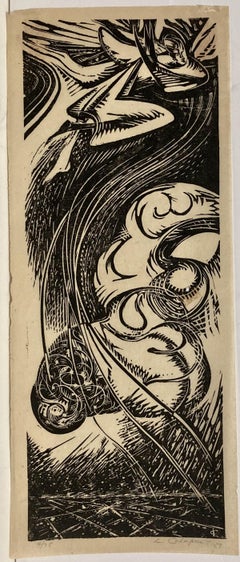
Letterio Calapai, (Sky Abstraction), 1957, mid-century wood engraving

Letterio Calapai, (Sky Abstraction), 1957, mid-century wood engraving

By Letterio Calapai

Located in New York, NY

Letterio Calapai is widely recognized as a major American artist of the twentieth century. He is widely respected as a printmaker, especially for engravings and wood engravings, and ...

Category

1950s American Modern Jules Pascin Prints and Multiples
Materials

Woodcut

Signed Jasper Johns 'The Seasons', 38/50 Print, Framed 53.75 x 48

Signed Jasper Johns 'The Seasons', 38/50 Print, Framed 53.75 x 48

By Jasper Johns

Located in Brooklyn, NY

"The Seasons" is a compelling artwork by Jasper Johns that delves into artifacts and seasonal symbols to represent the epochs of life and the cycles of growth and aging. This piece, ...

Category

1990s American Modern Jules Pascin Prints and Multiples
Materials

Etching

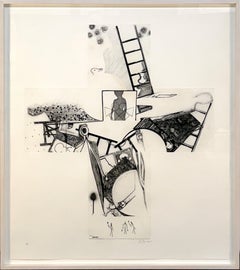
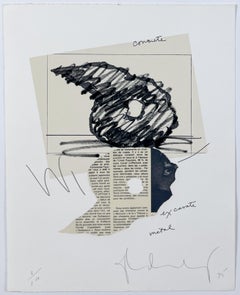
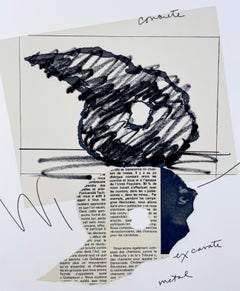
Study for Sculpture in the Form of an Inverted Q Above and Below Ground

Study for Sculpture in the Form of an Inverted Q Above and Below Ground

By Claes Oldenburg

Located in New York, NY

This work is a study for Inverted Q, a large sculpture that Oldenburg created after producing many sketches and small models. At the time he was experimenting with concepts of monume...

Category

1970s Pop Art Jules Pascin Prints and Multiples
Materials

Etching, Aquatint, Lithograph

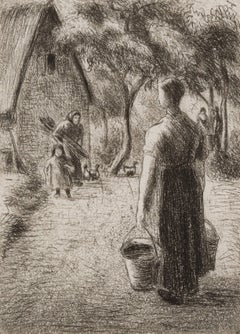
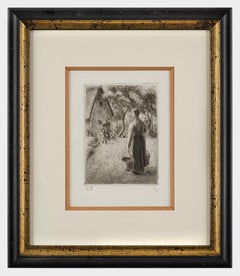
Paysanne Portant des Seaux by Camille Pissarro - Etching, paper, Impressionist

Paysanne Portant des Seaux by Camille Pissarro - Etching, paper, Impressionist

By Camille Pissarro

Located in London, GB

Paysanne Portant des Seaux by Camille Pissarro (1830-1903) Etching and aquatint 15 x 11 cm (5 ⁷/₈ x 4 ³/₈ inches) Signed with Estate stamp lower right, C.P. Numbered lower right, 9/2...

Category

19th Century Impressionist Jules Pascin Prints and Multiples
Materials

Etching, Aquatint

Previously Available Items
Cendrillon, Impressionist Etching by Jules Pascin

Cendrillon, Impressionist Etching by Jules Pascin

By Jules Pascin

Located in Long Island City, NY

Jules Pascin, Bulgarian/French (1885 - 1930) - Cendrillon, Year: 1929, Medium: Etching with Aquatint, signed in the plate, Image Size: 10 x 14 inches, Size: 13 x 17.5 in. (33.02 x ...

Category

1920s Impressionist Jules Pascin Prints and Multiples
Materials

Etching, Aquatint

The Sisters - Original woodcut - 1965

The Sisters - Original woodcut - 1965

By Jules Pascin

Located in Paris, IDF

Jules Pascin The Sisters Original woodcut in colors Printed signature in the plate On Arches vellum 38 x 28 cm (c. 15 x 11 in) INFORMATION : Edited for the portfolio Les Peintres ...

Category

1960s Modern Jules Pascin Prints and Multiples
Materials

Woodcut

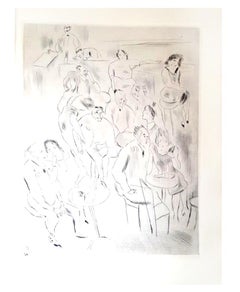
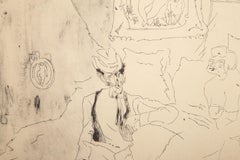
School of Paris etching, 'At the Cafe' by the Prince of Montparnasse

School of Paris etching, 'At the Cafe' by the Prince of Montparnasse

By Jules Pascin

Located in Santa Cruz, CA

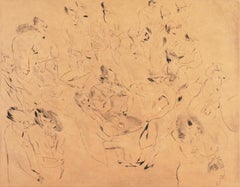
Signed lower right, 'Pascin' (French, 1885-1930) with number and limitation, '5/100' lower left; additionally inscribed verso, 'Pascin: Hommes et Femmes au Cafe'. Born Julius Mordec...

Category

1910s Jules Pascin Prints and Multiples
Materials

Paper, Etching

The Sisters - Original woodcut - 1965

The Sisters - Original woodcut - 1965

By Jules Pascin

Located in Paris, IDF

Jules Pascin The Sisters Original woodcut in colors Printed signature in the plate On Arches vellum 38 x 28 cm (c. 15 x 11 in) INFORMATION : Edited for the portfolio Les Peintres ...

Category

1960s Modern Jules Pascin Prints and Multiples
Materials

Woodcut

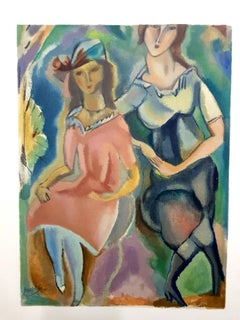
The Sisters - Original woodcut - 1965

The Sisters - Original woodcut - 1965

By Jules Pascin

Located in Paris, IDF

Jules Pascin The Sisters Original woodcut in colors Printed signature in the plate On Arches vellum 38 x 28 cm (c. 15 x 11 in) INFORMATION : Edited for the portfolio Les Peintres ...

Category

1960s Modern Jules Pascin Prints and Multiples
Materials

Woodcut

Jules Pascin - Au Bal - Original Etching

Jules Pascin - Au Bal - Original Etching

By Jules Pascin

Located in Collonge Bellerive, Geneve, CH

Jules Pascin - Au Bal - Original Etching Dimensions : 13 x 10". Paper : Rives vellum. Edition : 225 copies. 1927 From Tableaux de Paris, Emile-Paul Freres, Paris Jules Pascin, born Julius Mordechai Pincas, was a Bulgarian Jewish painter sometimes referred to as "the Prince of Montparnasse." He was born on March 31, 1885 in Vidin, Bulgaria to a Spanish-Sephardic Jewish father and a Serbian-Italian mother, the eighth of eleven children. The Pincas family moved to Bucharest, Romania in 1892 and Pascin was raised there until he left for boarding school in Vienna in 1896. While briefly working for his father’s grain merchant firm in Bucharest at fifteen, Pascin spent much of his time completing his earliest drawings in the local bordello, where he was residing under the Madame’s protection. In 1902, at the age of seventeen, Pascin moved to Vienna to study painting. The next year, he studied at the Heymann Art School in Munich. There, he supported himself by selling satirical drawings to Simplicissimus and other German magazines. Pascin would contribute drawings to a Munich daily through 1929. Pascin’s contributions were widely recognized for their wit and insight, and upon his arrival in Paris in 1905 he was welcomed at the Gare Montparnasse by an international group of artists and writers who gathered at the Café du Dôme, which Pascin soon began to frequent regularly. The group included Grossman, Grosz, William Howard, Levy, and Emil Orlik. Pascin was also a close friend of Amadeo Modigliani. Upon his arrival in Paris, Julius Mordechai Pincas changed his name to Jules Pascin and soon became the symbol of the Montparnasse artist community. Always in his bowler hat, he was a witty presence at Le Dôme café, Le Jockey club, and the others haunts of the area’s bohemian society, and was known for hosting legendary all-night parties. In his story, A Moveable Feast, Ernest Hemingway wrote a chapter titled With Pascin At the Dôme, recounting a night in 1923 when he had stopped off at Le Dôme and met Pascin escorted by two models. Hemingway's depiction of the events of that night is considered one of the defining images of Montparnasse at the time. In 1907, Pascin had his first solo exhibition at Paul Cassirer Gallery in Berlin. Three years later, Cassirir commissioned Pascin to illustrate Heinrich Heine's Aus den Memoiren des Herrn von Schnabelewopski. In 1911, Pascin exhibited his work at Berlin Secession and a year later at the Sonderbund-Aussstellung in Cologne. The artist’s first exhibition in the United States was at the Armory Show in New York, where he exhibited twelve of his works. Upon the outbreak of World War I, Pascin left Paris for London in order to avoid conscription in the Bulgarian Army. In October 1914, he immigrated to New York, where he stayed through 1920 and would later return again in 1927. Pascin was immediately welcomed into an artists circle based around the Penguin Club and became acquainted with John Quinn, an important art collector. A short time after his arrival in New York, Pascin was given a one-man show by the Berlin Photographic Company, a Madison Avenue gallery. While in New York, Pascin became associated with several progressive painters, including Walt Kuhn, Yasuo Kuniyoshi, and Max Weber. Many of these painters were influenced by Pascin’s unique style, in which he combined elements from Expressionism and Cubism with his own personal view of his environment. Pascin used his time in the United States to travel extensively, especially in the southern states and the Caribbean islands, recording his travels in sketches that were widely acclaimed. Pascin married Hermine David in 1918. In 1920, Pascin was awarded American citizenship with support from Alfred Stieglitz and Maurice Sterne. He returned to Paris in October of that same year and met his future mistress, Lucy Krohg, the wife of the Norwegian painter Per Krohg...

Category

1920s Modern Jules Pascin Prints and Multiples
Materials

Etching

Jules Pascin prints and multiples for sale on 1stDibs.
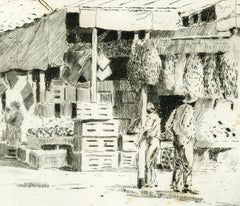
Find a wide variety of authentic Jules Pascin prints and multiples available for sale on 1stDibs. You can also browse by medium to find art by Jules Pascin in etching and more. Not every interior allows for large Jules Pascin prints and multiples, so small editions measuring 4 inches across are available. Customers who are interested in this artist might also find the work of André Lhote, Arthur John Trevor Briscoe, and Caroline Durieux. Jules Pascin prints and multiples prices can differ depending upon medium, time period and other attributes. On 1stDibs, the price for these items starts at $1,000 and tops out at $1,000, while the average work can sell for $1,000.