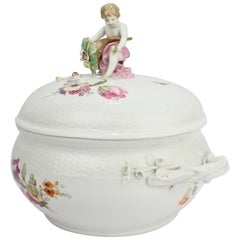
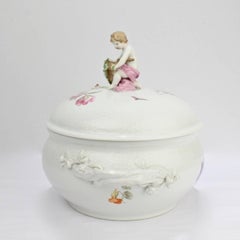
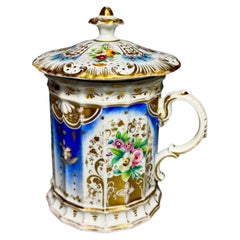
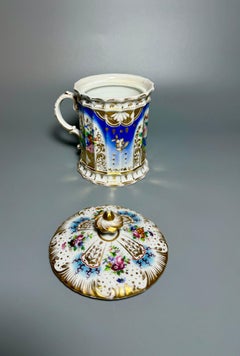
KPM Porcelain Barware

The Königliche Porzellan-Manufaktur Berlin, or KPM (Royal Porcelain Factory, Berlin, in English) was one of the most influential porcelain factories to emerge in 18th-century Germany, along with Nymphenburg and Meissen. KPM was the third incarnation of a company originally founded in 1751 by Wilhelm Caspar Wegely to take advantage of the burgeoning market for “white gold.” On the verge of bankruptcy, Wegely sold his inventory and tools to Johann Ernst Gotzkowsky, who in 1761 established another porcelain factory, which also failed, and was subsequently taken over by Frederick II of Prussia in 1763. Like Augustus II, Elector of Saxony, the patron of Meissen and a keen collector who described himself as suffering (quite happily) from “porcelain sickness,” Frederick II was proud to refer to himself as KPM’s “best customer.” KPM produces china and figurines to this day, and throughout its long history, it has been a style-setter for elegant tableware, particularly in the 1930’s, the period during which their popular patterns Urbino, Urania and Arkadia were designed.

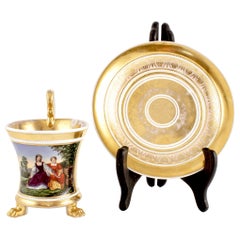
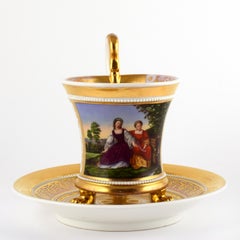
Thanks to its royal patronage, KPM had the resources and contacts necessary to establish itself as a leading luxury producer, and supplied Russian and European elites with tableware in the Rococo and Neoclassical styles, as well as monumental vases, and decorative plaques. Many of these objects can be found today in major museums as a result of Frederick II’s penchant for sending KPM porcelain as diplomatic gifts throughout Europe. Unlike Meissen, which was known for crafting porcelain sculptures of dazzling complexity, KPM is revered for the precision and splendor of its surface decoration, and for its porcelain plaques depicting scenes from history and mythology. One especially lovely example circa 1790 is a neocalssical-style tea service decorated with gold accents and a grisaille design of figures from the ancient world. By contrast, this boldly colorful narrative cup and saucer set from the 1840’s depicts scenes from real life as colorfully as a painting. The set was commissioned by a gentleman for his wife as a tongue-in-cheek gift commemorating her misadventures while in town for a visit to the opera, which resulted in her opera glasses being stolen. The saucer shows the thief and the glasses, and the cup reveals the scene of the crime in vivid hues.

KPM was forced to move from its original location in 1867 due to the building of the new Prussian Parliament building, and this afforded the company the opportunity to to create a new factory with the newest equipment and materials of the day. With the growing popularity of Art Nouveau and the western fascination with Asian ceramics, KPM began formulating glazes that evoked the color palette and rich surfaces of Chinese porcelain. By the turn of the century, KPM was exhibiting its wares to a global audience at international expositions. At the end of World War I with the collapse of the Prussian monarchy, KPM was renamed the State Porcelain Manufactory Berlin, continuing to use the name KPM and its use of the cobalt blue sceptre mark that is painted on the bottom of every piece.

By the late 1920’s, the designers and craftsmen of KPM were inspired by the tenets of Modernism, particularly the styles of the Bauhaus and the Deutscher Werkbund. During this period, the firm’s aim was to produce useful household porcelain for a range of consumers, rather than catering to a small elite. Among the most successful patterns of this era was designer Trude Petri’s Urbino line, which is still produced today. Following World War II, KPM was temporarily housed in the town of Selb, and only returned to its rebuilt quarters in Berlin in 1957. In the 1980s, KPM became an private company independent of the state, and began to focus production on the preservation of historic forms, designs, and techniques. KPM continues to collaborate with designers from all over the world, most recently on the Berlin dinnerware service with designer Enzo Mari, and a collaboration with the luxury brands Bottega Veneta and Bugatti.
to
1
1
1
1
1
1
1
1
1
1
1
1
47
260
129
96
84
Creator: KPM Porcelain
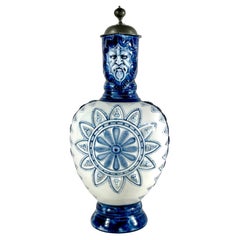
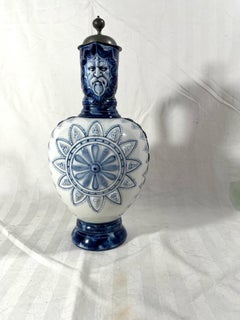
Antique German KPM Porcelain Lidded Bartmann Jug Tankard

Antique German KPM Porcelain Lidded Bartmann Jug Tankard

By KPM Porcelain

Located in Vero Beach, FL

Antique German KPM Porcelain Lidded Bartmann Jug Tankard. 19th century German Bellarmine Bartmann jug with bearded man from the Porcelain Manufactory K...

Category

Mid-19th Century German Renaissance Antique KPM Porcelain Barware

Materials

Pewter

Related Items
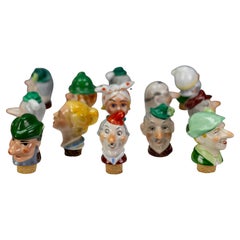
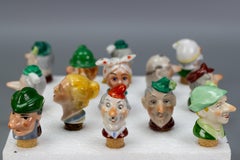
Set of 13 German Figural Porcelain and Cork Pourers Bottle Stoppers, 1930s

Set of 13 German Figural Porcelain and Cork Pourers Bottle Stoppers, 1930s

Located in Barntrup, DE

Adorable thirteen porcelain cork pourers or bottle stoppers with figural porcelain heads of eleven cheerful men and two beautiful girls, Germany, 1930s....

Category

1930s German Art Deco Vintage KPM Porcelain Barware

Materials

Porcelain, Cork

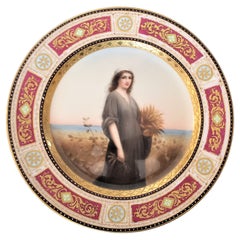
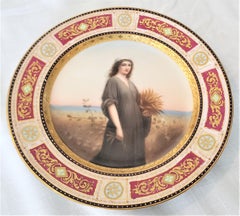
Antique KPM Hand-Painted Porcelain Cabinet Plate Depicting the Biblical "Ruth"

Antique KPM Hand-Painted Porcelain Cabinet Plate Depicting the Biblical "Ruth"

By KPM Porcelain

Located in Hamilton, Ontario

This antique hand-painted porcelain cabinet plate was made by the renowned KPM porcelain factory of Germany in approximately 1880. The center of the plate features a depiction of the...

Category

Late 19th Century German Neoclassical Revival Antique KPM Porcelain Barware

Materials

Porcelain

Antique " KPM " Empire Porcelain Cup

Antique " KPM " Empire Porcelain Cup

By Kerafina Royal Porzellan KPM

Located in Kastrup, DK

KPM Porcelain cup decorated with a finely hand painted depiction of two women in nature. Inside with gilding (light wear to the gilding). KPM (Königlich...

Category

Early 19th Century German Empire Antique KPM Porcelain Barware

Materials

Porcelain

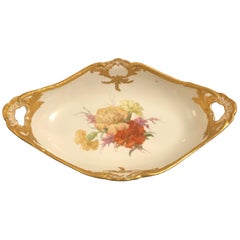
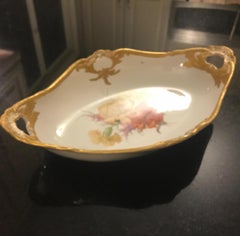
KPM Porcelain Hand Painted Oval Bowl, 19th Century

KPM Porcelain Hand Painted Oval Bowl, 19th Century

By KPM Porcelain

Located in Lambertville, NJ

Antique 19th century hand painted porcelain with floral and gilt decoration. The bowl with center floral decoration with detailed hand gilt all around. The 19th century KPM mark...

Category

1880s German Antique KPM Porcelain Barware

Materials

Porcelain

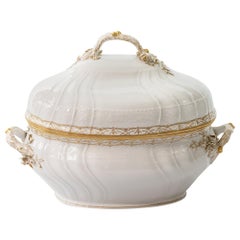
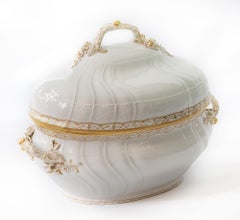
Antique Handmade Porcelain Soup Tureen by KPM

Antique Handmade Porcelain Soup Tureen by KPM

By KPM Porcelain

Located in Vilnius, LT

Antique KPM oval porcelain soup tureen is handmade with glazed relief ornament surface. It is hand painted with gold and decorated with molded flowers bouqets on the handles. Measu...

Category

Early 20th Century German KPM Porcelain Barware

Materials

Porcelain

KPM Porcelain Model of a Parrot, Late 19th Century

KPM Porcelain Model of a Parrot, Late 19th Century

$10,405

H 9.06 in W 4.73 in D 3.55 in

KPM Porcelain Model of a Parrot, Late 19th Century

By KPM Porcelain

Located in London, GB

A KPM porcelain model of a parrot German, late 19th century Measures: Height 23cm, width 12cm, depth 9cm Marked for KPM, the leading German porcelain makers, this charming and ...

Category

Late 19th Century German Belle Époque Antique KPM Porcelain Barware

Materials

Porcelain

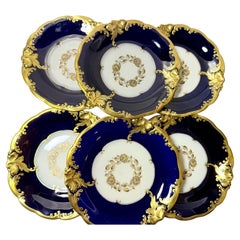
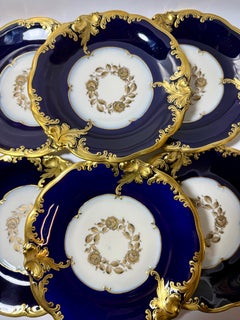
KPM Germany Friederike 6 cobalt gold side plates

KPM Germany Friederike 6 cobalt gold side plates

By KPM Porcelain

Located in Uppsala , SE

KPM Germany Cobalt Blue Fine China plates. This set of 6 side plates produced by the world famous KMP (Krister Porzellan-Manufaktur) factory in Germany . This set is part of the hi...

Category

Mid-20th Century German KPM Porcelain Barware

Materials

Porcelain

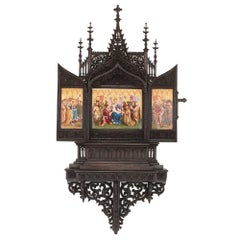
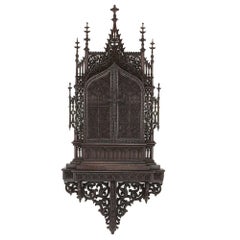
Gothic Revival Carved Oak and KPM Porcelain Triptych

Gothic Revival Carved Oak and KPM Porcelain Triptych

$76,310

H 56.7 in W 31.5 in D 6.3 in

Gothic Revival Carved Oak and KPM Porcelain Triptych

By KPM Porcelain

Located in London, GB

The triptych comprises a trio of porcelain plaques, depicting the patron saints of the German city of Cologne (Köln) by the renowned Berlin manufacturer KPM (Konigliche Porzellan-Man...

Category

19th Century German Gothic Revival Antique KPM Porcelain Barware

Materials

Porcelain, Oak

KPM Berlin Porcelain Figurine Group, Diana & Actaeon, Germany, Ca 1917

KPM Berlin Porcelain Figurine Group, Diana & Actaeon, Germany, Ca 1917

By KPM Porcelain

Located in Vienna, AT

Excellent KPM Porcelain Group from the early 20th century: Seated in the center on a raised shell pedestal is the beautiful young Diana with her hair tied at the nape of her neck and...

Category

1910s German Neoclassical Vintage KPM Porcelain Barware

Materials

Porcelain

Antique KPM Royal Berlin Reticulated Porcelain Basket with Deutsche Blumen Decor

Antique KPM Royal Berlin Reticulated Porcelain Basket with Deutsche Blumen Decor

By KPM Porcelain

Located in Philadelphia, PA

A fine KPM porcelain basket. With reticulated or pierced sides, twin handles, and a hand-painted floral spray to the center. Simply a wonderful porcelain basket! Date: Late 19th or Early 20th Century Overall Condition It is in overall good, as-pictured, used estate condition with some very fine & light surface scratches and other signs of expected light wear consistent with age. Maker: KPM Porcelain Marks: Base bears a blue underglaze factor scepter mark, an iron-red orb mark, hand-painted cyphers and numbers, an impressed cyphers, and a cut slash...

Category

Early 20th Century German Rococo KPM Porcelain Barware

Materials

Porcelain

'Oriental Girl' German KPM Porcelain Plaque

'Oriental Girl' German KPM Porcelain Plaque

$16,649

H 25.6 in W 18.12 in D 1.97 in

'Oriental Girl' German KPM Porcelain Plaque

By KPM Porcelain

Located in London, GB

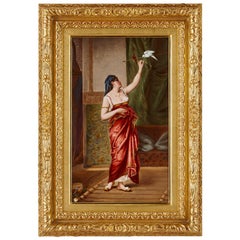
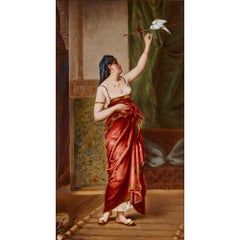
Orientalist style works became very popular in the 19th Century, and the tradition continued into the early 20th Century, when this fine porcelain plaque was produced. Manufactured by famed German firm KPM, the plaque was retailed in New York by Gilman Collamore & Co., who imported high-end works of porcelain and glass. The plaque still bears the retailer's label to the reverse reading 'Gilman Collamore & Co, Union Sq. NY'. The plaque is rectangular in shape, and portrays a young girl, swathed in rich, red draped clothing, reaching upward to give food to a white dove perched on a wire. The girl, her hair bound up in the Orientalist fashion, wears an armband as well as hoop earrings. The interior in which the scene is set is hung with luxurious textiles and decorated with gilt detailing. The plaque is housed in a giltwood frame and is marked to the reverse with the sceptre mark of KPM porcelain, together with the retailer's label. The reverse also bears a written inscription reading 'Orientalisches Mädchen / L. Sturm', the title translating to 'Oriental girl...

Category

Early 20th Century German KPM Porcelain Barware

Materials

Giltwood, Porcelain

Kpm Porcelain barware for sale on 1stDibs.

KPM Porcelain barware are available for sale on 1stDibs. There are many options to choose from in our collection of KPM Porcelain barware, although blue editions of this piece are particularly popular. Prices for KPM Porcelain barware can differ depending upon size, time period and other attributes — on 1stDibs, these items begin at $1,150 and can go as high as $1,150, while a piece like these, on average, fetch $1,150.
Questions About KPM Porcelain Barware
  • 1stDibs ExpertSeptember 23, 2024
    To identify KPM porcelain, first find the maker's marking on your piece. The German manufacturer used different markings over the years, including an eagle, a scepter, an orb on a cross and its KPM initials. Pieces produced after 1925 may also have "Germany" or "Bavaria" accompanying these stamps. By comparing the markings on your piece to images shared on trusted online resources, you can often determine whether it is KPM porcelain and approximately when it was made. Should you have any difficulty, a certified appraiser or knowledgeable antique dealer can be of assistance. On 1stDibs, explore a large selection of KPM porcelain.
  • 1stDibs ExpertMarch 15, 2024
    On porcelain, KPM stands for Königliche Porzellan-Manufaktur, a German maker. The company has been synonymous with exquisite porcelain works fit for nobility and royalty for over 200 years. KPM porcelain plates, centerpieces and sculptures are painstakingly formed through traditional techniques and meticulously painted by hand, producing one-of-a-kind quality. King Frederick II of Prussia founded KPM in Berlin in 1763 after two other entrepreneurs had been unsuccessful in establishing porcelain manufacturing companies in Germany. Shop a collection of Königliche Porzellan-Manufaktur porcelain ware on 1stDibs.