Max Ernst Prints

American, German, French, 1891-1976

Born in Germany in 1891, later naturalized as an American, then a French citizen, Max Ernst was a pioneer in the Dada and Surrealist movements, the boundaries of which he pushed with his unconventional methods of printmaking, drawing and collage.

Ernst had no formal art training — and that may have been his greatest asset. He produced his first work following four years serving in World War I. At the time, he was in Cologne, Germany, working closely with fellow Dada pioneers Jean Arp and Johannes Baargeld. His output during this period consisted largely of collages, which allowed him to represent the shards, rubble and explosions from his traumatic wartime experience.

In 1922, Ernst moved to France, where he soon became affiliated with Surrealism, the avant-garde art movement taking shape in Paris. Alongside Man Ray, Joan Miró and a couple of others, Ernst was among the first visual artists to experiment with imagery and techniques associated with Surrealism.

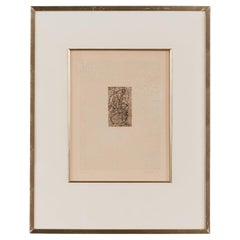
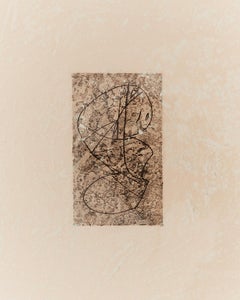
Ernst’s greatest contribution to the Surrealist movement was his invention of frottage (French for “rubbing”), wherein an artist rubs a pencil or crayon over a paper atop a textured surface, and later grattage (French for “scraping”), where a similar technique is applied with paint. Both methods showcase Ernst’s fascination with the unconscious and serendipitous elements of artistic creation, a theme that connected the Dadaists and the Surrealists. Ernst had deep knowledge of psychoanalysis and Sigmund Freud’s dream theories, which were big influences on Surrealists. He was among the first Surrealists to use Freud’s work to examine his own creative impulses. He also published a series of books of his collages, all of which were deeply symbolic and often philosophical.

When Germany occupied France during World War II, Ernst escaped to America with the help of patron and collector Peggy Guggenheim, whom he married in 1941. While living in New York, Ernst’s work and techniques proved instrumental in inspiring the early development of Abstract Expressionism — influencing Robert Motherwell and Jackson Pollock in particular. He later moved to Sedona, Arizona, where he lived with his fourth wife, Dorothea Tanning, a fellow Surrealist and prolific visual artist and poet.

While Ernst and Tanning are largely responsible for Sedona’s reputation as an artist colony, they relocated to France in the 1950s and remained until Ernst’s death in Paris in 1976.

Find original Max Ernst art on 1stDibs.

to
1
2
2
Height
to
Width
to
1
1
2
1
1
1
1
2
1
1
1
1
2
2
2
2
2
144
102
92
87
80
Creator: Max Ernst
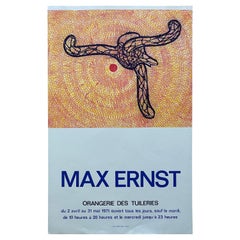
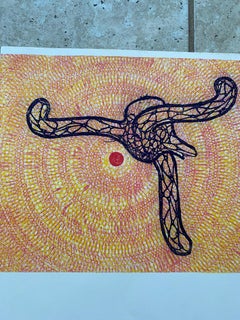
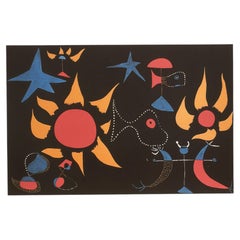
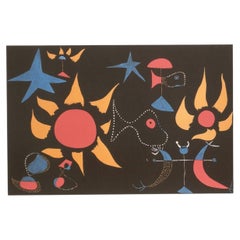
1971 Max Ernst "Orangerie Des Tuileries" Exposition Lithograph

1971 Max Ernst "Orangerie Des Tuileries" Exposition Lithograph

By Max Ernst

Located in San Carlos, CA

Gorgeous color lithograph after Max Ernst. Printed in 1971 to announce a Max Ernst exhibition at L'orangerie des Tuilieres in Paris, France. This Max Ernst Lithograph...

Category

1970s French Modern Vintage Max Ernst Prints

Materials

Other

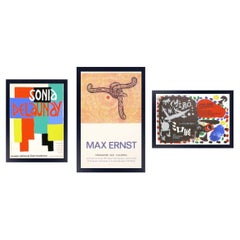
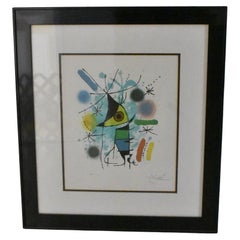
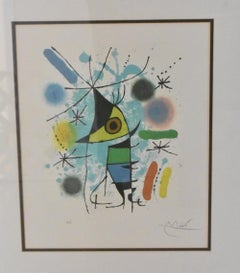
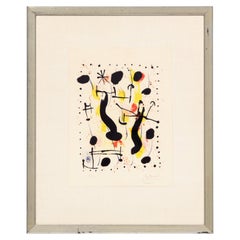
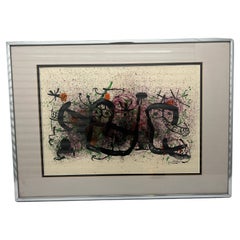
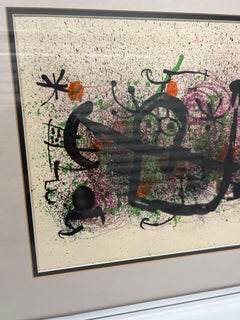
Abstract Modern Lithographs Joan Miro Max Ernst Sonia Delaunay $650 each

Abstract Modern Lithographs Joan Miro Max Ernst Sonia Delaunay $650 each

By (after) Joan Miró, (after) Sonia Delaunay, Max Ernst

Located in Atlanta, GA

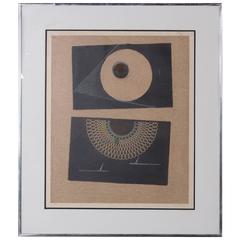
Mid century modern lithographs after Sonia Delaunay, Max Ernst, and Joan Miro, circa 1950s. They are priced at $650 each. They have been recently professionally framed under UV resis...

Category

1950s French Mid-Century Modern Vintage Max Ernst Prints

Materials

Glass, Wood, Paper

Related Items
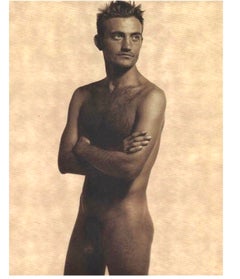
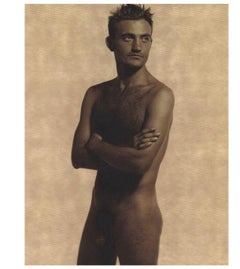
Karl Lagerfeld Satin Finish Umber Photo-Lithograph of Max Delorme, Nude, 1997

Karl Lagerfeld Satin Finish Umber Photo-Lithograph of Max Delorme, Nude, 1997

By Karl Lagerfeld

Located in Brooklyn, NY

Gorgeous photo print by the iconic photographer and fashion designer Karl Lagerfeld of Max Delorme. Image captured and satin finish umber photo-lithograph printed in 1997. Measures: ...

Category

Late 20th Century French Modern Max Ernst Prints

Materials

Paper

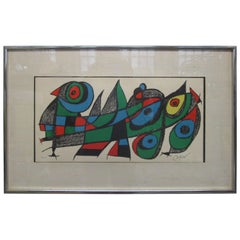
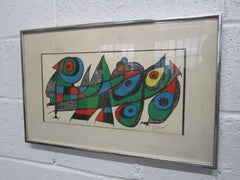
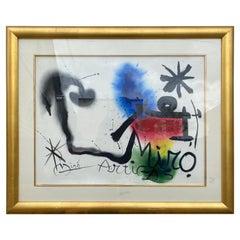
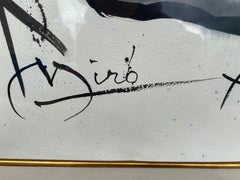
Joan Miro Lithograph Titled "Miro Sculptor Japan, " Signed and Numbered

Joan Miro Lithograph Titled "Miro Sculptor Japan, " Signed and Numbered

By Joan Miró

Located in New York, NY

This is a Joan Miro lithograph. Titled: Miro Sculptor Japan. It was a print exclusively for Collector's Guild members. Signed in the stone. Numbered 2/1000 in pencil. Framed measures...

Category

1970s Spanish Mid-Century Modern Vintage Max Ernst Prints

Materials

Paper

Joan Miro 'Self-Portrait II' Offset Lithograph Numbered Framed

Joan Miro 'Self-Portrait II' Offset Lithograph Numbered Framed

By (after) Joan Miró

Located in Vienna, AT

JOAN MIRÓ color lithograph, "Self-Portrait II", published by the SPADEN, Paris, 1973, and bearing their blind stamp number 36/150, printed sign.

Category

1960s Spanish Vintage Max Ernst Prints

Materials

Paper

Joan Miro "The Singing Fish" Signed Lithograph

Joan Miro "The Singing Fish" Signed Lithograph

Located in Toledo, OH

Joan Miro "The Singing Fish" Lithograph, 1972. Signed lower right, and marked H.C. lower left in pencil. Image size 14" x 17". The Singing Fish uses colors of blue, green, yellow and...

Category

Mid-20th Century Max Ernst Prints

Materials

Paper

Joan Miró "La Bague du Sanglier" Lithograph, Signed and Numbered, 1967

Joan Miró "La Bague du Sanglier" Lithograph, Signed and Numbered, 1967

By Joan Miró

Located in Oxnard, CA

Joan Miró (1893-1983) "La Bague du Sanglier" Limited Edition Lithograph on Arches paper Numbered 93/100 Hand signed in pencil Published by Maeght Éditeur, Paris Framed dimensions: ...

Category

Mid-20th Century French Mid-Century Modern Max Ernst Prints

Materials

Paper

Alphonse Mucha Lithograph Art Nouveau "Au Paradis des Bebes" 1902 Paris

Alphonse Mucha Lithograph Art Nouveau "Au Paradis des Bebes" 1902 Paris

By Alphonse Mucha

Located in Cincinnati, OH

A vintage lithograph of a glamorous woman of the Art Nouveau era done by the famed artist Alphonse Mucha known for his flowing detailed art depicting mostly woman in a sexy but digni...

Category

Late 19th Century French Art Nouveau Antique Max Ernst Prints

Materials

Paper

Joan Miro etching aquatint series of 30 on Japanese Paper , 1969

Joan Miro etching aquatint series of 30 on Japanese Paper , 1969

By Joan Miró

Located in La xara, VC

The work in question is part of a series of 30 prints on Japanese paper number with out sign Provenance Paris around Broder Family publisher .last picture Explanation: Series of 3...

Category

1960s Spanish Mid-Century Modern Vintage Max Ernst Prints

Materials

Paper

Joan Miró Les Pénalités de l’Enfer... Lithograph 1974

Joan Miró Les Pénalités de l’Enfer... Lithograph 1974

By Joan Miró

Located in Rio Vista, CA

A striking abstract lithograph by Joan Miro (Spanish 1893-1983) for Robert Desnos’ surrealist text 'Les Pénalités de l’Enfer ou les Nouvelles-Hébrides" (The Penalties of Hell or The ...

Category

20th Century Spanish Modern Max Ernst Prints

Materials

Wood, Giltwood, Paper, Linen, Glass

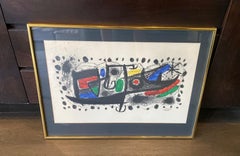
Joan Miró Signed Mid-Century Spanish Abstract Surrealist Lithograph Star Scene

Joan Miró Signed Mid-Century Spanish Abstract Surrealist Lithograph Star Scene

By Joan Miró

Located in Studio City, CA

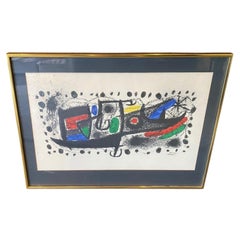
A beautiful, gorgeously colored Mid-Century Modern abstract surrealistic lithograph by renowned Spanish artist Joan Miró (1893–1983) titled "Star Scene" and created in 1969. The wor...

Category

1960s American Mid-Century Modern Vintage Max Ernst Prints

Materials

Paper

Victorian Fashion Flourishes: A Lithograph for the 1889 Exposition Universelle

Victorian Fashion Flourishes: A Lithograph for the 1889 Exposition Universelle

Located in Langweer, NL

This lithograph showcases a fashionable woman from 1889, dressed in a highly detailed and decorative gown. The dress is characterized by multiple tiers of ruffled fabric, adorned wit...

Category

1880s Antique Max Ernst Prints

Materials

Paper

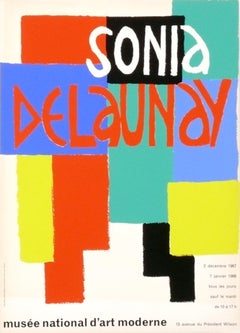
Sonia Delaunay Color Lithography Framed, circa 1970

Sonia Delaunay Color Lithography Framed, circa 1970

$1,976

H 14.57 in W 11.82 in D 0.75 in

Sonia Delaunay Color Lithography Framed, circa 1970

By Sonia Delaunay

Located in Barcelona, Barcelona

Lithography by Sonia Delaunay. Provenance: France Framed Not signed. Sonia Delaunay (1885-1979) was a Ukrainian-born French artist, who spent most of her working life in Paris and, with her husband Robert Delaunay and others, cofounded the Orphism art movement, noted for its use of strong colors and geometric shapes. Her work extends to painting, textile design and stage set design...

Category

2010s French Mid-Century Modern Max Ernst Prints

Materials

Paper

Picasso Exposition Poteries Fleurs Parfums (NO. 1)

Picasso Exposition Poteries Fleurs Parfums (NO. 1)

$2,400Sale Price|20% Off

H 38.19 in W 26.38 in D 0.04 in

Picasso Exposition Poteries Fleurs Parfums (NO. 1)

By Pablo Picasso

Located in Melbourne, Victoria

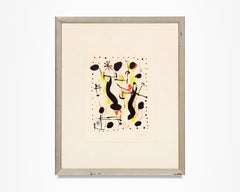
Exposition Poteries, Fleurs, Parfums no. 1 Original Vintage Poster PICASSO EXPOSITION POTERIES FLEURS PARFUMS (NO. 1) Poster created by Picasso for...

Category

19th Century French Mid-Century Modern Antique Max Ernst Prints
Materials

Linen, Paper

Previously Available Items
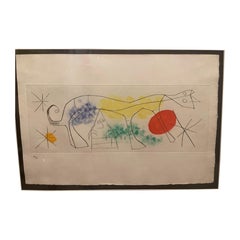
'Zodiaque' edition 95/100 print by Max Ernst, signed

'Zodiaque' edition 95/100 print by Max Ernst, signed

Sold

H 24.61 in W 19.69 in D 0.87 in

'Zodiaque' edition 95/100 print by Max Ernst, signed

By Max Ernst

Located in London, GB

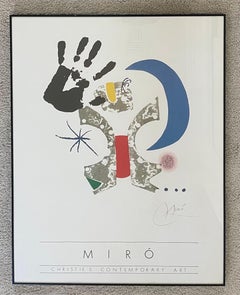
Framed 'Zodique' colour etching on Lana laid paper by Max Ernst. Signed in pencil lower right 'Max Ernst' and numbered '95/100' lower left. 2964 Provenance from the collection for '...

Category

1970s European Vintage Max Ernst Prints
Materials

Paper

"Entre Chiens et Loups" Etching by Max Ernst

"Entre Chiens et Loups" Etching by Max Ernst

Sold

H 28.75 in W 24.25 in D 1 in

"Entre Chiens et Loups" Etching by Max Ernst

By Max Ernst

Located in Palm Desert, CA

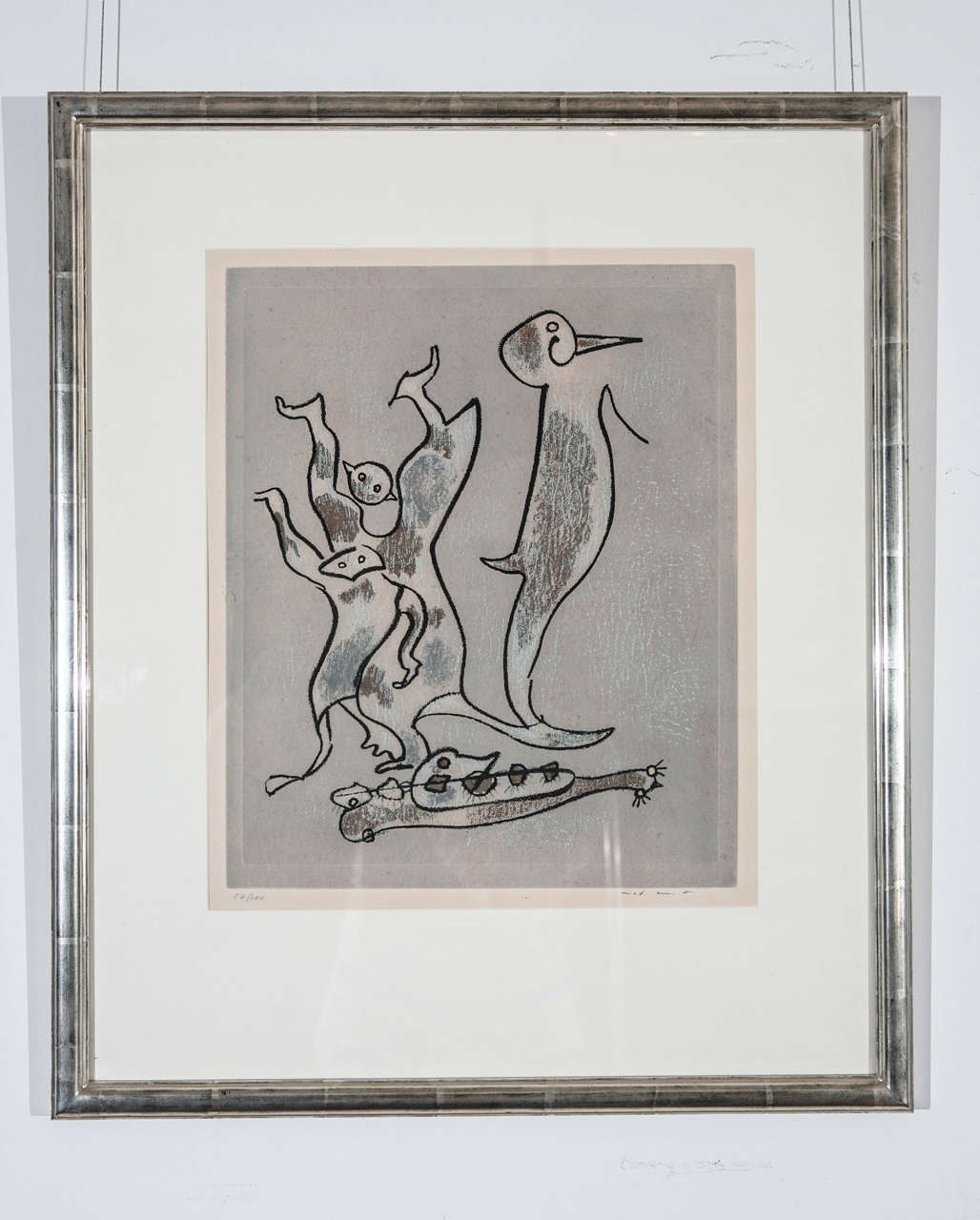
A charming etching and aquatint by Max Ernst entitled "Entre Chiens et Loups" pencil signed and numbered 57/100. Published by Editions Georges Visat, Paris. Dimensions given below ar...

Category

1970s French Vintage Max Ernst Prints
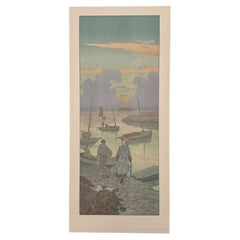
Max Ernst prints for sale on 1stDibs.

Max Ernst prints are available for sale on 1stDibs. These distinctive items are frequently made of paper and are designed with extraordinary care. Many of the original prints by Max Ernst were created in the modern style in france during the 1970s. If you’re looking for additional options, many customers also consider prints by Jean-Michel Folon, James Coignard, and Henri Matisse. Prices for Max Ernst prints can differ depending upon size, time period and other attributes — on 1stDibs, these items begin at $349 and can go as high as $349, while a piece like these, on average, fetch $349.
Questions About Max Ernst Prints
  • 1stDibs ExpertApril 26, 2024
    Max Ernst lived in several places during his life. He was born in Brühl, Germany, in 1881 and later moved to Bonn to attend the university located there. Then he settled in Cologne, not far from his birthplace. In 1922, Ernst moved to France, where he soon became affiliated with Surrealism, the avant-garde art movement taking shape in Paris. Alongside Man Ray, Joan Miró and others, Ernst was among the first visual artists to experiment with imagery and techniques associated with Surrealism. When Germany occupied France during World War II, Ernst escaped to America with the help of patron and collector Peggy Guggenheim, whom he married in 1941. While living in New York, Ernst's work and techniques proved instrumental in inspiring the early development of Abstract Expressionism. He later moved to Sedona, Arizona, where he lived with his fourth wife, Dorothea Tanning, a fellow Surrealist and prolific visual artist and poet. While Ernst and Tanning are largely responsible for Sedona's reputation as an artist colony, they relocated to France in the 1950s and remained there until Ernst's death in Paris in 1976. On 1stDibs, shop a collection of Max Ernst art.
  • 1stDibs ExpertMarch 13, 2024
    You can see Max Ernst paintings in many places around the world. The Max Ernst Museum Brühl des LVR in Brühl, Germany, is home to one of the largest exhibitions of his work. Other museums that have Max Ernst paintings in their permanent collections include the Museum of Modern Art in New York, New York; the San Francisco Museum of Modern Art in San Francisco, California; the Art Institute of Chicago in Chicago, Illinois and the Detroit Institute of Arts in Detroit, Michigan. Explore a range of Max Ernst art on 1stDibs.
  • 1stDibs ExpertNovember 20, 2024
    Max Ernst contributed to Surrealism by pushing the boundaries of the movement with his unconventional methods of printmaking, drawing and collage. He invented frottage (French for “rubbing”), wherein an artist rubs a pencil or crayon over a paper atop a textured surface, and later grattage (French for “scraping”), where a similar technique is applied with paint. Both methods showcase Ernst’s fascination with the unconscious and serendipitous elements of artistic creation, a theme that resonated with the Dadaists and the Surrealists. Ernst had deep knowledge of psychoanalysis and Sigmund Freud’s dream theories, which were big influences on Surrealists. He was among the first Surrealists to use Freud’s work to examine his own creative impulses. He also published a series of books of his collages, all of which were deeply symbolic and often philosophical. Explore a selection of Max Ernst art on 1stDibs.
  • 1stDibs ExpertOctober 15, 2024
    Max Ernst used Surrealism to process the traumas he experienced during World War I. His early works consisted largely of collages, which allowed him to represent the shards, rubble and explosions from his wartime experience. In 1922, Ernst moved to France, where he soon became affiliated with Surrealism, the avant-garde art movement taking shape in Paris. Alongside Man Ray, Joan Miró and others, Ernst was among the first visual artists to experiment with the imagery and techniques that became associated with Surrealist art. Ernst’s greatest contribution to the Surrealist movement is often considered his invention of frottage, wherein an artist rubs a pencil or crayon over a paper atop a textured surface, and later grattage, where a similar technique is applied with paint. Both methods showcase Ernst’s fascination with the unconscious and serendipitous elements of artistic creation, a theme that connected the Dadaists and the Surrealists. Explore a range of Max Ernst art on 1stDibs.
  • 1stDibs ExpertOctober 30, 2024
    How much Max Ernst paintings are worth depends on their size, history, condition and other factors. In 2023, his oil-on-panel piece Taya's Sun sold for more than $304,000 at auction. Ernst was a pioneer in the Dada and Surrealist movements, pushing their boundaries with his unconventional methods of printmaking, drawing and collage. If you own an Ernst, consider having a certified appraiser or experienced art dealer evaluate it. Explore a selection of Max Ernst art on 1stDibs.