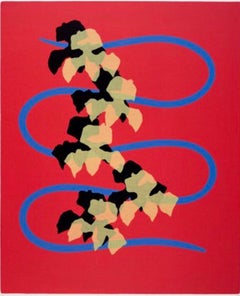
Michael Mazur Art

American, 1935-2009
Michael Mazur (b. 1935, New York, NY – d. 2009, Cambridge, MA) is internationally recognized for his paintings, drawings, and prints and for his fluidity between media. Mazur is unusual among artists in that he worked successfully in both abstract and representational imagery, influenced by elements of Impressionism, Abstract Expressionism, and early Chinese paintings. He was instrumental in the revival of the monotype in 20th-century art and renowned for his pastels, as well.Mazur’s work is in numerous prominent museum collections, including the British Museum, UK; Cincinnati Art Museum, OH; Cleveland Museum of Art, OH; de Cordova Museum, Lincoln, MA; Los Angeles County Museum of Art, CA; Museum of Fine Arts, Boston, MA; Art Institute of Chicago, IL; McNay Art Museum, San Antonio, TX; Metropolitan Museum of Art, NY; Museum of Modern Art, NY; Philadelphia Museum of Art, PA; Smith College, MA; Whitney Museum of American Art, NY; Yale University Art Gallery, CT; and Zimmerli Art Museum at Rutgers University, NJ. Mazur has been included in solo and group exhibitions at RYAN LEE (2018), Nagoya/Boston Museum of Fine Arts (2018), de Saisset Museum, Santa Clara University (2017), Mead Art Museum, Amherst College (2017), deCordova Sculpture Park and Museum (2016), The Print Center, Philadelphia (2015), International Print Center of New York (2015) and the Boston Museum of Fine Art (2006). In 2000, the Museum of Fine Arts, Boston held a retrospective, which later traveled to Stanford University Art Museum, the Jane Vorhees Zimmerli Art Museum at Rutgers University, and the Minneapolis Institute of Art. An accompanying catalogue was published by the Museum of Fine Arts, Boston. Mary Ryan Gallery has held 14 solo exhibitions featuring Mazur’s work between 1990 and 2010.
to
1
2
1
Overall Width
to
Overall Height
to
3
1
2
2
1
3
1
1
1
1
1
1
1
2
1
1
1
1
5
10,158
2,805
2,503
1,396
1
1
4
Artist: Michael Mazur
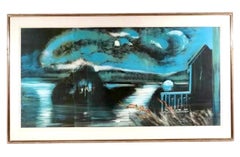
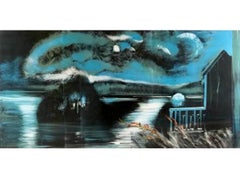
Large American Modernist Monotype Michael Mazur The Lake Expressionist Landscape

Large American Modernist Monotype Michael Mazur The Lake Expressionist Landscape

By Michael Mazur

Located in Surfside, FL

Michael Mazur (American, 1935-) Hand signed and titled The Lake II, 1985 Color monotype Hand signed, titled, and dated in pencil lower margin Dimensions overall: 47 x 82 in. (frame) ...

Category

1980s American Modern Michael Mazur Art

Materials

Monoprint, Monotype

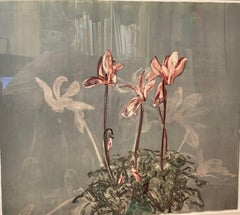
Cyclamen II

Cyclamen II

By Michael Mazur

Located in New York, NY

Mr. Mazur’s restless artistic temperament led him to explore a variety of styles and media, shuttling between realism and abstraction. He produced narrative paintings like “Incident ...

Category

1980s Realist Michael Mazur Art

Materials

Monotype

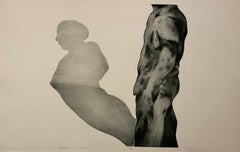
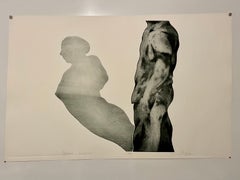
Modernist Figurative Pop Art Etching and Aquatint "the Artist" Michael Mazur

Modernist Figurative Pop Art Etching and Aquatint "the Artist" Michael Mazur

By Michael Mazur

Located in Surfside, FL

Michael Mazur "The Artist" Hand signed and editioned from the edition of 50 1967 Michael Burton Mazur (1935-August 18, 2009) was an American artist who was described by William Grim...

Category

Early 2000s American Modern Michael Mazur Art

Materials

Lithograph, Screen
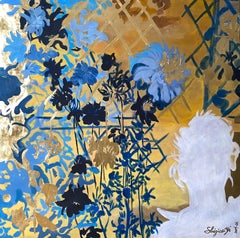
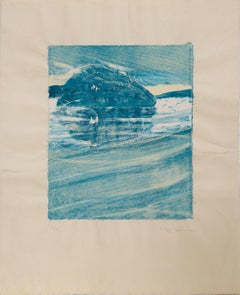
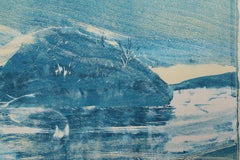
Wakeby Island, Conceptual Art Woodcut Print by Michael Mazur

Wakeby Island, Conceptual Art Woodcut Print by Michael Mazur

By Michael Mazur

Located in Long Island City, NY

Artist: Michael Mazur, American (1935 - 2009) Title: Wakeby Island Year: circa 1990 Medium: Color woodcut with chine collé, signed and numbered in pencil Edition: 15 Image Size: 15 x...

Category

Late 20th Century Contemporary Michael Mazur Art

Materials

Woodcut

Related Items
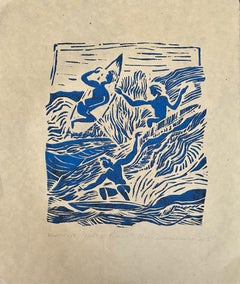
Surf Elements - Surfing Art - Figurative - Woodcut Print By Marc Zimmerman

Surf Elements - Surfing Art - Figurative - Woodcut Print By Marc Zimmerman

By Marc Zimmerman

Located in Carmel, CA

Surf Elements - Surfing Art - Figurative - Woodcut Print By Marc Zimmerman Limited Edition 01/04 This masterwork is exhibited in the Zimmerman Gallery, Carmel CA. Immerse yourself...

Category

2010s Contemporary Michael Mazur Art

Materials

Woodcut

High Tide

Hiroki MorinoueHigh Tide, 2012

$2,500

H 22 in W 30 in

High Tide

By Hiroki Morinoue

Located in Lyons, CO

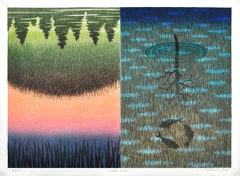
Color woodcut, Edition 30 The left panel of High Tide captures the reflections of the edge of a pond and surrounding trees and hills. The right panel depi...

Category

21st Century and Contemporary Contemporary Michael Mazur Art

Materials

Woodcut

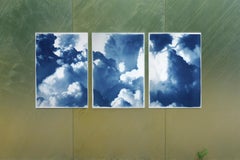
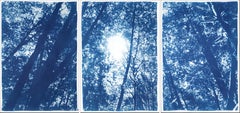
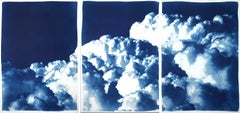
Waves of Clouds, Deep Blue Cyanotype Print, Pleasant Cloudy Sky, Large Triptych

Waves of Clouds, Deep Blue Cyanotype Print, Pleasant Cloudy Sky, Large Triptych

By Kind of Cyan

Located in Barcelona, ES

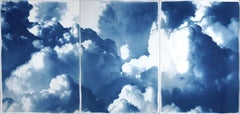
This series of cyanotype triptychs showcases the beauty of nature scenes, including stunning beaches and oceans, as well as the intricate textures of water, forests, and skies. These triptychs are large pieces that feature lush blues, making them an impressive addition to any beautifully designed space. Each triptych is printed by hand and carefully crafted to capture the unique essence of these natural environments, with a focus on the interplay of light and shadows, and the subtle nuances of tone and texture. The beach and ocean scenes depict the dynamic beauty of waves crashing against the shore, with the cyanotype process lending a dreamy, ethereal quality to the images. Similarly, the forest and wood scenes...

Category

2010s American Realist Michael Mazur Art

Materials

Lithograph, Rag Paper

Winter Trees — Sōsaku Hanga Japanese Woodblock Print

Winter Trees — Sōsaku Hanga Japanese Woodblock Print

Located in Myrtle Beach, SC

Hajime Namiki, 'Tree Scene 159', color woodcut, edition 200, 2022. Signed in pencil and with the artist’s red seal. Titled, numbered '37/200' and dated, in pencil. A very fine impres...

Category

21st Century and Contemporary Contemporary Michael Mazur Art

Materials

Woodcut

Realist Skyscape Triptych in Blue Tones of Serene Cloudy Sky, Handmade Cyanotype

Realist Skyscape Triptych in Blue Tones of Serene Cloudy Sky, Handmade Cyanotype

By Kind of Cyan

Located in Barcelona, ES

This series of cyanotype triptychs showcases the beauty of nature scenes, including stunning beaches and oceans, as well as the intricate textures of water, forests, and skies. These...

Category

2010s Realist Michael Mazur Art

Materials

Paper, Emulsion, Lithograph

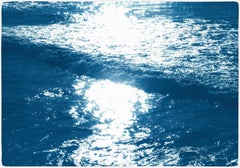
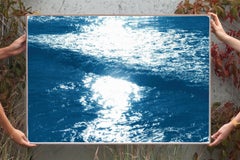
Serene Cove Waters, Feng Shui Seascape, Blue and White Ripples, Horizontal Print

Serene Cove Waters, Feng Shui Seascape, Blue and White Ripples, Horizontal Print

By Kind of Cyan

Located in Barcelona, ES

This is an exclusive handprinted limited edition cyanotype. "Serene Cove Waters" is a handmade cyanotype print portraying fresh ripples movements in a Greek Islands cove...

Category

2010s Abstract Michael Mazur Art

Materials

Emulsion, Mixed Media, Watercolor, Photographic Paper, Lithograph, Monop...

"Ravanna's Palace Burning, " Woodcut Landscape signed by Carol Summers

"Ravanna's Palace Burning, " Woodcut Landscape signed by Carol Summers

By Carol Summers

Located in Milwaukee, WI

"Ravanna's Palace Burning" is a woodcut signed by Carol Summers. The image combines landscape and architecture, which is typical of the works Summers produced during the 1980s and '90s. In the image, a dark building stands burning, bright red flames licking from the windows and rooftop. It stands beside an orange field framed in pink, probably representing a plaza. Beyond the plaza are multicolored trees, their branches reaching upward like the flames on the building. The playfulness of the image is enhanced by Summers' signature printmaking technique, which allows the ink from the woodblock to seep through the paper, blurring the edges of each form. Art: 24.5 x 37.25 in Frame: 30 x 42.75 in Numbered 53 of the edition of 125 Carol Summers (1925-2016) has worked as an artist throughout the second half of the 20th century and into the first years of the next, outliving most of his mid-century modernist peers. Initially trained as a painter, Summers was drawn to color woodcuts around 1950 and it became his specialty thereafter. Over the years he has developed a process and style that is both innovative and readily recognizable. His art is known for it’s large scale, saturated fields of bold color, semi-abstract treatment of landscapes from around the world and a luminescent quality achieved through a printmaking process he invented. In a career that has extended over half a century, Summers has hand-pulled approximately 245 woodcuts in editions that have typically run from 25 to 100 in number. His talent was both inherited and learned. Born in 1925 in Kingston, a small town in upstate New York, Summers was raised in nearby Woodstock with his older sister, Mary. His parents were both artists who had met in art school in St. Louis. During the Great Depression, when Carol was growing up, his father supported the family as a medical illustrator until he could return to painting. His mother was a watercolorist and also quite knowledgeable about the different kinds of papers used for various kinds of painting. Many years later, Summers would paint or print on thinly textured paper originally collected by his mother. From 1948 to 1951, Carol Summers trained in the classical fine and studio arts at Bard College and at the Art Students League of New York. He studied painting with Steven Hirsh and printmaking with Louis Schanker. He admired the shapes and colors favored by early modernists Paul Klee (Sw: 1879-1940) and Matt Phillips (Am: b.1927- ). After graduating, Summers quit working as a part-time carpenter and cabinetmaker (which had supported his schooling and living expenses) to focus fulltime on art. That same year, an early abstract, Bridge No. 1 was selected for a Purchase Prize in a competition sponsored by the Brooklyn Museum. In 1952, his work (Cathedral, Construction and Icarus) was shown the first time at the Museum of Modern Art in New York City in an exhibition of American woodcuts. In 1954, Summers received a grant from the Italian government to study for a year in Italy. Woodcuts completed soon after his arrival there were almost all editions of only 8 to 25 prints, small in size, architectural in content and black and white in color. The most well-known are Siennese Landscape and Little Landscape, which depicted the area near where he resided. Summers extended this trip three more years, a decision which would have significant impact on choices of subject matter and color in the coming decade. After returning from Europe, Summers’ images continued to feature historical landmarks and events from Italy as well as from France, Spain and Greece. However, as evidenced in Aetna’s Dream, Worldwind and Arch of Triumph, a new look prevailed. These woodcuts were larger in size and in color. Some incorporated metal leaf in the creation of a collage and Summers even experimented with silkscreening. Editions were now between 20 and 50 prints in number. Most importantly, Summers employed his rubbing technique for the first time in the creation of Fantastic Garden in late 1957. Dark Vision of Xerxes, a benchmark for Summers, was the first woodcut where Summers experimented using mineral spirits as part of his printmaking process. A Fulbright Grant as well as Fellowships from the Louis Comfort Tiffany Foundation and the Guggenheim Foundation followed soon thereafter, as did faculty positions at colleges and universities primarily in New York and Pennsylvania. During this period he married a dancer named Elaine Smithers with whom he had one son, Kyle. Around this same time, along with fellow artist Leonard Baskin, Summers pioneered what is now referred to as the “monumental” woodcut. This term was coined in the early 1960s to denote woodcuts that were dramatically bigger than those previously created in earlier years, ones that were limited in size mostly by the size of small hand-presses. While Baskin chose figurative subject matter, serious in nature and rendered with thick, striated lines, Summers rendered much less somber images preferring to emphasize shape and color; his subject matter approached abstraction but was always firmly rooted in the landscape. In addition to working in this new, larger scale, Summers simultaneously refined a printmaking process which would eventually be called the “Carol Summers Method” or the “ Carol Summers Technique”. Summers produces his woodcuts by hand, usually from one or more blocks of quarter-inch pine, using oil-based printing inks and porous mulberry papers. His woodcuts reveal a sensitivity to wood especially its absorptive qualities and the subtleties of the grain. In several of his woodcuts throughout his career he has used the undulating, grainy patterns of a large wood plank to portray a flowing river or tumbling waterfall. The best examples of this are Dream, done in 1965 and the later Flash Flood Escalante, in 2003. In the majority of his woodcuts, Summers makes the blocks slightly larger than the paper so the image and color will bleed off the edge. Before printing, he centers a dry sheet of paper over the top of the cut wood block or blocks, securing it with giant clips. Then he rolls the ink directly on the front of the sheet of paper and pressing down onto the dry wood block or reassembled group of blocks. Summers is technically very proficient; the inks are thoroughly saturated onto the surface of the paper but they do not run into each other. The precision of the color inking in Constantine’s Dream in 1969 and Rainbow Glacier in 1970 has been referred to in various studio handbooks. Summers refers to his own printing technique as “rubbing”. In traditional woodcut printing, including the Japanese method, the ink is applied directly onto the block. However, by following his own method, Summers has avoided the mirror-reversed image of a conventional print and it has given him the control over the precise amount of ink that he wants on the paper. After the ink is applied to the front of the paper, Summers sprays it with mineral spirits, which act as a thinning agent. The absorptive fibers of the paper draw the thinned ink away from the surface softening the shapes and diffusing and muting the colors. This produces a unique glow that is a hallmark of the Summers printmaking technique. Unlike the works of other color field artists or modernists of the time, this new technique made Summers’ extreme simplification and flat color areas anything but hard-edged or coldly impersonal. By the 1960s, Summers had developed a personal way of coloring and printing and was not afraid of hard work, doing the cutting, inking and pulling himself. In 1964, at the age of 38, Summers’ work was exhibited for a second time at the Museum of Modern Art. This time his work was featured in a one-man show and then as one of MOMA’s two-year traveling exhibitions which toured throughout the United States. In subsequent years, Summers’ works would be exhibited and acquired for the permanent collections of multiple museums throughout the United States, Europe and Asia. Summers’ familiarity with landscapes throughout the world is firsthand. As a navigator-bombardier in the Marines in World War II, he toured the South Pacific and Asia. Following college, travel in Europe and subsequent teaching positions, in 1972, after 47 years on the East Coast, Carol Summers moved permanently to Bonny Doon in the Santa Cruz Mountains in Northern California. There met his second wife, Joan Ward Toth, a textile artist who died in 1998; and it was here his second son, Ethan was born. During the years that followed this relocation, Summers’ choice of subject matter became more diverse although it retained the positive, mostly life-affirming quality that had existed from the beginning. Images now included moons, comets, both sunny and starry skies, hearts and flowers, all of which, in one way or another, remained tied to the landscape. In the 1980s, from his home and studio in the Santa Cruz mountains, Summers continued to work as an artist supplementing his income by conducting classes and workshops at universities in California and Oregon as well as throughout the Mid and Southwest. He also traveled extensively during this period hiking and camping, often for weeks at a time, throughout the western United States and Canada. Throughout the decade it was not unusual for Summers to backpack alone or with a fellow artist into mountains or back country for six weeks or more at a time. Not surprisingly, the artwork created during this period rarely departed from images of the land, sea and sky. Summers rendered these landscapes in a more representational style than before, however he always kept them somewhat abstract by mixing geometric shapes with organic shapes, irregular in outline. Some of his most critically acknowledged work was created during this period including First Rain, 1985 and The Rolling Sea, 1989. Summers received an honorary doctorate from his alma mater, Bard College in 1979 and was selected by the United States Information Agency to spend a year conducting painting and printmaking workshops at universities throughout India. Since that original sabbatical, he has returned every year, spending four to eight weeks traveling throughout that country. In the 1990s, interspersed with these journeys to India have been additional treks to the back roads and high country areas of Mexico, Central America, Nepal, China and Japan. Travel to these exotic and faraway places had a profound influence on Summers’ art. Subject matter became more worldly and nonwestern as with From Humla to Dolpo, 1991 or A Former Life of Budha, 1996, for example. Architectural images, such as The Pillars of Hercules, 1990 or The Raja’s Aviary, 1992 became more common. Still life images made a reappearance with Jungle Bouquet in 1997. This was also a period when Summers began using odd-sized paper to further the impact of an image. The 1996 Night, a view of the earth and horizon as it might be seen by an astronaut, is over six feet long and only slightly more than a foot-and-a-half high. From 1999, Revuelta A Vida (Spanish for “Return to Life”) is pie-shaped and covers nearly 18 cubic feet. It was also at this juncture that Summers began to experiment with a somewhat different palette although he retained his love of saturated colors. The 2003 Far Side of Time is a superb example of the new direction taken by this colorist. At the turn of the millennium in 1999, “Carol Summers Woodcuts...

Category

1980s Contemporary Michael Mazur Art

Materials

Woodcut

Pacific Sunset Waves, Contemporary Cyanotype on Paper, Navy Blue, Beach House

Pacific Sunset Waves, Contemporary Cyanotype on Paper, Navy Blue, Beach House

By Kind of Cyan

Located in Barcelona, ES

This is an exclusive handprinted limited edition cyanotype. "Pacific Sunset Waves" is an original cyanotype that abstractly shows the sunset reflections on the sea. Details: + Titl...

Category

2010s Realist Michael Mazur Art

Materials

Emulsion, Mixed Media, Watercolor, Photographic Paper, Lithograph, Monop...

"Little Wolf's Last Camp, " Colored Woodblock A/P signed by Carol Summers

"Little Wolf's Last Camp, " Colored Woodblock A/P signed by Carol Summers

By Carol Summers

Located in Milwaukee, WI

"Little Wolf's Last Camp" is a colored woodblock A/P signed by Carol Summers. In the image, a mountain looms over a circle of teat the edge of a lake, a scene likely inspired by the life events of the Northern Cheyenne Chief Little Wolf (c. 1820-1904) and his leadership during the Northern Cheyenne Exodus. The drama of the image is enhanced by Summers' signature printmaking technique, which allows the ink from the woodblock to seep through the paper, blurring the edges of each form. Frame: 37 x 37 in This is an artist's proof from the edition of 100 Carol Summers (1925-2016) has worked as an artist throughout the second half of the 20th century and into the first years of the next, outliving most of his mid-century modernist peers. Initially trained as a painter, Summers was drawn to color woodcuts around 1950 and it became his specialty thereafter. Over the years he has developed a process and style that is both innovative and readily recognizable. His art is known for it’s large scale, saturated fields of bold color, semi-abstract treatment of landscapes from around the world and a luminescent quality achieved through a printmaking process he invented. In a career that has extended over half a century, Summers has hand-pulled approximately 245 woodcuts in editions that have typically run from 25 to 100 in number. His talent was both inherited and learned. Born in 1925 in Kingston, a small town in upstate New York, Summers was raised in nearby Woodstock with his older sister, Mary. His parents were both artists who had met in art school in St. Louis. During the Great Depression, when Carol was growing up, his father supported the family as a medical illustrator until he could return to painting. His mother was a watercolorist and also quite knowledgeable about the different kinds of papers used for various kinds of painting. Many years later, Summers would paint or print on thinly textured paper originally collected by his mother. From 1948 to 1951, Carol Summers trained in the classical fine and studio arts at Bard College and at the Art Students League of New York. He studied painting with Steven Hirsh and printmaking with Louis Schanker. He admired the shapes and colors favored by early modernists Paul Klee (Sw: 1879-1940) and Matt Phillips (Am: b.1927- ). After graduating, Summers quit working as a part-time carpenter and cabinetmaker (which had supported his schooling and living expenses) to focus fulltime on art. That same year, an early abstract, Bridge No. 1 was selected for a Purchase Prize in a competition sponsored by the Brooklyn Museum. In 1952, his work (Cathedral, Construction and Icarus) was shown the first time at the Museum of Modern Art in New York City in an exhibition of American woodcuts. In 1954, Summers received a grant from the Italian government to study for a year in Italy. Woodcuts completed soon after his arrival there were almost all editions of only 8 to 25 prints, small in size, architectural in content and black and white in color. The most well-known are Siennese Landscape and Little Landscape, which depicted the area near where he resided. Summers extended this trip three more years, a decision which would have significant impact on choices of subject matter and color in the coming decade. After returning from Europe, Summers’ images continued to feature historical landmarks and events from Italy as well as from France, Spain and Greece. However, as evidenced in Aetna’s Dream, Worldwind and Arch of Triumph, a new look prevailed. These woodcuts were larger in size and in color. Some incorporated metal leaf in the creation of a collage and Summers even experimented with silkscreening. Editions were now between 20 and 50 prints in number. Most importantly, Summers employed his rubbing technique for the first time in the creation of Fantastic Garden in late 1957. Dark Vision of Xerxes, a benchmark for Summers, was the first woodcut where Summers experimented using mineral spirits as part of his printmaking process. A Fulbright Grant as well as Fellowships from the Louis Comfort Tiffany Foundation and the Guggenheim Foundation followed soon thereafter, as did faculty positions at colleges and universities primarily in New York and Pennsylvania. During this period he married a dancer named Elaine Smithers with whom he had one son, Kyle. Around this same time, along with fellow artist Leonard Baskin, Summers pioneered what is now referred to as the “monumental” woodcut. This term was coined in the early 1960s to denote woodcuts that were dramatically bigger than those previously created in earlier years, ones that were limited in size mostly by the size of small hand-presses. While Baskin chose figurative subject matter, serious in nature and rendered with thick, striated lines, Summers rendered much less somber images preferring to emphasize shape and color; his subject matter approached abstraction but was always firmly rooted in the landscape. In addition to working in this new, larger scale, Summers simultaneously refined a printmaking process which would eventually be called the “Carol Summers Method” or the “ Carol Summers Technique”. Summers produces his woodcuts by hand, usually from one or more blocks of quarter-inch pine, using oil-based printing inks and porous mulberry papers. His woodcuts reveal a sensitivity to wood especially its absorptive qualities and the subtleties of the grain. In several of his woodcuts throughout his career he has used the undulating, grainy patterns of a large wood plank to portray a flowing river or tumbling waterfall. The best examples of this are Dream, done in 1965 and the later Flash Flood Escalante, in 2003. In the majority of his woodcuts, Summers makes the blocks slightly larger than the paper so the image and color will bleed off the edge. Before printing, he centers a dry sheet of paper over the top of the cut wood block or blocks, securing it with giant clips. Then he rolls the ink directly on the front of the sheet of paper and pressing down onto the dry wood block or reassembled group of blocks. Summers is technically very proficient; the inks are thoroughly saturated onto the surface of the paper but they do not run into each other. The precision of the color inking in Constantine’s Dream in 1969 and Rainbow Glacier in 1970 has been referred to in various studio handbooks. Summers refers to his own printing technique as “rubbing”. In traditional woodcut printing, including the Japanese method, the ink is applied directly onto the block. However, by following his own method, Summers has avoided the mirror-reversed image of a conventional print and it has given him the control over the precise amount of ink that he wants on the paper. After the ink is applied to the front of the paper, Summers sprays it with mineral spirits, which act as a thinning agent. The absorptive fibers of the paper draw the thinned ink away from the surface softening the shapes and diffusing and muting the colors. This produces a unique glow that is a hallmark of the Summers printmaking technique. Unlike the works of other color field artists or modernists of the time, this new technique made Summers’ extreme simplification and flat color areas anything but hard-edged or coldly impersonal. By the 1960s, Summers had developed a personal way of coloring and printing and was not afraid of hard work, doing the cutting, inking and pulling himself. In 1964, at the age of 38, Summers’ work was exhibited for a second time at the Museum of Modern Art. This time his work was featured in a one-man show and then as one of MOMA’s two-year traveling exhibitions which toured throughout the United States. In subsequent years, Summers’ works would be exhibited and acquired for the permanent collections of multiple museums throughout the United States, Europe and Asia. Summers’ familiarity with landscapes throughout the world is firsthand. As a navigator-bombardier in the Marines in World War II, he toured the South Pacific and Asia. Following college, travel in Europe and subsequent teaching positions, in 1972, after 47 years on the East Coast, Carol Summers moved permanently to Bonny Doon in the Santa Cruz Mountains in Northern California. There met his second wife, Joan Ward Toth, a textile artist who died in 1998; and it was here his second son, Ethan was born. During the years that followed this relocation, Summers’ choice of subject matter became more diverse although it retained the positive, mostly life-affirming quality that had existed from the beginning. Images now included moons, comets, both sunny and starry skies, hearts and flowers, all of which, in one way or another, remained tied to the landscape. In the 1980s, from his home and studio in the Santa Cruz mountains, Summers continued to work as an artist supplementing his income by conducting classes and workshops at universities in California and Oregon as well as throughout the Mid and Southwest. He also traveled extensively during this period hiking and camping, often for weeks at a time, throughout the western United States and Canada. Throughout the decade it was not unusual for Summers to backpack alone or with a fellow artist into mountains or back country for six weeks or more at a time. Not surprisingly, the artwork created during this period rarely departed from images of the land, sea and sky. Summers rendered these landscapes in a more representational style than before, however he always kept them somewhat abstract by mixing geometric shapes with organic shapes, irregular in outline. Some of his most critically acknowledged work was created during this period including First Rain, 1985 and The Rolling Sea, 1989. Summers received an honorary doctorate from his alma mater, Bard College in 1979 and was selected by the United States Information Agency to spend a year conducting painting and printmaking workshops at universities throughout India. Since that original sabbatical, he has returned every year, spending four to eight weeks traveling throughout that country. In the 1990s, interspersed with these journeys to India have been additional treks to the back roads and high country areas of Mexico, Central America, Nepal, China and Japan. Travel to these exotic and faraway places had a profound influence on Summers’ art. Subject matter became more worldly and nonwestern as with From Humla to Dolpo, 1991 or A Former Life of Budha, 1996, for example. Architectural images, such as The Pillars of Hercules, 1990 or The Raja’s Aviary, 1992 became more common. Still life images made a reappearance with Jungle Bouquet in 1997. This was also a period when Summers began using odd-sized paper to further the impact of an image. The 1996 Night, a view of the earth and horizon as it might be seen by an astronaut, is over six feet long and only slightly more than a foot-and-a-half high. From 1999, Revuelta A Vida (Spanish for “Return to Life”) is pie-shaped and covers nearly 18 cubic feet. It was also at this juncture that Summers began to experiment with a somewhat different palette although he retained his love of saturated colors. The 2003 Far Side of Time is a superb example of the new direction taken by this colorist. At the turn of the millennium in 1999, “Carol Summers Woodcuts...

Category

1970s Contemporary Michael Mazur Art

Materials

Woodcut

Blue Tones Triptych, Serene Gorgeous Clouds, Handmade Cyanotype Watercolor Paper

Blue Tones Triptych, Serene Gorgeous Clouds, Handmade Cyanotype Watercolor Paper

By Kind of Cyan

Located in Barcelona, ES

This series of cyanotype triptychs showcases the beauty of nature scenes, including stunning beaches and oceans, as well as the intricate textures of w...

Category

2010s American Realist Michael Mazur Art

Materials

Emulsion, Lithograph, Monotype, Handmade Paper

Previously Available Items
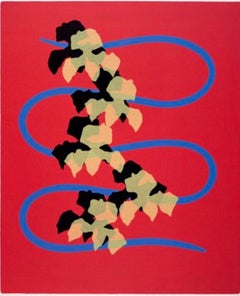
Serpentine with Orchids Modernist Silkscreen Signed Screenprint

Serpentine with Orchids Modernist Silkscreen Signed Screenprint

By Michael Mazur

Located in Surfside, FL

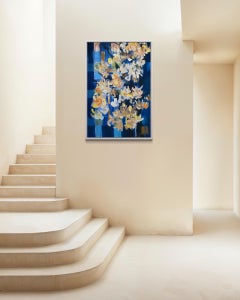
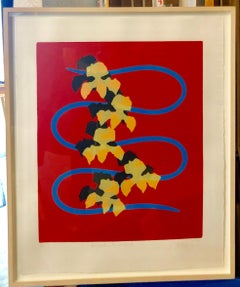
Serpentine with Orchids, 2005 Four-color screenprint on Rives BFK. Edition: 50 + 7 artist’s proofs 28 x 22 (paper size) framed by Bark Frameworks. Michael Burton Mazur (1935-August ...

Category

Early 2000s American Modern Michael Mazur Art

Materials

Lithograph, Screen
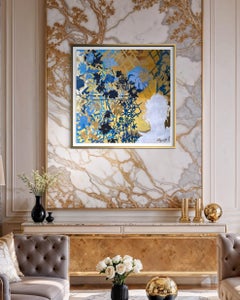
Modernist Figurative Pop Art Etching and Aquatint "the Artist" Michael Mazur

Modernist Figurative Pop Art Etching and Aquatint "the Artist" Michael Mazur

By Michael Mazur

Located in Surfside, FL

Michael Mazur "The Artist" Hand signed and editioned from the edition of 50 1967 Michael Burton Mazur (1935-August 18, 2009) was an American artist who was described by William Grimes of The New York Times as "a restlessly inventive printmaker, painter, and sculptor." Born and raised in New York City, Mazur attended the Horace Mann School. He received a bachelor's degree from Amherst College in 1958, then studied art at Yale. Mazur first gained notice for his series of lithographs and etchings of inmates in a mental asylum, which resulted in two publications, "Closed Ward" and "Locked Ward." Over the years, he worked in printmaking and painting. His series of large-scale prints for Dante's Inferno won critical acclaim, and were the subject of a traveling exhibition organized by the University of Iowa in 1994. Later he concentrated on creating large, lyrical paintings which make use of his free, gestural brushwork and a varied palette. Some of these paintings were seen in an exhibition of 2002 at Boston University, "Looking East: Brice Marden, Michael Mazur, and Pat Steir." (See also Susan Danly, "Branching: The Art of Michael Mazur," 1997). The Museum of Fine Arts, Boston, has acquired a definMichael Mazur received a B.A. from Amherst College in 1957, studying in his senior year at the Accademia di Belle Arti in Florence, Italy. He went on to earn both a B.F.A. and an M.F.A. from the Yale School of Art and Architecture in 1961. Mazur's first teaching job was at the Rhode Island School of Design from 1961 to 1964. He was awarded a Guggenheim Foundation fellowship for 1964–65. From 1965 to 1976, he taught at Brandeis University, and from 1976 to 1978 at Harvard University. As an artist, teacher, and writer, Mazur has been active in reviving the monotype process. He contributed an essay to the pioneering exhibition catalogue The Painterly Print, published by the Metropolitan Museum of Art in 1980. Mazur recently chaired the New Provincetown Print...

Category

Early 2000s American Modern Michael Mazur Art

Materials

Lithograph, Screen

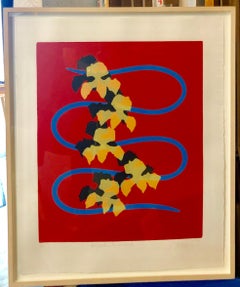
Serpentine with Orchids Modernist Silkscreen Signed Screenprint

Serpentine with Orchids Modernist Silkscreen Signed Screenprint

By Michael Mazur

Located in Surfside, FL

Serpentine with Orchids, 2005 Four-color screenprint on Rives BFK. Edition: 50 + 7 artist’s proofs 28 x 22 (paper size) framed by Bark Frameworks. Michael Burton Mazur (1935-August 18, 2009) was an American artist who was described by William Grimes of The New York Times as "a restlessly inventive printmaker, painter, and sculptor." Born and raised in New York City, Mazur attended the Horace Mann School. He received a bachelor's degree from Amherst College in 1958, then studied art at Yale. Mazur first gained notice for his series of lithographs and etchings of inmates in a mental asylum, which resulted in two publications, "Closed Ward" and "Locked Ward." Over the years, he worked in printmaking and painting. His series of large-scale prints for Dante's Inferno won critical acclaim, and were the subject of a traveling exhibition organized by the University of Iowa in 1994. Later he concentrated on creating large, lyrical paintings which make use of his free, gestural brushwork and a varied palette. Some of these paintings were seen in an exhibition of 2002 at Boston University, "Looking East: Brice Marden, Michael Mazur, and Pat Steir." (See also Susan Danly, "Branching: The Art of Michael Mazur," 1997). The Museum of Fine Arts, Boston, has acquired a definMichael Mazur received a B.A. from Amherst College in 1957, studying in his senior year at the Accademia di Belle Arti in Florence, Italy. He went on to earn both a B.F.A. and an M.F.A. from the Yale School of Art and Architecture in 1961. Mazur's first teaching job was at the Rhode Island School of Design from 1961 to 1964. He was awarded a Guggenheim Foundation fellowship for 1964–65. From 1965 to 1976, he taught at Brandeis University, and from 1976 to 1978 at Harvard University. As an artist, teacher, and writer, Mazur has been active in reviving the monotype process. He contributed an essay to the pioneering exhibition catalogue The Painterly Print, published by the Metropolitan Museum of Art in 1980. Mazur recently chaired the New Provincetown...

Category

Early 2000s American Modern Michael Mazur Art

Materials

Lithograph, Screen
Michael Mazur art for sale on 1stDibs.

Find a wide variety of authentic Michael Mazur art available for sale on 1stDibs. If you’re browsing the collection of art to introduce a pop of color in a neutral corner of your living room or bedroom, you can find work that includes elements of red and other colors. You can also browse by medium to find art by Michael Mazur in lithograph, screen print, woodcut print and more. Much of the original work by this artist or collective was created during the 21st century and contemporary and is mostly associated with the modern style. Not every interior allows for large Michael Mazur art, so small editions measuring 20 inches across are available. Customers who are interested in this artist might also find the work of Frank Kleinholz, Luigi Lucioni, and Arthur William Heintzelman.. Michael Mazur art prices can differ depending upon medium, time period and other attributes. On 1stDibs, the price for these items starts at $600 and tops out at $1,800, while the average work can sell for $1,200.
Artists Similar to Michael Mazur