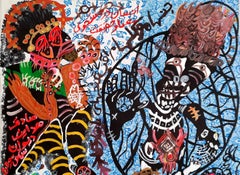
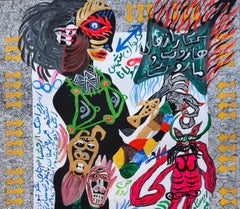
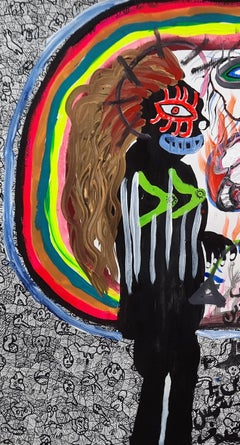
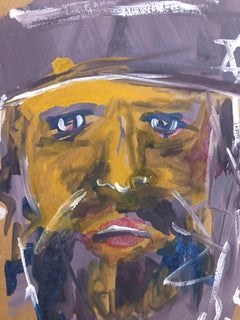
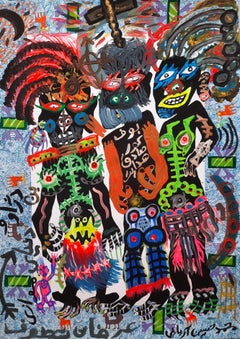
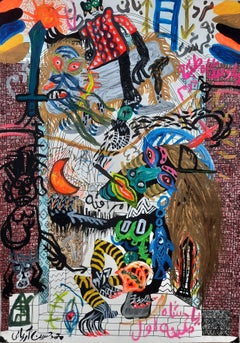
Man in quest of himself Mohammad Ariyaei 21st Century Iranian outsider art paint
By Mohammad Hossein Ariyaei
Located in Paris, FR
Acrylic paint on canvas Signed lower left by the artist
2010s Outsider Art Mohammad Hossein Ariyaei Art
Canvas, Acrylic
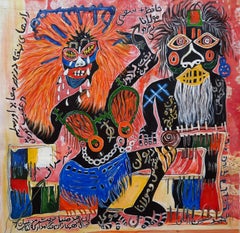
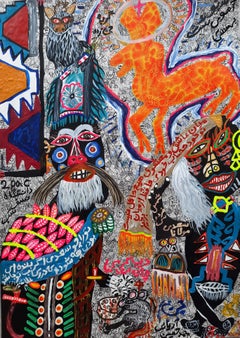
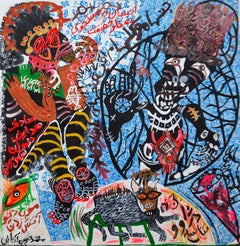
Man in quest of himself Mohammad Ariyaei 21st Century Iranian outsider art paint
By Mohammad Hossein Ariyaei
Located in Paris, FR
Acrylic paint on canvas Signed lower left by the artist
Canvas, Acrylic
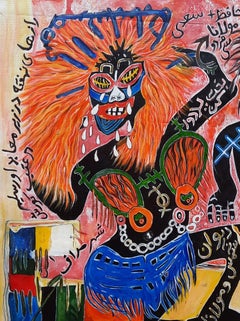
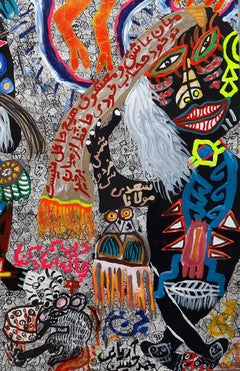
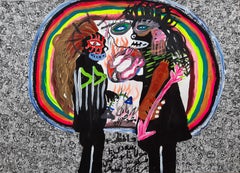
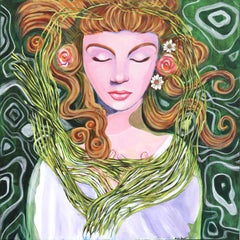
Hidden secrets Mohammad Ariyaei 21st Century Iranian art outsider art painting
By Mohammad Hossein Ariyaei
Located in Paris, FR
Acrylic paint on canvas Signed lower right by the artist
Canvas, Acrylic
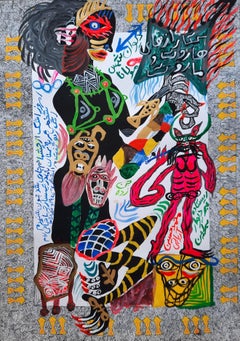
The book of poems Mohammad Ariyaei 21st Century art Contemporary Iranian paint
By Mohammad Hossein Ariyaei
Located in Paris, FR
Acrylic paint on paper Signed lower right
Paper, Acrylic
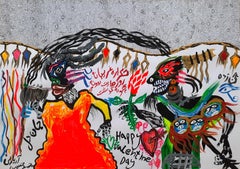
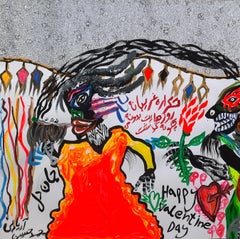
Happy Valentine day Mohammad Ariyaei 21st Century art Iranian outsider art paint
By Mohammad Hossein Ariyaei
Located in Paris, FR
Acrylic paint on paper Signed lower left
Paper, Acrylic
There is no barrier to love Mohammad Ariyaei 21st Century Iranian outsider art
By Mohammad Hossein Ariyaei
Located in Paris, FR
Acrylic paint on paper Signed lower right
Paper, Acrylic
Love Mohammad Ariyaei 21st Century Iranian art Contemporary paint outsider art
By Mohammad Hossein Ariyaei
Located in Paris, FR
Acrylic paint on paper Signed in the center
Paper, Acrylic
$400
H 12 in W 9.5 in
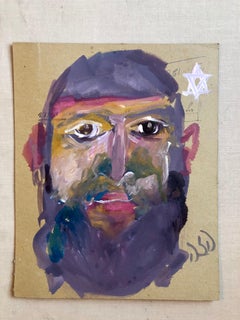
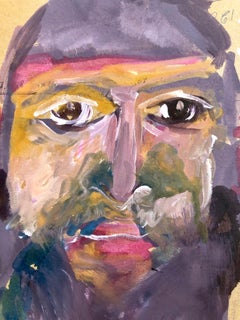
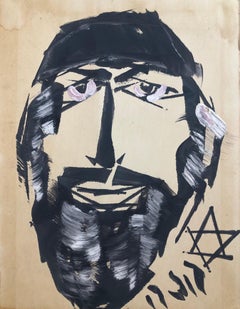
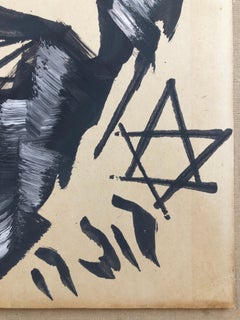
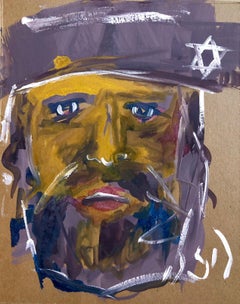
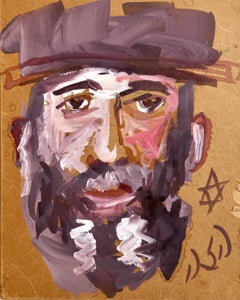
Outsider Folk Art Expressionist Rabbi Israeli Painting Signed Hebrew Jewish Star
Located in Surfside, FL
This is a signed portrait painting done in an outsider, folk art, expressionist style. it is signed in Hebrew, also marked with a Jewish star. this is from a collection of works by the same hand. they are all signed. Some have markings to the back of the paper. they have some age to them. They bear similarities to artists as dissimilar as Moshe Tamir, Mane Katz and an Israeli version of Purvis Young. In this piece the artist choice of colors is muted yet powerful. Israel has had a Vibrant Folk Art, Naive art scene for a long time now, artists like Yisrael Paldi, Nahum Guttman, Reuven Rubin and even Yefim Ladyzhensky had naive periods. The most well know of the strict naive artists are Shalom of Safed, Irene Awret, Gabriel Cohen, Natan Heber, Michael Falk and Kopel Gurwin. Naïve art is any form of visual art that is created by a person who lacks the formal education and training that a professional artist undergoes (in anatomy, art history, technique, perspective, ways of seeing). Unlike folk art, naïve art does not necessarily evince a distinct cultural context or tradition. Naïve art is recognized, and often imitated, for its childlike simplicity and frankness. Paintings of this kind typically have a flat rendering style with a rudimentary expression of perspective. One particularly influential painter of "naïve art" was Henri Rousseau (1844–1910), a French Post-Impressionist who was discovered by Pablo Picasso. Naïve art is often seen as outsider art that is by someone without formal (or little) training or degree. While this was true before the twentieth century, there are now academies for naïve art. Naïve art is now a fully recognized art genre, represented in art galleries worldwide. Museums devoted to naïve art now exist in Kecskemét, Hungary; Riga, Latvia; Jaen, Spain; Rio de Janeiro, Brasil; Vicq France and Paris. "Primitive art" is another term often applied to art by those without formal training, but is historically more often applied to work from certain cultures that have been judged socially or technologically "primitive" by Western academia, such as Native American, sub saharan African or Pacific Island art (see Tribal art). This is distinguished from the self-conscious, "primitive" inspired movement primitivism. Another term related to (but not completely synonymous with) naïve art is folk art. There also exist the terms "naïvism" and "primitivism" which are usually applied to professional painters working in the style of naïve art (like Paul Gauguin, Mikhail Larionov, Paul Klee). At all events, naive art can be regarded as having occupied an "official" position in the annals of twentieth-century art since - at the very latest - the publication of the Der Blaue Reiter, an almanac in 1912. Wassily Kandinsky and Franz Marc, who brought out the almanac, presented 6 reproductions of paintings by le Douanier' Rousseau (Henri Rousseau), comparing them with other pictorial examples. However, most experts agree that the year that naive art was "discovered" was 1885, when the painter Paul Signac became aware of the talents of Henri Rousseau and set about organizing exhibitions of his work in a number of prestigious galleries. The Earth Group (Grupa Zemlja) were Croatian artists, architects and intellectuals active in Zagreb from 1929 to 1935. The group included the painters Krsto Hegedušić, Edo Kovačević, Omer Mujadžić, Kamilo Ružička, Ivan Tabaković, and Oton Postružnik, the sculptors Antun Augustinčić, Frano Kršinić, and the architect Drago Ibler. Art brut, primitive art, primitive, art naïf, naïve art. Outsider art. A term applied to Yugoslav (Croatian) naive painters working in or around the village of Hlebine, near the Hungarian border, from about 1930. Some of the best known naive artists are Dragan Gaži, Ivan Generalić, Josip Generalić, Krsto Hegedušić, Mijo Kovačić, Ivan Lacković-Croata, Franjo Mraz, Ivan Večenaj and Mirko Virius. Camille Bombois (1883–1970) Ferdinand Cheval, known as 'le facteur Cheval' (1836–1924) Henry Darger (1892–1973) L. S. Lowry (1887–1976) Grandma Moses, Anna Mary Robertson (1860–1961) Nikifor (1895–1968) Poland, Horace Pippin (1888–1946) Jon Serl (1894-1993) United States Alfred Wallis (1855–1942) Scottie Wilson (1890–1972) Gesner Abelard (b. 1922) Jan Balet (1913–2009) Michel Delacroix (b. 1933) France Howard Finster (1916–2001) Ivan Rabuzin (1921–2008) Spontaneous Art Museum in Brussels Art en Marge Museum in Brussels MADmusée in Liege International Museum of Naive Art of Brazil in Cosme Velho, Rio de Janeiro Gallery Jacques Ardies in São Paulo Musée international d'art naïf de Magog in Magog Croatian Museum of Naïve Art in Zagreb Gallery of Croatian Naïve Art...
Gouache
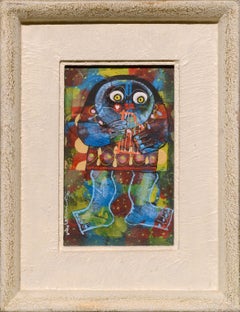
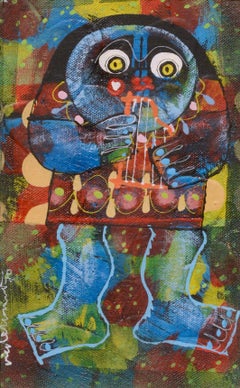
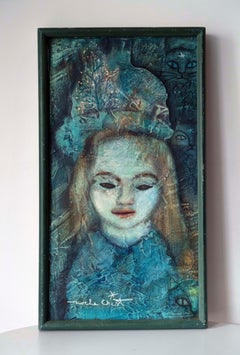
Filipina Girl Playing the Harp
Located in Soquel, CA
Vibrant portrait of a Filipino girl playing a harp by an unknown artist (20th Century). This piece is done in the style of traditional Filipino art, with ...
Canvas, Acrylic, Wood Panel
$1,450
H 16 in W 16 in
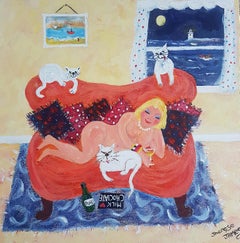
Perfect Moment Acrylic Painting on Canvas, Outsider Art, Signed, 2010+
By Therese James
Located in Brecon, Powys
Acrylic on canvas. Signed. Ready to hang
Canvas, Acrylic
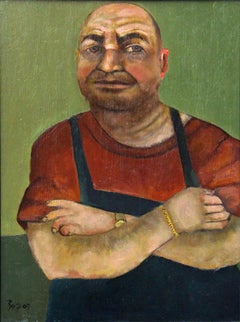
Shoe repairman, colorful, character
By Stephen Basso
Located in Brooklyn, NY
*ABOUT Stephen Basso Stephen Basso's highly original pastels and oil paintings are romantic, yet thought provoking fantasies. His whimsical works are...
Oil
$400
H 12.5 in W 9.5 in
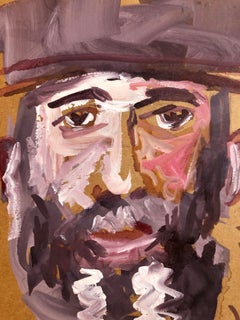
Outsider Folk Art Expressionist Rabbi Israeli Painting Signed Hebrew Jewish Star
Located in Surfside, FL
This is a signed portrait painting done in an outsider, folk art, expressionist style. it is signed in Hebrew, also marked with a Jewish star. this is from a collection of works by the same hand. they are all signed. Some have markings to the back of the paper. they have some age to them. They bear similarities to artists as dissimilar as Moshe tamir, Mane Katz and an Israeli version of Purvis Young. In this piece the artist choice of colors is muted yet powerful. Israel has had a Vibrant Folk Art, Naive art scene for a long time now, artists like Yisrael Paldi, Nahum Guttman, Reuven Rubin and even Yefim Ladyzhensky had naive periods. The most well know of the strict naive artists are Shalom of Safed, Irene Awret, Gabriel Cohen, Natan Heber, Michael Falk and Kopel Gurwin. Naïve art is any form of visual art that is created by a person who lacks the formal education and training that a professional artist undergoes (in anatomy, art history, technique, perspective, ways of seeing). Unlike folk art, naïve art does not necessarily evince a distinct cultural context or tradition. Naïve art is recognized, and often imitated, for its childlike simplicity and frankness. Paintings of this kind typically have a flat rendering style with a rudimentary expression of perspective. One particularly influential painter of "naïve art" was Henri Rousseau (1844–1910), a French Post-Impressionist who was discovered by Pablo Picasso. Naïve art is often seen as outsider art that is by someone without formal (or little) training or degree. While this was true before the twentieth century, there are now academies for naïve art. Naïve art is now a fully recognized art genre, represented in art galleries worldwide. Museums devoted to naïve art now exist in Kecskemét, Hungary; Riga, Latvia; Jaen, Spain; Rio de Janeiro, Brasil; Vicq France and Paris. "Primitive art" is another term often applied to art by those without formal training, but is historically more often applied to work from certain cultures that have been judged socially or technologically "primitive" by Western academia, such as Native American, sub saharan African or Pacific Island art (see Tribal art). This is distinguished from the self-conscious, "primitive" inspired movement primitivism. Another term related to (but not completely synonymous with) naïve art is folk art. There also exist the terms "naïvism" and "primitivism" which are usually applied to professional painters working in the style of naïve art (like Paul Gauguin, Mikhail Larionov, Paul Klee). At all events, naive art can be regarded as having occupied an "official" position in the annals of twentieth-century art since - at the very latest - the publication of the Der Blaue Reiter, an almanac in 1912. Wassily Kandinsky and Franz Marc, who brought out the almanac, presented 6 reproductions of paintings by le Douanier' Rousseau (Henri Rousseau), comparing them with other pictorial examples. However, most experts agree that the year that naive art was "discovered" was 1885, when the painter Paul Signac became aware of the talents of Henri Rousseau and set about organizing exhibitions of his work in a number of prestigious galleries. The Earth Group (Grupa Zemlja) were Croatian artists, architects and intellectuals active in Zagreb from 1929 to 1935. The group included the painters Krsto Hegedušić, Edo Kovačević, Omer Mujadžić, Kamilo Ružička, Ivan Tabaković, and Oton Postružnik, the sculptors Antun Augustinčić, Frano Kršinić, and the architect Drago Ibler. Art brut, primitive art, primitive, art naïf, naïve art. Outsider art. A term applied to Yugoslav (Croatian) naive painters working in or around the village of Hlebine, near the Hungarian border, from about 1930. Some of the best known naive artists are Dragan Gaži, Ivan Generalić, Josip Generalić, Krsto Hegedušić, Mijo Kovačić, Ivan Lacković-Croata, Franjo Mraz, Ivan Večenaj and Mirko Virius. Camille Bombois (1883–1970) Ferdinand Cheval, known as 'le facteur Cheval' (1836–1924) Henry Darger (1892–1973) L. S. Lowry (1887–1976) Grandma Moses, Anna Mary Robertson (1860–1961) Nikifor (1895–1968) Poland, Horace Pippin (1888–1946) Jon Serl (1894-1993) United States Alfred Wallis (1855–1942) Scottie Wilson (1890–1972) Gesner Abelard (b. 1922) Jan Balet (1913–2009) Michel Delacroix (b. 1933) France Howard Finster (1916–2001) Ivan Rabuzin (1921–2008) Spontaneous Art Museum in Brussels Art en Marge Museum in Brussels MADmusée in Liege International Museum of Naive Art of Brazil in Cosme Velho, Rio de Janeiro Gallery Jacques Ardies in São Paulo Musée international d'art naïf de Magog in Magog Croatian Museum of Naïve Art in Zagreb Gallery of Croatian Naïve Art...
Gouache
$775
H 27.5 in W 21.5 in D 1.5 in
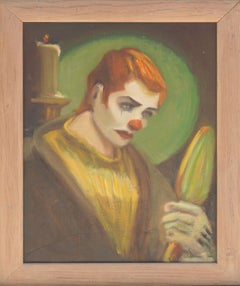
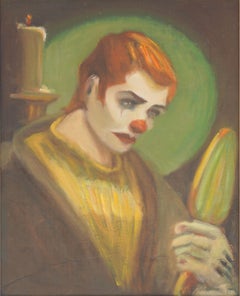
Mid Century Pulp Art - Sad Clown Portrait with Green, Yellow, & Red
Located in Soquel, CA
Mid century pulp art portrait of a somber clown with a yellow shirt, red hair and a red nose, holding a scepter in a dramatized space with a candle and green ...
Canvas, Acrylic, Cardboard
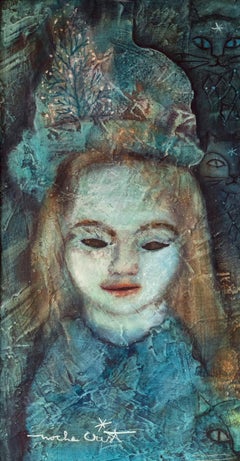
Girl with Cat
By Noche Crist 1
Located in Washington, DC
Painting by Noche Crist (1909 - 2004). Work is untitled and signed. Measures 22" x 12". Painting is casein paint and plaster on board. Catalogue of an exhibition in 2008 at the...
Acrylic
$8,000
H 30.37 in W 45.37 in D 1 in
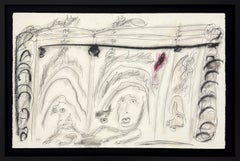
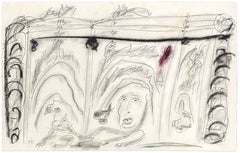
Deep Snow, Large Original Drawing on Paper, Signed, 34 x 49 in. Framed, 1993
By Thornton Dial, Sr.
Located in Aventura, FL
Original charcoal, graphite and mixed media drawing on artist paper. Hand initialed 'TD" lower front and hand titled and dated on verso by Thornton Dial. Artwork size: 26 x 41 inch...
Paper, Graphite, Charcoal, Mixed Media
$400
H 12 in W 9.5 in
Outsider Folk Art Expressionist Rabbi Israeli Painting Signed Hebrew Jewish Star
Located in Surfside, FL
This is a signed portrait painting done in an outsider, folk art, expressionist style. it is signed in Hebrew, also marked with a Jewish star. this is from a collection of works by the same hand. they are all signed. Some have markings to the back of the paper. they have some age to them. They bear similarities to artists as dissimilar as Moshe Tamir, Mane Katz and an Israeli version of Purvis Young. In this piece the artist choice of colors is muted yet powerful. Israel has had a Vibrant Folk Art, Naive art scene for a long time now, artists like Yisrael Paldi, Nahum Guttman, Reuven Rubin and even Yefim Ladyzhensky had naive periods. The most well know of the strict naive artists are Shalom of Safed, Irene Awret, Gabriel Cohen, Natan Heber, Michael Falk and Kopel Gurwin. Naïve art is any form of visual art that is created by a person who lacks the formal education and training that a professional artist undergoes (in anatomy, art history, technique, perspective, ways of seeing). Unlike folk art, naïve art does not necessarily evince a distinct cultural context or tradition. Naïve art is recognized, and often imitated, for its childlike simplicity and frankness. Paintings of this kind typically have a flat rendering style with a rudimentary expression of perspective. One particularly influential painter of "naïve art" was Henri Rousseau (1844–1910), a French Post-Impressionist who was discovered by Pablo Picasso. Naïve art is often seen as outsider art that is by someone without formal (or little) training or degree. While this was true before the twentieth century, there are now academies for naïve art. Naïve art is now a fully recognized art genre, represented in art galleries worldwide. Museums devoted to naïve art now exist in Kecskemét, Hungary; Riga, Latvia; Jaen, Spain; Rio de Janeiro, Brasil; Vicq France and Paris. "Primitive art" is another term often applied to art by those without formal training, but is historically more often applied to work from certain cultures that have been judged socially or technologically "primitive" by Western academia, such as Native American, sub saharan African or Pacific Island art (see Tribal art). This is distinguished from the self-conscious, "primitive" inspired movement primitivism. Another term related to (but not completely synonymous with) naïve art is folk art. There also exist the terms "naïvism" and "primitivism" which are usually applied to professional painters working in the style of naïve art (like Paul Gauguin, Mikhail Larionov, Paul Klee). At all events, naive art can be regarded as having occupied an "official" position in the annals of twentieth-century art since - at the very latest - the publication of the Der Blaue Reiter, an almanac in 1912. Wassily Kandinsky and Franz Marc, who brought out the almanac, presented 6 reproductions of paintings by le Douanier' Rousseau (Henri Rousseau), comparing them with other pictorial examples. However, most experts agree that the year that naive art was "discovered" was 1885, when the painter Paul Signac became aware of the talents of Henri Rousseau and set about organizing exhibitions of his work in a number of prestigious galleries. The Earth Group (Grupa Zemlja) were Croatian artists, architects and intellectuals active in Zagreb from 1929 to 1935. The group included the painters Krsto Hegedušić, Edo Kovačević, Omer Mujadžić, Kamilo Ružička, Ivan Tabaković, and Oton Postružnik, the sculptors Antun Augustinčić, Frano Kršinić, and the architect Drago Ibler. Art brut, primitive art, primitive, art naïf, naïve art. Outsider art. A term applied to Yugoslav (Croatian) naive painters working in or around the village of Hlebine, near the Hungarian border, from about 1930. Some of the best known naive artists are Dragan Gaži, Ivan Generalić, Josip Generalić, Krsto Hegedušić, Mijo Kovačić, Ivan Lacković-Croata, Franjo Mraz, Ivan Večenaj and Mirko Virius. Camille Bombois (1883–1970) Ferdinand Cheval, known as 'le facteur Cheval' (1836–1924) Henry Darger (1892–1973) L. S. Lowry (1887–1976) Grandma Moses, Anna Mary Robertson (1860–1961) Nikifor (1895–1968) Poland, Horace Pippin (1888–1946) Jon Serl (1894-1993) United States Alfred Wallis (1855–1942) Scottie Wilson (1890–1972) Gesner Abelard (b. 1922) Jan Balet (1913–2009) Michel Delacroix (b. 1933) France Howard Finster (1916–2001) Ivan Rabuzin (1921–2008) Spontaneous Art Museum in Brussels Art en Marge Museum in Brussels MADmusée in Liege International Museum of Naive Art of Brazil in Cosme Velho, Rio de Janeiro Gallery Jacques Ardies in São Paulo Musée international d'art naïf de Magog in Magog Croatian Museum of Naïve Art in Zagreb Gallery of Croatian Naïve Art...
Gouache
$400
H 12 in W 9.5 in
Outsider Folk Art Expressionist Rabbi Israeli Painting Signed Hebrew Jewish Star
Located in Surfside, FL
This is a signed portrait painting done in an outsider, folk art, expressionist style. it is signed in Hebrew, also marked with a Jewish star. this is from a collection of works by the same hand. they are all signed. Some have markings to the back of the paper. they have some age to them. They bear similarities to artists as dissimilar as Moshe Tamir, Mane Katz and an Israeli version of Purvis Young. In this piece the artist choice of colors is muted yet powerful. Israel has had a Vibrant Folk Art, Naive art scene for a long time now, artists like Yisrael Paldi, Nahum Guttman, Reuven Rubin and even Yefim Ladyzhensky had naive periods. The most well know of the strict naive artists are Shalom of Safed, Irene Awret, Gabriel Cohen, Natan Heber, Michael Falk and Kopel Gurwin. Naïve art is any form of visual art that is created by a person who lacks the formal education and training that a professional artist undergoes (in anatomy, art history, technique, perspective, ways of seeing). Unlike folk art, naïve art does not necessarily evince a distinct cultural context or tradition. Naïve art is recognized, and often imitated, for its childlike simplicity and frankness. Paintings of this kind typically have a flat rendering style with a rudimentary expression of perspective. One particularly influential painter of "naïve art" was Henri Rousseau (1844–1910), a French Post-Impressionist who was discovered by Pablo Picasso. Naïve art is often seen as outsider art that is by someone without formal (or little) training or degree. While this was true before the twentieth century, there are now academies for naïve art. Naïve art is now a fully recognized art genre, represented in art galleries worldwide. Museums devoted to naïve art now exist in Kecskemét, Hungary; Riga, Latvia; Jaen, Spain; Rio de Janeiro, Brasil; Vicq France and Paris. "Primitive art" is another term often applied to art by those without formal training, but is historically more often applied to work from certain cultures that have been judged socially or technologically "primitive" by Western academia, such as Native American, sub saharan African or Pacific Island art (see Tribal art). This is distinguished from the self-conscious, "primitive" inspired movement primitivism. Another term related to (but not completely synonymous with) naïve art is folk art. There also exist the terms "naïvism" and "primitivism" which are usually applied to professional painters working in the style of naïve art (like Paul Gauguin, Mikhail Larionov, Paul Klee). At all events, naive art can be regarded as having occupied an "official" position in the annals of twentieth-century art since - at the very latest - the publication of the Der Blaue Reiter, an almanac in 1912. Wassily Kandinsky and Franz Marc, who brought out the almanac, presented 6 reproductions of paintings by le Douanier' Rousseau (Henri Rousseau), comparing them with other pictorial examples. However, most experts agree that the year that naive art was "discovered" was 1885, when the painter Paul Signac became aware of the talents of Henri Rousseau and set about organizing exhibitions of his work in a number of prestigious galleries. The Earth Group (Grupa Zemlja) were Croatian artists, architects and intellectuals active in Zagreb from 1929 to 1935. The group included the painters Krsto Hegedušić, Edo Kovačević, Omer Mujadžić, Kamilo Ružička, Ivan Tabaković, and Oton Postružnik, the sculptors Antun Augustinčić, Frano Kršinić, and the architect Drago Ibler. Art brut, primitive art, primitive, art naïf, naïve art. Outsider art. A term applied to Yugoslav (Croatian) naive painters working in or around the village of Hlebine, near the Hungarian border, from about 1930. Some of the best known naive artists are Dragan Gaži, Ivan Generalić, Josip Generalić, Krsto Hegedušić, Mijo Kovačić, Ivan Lacković-Croata, Franjo Mraz, Ivan Večenaj and Mirko Virius. Camille Bombois (1883–1970) Ferdinand Cheval, known as 'le facteur Cheval' (1836–1924) Henry Darger (1892–1973) L. S. Lowry (1887–1976) Grandma Moses, Anna Mary Robertson (1860–1961) Nikifor (1895–1968) Poland, Horace Pippin (1888–1946) Jon Serl (1894-1993) United States Alfred Wallis (1855–1942) Scottie Wilson (1890–1972) Gesner Abelard (b. 1922) Jan Balet (1913–2009) Michel Delacroix (b. 1933) France Howard Finster (1916–2001) Ivan Rabuzin (1921–2008) Spontaneous Art Museum in Brussels Art en Marge Museum in Brussels MADmusée in Liege International Museum of Naive Art of Brazil in Cosme Velho, Rio de Janeiro Gallery Jacques Ardies in São Paulo Musée international d'art naïf de Magog in Magog Croatian Museum of Naïve Art in Zagreb Gallery of Croatian Naïve Art...
Gouache
$5,500
H 20.25 in W 14 in
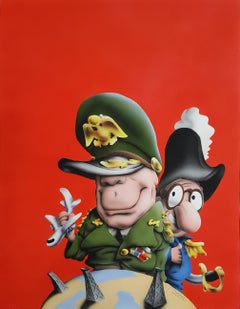
Ford and Kissinger, Magazine Cover Illustration Political Cartoon
Located in Miami, FL
Political Cartoon of Ford and Kissinger, Magazine Cover Illustration for magazine. Most likely a cover Newsweek, Time Magazine or The Atlantic Magazine Signed lower right Work is ...
Gouache, Illustration Board
$1,500
H 20 in W 15.5 in D 0.5 in
Mary Dwyer, Elizabeth Cady Stanton_Seneca Falls 1870s_2014_acrylic on board,
By Mary Dwyer
Located in Darien, CT
These new paintings illuminate individuals of the American Suffrage Movement. Elizabeth Cady Stanton, Ida B Wells and Alice Paul, each one intelligent, brave and incredibly relentless in the struggle to attain voting rights for American women. This series of paintings portrays the ardent women involved in the American Suffrage Movement which led up to the 19th Amendment...
Acrylic, Board
Sold
H 27.56 in W 19.69 in
The world of Jins Mohammad Ariyaei 21st Century Iranian outsider art painting
By Mohammad Hossein Ariyaei
Located in Paris, FR
Acrylic paint on paper Signed lower right
Paper, Acrylic
Sold
H 27.56 in W 19.69 in
Stairway to Heaven Mohammad Ariyaei 21st Century art Iranian Contemporary paint
By Mohammad Hossein Ariyaei
Located in Paris, FR
Acrylic paint on paper Signed by the artist
Paper, Acrylic