Myriam Bat Yosef Art

to
4
2
Overall Width
to
Overall Height
to
6
5
1
6
5
1
5
1
1
6
10,918
2,844
2,494
1,423
6
Artist: Myriam Bat Yosef
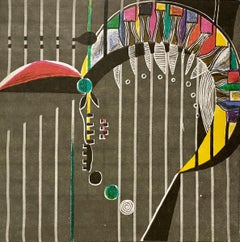
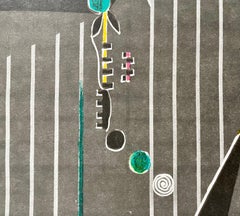
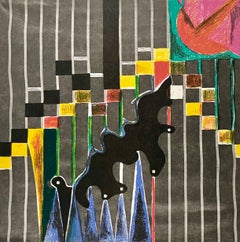
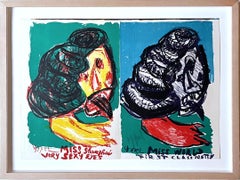
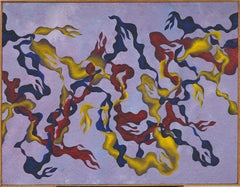
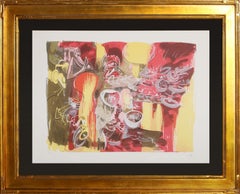
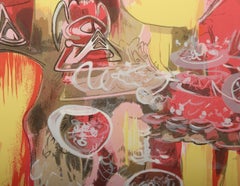
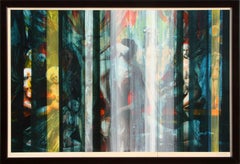
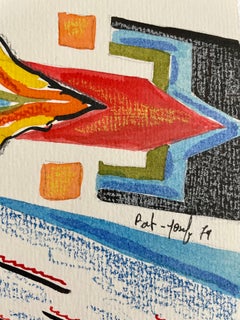
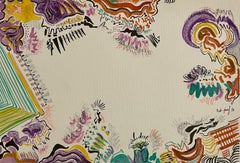
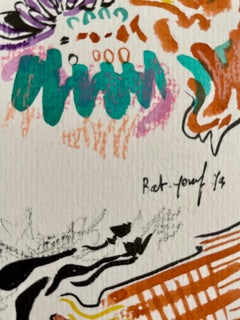
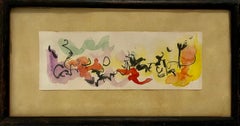
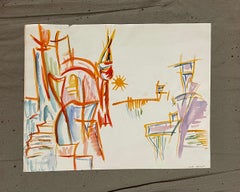
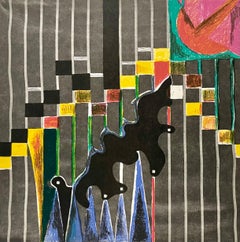
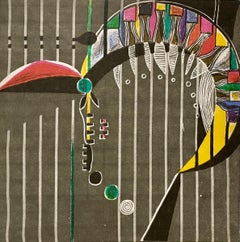
Feminist Surrealist French Abstract Colorful Lithograph Print Myriam Bat Yosef

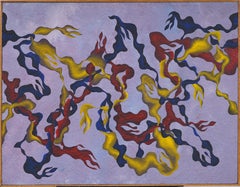
Feminist Surrealist French Abstract Colorful Lithograph Print Myriam Bat Yosef

By Myriam Bat Yosef

Located in Surfside, FL

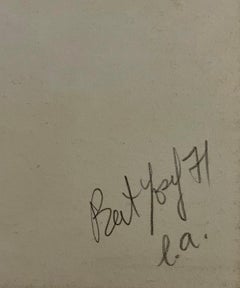
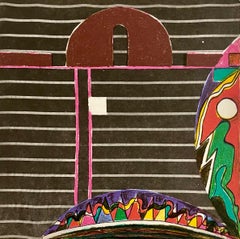
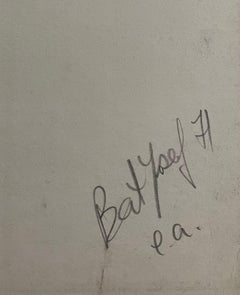
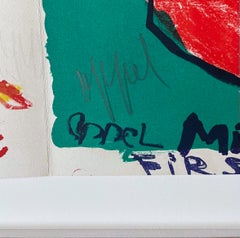
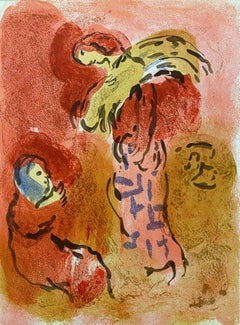
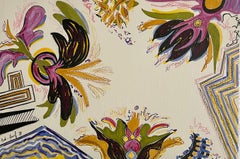
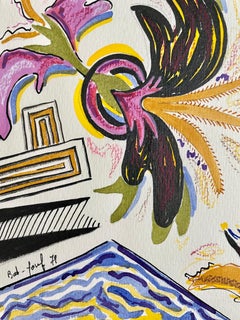
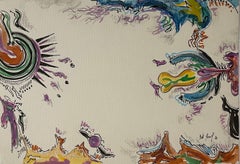
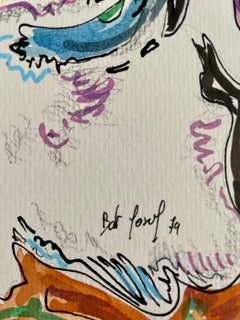
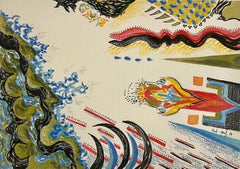
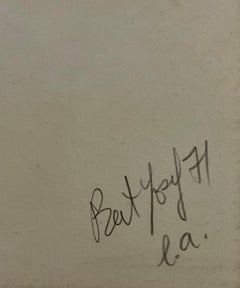
Myriam Bat-Yosef Surrealist abstract lithograph print in colorful abstract shapes and shades Hand signed and dated 1971. sheet measures 9.25 X 9.25 inches The envelope and the Peter Buch poster is just for provenance and is not included in this sale. Myriam Bat-Yosef, whose real name is Marion Hellerman, born on January 31, 1931 in Berlin, Germany to a Jewish family from Lithuania, she is an Israeli-Icelandic artist who paints on papers, paintings, fabrics, objects and human beings for performances. Myriam Bat-Yosef currently lives and works in Paris. In 1933, her family fleeing the Nazi Holocaust, Miriam Bat-Yosef emigrates to Palestine and settles in Jaffa. In 1936, she suffers a family tragedy, her father, militant Zionist, is called to fight, still recovering from an operation of appendicitis. The incision will become infected, antibiotics did not exist yet, and her father will die in the hospital after 9 months of suffering. Myriam and her mother leave Palestine to live in Paris for three years. French is Myriam's first school language. In 1939, still fleeing Nazism, she returned to Palestine, leaving France by the last boat from Marseille. She moved to Tel Aviv with her mother, aunt and maternal grandmother. In 1940, she began attending the Academy of Fine Arts in Tel Aviv and took her name as an artist, Bat-Yosef, which means Joseph's daughter in Hebrew, as a tribute to her father. In 1946, Myriam graduated as a kindergarten teacher but wanted to be an artist. Her mother enrolled her in an evening school to prepare a diploma of art teacher. At 19, she performs two years of military service in Israel. In 1952, with a pension of $50 a month that her mother allocated, she went to study at the Beaux-Arts in Paris. To survive, she has several activities while studying. In 1955, she had her first solo exhibition, at the Israeli Club on Wagram Avenue in Paris. Many artists, such as Yaacov Agam, Yehuda Neiman Avigdor Arikha, Raffi Kaiser, Dani Karavan and sculptors Achiam and Shlomo Selinger attended the opening . In 1956, she enrolled at the School of Fine Arts in Florence. This is where she meets the painter Errô. They share an icy studio in winter. Myriam moves to Milan with friends. She organizes a joint exhibition with Erro, one room each, at the Montenapoleone gallery. Her works are admired by the sculptor Marino Marini and the painters Renato Birolli and Enrico Prampolini. Myriam and Erro exhibit in Rome, Milan, Florence and meet many personalities: Alain Jouffroy and his wife, the painter Manina, Roberto Matta and his wife Malitte, textile artist who was one of the founders of the Pompidou Center. Back in Paris, Myriam and Erro get married, which allows Myriam to avoid being called into the Israeli army during the Suez Canal War. In 1957, Myriam and her husband went to Iceland. Myriam works in a chocolate factory. Having enough money, she starts producing art again. She exhibited in Reykjavik's first art gallery. She meets the artist Sigridur Bjornsdottir, married to the Swiss painter Dieter Roth . In 1958, Myriam and her husband leave for Israel. They exhibit in Germany, then in Israel. Back in Paris, the couple became friends with artists of the surrealist movement, such as Victor Brauner, Hans Bellmer, the sculptor Philippe Hiquily, Liliane Lijn, future wife of Takis and photographer Nathalie Waag. Erro and Myriam have a daughter on March 15, 1960, named Tura, after the painter Cosmè Tura, but also close to the Icelandic Thora or the Hebrew Torah. Bat-Yosef’s complex trajectory throughout the 20th century is linked as much to the transnational history of what was for a time called the School of Paris as it is to a certain legacy of Surrealism. Her work features the same idea of resolving antinomies that also defined the spirit of surrealism, and is enhanced with her readings of the Kabbalah and her spiritual grounding in Taoism. However, while there are reasons for her approach to be associated with the process of the ready-made, it is important to consider the immediate intrication of these works with her practice of performance, during which the body itself is also painted – a feminist response to Yves Klein’s Anthropometries (1960) and an echo of the happenings which Jean-Jacques Lebel organised at the time in Paris. In 1963, Erró told Myriam that if she wants to be a painter, she can not be his wife. Myriam chose to be a painter and the couple divorced in 1964. Since that time, Myriam Bat-Yosef has exhibited in many countries: Europe, United States, Japan, etc. Although long in the shadows, the work of Myriam Bat-Yosef has been greeted by many artists and personalities: Anaïs Nin, Nancy Huston, André Pieyre of Mandiargues, José Pierre, René de Solier , Jacques Lacarrière, Alain Bosquet, Pierre Restany, Sarane Alexandrian and Surrealist André Breton who, after a visit to her studio, confided to having been intrigued by its phantasmagorical dimension. She was included in the book Pop Art and Beyond: Gender, Race, and Class in the Global Sixties by Mona Hadler and Kalliopi Minioudaki. Extract "World Citizen, Artist of the Pop Era Sarah Wilson; Why do we know so little of Myriam Bat-Yosef, the most important female Israeli artist of the Pop era? Issues of identity and sexuality feature constantly in her work. She exhibited internationally from Reykjavik to Tokyo; she had two shows at Arturo Schwarz’s famous Dada/surrealist gallery in Milan; she participated in feminist art events in Los Angeles. Above all, in 1971, she conceived Total Art, a Pop Gesamtkunstwerk inside and outside the Israel Museum, Jerusalem. Painter, performer, and installation artist, she was also a lover, wife, and mother. Of Lithuanian-Jewish descent, she was close to the family of philosopher Emmanuel Levinas. An émigré in Paris she would repudiate a national passport, participating in Garry Davis’s short-lived “World Citizens” movement. She continues the lineage of women surrealist artists: Valentine Hugo, Leonor Fini, Dorothea Tanning, Leonora Carrington, Unica Zürn, Jane Graverol...

Category

1970s Surrealist Myriam Bat Yosef Art

Materials

Lithograph

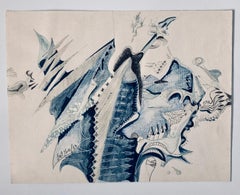
Feminist Surrealist French Abstract Colorful Lithograph Print Myriam Bat Yosef

Feminist Surrealist French Abstract Colorful Lithograph Print Myriam Bat Yosef

By Myriam Bat Yosef

Located in Surfside, FL

Myriam Bat-Yosef Surrealist abstract lithograph print in colorful abstract shapes and shades Hand signed and dated 1971. sheet measures 9.25 X 9.25 inches The envelope and the Peter Buch poster is just for provenance and is not included in this sale. Myriam Bat-Yosef, whose real name is Marion Hellerman, born on January 31, 1931 in Berlin, Germany to a Jewish family from Lithuania, she is an Israeli-Icelandic artist who paints on papers, paintings, fabrics, objects and human beings for performances. Myriam Bat-Yosef currently lives and works in Paris. In 1933, her family fleeing the Nazi Holocaust, Miriam Bat-Yosef emigrates to Palestine and settles in Jaffa. In 1936, she suffers a family tragedy, her father, militant Zionist, is called to fight, still recovering from an operation of appendicitis. The incision will become infected, antibiotics did not exist yet, and her father will die in the hospital after 9 months of suffering. Myriam and her mother leave Palestine to live in Paris for three years. French is Myriam's first school language. In 1939, still fleeing Nazism, she returned to Palestine, leaving France by the last boat from Marseille. She moved to Tel Aviv with her mother, aunt and maternal grandmother. In 1940, she began attending the Academy of Fine Arts in Tel Aviv and took her name as an artist, Bat-Yosef, which means Joseph's daughter in Hebrew, as a tribute to her father. In 1946, Myriam graduated as a kindergarten teacher but wanted to be an artist. Her mother enrolled her in an evening school to prepare a diploma of art teacher. At 19, she performs two years of military service in Israel. In 1952, with a pension of $50 a month that her mother allocated, she went to study at the Beaux-Arts in Paris. To survive, she has several activities while studying. In 1955, she had her first solo exhibition, at the Israeli Club on Wagram Avenue in Paris. Many artists, such as Yaacov Agam, Yehuda Neiman Avigdor Arikha, Raffi Kaiser, Dani Karavan and sculptors Achiam and Shlomo Selinger attended the opening . In 1956, she enrolled at the School of Fine Arts in Florence. This is where she meets the painter Errô. They share an icy studio in winter. Myriam moves to Milan with friends. She organizes a joint exhibition with Erro, one room each, at the Montenapoleone gallery. Her works are admired by the sculptor Marino Marini and the painters Renato Birolli and Enrico Prampolini. Myriam and Erro exhibit in Rome, Milan, Florence and meet many personalities: Alain Jouffroy and his wife, the painter Manina, Roberto Matta and his wife Malitte, textile artist who was one of the founders of the Pompidou Center. Back in Paris, Myriam and Erro get married, which allows Myriam to avoid being called into the Israeli army during the Suez Canal War. In 1957, Myriam and her husband went to Iceland. Myriam works in a chocolate factory. Having enough money, she starts producing art again. She exhibited in Reykjavik's first art gallery. She meets the artist Sigridur Bjornsdottir, married to the Swiss painter Dieter Roth . In 1958, Myriam and her husband leave for Israel. They exhibit in Germany, then in Israel. Back in Paris, the couple became friends with artists of the surrealist movement, such as Victor Brauner, Hans Bellmer, the sculptor Philippe Hiquily, Liliane Lijn, future wife of Takis and photographer Nathalie Waag. Erro and Myriam have a daughter on March 15, 1960, named Tura, after the painter Cosmè Tura, but also close to the Icelandic Thora or the Hebrew Torah. Bat-Yosef’s complex trajectory throughout the 20th century is linked as much to the transnational history of what was for a time called the School of Paris as it is to a certain legacy of Surrealism. Her work features the same idea of resolving antinomies that also defined the spirit of surrealism, and is enhanced with her readings of the Kabbalah and her spiritual grounding in Taoism. However, while there are reasons for her approach to be associated with the process of the ready-made, it is important to consider the immediate intrication of these works with her practice of performance, during which the body itself is also painted – a feminist response to Yves Klein’s Anthropometries (1960) and an echo of the happenings which Jean-Jacques Lebel organised at the time in Paris. In 1963, Erró told Myriam that if she wants to be a painter, she can not be his wife. Myriam chose to be a painter and the couple divorced in 1964. Since that time, Myriam Bat-Yosef has exhibited in many countries: Europe, United States, Japan, etc. Although long in the shadows, the work of Myriam Bat-Yosef has been greeted by many artists and personalities: Anaïs Nin, Nancy Huston, André Pieyre of Mandiargues, José Pierre, René de Solier , Jacques Lacarrière, Alain Bosquet, Pierre Restany, Sarane Alexandrian and Surrealist André Breton who, after a visit to her studio, confided to having been intrigued by its phantasmagorical dimension. She was included in the book Pop Art and Beyond: Gender, Race, and Class in the Global Sixties by Mona Hadler and Kalliopi Minioudaki. Extract "World Citizen, Artist of the Pop Era Sarah Wilson; Why do we know so little of Myriam Bat-Yosef, the most important female Israeli artist of the Pop era? Issues of identity and sexuality feature constantly in her work. She exhibited internationally from Reykjavik to Tokyo; she had two shows at Arturo Schwarz’s famous Dada/surrealist gallery in Milan; she participated in feminist art events in Los Angeles. Above all, in 1971, she conceived Total Art, a Pop Gesamtkunstwerk inside and outside the Israel Museum, Jerusalem. Painter, performer, and installation artist, she was also a lover, wife, and mother. Of Lithuanian-Jewish descent, she was close to the family of philosopher Emmanuel Levinas. An émigré in Paris she would repudiate a national passport, participating in Garry Davis’s short-lived “World Citizens” movement. She continues the lineage of women surrealist artists: Valentine Hugo, Leonor Fini, Dorothea Tanning, Leonora Carrington, Unica Zürn, Jane Graverol...

Category

1970s Surrealist Myriam Bat Yosef Art

Materials

Lithograph

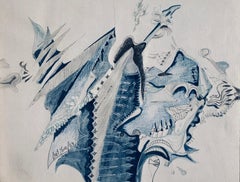
Feminist Surrealist French Abstract Colorful Lithograph Print Myriam Bat Yosef

Feminist Surrealist French Abstract Colorful Lithograph Print Myriam Bat Yosef

By Myriam Bat Yosef

Located in Surfside, FL

Myriam Bat-Yosef Surrealist abstract lithograph print in colorful abstract shapes and shades Hand signed and dated 1971. sheet measures 9.25 X 9.25 inches The envelope and the Peter Buch poster is just for provenance and is not included in this sale. Myriam Bat-Yosef, whose real name is Marion Hellerman, born on January 31, 1931 in Berlin, Germany to a Jewish family from Lithuania, she is an Israeli-Icelandic artist who paints on papers, paintings, fabrics, objects and human beings for performances. Myriam Bat-Yosef currently lives and works in Paris. In 1933, her family fleeing the Nazi Holocaust, Miriam Bat-Yosef emigrates to Palestine and settles in Jaffa. In 1936, she suffers a family tragedy, her father, militant Zionist, is called to fight, still recovering from an operation of appendicitis. The incision will become infected, antibiotics did not exist yet, and her father will die in the hospital after 9 months of suffering. Myriam and her mother leave Palestine to live in Paris for three years. French is Myriam's first school language. In 1939, still fleeing Nazism, she returned to Palestine, leaving France by the last boat from Marseille. She moved to Tel Aviv with her mother, aunt and maternal grandmother. In 1940, she began attending the Academy of Fine Arts in Tel Aviv and took her name as an artist, Bat-Yosef, which means Joseph's daughter in Hebrew, as a tribute to her father. In 1946, Myriam graduated as a kindergarten teacher but wanted to be an artist. Her mother enrolled her in an evening school to prepare a diploma of art teacher. At 19, she performs two years of military service in Israel. In 1952, with a pension of $50 a month that her mother allocated, she went to study at the Beaux-Arts in Paris. To survive, she has several activities while studying. In 1955, she had her first solo exhibition, at the Israeli Club on Wagram Avenue in Paris. Many artists, such as Yaacov Agam, Yehuda Neiman Avigdor Arikha, Raffi Kaiser, Dani Karavan and sculptors Achiam and Shlomo Selinger attended the opening . In 1956, she enrolled at the School of Fine Arts in Florence. This is where she meets the painter Errô. They share an icy studio in winter. Myriam moves to Milan with friends. She organizes a joint exhibition with Erro, one room each, at the Montenapoleone gallery. Her works are admired by the sculptor Marino Marini and the painters Renato Birolli and Enrico Prampolini. Myriam and Erro exhibit in Rome, Milan, Florence and meet many personalities: Alain Jouffroy and his wife, the painter Manina, Roberto Matta and his wife Malitte, textile artist who was one of the founders of the Pompidou Center. Back in Paris, Myriam and Erro get married, which allows Myriam to avoid being called into the Israeli army during the Suez Canal War. In 1957, Myriam and her husband went to Iceland. Myriam works in a chocolate factory. Having enough money, she starts producing art again. She exhibited in Reykjavik's first art gallery. She meets the artist Sigridur Bjornsdottir, married to the Swiss painter Dieter Roth . In 1958, Myriam and her husband leave for Israel. They exhibit in Germany, then in Israel. Back in Paris, the couple became friends with artists of the surrealist movement, such as Victor Brauner, Hans Bellmer, the sculptor Philippe Hiquily, Liliane Lijn, future wife of Takis and photographer Nathalie Waag. Erro and Myriam have a daughter on March 15, 1960, named Tura, after the painter Cosmè Tura, but also close to the Icelandic Thora or the Hebrew Torah. Bat-Yosef’s complex trajectory throughout the 20th century is linked as much to the transnational history of what was for a time called the School of Paris as it is to a certain legacy of Surrealism. Her work features the same idea of resolving antinomies that also defined the spirit of surrealism, and is enhanced with her readings of the Kabbalah and her spiritual grounding in Taoism. However, while there are reasons for her approach to be associated with the process of the ready-made, it is important to consider the immediate intrication of these works with her practice of performance, during which the body itself is also painted – a feminist response to Yves Klein’s Anthropometries (1960) and an echo of the happenings which Jean-Jacques Lebel organised at the time in Paris. In 1963, Erró told Myriam that if she wants to be a painter, she can not be his wife. Myriam chose to be a painter and the couple divorced in 1964. Since that time, Myriam Bat-Yosef has exhibited in many countries: Europe, United States, Japan, etc. Although long in the shadows, the work of Myriam Bat-Yosef has been greeted by many artists and personalities: Anaïs Nin, Nancy Huston, André Pieyre of Mandiargues, José Pierre, René de Solier , Jacques Lacarrière, Alain Bosquet, Pierre Restany, Sarane Alexandrian and Surrealist André Breton who, after a visit to her studio, confided to having been intrigued by its phantasmagorical dimension. She was included in the book Pop Art and Beyond: Gender, Race, and Class in the Global Sixties by Mona Hadler and Kalliopi Minioudaki. Extract "World Citizen, Artist of the Pop Era Sarah Wilson; Why do we know so little of Myriam Bat-Yosef, the most important female Israeli artist of the Pop era? Issues of identity and sexuality feature constantly in her work. She exhibited internationally from Reykjavik to Tokyo; she had two shows at Arturo Schwarz’s famous Dada/surrealist gallery in Milan; she participated in feminist art events in Los Angeles. Above all, in 1971, she conceived Total Art, a Pop Gesamtkunstwerk inside and outside the Israel Museum, Jerusalem. Painter, performer, and installation artist, she was also a lover, wife, and mother. Of Lithuanian-Jewish descent, she was close to the family of philosopher Emmanuel Levinas. An émigré in Paris she would repudiate a national passport, participating in Garry Davis’s short-lived “World Citizens” movement. She continues the lineage of women surrealist artists: Valentine Hugo, Leonor Fini, Dorothea Tanning, Leonora Carrington, Unica Zürn, Jane Graverol...

Category

1970s Surrealist Myriam Bat Yosef Art

Materials

Lithograph

Feminist Surrealist French Abstract Colorful Lithograph Print Myriam Bat Yosef

Feminist Surrealist French Abstract Colorful Lithograph Print Myriam Bat Yosef

By Myriam Bat Yosef

Located in Surfside, FL

Myriam Bat-Yosef Surrealist abstract lithograph print in colorful abstract shapes and shades Hand signed and dated 1971. sheet measures 9.25 X 9.25 inches The envelope and the Peter Buch poster is just for provenance and is not included in this sale. Myriam Bat-Yosef, whose real name is Marion Hellerman, born on January 31, 1931 in Berlin, Germany to a Jewish family from Lithuania, she is an Israeli-Icelandic artist who paints on papers, paintings, fabrics, objects and human beings for performances. Myriam Bat-Yosef currently lives and works in Paris. In 1933, her family fleeing the Nazi Holocaust, Miriam Bat-Yosef emigrates to Palestine and settles in Jaffa. In 1936, she suffers a family tragedy, her father, militant Zionist, is called to fight, still recovering from an operation of appendicitis. The incision will become infected, antibiotics did not exist yet, and her father will die in the hospital after 9 months of suffering. Myriam and her mother leave Palestine to live in Paris for three years. French is Myriam's first school language. In 1939, still fleeing Nazism, she returned to Palestine, leaving France by the last boat from Marseille. She moved to Tel Aviv with her mother, aunt and maternal grandmother. In 1940, she began attending the Academy of Fine Arts in Tel Aviv and took her name as an artist, Bat-Yosef, which means Joseph's daughter in Hebrew, as a tribute to her father. In 1946, Myriam graduated as a kindergarten teacher but wanted to be an artist. Her mother enrolled her in an evening school to prepare a diploma of art teacher. At 19, she performs two years of military service in Israel. In 1952, with a pension of $50 a month that her mother allocated, she went to study at the Beaux-Arts in Paris. To survive, she has several activities while studying. In 1955, she had her first solo exhibition, at the Israeli Club on Wagram Avenue in Paris. Many artists, such as Yaacov Agam, Yehuda Neiman Avigdor Arikha, Raffi Kaiser, Dani Karavan and sculptors Achiam and Shlomo Selinger attended the opening . In 1956, she enrolled at the School of Fine Arts in Florence. This is where she meets the painter Errô. They share an icy studio in winter. Myriam moves to Milan with friends. She organizes a joint exhibition with Erro, one room each, at the Montenapoleone gallery. Her works are admired by the sculptor Marino Marini and the painters Renato Birolli and Enrico Prampolini. Myriam and Erro exhibit in Rome, Milan, Florence and meet many personalities: Alain Jouffroy and his wife, the painter Manina, Roberto Matta and his wife Malitte, textile artist who was one of the founders of the Pompidou Center. Back in Paris, Myriam and Erro get married, which allows Myriam to avoid being called into the Israeli army during the Suez Canal War. In 1957, Myriam and her husband went to Iceland. Myriam works in a chocolate factory. Having enough money, she starts producing art again. She exhibited in Reykjavik's first art gallery. She meets the artist Sigridur Bjornsdottir, married to the Swiss painter Dieter Roth . In 1958, Myriam and her husband leave for Israel. They exhibit in Germany, then in Israel. Back in Paris, the couple became friends with artists of the surrealist movement, such as Victor Brauner, Hans Bellmer, the sculptor Philippe Hiquily, Liliane Lijn, future wife of Takis and photographer Nathalie Waag. Erro and Myriam have a daughter on March 15, 1960, named Tura, after the painter Cosmè Tura, but also close to the Icelandic Thora or the Hebrew Torah. Bat-Yosef’s complex trajectory throughout the 20th century is linked as much to the transnational history of what was for a time called the School of Paris as it is to a certain legacy of Surrealism. Her work features the same idea of resolving antinomies that also defined the spirit of surrealism, and is enhanced with her readings of the Kabbalah and her spiritual grounding in Taoism. However, while there are reasons for her approach to be associated with the process of the ready-made, it is important to consider the immediate intrication of these works with her practice of performance, during which the body itself is also painted – a feminist response to Yves Klein’s Anthropometries (1960) and an echo of the happenings which Jean-Jacques Lebel organised at the time in Paris. In 1963, Erró told Myriam that if she wants to be a painter, she can not be his wife. Myriam chose to be a painter and the couple divorced in 1964. Since that time, Myriam Bat-Yosef has exhibited in many countries: Europe, United States, Japan, etc. Although long in the shadows, the work of Myriam Bat-Yosef has been greeted by many artists and personalities: Anaïs Nin, Nancy Huston, André Pieyre of Mandiargues, José Pierre, René de Solier , Jacques Lacarrière, Alain Bosquet, Pierre Restany, Sarane Alexandrian and Surrealist André Breton who, after a visit to her studio, confided to having been intrigued by its phantasmagorical dimension. She was included in the book Pop Art and Beyond: Gender, Race, and Class in the Global Sixties by Mona Hadler and Kalliopi Minioudaki. Extract "World Citizen, Artist of the Pop Era Sarah Wilson; Why do we know so little of Myriam Bat-Yosef, the most important female Israeli artist of the Pop era? Issues of identity and sexuality feature constantly in her work. She exhibited internationally from Reykjavik to Tokyo; she had two shows at Arturo Schwarz’s famous Dada/surrealist gallery in Milan; she participated in feminist art events in Los Angeles. Above all, in 1971, she conceived Total Art, a Pop Gesamtkunstwerk inside and outside the Israel Museum, Jerusalem. Painter, performer, and installation artist, she was also a lover, wife, and mother. Of Lithuanian-Jewish descent, she was close to the family of philosopher Emmanuel Levinas. An émigré in Paris she would repudiate a national passport, participating in Garry Davis’s short-lived “World Citizens” movement. She continues the lineage of women surrealist artists: Valentine Hugo, Leonor Fini, Dorothea Tanning, Leonora Carrington, Unica Zürn, Jane Graverol...

Category

1970s Surrealist Myriam Bat Yosef Art

Materials

Lithograph

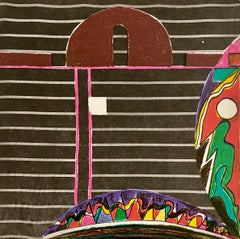
Feminist Surrealist French Woman Abstract Lithograph Embossing Myriam Bat-Yosef
Feminist Surrealist French Woman Abstract Lithograph Embossing Myriam Bat-Yosef
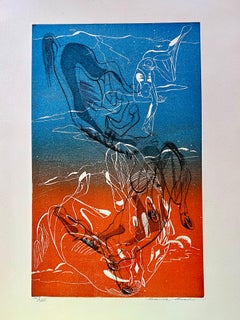
By Myriam Bat Yosef

Located in Surfside, FL

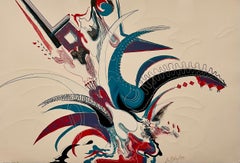
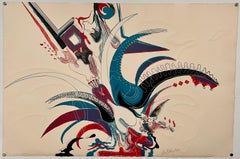
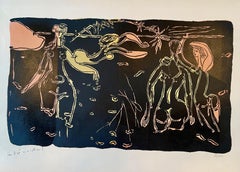
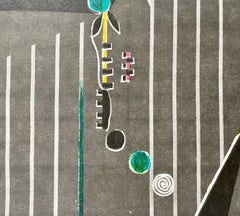
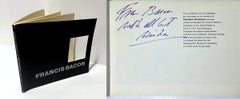
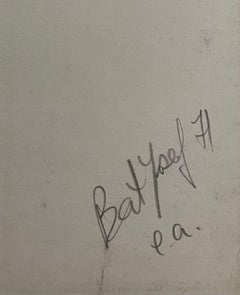
Myriam Bat-Yosef Surrealist abstract lithograph with embossing Hand signed and dated 1973. Myriam Bat-Yosef, whose real name is Marion Hellerman, born on January 31, 1931 in Berlin, Germany to a Jewish family from Lithuania, she is an Israeli Icelandic French artist who paints on papers, paintings, fabrics, objects and human beings for performances. Myriam Bat-Yosef currently lives and works in Paris. In 1933, her family fleeing the Nazi Holocaust, Miriam Bat-Yosef emigrates to Palestine and settles in Jaffa. In 1936, she suffers a family tragedy, her father, militant Zionist, is called to fight, still recovering from an operation of appendicitis. The incision will become infected, antibiotics did not exist yet, and her father will die in the hospital after 9 months of suffering. Myriam and her mother leave Palestine to live in Paris for three years. French is Myriam's first school language. In 1939, still fleeing Nazism, she returned to Palestine, leaving France by the last boat from Marseille. She moved to Tel Aviv with her mother, aunt and maternal grandmother. In 1940, she began attending the Academy of Fine Arts in Tel Aviv and took her name as an artist, Bat-Yosef, which means Joseph's daughter in Hebrew, as a tribute to her father. In 1946, Myriam graduated as a kindergarten teacher but wanted to be an artist. Her mother enrolled her in an evening school to prepare a diploma of art teacher. At 19, she performs two years of military service in Israel. In 1952, with a pension of $50 a month that her mother allocated, she went to study at the Beaux-Arts in Paris. To survive, she has several activities while studying. In 1955, she had her first solo exhibition, at the Israeli Club on Wagram Avenue in Paris. Many artists, such as Yaacov Agam, Yehuda Neiman Avigdor Arikha, Raffi Kaiser, Dani Karavan and sculptors Achiam and Shlomo Selinger attended the opening . In 1956, she enrolled at the School of Fine Arts in Florence. This is where she meets the painter Errô. They share an icy studio in winter. Myriam moves to Milan with friends. She organizes a joint exhibition with Erro, one room each, at the Montenapoleone gallery. Her works are admired by the sculptor Marino Marini and the painters Renato Birolli and Enrico Prampolini. Myriam and Erro exhibit in Rome, Milan, Florence and meet many personalities: Alain Jouffroy and his wife, the painter Manina, Roberto Matta and his wife Malitte, textile artist who was one of the founders of the Pompidou Center. Back in Paris, Myriam and Erro get married, which allows Myriam to avoid being called into the Israeli army during the Suez Canal War. In 1957, Myriam and her husband went to Iceland. Myriam works in a chocolate factory. Having enough money, she starts producing art again. She exhibited in Reykjavik's first art gallery. She meets the artist Sigridur Bjornsdottir, married to the Swiss painter Dieter Roth . In 1958, Myriam and her husband leave for Israel. They exhibit in Germany, then in Israel. Back in Paris, the couple became friends with artists of the surrealist movement, such as Victor Brauner, Hans Bellmer, the sculptor Philippe Hiquily, Liliane Lijn...
Category

1970s Surrealist Myriam Bat Yosef Art

Materials

Lithograph
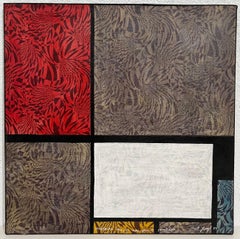
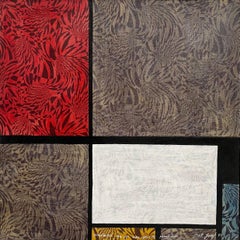
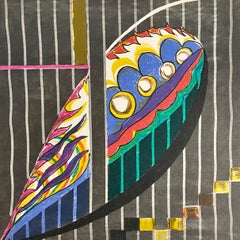
Feminist Surrealist French Abstract Apres Mondrian Oil Painting Myriam Bat Yosef

Feminist Surrealist French Abstract Apres Mondrian Oil Painting Myriam Bat Yosef

By Myriam Bat Yosef

Located in Surfside, FL

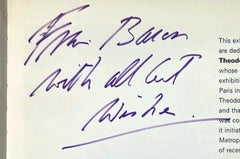
Myriam Bat-Yosef Surrealist abstract oil painting in colorful abstract patterned rectangles and shades Hand signed and dated 1984. Miniature design letter also signed. Myriam Bat-Yosef, whose real name is Marion Hellerman, born on January 31, 1931 in Berlin, Germany to a Jewish family from Lithuania, she is an Israeli-Icelandic artist who paints on papers, paintings, fabrics, objects and human beings for performances. Myriam Bat-Yosef currently lives and works in Paris. In 1933, her family fleeing the Nazi Holocaust, Miriam Bat-Yosef emigrates to Palestine and settles in Jaffa. In 1936, she suffers a family tragedy, her father, militant Zionist, is called to fight, still recovering from an operation of appendicitis. The incision will become infected, antibiotics did not exist yet, and her father will die in the hospital after 9 months of suffering. Myriam and her mother leave Palestine to live in Paris for three years. French is Myriam's first school language. In 1939, still fleeing Nazism, she returned to Palestine, leaving France by the last boat from Marseille. She moved to Tel Aviv with her mother, aunt and maternal grandmother. In 1940, she began attending the Academy of Fine Arts in Tel Aviv and took her name as an artist, Bat-Yosef, which means Joseph's daughter in Hebrew, as a tribute to her father. In 1946, Myriam graduated as a kindergarten teacher but wanted to be an artist. Her mother enrolled her in an evening school to prepare a diploma of art teacher. At 19, she performs two years of military service in Israel. In 1952, with a pension of $50 a month that her mother allocated, she went to study at the Beaux-Arts in Paris. To survive, she has several activities while studying. In 1955, she had her first solo exhibition, at the Israeli Club on Wagram Avenue in Paris. Many artists, such as Yaacov Agam, Yehuda Neiman Avigdor Arikha, Raffi Kaiser, Dani Karavan and sculptors Achiam and Shlomo Selinger attended the opening . In 1956, she enrolled at the School of Fine Arts in Florence. This is where she meets the painter Errô. They share an icy studio in winter. Myriam moves to Milan with friends. She organizes a joint exhibition with Erro, one room each, at the Montenapoleone gallery. Her works are admired by the sculptor Marino Marini and the painters Renato Birolli and Enrico Prampolini. Myriam and Erro exhibit in Rome, Milan, Florence and meet many personalities: Alain Jouffroy and his wife, the painter Manina, Roberto Matta and his wife Malitte, textile artist who was one of the founders of the Pompidou Center. Back in Paris, Myriam and Erro get married, which allows Myriam to avoid being called into the Israeli army during the Suez Canal War. In 1957, Myriam and her husband went to Iceland. Myriam works in a chocolate factory. Having enough money, she starts producing art again. She exhibited in Reykjavik's first art gallery. She meets the artist Sigridur Bjornsdottir, married to the Swiss painter Dieter Roth . In 1958, Myriam and her husband leave for Israel. They exhibit in Germany, then in Israel. Back in Paris, the couple became friends with artists of the surrealist movement, such as Victor Brauner, Hans Bellmer, the sculptor Philippe Hiquily, Liliane Lijn, future wife of Takis and photographer Nathalie Waag. Erro and Myriam have a daughter on March 15, 1960, named Tura, after the painter Cosmè Tura, but also close to the Icelandic Thora or the Hebrew Torah. Bat-Yosef’s complex trajectory throughout the 20th century is linked as much to the transnational history of what was for a time called the School of Paris as it is to a certain legacy of Surrealism. Her work features the same idea of resolving antinomies that also defined the spirit of surrealism, and is enhanced with her readings of the Kabbalah and her spiritual grounding in Taoism. However, while there are reasons for her approach to be associated with the process of the ready-made, it is important to consider the immediate intrication of these works with her practice of performance, during which the body itself is also painted – a feminist response to Yves Klein’s Anthropometries (1960) and an echo of the happenings which Jean-Jacques Lebel organised at the time in Paris. In 1963, Erró told Myriam that if she wants to be a painter, she can not be his wife. Myriam chose to be a painter and the couple divorced in 1964. Since that time, Myriam Bat-Yosef has exhibited in many countries: Europe, United States, Japan, etc. Although long in the shadows, the work of Myriam Bat-Yosef has been greeted by many artists and personalities: Anaïs Nin, Nancy Huston, André Pieyre of Mandiargues, José Pierre, René de Solier , Jacques Lacarrière, Alain Bosquet, Pierre Restany, Sarane Alexandrian and Surrealist André Breton who, after a visit to her studio, confided to having been intrigued by its phantasmagorical dimension. She was included in the book Pop Art and Beyond: Gender, Race, and Class in the Global Sixties by Mona Hadler and Kalliopi Minioudaki. Extract "World Citizen, Artist of the Pop Era Sarah Wilson; Why do we know so little of Myriam Bat-Yosef, the most important female Israeli artist of the Pop era? Issues of identity and sexuality feature constantly in her work. She exhibited internationally from Reykjavik to Tokyo; she had two shows at Arturo Schwarz’s famous Dada/surrealist gallery in Milan; she participated in feminist art events in Los Angeles. Above all, in 1971, she conceived Total Art, a Pop Gesamtkunstwerk inside and outside the Israel Museum, Jerusalem. Painter, performer, and installation artist, she was also a lover, wife, and mother. Of Lithuanian-Jewish descent, she was close to the family of philosopher Emmanuel Levinas. An émigré in Paris she would repudiate a national passport, participating in Garry Davis’s short-lived “World Citizens” movement. She continues the lineage of women surrealist artists: Valentine Hugo, Leonor Fini, Dorothea Tanning, Leonora Carrington, Unica Zürn, Jane Graverol...

Category

1980s Surrealist Myriam Bat Yosef Art

Materials

Oil

Related Items
Surrealist Large Painting Royal College of Art LGBTQ+ Female  Crocodile

Surrealist Large Painting Royal College of Art LGBTQ+ Female Crocodile

By Isabel Rock

Located in Norfolk, GB

Isabel Rock is a creator of contemporary fairy tales. A graduate of the Royal College of Art in London, her work is an explosion of strange occurrences while a surreal narrative take...

Category

2010s Surrealist Myriam Bat Yosef Art

Materials

Paint, Acrylic, Archival Paper, Pen

El gran masturbador (tras Salvador Dalí) - Técnica mixta sobre tela

El gran masturbador (tras Salvador Dalí) - Técnica mixta sobre tela

Located in Sant Celoni, ES

La obra va firmada en la parte inferior Estado de conservación bueno el de la pintura Se presenta enmarcada la obra Medidas de la obra: 52 x 61 cm. Medidas del marco: 68 x 77 cm.

Category

Early 20th Century Surrealist Myriam Bat Yosef Art

Materials

Mixed Media

Couple with a Goat - Original stone lithograph (Mourlot #608) - 1970
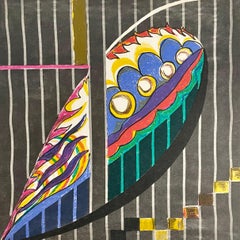
Couple with a Goat - Original stone lithograph (Mourlot #608) - 1970
By Marc Chagall

Located in Paris, IDF

Marc CHAGALL Couple with a goat Original stone lithograph (atelier Mourlot) Edition size: 3,000 (plus the signed and numbered edition of 50 with larger margins) Unsigned On light ve...
Category

1970s Surrealist Myriam Bat Yosef Art

Materials

Lithograph
"El Innombrable" Fernando de Szyszlo, Red Mysticist Abstract Composition

"El Innombrable" Fernando de Szyszlo, Red Mysticist Abstract Composition

By Fernando de Szyszlo

Located in New York, NY

Fernando de Szyszlo El Innombrable, 1980 Titled inscribed dated verso: Orrentia 1980 "El Innombrable" Signed lower bottom edge center "Szyszlo" Oil on canvas 59 1/2 x 59 inches Fernando de Szyszlo was a Peruvian painter...

Category

1980s Surrealist Myriam Bat Yosef Art

Materials

Canvas, Oil

Signs of The Zodiac,  Libra  original lithograph by Salvador Dali
Signs of The Zodiac, Libra original lithograph by Salvador Dali

By Salvador Dalí­

Located in Paonia, CO

Libra from Signs of the Zodiac by Salvador Dali is from a series of 12 limited edition lithographs. This original hand signed lithograph is Libra, the seventh astrological sign ...

Category

1960s Surrealist Myriam Bat Yosef Art

Materials

Lithograph

Le Lézard aux Plumes d'Or - Lithograph by Joan Miró - 1971

Le Lézard aux Plumes d'Or - Lithograph by Joan Miró - 1971

By Joan Miró

Located in Roma, IT

"Le Lézard aux Plumes d'Or" is an original lithograph realized by Joan Miró in 1971, and part of the famous homonym series. Hand signed and numbered, it is an H.C. (out of commerce)...

Category

1970s Surrealist Myriam Bat Yosef Art

Materials

Lithograph

Color Shot
Color Shot

Color Shot

By Leonardo Aguirre

Located in Los Angeles, CA

Uruguayan artist Leonardo Aguirre creates visually animated surreal scenes in a theatrical environment. Aguirre rearranges whimsical components into unexpectedly harmonious ways of surreal settings that could only exist in an alternate dimension. The idea of a colorful atmosphere with everyday recognizable signs and elements allows the art aficionado to imagine scenes one day and discover another story the next day. His work is a post-constructivist style that has roots in the legacy school of Torres-García. This one-of-a-kind 24-inch square original artwork is stretched, wired, and ready to hang. The sides are painted. It does not require framing and is signed by the artist on the front of the artwork. A certificate of authenticity issued by the art gallery is included. Convenient local Los Angeles area shipping. Affordable U.S. and global shipping is also available. Aguirre's architectural training is evident in his expert use of planes of color and precise brushwork to construct immersive, surreal environments that transport viewers to alternate dimensions. His whimsical rearrangement of everyday objects and recognizable signs creates unexpectedly harmonious settings that are visually stunning and emotionally evocative. Aguirre's artworks invite viewers to explore his mini-universes and discover new stories with each visit. Aguirre was born and lives in Montevideo, Uruguay. His works have been exhibited in Italy, Uruguay, Belgium, the UK, Argentina, Chicago, and Los Angeles. REPRESENTATION Artspace Warehouse, Los Angeles, USA EXHIBITIONS 2022 “Celebrating Latinx Artists”, Artspace Warehouse, Los Angeles, CA 2021 “Light On Your Feet”, Artspace Warehouse, Los Angeles, CA 2020 “Hidden Keyholes”, Artspace Warehouse, Los Angeles, CA 2018 Artspace Warehouse, Los Angeles, USA 2017 Art for the People Gallery, Austin, Texas, USA 2016 Artspace Warehouse, Los Angeles, USA 2015 Bohemian Art Gallery, Montevideo, Uruguay 2015 Rhizome Gallery, Las Vegas, USA 2014 Chicago Art Space Gallery, Chicago, USA 2014 10 años Trifecta Gallery, Las Vegas, USA 2013 Chicago Art Space Gallery, Chicago, USA 2013 Galeria Pueblo Garzón, Uruguay 2012 Trifecta Gallery, “6191”, Las Vegas, USA 2011 Golf Club, Montevideo, Uruguay 2011 Colectiva Bolosano Arts Hotel Piazza Mazzini 35 2010 Castells Art Gallery, Montevideo, Uruguay 2010 Nuestro norte es el sur Venice, Italy 2010 Ristoranti Cultural Space “il Simposio”, Trento, Italy 2010 Trifecta Gallery, Las Vegas, USA 2009 Mvd Art Gallery, The Famous Grouse, Montevideo, Uruguay 2009 Wallione de Bruxelles (Grand Place), Belgium 2009 Lido de Venezia Muestra Colectiva, Italy 2009 Agosto Torri del Benaco, Italy 2009 Palazzao della gran Guardia, Verona, Italy 2009 Museo Rawson, Pedro Meyer, Luis Camnitzer 2009 Lla Patagonia, Argentina 2009 Woburn Gallery Studios, United Kingdom 2008 Basilicata Collective Show, Italy 2007 100 Años Punta del Este...

Category

21st Century and Contemporary Surrealist Myriam Bat Yosef Art

Materials

Canvas, Oil

"Space Beetle 02" (2025), Original Abstract Figurative Acrylic on Wood Painting

"Space Beetle 02" (2025), Original Abstract Figurative Acrylic on Wood Painting

By Stacy D'Aguiar

Located in Denver, CO

Stacy D'Aguiar's (US based) "Space Beetle 02" is an acrylic painting that depicts a yellow lady beetle in the midst of a turquoise nebula. Artist Statement: My paintings are channel...

Category

2010s Surrealist Myriam Bat Yosef Art

Materials

Acrylic, Panel

Bird Potentiality
Bird Potentiality

AiromBird Potentiality

$300

H 10 in W 8 in D 1 in

Bird Potentiality

By Airom

Located in Santa Monica, CA

Artwork by Airom and collaborators.

Category

21st Century and Contemporary Surrealist Myriam Bat Yosef Art

Materials

Acrylic

Le Lézard aux Plumes d’Or - LIthograph by Joan Mirò - 1971

Le Lézard aux Plumes d’Or - LIthograph by Joan Mirò - 1971

By Joan Miró

Located in Roma, IT

Le Lézard aux Plumes d'Or is a beautiful colored lithograph on mother-of-pearl Japan paper from the series realized by Joan Miró in 1971. Signed on the lower right corner. Printed by...

Category

1970s Surrealist Myriam Bat Yosef Art

Materials

Lithograph

Woman - Offset and Lithograph - 1983

Woman - Offset and Lithograph - 1983

By Willem de Kooning

Located in Roma, IT

Woman is an offset and lithograph print realized on Fabriano Paper after a drawing by Willem De Kooning of 1983. The print suite was realized in a limited edition of 2500, and curat...

Category

1980s Surrealist Myriam Bat Yosef Art

Materials

Lithograph, Offset

Previously Available Items
Feminist Surrealist French Abstract Colorful Lithograph Print Myriam Bat Yosef

Feminist Surrealist French Abstract Colorful Lithograph Print Myriam Bat Yosef

By Myriam Bat Yosef

Located in Surfside, FL

Myriam Bat-Yosef Surrealist abstract lithograph print in colorful abstract shapes and shades Hand signed and dated 1971. sheet measures 9.25 X 9.25 inches The envelope and the Peter Buch poster is just for provenance and is not included in this sale. Myriam Bat-Yosef, whose real name is Marion Hellerman, born on January 31, 1931 in Berlin, Germany to a Jewish family from Lithuania, she is an Israeli-Icelandic artist who paints on papers, paintings, fabrics, objects and human beings for performances. Myriam Bat-Yosef currently lives and works in Paris. In 1933, her family fleeing the Nazi Holocaust, Miriam Bat-Yosef emigrates to Palestine and settles in Jaffa. In 1936, she suffers a family tragedy, her father, militant Zionist, is called to fight, still recovering from an operation of appendicitis. The incision will become infected, antibiotics did not exist yet, and her father will die in the hospital after 9 months of suffering. Myriam and her mother leave Palestine to live in Paris for three years. French is Myriam's first school language. In 1939, still fleeing Nazism, she returned to Palestine, leaving France by the last boat from Marseille. She moved to Tel Aviv with her mother, aunt and maternal grandmother. In 1940, she began attending the Academy of Fine Arts in Tel Aviv and took her name as an artist, Bat-Yosef, which means Joseph's daughter in Hebrew, as a tribute to her father. In 1946, Myriam graduated as a kindergarten teacher but wanted to be an artist. Her mother enrolled her in an evening school to prepare a diploma of art teacher. At 19, she performs two years of military service in Israel. In 1952, with a pension of $50 a month that her mother allocated, she went to study at the Beaux-Arts in Paris. To survive, she has several activities while studying. In 1955, she had her first solo exhibition, at the Israeli Club on Wagram Avenue in Paris. Many artists, such as Yaacov Agam, Yehuda Neiman Avigdor Arikha, Raffi Kaiser, Dani Karavan and sculptors Achiam and Shlomo Selinger attended the opening . In 1956, she enrolled at the School of Fine Arts in Florence. This is where she meets the painter Errô. They share an icy studio in winter. Myriam moves to Milan with friends. She organizes a joint exhibition with Erro, one room each, at the Montenapoleone gallery. Her works are admired by the sculptor Marino Marini and the painters Renato Birolli and Enrico Prampolini. Myriam and Erro exhibit in Rome, Milan, Florence and meet many personalities: Alain Jouffroy and his wife, the painter Manina, Roberto Matta and his wife Malitte, textile artist who was one of the founders of the Pompidou Center. Back in Paris, Myriam and Erro get married, which allows Myriam to avoid being called into the Israeli army during the Suez Canal War. In 1957, Myriam and her husband went to Iceland. Myriam works in a chocolate factory. Having enough money, she starts producing art again. She exhibited in Reykjavik's first art gallery. She meets the artist Sigridur Bjornsdottir, married to the Swiss painter Dieter Roth . In 1958, Myriam and her husband leave for Israel. They exhibit in Germany, then in Israel. Back in Paris, the couple became friends with artists of the surrealist movement, such as Victor Brauner, Hans Bellmer, the sculptor Philippe Hiquily, Liliane Lijn, future wife of Takis and photographer Nathalie Waag. Erro and Myriam have a daughter on March 15, 1960, named Tura, after the painter Cosmè Tura, but also close to the Icelandic Thora or the Hebrew Torah. Bat-Yosef’s complex trajectory throughout the 20th century is linked as much to the transnational history of what was for a time called the School of Paris as it is to a certain legacy of Surrealism. Her work features the same idea of resolving antinomies that also defined the spirit of surrealism, and is enhanced with her readings of the Kabbalah and her spiritual grounding in Taoism. However, while there are reasons for her approach to be associated with the process of the ready-made, it is important to consider the immediate intrication of these works with her practice of performance, during which the body itself is also painted – a feminist response to Yves Klein’s Anthropometries (1960) and an echo of the happenings which Jean-Jacques Lebel organised at the time in Paris. In 1963, Erró told Myriam that if she wants to be a painter, she can not be his wife. Myriam chose to be a painter and the couple divorced in 1964. Since that time, Myriam Bat-Yosef has exhibited in many countries: Europe, United States, Japan, etc. Although long in the shadows, the work of Myriam Bat-Yosef has been greeted by many artists and personalities: Anaïs Nin, Nancy Huston, André Pieyre of Mandiargues, José Pierre, René de Solier , Jacques Lacarrière, Alain Bosquet, Pierre Restany, Sarane Alexandrian and Surrealist André Breton who, after a visit to her studio, confided to having been intrigued by its phantasmagorical dimension. She was included in the book Pop Art and Beyond: Gender, Race, and Class in the Global Sixties by Mona Hadler and Kalliopi Minioudaki. Extract "World Citizen, Artist of the Pop Era Sarah Wilson; Why do we know so little of Myriam Bat-Yosef, the most important female Israeli artist of the Pop era? Issues of identity and sexuality feature constantly in her work. She exhibited internationally from Reykjavik to Tokyo; she had two shows at Arturo Schwarz’s famous Dada/surrealist gallery in Milan; she participated in feminist art events in Los Angeles. Above all, in 1971, she conceived Total Art, a Pop Gesamtkunstwerk inside and outside the Israel Museum, Jerusalem. Painter, performer, and installation artist, she was also a lover, wife, and mother. Of Lithuanian-Jewish descent, she was close to the family of philosopher Emmanuel Levinas. An émigré in Paris she would repudiate a national passport, participating in Garry Davis’s short-lived “World Citizens” movement. She continues the lineage of women surrealist artists: Valentine Hugo, Leonor Fini, Dorothea Tanning, Leonora Carrington, Unica Zürn, Jane Graverol, Toyen, Alice Rahon...

Category

1970s Surrealist Myriam Bat Yosef Art

Materials

Lithograph

Feminist Surrealist French Abstract Colorful Lithograph Print Myriam Bat Yosef

Feminist Surrealist French Abstract Colorful Lithograph Print Myriam Bat Yosef

By Myriam Bat Yosef

Located in Surfside, FL

Myriam Bat-Yosef Surrealist abstract lithograph print in colorful abstract shapes and shades Hand signed and dated 1971. sheet measures 9.25 X 9.25 inches The envelope and the Peter Buch poster is just for provenance and is not included in this sale. Myriam Bat-Yosef, whose real name is Marion Hellerman, born on January 31, 1931 in Berlin, Germany to a Jewish family from Lithuania, she is an Israeli-Icelandic artist who paints on papers, paintings, fabrics, objects and human beings for performances. Myriam Bat-Yosef currently lives and works in Paris. In 1933, her family fleeing the Nazi Holocaust, Miriam Bat-Yosef emigrates to Palestine and settles in Jaffa. In 1936, she suffers a family tragedy, her father, militant Zionist, is called to fight, still recovering from an operation of appendicitis. The incision will become infected, antibiotics did not exist yet, and her father will die in the hospital after 9 months of suffering. Myriam and her mother leave Palestine to live in Paris for three years. French is Myriam's first school language. In 1939, still fleeing Nazism, she returned to Palestine, leaving France by the last boat from Marseille. She moved to Tel Aviv with her mother, aunt and maternal grandmother. In 1940, she began attending the Academy of Fine Arts in Tel Aviv and took her name as an artist, Bat-Yosef, which means Joseph's daughter in Hebrew, as a tribute to her father. In 1946, Myriam graduated as a kindergarten teacher but wanted to be an artist. Her mother enrolled her in an evening school to prepare a diploma of art teacher. At 19, she performs two years of military service in Israel. In 1952, with a pension of $50 a month that her mother allocated, she went to study at the Beaux-Arts in Paris. To survive, she has several activities while studying. In 1955, she had her first solo exhibition, at the Israeli Club on Wagram Avenue in Paris. Many artists, such as Yaacov Agam, Yehuda Neiman Avigdor Arikha, Raffi Kaiser, Dani Karavan and sculptors Achiam and Shlomo Selinger attended the opening . In 1956, she enrolled at the School of Fine Arts in Florence. This is where she meets the painter Errô. They share an icy studio in winter. Myriam moves to Milan with friends. She organizes a joint exhibition with Erro, one room each, at the Montenapoleone gallery. Her works are admired by the sculptor Marino Marini and the painters Renato Birolli and Enrico Prampolini. Myriam and Erro exhibit in Rome, Milan, Florence and meet many personalities: Alain Jouffroy and his wife, the painter Manina, Roberto Matta and his wife Malitte, textile artist who was one of the founders of the Pompidou Center. Back in Paris, Myriam and Erro get married, which allows Myriam to avoid being called into the Israeli army during the Suez Canal War. In 1957, Myriam and her husband went to Iceland. Myriam works in a chocolate factory. Having enough money, she starts producing art again. She exhibited in Reykjavik's first art gallery. She meets the artist Sigridur Bjornsdottir, married to the Swiss painter Dieter Roth . In 1958, Myriam and her husband leave for Israel. They exhibit in Germany, then in Israel. Back in Paris, the couple became friends with artists of the surrealist movement, such as Victor Brauner, Hans Bellmer, the sculptor Philippe Hiquily, Liliane Lijn, future wife of Takis and photographer Nathalie Waag. Erro and Myriam have a daughter on March 15, 1960, named Tura, after the painter Cosmè Tura, but also close to the Icelandic Thora or the Hebrew Torah. Bat-Yosef’s complex trajectory throughout the 20th century is linked as much to the transnational history of what was for a time called the School of Paris as it is to a certain legacy of Surrealism. Her work features the same idea of resolving antinomies that also defined the spirit of surrealism, and is enhanced with her readings of the Kabbalah and her spiritual grounding in Taoism. However, while there are reasons for her approach to be associated with the process of the ready-made, it is important to consider the immediate intrication of these works with her practice of performance, during which the body itself is also painted – a feminist response to Yves Klein’s Anthropometries (1960) and an echo of the happenings which Jean-Jacques Lebel organised at the time in Paris. In 1963, Erró told Myriam that if she wants to be a painter, she can not be his wife. Myriam chose to be a painter and the couple divorced in 1964. Since that time, Myriam Bat-Yosef has exhibited in many countries: Europe, United States, Japan, etc. Although long in the shadows, the work of Myriam Bat-Yosef has been greeted by many artists and personalities: Anaïs Nin, Nancy Huston, André Pieyre of Mandiargues, José Pierre, René de Solier , Jacques Lacarrière, Alain Bosquet, Pierre Restany, Sarane Alexandrian and Surrealist André Breton who, after a visit to her studio, confided to having been intrigued by its phantasmagorical dimension. She was included in the book Pop Art and Beyond: Gender, Race, and Class in the Global Sixties by Mona Hadler and Kalliopi Minioudaki. Extract "World Citizen, Artist of the Pop Era Sarah Wilson; Why do we know so little of Myriam Bat-Yosef, the most important female Israeli artist of the Pop era? Issues of identity and sexuality feature constantly in her work. She exhibited internationally from Reykjavik to Tokyo; she had two shows at Arturo Schwarz’s famous Dada/surrealist gallery in Milan; she participated in feminist art events in Los Angeles. Above all, in 1971, she conceived Total Art, a Pop Gesamtkunstwerk inside and outside the Israel Museum, Jerusalem. Painter, performer, and installation artist, she was also a lover, wife, and mother. Of Lithuanian-Jewish descent, she was close to the family of philosopher Emmanuel Levinas. An émigré in Paris she would repudiate a national passport, participating in Garry Davis’s short-lived “World Citizens” movement. She continues the lineage of women surrealist artists: Valentine Hugo, Leonor Fini, Dorothea Tanning, Leonora Carrington, Unica Zürn, Jane Graverol, Toyen, Alice Rahon...

Category

1970s Surrealist Myriam Bat Yosef Art

Materials

Lithograph

1979 Feminist Surrealist Israeli Colorful Watercolor Painting Myriam Bat Yosef

1979 Feminist Surrealist Israeli Colorful Watercolor Painting Myriam Bat Yosef

By Myriam Bat Yosef

Located in Surfside, FL

Myriam Bat-Yosef Surrealist abstract painting in colorful abstract shapes and shades Hand signed and dated 1979. sheet measures 8.25 X 11.75 inches The envelope and the Peter Buch poster is just for provenance and is not included in this sale. Myriam Bat-Yosef, whose real name is Marion Hellerman, born on January 31, 1931 in Berlin, Germany to a Jewish family from Lithuania, she is an Israeli-Icelandic artist who paints on papers, paintings, fabrics, objects and human beings for performances. Myriam Bat-Yosef currently lives and works in Paris. In 1933, her family fleeing the Nazi Holocaust, Miriam Bat-Yosef emigrates to Palestine and settles in Jaffa. In 1936, she suffers a family tragedy, her father, militant Zionist, is called to fight, still recovering from an operation of appendicitis. The incision will become infected, antibiotics did not exist yet, and her father will die in the hospital after 9 months of suffering. Myriam and her mother leave Palestine to live in Paris for three years. French is Myriam's first school language. In 1939, still fleeing Nazism, she returned to Palestine, leaving France by the last boat from Marseille. She moved to Tel Aviv with her mother, aunt and maternal grandmother. In 1940, she began attending the Academy of Fine Arts in Tel Aviv and took her name as an artist, Bat-Yosef, which means Joseph's daughter in Hebrew, as a tribute to her father. In 1946, Myriam graduated as a kindergarten teacher but wanted to be an artist. Her mother enrolled her in an evening school to prepare a diploma of art teacher. At 19, she performs two years of military service in Israel. In 1952, with a pension of $50 a month that her mother allocated, she went to study at the Beaux-Arts in Paris. To survive, she has several activities while studying. In 1955, she had her first solo exhibition, at the Israeli Club on Wagram Avenue in Paris. Many artists, such as Yaacov Agam, Yehuda Neiman Avigdor Arikha, Raffi Kaiser, Dani Karavan and sculptors Achiam and Shlomo Selinger attended the opening . In 1956, she enrolled at the School of Fine Arts in Florence. This is where she meets the painter Errô. They share an icy studio in winter. Myriam moves to Milan with friends. She organizes a joint exhibition with Erro, one room each, at the Montenapoleone gallery. Her works are admired by the sculptor Marino Marini and the painters Renato Birolli and Enrico Prampolini. Myriam and Erro exhibit in Rome, Milan, Florence and meet many personalities: Alain Jouffroy and his wife, the painter Manina, Roberto Matta and his wife Malitte, textile artist who was one of the founders of the Pompidou Center. Back in Paris, Myriam and Erro get married, which allows Myriam to avoid being called into the Israeli army during the Suez Canal War. In 1957, Myriam and her husband went to Iceland. Myriam works in a chocolate factory. Having enough money, she starts producing art again. She exhibited in Reykjavik's first art gallery. She meets the artist Sigridur Bjornsdottir, married to the Swiss painter Dieter Roth . In 1958, Myriam and her husband leave for Israel. They exhibit in Germany, then in Israel. Back in Paris, the couple became friends with artists of the surrealist movement, such as Victor Brauner, Hans Bellmer, the sculptor Philippe Hiquily, Liliane Lijn, future wife of Takis and photographer Nathalie Waag. Erro and Myriam have a daughter on March 15, 1960, named Tura, after the painter Cosmè Tura, but also close to the Icelandic Thora or the Hebrew Torah. Bat-Yosef’s complex trajectory throughout the 20th century is linked as much to the transnational history of what was for a time called the School of Paris as it is to a certain legacy of Surrealism. Her work features the same idea of resolving antinomies that also defined the spirit of surrealism, and is enhanced with her readings of the Kabbalah and her spiritual grounding in Taoism. However, while there are reasons for her approach to be associated with the process of the ready-made, it is important to consider the immediate intrication of these works with her practice of performance, during which the body itself is also painted – a feminist response to Yves Klein’s Anthropometries (1960) and an echo of the happenings which Jean-Jacques Lebel organised at the time in Paris. In 1963, Erró told Myriam that if she wants to be a painter, she can not be his wife. Myriam chose to be a painter and the couple divorced in 1964. Since that time, Myriam Bat-Yosef has exhibited in many countries: Europe, United States, Japan, etc. Although long in the shadows, the work of Myriam Bat-Yosef has been greeted by many artists and personalities: Anaïs Nin, Nancy Huston, André Pieyre of Mandiargues, José Pierre, René de Solier , Jacques Lacarrière, Alain Bosquet, Pierre Restany, Sarane Alexandrian and Surrealist André Breton who, after a visit to her studio, confided to having been intrigued by its phantasmagorical dimension. She was included in the book Pop Art and Beyond: Gender, Race, and Class in the Global Sixties by Mona Hadler and Kalliopi Minioudaki. Extract "World Citizen, Artist of the Pop Era Sarah Wilson; Why do we know so little of Myriam Bat-Yosef, the most important female Israeli artist of the Pop era? Issues of identity and sexuality feature constantly in her work. She exhibited internationally from Reykjavik to Tokyo; she had two shows at Arturo Schwarz’s famous Dada/surrealist gallery in Milan; she participated in feminist art events in Los Angeles. Above all, in 1971, she conceived Total Art, a Pop Gesamtkunstwerk inside and outside the Israel Museum, Jerusalem. Painter, performer, and installation artist, she was also a lover, wife, and mother. Of Lithuanian-Jewish descent, she was close to the family of philosopher Emmanuel Levinas. An émigré in Paris she would repudiate a national passport, participating in Garry Davis’s short-lived “World Citizens” movement. She continues the lineage of women surrealist artists: Valentine Hugo, Leonor Fini, Dorothea Tanning, Leonora Carrington, Unica Zürn, Jane Graverol, Toyen, Alice Rahon...

Category

1970s Surrealist Myriam Bat Yosef Art

Materials

Watercolor

1979 Feminist Surrealist Israeli Colorful Watercolor Painting Myriam Bat Yosef

1979 Feminist Surrealist Israeli Colorful Watercolor Painting Myriam Bat Yosef

By Myriam Bat Yosef

Located in Surfside, FL

Myriam Bat-Yosef Surrealist abstract painting in colorful abstract shapes and shades Hand signed and dated 1979. sheet measures 8.25 X 11.75 inches The envelope and the Peter Buch poster is just for provenance and is not included in this sale. Myriam Bat-Yosef, whose real name is Marion Hellerman, born on January 31, 1931 in Berlin, Germany to a Jewish family from Lithuania, she is an Israeli-Icelandic artist who paints on papers, paintings, fabrics, objects and human beings for performances. Myriam Bat-Yosef currently lives and works in Paris. In 1933, her family fleeing the Nazi Holocaust, Miriam Bat-Yosef emigrates to Palestine and settles in Jaffa. In 1936, she suffers a family tragedy, her father, militant Zionist, is called to fight, still recovering from an operation of appendicitis. The incision will become infected, antibiotics did not exist yet, and her father will die in the hospital after 9 months of suffering. Myriam and her mother leave Palestine to live in Paris for three years. French is Myriam's first school language. In 1939, still fleeing Nazism, she returned to Palestine, leaving France by the last boat from Marseille. She moved to Tel Aviv with her mother, aunt and maternal grandmother. In 1940, she began attending the Academy of Fine Arts in Tel Aviv and took her name as an artist, Bat-Yosef, which means Joseph's daughter in Hebrew, as a tribute to her father. In 1946, Myriam graduated as a kindergarten teacher but wanted to be an artist. Her mother enrolled her in an evening school to prepare a diploma of art teacher. At 19, she performs two years of military service in Israel. In 1952, with a pension of $50 a month that her mother allocated, she went to study at the Beaux-Arts in Paris. To survive, she has several activities while studying. In 1955, she had her first solo exhibition, at the Israeli Club on Wagram Avenue in Paris. Many artists, such as Yaacov Agam, Yehuda Neiman Avigdor Arikha, Raffi Kaiser, Dani Karavan and sculptors Achiam and Shlomo Selinger attended the opening . In 1956, she enrolled at the School of Fine Arts in Florence. This is where she meets the painter Errô. They share an icy studio in winter. Myriam moves to Milan with friends. She organizes a joint exhibition with Erro, one room each, at the Montenapoleone gallery. Her works are admired by the sculptor Marino Marini and the painters Renato Birolli and Enrico Prampolini. Myriam and Erro exhibit in Rome, Milan, Florence and meet many personalities: Alain Jouffroy and his wife, the painter Manina, Roberto Matta and his wife Malitte, textile artist who was one of the founders of the Pompidou Center. Back in Paris, Myriam and Erro get married, which allows Myriam to avoid being called into the Israeli army during the Suez Canal War. In 1957, Myriam and her husband went to Iceland. Myriam works in a chocolate factory. Having enough money, she starts producing art again. She exhibited in Reykjavik's first art gallery. She meets the artist Sigridur Bjornsdottir, married to the Swiss painter Dieter Roth . In 1958, Myriam and her husband leave for Israel. They exhibit in Germany, then in Israel. Back in Paris, the couple became friends with artists of the surrealist movement, such as Victor Brauner, Hans Bellmer, the sculptor Philippe Hiquily, Liliane Lijn, future wife of Takis and photographer Nathalie Waag. Erro and Myriam have a daughter on March 15, 1960, named Tura, after the painter Cosmè Tura, but also close to the Icelandic Thora or the Hebrew Torah. Bat-Yosef’s complex trajectory throughout the 20th century is linked as much to the transnational history of what was for a time called the School of Paris as it is to a certain legacy of Surrealism. Her work features the same idea of resolving antinomies that also defined the spirit of surrealism, and is enhanced with her readings of the Kabbalah and her spiritual grounding in Taoism. However, while there are reasons for her approach to be associated with the process of the ready-made, it is important to consider the immediate intrication of these works with her practice of performance, during which the body itself is also painted – a feminist response to Yves Klein’s Anthropometries (1960) and an echo of the happenings which Jean-Jacques Lebel organised at the time in Paris. In 1963, Erró told Myriam that if she wants to be a painter, she can not be his wife. Myriam chose to be a painter and the couple divorced in 1964. Since that time, Myriam Bat-Yosef has exhibited in many countries: Europe, United States, Japan, etc. Although long in the shadows, the work of Myriam Bat-Yosef has been greeted by many artists and personalities: Anaïs Nin, Nancy Huston, André Pieyre of Mandiargues, José Pierre, René de Solier , Jacques Lacarrière, Alain Bosquet, Pierre Restany, Sarane Alexandrian and Surrealist André Breton who, after a visit to her studio, confided to having been intrigued by its phantasmagorical dimension. She was included in the book Pop Art and Beyond: Gender, Race, and Class in the Global Sixties by Mona Hadler and Kalliopi Minioudaki. Extract "World Citizen, Artist of the Pop Era Sarah Wilson; Why do we know so little of Myriam Bat-Yosef, the most important female Israeli artist of the Pop era? Issues of identity and sexuality feature constantly in her work. She exhibited internationally from Reykjavik to Tokyo; she had two shows at Arturo Schwarz’s famous Dada/surrealist gallery in Milan; she participated in feminist art events in Los Angeles. Above all, in 1971, she conceived Total Art, a Pop Gesamtkunstwerk inside and outside the Israel Museum, Jerusalem. Painter, performer, and installation artist, she was also a lover, wife, and mother. Of Lithuanian-Jewish descent, she was close to the family of philosopher Emmanuel Levinas. An émigré in Paris she would repudiate a national passport, participating in Garry Davis’s short-lived “World Citizens” movement. She continues the lineage of women surrealist artists: Valentine Hugo, Leonor Fini, Dorothea Tanning, Leonora Carrington, Unica Zürn, Jane Graverol, Toyen, Alice Rahon...

Category

1970s Surrealist Myriam Bat Yosef Art

Materials

Watercolor

1979 Feminist Surrealist Israeli Colorful Watercolor Painting Myriam Bat Yosef

1979 Feminist Surrealist Israeli Colorful Watercolor Painting Myriam Bat Yosef

By Myriam Bat Yosef

Located in Surfside, FL

Myriam Bat-Yosef Surrealist abstract painting in colorful abstract shapes and shades Hand signed and dated 1979. sheet measures 8.25 X 11.75 inches The envelope and the Peter Buch poster is just for provenance and is not included in this sale. Myriam Bat-Yosef, whose real name is Marion Hellerman, born on January 31, 1931 in Berlin, Germany to a Jewish family from Lithuania, she is an Israeli-Icelandic artist who paints on papers, paintings, fabrics, objects and human beings for performances. Myriam Bat-Yosef currently lives and works in Paris. In 1933, her family fleeing the Nazi Holocaust, Miriam Bat-Yosef emigrates to Palestine and settles in Jaffa. In 1936, she suffers a family tragedy, her father, militant Zionist, is called to fight, still recovering from an operation of appendicitis. The incision will become infected, antibiotics did not exist yet, and her father will die in the hospital after 9 months of suffering. Myriam and her mother leave Palestine to live in Paris for three years. French is Myriam's first school language. In 1939, still fleeing Nazism, she returned to Palestine, leaving France by the last boat from Marseille. She moved to Tel Aviv with her mother, aunt and maternal grandmother. In 1940, she began attending the Academy of Fine Arts in Tel Aviv and took her name as an artist, Bat-Yosef, which means Joseph's daughter in Hebrew, as a tribute to her father. In 1946, Myriam graduated as a kindergarten teacher but wanted to be an artist. Her mother enrolled her in an evening school to prepare a diploma of art teacher. At 19, she performs two years of military service in Israel. In 1952, with a pension of $50 a month that her mother allocated, she went to study at the Beaux-Arts in Paris. To survive, she has several activities while studying. In 1955, she had her first solo exhibition, at the Israeli Club on Wagram Avenue in Paris. Many artists, such as Yaacov Agam, Yehuda Neiman Avigdor Arikha, Raffi Kaiser, Dani Karavan and sculptors Achiam and Shlomo Selinger attended the opening . In 1956, she enrolled at the School of Fine Arts in Florence. This is where she meets the painter Errô. They share an icy studio in winter. Myriam moves to Milan with friends. She organizes a joint exhibition with Erro, one room each, at the Montenapoleone gallery. Her works are admired by the sculptor Marino Marini and the painters Renato Birolli and Enrico Prampolini. Myriam and Erro exhibit in Rome, Milan, Florence and meet many personalities: Alain Jouffroy and his wife, the painter Manina, Roberto Matta and his wife Malitte, textile artist who was one of the founders of the Pompidou Center. Back in Paris, Myriam and Erro get married, which allows Myriam to avoid being called into the Israeli army during the Suez Canal War. In 1957, Myriam and her husband went to Iceland. Myriam works in a chocolate factory. Having enough money, she starts producing art again. She exhibited in Reykjavik's first art gallery. She meets the artist Sigridur Bjornsdottir, married to the Swiss painter Dieter Roth . In 1958, Myriam and her husband leave for Israel. They exhibit in Germany, then in Israel. Back in Paris, the couple became friends with artists of the surrealist movement, such as Victor Brauner, Hans Bellmer, the sculptor Philippe Hiquily, Liliane Lijn, future wife of Takis and photographer Nathalie Waag. Erro and Myriam have a daughter on March 15, 1960, named Tura, after the painter Cosmè Tura, but also close to the Icelandic Thora or the Hebrew Torah. Bat-Yosef’s complex trajectory throughout the 20th century is linked as much to the transnational history of what was for a time called the School of Paris as it is to a certain legacy of Surrealism. Her work features the same idea of resolving antinomies that also defined the spirit of surrealism, and is enhanced with her readings of the Kabbalah and her spiritual grounding in Taoism. However, while there are reasons for her approach to be associated with the process of the ready-made, it is important to consider the immediate intrication of these works with her practice of performance, during which the body itself is also painted – a feminist response to Yves Klein’s Anthropometries (1960) and an echo of the happenings which Jean-Jacques Lebel organised at the time in Paris. In 1963, Erró told Myriam that if she wants to be a painter, she can not be his wife. Myriam chose to be a painter and the couple divorced in 1964. Since that time, Myriam Bat-Yosef has exhibited in many countries: Europe, United States, Japan, etc. Although long in the shadows, the work of Myriam Bat-Yosef has been greeted by many artists and personalities: Anaïs Nin, Nancy Huston, André Pieyre of Mandiargues, José Pierre, René de Solier , Jacques Lacarrière, Alain Bosquet, Pierre Restany, Sarane Alexandrian and Surrealist André Breton who, after a visit to her studio, confided to having been intrigued by its phantasmagorical dimension. She was included in the book Pop Art and Beyond: Gender, Race, and Class in the Global Sixties by Mona Hadler and Kalliopi Minioudaki. Extract "World Citizen, Artist of the Pop Era Sarah Wilson; Why do we know so little of Myriam Bat-Yosef, the most important female Israeli artist of the Pop era? Issues of identity and sexuality feature constantly in her work. She exhibited internationally from Reykjavik to Tokyo; she had two shows at Arturo Schwarz’s famous Dada/surrealist gallery in Milan; she participated in feminist art events in Los Angeles. Above all, in 1971, she conceived Total Art, a Pop Gesamtkunstwerk inside and outside the Israel Museum, Jerusalem. Painter, performer, and installation artist, she was also a lover, wife, and mother. Of Lithuanian-Jewish descent, she was close to the family of philosopher Emmanuel Levinas. An émigré in Paris she would repudiate a national passport, participating in Garry Davis’s short-lived “World Citizens” movement. She continues the lineage of women surrealist artists: Valentine Hugo, Leonor Fini, Dorothea Tanning, Leonora Carrington, Unica Zürn, Jane Graverol, Toyen, Alice Rahon...

Category

1970s Surrealist Myriam Bat Yosef Art

Materials

Watercolor

1957 Feminist Surrealist Israeli Colorful Watercolor Painting Myriam Bat Yosef

1957 Feminist Surrealist Israeli Colorful Watercolor Painting Myriam Bat Yosef

By Myriam Bat Yosef

Located in Surfside, FL

Myriam Bat-Yosef Surrealist abstract painting in colorful abstract shapes and shades in the style of Joan Miro Hand signed and dated Tel Aviv, 1957. frame measures 10 X 5.5 sheet measures 2.5 X 7 inches The envelope of the Peter Buch poster is just for provenance and is not included in this sale. Myriam Bat-Yosef, whose real name is Marion Hellerman, born on January 31 , 1931 in Berlin, Germany to a Jewish family from Lithuania, she is an Israeli-Icelandic artist who paints on papers, paintings, fabrics, objects and human beings for performances. Myriam Bat-Yosef currently lives and works in Paris. In 1933, her family fleeing the Nazi Holocaust, Myriam Bat-Yosef emigrates to Palestine and settles in Jaffa. In 1936, she suffers a family tragedy, her father, militant Zionist, is called to fight, still recovering from an operation of appendicitis. The incision will become infected, antibiotics did not exist yet, and her father will die in the hospital after 9 months of suffering. Myriam and her mother leave Palestine to live in Paris for three years. French is Myriam's first school language. In 1939, still fleeing Nazism, she returned to Palestine, leaving France by the last boat from Marseille. She moved to Tel Aviv with her mother, aunt and maternal grandmother. In 1940, she began attending the Academy of Fine Arts in Tel Aviv and took her name as an artist, Bat-Yosef, which means Joseph's daughter in Hebrew, as a tribute to her father. In 1946, Myriam graduated as a kindergarten teacher but wanted to be an artist. Her mother enrolled her in an evening school to prepare a diploma of art teacher. At 19, she performs two years of military service in Israel. In 1952, with a pension of $50 a month that her mother allocated, she went to study at the Beaux-Arts in Paris. To survive, she has several activities while studying. In 1955, she had her first solo exhibition, at the Israeli Club on Wagram Avenue in Paris. Many artists, such as Yaacov Agam, Yehuda Neiman Avigdor Arikha, Raffi Kaiser, Dani Karavan and sculptors Achiam and Shlomo Selinger attended the opening . In 1956, she enrolled at the School of Fine Arts in Florence. This is where she meets the painter Errô. They share an icy studio in winter. Myriam moves to Milan with friends. She organizes a joint exhibition with Erro, one room each, at the Montenapoleone gallery. Her works are admired by the sculptor Marino Marini and the painters Renato Birolli and Enrico Prampolini. Myriam and Erro exhibit in Rome, Milan, Florence and meet many personalities: Alain Jouffroy and his wife, the painter Manina, Roberto Matta and his wife Malitte, textile artist who was one of the founders of the Pompidou Center. Back in Paris, Myriam and Erro get married, which allows Myriam to avoid being called into the Israeli army during the Suez Canal War. In 1957, Myriam and her husband went to Iceland. Myriam works in a chocolate factory. Having enough money, she starts producing art again. She exhibited in Reykjavik's first art gallery. She meets the artist Sigridur Bjornsdottir, married to the Swiss painter Dieter Roth . In 1958, Myriam and her husband leave for Israel. They exhibit in Germany, then in Israel. Back in Paris, the couple became friends with artists of the surrealist movement, such as Victor Brauner, Hans Bellmer, the sculptor Philippe Hiquily, Liliane Lijn, future wife of Takis and photographer Nathalie Waag. Erro and Myriam have a daughter on March 15, 1960, named Tura, after the painter Cosmè Tura, but also close to the Icelandic Thora or the Hebrew Torah. Bat-Yosef’s complex trajectory throughout the 20th century is linked as much to the transnational history of what was for a time called the School of Paris as it is to a certain legacy of Surrealism. Her work features the same idea of resolving antinomies that also defined the spirit of surrealism, and is enhanced with her readings of the Kabbalah and her spiritual grounding in Taoism. However, while there are reasons for her approach to be associated with the process of the ready-made, it is important to consider the immediate intrication of these works with her practice of performance, during which the body itself is also painted – a feminist response to Yves Klein’s Anthropometries (1960) and an echo of the happenings which Jean-Jacques Lebel organised at the time in Paris. In 1963, Erró told Myriam that if she wants to be a painter, she can not be his wife. Myriam chose to be a painter and the couple divorced in 1964. Since that time, Myriam Bat-Yosef has exhibited in many countries: Europe, United States, Japan, etc. Although long in the shadows, the work of Myriam Bat-Yosef has been greeted by many artists and personalities: Anaïs Nin, Nancy Huston, André Pieyre of Mandiargues, José Pierre, René de Solier , Jacques Lacarrière, Alain Bosquet, Pierre Restany, Sarane Alexandrian and Surrealist André Breton who, after a visit to her studio, confided to having been intrigued by its phantasmagorical dimension. She was included in the book Pop Art and Beyond: Gender, Race, and Class in the Global Sixties by Mona Hadler and Kalliopi Minioudaki. Extract "World Citizen, Artist of the Pop Era Sarah Wilson; Why do we know so little of Myriam Bat-Yosef, the most important female Israeli artist of the Pop era? Issues of identity and sexuality feature constantly in her work. She exhibited internationally from Reykjavik to Tokyo; she had two shows at Arturo Schwarz’s famous Dada/surrealist gallery in Milan; she participated in feminist art events in Los Angeles. Above all, in 1971, she conceived Total Art, a Pop Gesamtkunstwerk inside and outside the Israel Museum, Jerusalem. Painter, performer, and installation artist, she was also a lover, wife, and mother. Of Lithuanian-Jewish descent, she was close to the family of philosopher Emmanuel Levinas. An émigré in Paris she would repudiate a national passport, participating in Garry Davis’s short-lived “World Citizens” movement. She continues the lineage of women surrealist artists: Valentine Hugo, Leonor Fini, Dorothea Tanning, Leonora Carrington, Unica Zürn, Jane Graverol, Toyen, Alice Rahon...

Category

1950s Surrealist Myriam Bat Yosef Art

Materials

Watercolor

1956 Feminist Surrealist Israeli Colorful Watercolor Painting Myriam Bat Yosef

1956 Feminist Surrealist Israeli Colorful Watercolor Painting Myriam Bat Yosef

By Myriam Bat Yosef

Located in Surfside, FL

Myriam Bat-Yosef Surrealist abstract painting in colorful abstract shapes and shades Hand signed and dated 1956. Backing measures 13.5 X 15.5 sheet measures 9.25 X 11.88 inches The envelope of the Peter Buch poster is just for provenance and is not included in this sale. Myriam Bat-Yosef, whose real name is Marion Hellerman, born on January 31 , 1931 in Berlin, Germany to a Jewish family from Lithuania, she is an Israeli-Icelandic artist who paints on papers, paintings, fabrics, objects and human beings for performances. Myriam Bat-Yosef currently lives and works in Paris. In 1933, her family fleeing the Nazi Holocaust, Myriam Bat-Yosef emigrates to Palestine and settles in Jaffa. In 1936, she suffers a family tragedy, her father, militant Zionist, is called to fight, still recovering from an operation of appendicitis. The incision will become infected, antibiotics did not exist yet, and her father will die in the hospital after 9 months of suffering. Myriam and her mother leave Palestine to live in Paris for three years. French is Myriam's first school language. In 1939, still fleeing Nazism, she returned to Palestine, leaving France by the last boat from Marseille. She moved to Tel Aviv with her mother, aunt and maternal grandmother. In 1940, she began attending the Academy of Fine Arts in Tel Aviv and took her name as an artist, Bat-Yosef, which means Joseph's daughter in Hebrew, as a tribute to her father. In 1946, Myriam graduated as a kindergarten teacher but wanted to be an artist. Her mother enrolled her in an evening school to prepare a diploma of art teacher. At 19, she performs two years of military service in Israel. In 1952, with a pension of $50 a month that her mother allocated, she went to study at the Beaux-Arts in Paris. To survive, she has several activities while studying. In 1955, she had her first solo exhibition, at the Israeli Club on Wagram Avenue in Paris. Many artists, such as Yaacov Agam, Yehuda Neiman Avigdor Arikha, Raffi Kaiser, Dani Karavan and sculptors Achiam and Shlomo Selinger attended the opening . In 1956, she enrolled at the School of Fine Arts in Florence. This is where she meets the painter Errô. They share an icy studio in winter. Myriam moves to Milan with friends. She organizes a joint exhibition with Erro, one room each, at the Montenapoleone gallery. Her works are admired by the sculptor Marino Marini and the painters Renato Birolli and Enrico Prampolini. Myriam and Erro exhibit in Rome, Milan, Florence and meet many personalities: Alain Jouffroy and his wife, the painter Manina, Roberto Matta and his wife Malitte, textile artist who was one of the founders of the Pompidou Center. Back in Paris, Myriam and Erro get married, which allows Myriam to avoid being called into the Israeli army during the Suez Canal War. In 1957, Myriam and her husband went to Iceland. Myriam works in a chocolate factory. Having enough money, she starts producing art again. She exhibited in Reykjavik's first art gallery. She meets the artist Sigridur Bjornsdottir, married to the Swiss painter Dieter Roth . In 1958, Myriam and her husband leave for Israel. They exhibit in Germany, then in Israel. Back in Paris, the couple became friends with artists of the surrealist movement, such as Victor Brauner, Hans Bellmer, the sculptor Philippe Hiquily, Liliane Lijn, future wife of Takis and photographer Nathalie Waag. Erro and Myriam have a daughter on March 15, 1960, named Tura, after the painter Cosmè Tura, but also close to the Icelandic Thora or the Hebrew Torah. Bat-Yosef’s complex trajectory throughout the 20th century is linked as much to the transnational history of what was for a time called the School of Paris as it is to a certain legacy of Surrealism. Her work features the same idea of resolving antinomies that also defined the spirit of surrealism, and is enhanced with her readings of the Kabbalah and her spiritual grounding in Taoism. However, while there are reasons for her approach to be associated with the process of the ready-made, it is important to consider the immediate intrication of these works with her practice of performance, during which the body itself is also painted – a feminist response to Yves Klein’s Anthropometries (1960) and an echo of the happenings which Jean-Jacques Lebel organised at the time in Paris. In 1963, Erró told Myriam that if she wants to be a painter, she can not be his wife. Myriam chose to be a painter and the couple divorced in 1964. Since that time, Myriam Bat-Yosef has exhibited in many countries: Europe, United States, Japan, etc. Although long in the shadows, the work of Myriam Bat-Yosef has been greeted by many artists and personalities: Anaïs Nin, Nancy Huston, André Pieyre of Mandiargues, José Pierre, René de Solier , Jacques Lacarrière, Alain Bosquet, Pierre Restany, Sarane Alexandrian and Surrealist André Breton who, after a visit to her studio, confided to having been intrigued by its phantasmagorical dimension. She was included in the book Pop Art and Beyond: Gender, Race, and Class in the Global Sixties by Mona Hadler and Kalliopi Minioudaki. Extract "World Citizen, Artist of the Pop Era Sarah Wilson; Why do we know so little of Myriam Bat-Yosef, the most important female Israeli artist of the Pop era? Issues of identity and sexuality feature constantly in her work. She exhibited internationally from Reykjavik to Tokyo; she had two shows at Arturo Schwarz’s famous Dada/surrealist gallery in Milan; she participated in feminist art events in Los Angeles. Above all, in 1971, she conceived Total Art, a Pop Gesamtkunstwerk inside and outside the Israel Museum, Jerusalem. Painter, performer, and installation artist, she was also a lover, wife, and mother. Of Lithuanian-Jewish descent, she was close to the family of philosopher Emmanuel Levinas. An émigré in Paris she would repudiate a national passport, participating in Garry Davis’s short-lived “World Citizens” movement. She continues the lineage of women surrealist artists: Valentine Hugo, Leonor Fini, Dorothea Tanning, Leonora Carrington, Unica Zürn, Jane Graverol, Toyen, Alice Rahon...

Category

1950s Surrealist Myriam Bat Yosef Art

Materials

Watercolor

Feminist Surrealist Israeli Woman Artist Blue Watercolor Painting and Drawing

Feminist Surrealist Israeli Woman Artist Blue Watercolor Painting and Drawing

By Myriam Bat Yosef

Located in Surfside, FL

Surrealist abstract painting in shades of indigo and denim blue. Hand signed and dated 1967. Myriam Bat-Yosef , whose real name is Marion Hellerman , born on January 31 , 1931 in Berlin, Germany to a Jewish family from Lithuania, she is an Israeli-Icelandic artist who paints on papers, paintings, fabrics, objects and human beings for performances. Myriam Bat-Yosef currently lives and works in Paris. In 1933, her family fleeing the Nazi Holocaust, Myriam Bat-Yosef emigrates to Palestine and settles in Jaffa. In 1936, she suffers a family tragedy, her father, militant Zionist, is called to fight, still recovering from an operation of appendicitis. The incision will become infected, antibiotics did not exist yet, and her father will die in the hospital after 9 months of suffering. Myriam and her mother leave Palestine to live in Paris for three years. French is Myriam's first school language. In 1939, still fleeing Nazism, she returned to Palestine, leaving France by the last boat from Marseille. She moved to Tel Aviv with her mother, aunt and maternal grandmother. In 1940, she began attending the Academy of Fine Arts in Tel Aviv and took her name as an artist, Bat-Yosef, which means Joseph's daughter in Hebrew, as a tribute to her father. In 1946, Myriam graduated as a kindergarten teacher but wanted to be an artist. Her mother enrolled her in an evening school to prepare a diploma of art teacher. At 19, she performs two years of military service in Israel. In 1952, with a pension of $50 a month that her mother allocated, she went to study at the Beaux-Arts in Paris. To survive, she has several activities while studying. In 1955, she had her first solo exhibition, at the Israeli Club on Wagram Avenue in Paris. Many artists, such as Yaacov Agam, Yehuda Neiman Avigdor Arikha, Raffi Kaiser, Dani Karavan and sculptors Achiam and Shlomo Selinger attended the opening . In 1956, she enrolled at the School of Fine Arts in Florence. This is where she meets the painter Errô. They share an icy studio in winter. Myriam moves to Milan with friends. She organizes a joint exhibition with Erro, one room each, at the Montenapoleone gallery. Her works are admired by the sculptor Marino Marini and the painters Renato Birolli and Enrico Prampolini. Myriam and Erro exhibit in Rome, Milan, Florence and meet many personalities: Alain Jouffroy and his wife, the painter Manina, Roberto Matta and his wife Malitte, textile artist who was one of the founders of the Pompidou Center. Back in Paris, Myriam and Erro get married, which allows Myriam to avoid being called into the Israeli army during the Suez Canal War. In 1957, Myriam and her husband went to Iceland. Myriam works in a chocolate factory. Having enough money, she starts producing art again. She exhibited in Reykjavik's first art gallery. She meets the artist Sigridur Bjornsdottir, married to the Swiss painter Dieter Roth . In 1958, Myriam and her husband leave for Israel. They exhibit in Germany, then in Israel. Back in Paris, the couple became friends with artists of the surrealist movement, such as Victor Brauner , Hans Bellmer, the sculptor Philippe Hiquily, Liliane Lijn, future wife of Takis and photographer Nathalie Waag. Erro and Myriam have a daughter on March 15, 1960, named Tura, after the painter Cosmè Tura, but also close to the Icelandic Thora or the Hebrew Torah. Bat-Yosef’s complex trajectory throughout the 20th century is linked as much to the transnational history of what was for a time called the School of Paris as it is to a certain legacy of Surrealism. Her work features the same idea of resolving antinomies that also defined the spirit of surrealism, and is enhanced with her readings of the Kabbalah and her spiritual grounding in Taoism. However, while there are reasons for her approach to be associated with the process of the ready-made, it is important to consider the immediate intrication of these works with her practice of performance, during which the body itself is also painted – a feminist response to Yves Klein’s Anthropometries (1960) and an echo of the happenings which Jean-Jacques Lebel organised at the time in Paris. In 1963, Erró told Myriam that if she wants to be a painter, she can not be his wife. Myriam chose to be a painter and the couple divorced in 1964. Since that time, Myriam Bat-Yosef has exhibited in many countries: Europe, United States, Japan, etc. Although long in the shadows, the work of Myriam Bat-Yosef has been greeted by many artists and personalities: Anaïs Nin, Nancy Huston, André Pieyre of Mandiargues, José Pierre, René de Solier , Jacques Lacarrière, Alain Bosquet, Pierre Restany, Sarane Alexandrian and Surrealist André Breton who, after a visit to her studio, confided to having been intrigued by its phantasmagorical dimension. She was included in the book Pop Art and Beyond: Gender, Race, and Class in the Global Sixties by Mona Hadler and Kalliopi Minioudaki. Extract "World Citizen, Artist of the Pop Era Sarah Wilson; Why do we know so little of Myriam Bat-Yosef, the most important female Israeli artist of the Pop era? Issues of identity and sexuality feature constantly in her work. She exhibited internationally from Reykjavik to Tokyo; she had two shows at Arturo Schwarz’s famous Dada/surrealist gallery in Milan; she participated in feminist art events in Los Angeles. Above all, in 1971, she conceived Total Art, a Pop Gesamtkunstwerk inside and outside the Israel Museum, Jerusalem. Painter, performer, and installation artist, she was also a lover, wife, and mother. Of Lithuanian-Jewish descent, she was close to the family of philosopher Emmanuel Levinas. An émigré in Paris she would repudiate a national passport, participating in Garry Davis’s short-lived “World Citizens” movement. She continues the lineage of women surrealist artists: “Valentine Hugo, Leonor Fini, Dorothea Tanning, Leonora Carrington, Unica Zürn, Jane Graverol...

Category

1960s Surrealist Myriam Bat Yosef Art

Materials

Ink, Watercolor

Myriam Bat Yosef art for sale on 1stDibs.

Find a wide variety of authentic Myriam Bat Yosef art available for sale on 1stDibs. You can also browse by medium to find art by Myriam Bat Yosef in lithograph, paint, watercolor and more. Much of the original work by this artist or collective was created during the 20th century and is mostly associated with the Surrealist style. Not every interior allows for large Myriam Bat Yosef art, so small editions measuring 6 inches across are available. Customers who are interested in this artist might also find the work of Charles Long, Fred Deux, and Camille Bryen. Myriam Bat Yosef art prices can differ depending upon medium, time period and other attributes. On 1stDibs, the price for these items starts at $650 and tops out at $850, while the average work can sell for $650.

Artists Similar to Myriam Bat Yosef