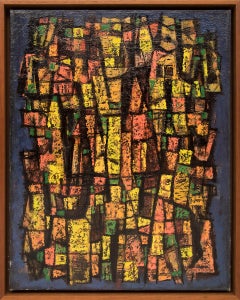
By Charles Green Shaw
Located in New York, NY
Charles Green Shaw
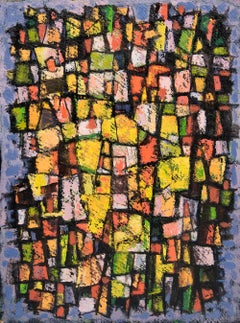
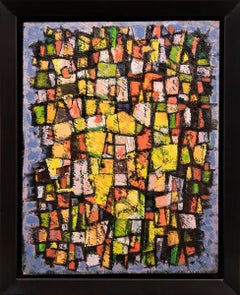
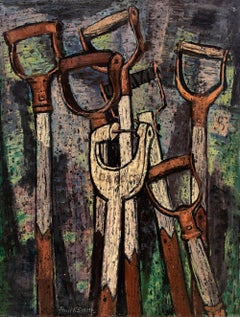
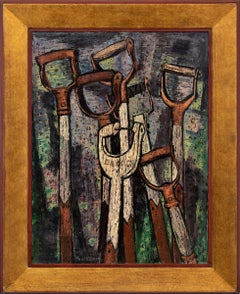
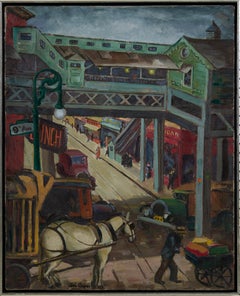
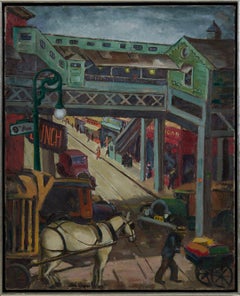
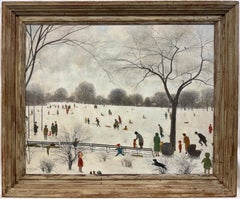
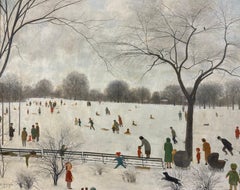
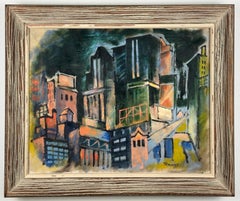
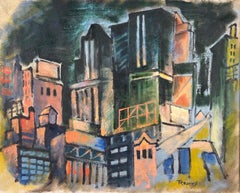
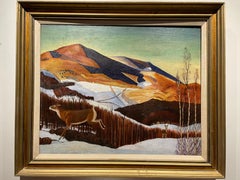
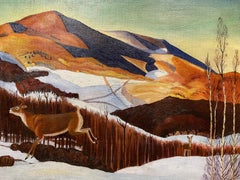
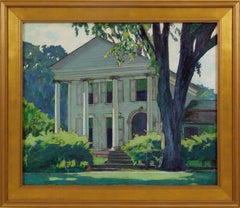
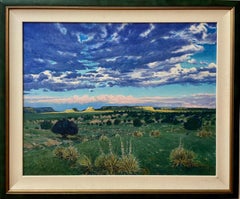
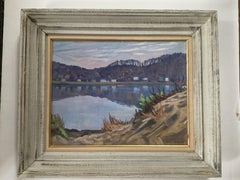
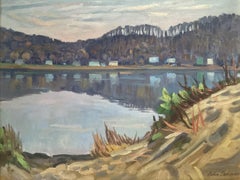
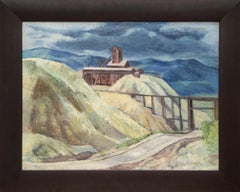
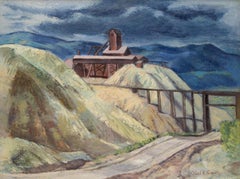
Harvard vs. Yale, 1944
Signed and dated on the reverse
Oil on canvasboard
9 x 12 inches
Provenance:
Harvey and Francois Rambach, New Jersey
Private Collection, California
Washburn Gallery, New York
D. Wigmore Fine Art, New York
Private Collection, New York
Charles Green Shaw, born into a wealthy New York family, began painting when he was in his mid-thirties. A 1914 graduate of Yale, Shaw also completed a year of architectural studies at Columbia University. During the 1920s Shaw enjoyed a successful career as a freelance writer for The New Yorker, Smart Set and Vanity Fair, chronicling the life of the theater and café society. In addition to penning insightful articles, Shaw was a poet, novelist and journalist. In 1927 he began to take a serious interest in art and attended Thomas Hart Benton's class at the Art Students League briefly in New York. He also studied privately with George Luks, who became a good friend. Once he had dedicated himself to non-traditional painting, Shaw's writing ability made him a potent defender of abstract art.
After initial study with Benton and Luks, Shaw continued his artistic education in Paris by visiting numerous museums and galleries. From 1930 to 1932 Shaw's paintings evolved from a style imitative of Cubism to one directly inspired by it, though simplified and more purely geometric. Returning to the United States in 1933, Shaw began a series of abstracted cityscapes of skyscrapers he called Manhattan Motifs which evolved into his most famous works, the shaped canvases he called Plastic Polygons.
The 1930s were productive years for Shaw. He showed his paintings in numerous group exhibitions, both in New York and abroad, and was also given several one-man exhibitions. Shaw had his first one-man exhibition at the Valentine Dudensing Gallery in New York in 1934, which included 25 Manhattan Motif paintings and 8 abstract works. In the spring of 1935 Shaw was introduced to Albert Gallatin and George L.K. Morris. Gallatin was so impressed with Shaw's work, he broke a policy against solo exhibitions at his museum, the Gallery of Living Art, and offered Shaw an exhibition there. In the summer of 1935 Shaw traveled to Paris with Gallatin and Morris who provided introductions to many great painters. Shaw regularly spent time with John Ferren and Jean Hélion. The following year Gallatin organized an exhibition called Five Contemporary American Concretionists at the Reinhardt Gallery that included Shaw, Ferren, and Morris, Alexander Calder, and Charles Biederman...
Category
1940s Abstract Geometric Paul Kauvar Smith Art