Pierre Balmain Cabinets

French, 1914-1982

Pierre Balmain founded his now-iconic label in 1945. Alongside fellow couture titans Christian Dior and Hubert de Givenchy, the French designer's postwar take on luxe dressing featured bell-shaped skirts falling from slender waists, structured jackets over sheath day dresses and embellishments like fur trim; he called the look “Jolie Madame.” The Duchess of Windsor was an early fan, prompting an aristocratic following. 

From the voluminous skirts of the post-World War II “New Look” favored by Hollywood icons like Audrey Hepburn and Marlene Dietrich to the sleek, skinny jeans seen on Nicki Minaj, Kid Cudi and every Kardashian, clothes from the House of Balmain have long been mainstays in celebrity wardrobes.

The son of a dressmaker and a drapery salesman, Balmain's founder was born in 1914 in southeastern France and formed an interest in fashion at an early age. His mother wanted her son to be an architect — but the principles of design and structure that Pierre learned in his brief studies at the École des Beaux Arts served him well throughout his career. 

Balmain was among the first to offer French looks to the American market. Since the death of the founder in 1982, the design reins at the company have been handed to luminaries such as Oscar de la Renta and Olivier Rousteing, an alum of Roberto Cavalli who was installed as creative director at the label in 2011.

Today’s Balmain has more in common with the master’s original haute couture than you might expect: sharply tailored blazers that nip in at the waist, delicate stilettos and ultra-feminine evening dresses are wardrobe basics for the 21st-century woman, too. Lovers of couture history will also prize the fluid, easy sketches from the master’s own hand they’ll find on offer here, while fashionistas clamor for the brand’s t-shirts, military-style jackets and skinny jeans. 

Whether you’re a colonel in Rousteing’s “glamour army” or you fancy yourself a “Jolie Madame,” a Balmain piece — from the 1960s or even last season — will add a bold, sexy note to your look. Daytime or night, Balmain feels right now.

Find vintage Pierre Balmain dresses, skirts, scarves and other garments and accessories on 1stDibs.

to
Height
to
Width
to
Depth
to
1
1
1
1
1
1
1
1
1
1
1
1
1
1
1
94
80
72
70
66
Creator: Pierre Balmain
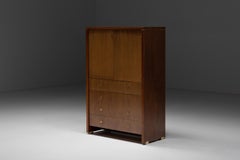
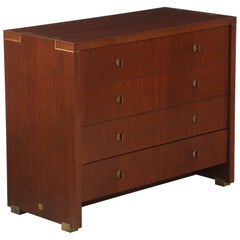
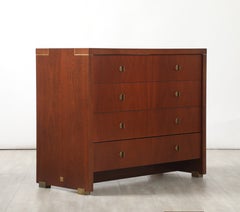
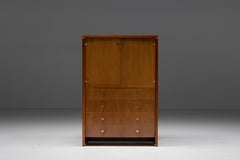
Walnut and Brass Cabinet by Pierre Balmain, France, 1980s

Walnut and Brass Cabinet by Pierre Balmain, France, 1980s

By Pierre Balmain

Located in Antwerp, BE

Pierre Balmain; Fashion designer; French Design; 1980s; France; Cabinet; Sideboard; Secretaire; Mid-Century Modern; Paris; Walnut; Brass; Pierre Balmain walnut cabinet, an original design crafted by French designer Pierre Balmain himself in the 1980s. Immerse yourself in the timeless elegance and exceptional craftsmanship that this stunning piece embodies. Meticulously constructed with a lustrous walnut veneer, this cabinet showcases the allure of natural wood grains, lending a touch of warmth and sophistication to any space. The use of premium materials ensures its durability and longevity, making it a valuable addition to your home. What sets this cabinet apart is its original mark and signature, an authentic testament to its prestigious lineage. Every detail has been carefully considered, including the brass lining that seamlessly incorporates the side panels with the top, exuding a harmonious blend of materials and textures. You'll find more remarkable designs from the Pierre Balmain collection...

Category

1980s French Mid-Century Modern Vintage Pierre Balmain Cabinets

Materials

Brass

Related Items
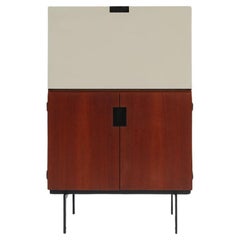
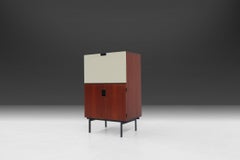
Iconic vintage dutch design CU07 Cabinet by Cees Braakman for Pastoe

Iconic vintage dutch design CU07 Cabinet by Cees Braakman for Pastoe

By Pastoe, Cees Braakman

Located in Meulebeke, BE

The Netherlands / CU07 cabinet / Pastoe / Cees Braakman / metal, teak / Vintage / Mid-century Highboard CU07 designed by the Dutch designer Cees Braakman in 1958 for Pastoe. This mo...

Category

1950s Dutch Mid-Century Modern Vintage Pierre Balmain Cabinets

Materials

Metal

Rene Drouet Attributed, Art Deco walnut  and Thuya Burr Cabinet

Rene Drouet Attributed, Art Deco walnut and Thuya Burr Cabinet

By René Drouet

Located in Saint-Ouen, FR

Rene Drouet attributed, Art Deco walnut and thuya burr cabinet. Ivory and interior in sycamore veneer. Secret drawers, original bronzes. Fully restored. F...

Category

1930s French Art Deco Vintage Pierre Balmain Cabinets

Materials

Bronze

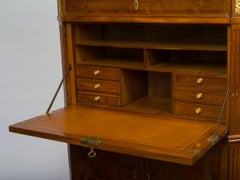
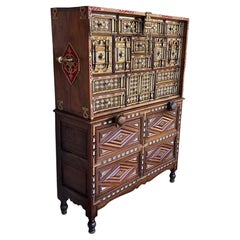
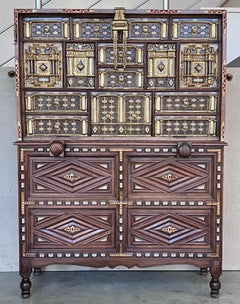
Austrian Baroque Secretary Cabinet in Walnut with Marquetry, ca. 1700–1730

Austrian Baroque Secretary Cabinet in Walnut with Marquetry, ca. 1700–1730

Located in Kastrup, DK

A highly impressive and architecturally refined Austrian Baroque secretary cabinet from the first half of the 18th century. Crafted to an exceptional standard, veneered with thick, h...

Category

18th Century Italian Baroque Antique Pierre Balmain Cabinets

Materials

Brass, Iron

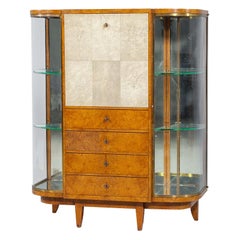
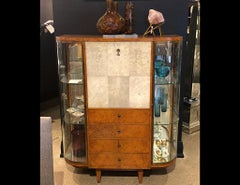
Art Deco Secretaire Cabinet by Jules Deroubaix

Art Deco Secretaire Cabinet by Jules Deroubaix

$16,800Sale Price|20% Off

H 51.25 in W 42 in D 18.5 in

Art Deco Secretaire Cabinet by Jules Deroubaix

By Jules Deroubaix

Located in North York, ON

This Jules Deroubaix display cabinet secretaire is timeless, functional, and effortlessly chic. Made of burl sandalwood, it showcases a drop door paneled wit...

Category

1930s French Art Deco Vintage Pierre Balmain Cabinets

Materials

Brass, Chrome

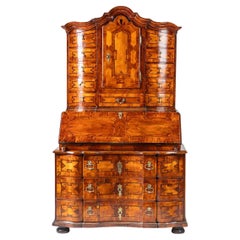
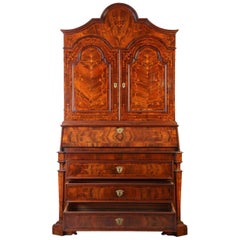
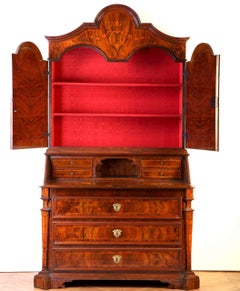
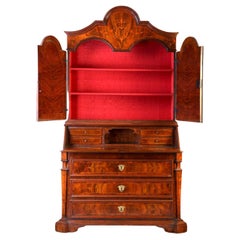
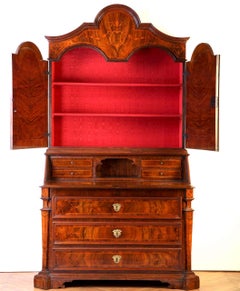
18th Century Italian Walnut Parquetry Important Bureau Cabinet Trumeaux

18th Century Italian Walnut Parquetry Important Bureau Cabinet Trumeaux

$44,736Sale Price|30% Off

H 94.49 in W 51.19 in D 22.05 in

18th Century Italian Walnut Parquetry Important Bureau Cabinet Trumeaux

Located in Rome, IT

An Italian walnut, parquetry bureau cabinet fruitwood inlaid with scrolling foliage, The upper section with a shaped carved cresting, a shaped doors opening to reveal three shelves, ...

Category

Early 18th Century Italian Baroque Antique Pierre Balmain Cabinets

Materials

Walnut

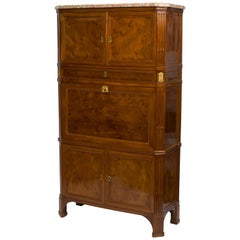
Louis XVI Ormolu-Mounted Mahogany Secrétaire en Cabinet by Jean-Francois Leleu

Louis XVI Ormolu-Mounted Mahogany Secrétaire en Cabinet by Jean-Francois Leleu

By Jean-François Leleu

Located in Kittery Point, ME

The later breccia marble top over two paneled doors opening to reveal shelves, above a drawer over a fall front with an interior fitted with drawers and compartments, and two further...

Category

Late 18th Century French Louis XVI Antique Pierre Balmain Cabinets

Materials

Marble

Italian Baroque Ebonized and Eglomise Bureau Cabinet

Italian Baroque Ebonized and Eglomise Bureau Cabinet

Located in Essex, MA

Slightly arched top that may have held a bust at some point, over a middle section with drawers with reverse painted panels with scenes of ancient towns and ruins with a central mirr...

Category

1690s Italian Baroque Antique Pierre Balmain Cabinets

Materials

Pine

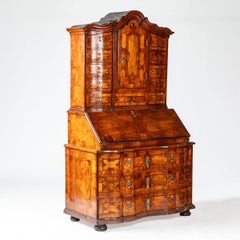
18th Century Italian Walnut Parquetry Important Bureau Cabinet Trumeaux

18th Century Italian Walnut Parquetry Important Bureau Cabinet Trumeaux

$51,116Sale Price|20% Off

H 94.49 in W 51.19 in D 22.05 in

18th Century Italian Walnut Parquetry Important Bureau Cabinet Trumeaux

Located in Rome, IT

An Italian walnut, parquetry bureau cabinet fruitwood inlaid with scrolling foliage, The upper section with a shaped carved cresting, a shaped doors opening to reveal three shelves,...

Category

Early 18th Century Italian Baroque Antique Pierre Balmain Cabinets

Materials

Wood

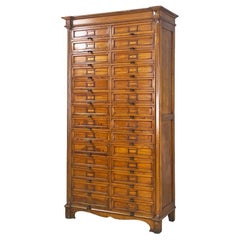
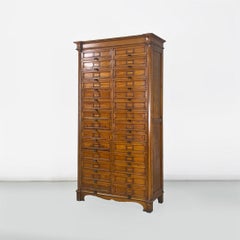
Italian modern walnut wood archive cabinet with brass details, 1940s

Italian modern walnut wood archive cabinet with brass details, 1940s

Located in MIlano, IT

Italian modern walnut wood archive cabinet with brass details, 1940s. Office filing cabinet in walnut wood with double column of drawers with brass details. 1940 ca. Good condition. ...

Category

1940s Italian Mid-Century Modern Vintage Pierre Balmain Cabinets

Materials

Brass

1980s Italian White Pickle Lacquer and Brass Cabinet

1980s Italian White Pickle Lacquer and Brass Cabinet

$3,231Sale Price|50% Off

H 29.53 in W 57.09 in D 19.3 in

1980s Italian White Pickle Lacquer and Brass Cabinet

Located in London, GB

An Italian cabinet 3 door cabinet designed with raised circles in white pickle lacquer and brass on all three sides. There is a single shelf in natural wo...

Category

1980s Italian Vintage Pierre Balmain Cabinets

Materials

Brass

Rare Golden Lacquer and Brass Maison Jansen Secretary Cabinet 1970s

Rare Golden Lacquer and Brass Maison Jansen Secretary Cabinet 1970s

By Maison Jansen

Located in Paris, IDF

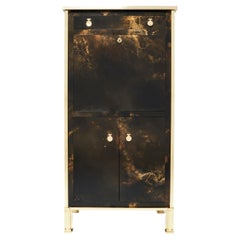
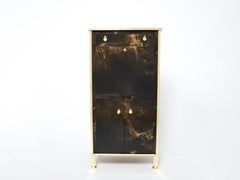
An exciting example of French design firm Maison Jansen’s commissioned pieces. This secretary cabinet is made from solid mahogany, lacquered in a rich dark brown and bronze–golden fi...

Category

1970s French Mid-Century Modern Vintage Pierre Balmain Cabinets

Materials

Brass

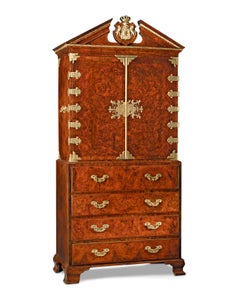
King George I Ambassadorial Secrétaire-Cabinet

King George I Ambassadorial Secrétaire-Cabinet

$348,500

H 89.75 in W 42.5 in D 21 in

King George I Ambassadorial Secrétaire-Cabinet

Located in New Orleans, LA

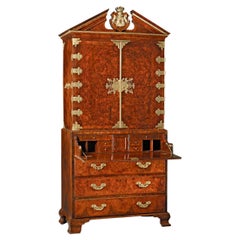
This highly important secrétaire-cabinet was crafted for and specially ordered by King George I for the British Ambassador to Russia. From its craftsmanship and materials to its exceptional artistry, it is a work of royal and historic significance that exudes power in each and every detail. The broken pediment at its apex features the simplified royal coat of arms bearing the king’s crown, while the interior is adorned by portraits of the British Royal Family. Placed within the ambassador’s St. Petersburg home, this entirely unique piece of furniture would have been a potent reminder of England's grandeur and political importance. Relations between England and Russia during this period were at an all-time high. Peter the Great had traveled to England in 1698 as part of his widely known “Grand Embassy” tour, wherein he attempted to gain foreign support against the Ottoman Empire. He spent a period of nearly four months there, meeting with King William III and his court on numerous occasions. Noted academic Arthur MacGregor wrote concerning the impact of the trip, “For two decades following Peter's visit, British influence in Russia reached a peak. It manifested itself in social custom, in craft practice and in ships and naval organization... it reached a significant sector of the population before relations cooled once again and the two nations pulled back from this era of unprecedented cordiality.” First and foremost, however, it is a reminder of British might and influence. By the reign of King George I, England had come into its own as a world power. Unique in its design, this cabinet is a reflection of the country’s might. It is crafted from the highest-quality solid walnut and burr walnut adorned by gilded lock plates and engraved hinges. The presence of ormolu at its apex and lining the doors was a rarity for this period, and its addition makes manifest the importance of the design. The outer doors open to reveal multiple interiors, including fifteen separate drawers around a central cupboard; the cupboard doors each bear mezzotint portraits of George I and his father, Ernest Augustus, Elector of Hanover. An etching after the portrait of George I dating to circa 1716 is in London’s Royal Academy. A second, inner pair of doors are adorned by mezzotints of the Prince and Princess of Wales (later Queen Caroline and George II), which are both after portraits by Sir Godfrey Kneller dated 1716 in the Royal Collection. A final portrait is revealed on the very interior of the cabinet, where a mezzotint of Frederick, Anne, Amelia and Caroline, children of the Prince of Wales, resides. An etching (circa 1715-1720) after this portrait can be found in the National Portrait Gallery (London). Apart from its abundance of royal portraiture, the cabinet features stunning painted decoration, including floral designs as well as clouds, birds and trees in a bucolic motif reminiscent of Eden. Its lower portion is a study in both form and function, featuring a fitted secrétaire-drawer above three additional drawers for storage. The cabinet appears in The Shorter Dictionary of English Furniture by R. Edwards from 1964, a text that is regarded as the bible of British furniture design. Edwards describes it as a “writing cabinet...given by George I to the British Ambassador at the Russian court.” The cabinet was likely made for the 18th-century German diplomat and writer Friedrich Christian Weber, who represented English interests at the Russian court from 1714 until 1719. Although Weber’s tenure as ambassador was relatively short, while in St. Petersburg, he authored his account entitled Das veraenderte Russland (The Present State of Russia), which was published in three volumes in 1721, 1739 and 1740. It may, however, also have been made for George Douglas, 2nd Earl of Dumbarton, who served as ambassador alongside Weber in 1716. Diplomatic relations ceased between the two countries in 1721. In 1928, the cabinet appeared for sale at the International Exhibition of Antiques & Works of Art in Olympia. It had previously been in the collection of the Woltner family of Bordeaux, the celebrated vintners who owned the estate Château Laville Haut-Brion and produced wine of the same name. According to the family, Monsieur Woltner was given the cabinet as a gift from an aunt who lived in Russia for many years. After leaving the Woltner collection, the cabinet was acquired by William Berry...

Category

18th Century English Georgian Antique Pierre Balmain Cabinets
Materials

Brass

Pierre Balmain cabinets for sale on 1stDibs.

Pierre Balmain cabinets are available for sale on 1stDibs. These distinctive items are frequently made of wood and are designed with extraordinary care. Many of the original cabinets by Pierre Balmain were created in the mid-century modern style in france during the 1980s. If you’re looking for additional options, many customers also consider cabinets by Guillerme et Chambron, Votre Maison, and Pierre Cardin. Prices for Pierre Balmain cabinets can differ depending upon size, time period and other attributes — on 1stDibs, these items begin at $5,150 and can go as high as $5,150, while a piece like these, on average, fetch $5,150.
Questions About Pierre Balmain Cabinets
  • 1stDibs ExpertMay 13, 2024
    Pierre Balmain was the founder of Balmain, an iconic haute couture house based in Paris, France. Under creative director Olivier Rousteing, the brand introduced an affordable diffusion line named for its founder in 2011. 

    In the postwar years, Balmain became known for bell-shaped skirts falling from slender waists, structured jackets over sheath day dresses and embellishments like fur trim. Pierre died in 1982, and the company is now owned by Mayhoola for Investments.

    From the dresses favored by Hollywood icons like Audrey Hepburn and Marlene Dietrich to the sleek, skinny jeans seen on Nicki Minaj, Kid Cudi and every Kardashian, clothes from the House of Balmain have long been mainstays in celebrity wardrobes. 

    Shop a collection of vintage Balmain from some of the world’s top sellers on 1stDibs.
  • 1stDibs ExpertApril 5, 2022
    Pierre Balmain was a French fashion designer most known for founding his fashion house Balmain. Balmain’s designs are described as sophisticated and elegant, and remain one of the most sought after garments in high-fashion. Find vintage and contemporary Balmain designs from some of the world’s top boutiques on 1stDibs.
  • 1stDibs ExpertFebruary 28, 2024
    Pierre Balmain jeans tend to run true to size. The brand provides a size chart/“fit predictor” on its official website. It is recommended that you make use of the size chart before you make your purchase on the site. Balmain was founded in 1945 by Pierre and is now known by the French designer’s surname. On 1stDibs, find a collection of vintage Pierre Balmain clothing.
  • 1stDibs ExpertMay 13, 2024
    Balmain is the name of a luxury brand founded by French couturier Pierre Balmain in 1945. Pierre Balmain is also the name of one of Balmain’s diffusion lines.

    Launched in 2011 under Balmain creative director Olivier Rousteing, the diffusion line was largely inclusive of apparel intended for casual wear and offered at affordable price points. It targeted a younger segment of buyers.

    Shop a collection of vintage Balmain on 1stDibs.
  • 1stDibs ExpertMarch 22, 2022
    To tell if a Pierre Balmain vintage bag is authentic, first check the hardware. Balmain often stamped the brand name onto zipper pulls and fasteners. The lettering should appear crisp and evenly spaced. Balmain's tags changed greatly over time. Compare the ones in your bag to images of authenticated pieces available online. Shop a range of expertly vetted Pierre Balmain bags on 1stDibs.
    1stDibs ExpertApril 5, 2022
    There are a few ways to tell if your vintage Pierre Balmain is real. Authentic Pierre Balmain bags are made with brand tags, authenticity labels and serial numbers. Always purchase Balmain jackets from a reputable seller to ensure authenticity. Shop a collection of authentic Pierre Balmain from some of the world’s top boutiques on 1stDibs.