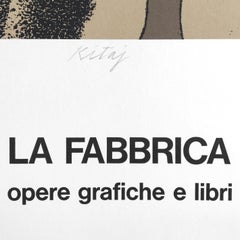
By Ronald Brooks Kitaj
Located in Surfside, FL
R.B. Kitaj (1932-2007)
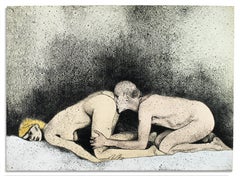
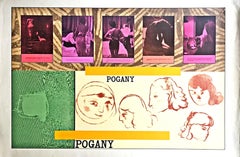
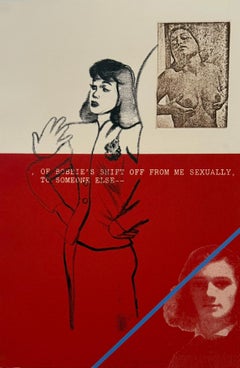
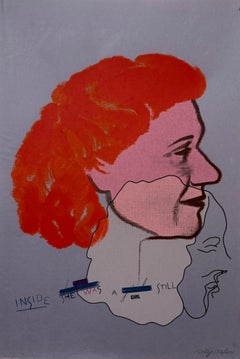
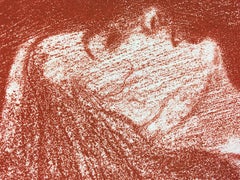
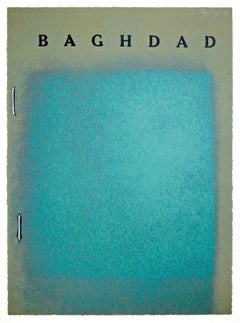
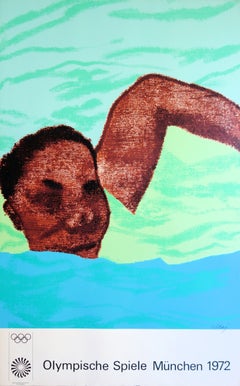
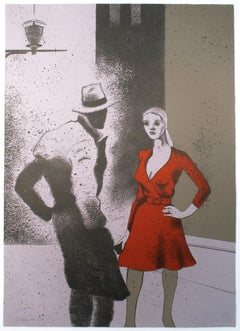
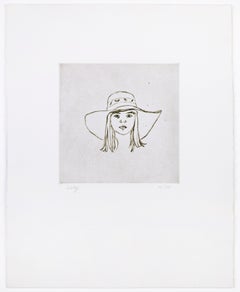
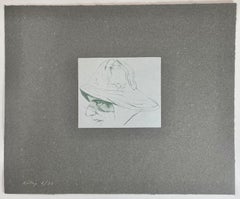
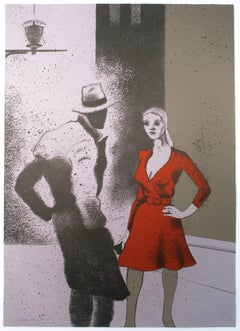
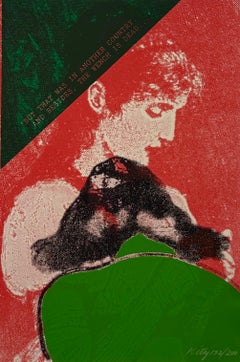
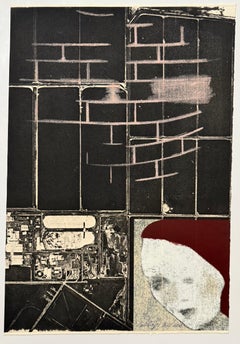
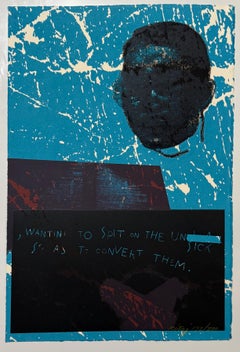
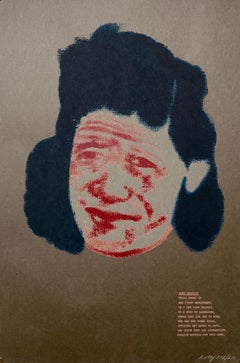
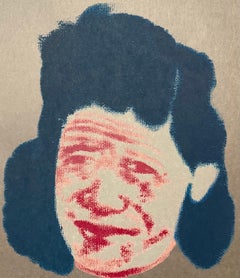
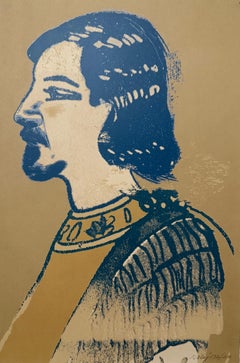
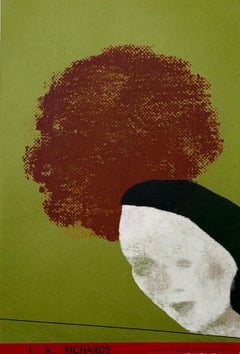
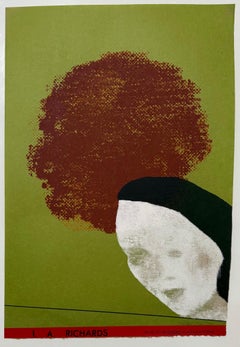
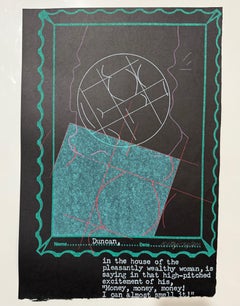
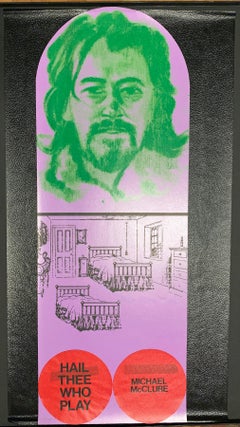
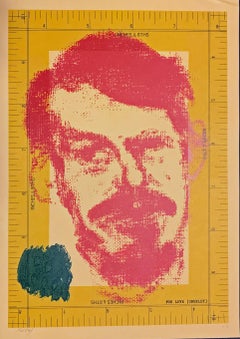
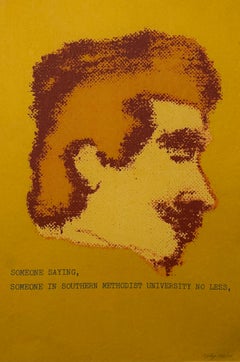
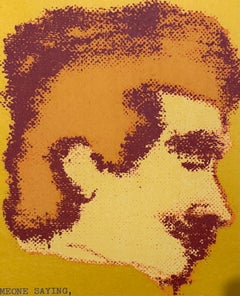
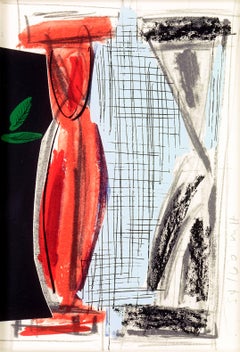
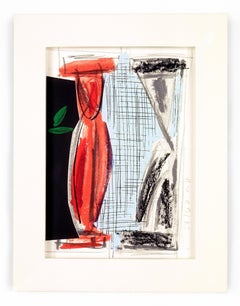
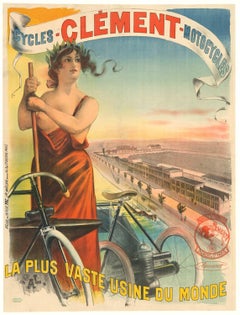
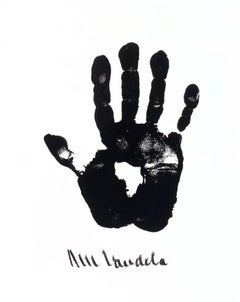
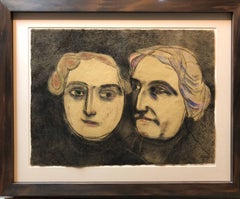
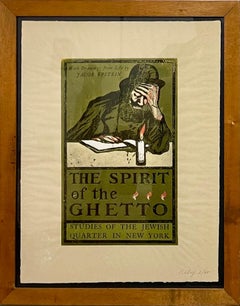
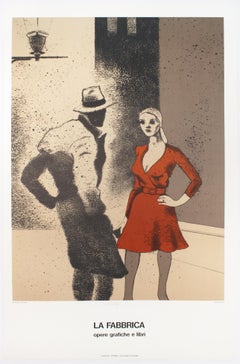
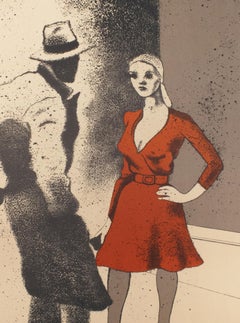
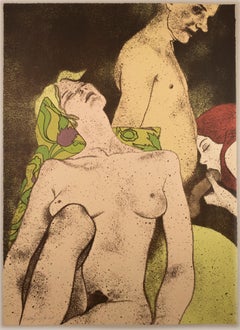
Spirit of the Ghetto
Original seven color silkscreen on paper
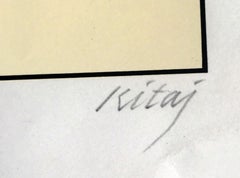
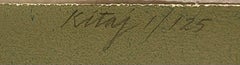
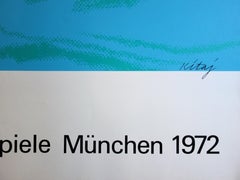
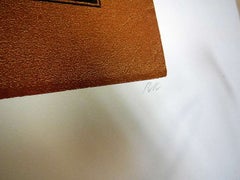
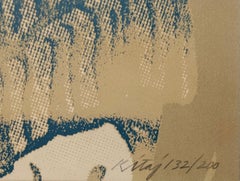
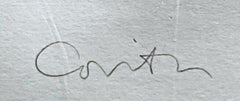
Signature: Hand signed by the artist in pencil lower right
Edition: From the small, limited edition of 25, pencil numbered lower right 2/25
Sight Size: 23-1/2" x 17-1/2" Frame Size: 27" x 21.5"
In Tate collection, London.
Ronald Brooks Kitaj RA 1932 – 2007 was an American artist with Jewish roots who spent much of his life in England. He became a merchant seaman with a Norwegian freighter when he was 17. He studied at the Akademie der bildenden Künste in Vienna and the Cooper Union in New York City. After serving in the United States Army for two years, in France and Germany, he moved to England to study at the Ruskin School of Drawing and Fine Art in Oxford (1958–59) under the G.I. Bill, where he developed a love of Cézanne, and then at the Royal College of Art in London (1959–61), alongside David Hockney, Derek Boshier, Peter Phillips, Allen Jones and Patrick Caulfield. Richard Wollheim, the philosopher and David Hockney remained lifelong friends.
"Through an earlier pre-occupation with turn-of-the-century intellectual life in Vienna (where he had started his art studies in the early 1950s), as well as an admiration for the Warburg Institute approach to the history of art-in-its-intellectual-context (since after Vienna he had moved to Oxford to study with the art historian Edgar Wind, before going on to the Royal College of Art) Kitaj has come to identify most strongly with the central European Jewish writer Franz Kafka, and with his sense of estrangement and of hidden mysteries. Illustrations to Kafka's aphorisms, imaginary portraits of his fiancée Felice and Count West-West who owned The Castle, appear in the Little Pictures, as do rapidly sketched portraits of Karl Kraus, Paul Celan, Leon Trotsky and Ludwig Wittgenstein, representations of Judeo-Christian mysteries of the hidden face of God.
Kitaj settled in England, and through the 1960s taught at the Ealing Art College, the Camberwell School of Art and the Slade School of Art. He also taught at the University of California, Berkeley in 1968. He staged his first solo exhibition at Marlborough New London Gallery in London in 1963, entitled "Pictures with commentary, Pictures without commentary", in which text included in the pictures and the accompanying catalogue referred to a range of literature and history, citing Aby Warburg's analysis of symbolic forms as a major influence.
He curated an exhibition for the Arts Council at the Hayward Gallery in 1976, entitled "The Human Clay" (an allusion to a line by W. H. Auden), including works by 48 London artists, such as William Roberts, Richard Carline, Colin Self and Maggi Hambling, championing the cause of figurative art at a time when abstract was dominant. In an essay in the controversial catalogue, he invented the phrase the School of London to describe painters such as Frank Auerbach, Leon Kossoff, Francis Bacon, Lucian Freud, Euan Uglow, Michael...
Category
1970s Pop Art Ronald Brooks Kitaj Art