Samuel M. Adler Art

to
11
11
11
11
original lithograph

original lithograph

By Samuel M. Adler

Located in Henderson, NV

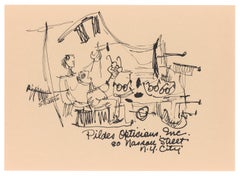
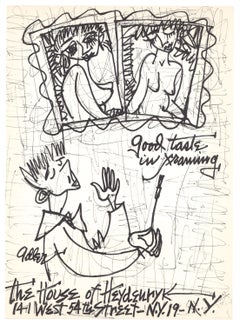
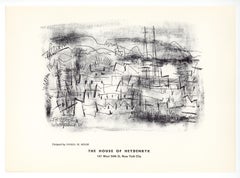
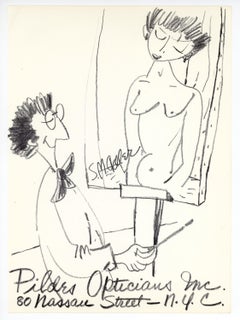
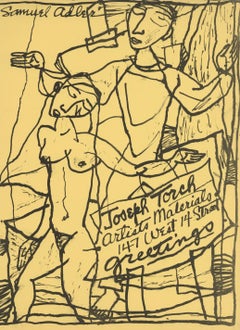
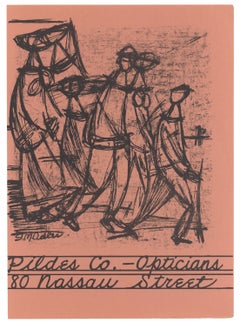
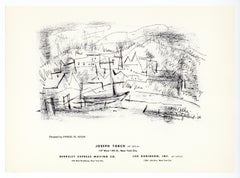
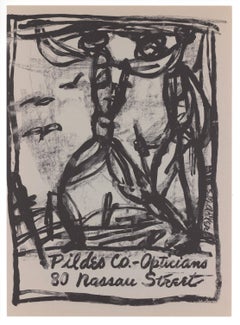
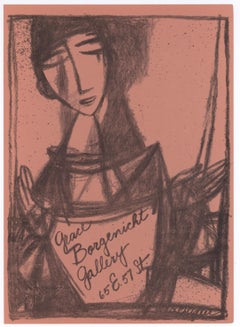
Medium: original lithograph. This lithograph was printed in 1958 for the "Improvisations" portfolio, published by the Artists Equity Association of New York on the occasion of the 19...

Category

1950s Samuel M. Adler Art

Materials

Lithograph

original lithograph

original lithograph

By Samuel M. Adler

Located in Henderson, NV

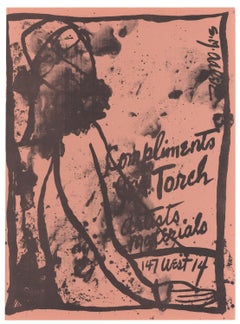
Medium: original lithograph. This lithograph was printed in 1956 for the "Improvisations" portfolio, published by the Artists Equity Association of New York on the occasion of the 19...

Category

1950s Samuel M. Adler Art

Materials

Lithograph

original lithograph

original lithograph

By Samuel M. Adler

Located in Henderson, NV

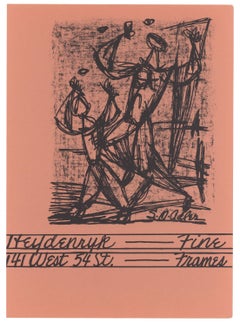
Medium: original lithograph. This lithograph was printed in 1955 for the "Improvisations" portfolio, and published by the Artists Equity Association of New York in an edition of 2000...

Category

1950s Samuel M. Adler Art

Materials

Lithograph

original lithograph

original lithograph

By Samuel M. Adler

Located in Henderson, NV

Medium: original lithograph. This lithograph is from the rare 1957 "Improvisations" portfolio, published by the Artists Equity Association of New York on the occasion of the 1957 Spr...

Category

1950s Samuel M. Adler Art

Materials

Lithograph

original lithograph

original lithograph

By Samuel M. Adler

Located in Henderson, NV

Medium: original lithograph. This lithograph is from the rare 1951 "Improvisations" portfolio, published by the Artists Equity Association of New York on the occasion of the 1951 Spr...

Category

1950s Samuel M. Adler Art

Materials

Lithograph

original lithograph

original lithograph

By Samuel M. Adler

Located in Henderson, NV

Medium: original lithograph. This lithograph is from the rare 1953 "Improvisations" portfolio, published by the Artists Equity Association of New York on the occasion of the 1953 Spr...

Category

1950s Samuel M. Adler Art

Materials

Lithograph

original lithograph

original lithograph

By Samuel M. Adler

Located in Henderson, NV

Medium: original lithograph. This lithograph was printed in 1955 for the "Improvisations" portfolio, and published by the Artists Equity Association of New York in an edition of 2000...

Category

1950s Samuel M. Adler Art

Materials

Lithograph

original lithograph

original lithograph

By Samuel M. Adler

Located in Henderson, NV

Medium: original lithograph. This lithograph is from the rare 1954 "Improvisations" portfolio, published by the Artists Equity Association of New York on the occasion of the 1954 Spr...

Category

1950s Samuel M. Adler Art

Materials

Lithograph

original lithograph

original lithograph

By Samuel M. Adler

Located in Henderson, NV

Medium: original lithograph. This lithograph is from the rare 1952 "Improvisations" portfolio, published by the Artists Equity Association of New York on the occasion of the 1952 Spr...

Category

1950s Samuel M. Adler Art

Materials

Lithograph

original lithograph

original lithograph

By Samuel M. Adler

Located in Henderson, NV

Medium: original lithograph. This lithograph is from the rare 1950 "Improvisations" portfolio, published by the Artists Equity Association of New York on the occasion of the 1950 Spr...

Category

1950s Samuel M. Adler Art

Materials

Lithograph

original lithograph

original lithograph

By Samuel M. Adler

Located in Henderson, NV

Medium: original lithograph. This lithograph is from the rare 1953 "Improvisations" portfolio, published by the Artists Equity Association of New York on...

Category

1950s Samuel M. Adler Art

Materials

Lithograph

Related Items
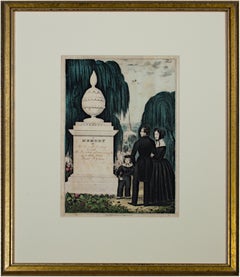
19th century color lithograph figures cemetery willow tree memorial headstone

19th century color lithograph figures cemetery willow tree memorial headstone

By Nathaniel Currier

Located in Milwaukee, WI

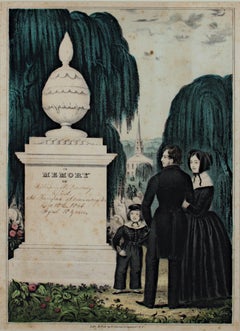
The present hand-colored lithograph was produced as part of the funeral and mourning culture in the United States during the 19th century. Images like this were popular as ways of remembering loved ones, an alternative to portraiture of the deceased. This lithograph shows a man, woman and child in morning clothes next to an urn-topped stone monument. Behind are additional putto-topped headstones beneath weeping willows, with a steepled church beyond. The monument contains a space where a family could inscribe the name and death dates of a deceased loved one. In this case, it has been inscribed to a young Civil War soldier: William W. Peabody Died at Fairfax Seminary, VA December 18th, 1864 Aged 18 years The young Mr. Peabody probably died in service for the Union during the American Civil War. Farifax Seminary was a Union hospital and military headquarters in Alexandria, Virginia. The hospital served nearly two thousand soldiers during the war time. Five hundred were also buried on the Seminary's grounds. 13.75 x 9.5 inches, artwork 23 x 19 inches, frame Published before 1864 Inscribed bottom center "Lith. & Pub. by N. Currier. 2 Spruce St. N.Y." Framed to conservation standards using 100 percent rag matting and TruVue Conservation Clear glass, housed in a gold gilded moulding. Nathaniel Currier was a tall introspective man with a melancholy nature. He could captivate people with his piercing stare or charm them with his sparkling blue eyes. Nathaniel was born in Roxbury, Massachusetts on March 27th, 1813, the second of four children. His parents, Nathaniel and Hannah Currier, were distant cousins who lived a humble yet spartan life. When Nathaniel was eight years old, tragedy struck. Nathaniel’s father unexpectedly passed away leaving Nathaniel and his eleven-year-old brother Lorenzo to provide for the family. In addition to their mother, Nathaniel and Lorenzo had to care for six-year-old sister Elizabeth and two-year-old brother Charles. Nathaniel worked a series of odd jobs to support the family, and at fifteen, he started what would become a life-long career when he apprenticed in the Boston lithography shop of William and John Pendleton. A Bavarian gentleman named Alois Senefelder invented lithography just 30 years prior to young Nat Currier’s apprenticeship. While under the employ of the brothers Pendleton, Nat was taught the art of lithography by the firm’s chief printer, a French national named Dubois, who brought the lithography trade to America. Lithography involves grinding a piece of limestone flat and smooth then drawing in mirror image on the stone with a special grease pencil. After the image is completed, the stone is etched with a solution of aqua fortis leaving the greased areas in slight relief. Water is then used to wet the stone and greased-ink is rolled onto the raised areas. Since grease and water do not mix, the greased-ink is repelled by the moisture on the stone and clings to the original grease pencil lines. The stone is then placed in a press and used as a printing block to impart black on white images to paper. In 1833, now twenty-years old and an accomplished lithographer, Nat Currier left Boston and moved to Philadelphia to do contract work for M.E.D. Brown, a noted engraver and printer. With the promise of good money, Currier hired on to help Brown prepare lithographic stones of scientific images for the American Journal of Sciences and Arts. When Nat completed the contract work in 1834, he traveled to New York City to work once again for his mentor John Pendleton, who was now operating his own shop located at 137 Broadway. Soon after the reunion, Pendleton expressed an interest in returning to Boston and offered to sell his print shop to Currier. Young Nat did not have the financial resources to buy the shop, but being the resourceful type he found another local printer by the name of Stodart. Together they bought Pendleton’s business. The firm ‘Currier & Stodart’ specialized in "job" printing. They produced many different types of printed items, most notably music manuscripts for local publishers. By 1835, Stodart was frustrated that the business was not making enough money and he ended the partnership, taking his investment with him. With little more than some lithographic stones, and a talent for his trade, twenty-two year old Nat Currier set up shop in a temporary office at 1 Wall Street in New York City. He named his new enterprise ‘N. Currier, Lithographer’ Nathaniel continued as a job printer and duplicated everything from music sheets to architectural plans. He experimented with portraits, disaster scenes and memorial prints, and any thing that he could sell to the public from tables in front of his shop. During 1835 he produced a disaster print Ruins of the Planter's Hotel, New Orleans, which fell at two O’clock on the Morning of the 15th of May 1835, burying 50 persons, 40 of whom Escaped with their Lives. The public had a thirst for newsworthy events, and newspapers of the day did not include pictures. By producing this print, Nat gave the public a new way to “see” the news. The print sold reasonably well, an important fact that was not lost on Currier. Nat met and married Eliza Farnsworth in 1840. He also produced a print that same year titled Awful Conflagration of the Steamboat Lexington in Long Island Sound on Monday Evening, January 18, 1840, by which melancholy occurrence over One Hundred Persons Perished. This print sold out very quickly, and Currier was approached by an enterprising publication who contracted him to print a single sheet addition of their paper, the New York Sun. This single page paper is presumed to be the first illustrated newspaper ever published. The success of the Lexington print launched his career nationally and put him in a position to finally lift his family up. In 1841, Nat and Eliza had their first child, a son they named Edward West Currier. That same year Nat hired his twenty-one year old brother Charles and taught him the lithography trade, he also hired his artistically inclined brother Lorenzo to travel out west and make sketches of the new frontier as material for future prints. Charles worked for the firm on and off over the years, and invented a new type of lithographic crayon which he patented and named the Crayola. Lorenzo continued selling sketches to Nat for the next few years. In 1843, Nat and Eliza had a daughter, Eliza West Currier, but tragedy struck in early 1847 when their young daughter died from a prolonged illness. Nat and Eliza were grief stricken, and Eliza, driven by despair, gave up on life and passed away just four months after her daughter’s death. The subject of Nat Currier’s artwork changed following the death of his wife and daughter, and he produced many memorial prints and sentimental prints during the late 1840s. The memorial prints generally depicted grief stricken families posed by gravestones (the stones were left blank so the purchasers could fill in the names of the dearly departed). The sentimental prints usually depicted idealized portraits of women and children, titled with popular Christian names of the day. Late in 1847, Nat Currier married Lura Ormsbee, a friend of the family. Lura was a self-sufficient woman, and she immediately set out to help Nat raise six-year-old Edward and get their house in order. In 1849, Lura delivered a son, Walter Black Currier, but fate dealt them a blow when young Walter died one year later. While Nat and Lura were grieving the loss of their new son, word came from San Francisco that Nat’s brother Lorenzo had also passed away from a brief illness. Nat sank deeper into his natural quiet melancholy. Friends stopped by to console the couple, and Lura began to set an extra place at their table for these unexpected guests. She continued this tradition throughout their lives. In 1852, Charles introduced a friend, James Merritt Ives, to Nat and suggested he hire him as a bookkeeper. Jim Ives was a native New Yorker born in 1824 and raised on the grounds of Bellevue Hospital where his father was employed as superintendent. Jim was a self-trained artist and professional bookkeeper. He was also a plump and jovial man, presenting the exact opposite image of his new boss. Jim Ives met Charles Currier through Caroline Clark, the object of Jim’s affection. Caroline’s sister Elizabeth was married to Charles, and Caroline was a close friend of the Currier family. Jim eventually proposed marriage to Caroline and solicited an introduction to Nat Currier, through Charles, in hopes of securing a more stable income to support his future wife. Ives quickly set out to improve and modernize his new employer’s bookkeeping methods. He reorganized the firm’s sizable inventory, and used his artistic skills to streamline the firm’s production methods. By 1857, Nathaniel had become so dependent on Jims’ skills and initiative that he offered him a full partnership in the firm and appointed him general manager. The two men chose the name ‘Currier & Ives’ for the new partnership, and became close friends. Currier & Ives produced their prints in a building at 33 Spruce Street where they occupied the third, fourth and fifth floors. The third floor was devoted to the hand operated printing presses that were built by Nat's cousin, Cyrus Currier, at his shop Cyrus Currier & Sons in Newark, NJ. The fourth floor found the artists, lithographers and the stone grinders at work. The fifth floor housed the coloring department, and was one of the earliest production lines in the country. The colorists were generally immigrant girls, mostly German, who came to America with some formal artistic training. Each colorist was responsible for adding a single color to a print. As a colorist finished applying their color, the print was passed down the line to the next colorist to add their color. The colorists worked from a master print displayed above their table, which showed where the proper colors were to be placed. At the end of the table was a touch up artist who checked the prints for quality, touching-in areas that may have been missed as it passed down the line. During the Civil War, demand for prints became so great that coloring stencils were developed to speed up production. Although most Currier & Ives prints were colored in house, some were sent out to contract artists. The rate Currier & Ives paid these artists for coloring work was one dollar per one hundred small folios (a penny a print) and one dollar per one dozen large folios. Currier & Ives also offered uncolored prints to dealers, with instructions (included on the price list) on how to 'prepare the prints for coloring.' In addition, schools could order uncolored prints from the firm’s catalogue to use in their painting classes. Nathaniel Currier and James Merritt Ives attracted a wide circle of friends during their years in business. Some of their more famous acquaintances included Horace Greeley, Phineas T. Barnum, and the outspoken abolitionists Rev. Henry Ward, and John Greenleaf Whittier (the latter being a cousin of Mr. Currier). Nat Currier and Jim Ives described their business as "Publishers of Cheap and Popular Pictures" and produced many categories of prints. These included Disaster Scenes, Sentimental Images, Sports, Humor, Hunting Scenes, Politics, Religion, City and Rural Scenes, Trains, Ships, Fire Fighters, Famous Race Horses, Historical Portraits, and just about any other topic that satisfied the general public's taste. In all, the firm produced in excess of 7500 different titles, totaling over one million prints produced from 1835 to 1907. Nat Currier retired in 1880, and signed over his share of the firm to his son Edward. Nat died eight years later at his summer home 'Lion’s Gate' in Amesbury, Massachusetts. Jim Ives remained active in the firm until his death in 1895, when his share of the firm passed to his eldest son, Chauncey. In 1902, faced will failing health from the ravages of Tuberculosis, Edward Currier sold his share of the firm to Chauncey Ives...

Category

Mid-19th Century Romantic Samuel M. Adler Art

Materials

Watercolor, Lithograph
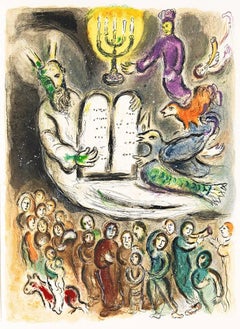
Marc Chagall 'Moses Shows the Elders the Tablets of the Law, 1966'

Marc Chagall 'Moses Shows the Elders the Tablets of the Law, 1966'

By Marc Chagall

Located in Pembroke Pines, FL

Artist: MARC CHAGALL Title: Moses Shows the Elders the Tablets of the Law (FROM STORY OF THE EXODUS) Medium: Lithograph on arches paper Image Size: 18.50x13.50 inches paper size: 20 ...

Category

1960s Modern Samuel M. Adler Art

Materials

Lithograph

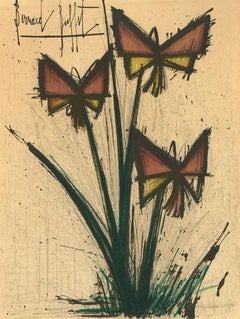
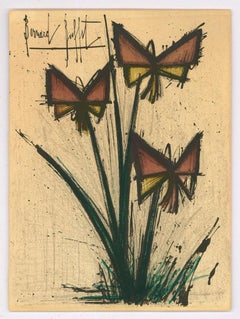
Bernard Buffet - Signed Mid 20th Century Lithograph, Pensees

Bernard Buffet - Signed Mid 20th Century Lithograph, Pensees

Located in Corsham, GB

A coloured lithograph of Buffet's famous work titled 'Pensees'. The piece depicts three pansies in black, red and yellow. The artist signature has been printed in the upper left corn...

Category

Mid-20th Century Samuel M. Adler Art

Materials

Lithograph

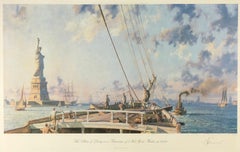
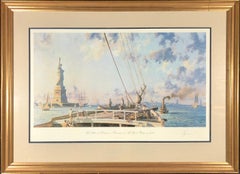
The Statue of Liberty in a Panorama of New York City in 1886

The Statue of Liberty in a Panorama of New York City in 1886

By John Stobart

Located in Missouri, MO

John Stobart "The Statue of Liberty in a Panorama of New York City in 1886" Color Lithograph approx 32 x 43 inches framed Signed in Pencil and Numbered 914/950 A marine painter of ...

Category

1970s American Realist Samuel M. Adler Art

Materials

Lithograph

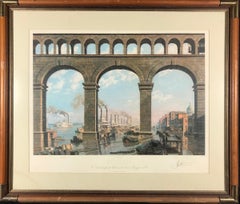
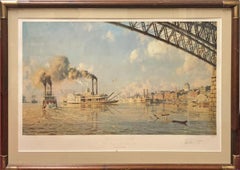
A View of St. Louis
A View of St. Louis

John StobartA View of St. Louis, 1979

$1,250

H 32.5 in W 37.5 in D 1 in

A View of St. Louis

By John Stobart

Located in Missouri, MO

John Stobart "St. Louis, A View Through the Arches of the Eads Bridge" 1979 Color Lithograph 32.5 x 37.5 inches framed Signed in Pencil and Numbered 221/75...

Category

1970s American Realist Samuel M. Adler Art

Materials

Lithograph

St. Louis, Gateway to the West

John StobartSt. Louis, Gateway to the West

$1,450

H 30 in W 42 in D 1 in

St. Louis, Gateway to the West

By John Stobart

Located in Missouri, MO

John Stobart "St. Louis, Gateway to the West" Color Lithograph 30 x 42 inches framed Signed in Pencil and Numbered 434/750

Category

1970s American Realist Samuel M. Adler Art

Materials

Lithograph

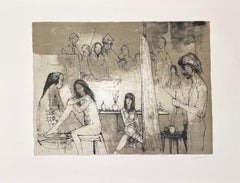
Peintre dans son atelier, 1969, original lithograph by Jean Jansem, handsigned

Peintre dans son atelier, 1969, original lithograph by Jean Jansem, handsigned

By Jean Jansem

Located in Les Acacias GE, GE

Jean Jansem (1920-2013) Peintre dans son atelier, 1969 Lithographie sur papier Rives Signée en bas à droite et justifiée en bas à gauche 39 x 52 cm / 56 x 76 cm D'une édition à 120 exemplaires Bibliographie: Jansem Lithographe, 1954-1983, de Francony Editeur, Nice, 1984, n. 211, reproduit p. 53, référencé p. 231. "Ma première lithographie date de 1954. Elle représente un enfant en haillons portant deux seaux d'eau, d'après un croquis rapporté de Cordoue lors de mon voyage en Espagne en 1952. Je l'exécutai sur pierre, au pinceau et à l'encre lithographique. Je fus déçu du résultat et n'en tirai qu'un essai et une épreuve. Quatre ans plus tard, je réalisai une dizaine de nouvelles lithographies, toujours sur pierre, la plupart en noir. Au lieu d'employer l'encre et le crayon...

Category

Late 20th Century Expressionist Samuel M. Adler Art

Materials

Lithograph

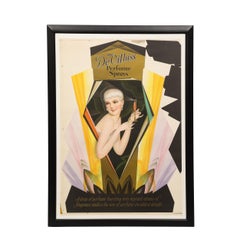
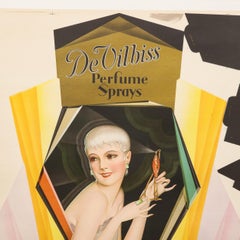
DeVilbiss Purfume Art Deco Poster by George Petty for the A.C. Schultz Company

DeVilbiss Purfume Art Deco Poster by George Petty for the A.C. Schultz Company

Located in New York, NY

This beautiful Art Deco poster was realized by the esteemed American Artist George Petty for the A.C. Schultz Company in 1926. The work is an advertisement for DeVilbiss Perfume, which depicts a "Petty Girl" (as they came to be known) in the center of the composition floating in a pentagonal black color block. With short cropped silvery white hair and red lipstick, the female figure in center (suggestive of a stylized flapper) squeezes the atomizer of her perfume bottle misting herself in fragrance. Skyscraper style geometric forms suggesting elaborately faceted gemstones- in hues of rose, lavender, orange sapphire and yellow diamond- explode around her, suggesting the stage design for the set of the iconic film "Metropolis". The top of the composition features a bronze color block reading "DeVilbiss Perfume sprays" and in scrolling Deco lettering text reads “A drop of perfume bursting into myriad atoms of fragrance makes the use of perfume an added delight” near the bottom of the piece. Additionally, there is a solid black color block with crystalline black forms emanating outwards at the base of the composition, as well as a geometric abstract form on the right side of the piece imbuing it with a distinctly modernist inflection. With its quintessentially Art Deco sensibility, this piece is sure to delight discerning collectors of the period as well as those with a distinct appreciation for unusual (and stunning) fine art pieces. its vibrant palate and clean modernist lines make this piece a winning addition to any style of interior from classic Deco to contemporary. The piece comes presented in a custom gallery frame and is in excellent vintage condition. George Petty was an American illustrator known for his series of pin-ups known as "Petty Girls" which he created for Esquire magazine. The Petty Girl were coquettish women whose legs were elongated to create idealized female forms. They were featured on magazine centerfolds, billboards, and calendars for companies such as Ridgid Tools. Born George Brown Petty IV on April 27, 1894 in Abbeville, LA, Petty received his formal training at the School of the Art Institute of Chicago under Ruth Van Sickle Ford...

Category

1920s Art Deco Samuel M. Adler Art

Materials

Lithograph

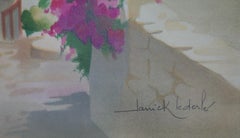
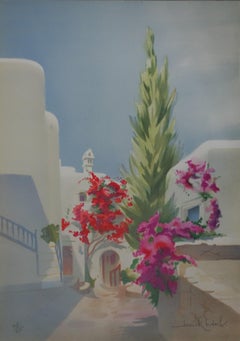
Little Street in Santorini - Original handsigned lithograph

Little Street in Santorini - Original handsigned lithograph

By Janick Lederle

Located in Paris, IDF

Janick LEDERLE Little Street in Santorini Original lithograph (Mourlot) Handsigned in pencil Limited /275 copies On vellum 55 x 39 cm (c. 21.6 x 15,3 in) Excellent condition

Category

Late 20th Century Modern Samuel M. Adler Art

Materials

Lithograph

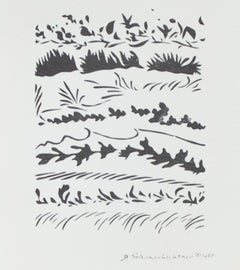
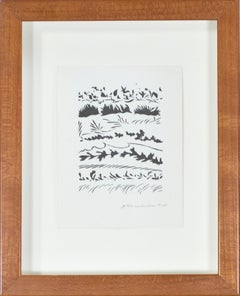
'Winter Silhouettes, ' offset lithograph by Schomer Lichtner

'Winter Silhouettes, ' offset lithograph by Schomer Lichtner

By Schomer Lichtner

Located in Milwaukee, WI

'Winter Silhouettes,' a small and delicate print, is an original offset lithograph by the Milwaukee artist Schomer Lichtner. The composition displays registers of foliage, emerging from the white of the paper as though emerging from the snow-covered ground. The artwork is thus plays with the materials of printmaking; the paper is both the support and the primary indication of the season. The subtle texture of the tooth of the paper also adds life to the image, giving the snow a wind-swept, creature trodden surface. The free forms of the grasses and leaves resemble the lyrical mid-century works of the French artist Henri Matisse, which combined with these material concerns demonstrate Lichter's modern sensibilities. 3.75 x 2.75 inches, image 5.5 x 4.5 inches, paper 10 x 8 inches frame Signed and dated in the stone, lower right Framed to conservation standards in a shadow-box style mounting, using 100 percent rag matting, museum glass, and housed in a cherry wood moulding Overall excellent condition; some toning to edges of paper; some minor abrasions to frame Milwaukee artist Schomer Lichtner was well known for his whimsical cows and ballerinas and abstract imagery. He and his late wife Ruth Grotenrath, both well-known Wisconsin artists, began their prolific careers as muralists for WPA projects, primarily post offices. Lichtner also painted murals for industry and private clients. Schomer was a printmaker and produced block prints, lithographs, and serigraph prints. His casein (paint made from dairy products) and acrylic paintings are of the rural Wisconsin landscape and farm animals. He became interested in cows when he and Ruth spent summers near Holy Hill in Washington County. According to David Gordon, director of the Milwaukee Art Museum, Schomer Lichtner had a tremendous joie de vivre and expressed it in his art. Schomer Lichtner was nationally known for his whimsical paintings and sculptures of black- and white-patterned Holstein cows and elegant ballerina dancers. Lichtner also painted all sorts of combinations of beautiful women, flowers and country landscapes. James Auer, former Milwaukee Journal Sentinel art critic, said that his art eventually "exploded into expressionistic design elements with bold, flat areas of color and high energy that anticipated Pop Art." Auer went on to describe Lichtner’s work as full of "wit, vigor and virtuosity." As early as 1930, Lichtner’s work was shown at the prestigious Carnegie International Exhibition in New York and at museums throughout the Midwest. As a student, he was a protégé of another icon of 20th century American art, Gustave Moeller. Lichtner and his wife, Ruth Grotenrath (1912-1988), are celebrated as Milwaukee’s first couple of painting and are regarded as major Wisconsin artists. Lichtner’s impressive production, perseverance, longevity, and positive approach to his life and art made him and his work distinctive and much loved by his many admirers. His work is currently represented in collections at the Milwaukee Art Museum, the John Michael Kohler Art Center, the West Bend Museum, and in the collections of many individuals. Books on the lives and art work of both Lichtner and Grotenrath are in progress and it is anticipated that they will be published next year. Schomer Lichtner passed away on May 9, 2006 at the age of 101. He continued to amaze and create with his whimsical paintings of ballerinas...

Category

1960s American Modern Samuel M. Adler Art

Materials

Black and White, Lithograph
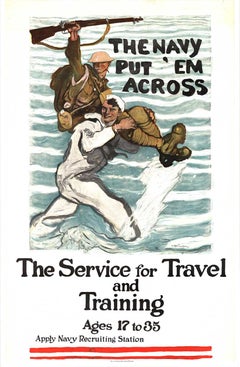
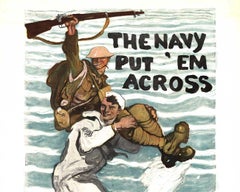
Original The Navy Put 'em Across, Vintage Recruiting Poster, U.S. Navy, linen

Original The Navy Put 'em Across, Vintage Recruiting Poster, U.S. Navy, linen

Located in Spokane, WA

Original "The Navy Put 'Em Across": Vintage WWI Recruitment Poster by Henry Reuterdahl, 1918. Linen-backed. An extraordinarily scarce and historically rich piece of American propag...

Category

1910s American Modern Samuel M. Adler Art

Materials

Lithograph
Previously Available Items
"Untitled"
"Untitled"

Samuel M. Adler"Untitled", 1969

Sold

H 18 in W 12.5 in D 6.25 in

"Untitled"

By Samuel M. Adler

Located in Southampton, NY

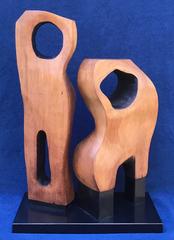
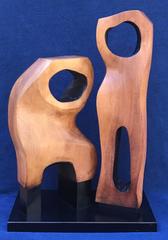
Wooden figural sculpture by the American artist, Samuel M. Adler. Signed twice on original lucite base and dated 1969. Condition: Excellent. ...

Category

1960s American Modern Samuel M. Adler Art

Materials

Wood

Samuel M. Adler art for sale on 1stDibs.

Find a wide variety of authentic Samuel M. Adler art available for sale on 1stDibs. If you’re browsing the collection of art to introduce a pop of color in a neutral corner of your living room or bedroom, you can find work that includes elements of orange and other colors. You can also browse by medium to find art by Samuel M. Adler in lithograph and more. Not every interior allows for large Samuel M. Adler art, so small editions measuring 9 inches across are available. Customers who are interested in this artist might also find the work of Stephen Ronay, Arthur Osver, and Georges Schreiber. Samuel M. Adler art prices can differ depending upon medium, time period and other attributes. On 1stDibs, the price for these items starts at $50 and tops out at $50, while the average work can sell for $50.
Artists Similar to Samuel M. Adler