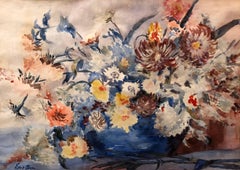
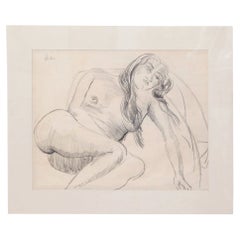
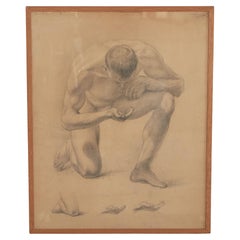
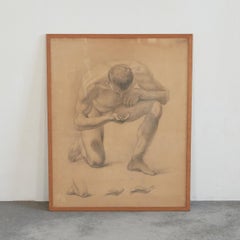
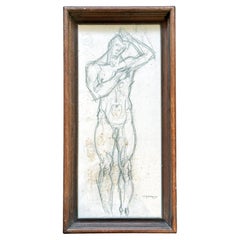
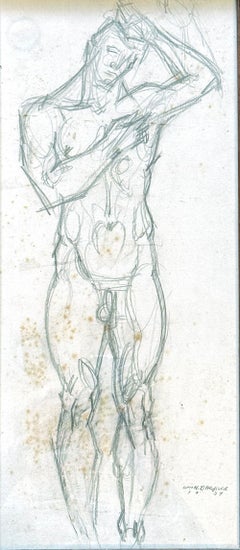
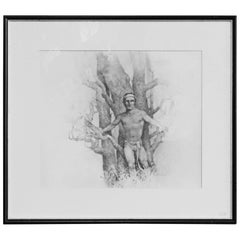
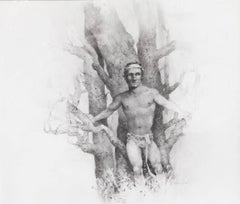
By Sir Jacob Epstein
Located in Surfside, FL
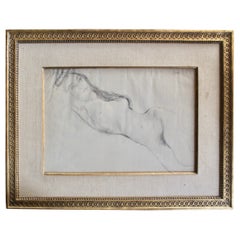
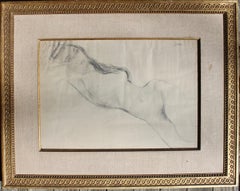
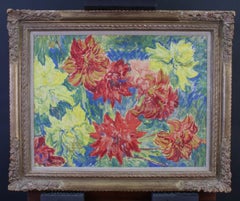
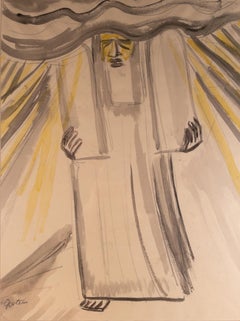
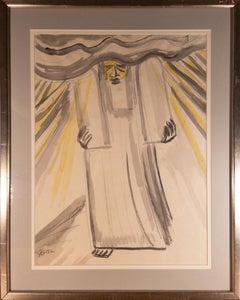
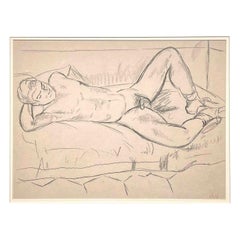
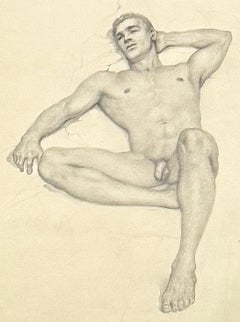
Sir Jacob Epstein KBE (10 November 1880 – 19 August 1959) was an American British sculptor who helped pioneer modern sculpture. He was born in the United States, and moved to Europe in 1902, becoming a British subject in 1911. He often produced controversial works which challenged ideas on what was appropriate subject matter for public artworks. He also made paintings and drawings, and often exhibited his work.
Epstein's parents were Polish Jewish refugees, living on New York's Lower East Side. He studied art in his native New York as a teenager, sketching the city, and joined the Art Students League of New York in 1900. For his livelihood, he worked in a bronze foundry by day, studying drawing and sculptural modelling at night. Epstein's first major commission was to illustrate Hutchins Hapgood's 1902 book Spirit of the Ghetto. Epstein used the money from the commission to move to Paris.
Moving to Europe in 1902, he studied in Paris at the Académie Julian and the École des Beaux-Arts. He settled in London in 1905 and married Margaret Dunlop in 1906. Epstein became a British subject on 4 January 1911. Many of Epstein's works were sculpted at his two cottages in Loughton, Essex, where he lived first at number 49 then 50, Baldwin's Hill (there is a blue plaque on number 50). He served briefly in the 38th Battalion of the Royal Fusiliers, known as the Jewish Legion during World War I; following a breakdown, he was discharged in 1918 without having left England.
In London, Epstein involved himself with a bohemian and artistic crowd. Revolting against ornate, pretty art, he made bold, often harsh and massive forms of bronze or stone. His sculpture is distinguished by its vigorous rough-hewn realism. Avant-garde in concept and style, his works often shocked his audience. This was not only a result of their (often explicit) sexual content, but also because they deliberately abandoned the conventions of classical Greek sculpture favoured by European Academic sculptors to experiment instead with the aesthetics of art traditions as diverse as those of India, West Africa, and the Pacific Islands.
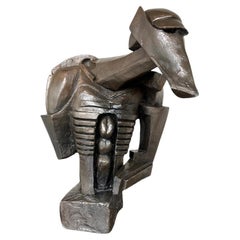
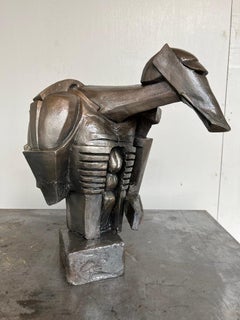
Between 1913 and 1915, Epstein was associated with the short-lived Vorticism movement and produced one of his best known sculptures The Rock Drill.
Between the late 1930s and the mid-1950s, numerous works by Epstein were exhibited in Blackpool. Adam, Consummatum Est, Jacob and the Angel and Genesis, and other works, were initially displayed in an old drapery shop surrounded by red velvet curtains. The crowds were ushered in at the cost of a shilling by a barker on the street. After a small tour of American fun fairs, the works were returned to Blackpool and were exhibited in the anatomical curiosities section of Louis Tussaud's waxworks.
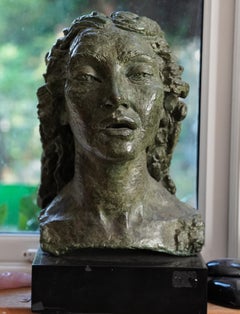
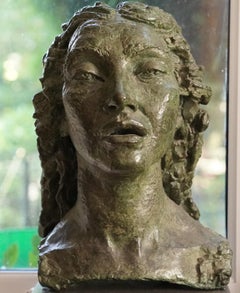
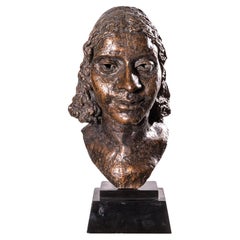
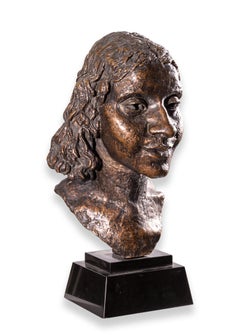
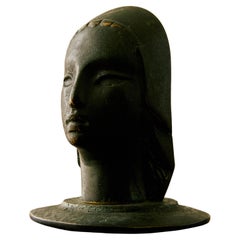
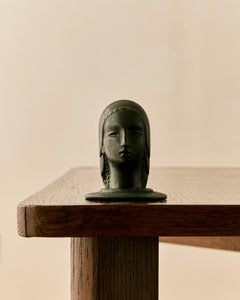
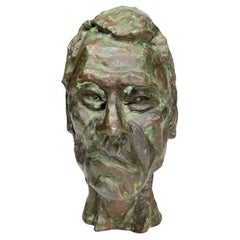
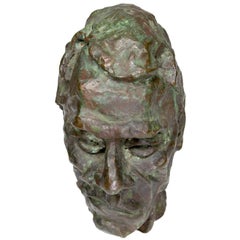
Bronze portrait sculpture formed one of Epstein's staple products, and perhaps the best known. These sculptures were often executed with roughly textured surfaces, expressively manipulating small surface planes and facial details. Some fine examples are in the National Portrait Gallery. He completed a bust of Winston Churchill...
Category
1930s Modern Sir Jacob Epstein Art
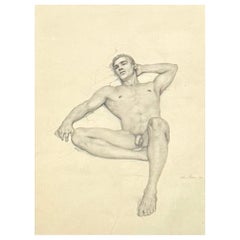
MaterialsPaper, Watercolor