Sir Jacob Epstein Art

to
2
1
2
Overall Width
to
Overall Height
to
5
1
2
2
2
1
3
3
2
1
1
1
1
1
3
3
2
1
1
5
10,907
2,843
2,494
1,423
2
1
3
2
Artist: Sir Jacob Epstein
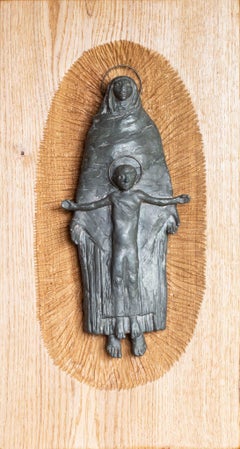
Jacob Epstein, 1950, Madonna and Child, lead sculpture, signed, British

Jacob Epstein, 1950, Madonna and Child, lead sculpture, signed, British

By Sir Jacob Epstein

Located in Petworth, West Sussex

Jacob Epstein (British / American 1880 – 1959) Madonna and Child, 1950 Sculpture (lead with bronze halos) 34cm. In a bespoke carved oak devotional niche Signed ‘Epstein’ (on the reve...

Category

20th Century Modern Sir Jacob Epstein Art

Materials

Mixed Media

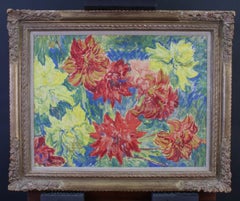
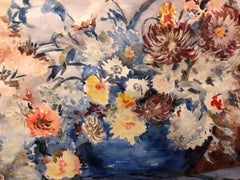
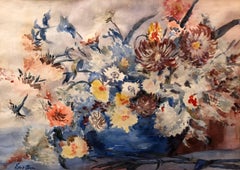
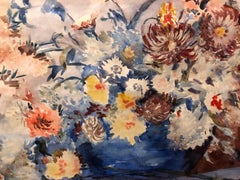
Dahlias
Dahlias

Dahlias

By Sir Jacob Epstein

Located in Douglas, Isle of Man

Sir Jacob Epstein K.B.E. 1880-1959, was an American born English sculptor, who pioneered modern sculpture. He had a very long and productive career and was considered the greatest s...

Category

1930s Sir Jacob Epstein Art

Materials

Paper, Watercolor
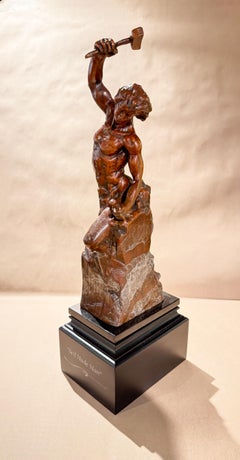
Moses with the Ten Commandments, 20th Century Framed Artwork

Moses with the Ten Commandments, 20th Century Framed Artwork

By Sir Jacob Epstein

Located in New York, NY

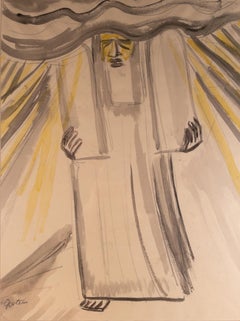
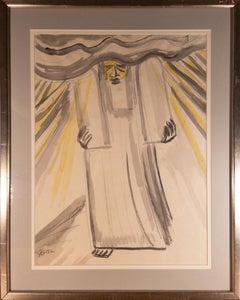
Moses With the Ten Commandments by Sir Jacob Epstein (1880-1959) Pencil and watercolor on paper 22 x 16 ⅝ inches unframed (55.88 x 42.24 cm) 28 ½ x 23 inches framed (72.39 x 58.42 cm) Signed on bottom left Description: In this figurative watercolor painting, Jacob Epstein depicts Moses holding two tablets, one in each arm, that are inscribed with the ten commandments. This is a visualization of the traditional biblical story in which Moses goes to Mount Sinai and has the ten commandments revealed to him by God which he inscribed onto two tablets and keeps in the Ark of the Covenant...

Category

20th Century Post-Modern Sir Jacob Epstein Art

Materials

Watercolor, Pencil

Related Items
After Fernando Botero Standing Woman Bronze Sculpture, Edition of 50

After Fernando Botero Standing Woman Bronze Sculpture, Edition of 50

By Fernando Botero

Located in Cuauhtemoc, Ciudad de México

After Fernando Botero – STANDING WOMAN Bronze Sculpture Edition of 50 This beautifully executed bronze sculpture is an After Fernando Botero work, created in faithful homage to th...

Category

20th Century Contemporary Sir Jacob Epstein Art

Materials

Marble, Bronze

Mali woman bronze sculpture

Mali woman bronze sculpture

$950

H 13.5 in W 3 in D 2.5 in

Mali woman bronze sculpture

Located in Three Oaks, MI

These cast figures and objects express status, prestige, and power. This cast metal figure exhibits the technical skill and artistry that Dogon blacksmiths brought to their work. Mad...

Category

Early 20th Century Tribal Sir Jacob Epstein Art

Materials

Bronze

Contemporary Bronze Sculpture Demeter Goddess Greek Mythology, figurative, nude

Contemporary Bronze Sculpture Demeter Goddess Greek Mythology, figurative, nude

By Carl Payne

Located in Shrewsbury, Shropshire

Edition of 25 'Demeter' by Carl Payne. A bronze sculpture of a figurative woman representing Demeter, goddess of the harvest and fertility, captures both grace and symbolic power. T...

Category

21st Century and Contemporary Contemporary Sir Jacob Epstein Art

Materials

Bronze

“Animals and Figures”

Craig Rubadoux“Animals and Figures”, Circa 1965

$700Sale Price|20% Off

H 14 in W 16.5 in D 1.25 in

“Animals and Figures”

Located in Southampton, NY

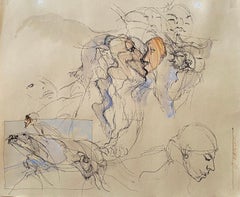
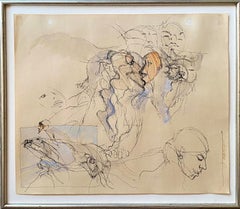
Original pen and black ink drawing with watercolor wash in specific areas. Study of figures and animals intertwined. Signed vertically right side along with the artist’s initials lower right. The artwork is tabbed on top two corners to a heavy card backing. Circa 1965. Condition is good to very good. Under UV plexiglass. Framed in a contemporary silver gallery frame. Overall framed measurements are 16.5 by 19 inches. Provenance: A Sarasota, Florida estate. Craig Rubadoux...

Category

1960s Post-Modern Sir Jacob Epstein Art

Materials

Paper, Ink, Watercolor, Pen

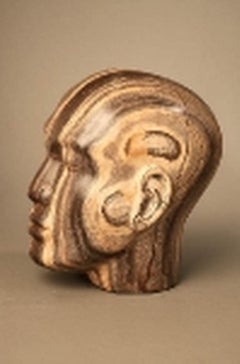
Striped Head #3

Jane JaskevichStriped Head #3

$3,900

H 8 in W 10 in D 6 in

Striped Head #3

By Jane Jaskevich

Located in Atlanta, GA

An Atlanta Journal Constitution reviewer once said ” Jane creates dreams in stone”. My stone sculptures are mystical in nature.The art reflects the coexistence of the conscious and s...

Category

21st Century and Contemporary Modern Sir Jacob Epstein Art

Materials

Mixed Media

19th Century Italian Floral Wallpaper Painting

19th Century Italian Floral Wallpaper Painting

Located in Lake Worth Beach, FL

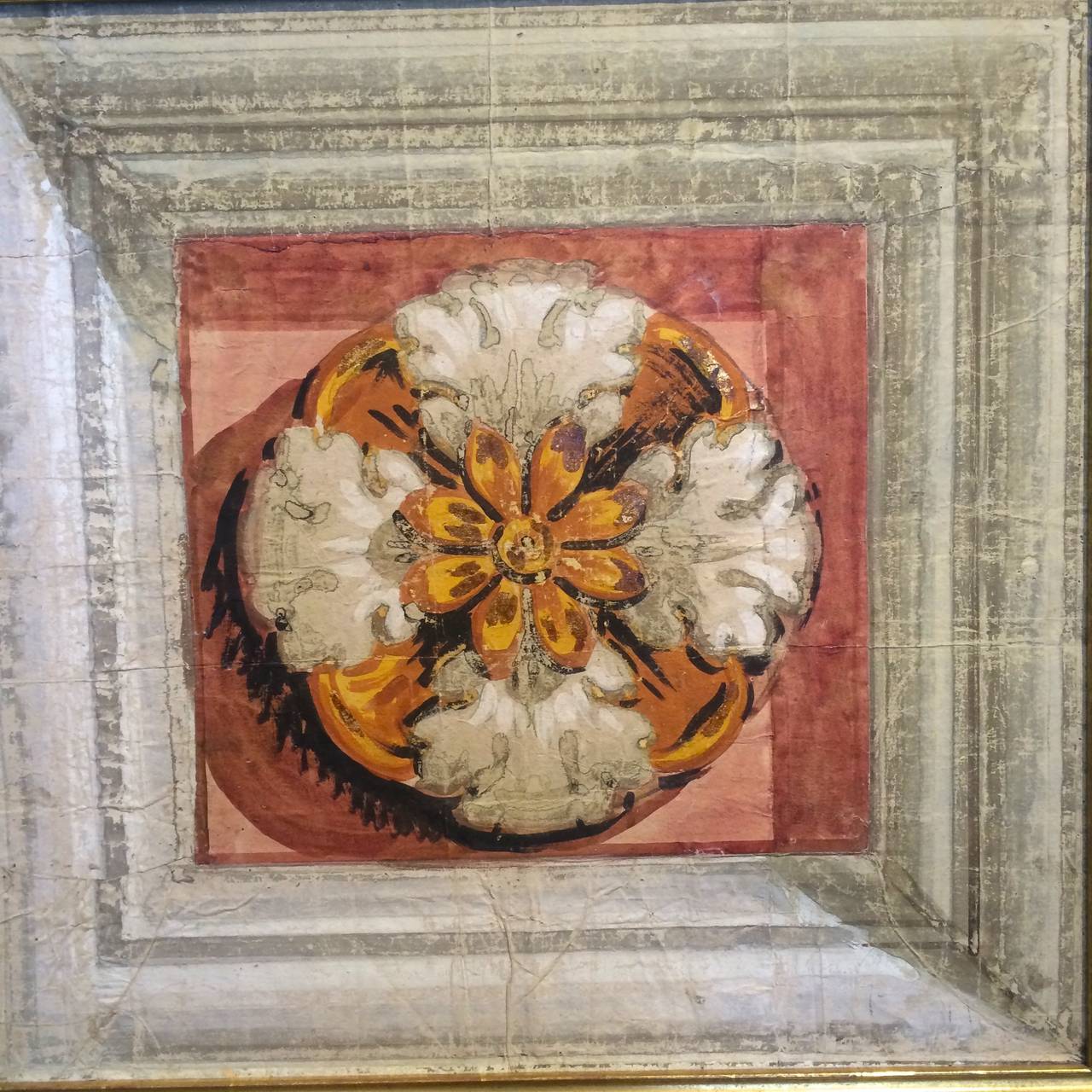
Architectural Floral Wallpaper Fragment 19th Century Italian hand painted floral design wallpaper lined with linen, in gold leaf wood framed as is.

Category

19th Century Italian School Sir Jacob Epstein Art

Materials

Watercolor, Gouache, Laid Paper, Linen

Bill Haendel Americana 'A Child's War' Cast Paper Relief Sculpture

Bill Haendel Americana 'A Child's War' Cast Paper Relief Sculpture

By William Haendel

Located in Surfside, FL

Genre: Modern Subject: Abstract Medium: Other Surface: Paper Country: United States Dimensions w/Mat: 20" x 21" Bas relief on hand-made paper; Visual statement of society’s role in...

Category

1970s Modern Sir Jacob Epstein Art

Materials

Mixed Media

Mid-Century Signed Still-Life Watercolor Drawing

Mid-Century Signed Still-Life Watercolor Drawing

By John Haymson

Located in Roma, IT

Wonderful and evocative watercolour on paper by the great Austrian-born artist who lived in the United States John Haymson (Vienna 1902 - New York 1980). This beautiful still life de...

Category

1940s Modern Sir Jacob Epstein Art

Materials

Paper, Watercolor
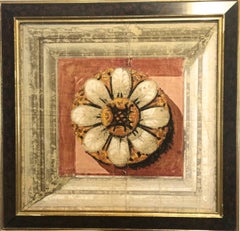
19th Century Italian Wall Paper Painting

19th Century Italian Wall Paper Painting

$1,990

H 34 in W 34 in D 1 in

19th Century Italian Wall Paper Painting

Located in Lake Worth Beach, FL

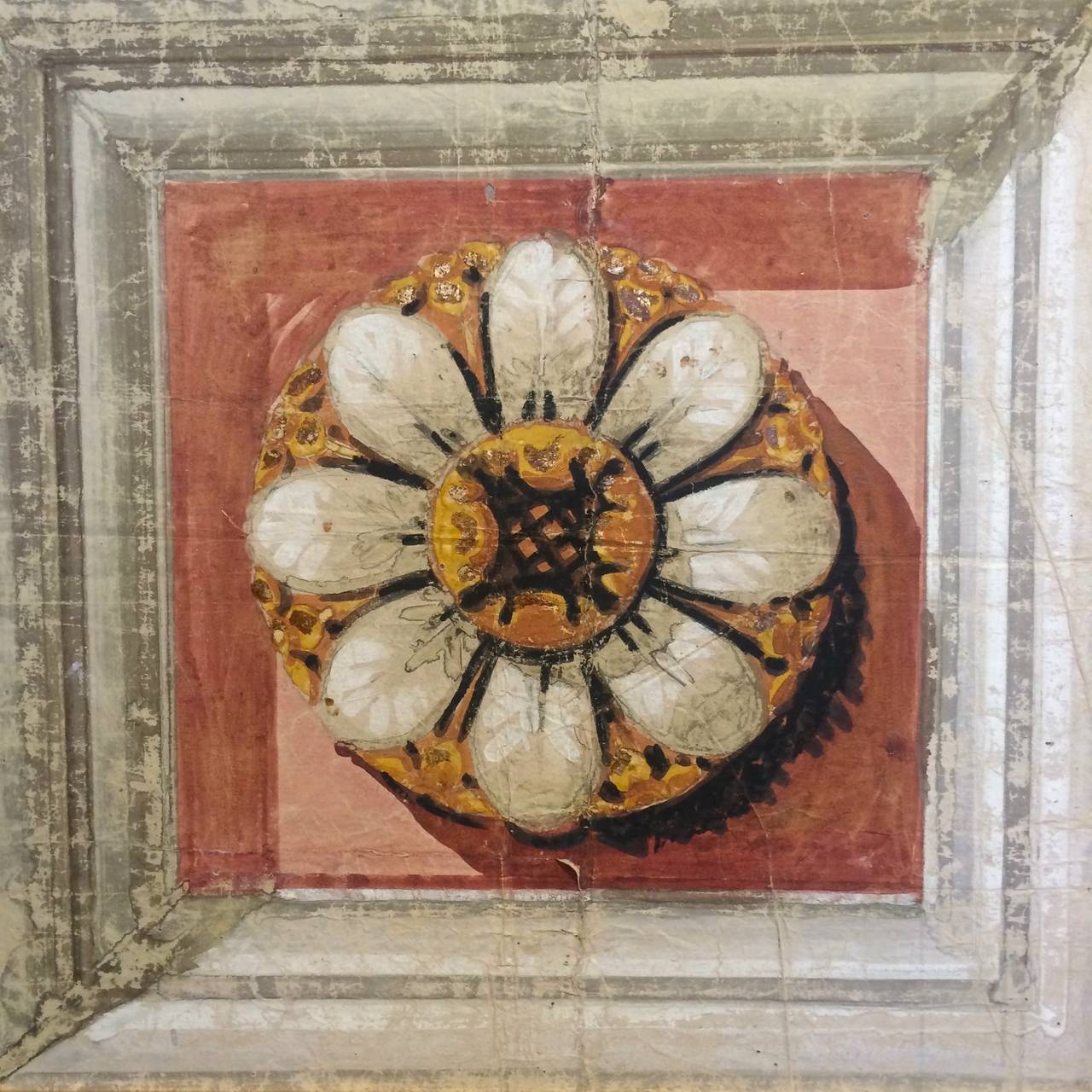
Italian Floral Wallpaper Fragment 19th Century Italian hand painted floral design wallpaper lined with linen, in gold leaf wood frame (as is).

Category

19th Century Italian School Sir Jacob Epstein Art

Materials

Watercolor, Gouache, Handmade Paper, Linen

Pair of herons in chiseled bronze with green patina, 20th century (1960s)

Pair of herons in chiseled bronze with green patina, 20th century (1960s)

Located in PARIS, FR

The Herons, pair of chiseled bronze subjects, the body with a green patina and the head with a purple patina, 1960s-1970s. The two herons or storks are presented in different attitud...

Category

1970s Naturalistic Sir Jacob Epstein Art

Materials

Bronze

Fleurs et Papillons - Fauvist Flowers Watercolor & Gouache by Raoul Dufy

Fleurs et Papillons - Fauvist Flowers Watercolor & Gouache by Raoul Dufy

By Raoul Dufy

Located in Marlow, Buckinghamshire

Botanical watercolour and gouache on paper circa 1920 by French fauvist painter Raoul Dufy. The work depicts flowers in red and butterflies in blues, yellows, black and white. This work was executed by Dufy as a fabric design. Dimensions: Framed: 17"x27" Unframed: 10"x20" Provenance: Private collection of works by Raoul Dufy for Bianchini Ferier Bianchini Ferrier Collection - Christie's London - July 2001 SF Fall Show Raoul Dufy was one of a family of nine children, including five sisters and a younger brother, Jean Dufy, also destined to become a painter. Their father was an accountant in the employ of a major company in Le Havre. The Dufy family was musically gifted: his father was an organist, as was his brother Léon, and his youngest brother Gaston was an accomplished flautist who later worked as a music critic in Paris. Raoul Dufy's studies were interrupted at the age of 14, when he had to contribute to the family income. He took a job with an importer of Brazilian coffee, but still found time from 1892 to attend evening courses in drawing and composition at the local college of fine arts under Charles Marie Lhullier, former teacher of Othon Friesz and Georges Braque. He spent his free time in museums, admiring the paintings of Eugène Boudin in Le Havre and The Justice of Trajan in Rouen. A municipal scholarship enabled him to leave for Paris in 1900, where he lodged initially with Othon Friesz. He was accepted by the École des Beaux-Arts, where he studied under Léon Bonnat, whose innate conservatism prompted Dufy to remark later that it was 'good to be at the Beaux-Arts providing one knew one could leave'. And leave he did, four years later, embarking with friends and fellow students on the rounds of the major Paris galleries - Ambroise Vollard, Durand-Ruel, Eugène Blot and Berheim-Jeune. For Dufy and his contemporaries, Impressionism represented a rejection of sterile academism in favour of the open-air canvases of Manet, the light and bright colours of the Impressionists, and, beyond them, the daringly innovative work of Gauguin and Van Gogh, Seurat, Cézanne, Toulouse-Lautrec and others. Dufy was an out-and-out individualist, however, and was not tempted to imitate any of these artists. He produced, between 1935 and 1937, Fée Electricité (Spirit of Electricity), the emblem for the French utilities company Electricité de France (EDF). Dufy visited the USA for the first time in 1937, as a member of the Carnegie Prize jury. In 1940, the outbreak of war (and his increasingly rheumatic condition) persuaded him to settle in Nice. When he eventually returned to Paris 10 years later, his rheumatism had become so debilitating that he immediately left for Boston to follow a course of pioneering anti-cortisone treatment. He continued working, however, spending time first in Harvard and then in New York City before moving to the drier climate of Tucson, Arizona. The cortisone treatment was by and large unsuccessful, although he did recover the use of his fingers. He returned to Paris in 1951 and decided to settle in Forcalquier, where the climate was more clement. Within a short time, however, he was wheelchair-bound. He died in Forcalquier in March 1953 and was buried in Cimiez. Between 1895 and 1898, Raoul Dufy painted watercolours of landscapes near his native Le Havre and around Honfleur and Falaise. By the turn of the century, however, he was already painting certain subjects that were to become hallmarks of his work - flag-decked Parisian cityscapes, Normandy beaches teeming with visitors, regattas and the like, including one of his better-known early works, Landing Stage at Ste-Adresse. By 1905-1906 Friesz, Braque, Matisse, Derain, Vlaminck, Van Dongen and Rouault were described collectively as Fauves (the wild beasts). What they had in common was a desire to innovate, but they felt constrained nonetheless to meet formally to set out the guiding principles of what promised to be a new 'movement'. Dufy quickly established that those principles were acceptable; moreover, he was most impressed by one particular painting by Henri Matisse ( Luxury, Calm and Voluptuousness) which, to Dufy, embodied both novelty and a sense of artistic freedom. Dufy promptly aligned himself with the Fauves. Together with Albert Marquet in particular, he spent his time travelling the Normandy coast and painting views similar...

Category

1920s Fauvist Sir Jacob Epstein Art

Materials

Paper, Watercolor, Gouache

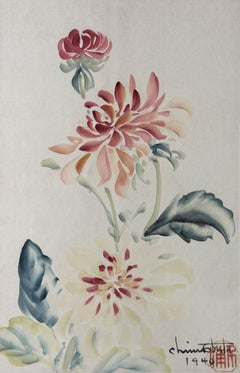
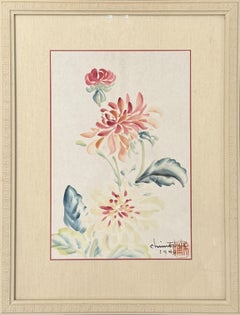
"Dahlias" Chiura Obata, Japanese American, Red and Blue Delicate Floral Work

"Dahlias" Chiura Obata, Japanese American, Red and Blue Delicate Floral Work

By Chiura Obata

Located in New York, NY

Chiura Obata Dahlias, 1940 Signed, dated and stamped lower right Watercolor on paper 15 x 9 5/8 inches Born in the Okayama prefecture of Japan, Chiura Obata was adopted by his uncle, an artist. As a child he was trained in ink painting, and at 14 he was apprenticed to the painter Murata Tanryo in Tokyo. He also studied with Kogyo Terasaki and Goho Hasimoto. In 1903, Obata moved to San Francisco and began working as an illustrator for The New World and The Japanese American, two of the city's Japanese newspapers. He also did work as a commercial designer. Obata helped establish the East West Art Society in San Francisco in 1921, which sought to promote cross-cultural understanding through art. This goal was reflected in his embrace of the Nihonga style, which fused traditional Japanese sumi-e ink painting with the conventions of western naturalism. He spent much of the 1920s painting landscapes throughout California, and among his favorite subjects were mountain landscapes. In 1927, he visited Yosemite and the Sierra Nevada, creating over a hundred paintings and sketches of the high country. Obata stayed in the USA until the death of his father in 1928. Between 1928 and 1932, he worked in Tokyo as a painter and transformed his California landscape watercolors...

Category

1940s Modern Sir Jacob Epstein Art

Materials

Paper, Watercolor
Previously Available Items
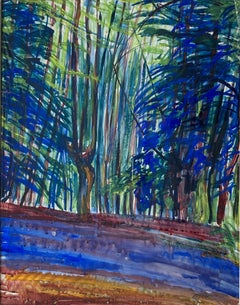
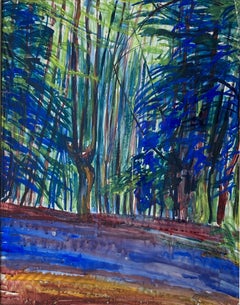
Sir Jacob Epstein, Woodland scene, Jewish Modernist artist

Sir Jacob Epstein, Woodland scene, Jewish Modernist artist

By Sir Jacob Epstein

Located in Harkstead, GB

Sir Jacob Epstein (1880-1959) Little Monk Wood Signed Watercolour and touches of gouache 22 x 17 inches Please note, for international buyers, the glass will be removed to avoid any...

Category

Early 20th Century Expressionist Sir Jacob Epstein Art

Materials

Paper, Watercolor, Gouache

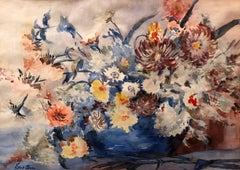
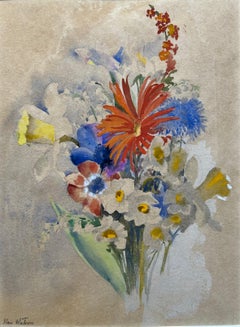
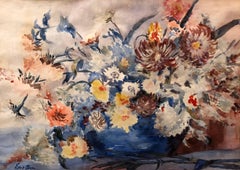
British Modernist Vibrant Watercolor Painting of Flowers, Sir Jacob Epstein

British Modernist Vibrant Watercolor Painting of Flowers, Sir Jacob Epstein

By Sir Jacob Epstein

Located in Surfside, FL

Sir Jacob Epstein KBE (10 November 1880 – 19 August 1959) was an American British sculptor who helped pioneer modern sculpture. He was born in the United States, and moved to Europe in 1902, becoming a British subject in 1911. He often produced controversial works which challenged ideas on what was appropriate subject matter for public artworks. He also made paintings and drawings, and often exhibited his work. Epstein's parents were Polish Jewish refugees, living on New York's Lower East Side. He studied art in his native New York as a teenager, sketching the city, and joined the Art Students League of New York in 1900. For his livelihood, he worked in a bronze foundry by day, studying drawing and sculptural modelling at night. Epstein's first major commission was to illustrate Hutchins Hapgood's 1902 book Spirit of the Ghetto. Epstein used the money from the commission to move to Paris. Moving to Europe in 1902, he studied in Paris at the Académie Julian and the École des Beaux-Arts. He settled in London in 1905 and married Margaret Dunlop in 1906. Epstein became a British subject on 4 January 1911. Many of Epstein's works were sculpted at his two cottages in Loughton, Essex, where he lived first at number 49 then 50, Baldwin's Hill (there is a blue plaque on number 50). He served briefly in the 38th Battalion of the Royal Fusiliers, known as the Jewish Legion during World War I; following a breakdown, he was discharged in 1918 without having left England. In London, Epstein involved himself with a bohemian and artistic crowd. Revolting against ornate, pretty art, he made bold, often harsh and massive forms of bronze or stone. His sculpture is distinguished by its vigorous rough-hewn realism. Avant-garde in concept and style, his works often shocked his audience. This was not only a result of their (often explicit) sexual content, but also because they deliberately abandoned the conventions of classical Greek sculpture favoured by European Academic sculptors to experiment instead with the aesthetics of art traditions as diverse as those of India, West Africa, and the Pacific Islands. Between 1913 and 1915, Epstein was associated with the short-lived Vorticism movement and produced one of his best known sculptures The Rock Drill. Between the late 1930s and the mid-1950s, numerous works by Epstein were exhibited in Blackpool. Adam, Consummatum Est, Jacob and the Angel and Genesis, and other works, were initially displayed in an old drapery shop surrounded by red velvet curtains. The crowds were ushered in at the cost of a shilling by a barker on the street. After a small tour of American fun fairs, the works were returned to Blackpool and were exhibited in the anatomical curiosities section of Louis Tussaud's waxworks. Bronze portrait sculpture formed one of Epstein's staple products, and perhaps the best known. These sculptures were often executed with roughly textured surfaces, expressively manipulating small surface planes and facial details. Some fine examples are in the National Portrait Gallery. He completed a bust of Winston Churchill...

Category

1930s Modern Sir Jacob Epstein Art

Materials

Paper, Watercolor
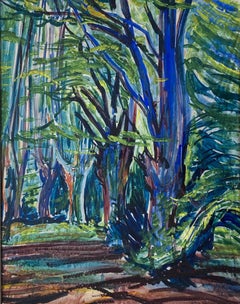
Sir Jacob Epstein, Woodland scene, Jewish Modernist artist

Sir Jacob Epstein, Woodland scene, Jewish Modernist artist

By Sir Jacob Epstein

Located in Harkstead, GB

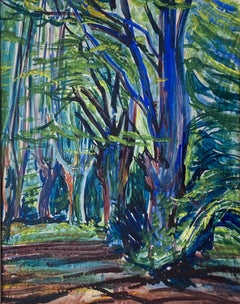
Sir Jacob Epstein (1880-1959) Near Baldwyns Hill Signed Watercolour and touches of gouache 22 x 17 inches ​ Exhibited: No. 4, as title, from the Epping Forest Series at Arthur Tooth and Sons, 1933 Provenance: Bought from the above exhibition by Commander G.L.Lowis and by direct descent to the current vendor. A very fine example from Epstein's Epping Forest series which was exhibited to great acclaim at Arthur Tooth and Sons Galleries in 1933. In good original condition having been bought directly from the exhibition by the vendor's grandfather, Commander Geoffrey Lowis who after his naval service went on to write Fabulous Admirals and Some Naval Fragments. ​ A similar example from the series can be found in the Tate Gallery, with the following description, ​ ‘In technique, the Epping Forest series show an affinity with the plein air painting of the French and British Impressionists of the late nineteenth and early twentieth centuries. Working with watercolour and gouache..... Epstein could work speedily to capture the fleeting effects of nature; carrying his paints and brushes into the Forest, he would pin a sheet of paper to his board, using a chair...

Category

Early 20th Century Impressionist Sir Jacob Epstein Art

Materials

Paper, Watercolor, Gouache

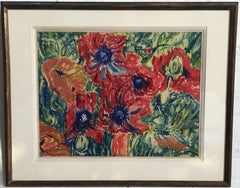
Sir Jacob Epstein, Still life of Poppies, Jewish Modernist artist

Sir Jacob Epstein, Still life of Poppies, Jewish Modernist artist

By Sir Jacob Epstein

Located in Harkstead, GB

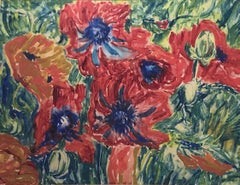
Sir Jacob Epstein (1880-1959) Poppies, Signed, Watercolour and touches of gouache, 17 x 22 inches ​ Exhibited: Arthur Tooth and Sons, 1936 (Gallery label verso) ​ Provenance: Private...

Category

Early 20th Century Impressionist Sir Jacob Epstein Art

Materials

Watercolor, Gouache, Paper

British Modernist Vibrant Watercolor Painting of Flowers

British Modernist Vibrant Watercolor Painting of Flowers

By Sir Jacob Epstein

Located in Surfside, FL

Sir Jacob Epstein KBE (10 November 1880 – 19 August 1959) was an American British sculptor who helped pioneer modern sculpture. He was born in the United States, and moved to Europe in 1902, becoming a British subject in 1911. He often produced controversial works which challenged ideas on what was appropriate subject matter for public artworks. He also made paintings and drawings, and often exhibited his work. Epstein's parents were Polish Jewish refugees, living on New York's Lower East Side. He studied art in his native New York as a teenager, sketching the city, and joined the Art Students League of New York in 1900. For his livelihood, he worked in a bronze foundry by day, studying drawing and sculptural modelling at night. Epstein's first major commission was to illustrate Hutchins Hapgood's 1902 book Spirit of the Ghetto. Epstein used the money from the commission to move to Paris. Moving to Europe in 1902, he studied in Paris at the Académie Julian and the École des Beaux-Arts. He settled in London in 1905 and married Margaret Dunlop in 1906. Epstein became a British subject on 4 January 1911. Many of Epstein's works were sculpted at his two cottages in Loughton, Essex, where he lived first at number 49 then 50, Baldwin's Hill (there is a blue plaque on number 50). He served briefly in the 38th Battalion of the Royal Fusiliers, known as the Jewish Legion during World War I; following a breakdown, he was discharged in 1918 without having left England. In London, Epstein involved himself with a bohemian and artistic crowd. Revolting against ornate, pretty art, he made bold, often harsh and massive forms of bronze or stone. His sculpture is distinguished by its vigorous rough-hewn realism. Avant-garde in concept and style, his works often shocked his audience. This was not only a result of their (often explicit) sexual content, but also because they deliberately abandoned the conventions of classical Greek sculpture favoured by European Academic sculptors to experiment instead with the aesthetics of art traditions as diverse as those of India, West Africa, and the Pacific Islands. Between 1913 and 1915, Epstein was associated with the short-lived Vorticism movement and produced one of his best known sculptures The Rock Drill. Between the late 1930s and the mid-1950s, numerous works by Epstein were exhibited in Blackpool. Adam, Consummatum Est, Jacob and the Angel and Genesis, and other works, were initially displayed in an old drapery shop surrounded by red velvet curtains. The crowds were ushered in at the cost of a shilling by a barker on the street. After a small tour of American fun fairs, the works were returned to Blackpool and were exhibited in the anatomical curiosities section of Louis Tussaud's waxworks. Bronze portrait sculpture formed one of Epstein's staple products, and perhaps the best known. These sculptures were often executed with roughly textured surfaces, expressively manipulating small surface planes and facial details. Some fine examples are in the National Portrait Gallery. He completed a bust of Winston Churchill...

Category

1930s Modern Sir Jacob Epstein Art

Materials

Paper, Watercolor
Sunita
Sunita

Sir Jacob EpsteinSunita

Sold

H 11.25 in W 9.5 in D 1 in

Sunita

By Sir Jacob Epstein

Located in Petworth, West Sussex

Sir Jacob Epstein (British/American 1880-1959) Sunita Pencil and watercolour on paper Signed `Epstein’ (lower left) 11.1/4 x 9.1/2 in. (28.6 x 24.2 cm.) Provenance Christie’s Londo...

Category

Early 20th Century Modern Sir Jacob Epstein Art

Materials

Paper, Watercolor, Pencil

Sir Jacob Epstein art for sale on 1stDibs.

Find a wide variety of authentic Sir Jacob Epstein art available for sale on 1stDibs. If you’re browsing the collection of art to introduce a pop of color in a neutral corner of your living room or bedroom, you can find work that includes elements of purple and other colors. You can also browse by medium to find art by Sir Jacob Epstein in paint, watercolor, paper and more. Much of the original work by this artist or collective was created during the 20th century and is mostly associated with the modern style. Not every interior allows for large Sir Jacob Epstein art, so small editions measuring 17 inches across are available. Customers who are interested in this artist might also find the work of Pierre Ambrogiani, Béla Kádár, and Frank Kleinholz. Sir Jacob Epstein art prices can differ depending upon medium, time period and other attributes. On 1stDibs, the price for these items starts at $3,000 and tops out at $45,000, while the average work can sell for $7,366.
Artists Similar to Sir Jacob Epstein