Located in Boca Raton, FL
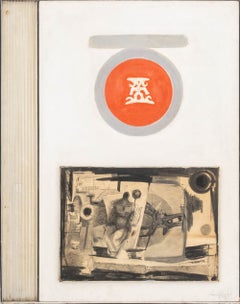
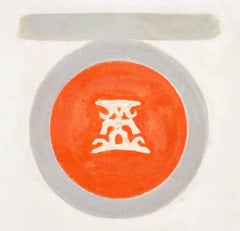
Exceedingly rare, one-of-a-kind handwritten Jewish calendrical manuscript from Władysławowie, 1837.

This book belongs in a museum.
Rebound beautifully by James MacDonald & Co. Photos are the actual photos of the book. See all photos.
The history of the Jewish calendar may be divided into three periods—the Biblical, the Talmudic, and the post-Talmudic. The first rested purely on the observation of the sun and the moon, the second on observation and reckoning, the third entirely on reckoning.
The study of astronomy was largely due to the need of fixing the dates of the festivals. The command (Deut. xvi. 1), "Keep the month of Abib," made it necessary to be acquainted with the position of the sun; and the command, "Also observe themoon and sanctify it," made it necessary to study the phases of the moon.
The oldest term in Hebrew for the science of the calendar is ("fixing of the month"); later ("sanctification of the new moon"); ("sanctification of the new moon by means of observation"); ("sanctification of the new moon by means of reckoning"); ("science of fixing the month"); ("rules for the sanctification of the new moon"). Among other names besides these we find (" the secret of intercalation"). The medieval and modern name is Babylonian Calendar.
The Babylonian year, which influenced the French time reckoning, seems to have consisted of 12 months of 30 days each, intercalary months being added by the priests when necessary. Two Babylonian calendars are preserved in the inscriptions, and in both each month has 30 days as far as can be learnt. In later times, however, months of 29 days alternated with those of 30. The method of intercalation is uncertain, and the practise seems to have varied.
The Babylonian years were soli-lunar; that is to say, the year of 12 months containing 354 days was bound to the solar year of 365 days by intercalating, as occasion required, a thirteenth month. Out of every 11 years there were 7 with 12 months and 4 with 13 months.
Strassmeier and Epping, in "Astronomisches aus Babylon," have shown that the ancient Babylonians...
Category
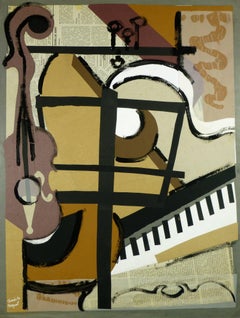
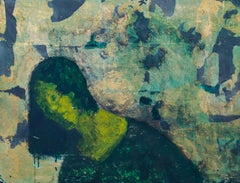
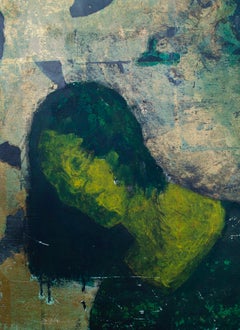
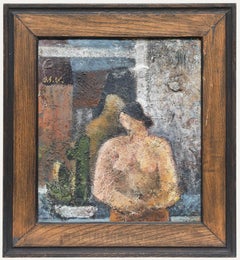
Early 20th Century Realist Unknown Mixed Media