WOLFS

to
106
396
175
105
86
61
45
40
40
37
29
25
22
17
16
15
13
11
10
9
9
7
5
4
3
2
2
1
1
1
63
50
29
17
15
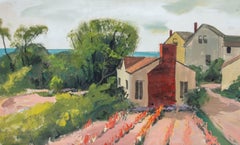
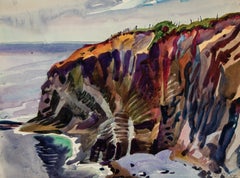
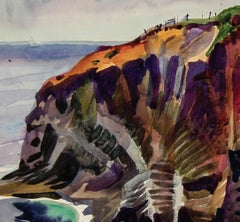
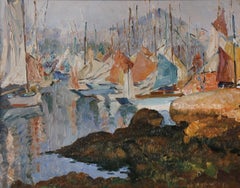
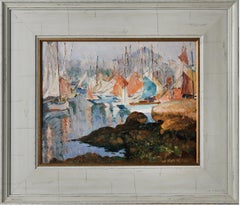
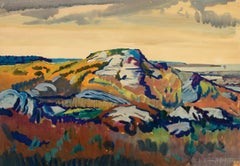
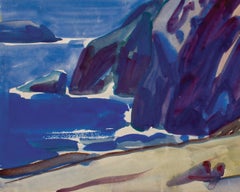
Headland & Rocks, White Island, Maine, early 20th century watercolor

Headland & Rocks, White Island, Maine, early 20th century watercolor

By Frank Wilcox

Located in Beachwood, OH

Frank Nelson Wilcox (American, 1887-1964) Headland & Rocks, White Island, Maine, c. 1923 Watercolor on paper Signed lower left 15 x 19.5 inches Frank Nelson Wilcox (October 3, 1887 – April 17, 1964) was a modernist American artist and a master of watercolor. Wilcox is described as the "Dean of Cleveland School painters," though some sources give this appellation to Henry Keller or Frederick Gottwald. Wilcox was born on October 3, 1887 to Frank Nelson Wilcox, Sr. and Jessie Fremont Snow Wilcox at 61 Linwood Street in Cleveland, Ohio. His father, a prominent lawyer, died at home in 1904 shortly before Wilcox' 17th birthday. His brother, lawyer and publisher Owen N. Wilcox, was president of the Gates Legal Publishing Company or The Gates Press. His sister Ruth Wilcox...

Category

1920s American Modern Figurative Drawings and Watercolors

Materials

Watercolor

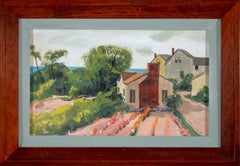
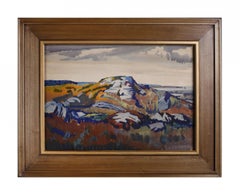
Beachside Village, Maine, 20th century landscape watercolor, Cleveland School

Beachside Village, Maine, 20th century landscape watercolor, Cleveland School

By George Adomeit

Located in Beachwood, OH

George Gustav Adomeit (American, 1879-1967) Beachside Village, Maine Watercolor on paper Signed lower right 10 x 14 inches 17.75 x 21.75 inches, framed A major painter of American ...

Category

Mid-20th Century American Modern Figurative Drawings and Watercolors

Materials

Watercolor

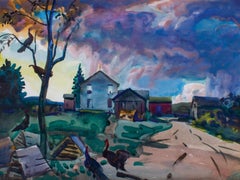
The Wood Chopper, Brecksville, Ohio, Early 20th Century Cleveland School

The Wood Chopper, Brecksville, Ohio, Early 20th Century Cleveland School

By Frank Wilcox

Located in Beachwood, OH

Frank Nelson Wilcox (American, 1887-1964) The Wood Chopper, Brecksville, Ohio, c. 1917 Oil on masonite 33 x 24 inches "We were fortunate in that the two farms in Brecksville were still open to our visits. The urbanization of the township was then only beginning and we spent several summers there where I tried to capture something of the rural peace so soon to be erased from the countryside." - Wilcox Exhibited: “Water Colors and Oils by Frank N. Wilcox,” Cleveland Museum of Art, January 1937. Frank Nelson Wilcox (October 3, 1887 – April 17, 1964) was a modernist American artist and a master of watercolor. Wilcox is described as the "Dean of Cleveland School...

Category

1910s American Modern Figurative Paintings

Materials

Oil

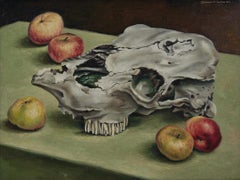
20th century abstract still life by Cleveland School artist

20th century abstract still life by Cleveland School artist

By Joseph O'Sickey

Located in Beachwood, OH

Work sold to benefit the CLEVELAND INSTITUTE OF ART Joseph B. O’Sickey (American, 1918–2013) Still Life Oil and graphite on paper Signed lower left 12.25 x 1...

Category

Late 20th Century Post-Impressionist Abstract Paintings
Materials

Oil, Graphite

Horses in Landscape, Late 20th Century Watercolor by Cleveland School artist

Horses in Landscape, Late 20th Century Watercolor by Cleveland School artist

By Joseph O'Sickey

Located in Beachwood, OH

Work sold to benefit the CLEVELAND INSTITUTE OF ART Joseph B. O’Sickey (American, 1918–2013) Horses in Landscape Watercolor and graphite on paper Signed lowe...

Category

Late 20th Century Post-Impressionist Landscape Drawings and Watercolors

Materials

Graphite, Watercolor

Stable Scene, 20th century horse and barn watercolor by Cleveland School artist

Stable Scene, 20th century horse and barn watercolor by Cleveland School artist

By Joseph O'Sickey

Located in Beachwood, OH

Work sold to benefit the CLEVELAND INSTITUTE OF ART Joseph B. O’Sickey (American, 1918–2013) Stable Scene Watercolor and graphite on paper Signed lower right...

Category

Late 20th Century Post-Impressionist Figurative Drawings and Watercolors

Materials

Watercolor, Graphite

20th Century Industrial Cityscape Oil painting, Cleveland School Artist

20th Century Industrial Cityscape Oil painting, Cleveland School Artist

By Joseph O'Sickey

Located in Beachwood, OH

Work sold to benefit the CLEVELAND INSTITUTE OF ART Joseph B. O’Sickey (American, 1918–2013) Industrial Cityscape Oil on paper Signed lower left 13.75 x 16.5 inches Joseph O'Sicke...

Category

Late 20th Century Post-Impressionist Landscape Paintings

Materials

Oil

Horseback Riders in Sunny Landscape, 20th Century, Cleveland Artist

Horseback Riders in Sunny Landscape, 20th Century, Cleveland Artist

By Joseph O'Sickey

Located in Beachwood, OH

Work sold to benefit the CLEVELAND INSTITUTE OF ART Joseph B. O’Sickey (American, 1918–2013) Horseback Riders Pastel on brown paper Signed lower left 9.5 x 12.5 inches Joseph O'S...

Category

Late 20th Century Post-Impressionist Animal Paintings

Materials

Pastel

Sunflowers and Horses in Field, 20th Century Landscape Watercolor

Sunflowers and Horses in Field, 20th Century Landscape Watercolor

By Joseph O'Sickey

Located in Beachwood, OH

Work sold to benefit the CLEVELAND INSTITUTE OF ART Joseph B. O’Sickey (American, 1918–2013) Sunflowers in Field Watercolor on paper Signed lower left 12.5. ...

Category

Late 20th Century Post-Impressionist Landscape Drawings and Watercolors

Materials

Watercolor

20th Century Interior Still Life with Chair and Flowers pastel & oil painting

20th Century Interior Still Life with Chair and Flowers pastel & oil painting

By Joseph O'Sickey

Located in Beachwood, OH

Work sold to benefit the CLEVELAND INSTITUTE OF ART Joseph B. O’Sickey (American, 1918–2013) Interior Still Life with Chair and Flowers Pastel and oil on gre...

Category

Late 20th Century Post-Impressionist Still-life Paintings

Materials

Pastel, Oil

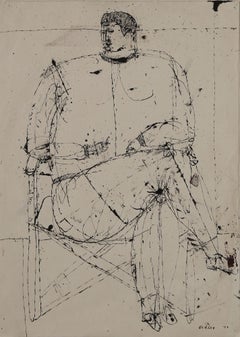
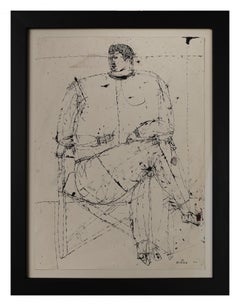
Seated Male, Mid-Century Male Nude Figurative Expressionist Drawing on Paper

Seated Male, Mid-Century Male Nude Figurative Expressionist Drawing on Paper

By Joseph Glasco

Located in Beachwood, OH

Joseph Glasco (American, 1925-1996) Seated Male, 1969 Ink on paper Signed and dated lower right 25 x 19.5 inches 27.5 x 22 inches, framed Joseph Glasco was born in Paul’s Valley, Okl...

Category

1960s Abstract Expressionist Figurative Paintings

Materials

Ink

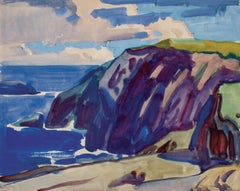
Coastal Scene, 20th Century Seascape, Cleveland School Artist

Coastal Scene, 20th Century Seascape, Cleveland School Artist

By George Adomeit

Located in Beachwood, OH

George Gustav Adomeit (American, 1879-1967) Coastal Scene Oil on canvas Signed lower left 19 x 23 inches 21.5 x 25.5 inches, framed A major painter of American scene subjects, Georg...

Category

20th Century American Modern Figurative Paintings

Materials

Oil

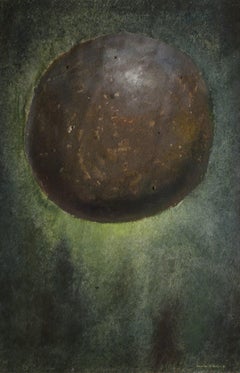
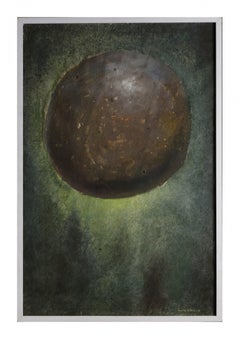
The Sun, 20th Century Magic Realism Painting by Cleveland School Artist

The Sun, 20th Century Magic Realism Painting by Cleveland School Artist

By Paul Riba

Located in Beachwood, OH

Paul Riba (American, 1912-1977) The Sun Oil on masonite Signed lower right, titled verso 14 x 21.5 inches 20.75 x 28.25 inches, framed Paul Riba was a painter of Magic Realism. He ...

Category

20th Century Surrealist Figurative Paintings

Materials

Masonite, Oil

20th C. Figurative Abstract Painting Cleveland School African American Artist

20th C. Figurative Abstract Painting Cleveland School African American Artist

By Beni E. Kosh

Located in Beachwood, OH

Beni E. Kosh/Charles Elmer Harris (American, 1917-1993) Untitled Oil on canvas board Estate stamped #611 verso 24 x 18 inches Charles Elmer Harris was born in 1917 in Cleveland, Oh...

Category

20th Century American Modern Figurative Paintings

Materials

Oil

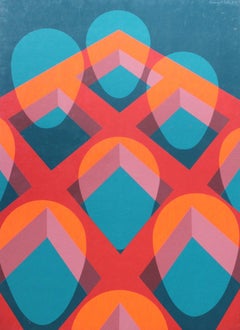
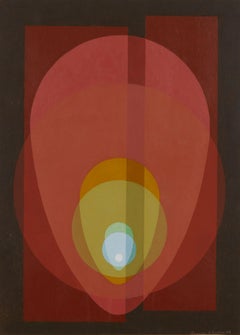
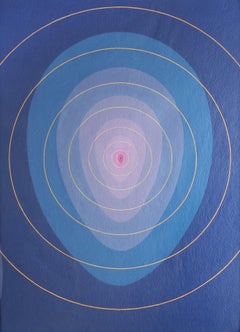
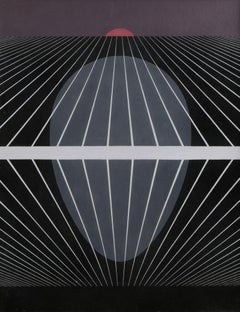
Mandala No. 15, Abstract Ovoid Geometrical Mid-Century Painting Cleveland School

Mandala No. 15, Abstract Ovoid Geometrical Mid-Century Painting Cleveland School

By Clarence Holbrook Carter

Located in Beachwood, OH

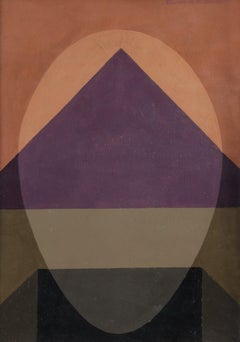
Clarence Holbrook Carter (American, 1904-2000) Mandala No. 15, 1969 Acrylic on paper Signed and dated verso 27.5 x 22 inches Clarence Holbrook Carter achieved a level of national ar...

Category

1960s American Modern Abstract Paintings
Materials

Acrylic

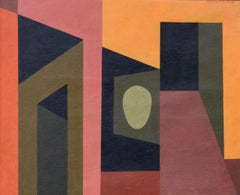
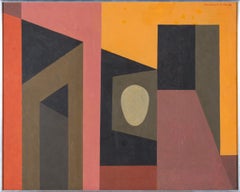
Transection w/ Architectural Forms, Geometrical Figurative Abstract Acrylic

Transection w/ Architectural Forms, Geometrical Figurative Abstract Acrylic

By Clarence Holbrook Carter

Located in Beachwood, OH

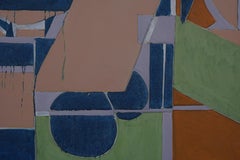
Clarence Holbrook Carter (American, 1904-2000) Transection with Architectural Forms, c. 1980s Acrylic and graphite on board 12 x 20 inches A surrealist mid-century figural abstract ...

Category

1980s American Modern Abstract Paintings
Materials

Acrylic, Graphite

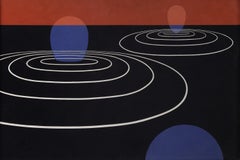
Double Ovoids, Mid-Century Blue & Black Figurative Abstract Ovoids

Double Ovoids, Mid-Century Blue & Black Figurative Abstract Ovoids

By Clarence Holbrook Carter

Located in Beachwood, OH

Clarence Holbrook Carter (American, 1904-2000) Double Ovoids with Blue and Black, 1960s Acrylic on scintilla 15.25 x 12.25 inches A surrealist mid-century figural abstract painting....

Category

1960s American Modern Abstract Paintings
Materials

Acrylic

Maze, 20th Century Geometric Figurative Abstract Acrylic Painting

Maze, 20th Century Geometric Figurative Abstract Acrylic Painting

By Clarence Holbrook Carter

Located in Beachwood, OH

Clarence Holbrook Carter (American, 1904-2000) Maze, 1982 Acrylic on cardboard Signed and dated upper right 7 x 9.5 inches A surrealist mid-century figural abstract painting. Clar...

Category

1980s American Modern Figurative Paintings

Materials

Acrylic

Reclining Nude Male Figure, figural expressionist New York artist ink drawing

Reclining Nude Male Figure, figural expressionist New York artist ink drawing

By Joseph Glasco

Located in Beachwood, OH

Joseph Glasco (American, 1925-1996) Reclining Figure, facing right (Nikos) 1971 India ink on paper Signed and dated middle right 26 x 38.25 inches In original frame. Joseph Glasco ...

Category

1970s Abstract Expressionist Figurative Drawings and Watercolors

Materials

India Ink

Reclining Nude Male Figure, figural expressionist New York artist ink drawing

Reclining Nude Male Figure, figural expressionist New York artist ink drawing

By Joseph Glasco

Located in Beachwood, OH

Joseph Glasco (American, 1925-1996) Reclining Male Figure (For Nick) 1971 India ink on paper Inscribed, signed and dated 10.25 x 14 inches 18.5 x 21 inches, framed Joseph Glasco was...

Category

1970s Abstract Expressionist Figurative Drawings and Watercolors

Materials

India Ink

Dichotomy, mid-century figural abstract green oil painting

Dichotomy, mid-century figural abstract green oil painting

By Clarence Holbrook Carter

Located in Beachwood, OH

Clarence Holbrook Carter (American, 1904-2000) Dichotomy, 1962 Oil on paper Signed and dated upper left 20 x 25 inches Mid-century figural abstract green painting of woman swimming ...

Category

1960s American Modern Abstract Paintings
Materials

Oil

Cattle Series Study, Early 20th Century Bovine/Cow, Cleveland School artist

Cattle Series Study, Early 20th Century Bovine/Cow, Cleveland School artist

By Henry George Keller

Located in Beachwood, OH

Henry George Keller (American, 1868-1949) Cattle Series Study, 1901 Oil on canvas Signed verso 22 x 26 inches 28.5 x 33 inches, framed Keller, a leading painter in Cleveland, was born at sea, off Nova Scotia on April 3, 1869. His earliest training was in Karlsruhe, Germany under Hermann Baisch (1846-1894), then at the Cleveland School of Art...

Category

Early 1900s Animal Paintings

Materials

Oil

Crashing Waves on Atlantic Coast, Mid-century Seascape, Cleveland School Artist

Crashing Waves on Atlantic Coast, Mid-century Seascape, Cleveland School Artist

By Frank Wilcox

Located in Beachwood, OH

Frank Nelson Wilcox (American, 1887-1964) Crashing Waves on the Atlantic Coast, 1957 Watercolor and graphite on paper Signed and dated lower right 22 x 29 inches Frank Nelson Wilcox (October 3, 1887 – April 17, 1964) was a modernist American artist and a master of watercolor. Wilcox is described as the "Dean of Cleveland School painters," though some sources give this appellation to Henry Keller or Frederick Gottwald. Wilcox was born on October 3, 1887 to Frank Nelson Wilcox, Sr. and Jessie Fremont Snow Wilcox at 61 Linwood Street in Cleveland, Ohio. His father, a prominent lawyer, died at home in 1904 shortly before Wilcox' 17th birthday. His brother, lawyer and publisher Owen N. Wilcox, was president of the Gates Legal Publishing Company or The Gates Press. His sister Ruth Wilcox was a respected librarian. In 1906 Wilcox enrolled from the Cleveland School of Art under the tutelage of Henry Keller, Louis Rorimer, and Frederick Gottwald. He also attended Keller's Berlin Heights summer school from 1909. After graduating in 1910, Wilcox traveled and studied in Europe, sometimes dropping by Académie Colarossi in the evening to sketch the model or the other students at their easels, where he was influenced by French impressionism. Wilcox was influenced by Keller's innovative watercolor techniques, and from 1910 to 1916 they experimented together with impressionism and post-impressionism. Wilcox soon developed his own signature style in the American Scene or Regionalist tradition of the early 20th century. He joined the Cleveland School of Art faculty in 1913. Among his students were Lawrence Edwin Blazey, Carl Gaertner, Paul Travis, and Charles E. Burchfield. Around this time Wilcox became associated with Cowan Pottery. In 1916 Wilcox married fellow artist Florence Bard, and they spent most of their honeymoon painting in Berlin Heights with Keller. They had one daughter, Mary. In 1918 he joined the Cleveland Society of Artists, a conservative counter to the Bohemian Kokoon Arts Club, and would later serve as its president. He also began teaching night school at the John Huntington Polytechnic Institute at this time, and taught briefly at Baldwin-Wallace College. Wilcox wrote and illustrated Ohio Indian Trails in 1933, which was favorably reviewed by the New York Times in 1934. This book was edited and reprinted in 1970 by William A. McGill. McGill also edited and reprinted Wilcox' Canals of the Old Northwest in 1969. Wilcox also wrote, illustrated, and published Weather Wisdom in 1949, a limited edition (50 copies) of twenty-four serigraphs (silk screen prints) accompanied by commentary "based upon familiar weather observations commonly made by people living in the country." Wilcox displayed over 250 works at Cleveland's annual May Show. He received numerous awards, including the Penton Medal for as The Omnibus, Paris (1920), Fish Tug on Lake Erie (1921), Blacksmith Shop (1922), and The Gravel Pit (1922). Other paintings include The Trailing Fog (1929), Under the Big Top (1930), and Ohio Landscape...

Category

1950s American Modern Figurative Drawings and Watercolors

Materials

Graphite, Watercolor

Untitled Black & White Abstract Painting, CoBrA Movement

Untitled Black & White Abstract Painting, CoBrA Movement

Located in Beachwood, OH

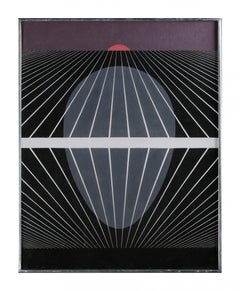
Theo Wilhelm Wolvecamp (Dutch, 1925 - 1992) Untitled Oil on canvas Signed and numbered 21 verso 15.75 x 19.75 inches Theo Wilhelm Wolvecamp was a Dutch artist and member of the COBRA group...

Category

Mid-20th Century Abstract Abstract Paintings
Materials

Oil

Venus with Koalas in Her Hair, 21st Century Contemporary Ceramic Sculpture

Venus with Koalas in Her Hair, 21st Century Contemporary Ceramic Sculpture

Located in Beachwood, OH

Kristen Newell (American, b. 1989) Venus with Koalas in Her Hair, 2020 Glazed stoneware and acrylic Signed and dated on bottom 14 x 12 x 6 inches Kristen Newell was born in a small town on the coast of Massachusetts, where from a very early age, she demonstrated a strong propensity for the arts. Important additional inspiration came from her family and from the family of a childhood friend, where Kristen found herself surrounded by the work of Paul Manship, her friend’s grandfather and one of America’s greatest sculptors. With increased focus on her art, along with winning numerous awards throughout high school, Newell eagerly enrolled in the arts program at University of Vermont and augmented her studies with a valuable year at the Cleveland Institute of Art. Upon graduation, Newell moved back to Cleveland to begin her art career and started participating in group shows, including River Gallery and the Ohio State...

Category

2010s Contemporary Figurative Sculptures

Materials

Stoneware, Glaze, Acrylic

Four Three Two One, 21st Century Contemporary Surrealist Ceramic Sculpture

Four Three Two One, 21st Century Contemporary Surrealist Ceramic Sculpture

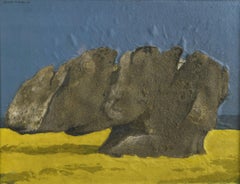
Located in Beachwood, OH

Kristen Newell (American, b. 1989) Four Three Two One, 2015 Stoneware, porcelain and acrylic Signed and dated on bottom 16 x 15 x 14 inches Kristen Newell was born in a small town on the coast of Massachusetts, where from a very early age, she demonstrated a strong propensity for the arts. Important additional inspiration came from her family and from the family of a childhood friend, where Kristen found herself surrounded by the work of Paul Manship, her friend’s grandfather and one of America’s greatest sculptors. With increased focus on her art, along with winning numerous awards throughout high school, Newell eagerly enrolled in the arts program at University of Vermont and augmented her studies with a valuable year at the Cleveland Institute of Art. Upon graduation, Newell moved back to Cleveland to begin her art career and started participating in group shows, including River Gallery and the Ohio State...

Category

2010s Contemporary Figurative Sculptures

Materials

Stoneware, Porcelain, Acrylic

Circus Lot at Toledo, Ohio, Early 20th Century Cleveland School Artist

Circus Lot at Toledo, Ohio, Early 20th Century Cleveland School Artist

By Frank Wilcox

Located in Beachwood, OH

Frank Nelson Wilcox (American, 1887-1964) Circus Lot at Toledo, c. 1920 Watercolor on Whatman board Signed lower right 22 x 30 inches 28 x 36 inches, framed Frank Nelson Wilcox (October 3, 1887 – April 17, 1964) was a modernist American artist and a master of watercolor. Wilcox is described as the "Dean of Cleveland School painters," though some sources give this appellation to Henry Keller or Frederick Gottwald. Wilcox was born on October 3, 1887 to Frank Nelson Wilcox, Sr. and Jessie Fremont Snow Wilcox at 61 Linwood Street in Cleveland, Ohio. His father, a prominent lawyer, died at home in 1904 shortly before Wilcox' 17th birthday. His brother, lawyer and publisher Owen N. Wilcox, was president of the Gates Legal Publishing Company or The Gates Press. His sister Ruth Wilcox was a respected librarian. In 1906 Wilcox enrolled from the Cleveland School of Art under the tutelage of Henry Keller, Louis Rorimer, and Frederick Gottwald. He also attended Keller's Berlin Heights summer school from 1909. After graduating in 1910, Wilcox traveled and studied in Europe, sometimes dropping by Académie Colarossi in the evening to sketch the model or the other students at their easels, where he was influenced by French impressionism. Wilcox was influenced by Keller's innovative watercolor techniques, and from 1910 to 1916 they experimented together with impressionism and post-impressionism. Wilcox soon developed his own signature style in the American Scene or Regionalist tradition of the early 20th century. He joined the Cleveland School of Art faculty in 1913. Among his students were Lawrence Edwin Blazey, Carl Gaertner, Paul Travis, and Charles E. Burchfield. Around this time Wilcox became associated with Cowan Pottery. In 1916 Wilcox married fellow artist Florence Bard, and they spent most of their honeymoon painting in Berlin Heights with Keller. They had one daughter, Mary. In 1918 he joined the Cleveland Society of Artists, a conservative counter to the Bohemian Kokoon Arts Club, and would later serve as its president. He also began teaching night school at the John Huntington Polytechnic Institute at this time, and taught briefly at Baldwin-Wallace College. Wilcox wrote and illustrated Ohio Indian Trails in 1933, which was favorably reviewed by the New York Times in 1934. This book was edited and reprinted in 1970 by William A. McGill. McGill also edited and reprinted Wilcox' Canals of the Old Northwest in 1969. Wilcox also wrote, illustrated, and published Weather Wisdom in 1949, a limited edition (50 copies) of twenty-four serigraphs (silk screen prints) accompanied by commentary "based upon familiar weather observations commonly made by people living in the country." Wilcox displayed over 250 works at Cleveland's annual May Show. He received numerous awards, including the Penton Medal for as The Omnibus, Paris (1920), Fish Tug on Lake Erie (1921), Blacksmith Shop (1922), and The Gravel Pit (1922). Other paintings include The Trailing Fog (1929), Under the Big Top (1930), and Ohio Landscape...

Category

1920s American Modern Figurative Drawings and Watercolors

Materials

Watercolor

Cows by Woodland Pond, Toledo, Ohio, Early 20th Century Cleveland School

Cows by Woodland Pond, Toledo, Ohio, Early 20th Century Cleveland School

By Frank Wilcox

Located in Beachwood, OH

Frank Nelson Wilcox (American, 1887-1964) Cows by Woodland Pond, Toledo, Ohio, c. 1920 Watercolor and graphite on board Signed lower right 22 x 30 inches 24.75 x 32.75 inches, framed Frank Nelson Wilcox (October 3, 1887 – April 17, 1964) was a modernist American artist and a master of watercolor. Wilcox is described as the "Dean of Cleveland School painters," though some sources give this appellation to Henry Keller or Frederick Gottwald. Wilcox was born on October 3, 1887 to Frank Nelson Wilcox, Sr. and Jessie Fremont Snow Wilcox at 61 Linwood Street in Cleveland, Ohio. His father, a prominent lawyer, died at home in 1904 shortly before Wilcox' 17th birthday. His brother, lawyer and publisher Owen N. Wilcox, was president of the Gates Legal Publishing Company or The Gates Press. His sister Ruth Wilcox was a respected librarian. In 1906 Wilcox enrolled from the Cleveland School of Art under the tutelage of Henry Keller, Louis Rorimer, and Frederick Gottwald. He also attended Keller's Berlin Heights summer school from 1909. After graduating in 1910, Wilcox traveled and studied in Europe, sometimes dropping by Académie Colarossi in the evening to sketch the model or the other students at their easels, where he was influenced by French impressionism. Wilcox was influenced by Keller's innovative watercolor techniques, and from 1910 to 1916 they experimented together with impressionism and post-impressionism. Wilcox soon developed his own signature style in the American Scene or Regionalist tradition of the early 20th century. He joined the Cleveland School of Art faculty in 1913. Among his students were Lawrence Edwin Blazey, Carl Gaertner, Paul Travis, and Charles E. Burchfield. Around this time Wilcox became associated with Cowan Pottery. In 1916 Wilcox married fellow artist Florence Bard, and they spent most of their honeymoon painting in Berlin Heights with Keller. They had one daughter, Mary. In 1918 he joined the Cleveland Society of Artists, a conservative counter to the Bohemian Kokoon Arts Club, and would later serve as its president. He also began teaching night school at the John Huntington Polytechnic Institute at this time, and taught briefly at Baldwin-Wallace College. Wilcox wrote and illustrated Ohio Indian Trails in 1933, which was favorably reviewed by the New York Times in 1934. This book was edited and reprinted in 1970 by William A. McGill. McGill also edited and reprinted Wilcox' Canals of the Old Northwest in 1969. Wilcox also wrote, illustrated, and published Weather Wisdom in 1949, a limited edition (50 copies) of twenty-four serigraphs (silk screen prints) accompanied by commentary "based upon familiar weather observations commonly made by people living in the country." Wilcox displayed over 250 works at Cleveland's annual May Show. He received numerous awards, including the Penton Medal for as The Omnibus, Paris (1920), Fish Tug on Lake Erie (1921), Blacksmith Shop (1922), and The Gravel Pit (1922). Other paintings include The Trailing Fog (1929), Under the Big Top (1930), and Ohio Landscape...

Category

1920s American Modern Figurative Drawings and Watercolors

Materials

Graphite, Watercolor

Stevedores, Ohio River, Early 20th Century Cleveland School Artist

Stevedores, Ohio River, Early 20th Century Cleveland School Artist

By Frank Wilcox

Located in Beachwood, OH

Frank Nelson Wilcox (American, 1887-1964) Stevedores, Ohio River, c. 1920 Watercolor on paper Signed lower right 21.5 x 29. 5 inches "The trip Otto Ege and I made from Pittsburgh to Marietta by riverboat and then by train to Mammoth Cave, was the next high spot in my artistic explorations. We saw something of the Old Southern river life on the way - the roustabouts, the showboat and river town life at Point Pleasant, and then to the sombre tonal mysteries of the Cave. These sights added much to my pictorial vocabulary..." - Frank Wilcox Frank Nelson Wilcox (October 3, 1887 – April 17, 1964) was a modernist American artist and a master of watercolor. Wilcox is described as the "Dean of Cleveland School...

Category

1920s American Modern Landscape Drawings and Watercolors

Materials

Watercolor

Women's Corner, Along the Cuyahoga River, Early 20th Century Landscape

Women's Corner, Along the Cuyahoga River, Early 20th Century Landscape

By Frank Wilcox

Located in Beachwood, OH

Frank Nelson Wilcox (American, 1887-1964) Women's Corner, Along the Cuyahoga River, c. 1916 Watercolor and graphite on paper 21 x 29 inches Frank Nelson Wilcox (October 3, 1887 – April 17, 1964) was a modernist American artist and a master of watercolor. Wilcox is described as the "Dean of Cleveland School painters," though some sources give this appellation to Henry Keller or Frederick Gottwald. Wilcox was born on October 3, 1887 to Frank Nelson Wilcox, Sr. and Jessie Fremont Snow Wilcox at 61 Linwood Street in Cleveland, Ohio. His father, a prominent lawyer, died at home in 1904 shortly before Wilcox' 17th birthday. His brother, lawyer and publisher Owen N. Wilcox, was president of the Gates Legal Publishing Company or The Gates Press. His sister Ruth Wilcox was a respected librarian. In 1906 Wilcox enrolled from the Cleveland School of Art under the tutelage of Henry Keller, Louis Rorimer, and Frederick Gottwald. He also attended Keller's Berlin Heights summer school from 1909. After graduating in 1910, Wilcox traveled and studied in Europe, sometimes dropping by Académie Colarossi in the evening to sketch the model or the other students at their easels, where he was influenced by French impressionism. Wilcox was influenced by Keller's innovative watercolor techniques, and from 1910 to 1916 they experimented together with impressionism and post-impressionism. Wilcox soon developed his own signature style in the American Scene or Regionalist tradition of the early 20th century. He joined the Cleveland School of Art faculty in 1913. Among his students were Lawrence Edwin Blazey, Carl Gaertner, Paul Travis, and Charles E. Burchfield. Around this time Wilcox became associated with Cowan Pottery. In 1916 Wilcox married fellow artist Florence Bard, and they spent most of their honeymoon painting in Berlin Heights with Keller. They had one daughter, Mary. In 1918 he joined the Cleveland Society of Artists, a conservative counter to the Bohemian Kokoon Arts Club, and would later serve as its president. He also began teaching night school at the John Huntington Polytechnic Institute at this time, and taught briefly at Baldwin-Wallace College. Wilcox wrote and illustrated Ohio Indian Trails in 1933, which was favorably reviewed by the New York Times in 1934. This book was edited and reprinted in 1970 by William A. McGill. McGill also edited and reprinted Wilcox' Canals of the Old Northwest in 1969. Wilcox also wrote, illustrated, and published Weather Wisdom in 1949, a limited edition (50 copies) of twenty-four serigraphs (silk screen prints) accompanied by commentary "based upon familiar weather observations commonly made by people living in the country." Wilcox displayed over 250 works at Cleveland's annual May Show. He received numerous awards, including the Penton Medal for as The Omnibus, Paris (1920), Fish Tug on Lake Erie (1921), Blacksmith Shop (1922), and The Gravel Pit (1922). Other paintings include The Trailing Fog (1929), Under the Big Top (1930), and Ohio Landscape...

Category

1910s American Modern Figurative Drawings and Watercolors

Materials

Watercolor, Graphite

Abstract expressionist blue, black & green mid-century geometric painting

Abstract expressionist blue, black & green mid-century geometric painting

By Richard Andres

Located in Beachwood, OH

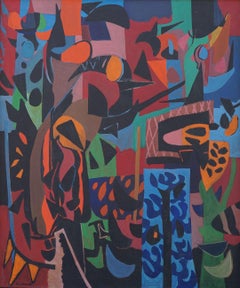
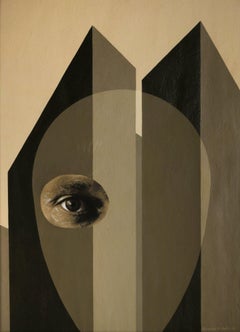
Richard Andres (American, 1927-2013) Untitled, c. 1949 oil on canvas 18 x 32 inches Richard Andres was born in Buffalo, New York in 1927. A graduate of the Cleveland Institute of Art in 1950, he was immediately drafted and served for two years in the army as a mural painter. He received his Master of Arts from Kent State in 1961. A frequent exhibitor at galleries and museums and winner of multiple May Show prizes, Andres taught art in the Cleveland Public Schools for 28 years, as well as teaching the University of Buffalo, the Cleveland Institute of Art and the Western Reserve University. Very little in Richard Andres’ childhood would have predicted his love of classical music, mid-century-modern architecture and certainly not his lifelong passion for art and in particular abstract art. Richard’s father, Raymond, had no more than a third-grade education, and his mother, Clara, was one of thirteen children – only three of whom lived into adulthood and none of whom attended high school. They lived, when Richard was a boy, in a dingy area of Buffalo, NY in a walk-up apartment situated above a tavern. Raymond and Clara supplemented the income from their factory jobs in the bar downstairs with Raymond playing ragtime on the piano and Clara serving drinks. This often left Richard and his two older brothers at home alone to fend for themselves. The two older boys, Raymond and Russell, were - unlike Richard- rather rough and tumble and entertained themselves with stickball, boxing and the like. Richard, on the other hand, from a very young age liked to draw, or better yet even, to paint with the small set of watercolors he received for Christmas one year. Paper, however, at the height of the depression, was hard to come by. Luckily, Clara used paper doilies as decoration for the apartment and Richard would contentedly paint and then cut up doilies, gluing the pieces together to create collages. At eight-years-old, he discovered the Albright-Knox Museum (then known as the Albright Art Gallery) and spent several hours a week there studying the paintings. He was particularly fond of Charles Burchfield‘s landscapes, enamored with their ‘messiness’ and thinking that they somehow captured more ‘feeling’ than works he was previously familiar with. For his tenth Christmas, he asked for and received a ‘how-to’ paint book by Elliot O’Hare. Through this self-teaching, he assembled the portfolio needed for acceptance to Buffalo Technical High School where he studied Advertising Arts. In his Junior year, he was encouraged to enter a watercolor painting, “Two Barns,” in the national 1944-45 Ingersoll Art Award Contest and was one of twelve grand prize winners – each one winning one hundred dollars. More importantly the painting was exhibited at the Carnegie Institute Galleries, which resulted in his winning a national scholarship to the Cleveland School of Art (The Cleveland Art Institute). He flourished at the art school under the tutelage of faculty members such as Carl Gaertner, as well as that of visiting artists such as William Sommer and Henry George Keller. He would say in later years that Gaertner, in particular, influenced his attitude toward life as well as art. “Gaertner,” Andres said, “believed that there was no need to be a ‘tortured artist’, that an artist should rather enjoy beauty, family, and life in general.” Free to spend his days as he chose, he wandered the Cleveland Art Museum for most of the hours he was not attending classes or painting; the remaining time was spent drinking coffee at a local hangout with art school friends – which is where he met fellow Henry Keller scholarship winner, Avis Johnson. Richard was immediately smitten with Avis, but being rather shy, it took him the entire summer of 1948 to build up his courage to ask her out. Over that summer he ‘thought about Avis’ and worked in a diner to save money. He also used the hundred-dollar prize money won in High School to visit the first Max Beckmann retrospective in the United States at the City Art Museum in St. Louis. Over a half century later he spoke of that exhibit with a reverence usually reserved for spiritual matters, “I walked in and it was like nothing I had ever seen before... the color...It just glowed.” Returning to campus in the Fall, the first thing he did was go to the coffee shop in hopes of finding Avis. He did, and she, upon seeing him, realized that she was also smitten with him. They quickly became known as ‘the couple’ on campus, and a year later, with Richard being drafted for the Korean war, they were quickly married by a Justice of the Peace, celebrating after with family at Avis’s Cleveland home. As a gift, faculty member John Paul Miller designed and made the simple gold wedding ring Avis wore for their 65 years of marriage. During those 65 years neither wavered in their mutual love, nor in the respect they shared for one another’s art. The couple lived in a converted chicken coop in Missouri while Richard was in boot camp. At the camp, he would volunteer for any job offered and one of those jobs ended up being painting road signs. His commander noticed how quickly and neatly he worked and gave him more painting work to do - eventually recommending him for a position painting murals for Army offices in Panama. Until her dying day, Avis remained angry that “The army got to keep those fabulous murals and they probably didn’t even know how wonderful they were.” In Panama, their first son, Mark, was born. After Richard’s discharge in 1953, they moved back to the Cleveland area and used the GI bill to attend Kent State gaining his BA in education. The small family then moved briefly to Buffalo, where Richard taught at the Albright Art School and the University of Buffalo – and their second son, Peter, was born. Richard had exhibited work in the Cleveland May Show and the Butler Art Museum during his art school years, and during the years in Buffalo, his work was exhibited at the gallery he had so loved as a child, the Albright Art Gallery. In 1956, the family moved back to the Cleveland area and Richard began teaching art at Lincoln West High School during the day while working toward his MA in art at Kent State in the evenings. Avis and Richard, with the help of an architect, designed their first home - a saltbox style house in Hudson, Ohio, and in 1958, their third son, Max (after Max Beckmann) was born. Richard enjoyed the consistency of teaching high school as well as the time it gave him to paint on the weekends and during the summer months. In 1961, he received his MA and his daughter, Claire, was born. With a fourth child, the house was much too small, and Avis and Richard began designing their second home. An admirer of MCM architecture, Richard’s favorite example of the style was the Farnsworth house – he often spoke of how the concepts behind this architectural style, particularly that of Mies van der Rohe, influenced his painting. Andres described himself as a 1950’s...

Category

1940s Abstract Expressionist Abstract Paintings
Materials

Oil

Meditation on African Sculpture, mid-century figural abstract painting

Meditation on African Sculpture, mid-century figural abstract painting

By Beni E. Kosh

Located in Beachwood, OH

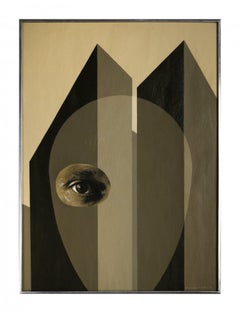
Beni E. Kosh/Charles Elmer Harris (American, 1917-1993) Meditation on African Sculpture, 1957 Oil on found wood panel Signed and dated lower left 20 x 15 inches Charles Elmer Harris...

Category

1950s Modern Abstract Paintings
Materials

Oil

Mayan, Large 20th Century Watercolor, Cleveland School, Viktor Schreckengost

Mayan, Large 20th Century Watercolor, Cleveland School, Viktor Schreckengost

By Viktor Schreckengost

Located in Beachwood, OH

Viktor Schreckengost (American, 1906-2008) Mayan Watercolor heightened with gouache over pencil on paper Signed lower right 39 x 29 inches 45.5 x 35.5 inches, framed Registered with The Viktor Schreckengost foundation, stock no. 6891 The son of a commercial potter in Sebring, Ohio, Viktor Schreckengost learned the craft of sculpting in clay from his father. In the mid-1920s, he enrolled at the Cleveland School of Art (now the Cleveland Institute of Art, or CIA) to study cartoon making, but after seeing an exhibition at the Cleveland Museum of Art he changed his focus to ceramics. Upon graduation in 1929, he studied ceramics in Vienna, Austria, where he began to build a reputation, not only for his art, but also as a jazz saxophonist. A year later, at the age of 25, he became the youngest faculty member at the CIA. In 1931, Schreckengost won the first of several awards for excellence in ceramics at the Cleveland Museum of Art, and his works were shown at the Metropolitan Museum of Art, the Art Institute of Chicago, the Panama-Pacific Exposition in San Francisco, and elsewhere. By the mid-1930s, Schreckengost had begun to pursue his interest in industrial design. For American Limoges...

Category

20th Century American Modern Figurative Drawings and Watercolors

Materials

Gouache, Watercolor

Spring Fantasy, Mid-20th Century American Impressionist Landscape

Spring Fantasy, Mid-20th Century American Impressionist Landscape

By Abel Warshawsky

Located in Beachwood, OH

Abel Warshawsky (American 1883-1962) Spring Fantasy, 1948 Oil on artist's board Signed lower right and verso 16 x 13 inches 20 x 17 inches, framed Impressionist painter A.G. Warshaw...

Category

1940s American Impressionist Landscape Paintings

Materials

Oil

Horses Prepared to Perform and Circus Truck, Contemporary American Modern

Horses Prepared to Perform and Circus Truck, Contemporary American Modern

By Joseph O'Sickey

Located in Beachwood, OH

Work sold to benefit the CLEVELAND INSTITUTE OF ART Joseph B. O’Sickey (American, 1918–2013) Horses Prepared to Perform and Circus Truck, Circus Series, 1991 Oil on canvas Signed an...

Category

1990s Post-Impressionist Animal Paintings

Materials

Oil

In the Garden of His Eminence, 19th Century Work w/ Gilt Frame

In the Garden of His Eminence, 19th Century Work w/ Gilt Frame

By August Vilhelm Nikolaus Hagborg

Located in Beachwood, OH

August Vilhelm Nikolaus Hagborg (Swedish, 1852-1921) In the Garden of His Eminence Oil on wood panel Signed lower left 21 x 25.5 inches 34 x 38.25 inches, framed August Vilhelm Nikolaus Hagborg was a Swedish painter who spent most of his life in France. His father was an associate professor. Against the wishes of his parents, he decided on a career in art and, from 1872 to 1874, he studied at the Royal Swedish Academy of Fine Arts in Stockholm with Vicente Palmaroli...

Category

Late 19th Century Figurative Paintings

Materials

Oil

Erie Shore, Large Abstract Expressionist Mid-Century Modern geometric work

Erie Shore, Large Abstract Expressionist Mid-Century Modern geometric work

By Richard Andres

Located in Beachwood, OH

Richard Andres (American, 1927-2013) Erie Shore, c. 1975 acrylic on canvas signed lower right, signed and titled verso 50 x 72 inches Richard Andres was born in Buffalo, New York in 1927. A graduate of the Cleveland Institute of Art in 1950, he was immediately drafted and served for two years in the army as a mural painter. He received his Master of Arts from Kent State in 1961. A frequent exhibitor at galleries and museums and winner of multiple May Show prizes, Andres taught art in the Cleveland Public Schools for 28 years, as well as teaching the University of Buffalo, the Cleveland Institute of Art and the Western Reserve University. Very little in Richard Andres’ childhood would have predicted his love of classical music, mid-century-modern architecture and certainly not his lifelong passion for art and in particular abstract art. Richard’s father, Raymond, had no more than a third-grade education, and his mother, Clara, was one of thirteen children – only three of whom lived into adulthood and none of whom attended high school. They lived, when Richard was a boy, in a dingy area of Buffalo, NY in a walk-up apartment situated above a tavern. Raymond and Clara supplemented the income from their factory jobs in the bar downstairs with Raymond playing ragtime on the piano and Clara serving drinks. This often left Richard and his two older brothers at home alone to fend for themselves. The two older boys, Raymond and Russell, were - unlike Richard- rather rough and tumble and entertained themselves with stickball, boxing and the like. Richard, on the other hand, from a very young age liked to draw, or better yet even, to paint with the small set of watercolors he received for Christmas one year. Paper, however, at the height of the depression, was hard to come by. Luckily, Clara used paper doilies as decoration for the apartment and Richard would contentedly paint and then cut up doilies, gluing the pieces together to create collages. At eight-years-old, he discovered the Albright-Knox Museum (then known as the Albright Art Gallery) and spent several hours a week there studying the paintings. He was particularly fond of Charles Burchfield‘s landscapes, enamored with their ‘messiness’ and thinking that they somehow captured more ‘feeling’ than works he was previously familiar with. For his tenth Christmas, he asked for and received a ‘how-to’ paint book by Elliot O’Hare. Through this self-teaching, he assembled the portfolio needed for acceptance to Buffalo Technical High School where he studied Advertising Arts. In his Junior year, he was encouraged to enter a watercolor painting, “Two Barns,” in the national 1944-45 Ingersoll Art Award Contest and was one of twelve grand prize winners – each one winning one hundred dollars. More importantly the painting was exhibited at the Carnegie Institute Galleries, which resulted in his winning a national scholarship to the Cleveland School of Art (The Cleveland Art Institute). He flourished at the art school under the tutelage of faculty members such as Carl Gaertner, as well as that of visiting artists such as William Sommer and Henry George Keller. He would say in later years that Gaertner, in particular, influenced his attitude toward life as well as art. “Gaertner,” Andres said, “believed that there was no need to be a ‘tortured artist’, that an artist should rather enjoy beauty, family, and life in general.” Free to spend his days as he chose, he wandered the Cleveland Art Museum for most of the hours he was not attending classes or painting; the remaining time was spent drinking coffee at a local hangout with art school friends – which is where he met fellow Henry Keller scholarship winner, Avis Johnson. Richard was immediately smitten with Avis, but being rather shy, it took him the entire summer of 1948 to build up his courage to ask her out. Over that summer he ‘thought about Avis’ and worked in a diner to save money. He also used the hundred-dollar prize money won in High School to visit the first Max Beckmann retrospective in the United States at the City Art Museum in St. Louis. Over a half century later he spoke of that exhibit with a reverence usually reserved for spiritual matters, “I walked in and it was like nothing I had ever seen before... the color...It just glowed.” Returning to campus in the Fall, the first thing he did was go to the coffee shop in hopes of finding Avis. He did, and she, upon seeing him, realized that she was also smitten with him. They quickly became known as ‘the couple’ on campus, and a year later, with Richard being drafted for the Korean war, they were quickly married by a Justice of the Peace, celebrating after with family at Avis’s Cleveland home. As a gift, faculty member John Paul Miller...

Category

1970s Abstract Expressionist Abstract Paintings

Materials

Acrylic

Interior, large, colorful figural abstract red, orange, blue acrylic of couple

Interior, large, colorful figural abstract red, orange, blue acrylic of couple

By Richard Andres

Located in Beachwood, OH

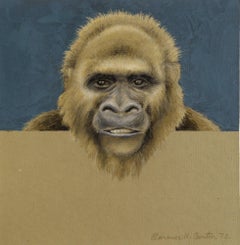
Richard Andres (American, 1927-2013) Interior, 1976 acrylic on canvas signed lower right, signed and titled verso 50 x 59.5 inches Richard Andres was born in Buffalo, New York in 1927. A graduate of the Cleveland Institute of Art in 1950, he was immediately drafted and served for two years in the army as a mural painter. He received his Master of Arts from Kent State in 1961. A frequent exhibitor at galleries and museums and winner of multiple May Show prizes, Andres taught art in the Cleveland Public Schools for 28 years, as well as teaching the University of Buffalo, the Cleveland Institute of Art and the Western Reserve University. Very little in Richard Andres’ childhood would have predicted his love of classical music, mid-century-modern architecture and certainly not his lifelong passion for art and in particular abstract art. Richard’s father, Raymond, had no more than a third-grade education, and his mother, Clara, was one of thirteen children – only three of whom lived into adulthood and none of whom attended high school. They lived, when Richard was a boy, in a dingy area of Buffalo, NY in a walk-up apartment situated above a tavern. Raymond and Clara supplemented the income from their factory jobs in the bar downstairs with Raymond playing ragtime on the piano and Clara serving drinks. This often left Richard and his two older brothers at home alone to fend for themselves. The two older boys, Raymond and Russell, were - unlike Richard- rather rough and tumble and entertained themselves with stickball, boxing and the like. Richard, on the other hand, from a very young age liked to draw, or better yet even, to paint with the small set of watercolors he received for Christmas one year. Paper, however, at the height of the depression, was hard to come by. Luckily, Clara used paper doilies as decoration for the apartment and Richard would contentedly paint and then cut up doilies, gluing the pieces together to create collages. At eight-years-old, he discovered the Albright-Knox Museum (then known as the Albright Art Gallery) and spent several hours a week there studying the paintings. He was particularly fond of Charles Burchfield‘s landscapes, enamored with their ‘messiness’ and thinking that they somehow captured more ‘feeling’ than works he was previously familiar with. For his tenth Christmas, he asked for and received a ‘how-to’ paint book by Elliot O’Hare. Through this self-teaching, he assembled the portfolio needed for acceptance to Buffalo Technical High School where he studied Advertising Arts. In his Junior year, he was encouraged to enter a watercolor painting, “Two Barns,” in the national 1944-45 Ingersoll Art Award Contest and was one of twelve grand prize winners – each one winning one hundred dollars. More importantly the painting was exhibited at the Carnegie Institute Galleries, which resulted in his winning a national scholarship to the Cleveland School of Art (The Cleveland Art Institute). He flourished at the art school under the tutelage of faculty members such as Carl Gaertner, as well as that of visiting artists such as William Sommer and Henry George Keller. He would say in later years that Gaertner, in particular, influenced his attitude toward life as well as art. “Gaertner,” Andres said, “believed that there was no need to be a ‘tortured artist’, that an artist should rather enjoy beauty, family, and life in general.” Free to spend his days as he chose, he wandered the Cleveland Art Museum for most of the hours he was not attending classes or painting; the remaining time was spent drinking coffee at a local hangout with art school friends – which is where he met fellow Henry Keller scholarship winner, Avis Johnson. Richard was immediately smitten with Avis, but being rather shy, it took him the entire summer of 1948 to build up his courage to ask her out. Over that summer he ‘thought about Avis’ and worked in a diner to save money. He also used the hundred-dollar prize money won in High School to visit the first Max Beckmann retrospective in the United States at the City Art Museum in St. Louis. Over a half century later he spoke of that exhibit with a reverence usually reserved for spiritual matters, “I walked in and it was like nothing I had ever seen before... the color...It just glowed.” Returning to campus in the Fall, the first thing he did was go to the coffee shop in hopes of finding Avis. He did, and she, upon seeing him, realized that she was also smitten with him. They quickly became known as ‘the couple’ on campus, and a year later, with Richard being drafted for the Korean war, they were quickly married by a Justice of the Peace, celebrating after with family at Avis’s Cleveland home. As a gift, faculty member John Paul Miller...

Category

1970s Abstract Expressionist Abstract Paintings
Materials

Acrylic

Garden, Abstract Expressionist Mid-Century Modern geometric work

Garden, Abstract Expressionist Mid-Century Modern geometric work

By Richard Andres

Located in Beachwood, OH

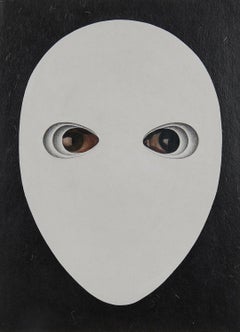
Richard Andres (American, 1927-2013) Garden, 1972 acrylic on canvas signed, dated and titled verso 59.5 x 50 inches Richard Andres was born in Buffalo, New York in 1927. A graduate of the Cleveland Institute of Art in 1950, he was immediately drafted and served for two years in the army as a mural painter. He received his Master of Arts from Kent State in 1961. A frequent exhibitor at galleries and museums and winner of multiple May Show prizes, Andres taught art in the Cleveland Public Schools for 28 years, as well as teaching the University of Buffalo, the Cleveland Institute of Art and the Western Reserve University. Very little in Richard Andres’ childhood would have predicted his love of classical music, mid-century-modern architecture and certainly not his lifelong passion for art and in particular abstract art. Richard’s father, Raymond, had no more than a third-grade education, and his mother, Clara, was one of thirteen children – only three of whom lived into adulthood and none of whom attended high school. They lived, when Richard was a boy, in a dingy area of Buffalo, NY in a walk-up apartment situated above a tavern. Raymond and Clara supplemented the income from their factory jobs in the bar downstairs with Raymond playing ragtime on the piano and Clara serving drinks. This often left Richard and his two older brothers at home alone to fend for themselves. The two older boys, Raymond and Russell, were - unlike Richard- rather rough and tumble and entertained themselves with stickball, boxing and the like. Richard, on the other hand, from a very young age liked to draw, or better yet even, to paint with the small set of watercolors he received for Christmas one year. Paper, however, at the height of the depression, was hard to come by. Luckily, Clara used paper doilies as decoration for the apartment and Richard would contentedly paint and then cut up doilies, gluing the pieces together to create collages. At eight-years-old, he discovered the Albright-Knox Museum (then known as the Albright Art Gallery) and spent several hours a week there studying the paintings. He was particularly fond of Charles Burchfield‘s landscapes, enamored with their ‘messiness’ and thinking that they somehow captured more ‘feeling’ than works he was previously familiar with. For his tenth Christmas, he asked for and received a ‘how-to’ paint book by Elliot O’Hare. Through this self-teaching, he assembled the portfolio needed for acceptance to Buffalo Technical High School where he studied Advertising Arts. In his Junior year, he was encouraged to enter a watercolor painting, “Two Barns,” in the national 1944-45 Ingersoll Art Award Contest and was one of twelve grand prize winners – each one winning one hundred dollars. More importantly the painting was exhibited at the Carnegie Institute Galleries, which resulted in his winning a national scholarship to the Cleveland School of Art (The Cleveland Art Institute). He flourished at the art school under the tutelage of faculty members such as Carl Gaertner, as well as that of visiting artists such as William Sommer and Henry George Keller. He would say in later years that Gaertner, in particular, influenced his attitude toward life as well as art. “Gaertner,” Andres said, “believed that there was no need to be a ‘tortured artist’, that an artist should rather enjoy beauty, family, and life in general.” Free to spend his days as he chose, he wandered the Cleveland Art Museum for most of the hours he was not attending classes or painting; the remaining time was spent drinking coffee at a local hangout with art school friends – which is where he met fellow Henry Keller scholarship winner, Avis Johnson. Richard was immediately smitten with Avis, but being rather shy, it took him the entire summer of 1948 to build up his courage to ask her out. Over that summer he ‘thought about Avis’ and worked in a diner to save money. He also used the hundred-dollar prize money won in High School to visit the first Max Beckmann retrospective in the United States at the City Art Museum in St. Louis. Over a half century later he spoke of that exhibit with a reverence usually reserved for spiritual matters, “I walked in and it was like nothing I had ever seen before... the color...It just glowed.” Returning to campus in the Fall, the first thing he did was go to the coffee shop in hopes of finding Avis. He did, and she, upon seeing him, realized that she was also smitten with him. They quickly became known as ‘the couple’ on campus, and a year later, with Richard being drafted for the Korean war, they were quickly married by a Justice of the Peace, celebrating after with family at Avis’s Cleveland home. As a gift, faculty member John Paul Miller...

Category

1970s Abstract Expressionist Abstract Paintings
Materials

Acrylic

Panama Garden, Mid-century abstract expressionist modern work

Panama Garden, Mid-century abstract expressionist modern work

By Richard Andres

Located in Beachwood, OH

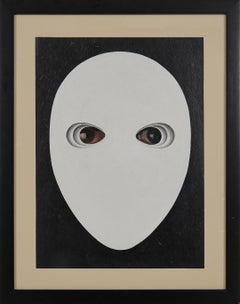
Richard Andres (American, 1927-2013) Panama Garden, c. 1964 acrylic on canvas signed lower right, signed and titled verso 46 x 38 inches Richard Andres was born in Buffalo, New York in 1927. A graduate of the Cleveland Institute of Art in 1950, he was immediately drafted and served for two years in the army as a mural painter. He received his Master of Arts from Kent State in 1961. A frequent exhibitor at galleries and museums and winner of multiple May Show prizes, Andres taught art in the Cleveland Public Schools for 28 years, as well as teaching the University of Buffalo, the Cleveland Institute of Art and the Western Reserve University. Very little in Richard Andres’ childhood would have predicted his love of classical music, mid-century-modern architecture and certainly not his lifelong passion for art and in particular abstract art. Richard’s father, Raymond, had no more than a third-grade education, and his mother, Clara, was one of thirteen children – only three of whom lived into adulthood and none of whom attended high school. They lived, when Richard was a boy, in a dingy area of Buffalo, NY in a walk-up apartment situated above a tavern. Raymond and Clara supplemented the income from their factory jobs in the bar downstairs with Raymond playing ragtime on the piano and Clara serving drinks. This often left Richard and his two older brothers at home alone to fend for themselves. The two older boys, Raymond and Russell, were - unlike Richard- rather rough and tumble and entertained themselves with stickball, boxing and the like. Richard, on the other hand, from a very young age liked to draw, or better yet even, to paint with the small set of watercolors he received for Christmas one year. Paper, however, at the height of the depression, was hard to come by. Luckily, Clara used paper doilies as decoration for the apartment and Richard would contentedly paint and then cut up doilies, gluing the pieces together to create collages. At eight-years-old, he discovered the Albright-Knox Museum (then known as the Albright Art Gallery) and spent several hours a week there studying the paintings. He was particularly fond of Charles Burchfield‘s landscapes, enamored with their ‘messiness’ and thinking that they somehow captured more ‘feeling’ than works he was previously familiar with. For his tenth Christmas, he asked for and received a ‘how-to’ paint book by Elliot O’Hare. Through this self-teaching, he assembled the portfolio needed for acceptance to Buffalo Technical High School where he studied Advertising Arts. In his Junior year, he was encouraged to enter a watercolor painting, “Two Barns,” in the national 1944-45 Ingersoll Art Award Contest and was one of twelve grand prize winners – each one winning one hundred dollars. More importantly the painting was exhibited at the Carnegie Institute Galleries, which resulted in his winning a national scholarship to the Cleveland School of Art (The Cleveland Art Institute). He flourished at the art school under the tutelage of faculty members such as Carl Gaertner, as well as that of visiting artists such as William Sommer and Henry George Keller. He would say in later years that Gaertner, in particular, influenced his attitude toward life as well as art. “Gaertner,” Andres said, “believed that there was no need to be a ‘tortured artist’, that an artist should rather enjoy beauty, family, and life in general.” Free to spend his days as he chose, he wandered the Cleveland Art Museum for most of the hours he was not attending classes or painting; the remaining time was spent drinking coffee at a local hangout with art school friends – which is where he met fellow Henry Keller scholarship winner, Avis Johnson. Richard was immediately smitten with Avis, but being rather shy, it took him the entire summer of 1948 to build up his courage to ask her out. Over that summer he ‘thought about Avis’ and worked in a diner to save money. He also used the hundred-dollar prize money won in High School to visit the first Max Beckmann retrospective in the United States at the City Art Museum in St. Louis. Over a half century later he spoke of that exhibit with a reverence usually reserved for spiritual matters, “I walked in and it was like nothing I had ever seen before... the color...It just glowed.” Returning to campus in the Fall, the first thing he did was go to the coffee shop in hopes of finding Avis. He did, and she, upon seeing him, realized that she was also smitten with him. They quickly became known as ‘the couple’ on campus, and a year later, with Richard being drafted for the Korean war, they were quickly married by a Justice of the Peace, celebrating after with family at Avis’s Cleveland home. As a gift, faculty member John Paul Miller...

Category

1960s Abstract Expressionist Abstract Paintings
Materials

Acrylic

Two Owls, 20th Century Purple & Green Owls

Two Owls, 20th Century Purple & Green Owls

By Joseph O'Sickey

Located in Beachwood, OH

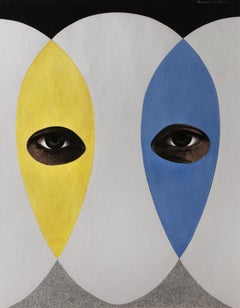
Work sold to benefit the CLEVELAND INSTITUTE OF ART Joseph B. O’Sickey (American, 1918–2013) Two Owls Oil on board 15 x 10.5 inches Joseph O'Sickey, born in...

Category

20th Century Post-Impressionist Animal Paintings
Materials

Oil

Hats, Vibrant 21st century turquoise, pink, purple still life interior scene

Hats, Vibrant 21st century turquoise, pink, purple still life interior scene

By Joseph O'Sickey

Located in Beachwood, OH

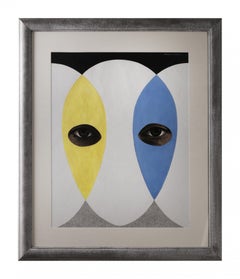
Work sold to benefit the CLEVELAND INSTITUTE OF ART Joseph B. O’Sickey (American, 1918–2013) Hats, 2000 Oil on canvas Signed and dated lower right 48 x 54 inches Joseph O'Sickey, ...

Category

Early 2000s Post-Impressionist Still-life Paintings
Materials

Oil

At the Stable, Landscape Scene with Horse and Jockey

At the Stable, Landscape Scene with Horse and Jockey

By Joseph O'Sickey

Located in Beachwood, OH

Work sold to benefit the CLEVELAND INSTITUTE OF ART Joseph B. O’Sickey (American, 1918–2013) At the Stable, 2000 Oil on canvas Signed and dated lower right 29 x 36 inches Joseph ...

Category

Early 2000s Post-Impressionist Animal Paintings
Materials

Oil

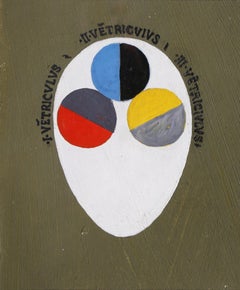
Air Chamber, Mid-Century Figural Abstract Collage, Anatomy & Ovoids

Air Chamber, Mid-Century Figural Abstract Collage, Anatomy & Ovoids

By Clarence Holbrook Carter

Located in Beachwood, OH

Clarence Holbrook Carter (American, 1904-2000) Air Chamber, 1965 Collage, graphite and gouache on paper Signed and dated upper left 30 x 22 inches Provenance: Descended through the family. Exhibited: WOLFS Gallery, Cleveland, OH, Cleveland: A Cultural Center, July - August 2018, illustrated #146 page 146 Clarence Holbrook Carter achieved a level of national artistic success that was nearly unprecedented among Cleveland School artists of his day, with representation by major New York dealers...

Category

1960s American Modern Abstract Paintings
Materials

Gouache, Graphite

In the Window, Ovoid Shapes Floating Through Windows

In the Window, Ovoid Shapes Floating Through Windows

By Clarence Holbrook Carter

Located in Beachwood, OH

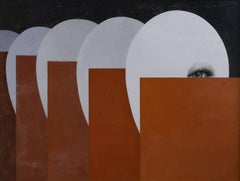
Clarence Holbrook Carter (American, 1904-2000) In the Window, 1973 Acrylic and collage on scintilla Signed and dated lower right 30 x 22 inches A surrealist mid-century figural abs...

Category

1970s American Modern Abstract Paintings
Materials

Acrylic

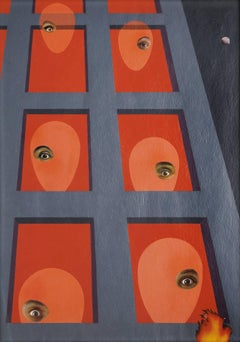
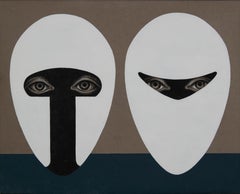
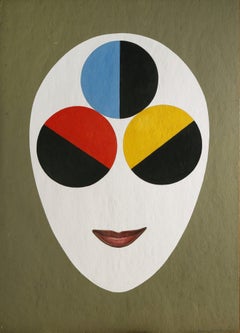
Ablaze, Ovoid Faces Looking Through Geometrical Windows

Ablaze, Ovoid Faces Looking Through Geometrical Windows

By Clarence Holbrook Carter

Located in Beachwood, OH

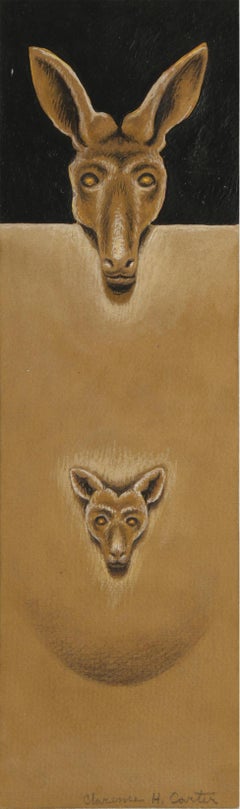
Clarence Holbrook Carter (American, 1904-2000) Ablaze, 1973-79 Acrylic and collage on scintilla Signed and dated lower left 30 x 22 inches A surrealist mid-century figural abstract...

Category

1970s American Modern Abstract Paintings
Materials
Acrylic

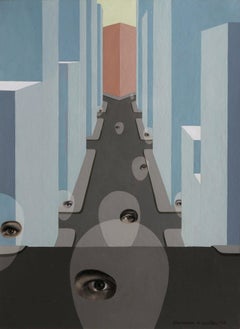
Up the Avenue, Geometrical Ovoid Abstract Acrylic & Collage Cityscape

Up the Avenue, Geometrical Ovoid Abstract Acrylic & Collage Cityscape

By Clarence Holbrook Carter

Located in Beachwood, OH

Clarence Holbrook Carter (American, 1904-2000) Up the Avenue, 1979 Acrylic and collage on paper Signed and dated lower right 15 x 11 inches A surrealist mid-century figural abstract...

Category

1970s American Modern Figurative Paintings

Materials

Mixed Media, Acrylic

Transection No. 3, Ovoid Geometrical Figural Abstract Neon Acrylic Painting

Transection No. 3, Ovoid Geometrical Figural Abstract Neon Acrylic Painting

By Clarence Holbrook Carter

Located in Beachwood, OH

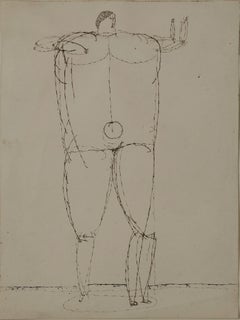
Clarence Holbrook Carter (American, 1904-2000) Transection No. 3, 1972 Acrylic on paper Signed and dated upper right 30 x 22 inches Provenance: Collection of William H. Milliken Cl...

Category

1970s American Modern Abstract Paintings
Materials

Acrylic

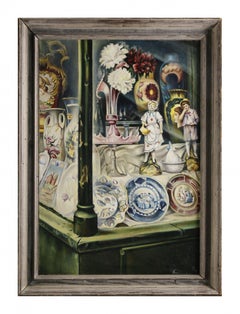
Hospitalities Long Past, 1940s Oil Painting of Store Front

Hospitalities Long Past, 1940s Oil Painting of Store Front

By Clarence Holbrook Carter

Located in Beachwood, OH

Clarence Holbrook Carter (American, 1904-2000) Hospitalities Long Past, 1941 Oil on canvas Signed and dated lower right 37 x 27 inches "Looking into store front windows has always i...

Category

1940s American Modern Figurative Paintings

Materials

Oil

Terror of History No. 1, Mid-Century Abstract Acrylic & Sand, Blue and Yellow

Terror of History No. 1, Mid-Century Abstract Acrylic & Sand, Blue and Yellow

By Clarence Holbrook Carter

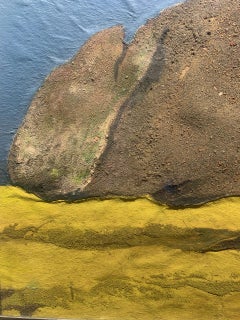
Located in Beachwood, OH

Clarence Holbrook Carter (American, 1904-2000) Terror of History No. 1, 1962 Acrylic and sand on scintilla Signed and dated upper left 23 x 30 inches See photos for condition. Clarence Holbrook Carter achieved a level of national artistic success that was nearly unprecedented among Cleveland School artists of his day, with representation by major New York dealers...

Category

1960s American Modern Figurative Paintings

Materials

Acrylic

"Rockefeller Center" - Abstract Rock, Mid-Century Acrylic & Sand Painting

"Rockefeller Center" - Abstract Rock, Mid-Century Acrylic & Sand Painting

By Clarence Holbrook Carter

Located in Beachwood, OH

Clarence Holbrook Carter (American, 1904-2000) Rockefeller Center, 1962 Acrylic and sand on scintilla Signed and dated lower left 25 x 20 inches Clarence Holbrook Carter achieved a ...

Category

1960s American Modern Abstract Paintings

Materials

Mixed Media, Acrylic

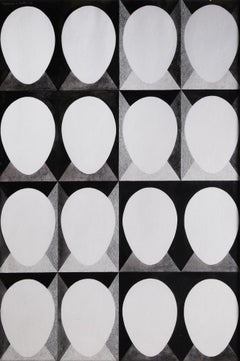
"People" - Mid-Century Ovoid Geometrical Abstract Black & White Drawing

"People" - Mid-Century Ovoid Geometrical Abstract Black & White Drawing

By Clarence Holbrook Carter

Located in Beachwood, OH

Clarence Holbrook Carter (American, 1904-2000) People, 1964 Ink and crayon on paper Signed and dated upper right 36.5 x 24 inches Clarence Holbrook Carter achieved a level of nation...

Category

1960s American Modern Abstract Drawings and Watercolors
Materials

Crayon, Ink