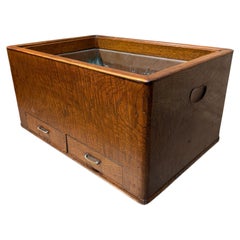
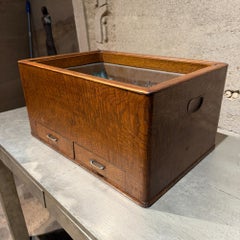
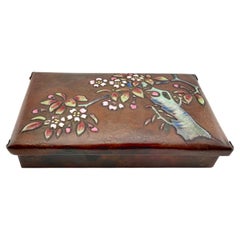
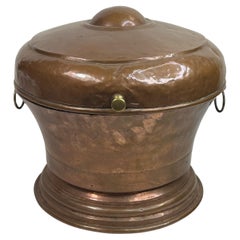
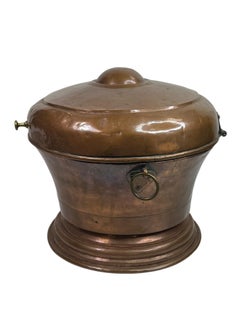
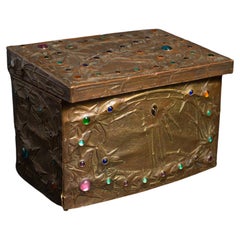
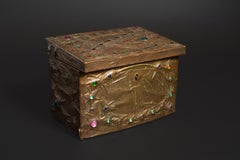
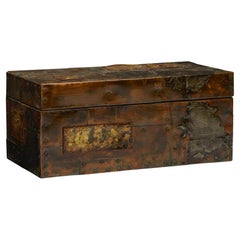
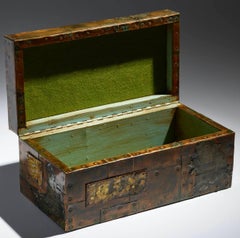
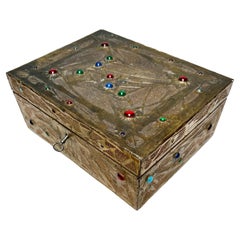
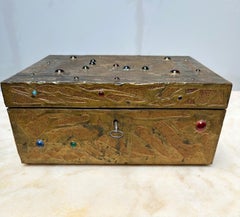
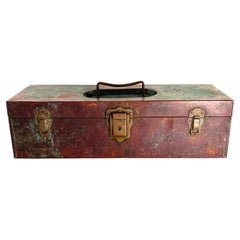
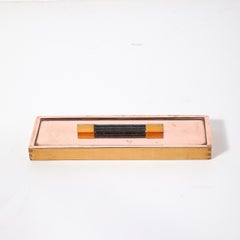
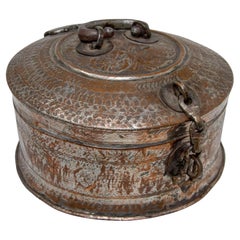
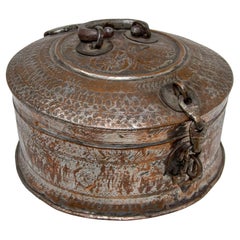
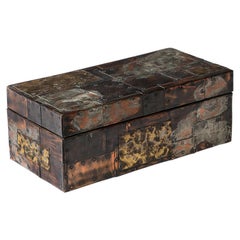
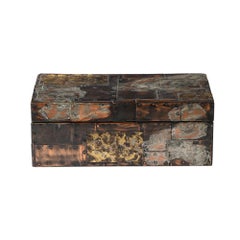
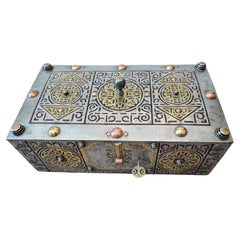
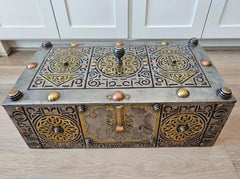
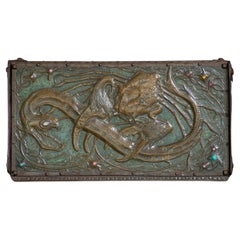
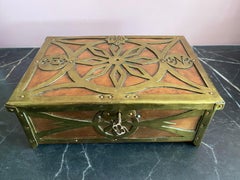
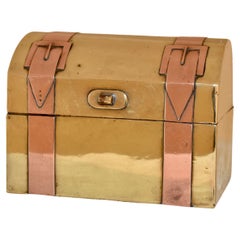
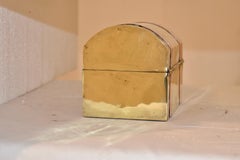
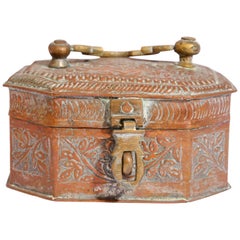
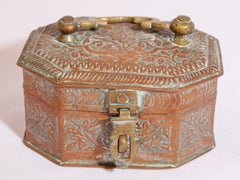
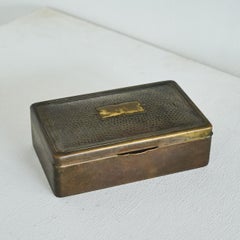
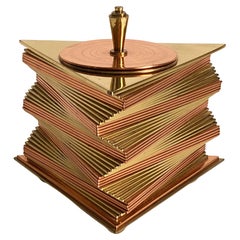
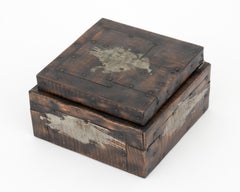
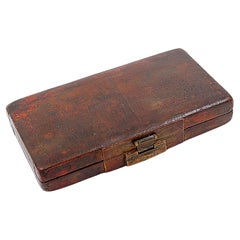
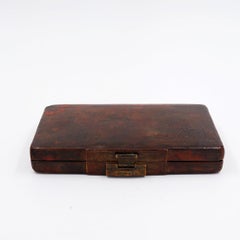
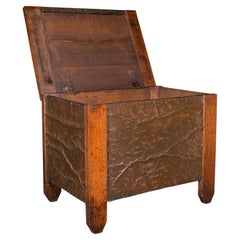
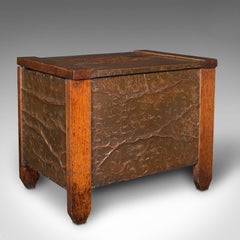
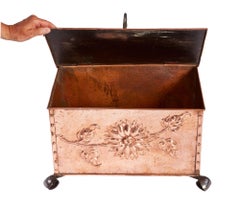
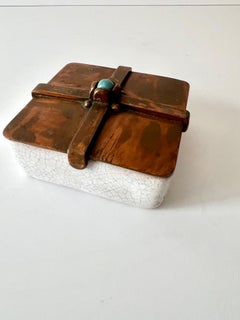
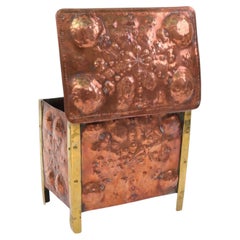
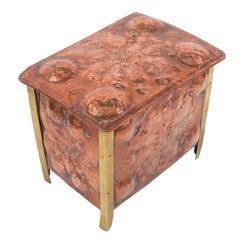
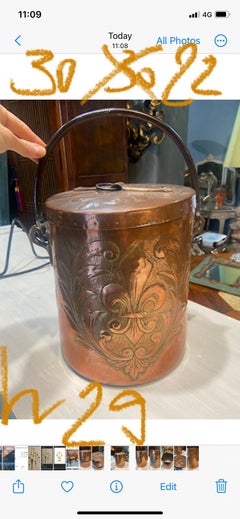
Large Early 20th C. Abercrombie & Fitch Copper Equestrian / Fishing Tackle Box
By Abercrombie & Fitch
Located in Red Lion, PA
Large Early 20th Century Abercrombie & Fitch Solid Copper Equestrian / Fishing Tackle Box, A True Unicorn of American Sporting History
There are rare objects.
And then there are objects so scarce they feel nearly extinct.
This sizable early 20th century solid copper tackle or equestrian box by Abercrombie & Fitch belongs in the latter category.
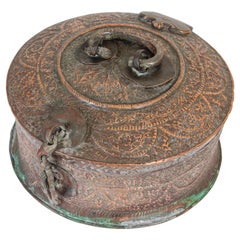
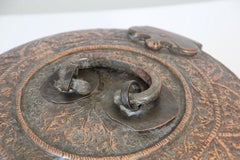
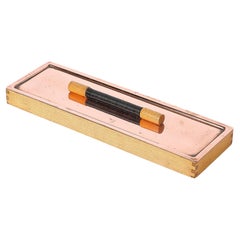
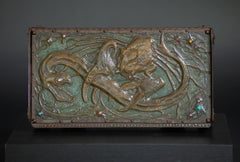
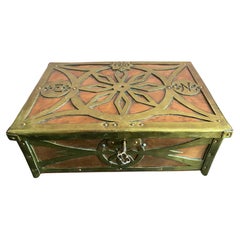
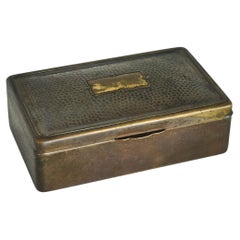
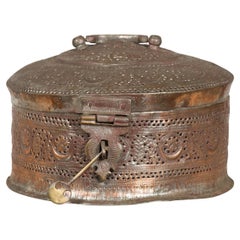
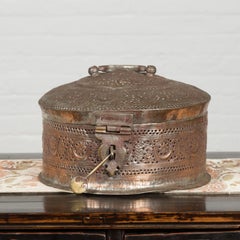
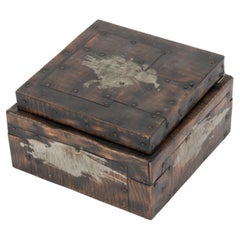
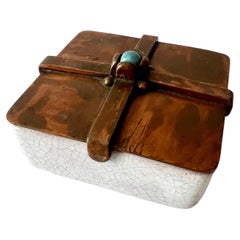
Measuring an impressive 7.25 x 19.13 x 5.38 inches, this is not a modest accessory, it is a commanding, heirloom-grade sporting chest fashioned entirely from solid copper and now cloaked in the most extraordinary naturally developed patina one could hope to encounter. Deep auburns, warm chocolate browns, and subtle verdigris undertones create a surface that only a century of honest aging can produce. It is sculptural. Architectural. Almost reverent.
In extensive research, no other surviving example of a copper latching box of this scale by Abercrombie & Fitch has surfaced. It is, quite simply, a unicorn.
Founded in 1892, Abercrombie & Fitch was not originally a fashion retailer, it was the premier American outfitter for serious outdoorsmen, explorers, equestrians, anglers, big-game hunters, and presidents.
By the early 20th century, the Abercrombie flagship store in Manhattan had become a pilgrimage site for those preparing for safari in Africa, trout fishing in the Adirondacks, or an expedition to the Arctic. Their catalogues were encyclopedic works of aspiration and utility, supplying everything from fly rods and saddlery to tents, custom firearms, and scientifically designed luggage.
Abercrombie & Fitch supplied some of the most recognizable names in American history, including: Theodore Roosevelt, Ernest Hemingway, and Amelia Earhart
Their goods were engineered not merely for leisure, but for endurance, precision, and legacy.
In a 1910 catalog, Abercrombie advertised a smaller copper tackle box with a tinned interior, confirming their use of copper for specialty sporting containers. This larger example likely dates slightly later in the early 20th century and appears to be entirely solid copper with zinc solder construction, suggesting commission by a specialist metalsmith rather than mass production.
Inside the lid, the classic early 20th-century Abercrombie & Fitch paper label remains intact—an extraordinarily rare survival in itself. Beneath it lies a second commission label indicating that this box was commissioned by Abercrombie, sold by Abercrombie, but manufactured by a specialist copper maker
To the left of the Abercrombie logo is a “B,” and to the right “Co”, yet the exact maker remains unidentified. This was typical of the era: premier retailers frequently partnered with elite specialty manufacturers, particularly in materials such as copper, leather, canvas, and firearms.
Just as Abercrombie worked with makers like Winchester Repeating Arms Company, Parker Brothers, and L.L.Bean, so too would they have commissioned bespoke storage from a workshop specializing in heavy-gauge copper.
Copper offered distinct advantages for fishing and equestrian gear. It is naturally corrosion-resistant, durable in damp climates, structurally strong yet repairable, and has distinguished aesthetic appeal
This box was built to survive generations.
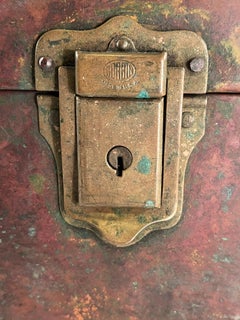
The exterior features two robust copper latches, a central locking clasp (no longer retaining its key, does not lock, but latches securely), an inset copper handle that moves smoothly and confidently, and two sturdy rear hinges that operate freely and remain structurally sound
The lid opens to reveal four evenly divided interior compartments, ideal for fly fishing tackle, shooting accessories, equestrian grooming tools, or specialized field instruments.
It is industrial elegance executed at the highest level.
The underside tells a story no reproduction ever could. The bottom is hand engraved:
“Jack Rochelle, High Point NC, USA”
This inscription transforms the object from rare artifact to an epic American story.
Born October 18, 1923, in Jamestown, North Carolina, John “Jack” Hardin Rochelle became one of High Point’s defining figures, a furniture industry legend, equestrian, decorated soldier, conservationist, and quintessential outdoorsman.
Jack’s early life was marked by loss and resilience. Raised by strong maternal guidance and later adopted by T.V. Rochelle, who instilled in him a passion for furniture manufacturing, Jack developed drive, discipline, and ambition from a young age.
He was a top equestrian in North Carolina, a Davidson College athlete and Kappa Sigma member, president of the Kappa Sigma Fraternity at the University of Georgia, head of the ROTC Cavalry Unit, and a student of furniture design at the University of Michigan
When World War II erupted, Jack joined the U.S. Army, receiving his commission as an officer. He served in the final Horse Cavalry...
Category
1930s American Industrial Vintage Copper Decorative Boxes