By Matthew Boulton
Located in valatie, NY
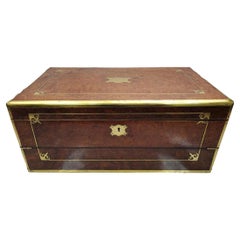
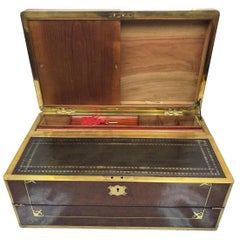
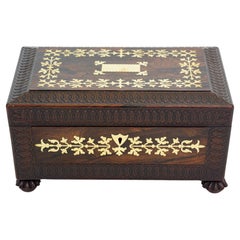
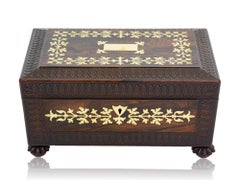
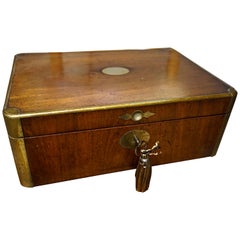
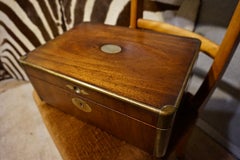
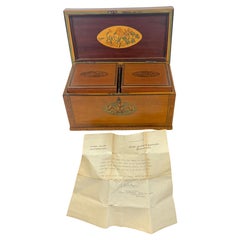
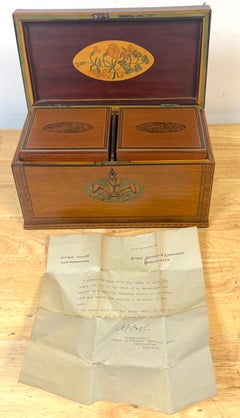
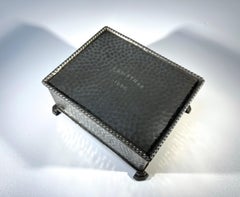
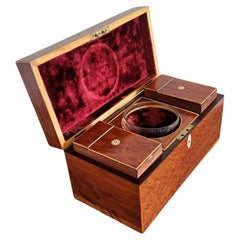
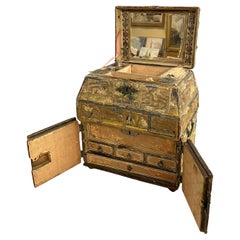
The hinged rectangular top with three oval Signed Wedgwood plaques depicting putti at various pursuits within oval paterae mounted swagged and beaded borders, opening to a morocco leather lined hinged slope enclosing a well, the upper section fitted with candlesticks and compartmentalized for inkwells, above a hinged lid the front with a spring loaded secret drawer opening to a needle or pincushion and spools of thread.
This unusual work box, mounted with blue and white jasperware signed Wedgwood plaques, is English in conception. The writing box was a popular form first used in the 18th c and well into the 19th c for traveling. This type of portable desk was described by the English poet William Cowper in 1785 as 'the most elegant, the compactest, the most commodious desk in the world.'
Additionally, the jasperware plaques, came from Josiah Wedgwood's factory in Stoke-on-Trent, Staffordshire, England. Its proximity to the steel manufacturing city of Birmingham, the birthplace of Matthew Boulton, producer of decorative metalwork (including cut steel mounts) and described by his friend and fellow-industrialist, Josiah Wedgwood, as 'the first Manufacturer in England', certainly suggests an English origin and possibly his handwork.
However, the polished steel mounts are also typical of furniture and objects made in Tula, Russia, where the Imperial Arms Factory was founded by Peter the Great in the early 18th c and which later became known for its decorative objects, including furniture and domestic pieces. Catherine the Great, Empress of Russia, ordered the 'Frog Service...
Category
Early 1800s George III Antique English Boxes