Carved Snuff Boxes and Tobacco Boxes

to
9
87
1
10
17
60
1
7
12
41
2
1
1
10
27
11
3
18
9
7
5
3
3
2
2
2
2
2
1
1
59
48
48
48
31
68
18
72
49
10
7
7
Height
to
Width
to
88
88
88
48
34
12
3
1
Technique: Carved
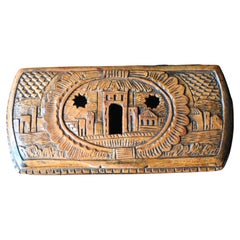
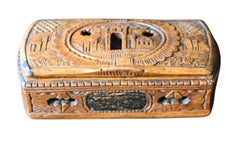
Rare large Swiss Black Forest Tobacco box with Chickens 19th century Humidor
Located in Ijzendijke, NL
A charming and finely detailed 19th-century Black Forest–style hand-carved tobacco jar. Entirely carved from wood and executed with remarkable depth and texture. A rare large size to...
Category

Late 19th Century German Black Forest Antique Carved Snuff Boxes and Tobacco Boxes

Materials

Oak

Snuff Box hand engraving, black “niello” type Sterling Silver Salimbeni
Located in Firenze, FI
Snuff Box rectangular in 925/1000 sterling silver with fine hand engraving, black fired enameled “niello” type, in early 19th century “Rococo” style. Snuff Box measurements cm. 4.5 x...
Category

1980s Italian Rococo Vintage Carved Snuff Boxes and Tobacco Boxes

Materials

Sterling Silver, Enamel
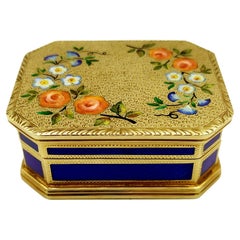
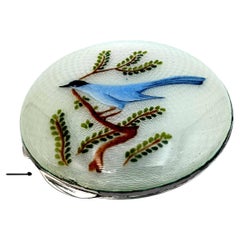
Snuffbox white enamel sterling silve stylised birdr miniature on the lid Salimba
Located in Firenze, FI
Round curved snuffbox in 925/1000 sterling silver with translucent fired enamels on guilloché, above and below, and miniature on the lid of a stylised bird, hand painted by the paint...
Category

1960s Italian Art Nouveau Vintage Carved Snuff Boxes and Tobacco Boxes

Materials

Gold, Gold Plate, Sterling Silver, Enamel
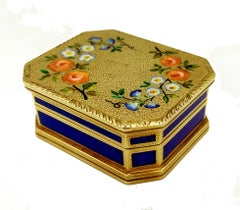
French School 1790 Louis XVI Oval Snuff Box in 18kt Gold with Miniature Portrait
Located in Miami, FL
Presentation Snuff box from the 18th century French School. A very important and rare Neoclassical oval box, made in Paris, France circa 1790. It was crafted with translucent natu...
Category

1790s French Neoclassical Antique Carved Snuff Boxes and Tobacco Boxes

Materials

Gold

19th Century Squared Spinach Jade Snuff Bottle with Unique Design
Located in Lomita, CA
This spinach jade snuff bottle has a geometric appearance with its squared silhouette and ledge that is ergonomically designed to accommodate a finger or a thumb while using the bott...
Category

Late 19th Century Chinese Chinese Export Antique Carved Snuff Boxes and Tobacco Boxes

Materials

Jade

Snuff Box "Soap" Shaped with Horse's Head Sterling Silver Enamel Salimbeni
Located in Firenze, FI
Oval rounded "soap" shaped snuff box in 925/1000 sterling silver with fired enamels above and below and hand-painted miniature of a horse's head, English "Art Nouveau" style, early 1900s. Measurements cm. 4.7 x 6.7 x 2. Weight gr. 96. Designed by Franco Salimbeni in 1980 and manufactured in Florence in the headquarters of the Salimbeni company with completely manual execution by artisan artists with thick slab and large reinforcements suitable for withstanding numerous enamelled firings at high heat at about 800° C. Miniature is a very ancient technique which consists of painting works in small proportions. It was born for the decoration of the first letter of the paragraph of the books. Over the years, however, this technique is refined and enriched, then moving on to precious personal items. Hand-painted miniatures can be done with multiple different techniques. The most important that we use on our articles are of three kinds: 1) Fire enamel. 2) Water tempera on an ivory plate. 3) Painted on mother-of-pearl. Fire enameled miniatures: On a first layer of enamel generally white or very clear or even transparent suitably liquefied at a temperature of about 750 ° C, the chosen subject is painted using miniature colors which are as many colored crystals, ground and reduced to a very fine, almost impalpable powder washed and purified in distilled water with the addition of small quantities of deoxidizing acids which, diluted with essential oils (usually essential oil of solder), can be mixed to form a palette of colors. With very fine sable hair brushes you draw the subject starting from the perimeter and then gradually adding various layers of color. It is necessary to carry out various firings very often so that the colors harden and are not absorbed by the underlying glaze as, during the subsequent firings at 750 ° C, during liquefaction, it would spread irremediably. Hence the need to form the painting a little at a time, cooking it numerous times. Therefore it is necessary to proceed with numerous retouching, often overlapping different colors that only the painter's experience knows. A beautiful miniature needs from 20 to over 50 firings and is finished when the painter deems he does not have to further intervene. Some colors must have darker tones than others because then, by superimposing the transparent enamel placed at the end of the miniature, they fade. This transparent layer, called “fondant” in jargon, must be smoothed and polished like all other translucent enamel colors. The miniatures with water tempera colors are painted on real ivory...
Category

1980s Italian Art Nouveau Vintage Carved Snuff Boxes and Tobacco Boxes

Materials

Sterling Silver, Enamel
Snuff box Enamel Stripes and miniature Sterling Silver Salimbeni
Located in Firenze, FI
Shaped snuff box in 925/1000 sterling silver gold plated with fire-enameled stripes and fine oval enameled miniature in center cm. 3 x 4 hand-painted by ...
Category

1970s Italian Napoleon III Vintage Carved Snuff Boxes and Tobacco Boxes

Materials

Sterling Silver, Enamel
Snuffbox Vessel Miniature Hand-Painted Sterling Silver Enamel Salimbeni
Located in Firenze, FI
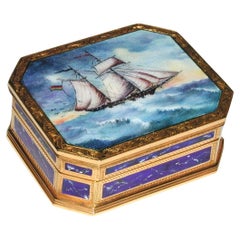
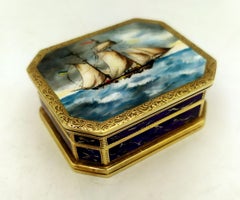
Shaped snuffbox in 925/1000 sterling silver gold plated with fired enamel inserted in a fine hand engraving and with round miniature diameter cm. 3.3 hand painted always with fire enamels depicting a sailing ship. Early 19th century Viennese Baroque style. Fine hand engraving on all sides and bottom. Measurements cm. 7.5 x 7.5 x 2. Weight gr. 151. Designed by Franco Salimbeni in 1976 on inspiration of ancient original artifacts and manufactured in Florence at the Salimbeni company headquarters in several specimens, also with different colors and miniatures, with completely manual execution by artisan artists with thick slabs and large reinforcements suitable for supporting numerous high-fire enamelled firings at approximately 750 < 800° C. Miniature is a very ancient technique which consists of painting works in small proportions. It was born for the decoration of the first letter of the paragraph of the books. Over the years, however, this technique is refined and enriched, then moving on to precious personal items. Hand-painted miniatures can be done with multiple different techniques. The most important that we use on our articles are of three kinds: 1) Fire enamel. 2) Water tempera on an ivory plate. 3) Painted on mother-of-pearl. Fire enameled miniatures: On a first layer of enamel generally white or very clear or even transparent suitably liquefied at a temperature of about 750 ° C, the chosen subject is painted using miniature colors which are as many colored crystals, ground and reduced to a very fine, almost impalpable powder washed and purified in distilled water with the addition of small quantities of deoxidizing acids which, diluted with essential oils (usually essential oil of solder), can be mixed to form a palette of colors. With very fine sable hair brushes you draw the subject starting from the perimeter and then gradually adding various layers of color. It is necessary to carry out various firings very often so that the colors harden and are not absorbed by the underlying glaze as, during the subsequent firings at 750 ° C, during liquefaction, it would spread irremediably. Hence the need to form the painting a little at a time, cooking it numerous times. Therefore it is necessary to proceed with numerous retouching, often overlapping different colors that only the painter's experience knows. A beautiful miniature needs from 20 to over 50 firings and is finished when the painter deems he does not have to further intervene. Some colors must have darker tones than others because then, by superimposing the transparent enamel placed at the end of the miniature, they fade. This transparent layer, called “fondant” in jargon, must be smoothed and polished like all other translucent enamel colors. The miniatures with water tempera colors are painted on real ivory...
Category

1970s Italian Baroque Vintage Carved Snuff Boxes and Tobacco Boxes

Materials

Sterling Silver, Enamel
Snuffbox female face wearing Art Nouveau style clothing Salimbeni
Located in Firenze, FI
Rounded rectangular snuffbox in 925/1000 sterling silver gold plated with fine hand-painted fire-enamelled miniature depicting a female face wearing Art Nouveau style clothing, hand-...
Category

1970s Italian Art Nouveau Vintage Carved Snuff Boxes and Tobacco Boxes

Materials

Gold, Gold Plate, Sterling Silver, Enamel
Mid-18th Century Decorative Lacquered Wooden Tobacco Snuff Box Black
Located in Brescia, IT
This fine wood lacquered wood case is painted both on the sides: there is the elegant portrait of a pretty woman on one side and on the other side, a natura...
Category

Mid-18th Century Austrian Baroque Antique Carved Snuff Boxes and Tobacco Boxes

Materials

Fabric, Wood, Lacquer

Snuff box Enamel Double opening Sterling Silver flower bouquet Salimbeni
Located in Firenze, FI
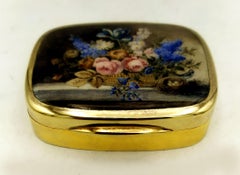
Square snuff box with two slightly domed sides in 925/1000 sterling silver gold plated with translucent fired enamel on guillochè and hand-painted miniature of flower bouquet, late 1...
Category

1970s Italian Art Nouveau Vintage Carved Snuff Boxes and Tobacco Boxes

Materials

Sterling Silver, Enamel
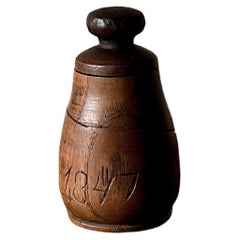
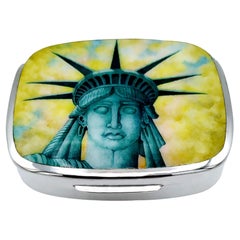
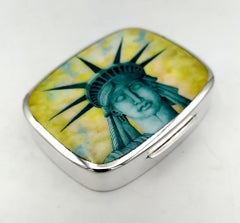
Snuffbox Head of the Statue of Liberty in New York hand painted Sterling Silver
Located in Firenze, FI
Rounded rectangular snuffbox in 925/1000 sterling silver with fine hand-painted fire-enamelled miniature depicting the Head of the Statue of Liberty in New York. Dimensions cm. 5.5 x 7 x 1.8. Weight gr. 105. Designed by Giorgio Salimbeni in 1975 in Art Deco style and executed in numerous specimens, at the specific request of the firm Tiffany & Co., in Florence in the headquarters of the Salimbeni firm with completely manual execution by artisan artists with thick slab and large reinforcements suitable for sustaining numerous high-fire enamelled firings at approximately 750 < 800° C. Miniature is a very ancient technique which consists of painting works in small proportions. It was born for the decoration of the first letter of the paragraph of the books. Over the years, however, this technique is refined and enriched, then moving on to precious personal items. Hand-painted miniatures can be done with multiple different techniques. The most important that we use on our articles are of three kinds: 1) Fire enamel. 2) Water tempera on an ivory plate. 3) Painted on mother-of-pearl. Fire enameled miniatures: On a first layer of enamel generally white or very clear or even transparent suitably liquefied at a temperature of about 750° C, the chosen subject is painted using miniature colors which are as many colored crystals, ground and reduced to a very fine, almost impalpable powder washed and purified in distilled water with the addition of small quantities of deoxidizing acids which, diluted with essential oils (usually essential oil of solder), can be mixed to form a palette of colors. With very fine sable hair brushes you draw the subject starting from the perimeter and then gradually adding various layers of color. It is necessary to carry out various firings very often so that the colors harden and are not absorbed by the underlying glaze as, during the subsequent firings at 750 ° C, during liquefaction, it would spread irremediably. Hence the need to form the painting a little at a time, cooking it numerous times. Therefore it is necessary to proceed with numerous retouching, often overlapping different colors that only the painter's experience knows. A beautiful miniature needs from 20 to over 50 firings and is finished when the painter deems he does not have to further intervene. Some colors must have darker tones than others because then, by superimposing the transparent enamel placed at the end of the miniature, they fade. This transparent layer, called “fondant” in jargon, must be smoothed and polished like all other translucent enamel colors. The miniatures with water tempera colors are painted on real...
Category

1970s Italian Art Deco Vintage Carved Snuff Boxes and Tobacco Boxes

Materials

Sterling Silver, Enamel
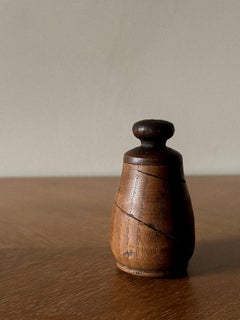
Tabacco Pot, in Wood and Brass, Brown Color, French, 1970
Located in Auribeau sur Siagne, FR
Tabacco box in wood. With brass. Leaf Decor pattern. Brown color. It has been made in France Circa 1970.
Category

1970s French French Provincial Vintage Carved Snuff Boxes and Tobacco Boxes

Materials

Brass

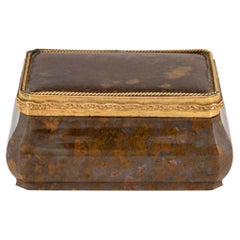
A Gold Mounted Moss Agate Snuff Box
Located in Spencertown, NY
The mottled brown agate with translucence when held to light. The cover with a gold rope twist edge above hinged clasp with wreath and berry design above a cushion base
Category

Mid-19th Century French Neoclassical Antique Carved Snuff Boxes and Tobacco Boxes

Materials

Agate, Gold

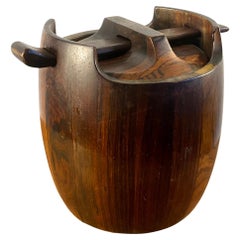
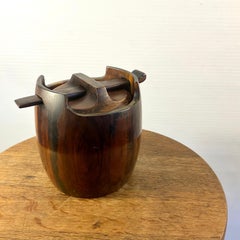
1960s Jean Gillon Tobacco Jar for Italma Wood Art Brazil
Located in London, GB
Cigar humidor or tobacco jar from the 1960s. This iconic piece from the Italma Wood Art collection was created by Brazilian designer Jean Gillon. Very well crafted from the finest st...
Category

Mid-20th Century Brazilian Mid-Century Modern Carved Snuff Boxes and Tobacco Boxes

Materials

Wood

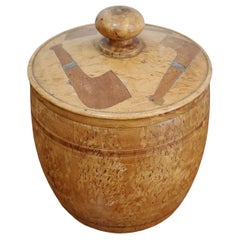
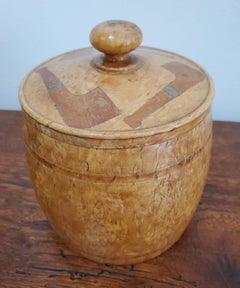
Early 20th Century Swedish Burled Birch Wood and Mahogany Tobacco Box
Located in Middleburg, VA
A little poem in wood, this early 20th-century Swedish tobacco box is a quiet testament to the beauty of everyday ritual. Hand-turned from golden-hued burled birch, its surface is al...
Category

Early 20th Century Swedish Arts and Crafts Carved Snuff Boxes and Tobacco Boxes

Materials

Metal, Brass

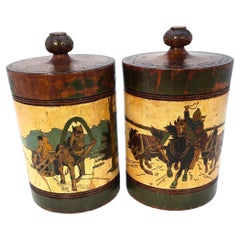
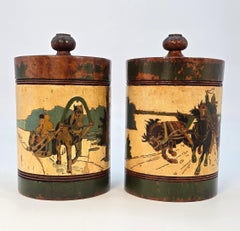
Russian tobacco containers with carved and painted decoration, treen, C 1890
Located in Central England, GB
This rare pair of Russian folk art treen tobacco containers are beautifully hand turned from one solid piece of limewood. They have well hollowed interiors with a neatly fitting lid ...
Category

Late 19th Century Russian Folk Art Antique Carved Snuff Boxes and Tobacco Boxes

Materials

Wood

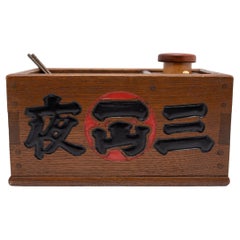
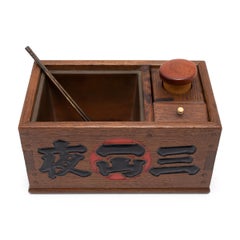
Japanese Tokyo Shop Tabako-Bon
Located in Chicago, IL
This wooden box is a Japanese tabako-bon, or 'tobacco tray,' used to store tobacco and smoking accessories. Believed to have evolved from the traditional ...
Category

Early 20th Century Japanese Taisho Carved Snuff Boxes and Tobacco Boxes

Materials

Brass, Sheet Metal

Japanese Tabako-bon with Two Rabbits, c. 1920
Located in Chicago, IL
This wooden box is a Japanese tabako-bon, or 'tobacco tray,' used to store tobacco and smoking accessories. Believed to have evolved from the traditional ...
Category

Early 20th Century Japanese Taisho Carved Snuff Boxes and Tobacco Boxes

Materials

Bamboo, Bakelite, Hardwood

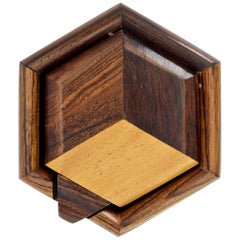
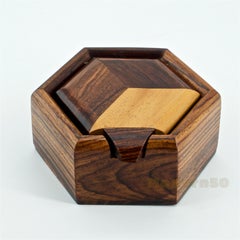
1960s Geometric Jewelry Trinket Geometric Box Mexican Craft Eclectic Woodworker
Located in Hyattsville, MD
Vintage hinged lidded hexagonal box by Don Shoemaker, Senal.
Category

1960s Mexican Mid-Century Modern Vintage Carved Snuff Boxes and Tobacco Boxes

Materials

Cocobolo

French 1750 Antique Double Compartment Pocket Snuff Flask Carved In Coquille Nut
Located in Miami, FL
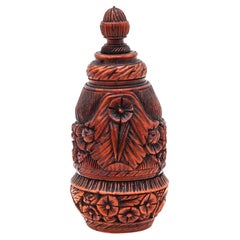
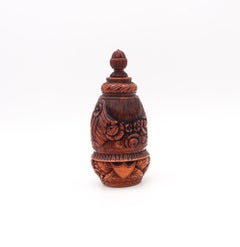
Pocket snuff flask carved from coquille nut. Amazing small pocket snuff bottle, carved from a large coquille nut. This antique piece was created in the shape of a spinning top with two secret compartments which can be unscrewed to open. Made in the continental Europe and most probably French or Portuguese provenance from the 18th century, circa 1780. Extensively decorated with organic and floral motifs with a beautiful image of a nut on the upper part. Curiously due to the shape of this piece, it could be played as a spinning tool on a table. This adds a particular interest for the multiple use with which the carving was conceived. Weight: 42.60 Grams. Measurements: Diameter of 40 mm and a height of 89 mm (1.57 x 3.5 Inches). Hallmarks: No marks, gorgeous deep antique patina. Coquille Nut The coquille nut emanates from swampy areas on the eastern side of South America, from a palm known as the “attalea funiefera”. Brazilians call it “Piassabe”. The nuts were introduced into Western Europe in the mid-16th century, and used for small carved objects until the end of the 19th century. Coquille nut is a fruit of a Brazilian palm...
Category

1750s French Louis XV Antique Carved Snuff Boxes and Tobacco Boxes

Materials

Chestnut, Fruitwood

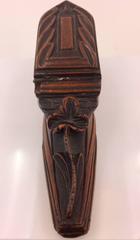
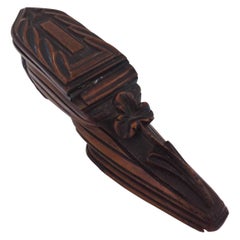
Carved Shoe Form Treen Snuff Box with Carved Shamrock, 19th Century
Located in Spencertown, NY
Probably Irish given the carved shamrock, with hinged top and robust leaf like carving. A small chip to bottom of toe and two small holes on the bottom likely from former mounting.
Category

19th Century Irish Victorian Antique Carved Snuff Boxes and Tobacco Boxes

Materials

Wood

Snuff Box “Savonette” Sterling Silver Fire Enamel and Miniature Salimbeni Home>S
Located in Firenze, FI
Snuff box “savonette” shape in 925/1000 sterling silver with fire enamel and hand painted miniature on white background depicting two heads of running horses . English “Art Nouveau” ...
Category

1970s Italian Art Nouveau Vintage Carved Snuff Boxes and Tobacco Boxes

Materials

Gold, Enamel, Sterling Silver, Gold Plate

Snuffbox basket with flowers, in Florentine Renaissance style, Salimbeni
Located in Firenze, FI
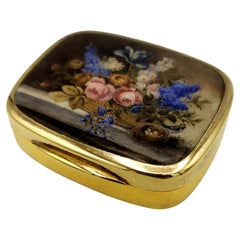
Rounded rectangular snuffbox in 925/1000 sterling Silver gold plated with beautiful fire enamelled miniature hand-painted by the painter Renato Dainelli of a basket with flowers, in ...
Category

1960s Italian Napoleon III Vintage Carved Snuff Boxes and Tobacco Boxes

Materials

Gold, Gold Plate, Sterling Silver, Enamel
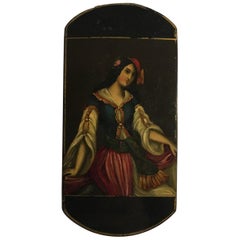
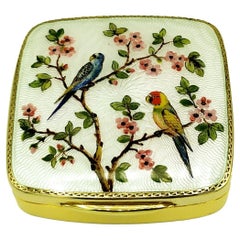
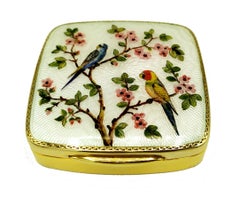
Snuff Box Parrotlets on Flowering Branches. Art Nouveau Style Sterling Silver En
Located in Firenze, FI
Square snuff box with rounded sides in 925/1000 sterling silver gold plated with translucent fired enamel on guillochè and hand painted miniature parrotlets on flowering branches. Ar...
Category

1990s Italian Mid-Century Modern Carved Snuff Boxes and Tobacco Boxes

Materials

Sterling Silver, Enamel
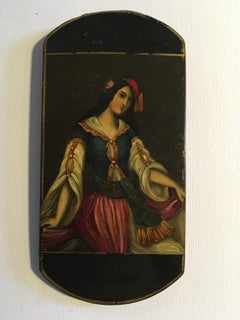
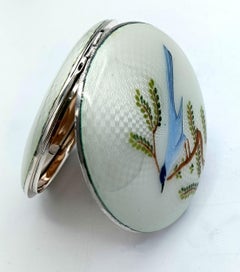
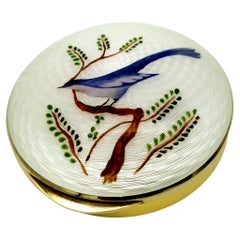
Snuff Box White Fire Enamel with Miniature of Bird Salimbeni
Located in Firenze, FI
Round snuff box in 925/1000 sterling silver gold plated with translucent fire enamel on guilloche and hand-painted miniature of stylized blue bird, late 19th-century Viennese Art Nou...
Category

1970s Italian Art Deco Vintage Carved Snuff Boxes and Tobacco Boxes

Materials

Sterling Silver, Enamel
Chinese Cinnabar Lacquer Cuspidor
Located in New Orleans, LA
This intriguing Chinese zhadou is intricately carved of fine cinnabar lacquer. A work of exceptional artistry, this covered bowl is adorned with an intricately carved floral motif on all surfaces, including the cover and the wide rim. Also known as a cuspidor or spittoon, this rare container would have been used by members of the imperial family and scholar- officials at the court. Carved during the Kangxi period (1662-1722), this charming piece exhibits the high detail and charm associated with items from that period, making it a true treasure, Early 18th century (Kangxi dynasty) Measures: 6 ¼” wide x 3 ¼” high Cinnabar has been revered for its color all over the world. It has been found in the royal burial chambers of the Mayas, in the rituals of India, and in the ruins of ancient Greece and Rome. In China, cinnabar and gold were the two most important elements in alchemy. Mined since the Neolithic Age, cinnabar is the ore of mercury, and as such, it can be incredibly toxic, especially when mining. In fact, during the Roman Empire, miners at Spain’s Almadén mine in Spain were frequently exposed to mercury fumes, and the subsequent, often fatal, sickness was considered an occupational hazard. The most popular known use of cinnabar is in Chinese carved lacquer-ware, a technique that is believed to have originated in the Song Dynasty, in which cinnabar is ground to a powder and added to clear lacquer. As with mining, there was inherent danger of mercury poisoning for those who carved the lacquer, as mercury was also released into the air when artisans ground the pigments. Most antique cinnabar...
Category

18th Century Chinese Other Antique Carved Snuff Boxes and Tobacco Boxes

Materials

Lacquer

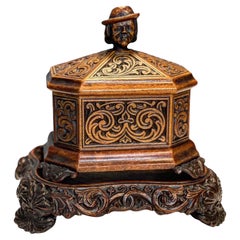
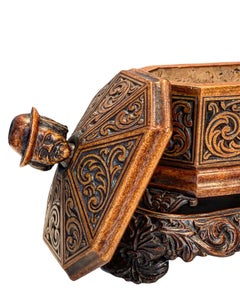
18th Century Georgian Hand-Carved Walnut Wood Tobacco Box
Located in North Miami, FL
18th century Georgian hand-carved walnut wood tobacco box on its original stand. This is an extremely fine and rare piece and one of its kind.    
Category

18th Century Georgian Antique Carved Snuff Boxes and Tobacco Boxes

Materials

Wood, Walnut