Austrian Decorative Objects

2,845 Results
to
289
2,566
263
22
28
484
2,054
285
1,028
870
75
260
89
261
170
25
330
130
30
21
5
794
497
458
66
46
36
23
18
14
14
12
8
7
4
3
2
2
1
1,818
831
635
604
365
1,786
825
13,100
100,629
28,834
25,218
17,666
Height
to
Width
to
2,851
2,833
2,841
383
168
147
141
90
Place of Origin: Austrian
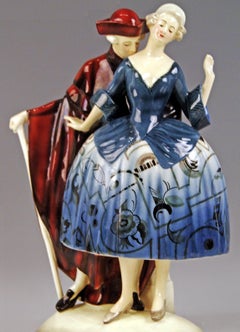
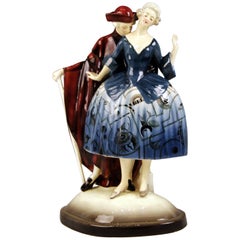
Goldscheider Vienna Rococo Scene Loving Gallant Couple 5517, Kostial, circa 1930

Goldscheider Vienna Rococo Scene Loving Gallant Couple 5517, Kostial, circa 1930

By Goldscheider Manufactory of Vienna

Located in Vienna, AT

Gallant Rococo scene of loving couple Manufactory: Goldscheider Vienna / Austria Dating of manufacture: made circa 1930 Material: ceramics / painted / glossy finish Technique of manufacture: ceramics modelling Designer: Josef Kostial...

Category

1930s Other Vintage Austrian Decorative Objects

Materials

Ceramic

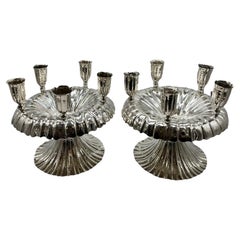
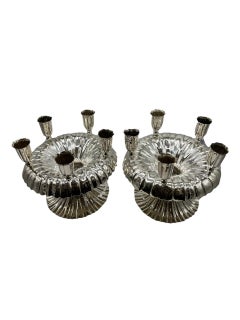
Frank Brüder Circa 1925, Pair of Austrian Sterling Silver Five-Light Candelabra

Frank Brüder Circa 1925, Pair of Austrian Sterling Silver Five-Light Candelabra

Located in North Miami, FL

Circa 1925 pair of Austrian silver five-light candelabra by artist, Frank Brüder, From Vienna. Each circular with spot hammered surface, the lobed everted rim with scalloped edge and...

Category

20th Century Austrian Decorative Objects

Materials

Silver, Sterling Silver

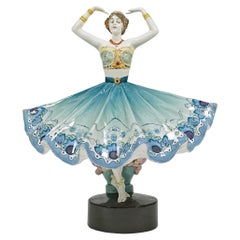
Goldscheider "Indian Dancer" Ceramic Statuette by Podala

Goldscheider "Indian Dancer" Ceramic Statuette by Podala

By Goldscheider Manufactory of Vienna

Located in Ciudad Autónoma Buenos Aires, C

Goldscheider "Indian Dancer" ceramic statuette design by Podola and it was registered as "Model 4495". The stattuete depicts the female dancer Ruth Saint ...

Category

1920s Art Deco Vintage Austrian Decorative Objects

Materials

Ceramic

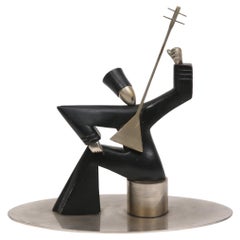
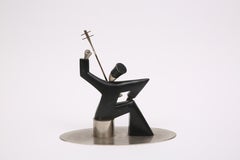
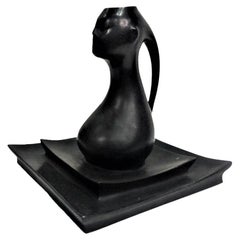
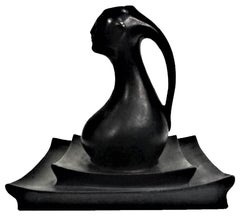
Art Deco Balalaika Sculpture by Werkstätte Hagenauer, Circa 1920

Art Deco Balalaika Sculpture by Werkstätte Hagenauer, Circa 1920

By Werkstätte Hagenauer Wien

Located in Ciudad Autónoma Buenos Aires, C

Wood and bronze sculpture. Signed by Hagenauer Wien, WHW, Made in Vienna, 47/9. Austria, CIRCA 1920.

Category

1920s Art Deco Vintage Austrian Decorative Objects

Materials

Bronze

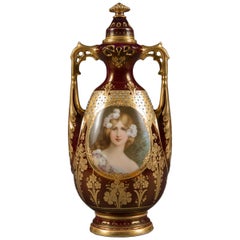
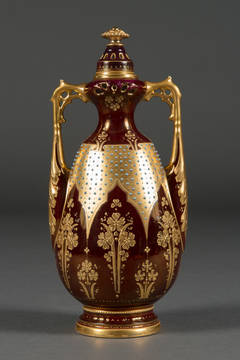
Royal Vienna Porcelain Jeweled Iridescent Portrait Vase

Royal Vienna Porcelain Jeweled Iridescent Portrait Vase

By Royal Vienna Porcelain

Located in Tarzana, CA

A beautiful antique Royal Vienna hand painted "Jeweled" porcelain portrait vase. The vase is painted with a portrait of a young lady wearing flowers in her hair. The iridescent red ...

Category

Early 1900s Napoleon III Antique Austrian Decorative Objects

Materials

Porcelain

Alfonso Canciani, Viennese Secession Orientalist Bronze Vase, c. 1910

Alfonso Canciani, Viennese Secession Orientalist Bronze Vase, c. 1910

By Alfonso Canciani

Located in New York, NY

Alfonso Canciani (Italian-Austrian, 1863-1955) was a famous Italian-Austrian sculptor of the period of accession to the Viennese Secession. Son of a stonemason, after a realist period he managed to establish himself as a leading sculptor of the Viennese Secession. In fact, he worked in Vienna, where he had enrolled in 1886 at the Academy of Fine Arts, then at the Higher School of Sculpture and finally at the Special School, where he obtained the Rome prize for the sketch for Dante's Monument. He developed a notable business obtaining important prizes and numerous commissions. First among the sculptors of the Viennese capital, he was invited to join the Association of the Viennese Secession, of which Klimt was magna pars, after the exhibition of Dante's group in 1900 at the Secession exhibition, and obtained the most important Austrian artistic prize, the Kunstlerlpreis. This same work, presented in 1910 in Berlin, at the Great Art Exhibition, also received an important recognition here. He obtained the Rome prize in 1896, exhibited successfully in Munich and in 1899 at the III International Art Exhibition in Venice. In that period he made some statues of saints for the cathedral of Santo Stefano in Vienna, the monument to Wagner, the bust of Nietzsche for the University, the scepter and the gold chain of the University Rector, figures of Italian poets ( Petrarch, Boccaccio, Tasso, Ariosto). He submitted a sketch for the official monument to Empress Elizabeth, which was then built in Austrisn Gföhl and Pula. At the time of his accession to the Secession, he dedicated himself to decorating the facade of the Artaria house in Vienna in collaboration with the architect Max Fabiani. He later abandoned the symbolist decorativism of the Jugendstil for a more concentrated and vigorous style, approaching the Belgian sculptor Constantin Meunier for the theme of work, and preferring to exhibit at the Künstlerhaus. In Vienna, he was generous with advice and help with the Italians and in particular with his fellow citizens (such as the Brazzanese Luigi Visintin, then a university student). After the First World War, he returned to Italy and lived in Friuli, penalized by the fact that the Habsburg Empire had by now disappeared. Instead of large-scale public monuments, he then devoted himself to engraving medals (e.g. for Benedict XV and for the Italian mission in Vienna in 1919) and to designing funeral monuments (examples in Mali Lošinj and Trieste) and portrait busts (of Generals Carlo Caneva and Antonio Baldissera in Udine, sculptures of the War Memorial of Corno di Rosazzo). After all, he had already executed the Bab grave monument in the Döblinger cemetery in Vienna in 1909. He taught in Trieste from 1920 until 1935, at the local school of industrial art, where he had Marcello Mascherini...

Category

1910s Jugendstil Vintage Austrian Decorative Objects
Materials

Bronze

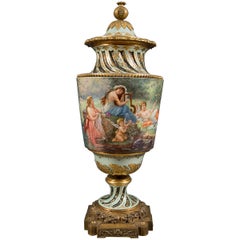
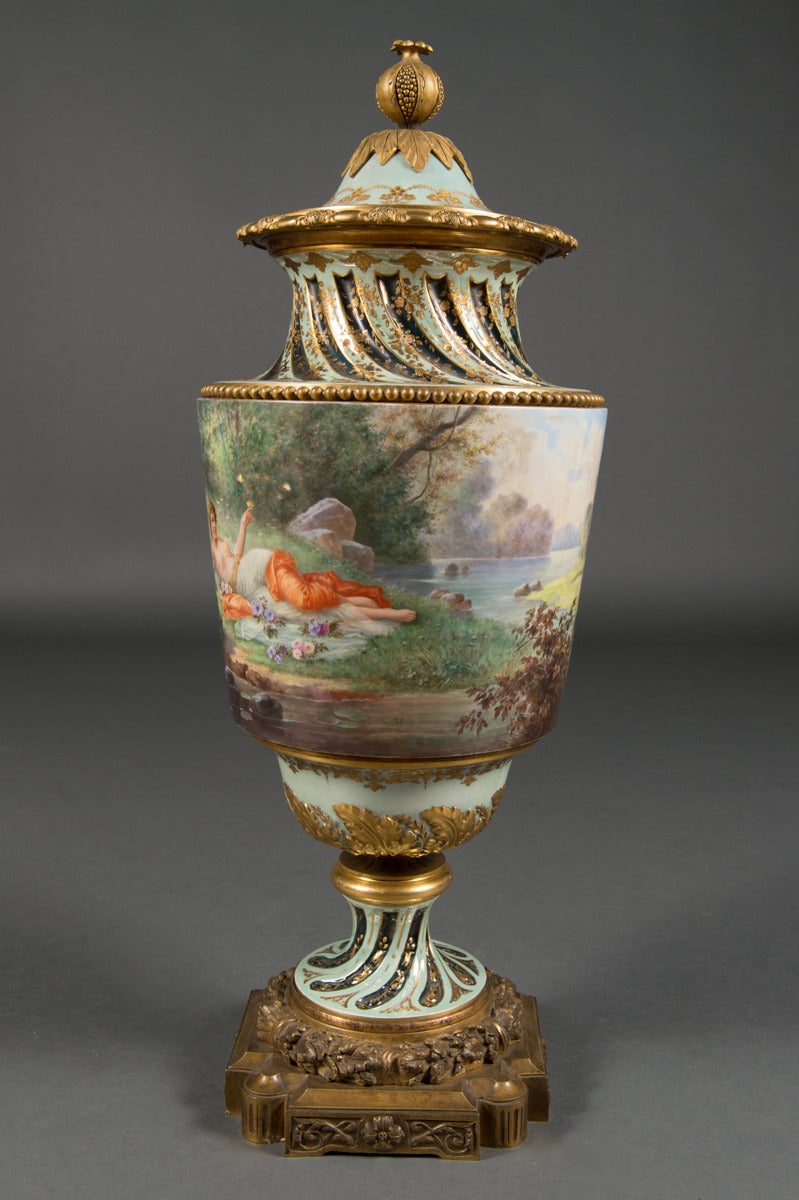
Large Austrian Royal Vienna Bronze Mounted covered Vase, circa 1890

Large Austrian Royal Vienna Bronze Mounted covered Vase, circa 1890

By Royal Vienna Porcelain

Located in Tarzana, CA

A very fine 19th century "Royal Vienna" hand painted gilt bronze mounted porcelain covered urn. The 360 degree body finely painted in the Bouguereau style with a maiden playing a Lyre, other maidens in the background, and a cherub picking flowers near a river. The swirly neck and base extremely decorative and rare. The top with a pomegranate finial Austria, Circa 1890 Marked with the under glazed Royal Vienna Beehive...

Category

19th Century Art Nouveau Antique Austrian Decorative Objects

Materials

Bronze

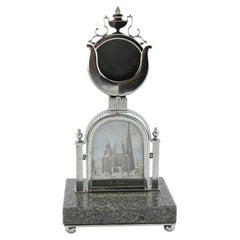
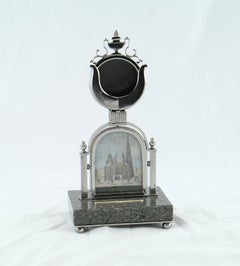
Austrian Clock Holder, Granite and Steel with Picture St Stephans Dome

Austrian Clock Holder, Granite and Steel with Picture St Stephans Dome

Located in Östermalm, Stockholms län

A beautiful and exclusive clock stand made of steel and granite. Holding a picture of the Stephans-dome. The most famous church in Wienna, Austria. High quality craftsmanship on all...

Category

Early 19th Century Empire Antique Austrian Decorative Objects

Materials

Granite, Steel

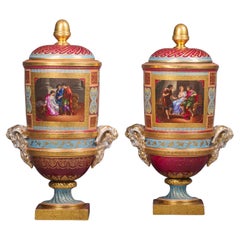
Pair of Vienna Style Covered Cylindrical Vases

Pair of Vienna Style Covered Cylindrical Vases

By Royal Vienna Porcelain

Located in Brighton, West Sussex

A fine pair of Vienna style covered cylindrical vases, on square footed socle bases. The vases are decorated with classical scenes including Jupiter an...

Category

19th Century Antique Austrian Decorative Objects

Materials

Porcelain

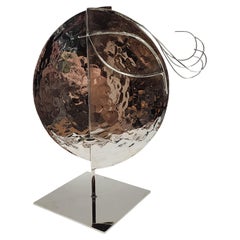
Art Deco Mask Sculpture in Silver-Plated Metal by Hagenauer Wien, Austria

Art Deco Mask Sculpture in Silver-Plated Metal by Hagenauer Wien, Austria

By Werkstätte Hagenauer Wien

Located in Autonomous City Buenos Aires, CABA

Art Deco Mask Sculpture in Silver-Plated Metal by Hagenauer Wien, Austria This Art Deco sculpture in the form of a stylized mask was created by the renowned Viennese firm Hagenauer ...

Category

20th Century Art Deco Austrian Decorative Objects

Materials

Metal

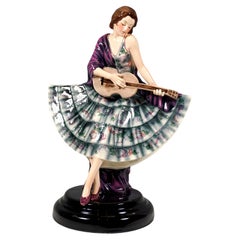
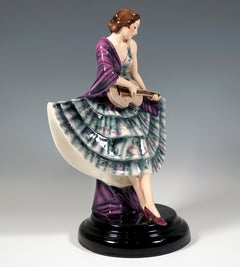
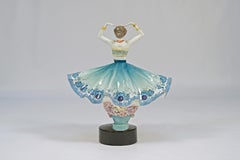
Rare Goldscheider Vienna Figure, Dancer With Guitar, by Josef Lorenzl, ca 1930

Rare Goldscheider Vienna Figure, Dancer With Guitar, by Josef Lorenzl, ca 1930

By Goldscheider Manufactory of Vienna, Josef Lorenzl

Located in Vienna, AT

Rare Goldscheider Art Déco figurine of around 1930: Dancer with brown hair pinned up at the nape of her neck in a dress flared like a fan with flounces and floral decoration, leaning...

Category

1930s Art Deco Vintage Austrian Decorative Objects
Materials

Ceramic

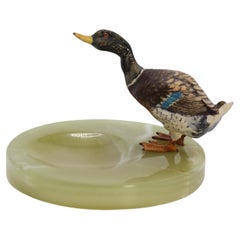
Austrian Cold Painted Bronze Study of a Drake Mallard Duck Drinking, circa 1930

Austrian Cold Painted Bronze Study of a Drake Mallard Duck Drinking, circa 1930

Located in Central England, GB

An Austrian cold painted bronze study of a drake mallard duck drinking This fine bronze study of drake mallard duck was produced in Austria, circa 1930. It is very well modelled a...

Category

Mid-20th Century Austrian Decorative Objects

Materials

Bronze

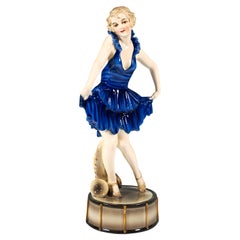
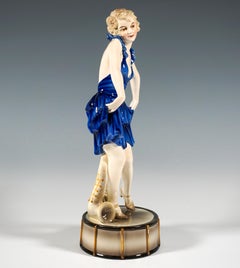
Goldscheider Art Déco Dancer Posing On Drum, by Josef Lorenzl, Around 1926

Goldscheider Art Déco Dancer Posing On Drum, by Josef Lorenzl, Around 1926

By Goldscheider Manufactory of Vienna, Josef Lorenzl

Located in Vienna, AT

Rare Goldscheider Art Deco ceramic figure of the 1920's: Depiction of a young vaudeville dancer posing in a short, low-cut, backless, blue dress with ruffled flounces and a bow, hold...

Category

1920s Art Deco Vintage Austrian Decorative Objects
Materials

Ceramic

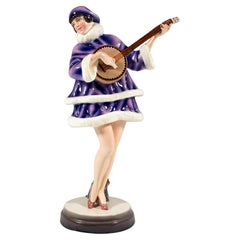
'Banjo Play' Zerline Balten As A Banjo Player, Goldscheider Vienna, ca 1930

'Banjo Play' Zerline Balten As A Banjo Player, Goldscheider Vienna, ca 1930

By Stefan Dakon, Goldscheider Manufactory of Vienna

Located in Vienna, AT

Rare Art Déco Goldscheider Art Ceramic Figurine around 1930. Zerline Balten, a Viennese dancer and actress, is depicted accompanying herself in her 'fantasy dance' on a banjo. The yo...

Category

1930s Art Deco Vintage Austrian Decorative Objects
Materials

Ceramic

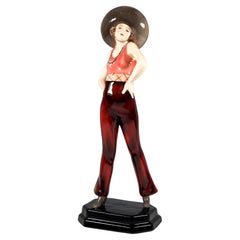
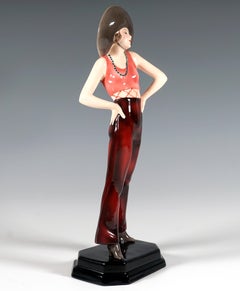
Goldscheider Art Déco Figure, Girl With Pointed Hat, by Stephan Dakon, ca 1934

Goldscheider Art Déco Figure, Girl With Pointed Hat, by Stephan Dakon, ca 1934

By Goldscheider Manufactory of Vienna, Stefan Dakon

Located in Vienna, AT

Very rare art ceramic figurine of the 1930s: Standing girl with a pointed, sombrero-like hat on her chin-length brunette hair, dressed only in a black, short bolero jacket opened wid...

Category

1930s Art Deco Vintage Austrian Decorative Objects
Materials

Ceramic

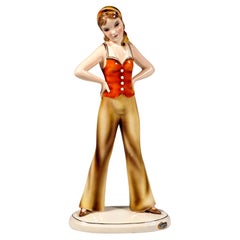
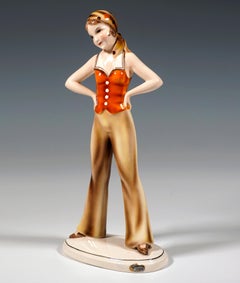
Goldscheider Art Déco Figure, Girl With Headscarf, by Stephan Dakon, ca 1933

Goldscheider Art Déco Figure, Girl With Headscarf, by Stephan Dakon, ca 1933

By Stefan Dakon, Goldscheider Manufactory of Vienna

Located in Vienna, AT

Very rare art ceramic figurine of the 1930s: Standing girl with a dotted headscarf tied to the back of her head in orange and brown tones, dressed in a sleeveless orange top with a w...

Category

1930s Art Deco Vintage Austrian Decorative Objects
Materials

Ceramic

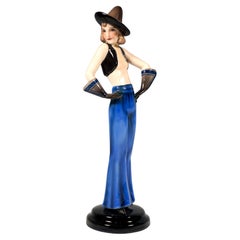
Goldscheider Art Déco Figure 'Cowboy Girl', By Stephan Dakon, Circa 1929

Goldscheider Art Déco Figure 'Cowboy Girl', By Stephan Dakon, Circa 1929

By Goldscheider Manufactory of Vienna, Stefan Dakon

Located in Vienna, AT

Very Rare Art Ceramic Figurine Around 1929: Girl with a wide-brimmed hat on her short curls, sleeveless, short top, wearing long flared trousers and cowboy boots on her feet, standin...

Category

1920s Art Deco Vintage Austrian Decorative Objects
Materials

Ceramic

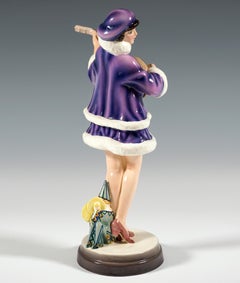
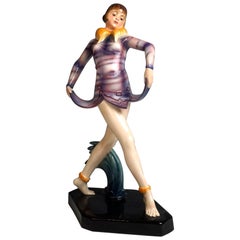
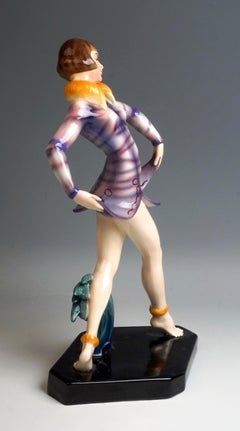
Goldscheider Vienna 'Revue' Single Figur of the 'Dolly Sisters' by Dakon, 1930

Goldscheider Vienna 'Revue' Single Figur of the 'Dolly Sisters' by Dakon, 1930

By Stefan Dakon, Goldscheider Manufactory of Vienna

Located in Vienna, AT

Remarkable Art Déco Goldscheider ceramics figurine of the 1930s Standing young revue dancer with pageboy hairstyle, taking a step forward. At the same time she lifts the bellflower-shaped hem of her short purple dress with a fur collar with both hands. A large tuft of grass supports the figure on the left leg. On a black, diamond-shaped base. This figure also exists as a group of two, as the 'Dolly Sisters...

Category

1930s Art Deco Vintage Austrian Decorative Objects
Materials

Ceramic

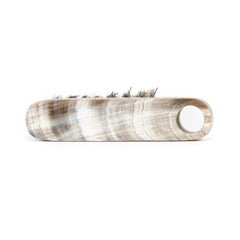
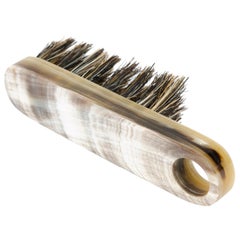
Brush by Carl Aubock

Brush by Carl Aubock

By Werkstätte Carl Auböck

Located in Sagaponack, NY

An elegant brush hand carved from cow Horn with naturally occurring variations in color and pattern.

Category

1960s Mid-Century Modern Vintage Austrian Decorative Objects
Materials

Horn

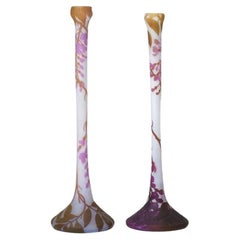
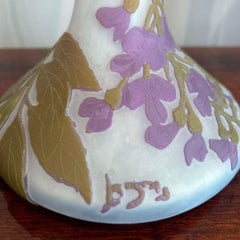
Art Nouveau Vase, signed by LeGras, 1900

Art Nouveau Vase, signed by LeGras, 1900

By Loetz Glass

Located in Zurich, CH

The Legras vases, from around 1900, feature white glass overlaid with violet and green, etched with delicate wisteria motifs. Signed by the renowned French glassmaker Legras, these v...

Category

Early 1900s Art Nouveau Antique Austrian Decorative Objects
Materials

Glass

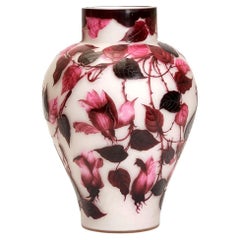
Art Nouveau Vase, signed by Loetz, 1910

Art Nouveau Vase, signed by Loetz, 1910

By Loetz Glass

Located in Zurich, CH

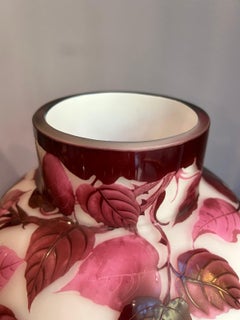
The vase by Loetz from around 1910, features white glass with a red overlay and is intricately etched with a rose motif. The leafs of the rose stand out in light pinkish to deep purp...

Category

1910s Art Nouveau Vintage Austrian Decorative Objects
Materials

Glass

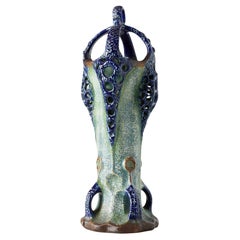
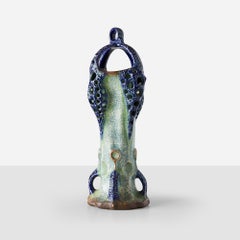
Art Nouveau Porcelain Vase by RStK Pottery, Austria, Circa 1900

Art Nouveau Porcelain Vase by RStK Pottery, Austria, Circa 1900

Located in San Francisco, CA

An Art Nouveau porcelain vase marked "Amphora" and "Austria" on the bottom, hallmarks of the Riessner, Stellmacher, and Kessel factory. Design shows evidence of the work Eduard Stell...

Category

Early 1900s Modern Antique Austrian Decorative Objects
Materials

Porcelain

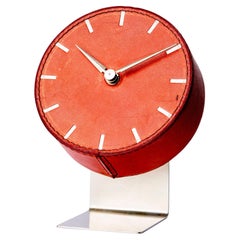
Carl Auböck Table Clock in red leather, Austria 1950s

Carl Auböck Table Clock in red leather, Austria 1950s

By Werkstätte Carl Auböck

Located in Berlin, DE

A beautiful leather and stainless steel modernist clock from the 1950s, designed and executed by Carl Auböck in very rare and hard to find red leather, Vienna/Austria. An amazing str...

Category

1950s Mid-Century Modern Vintage Austrian Decorative Objects
Materials

Stainless Steel

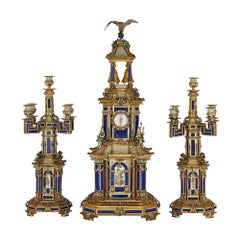
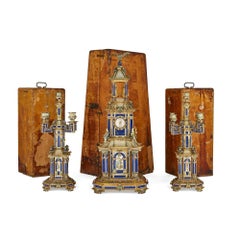
Impressive Antique Austrian Champlevé Enamel, Silver-Gilt and Lapis Lazuli Clock

Impressive Antique Austrian Champlevé Enamel, Silver-Gilt and Lapis Lazuli Clock

Located in London, GB

Impressive antique Austrian champlevé enamel, silver-gilt and lapis lazuli clock set Austrian, Late 19th century Clock: Height 91cm, width 37cm, depth 37cm Candelabra: Height 64cm, width 24cm, depth 24cm Clock case: Height 97cm, width 44cm, depth 41cm Candelabra case: 67cm, width 27cm, depth 27cm Crafted in Austria in the late 19th century, this magnificent three-piece clock set was most likely gifted to the Imperial Russian family by the Austro-Hungarian Royal family. Its design is inspired by various cultures and styles, whilst its high quality celebrates some of the best craftsmen of the late 19th century. Of a tiered pagoda shape, the clock is surmounted by an eagle, its wings spread wide landing atop a vibrant lapis lazuli ball. The eagle is most likely a reference to Turul, a mythological animal which is a symbol of Hungary. This bird of prey is also a popular feature within Turkish traditions. Within a canopy, supported on four sturdy lapis lazuli pillars two prominent silver-gilt bells are hanging. These are carved with various motifs such as acanthus leaf design and connect to the clock mechanism below. The bells ring informing its users of the time. All four sides of the piece are inset with a clock, an unusual feature on an object of this type and a testament to its highest quality. The inclusion of clocks on all sides signifies that the antique is aimed to be a centrepiece, admired from all sides. The dial is decorated using the champlevé enamelling technique, whereby ‘parcels’ are carved into the silver gilt and into which enamel is poured. The 12 numbers are coloured in black with a gold outline and are surrounded by a white circular background making them stand out and easy to read. The hour clock dial is cast in the form of a sun, while the minute hand is represented as the moon. The two motifs symbolise one’s bright and gloomy sides of existence. The four corners around the clocks are mounted with three-dimensional female figures dressed in traditional garments from around the world. For example, one figure is dressed in typical Turkish clothing...

Category

Late 19th Century Antique Austrian Decorative Objects
Materials
Lapis Lazuli, Silver, Bronze, Enamel