Silver Mounted Objects

to
4
56
3
2
13
10
33
5
14
6
9
1
1
2
3
2
6
3
2
2
2
1
1
1
29,132
1,266
1,150
711
416
39
21
39
12
12
10
9
Height
to
Width
to
61
61
61
6
3
3
1
1
Material: Silver
Stoup in silver and ebony; Augsburg, last quarter of the 16th century

Stoup in silver and ebony; Augsburg, last quarter of the 16th century

Located in MADRID, ES

Stoup in silver and ebony Augsburg, last quarter of the 16th century Attributed to the master architect, sculptor, and goldsmith Guglielmo della Porta (1500–1577) Includes a study co...

Category

16th Century German Renaissance Antique Silver Mounted Objects

Materials

Silver

Mid Century Abstract Modern Sound Sculpture by Val Bertoia in Copper & Brass

Mid Century Abstract Modern Sound Sculpture by Val Bertoia in Copper & Brass

By Val Bertoia

Located in Philadelphia, PA

A stunning sound sculpture made by Val Bertoia. Makes a beautiful chime when played. Comprised of 39 beryllium copper rods silvered to brass base. Stamped and numbered with COA from ...

Category

2010s American Mid-Century Modern Silver Mounted Objects

Materials

Brass, Copper, Silver

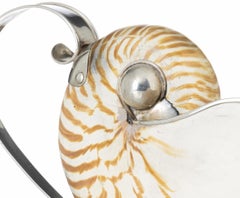
1960s Seashell Sculpture On Stand

1960s Seashell Sculpture On Stand

By Gabriella Binazzi

Located in Tarrytown, NY

This 1960s Seashell Sculpture features a crowned Baeler melon seashell The melon shell has a distinctive crown of spines that circles around the apex of the shell Curved metal detai...

Category

1960s Vintage Silver Mounted Objects

Materials

Silver Plate

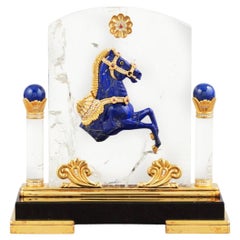
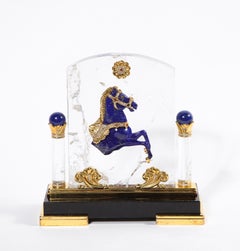
Mellerio Paris, A French Gold, Diamond, Silver-Gilt, Rock-Crystal, & Lapis Horse

Mellerio Paris, A French Gold, Diamond, Silver-Gilt, Rock-Crystal, & Lapis Horse

By Mellerio

Located in Long Island City, NY, NY

Mellerio Paris, A French Gold, Diamond, Silver-Gilt, Rock-Crystal, Obsidian & Lapis Horse An extremely rare and unique, one of a kind French gold, diamonds, Silver-gilt rock-crystal, obsidian and lapis lazuli jeweled sculpture "Bucéphale, Chevaux de légende", "Bucephalus, A Legendary Horse" by Mellerio, Paris, circa 1998. Sitting on black obsidian base, the solid rock crystal slab is finely applied with a lapis lazuli half-horse with harness mounted in 18k gold and brilliant cut diamonds, between two crystal and lapis lazuli columns adorned with gold and diamonds, insert with 7 ruby cabochons and 1 emerald cabochon, the obsidian base with a plaque engraved: CHEVAUX DE LEGENDE / MELLERIO DITS MELLER / PARIS / 5029 DIV Bucephalus (c355-326 BC) is among the most famous horses in history, and it was said that this he could not be tamed. The young Alexander the Great, of course, tamed him – and went on to ride his beloved equine companion for many years and into many battles. The piece is in excellent condition and comes with a custom made wood case made for transport. It's very elegant and has French hallmarks throughout. A truly magnificent piece. Measures 10" high x 9" wide x 4" deep Founded in France in 1613 by the descendants of Italian immigrants from the Vigezzo Valley in the north of Italy, Mellerio is one of the oldest jewellery houses in Europe. The family business soon attracted the attention of the Royal Court and Marie Antoinette herself reportedly purchased a precious bracelet featuring 7 cameos surrounded by rubies in 1780. Later on, in the 19th century, Mellerio became the official supplier of the French Royal family and the Court of Netherland. Mellerio creates many jewellery items, all set with rare gems such as peridots, amethysts, aquamarines, citrines and topaz, applying for a patent, the flexible stem, a very supple and light jewellery mechanism. Mellerio remains also well known for their spectacular series of Art Nouveau jewels, created at the beginning of the 20th century, as well as for the creation of trophies rewarding some of the greatest footfall and tennis players of history. In 1993, the jewellery house launched their first watch collection. Today, Mellerio has stores in Paris, Japan and Hong Kong. July 14, 1789: this date is known throughout the world as the beginning of the French Revolution. According to a ledger belonging to House of Mellerio, this was also the day that the jeweler sold a golden key to the Comte de Coutance for 10 livres. This ledger, as well as inventories dating as far back as 1768, are the jeweler’s oldest archives. These archives have continued to grow over the years, as the House, established on rue de la Paix in Paris, still lives on today, still in the hands of the same family from Craveggia, in the North of Italy. The tumultuous history of the Mellerio family in France probably goes as far back as the Italian wars of the Renaissance, but the first official document proving their commercial activity in Paris dates back to 1613. This document is the famous royal warrant awarded by Marie de Medici to a number of Italian families established along the rue des Lombards, including the Mellerios, allowing them to sell “small jewelery items”, therefore granting them a small exception to the traditional monopoly enjoyed by Parisian jewelers. At that time, powerful corporations regulated the operations and customs of Parisian business, but thanks to this exceptional warrant, the Mellerios managed to escape the confines of this framework. Today, this wax-sealed document is kept at the city hall of Craveggia. From 1613 to the Revolution, the Mellerios lived between France and Italy. The corporations tried many times to put an end to their trade privileges, but all in vain, as a dynasty of sovereigns renewed the warrant. Always marrying and often retiring in Craveggia, the Mellerios continued to maintain their jewelry business in Paris. At first, they did this without a shop. Wearing backpacks (wooden boxes divided into small compartments where jewels were kept), they would tour town fairs around Paris and royal castles. This is how Jean-Baptiste Mellerio (1765-1850) is said to have sold a bracelet set with rubies and Antique cameos to Marie-Antoinette, which still exists today. Many elements seem to prove the veracity of this anecdote. The queen was particularly fond of cameos, which cover the entire background of her famous jewelry cabinet, and ruby was her favorite stone after diamond. The famous bracelet, reacquired a few years ago by the House of Mellerio, is indeed an 18th century jewel, set with antique cameos representing the profiles of Roman emperors. Two branches of the family were operating in Paris during this time, under the reign of Louis XVI: that of Jean-François (1746-1828), the paternal ancestor of the current Mellerios, and that of Jean-Baptiste (1765-1850). The French Revolution forced them to return to Italy. However, both Jean-Baptiste and François Mellerio (1772-1843), who was the son of Jean-François, were eventually able to return to Paris after the founding of the Consulate. Jean-Baptiste opened a shop at the Iron Crown of rue Vivienne, and François opened his at the Palais des Tuileries, rue du Coq Saint-Honoré. His well-organized order books give an idea of his high-ranking clientele during the “Old Regime”, among which were the Comte and Comtesse Octave de Segur, the Marquise (later Duchess) de Tourzel, former governess of the royal children, and her daughter, the Comtesse de Bearn, the Craufurds -who organized the flight to Varennes, the Duc and Duchess de Gramont, the Comtesse de Boigne, and Madame de Souza, Talleyrand’s mistress. We also see the names of the imperial family: Empress Josephine, the Queen of Holland, Princess Elisa, Caroline and Pauline. At that time, the House of Mellerio specialized, among other things, in the trade of antique cameos, a newly fashionable genre of jewel that captured the imagination of all the princesses and noble women of the time. The years of the Restauration and July Monarchy were among the most glorious. The Bourbons were back on the throne, and the clientele of the House of Mellerio had regained its former wealth. Mellerio supplied Louis-Philippe, Duke of Orléans, as well as his mother, wife and sister, with sumptuous jewels, including a set of emeralds made piece by piece, while the Duke of Bourbon, last prince of the House of Condé, offered diamonds to his mistress, the scheming Baronne de Feucheres, and Monsieur de LaFayette also bought cameos for one of his granddaughters. For the first time, Mellerio ventured into the world of arts in 1815, when Carlotta Grisi, a famous dancer who created Giselle, as well as an actress named Rachel, bought jewels at the Mellerio store on rue de la Paix. 1848 marked a new turning point. France once again became a Republic. François Mellerio handed the company over to his son, Jean, and the latter decided to travel to Spain to build a new clientele. He later became one of the jewelers of the royal family, and met Eugénie de Montijo, who remained a faithful client when she became empress of the French people. The Imperial years were lavish. During the Second Empire, Paris was a pageant of crinoline dresses designed by Worth, while jewels by Mellerio, Worth’s neighbour on the rue de la Paix, adorned the noble women of the Tuileries court. The Empress bought pearls. Mathilde Bonaparte...

Category

20th Century French Silver Mounted Objects

Materials

Lapis Lazuli, Rock Crystal, Gold, Silver

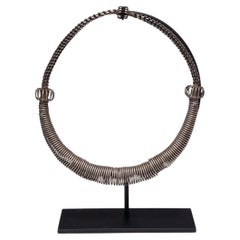
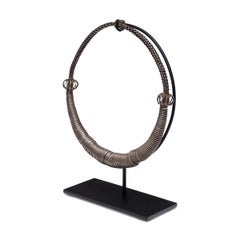
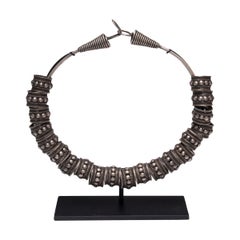
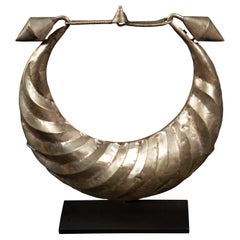
Miao Minority Tribe Silver Necklace 11.5"H

Miao Minority Tribe Silver Necklace 11.5"H

Located in New York, NY

Stunning Silver Miao Minority Tribe Necklace mounted on a custom base. Meticulously designed to add a touch of cultural charm to your space, this captivating piece serves as a decora...

Category

Early 20th Century Chinese Tribal Silver Mounted Objects

Materials

Silver

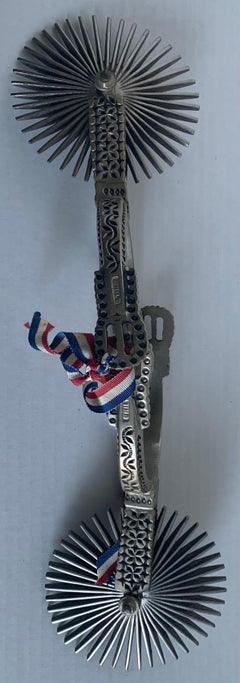
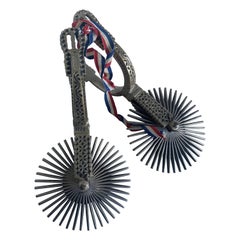
Chilean Metal Huasos Spurs

Chilean Metal Huasos Spurs

Located in Stamford, CT

Early 20th century Chilean huasos metal spurs. Heavy silvered metal stamped Chile on the side. As found with grosgrain ribbon attached.

Category

Early 20th Century Chilean Spanish Colonial Silver Mounted Objects

Materials

Metal, Silver

Buccellati Sterling Silver shell

Buccellati Sterling Silver shell

By Buccellati

Located in Saint-Ouen, FR

Buccellati Sterling Silver shell Italian work 1970

Category

1970s Italian Vintage Silver Mounted Objects

Materials

Sterling Silver

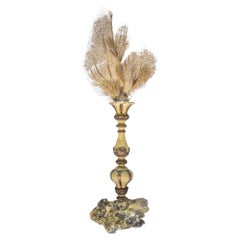
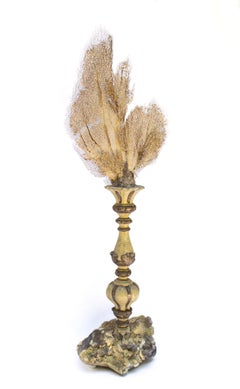
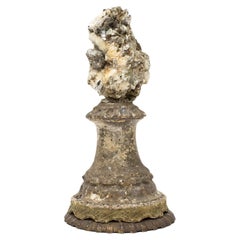
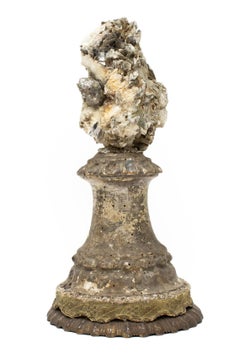
18th Century Italian Candlestick with Natural Citrine Crystals and Sea Fan

18th Century Italian Candlestick with Natural Citrine Crystals and Sea Fan

By Interi

Located in Dublin, Dalkey

18th century Italian hand-carved candlestick with hand-painted cream tones and distressed silver leaf detailing, darkened with age, with a coordinating fossil sea fan surrounded by u...

Category

18th Century Italian Rococo Antique Silver Mounted Objects

Materials

Coral, Crystal, Rock Crystal, Silver Leaf

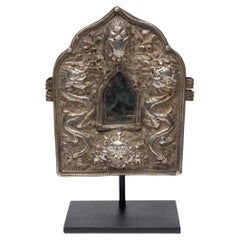
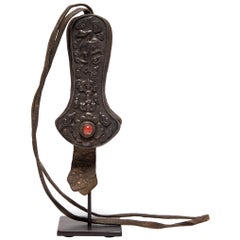
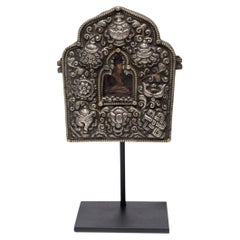
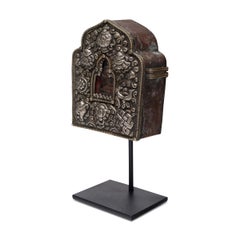
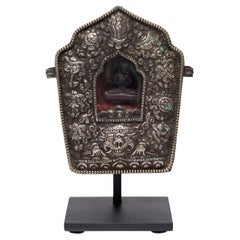
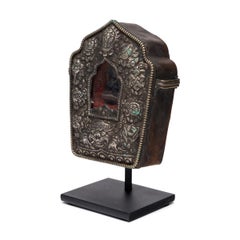
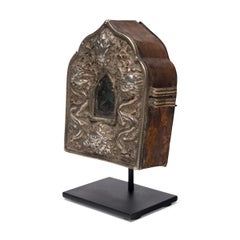
Tibetan Gau Traveling Shrine, c. 1900

Tibetan Gau Traveling Shrine, c. 1900

Located in Chicago, IL

Tibetan traveling shrines, known as Gau, were believed to offer protective powers and were used to hold and carry sacred objects during long journeys. Crafted over a century ago, a B...

Category

Early 20th Century Tibetan Tibetan Silver Mounted Objects

Materials

Silver, Copper

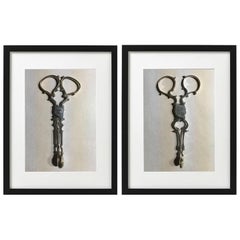
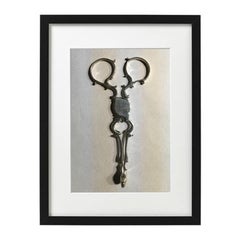
London  18th Century Pair of Regency Sterling Silver Sugar Nips

London 18th Century Pair of Regency Sterling Silver Sugar Nips

Located in Brescia, IT

England, London 18th Century pair of sterling silver sugar nips put in wooden black frames with glass. The wooden frames are a contemporary...

Category

18th Century English Regency Antique Silver Mounted Objects

Materials

Sterling Silver

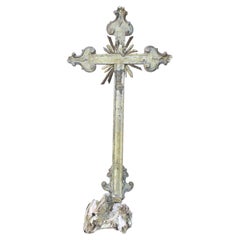
18th Century Italian Silver and Gold Crucifix with Mica and Calcite Crystal

18th Century Italian Silver and Gold Crucifix with Mica and Calcite Crystal

By Interi

Located in Dublin, Dalkey

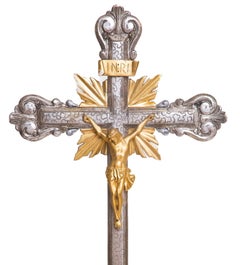
18th century Italian silver and gold leaf crucifix adorned with baroque pearls and mounted on a mica cluster and a calcite crystal. The mica specimen is from the Great Smoky Mountain...

Category

18th Century Italian Rococo Antique Silver Mounted Objects

Materials

Rock Crystal, Gold Leaf, Silver Leaf

19th Century Italian Sterling Silver Madonna, circa 1830

19th Century Italian Sterling Silver Madonna, circa 1830

Located in Milano, IT

Embossed and engraved silver plaque La Madonna del lago (The Madonna of the Lake) Probably Milan, post 1824 Brass frame It measures 16.14 in x 13.85 in (41 x 35.2 cm) and it weighs 10.357 pounds (4.698 g): silver 1.31 pounds (598 g) + brass 9.03 pounds (4.100 g) State of conservation: some abrasions on the bottom. The frame is old, but not original. The plaque is made up of a sheet of embossed and engraved silver, and held in a solid brass frame. It depicts the “Madonna del lago” – “Madonna of the Lake” - (the Madonna with Child and San Giovannino) by Marco d'Oggiono (Oggiono, 1474 circa - Milan, 1524 circa), while changing only the background landscape. Almost certainly the subject reproduced in the plaque was taken from a famous engraving by Giuseppe Longhi (Monza, 1766 - Milan, 1831), one of the greatest engravers of his era. The silver is unmarked, probably because originally the Madonna was due to be exposed in a church: sometimes precious metals destined for worship and liturgical use would be exempted from payment and were, therefore, not marked. It is very likely that the plaque was made in Milan because in this city in 1824 the engraving by Giuseppe Longhi was made and printed. In addition, in Milan, the alleged lost painting by Leonardo da Vinci in his Milanese period (1482-1500) would be produced; this is the painting from which Marco d'Oggiono took his version. The painting Marco d?Oggiono was one of Leonardo da Vinci's most brilliant students and collaborators (D. Sedini, Marco d’Oggiono, tradizione e rinnovamento in Lombardia tra Quattrocento e Cinquecento, Roma 1989, pp. 151-153, n. 56; p. 225, n. 124, with previous bibliography). His style reflects in every way that of the Tuscan Maestro, so much so that he was the one who executed some copies of da Vinci's paintings. The execution of the “Madonna del Lago” probably draws inspiration from a lost painting by the Maestro, created while he was living in Milan (1482-1500). There are many similarities with other works by Leonardo such as the “Vergine delle rocce” or the “Vergine con il Bambino e San Giovannino, Sant’Anna e l’Agnello”. The painting, from which the drawing and then the famous engraving were taken, is found today at the M&G Museum of Bob Jones University in Greenville, South Carolina, where it came to rest after the sale of the Harrington Collection in London in 1917. The work appears in the inventories of the collection of Napoleon and Joséphine Bonaparte at the castle of Malmaison, before 1809. The Malmaison building was born and developed in the 17th and 18th centuries. In the 18th century it belonged to Jacques-Jean Le Coulteux du Molay, a wealthy banker. Later, during the Directory, Joséphine Bonaparte de Beauharnais bought it on April 21st, 1799, but settled at the castle definitively only after her husband separated from her in 1809. She remained there until 1814, the year of her death. When Joséphine died, the estate passed to her son Eugène de Beauharnais, who moved to Munich with his whole family in 1815, bringing with him the collection of paintings he inherited from his mother. Eugène died in 1824 and his wife Augusta of Bavaria (von Bayern), unable to keep it, in 1828 sold the Malmaison to the Swedish banker Jonas-Philip Hagerman. It is likely that in this period Augusta also sold part of the paintings inherited from her husband, including the “Madonna del Lago”. This painting then came into the possession of Leicester Stanhope, fifth Earl of Harrington (1784 - 1862) and then was passed down to his descendants. In 1917, at the death of Charles, eighth Earl of Harrington, his brother Dudley inherited the title and properties and he put up a part of his collections for sale. Among these, precisely, the painting by Marco d'Oggiono was to be found. On the occasion of that auction the painting was presented as a work by Cesare da Sesto, by virtue of a handwritten note by the Countess of Harrington on the back of the table. However, already in 1857, the German critic Gustav Waagen had identified Marco d'Oggiono as the author of the painting, then exhibited in the dining room of Harrington House in London (Treasures of Art in Great Britain, in 4 volumes, London, 1854 and 1857). The engraving Giuseppe Longhi was one of the most renowned engravers in Italy between the end of the 18th century and the first quarter of the 19th century. In 1824 Giuseppe Longhi, based on a design by Paolo Caronni, made a famous engraving of the painting of Marco d?Oggiono. The activity of Longhi was then at the peak of his notoriety, enough to earn him very substantial commissions; it is not risky to suppose that some of his successful engravings were also reproduced using other means: in our case in silver. (A. Crespi, a cura di, Giuseppe Longhi 1766–1831 e Raffaello Morghen...

Category

1820s Italian Neoclassical Antique Silver Mounted Objects

Materials

Sterling Silver, Brass

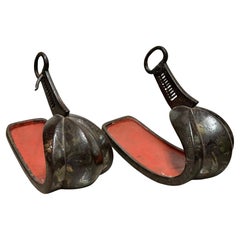
Rare Pair of Japanese Samurai Abumi (Stirrups) from the Edo Period

Rare Pair of Japanese Samurai Abumi (Stirrups) from the Edo Period

Located in San Diego, CA

A rare and evocative pair of antique Japanese samurai abumi (horse-riding stirrups) dating to the Edo period (1603–1868). Expertly forged in iron, with a silver inlay decorative desi...

Category

18th Century Japanese Edo Antique Silver Mounted Objects

Materials

Silver, Iron

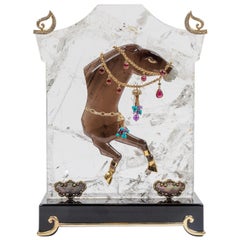
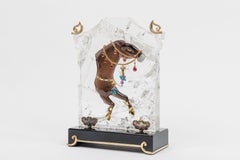
Mellerio Paris, A French Gold, Diamonds, Silver, and Smoky Quartz Carved Horse

Mellerio Paris, A French Gold, Diamonds, Silver, and Smoky Quartz Carved Horse

By Mellerio

Located in Long Island City, NY, NY

Mellerio Paris, A French Gold, Diamonds, Silver-Gilt, Rock-Crystal, Jade, Mother-Of-Pearl and Smoky Quartz, Carved Horse Sculpture, Jeweled Mounted Object. An extremely rare and unique, one of a kind French gold, diamonds, Silver-gilt, rock-crystal, jade, obsidian, mother-of-pearl, and smoky quartz carved jeweled sculpture "CHEVAUX DE LEGENDE", "A Legendary Horse" by Mellerio, Paris, circa 1991. Sitting on black obsidian base, the solid rock-crystal slab is finely applied with a carved smoky -quartz and jade horse with a harness mounted in 18k gold, brilliant -cut diamonds, rubies, turquoise, and amethyst chains and pendants. The top columns adorned with 18k gold and brilliant cut diamond pendants, the bottom with gold and mother of pearl plaques. The obsidian base with a plaque engraved: CHEVAUX DE LEGENDE" / N° 05 / MELLERIO DITS MELLER / PARIS / 5003 D The piece is in excellent condition and comes with a custom made wood case made for transport. It's very elegant and has French hallmarks throughout. A truly magnificent piece. Measures 10.5" high x 8.5" wide x 4" deep Founded in France in 1613 by the descendants of Italian immigrants from the Vigezzo Valley in the north of Italy, Mellerio is one of the oldest jewellery houses in Europe. The family business soon attracted the attention of the Royal Court and Marie Antoinette herself reportedly purchased a precious bracelet featuring 7 cameos surrounded by rubies in 1780. Later on, in the 19th century, Mellerio became the official supplier of the French Royal family and the Court of Netherland. Mellerio creates many jewellery items, all set with rare gems such as peridots, amethysts, aquamarines, citrines and topaz, applying for a patent, the flexible stem, a very supple and light jewellery mechanism. Mellerio remains also well known for their spectacular series of Art Nouveau jewels, created at the beginning of the 20th century, as well as for the creation of trophies rewarding some of the greatest footfall and tennis players of history. In 1993, the jewellery house launched their first watch collection. Today, Mellerio has stores in Paris, Japan and Hong Kong. July 14, 1789: this date is known throughout the world as the beginning of the French Revolution. According to a ledger belonging to House of Mellerio, this was also the day that the jeweler sold a golden key to the Comte de Coutance for 10 livres. This ledger, as well as inventories dating as far back as 1768, are the jeweler’s oldest archives. These archives have continued to grow over the years, as the House, established on rue de la Paix in Paris, still lives on today, still in the hands of the same family from Craveggia, in the North of Italy. The tumultuous history of the Mellerio family in France probably goes as far back as the Italian wars of the Renaissance, but the first official document proving their commercial activity in Paris dates back to 1613. This document is the famous royal warrant awarded by Marie de Medici to a number of Italian families established along the rue des Lombards, including the Mellerios, allowing them to sell “small jewelery items”, therefore granting them a small exception to the traditional monopoly enjoyed by Parisian jewelers. At that time, powerful corporations regulated the operations and customs of Parisian business, but thanks to this exceptional warrant, the Mellerios managed to escape the confines of this framework. Today, this wax-sealed document is kept at the city hall of Craveggia. From 1613 to the Revolution, the Mellerios lived between France and Italy. The corporations tried many times to put an end to their trade privileges, but all in vain, as a dynasty of sovereigns renewed the warrant. Always marrying and often retiring in Craveggia, the Mellerios continued to maintain their jewelry business in Paris. At first, they did this without a shop. Wearing backpacks (wooden boxes divided into small compartments where jewels were kept), they would tour town fairs around Paris and royal castles. This is how Jean-Baptiste Mellerio (1765-1850) is said to have sold a bracelet set with rubies and Antique cameos to Marie-Antoinette, which still exists today. Many elements seem to prove the veracity of this anecdote. The queen was particularly fond of cameos, which cover the entire background of her famous jewelry cabinet, and ruby was her favorite stone after diamond. The famous bracelet, reacquired a few years ago by the House of Mellerio, is indeed an 18th century jewel, set with antique cameos representing the profiles of Roman emperors. Two branches of the family were operating in Paris during this time, under the reign of Louis XVI: that of Jean-François (1746-1828), the paternal ancestor of the current Mellerios, and that of Jean-Baptiste (1765-1850). The French Revolution forced them to return to Italy. However, both Jean-Baptiste and François Mellerio (1772-1843), who was the son of Jean-François, were eventually able to return to Paris after the founding of the Consulate. Jean-Baptiste opened a shop at the Iron Crown of rue Vivienne, and François opened his at the Palais des Tuileries, rue du Coq Saint-Honoré. His well-organized order books give an idea of his high-ranking clientele during the “Old Regime”, among which were the Comte and Comtesse Octave de Segur, the Marquise (later Duchess) de Tourzel, former governess of the royal children, and her daughter, the Comtesse de Bearn, the Craufurds -who organized the flight to Varennes, the Duc and Duchess de Gramont, the Comtesse de Boigne, and Madame de Souza, Talleyrand’s mistress. We also see the names of the imperial family: Empress Josephine, the Queen of Holland, Princess Elisa, Caroline and Pauline. At that time, the House of Mellerio specialized, among other things, in the trade of antique cameos, a newly fashionable genre of jewel that captured the imagination of all the princesses and noble women of the time. The years of the Restauration and July Monarchy were among the most glorious. The Bourbons were back on the throne, and the clientele of the House of Mellerio had regained its former wealth. Mellerio supplied Louis-Philippe, Duke of Orléans, as well as his mother, wife and sister, with sumptuous jewels, including a set of emeralds made piece by piece, while the Duke of Bourbon, last prince of the House of Condé, offered diamonds to his mistress, the scheming Baronne de Feucheres, and Monsieur de LaFayette also bought cameos for one of his granddaughters. For the first time, Mellerio ventured into the world of arts in 1815, when Carlotta Grisi, a famous dancer who created Giselle, as well as an actress named Rachel, bought jewels at the Mellerio store on rue de la Paix. 1848 marked a new turning point. France once again became a Republic. François Mellerio handed the company over to his son, Jean, and the latter decided to travel to Spain to build a new clientele. He later became one of the jewelers of the royal family, and met Eugénie de Montijo, who remained a faithful client when she became empress of the French people. The Imperial years were lavish. During the Second Empire, Paris was a pageant of crinoline dresses designed by Worth, while jewels by Mellerio, Worth’s neighbour on the rue de la Paix, adorned the noble women of the Tuileries court. The Empress bought pearls. Mathilde Bonaparte...

Category

20th Century French Silver Mounted Objects

Materials

Rock Crystal, Jade, Quartz, Gold, Silver
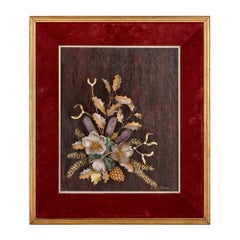
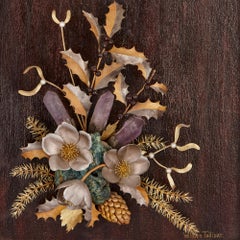
Framed Floral Bouquet Crafted from Gold and Semi-Precious Stones by Tolliday

Framed Floral Bouquet Crafted from Gold and Semi-Precious Stones by Tolliday

By Asprey & Garrard Limited

Located in London, GB

This magnificent study of flowers is wrought from gold and silver, amethyst and other minerals, and natural pearls. The study features sprigs of Holly with mineral berries and gold leaves springing from a green stone crop of rock. Grasses, also wrought from gold, spring from the same crop of rock, and the floor is littered with litter and debris, including an exquisitely produced pinecone. The flowers are set above a brown backing and surrounded by a red mount within a gilt frame. The work is signed ‘William Tolliday...

Category

Late 20th Century English Silver Mounted Objects

Materials

Amethyst, Gold, Silver
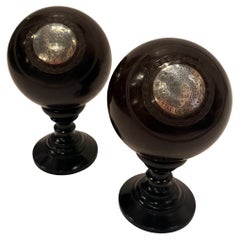
Pair of Victorian Carpet Balls on Stands with Sterling Silver Plaques

Pair of Victorian Carpet Balls on Stands with Sterling Silver Plaques

Located in Hopewell, NJ

A fabulous unusual accessory, this pair of 19th century English carpet balls on wooden stands makes a true collector’s item. Silverplate round plaques are signed and dated. RR

Category

19th Century English Victorian Antique Silver Mounted Objects

Materials

Sterling Silver

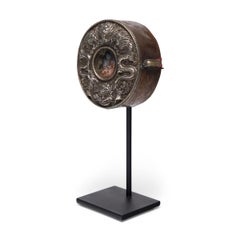
Round Tibetan Traveling Shrine with Twin Dragons, c. 1900

Round Tibetan Traveling Shrine with Twin Dragons, c. 1900

Located in Chicago, IL

Tibetan traveling shrines, known as Gau, were believed to offer protective powers and were used to hold and carry sacred objects during long journeys. Crafted over a century ago, a B...

Category

Early 20th Century Tibetan Tibetan Silver Mounted Objects

Materials

Silver, Copper

Chaumet Paris, a French Silver-Gilt Seahorse Mounted Rhodochrosite Cup

Chaumet Paris, a French Silver-Gilt Seahorse Mounted Rhodochrosite Cup

By Chaumet

Located in Long Island City, NY, NY

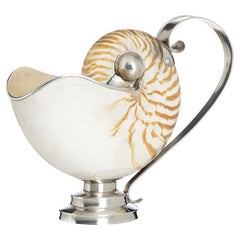
Chaumet Paris, A French Silver-Gilt Seahorse Mounted Rhodochrosite cup Circa 1980. An exceptional object A quadrangular cut cup in rhodochrosite and the handle made of a sea...

Category

Late 20th Century French Brutalist Silver Mounted Objects

Materials

Sterling Silver

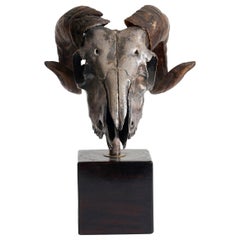
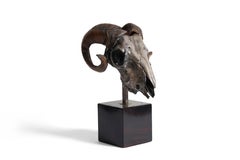
Ram's Skull Silver Plated

Ram's Skull Silver Plated

Located in Chicago, IL

Rams skull rests on plinth base. Marked "Made in France on underside from Wingate and Johnston"

Category

1960s French Aesthetic Movement Vintage Silver Mounted Objects

Materials

Silver

Silver wall salver with Portuguese coat of arms, shell & floral motifs

Silver wall salver with Portuguese coat of arms, shell & floral motifs

Located in Porto, PT

Description: Silver wall salver with relief Portuguese coat of arms, surrounded by shell reliefs and floral motifs. Metal: Silver. Origin: Portuguese. Brand: boar II Title. Weight: 6...

Category

19th Century European Antique Silver Mounted Objects

Materials

Silver

Chinese Petite Gilt String of Charms, c. 1900

Chinese Petite Gilt String of Charms, c. 1900

Located in Chicago, IL

This petite Chinese jewelry chain dates to the early 20th century and is strung with an array of petite bells and good luck charms. Among the charms is a bat, a stone chime, two litt...

Category

Early 20th Century Chinese Qing Silver Mounted Objects

Materials

Silver

Chinese Gilt Repoussé String of Charms, c. 1900

Chinese Gilt Repoussé String of Charms, c. 1900

Located in Chicago, IL

This curious Chinese jewelry chain dates to the early 20th century and is strung with an array of petite bells, charms and amulets. Worked of gilded silver alloy, the repoussé charms are laden with blessings and symbolism, including fruits for abundance, bats for happiness, and a lotus for perfection. The chain is strung with three larger charms of a horse, a donkey and a three-legged toad, the mythical creature known as the Jin Chan, or Money Toad...

Category

Early 20th Century Chinese Qing Silver Mounted Objects

Materials

Silver

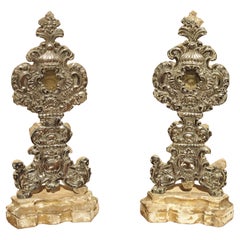
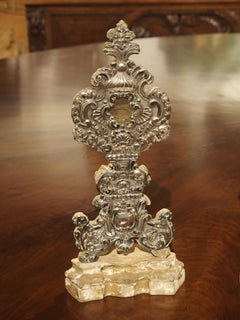
Pair of Silvered Wooden Reliquaries from France, Circa 1750

Pair of Silvered Wooden Reliquaries from France, Circa 1750

Located in Dallas, TX

This pair of silvered wooden reliquaries are from France, circa 1750. The backs are still preserved by wax seals, indicating that the relics were never removed. Each reliquary has...

Category

Mid-18th Century French Antique Silver Mounted Objects

Materials

Silver

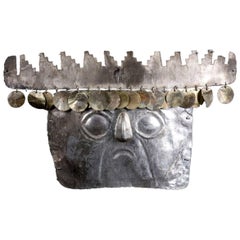
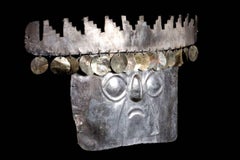
Rare Pre-Columbian Inca Silver Mask with Gold Sequins

Rare Pre-Columbian Inca Silver Mask with Gold Sequins

Located in San Pedro Garza Garcia, Nuevo Leon

A rare, sheet silver human face mask with simple relief facial features including large, almond shaped eyes and downturned mouth. Classic stepped pyramid headdress with round, very t...

Category

15th Century and Earlier Peruvian Pre-Columbian Antique Silver Mounted Objects

Materials

Silver

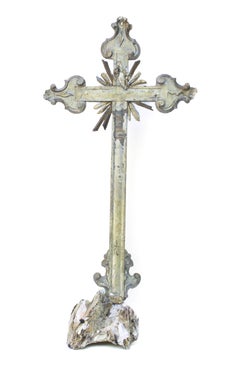
18th Century Italian Silver Leaf Cross with Plated Crystals on a Mica Cluster

18th Century Italian Silver Leaf Cross with Plated Crystals on a Mica Cluster

By Interi

Located in Dublin, Dalkey

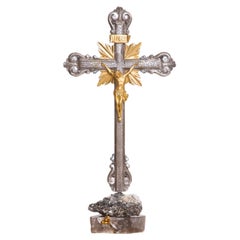
18th century Italian sliver leaf and mecca cross adorned with gold and silver plated crystal points and mica mounted on a mica and tourmaline in calcite matrix base. The crucifix originally came from a church in Tuscany. The gold and silver plated crystal points replicate the original sunrays or halo around the cross. The piece is mounted on a mica and tourmaline cluster that is in a matrix of calcite. The mica holds a shimmery appearance that can reflect light - like nature's disco ball. It perfectly coordinates with the silver leaf and mecca painted cross...

Category

18th Century Italian Baroque Antique Silver Mounted Objects

Materials

Quartz, Rock Crystal, Crystal, Silver Leaf
20th Century Tureen or Center Piece in Sterling Silver 925 by Alcino Silversmith
20th Century Tureen or Center Piece in Sterling Silver 925 by Alcino Silversmith
By Alcino Silversmith

Located in Porto, 13

The Rocaille tureen or center piece is a unique piece produced in the 70.80s in sterling silver 925 silver by Alcino Silversmith 1902. This piece was designed and produced in our w...
Category

20th Century Portuguese Silver Mounted Objects
Materials

Silver, Sterling Silver
Tibetan Gau Traveling Shrine with Twin Dragons, c. 1850

Tibetan Gau Traveling Shrine with Twin Dragons, c. 1850

Located in Chicago, IL

Tibetan traveling shrines, known as Gau, were believed to offer protective powers and were used to hold and carry sacred objects during long journeys. Crafted over a century ago, a B...

Category

Mid-19th Century Tibetan Tibetan Antique Silver Mounted Objects

Materials

Silver, Copper

Tibetan Gau Traveling Shrine, c. 1900

Tibetan Gau Traveling Shrine, c. 1900

Located in Chicago, IL

Tibetan traveling shrines, known as Gau, were believed to offer protective powers and were used to hold and carry sacred objects during long journeys. Crafted over a century ago, a B...

Category

Early 20th Century Tibetan Tibetan Silver Mounted Objects

Materials

Silver, Copper

1970s Anthony Redmile Mounted Horns

1970s Anthony Redmile Mounted Horns

$3,848Sale Price / set|50% Off

1970s Anthony Redmile Mounted Horns

By J. Antony Redmile

Located in Saint-Ouen, FR

Pair of 1970s Anthony Redmile mounted horns with silver plated details and polished tiger eye Signed and stamped on the base. Good vintade overall condition

Category

1970s English Mid-Century Modern Vintage Silver Mounted Objects

Materials

Silver Plate

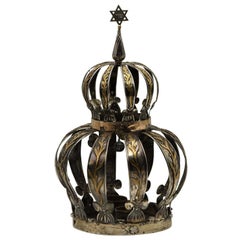
Early 20th Century Argentinian Silver and Gold Torah Crown

Early 20th Century Argentinian Silver and Gold Torah Crown

Located in New York, NY

Silver and gold Torah crown, Buenos Aires, Argentina, 1925. On silver base decorated with a small gold Stars of David. The lower ribs decorated with applie...

Category

1920s Argentine Vintage Silver Mounted Objects

Materials

Silver, Gold

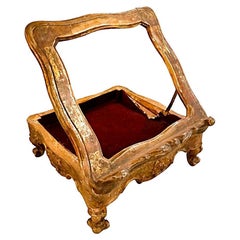
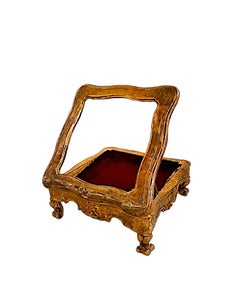
1700 lectern  gilded and carved Venetian

1700 lectern gilded and carved Venetian

Located in Cesena, FC

Venetian 1700s lectern from the Baroque period. Baroque-era lectern, from the early 1700s, from the Veneto region (Venice) Made of gilded wood with mecha technique and with floral ...

Category

18th Century European Baroque Antique Silver Mounted Objects

Materials

Silver Leaf

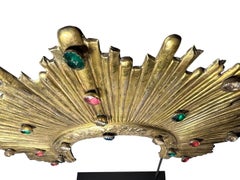
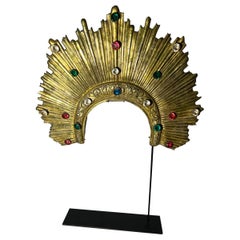
Resplandor 1900s Spanish Gilded Silver

Resplandor 1900s Spanish Gilded Silver

Located in Dallas, TX

Gilded silver Resplandor with glass mounted jewels on metal stand. In English Resplandor means Radiance. Spanish circa 1900. Measurement without stand 14”W x 6.25” H x 1” D.

Category

Early 1900s Spanish Antique Silver Mounted Objects

Materials

Metal, Silver
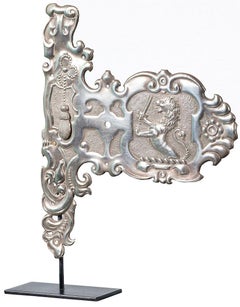
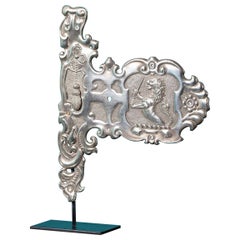
Antique Armorial Door Lock Plate

Antique Armorial Door Lock Plate

Located in Wormelow, Herefordshire

Antique Armorial door Escutcheon plate. A white metal armorial door escutcheon plate with engraved detail, featuring the City of Londons lion cre...

Category

Late 19th Century Antique Silver Mounted Objects
Materials

Silver, Steel

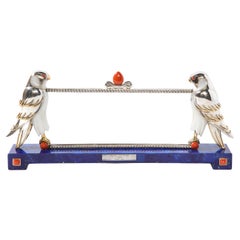
Mellerio Paris, a Silver, Gold, Lapis Lazuli, Coral, and Hardstone Picture Frame

Mellerio Paris, a Silver, Gold, Lapis Lazuli, Coral, and Hardstone Picture Frame

By Mellerio

Located in Long Island City, NY, NY

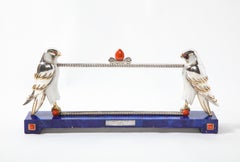
Mellerio Paris, a large silver, gold, lapis lazuli, coral, and hardstone picture photo frame with two falcons. France, circa 2000 The frame resting on a lapis lazuli base with squa...

Category

21st Century and Contemporary French Silver Mounted Objects
Materials

Coral, Lapis Lazuli, Silver
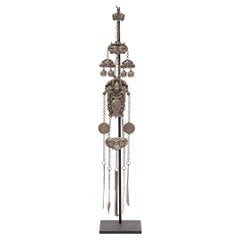
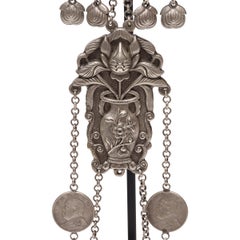
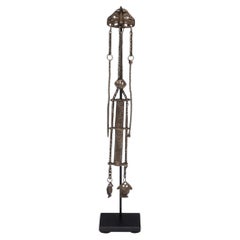
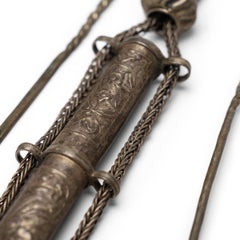
Chinese Repoussé Silver Grooming Set
Chinese Repoussé Silver Grooming Set
Located in Chicago, IL

This elaborate chain of repoussé charms and tools is a traditional Chinese grooming kit, intricately worked of silver alloy with fantastic detail. Much like a Victorian chatelaine, a...
Category

Mid-20th Century Chinese Qing Silver Mounted Objects

Materials

Silver

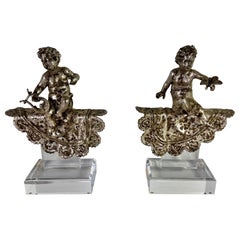
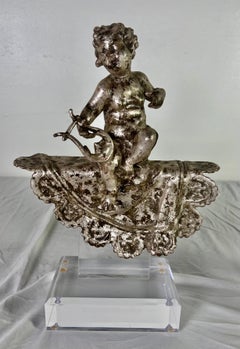
Pair of French Silvered Gilt Metal Cherubs on Lucite Bases

Pair of French Silvered Gilt Metal Cherubs on Lucite Bases

Located in Los Angeles, CA

A charming and highly decorative pair of early 20th century gilt metal cherubs, finely modeled in the Rococo Revival taste. Each cherub is shown seated atop a richly cast scrolling a...

Category

Early 20th Century French Rococo Silver Mounted Objects

Materials

Metal, Silver Leaf

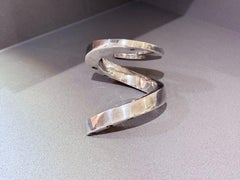
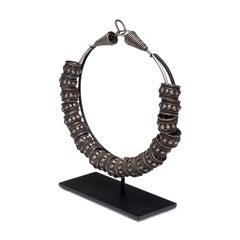
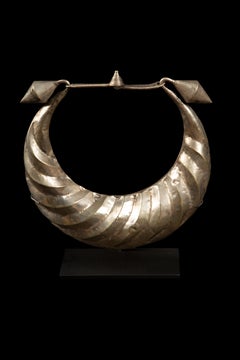
Spirals of Memory: Silver Miao Ceremonial Necklace

Spirals of Memory: Silver Miao Ceremonial Necklace

Located in New York, NY

Miao Tribe Silver Torque Necklace Mounted on Custom Metal Stand An exceptional Miao Tribe silver torque necklace, composed of eight crescent-sh...

Category

Early 20th Century Chinese Tribal Silver Mounted Objects

Materials

Silver

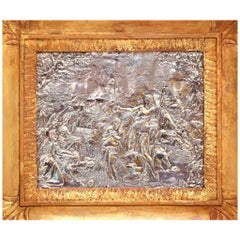
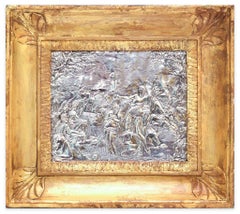
Baptism Scene, Silver Bas-Relief with Gilded Frame, Mid-17th Century

Baptism Scene, Silver Bas-Relief with Gilded Frame, Mid-17th Century

Located in Roma, IT

This silver bas-relief is an original decorative artwork realized in the mid-17th century. The work is an original relief realized in silver. A golden frame is included (cm 28 ...

Category

Mid-17th Century Unknown Antique Silver Mounted Objects

Materials

Silver

18th Century Italian Fragment Base with Mica in Matrix and Silver Leaf Shells

18th Century Italian Fragment Base with Mica in Matrix and Silver Leaf Shells

By Interi

Located in Dublin, Dalkey

Sculptural 18th century Italian base decorated with mica in matrix, and silver leaf shells on an antique metal base decorated with church vestment braid. The 18th century fragment ba...

Category

18th Century Italian Rococo Antique Silver Mounted Objects

Materials

Rock Crystal, Metal, Silver Leaf

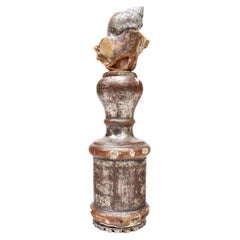
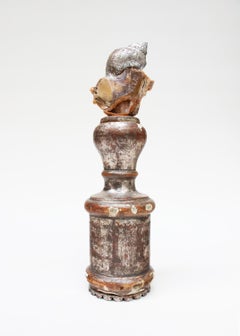
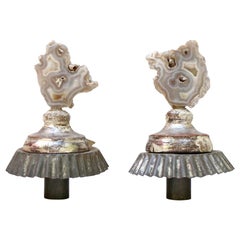
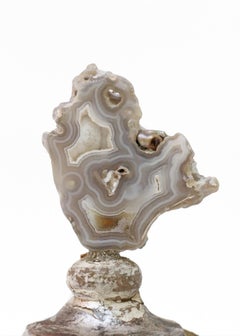
18th Century Italian Fragment with Fossil Agate Coral and a Silver Leaf Shell

18th Century Italian Fragment with Fossil Agate Coral and a Silver Leaf Shell

By Interi

Located in Dublin, Dalkey

Sculptural 18th century Italian candlestick top fragment with polished agate coral and a coordinating silver-leaf shell. The hand-carved, 18th century silver candlestick top origin...

Category

18th Century Italian Rococo Antique Silver Mounted Objects

Materials

Rock Crystal, Agate, Silver Leaf

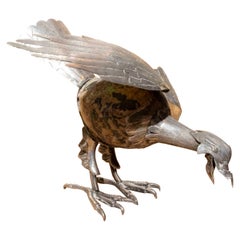
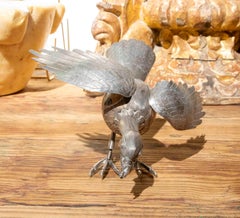
1970s Bird Sculpture in Silver-plated Metal and Natural Stone

1970s Bird Sculpture in Silver-plated Metal and Natural Stone

Located in Marbella, ES

Decorative sculpture depicting a bird in a searching pose, crafted from silver-plated metal with meticulous detail in the wings, legs, and head. The body incorporates a polished natu...

Category

Late 20th Century Spanish Silver Mounted Objects

Materials

Stone, Silver Leaf

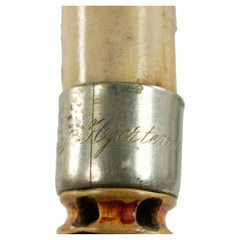
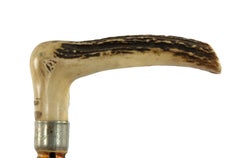
English Victorian Bone, Horn, and Silver Cane

English Victorian Bone, Horn, and Silver Cane

Located in Queens, NY

English Victorian vertibrate cane with horn and silver handle (as is) Losses and tarnish

Category

Late 19th Century British Victorian Antique Silver Mounted Objects

Materials

Silver

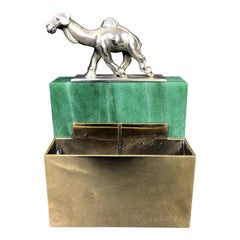
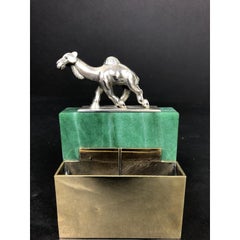
Erik Magnussen Sterling Silver And Green Hardstone Desk Accessory

Erik Magnussen Sterling Silver And Green Hardstone Desk Accessory

By Erik Magnussen

Located in Norwood, NJ

Post Art Deco sculpture by Erik Magnussen (1884-1961) a well known Danish designer-silversmith. This unique item is sterling silver, bronze and aventurine. A beautiful and creative u...

Category

1930s German Mid-Century Modern Vintage Silver Mounted Objects

Materials

Quartz, Bronze, Sterling Silver

Tibetan Silver Repoussé Needle Case, c. 1850

Tibetan Silver Repoussé Needle Case, c. 1850

Located in Chicago, IL

Lavishly decorated with repoussé, auspicious Buddhist symbols, and a bit of coral, this 19th century silver needle case was once filled with the nee...

Category

Mid-19th Century Tibetan Tibetan Antique Silver Mounted Objects

Materials

Silver

Tibetan Mechag Flint Striker, c. 1850

Tibetan Mechag Flint Striker, c. 1850

Located in Chicago, IL

In 19th century Tibet, many men would have carried a flint striker along with several other tools that could help ensure survival in the often-harsh climate of the Tibetan Plateau. K...

Category

Mid-19th Century Tibetan Tibetan Antique Silver Mounted Objects

Materials

Bronze, Silver

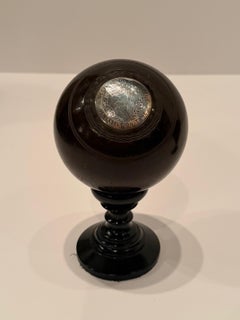
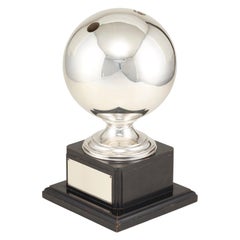
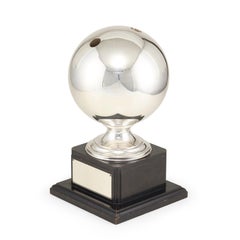
Sterling Silver Bowling Ball Mounted as Trophy by the House of Williams

Sterling Silver Bowling Ball Mounted as Trophy by the House of Williams

Located in New York, NY

This unique and one-of-a-kind sterling silver trophy bowling ball by the House of Williams is set on a round, stepped pedestal, mounted on a wooden trophy plinth. There are no inscri...

Category

20th Century American Silver Mounted Objects

Materials

Silver, Sterling Silver

Sculpture with Seashell Assembly and Antique Silver Base

Sculpture with Seashell Assembly and Antique Silver Base

Located in Marbella, ES

Sculpture with Seashell Assembly and Antique Silver Base

Category

Late 20th Century Spanish Silver Mounted Objects

Materials

Silver

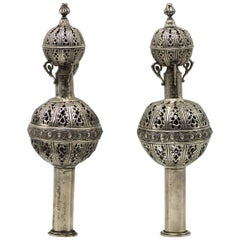
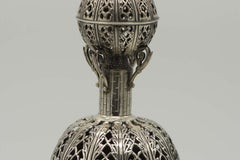
Mid-19th Century French Silver Torah Finials 'Rimmonim'

Mid-19th Century French Silver Torah Finials 'Rimmonim'

Located in New York, NY

Handmade silver Torah finials, chased, pierced, engraved, and cast, France, circa 1860. The finials are constructed with large open-work decorated ball ...

Category

Mid-19th Century French Antique Silver Mounted Objects

Materials

Silver

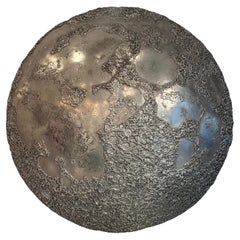
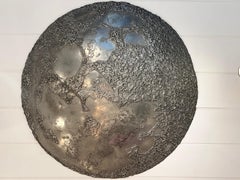
Silver moon wall-mounted sculpture

Silver moon wall-mounted sculpture

Located in Saint-Ouen, FR

Michel Pichard Silver moon wall-mounted sculpture Edition 8/50 France Diameter: 150 cm Width: 20 cm

Category

2010s French Silver Mounted Objects

Materials

Silver

Modern Style Rock Crystal Flame Sculpture

Modern Style Rock Crystal Flame Sculpture

Located in Cypress, CA

Exquisite and large modern style hand carved and polished rock crystal abstract flame sculpture on silver leafed stand. Very decorative for the modern taste. Late 20th century. ...

Category

Late 20th Century American Modern Silver Mounted Objects

Materials

Rock Crystal, Iron, Silver Leaf