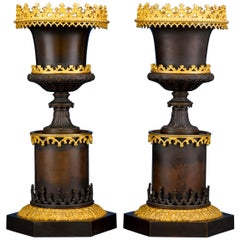
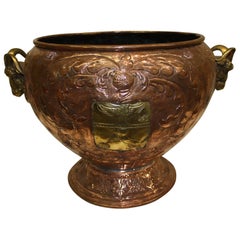
Medieval Urns

MEDIEVAL STYLE

The Middle Ages in Europe followed the end of the Roman Empire, and in this time of change, which preceded the Renaissance, furniture was simple and utilitarian, with most homes having only the necessities like chests and benches. Much of medieval furniture, which was often made in oak or walnut, was built for the elite, particularly the emerging merchant class who owned multiple homes.

Life for many in the medieval era was unstable, and furniture was designed to be functional and portable. Peasants worked the fields for affluent landowners and didn’t have access to literature in the way that nobles and people of the church did (women less so than men). The furniture in their modest dwellings was typically limited to cookware and a handful of stools. Foldable chairs, while uncommon in homes of the early Middle Ages and emblematic of wealth, like all other furnishings of the time, allowed for easy transportation of a household. Trestle tables with detachable legs and collapsible beds were designed to be simply moved from place to place.

Medieval blanket chests were among the most important furniture objects and could further serve as tables or even beds. Some ancient traditions were carried forward to build this sturdy furniture, such as turnery. Although the furniture was minimally designed, embellishments like carvings added elegance to the heavy wood pieces. These details sometimes reflected trends in religious art like rose windows.

By the later Middle Ages, storage pieces like chests of drawers were often adorned with high relief carvings, such as geometric and floral motifs. By the 14th and 15th centuries, design had developed to include more involved pieces like cupboards and desks, while benches frequently doubled as chests with hinged seats. Beds also changed in this era from basic boards to four-post designs with large drapes to keep the sleeper warm. These beds and other medieval bedroom furniture were significant status symbols, passed down through families and used as places to conduct business and receive visitors.

Surviving examples of medieval furniture are very rare, yet its distinctive aesthetics influenced later styles like William and Mary and Arts and Crafts.

Find a collection of medieval seating, garden elements, decorative objects and other furniture on 1stDibs.

to
2
1
1
205
165
162
133
69
68
47
35
34
33
30
27
23
19
17
16
6
4
1
1
1
1
1
1
1
1
1
Height
to
2
2
2
Style: Medieval
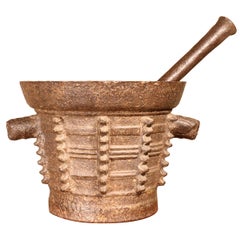
Mortar and Pilar End 15th Century Gothic Period

Mortar and Pilar End 15th Century Gothic Period

Located in Brussels, Brussels

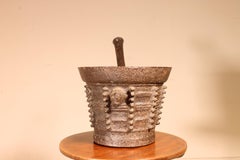
Iron mortar with its original pestle end 15th beginning 16th century Gothic period, France Beautiful original object with a beautiful patina and in good condition   

Category

16th Century French Antique Medieval Urns

Materials

Iron

Related Items
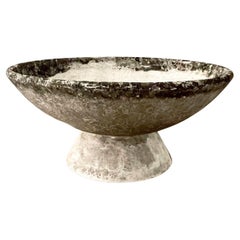
Willy Guhl Saucer Planter on Stand

Willy Guhl Saucer Planter on Stand

By Willy Guhl

Located in Los Angeles, CA

31" Willy Guhl saucer planter on stand for Eternit Floating saucer planter on base Sculptural garden vessel The base can be flipped upside down for use ...

Category

Mid-20th Century Swiss Medieval Urns

Materials

Concrete

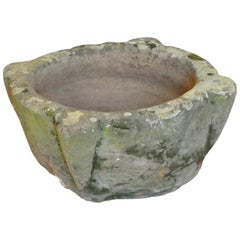
Exceptional 18th Century French Stone Baptismal Font

Exceptional 18th Century French Stone Baptismal Font

Located in Round Top, TX

An exceptional 18th century stone Baptismal font from the South of France. Beautifully hand-sculpted with a sensational patina. Perfect as a water...

Category

18th Century French Antique Medieval Urns

Materials

Stone

Black Marble Low Pedestal Cylinder

Black Marble Low Pedestal Cylinder

$240 / item

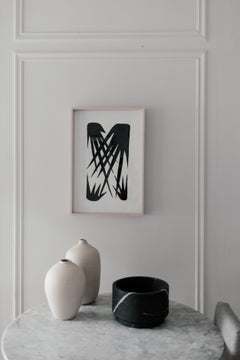
H 5.91 in Dm 9.85 in

Black Marble Low Pedestal Cylinder

By Casa Mineral

Located in Mexico City, MX

Monterrey black marble carved cylinder. Handmade in Mexico by local craftsmen. Production time: 6-8 weeks for items without marble / 13-14 weeks for marble pieces. Shipping +10 addi...

Category

2010s Mexican Medieval Urns

Materials

Marble

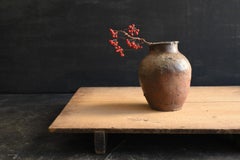
Japanese Antique Pottery Jar 15th-16th Century/ Wabi-Sabi Jar/Tokoname Vase

Japanese Antique Pottery Jar 15th-16th Century/ Wabi-Sabi Jar/Tokoname Vase

Located in Sammu-shi, Chiba

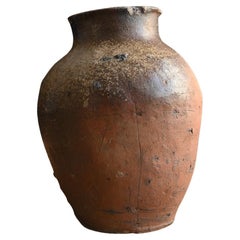
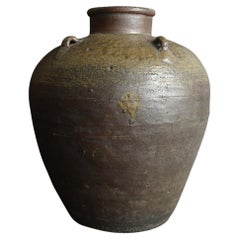
It is a very old jar in Japan. This is a pottery called Tokoname ware. Tokoname is a kiln located in Aichi prefecture, Japan. It is said to have originated around the 12th century. A...

Category

16th Century Japanese Antique Medieval Urns

Materials

Pottery

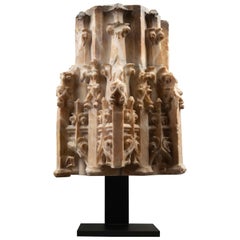
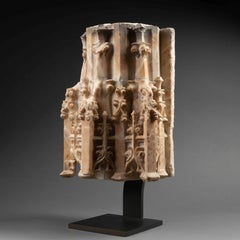
Gothic Canopy, France, 15th Century

Gothic Canopy, France, 15th Century

$24,155Sale Price|20% Off

H 13 in W 9.06 in D 11.03 in

Gothic Canopy, France, 15th Century

Located in Bruxelles, BE

Gothic canopy France, 15th century Alabaster, some traces of polychromy 33 x 23 x 20 cm Provenance: - Private collection Genève, Switzerland ...

Category

15th Century and Earlier French Antique Medieval Urns

Materials

Alabaster

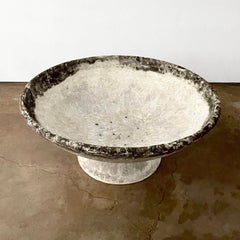
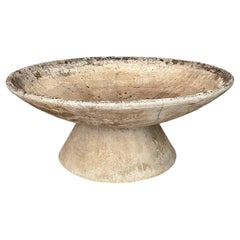
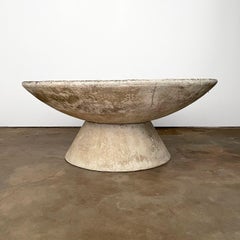
Willy Guhl Planter on Stand

Willy Guhl Planter on Stand

$5,200

H 20.5 in Dm 47 in

Willy Guhl Planter on Stand

By Willy Guhl

Located in Los Angeles, CA

Willy Guhl for Eternit 47" planter on stand. Floating saucer planter on base. Sculptural garden vessel. The base can be flipped upside down for u...

Category

Mid-20th Century Swiss Medieval Urns

Materials

Concrete

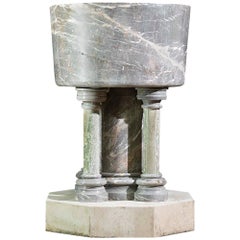
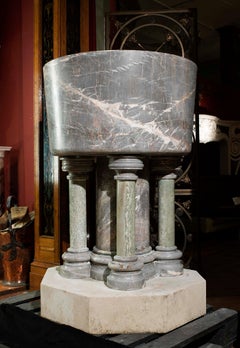
Baptismal Font in Ashburton Marble

Baptismal Font in Ashburton Marble

$10,329

H 44.18 in W 29.93 in D 10.44 in

Baptismal Font in Ashburton Marble

Located in London, GB

An impressive and large baptismal font entirely carved from Ashburton Marble. This is a soft grey and blush pink, lightly veined marble with evidence of...

Category

Late 19th Century English Antique Medieval Urns

Materials

Marble

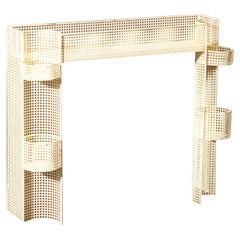
Original Josef Hoffmann & Wiener Werkstatte Vienna Secessonist Flower Stand

Original Josef Hoffmann & Wiener Werkstatte Vienna Secessonist Flower Stand

By Wiener Werkstätte, Woka Lamps, Josef Hoffmann

Located in Vienna, AT

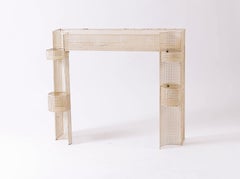
A typical work from the early period of the Wiener Werkstatte. Punched iron sheet, white lacquered. See similar items - Wiener Werkstatte pattern books as displayed. No signature.

Category

Early 1900s Austrian Antique Medieval Urns

Materials

Metal

Japanese antique Bizen ware vase / 15th-16th century / Wabi-sabi vase/Tsubo

Japanese antique Bizen ware vase / 15th-16th century / Wabi-sabi vase/Tsubo

Located in Sammu-shi, Chiba

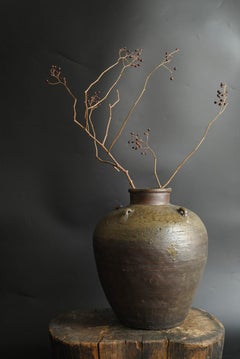
This Bizen ware jar was fired in the Bizen region of Okayama Prefecture. Bizen ware is one of Japan's Six Ancient Kilns and is known as one of the oldest pottery styles in Japan. Its...

Category

16th Century Japanese Antique Medieval Urns

Materials

Pottery

Korean antique black glaze pottery/Joseon period/15th-16th century/small vase

Korean antique black glaze pottery/Joseon period/15th-16th century/small vase

Located in Sammu-shi, Chiba

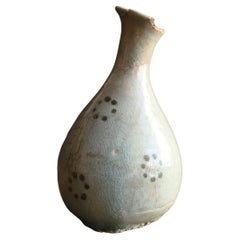
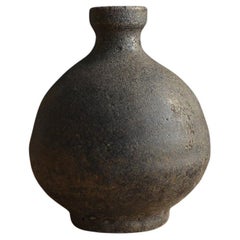
This is a small black-glazed jar made in Korea between the 15th and 16th centuries. White porcelain is famous in Korea, but this was a type of porcelain that was only allowed to be u...

Category

16th Century South Korean Antique Medieval Urns

Materials

Pottery

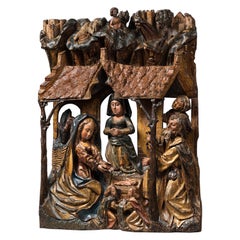
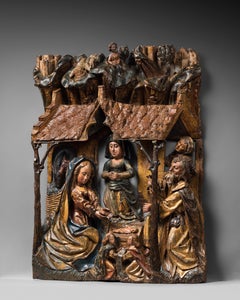
Late 15th Century Polychrome Wood Carving Depicting the Nativity

Late 15th Century Polychrome Wood Carving Depicting the Nativity

Located in Saint-Ouen, FR

While the birth of Christ is briefly told in the Gospel of Luke (2, 7) it is in the apocryphal texts that we find most of the elements and details that have then inspired artists. As of the 14th century and even more of the 15th century the subject of the Adoration of the Child replaces in Western art the scene of the Birth, much favoured in Byzantine art. Instead of being depicted lying with the new-born swathed in the manger, the Virgin is now kneeling, her hands joined in prayer in front of the naked child. This change was probably hastened by the popularity of the visions of Saint Bridget of Sweden to whom the Virgin allegedly appeared to show how she had given birth to Jesus (Visions, VII, chap. 21). Sheltered by a thatch-roofed structure the Virgin is kneeling in front of the Child Jesus. She wears a magnificent red dress under a large gold cloak. Her curled blond hair is partially veiled. The newborn is lying on a straw mat. Joseph is depicted with a parted beard and stands opposite from the Virgin. He wears a tunic and a coat with a purse hanging from the belt. His costume reminds us of the long journey him and Mary have accomplished to reach Bethlehem. Two other women are present. One is looking through the stable’s window to observe the Holy Family while another one kneels in prayer in front of the divine child. The rich costume of the lady might indicate she is a donator. However they could also both represent the women who took part in the birth of Christ, Zelemi and Salome. Salome, incredulous did not believe in the virginal conception of Mary and she is represented far from the scene. The artist has depicted her with an expression of doubt on her face. Zelemi, on the contrary, is a believer. She is rewarded by a place of honour at the heart of the scene, close to Mary. To the left the donkey and ox that have accompanied Mary and Joseph to Bethlehem observe quietly the scene. On the foreground two angels hold a scroll reading an excerpt from the Gloria : “/Gloria/ in excelsis /Deo/.” One of the angels wears a blue cape while the other’s is red Those two colours are very significant as during Middle-Ages blue symbolises hope and red charity. Together they express the hope in redemption thanks to the advent of Christ and his sacrifice to come. Above the main scene, up a cliff, a small shepherd lets his herd of sheep graze amidst the trees. He is framed by two walled cities. This wood carving is the work of a very skilled and inventive artist. The piece bears witness to his exceptional talent. The realism of the scene is emphasised by the amount of details depicted. The refinement of the carving itself is highlighted by the well preserved polychromy. This key moment of the New Testament is set in a contemporary context thanks to the clothes of the characters and the scenes of rural life. The universal dimension of the scene is intensified while allowing contemporary viewers to grasp its meaning more easily. This care for details, the picturesque realism as well as the extraordinary rendition of the cloths suggest it was made by a Flemish artist during the late 15th century. This relief can be compared with the panel of the Nativity from the Saint-Vaast altarpiece made by Jacques Daret between 1433 and 1435, today in Madrid’s Thyssen-Bronemisza Museum. Literature Louis Réau, Iconographie de l’Art chrétien...

Category

15th Century and Earlier Dutch Antique Medieval Urns

Materials

Wood

Previously Available Items
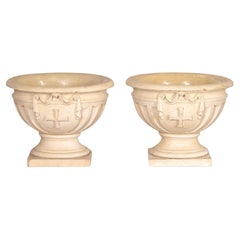
Pair of 18th Century Coade Stone Gothic Stoops

Pair of 18th Century Coade Stone Gothic Stoops

Sold

H 10.63 in W 13 in D 10.63 in

Pair of 18th Century Coade Stone Gothic Stoops

Located in Gloucestershire, GB

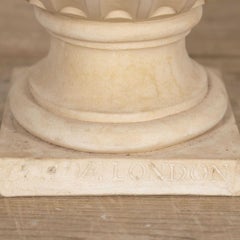
Pair of finely cast 18th Century Coade Stone gothic stoops. In super condition, stamped 'Coade London', these are glazed internally, for holding water which is an unusual design for...

Category

18th Century British Antique Medieval Urns

Materials

Terracotta

Pair of Gothic Urns in Ormolu, Patinated Bronze and Marble

Pair of Gothic Urns in Ormolu, Patinated Bronze and Marble

Located in London, GB

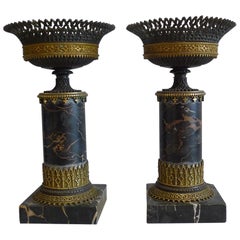
A Classic and quite beautiful pair of Gothic urns. French and early 19th century with pierced tracery patinated bronze urn tops with an ormolu waist falling to the gadrooned patinate...

Category

1830s French Antique Medieval Urns

Materials

Marble, Bronze, Ormolu

Gothic Two-Color Bronze Urns

Gothic Two-Color Bronze Urns

Sold

H 12 in Dm 5 in

Gothic Two-Color Bronze Urns

Located in New Orleans, LA

A striking pair of bronze urns, created in the dramatic Gothic style. Resembling classical Greco-Roman vases set upon pedestals, the urns are crafted in a two-toned design, with deep...

Category

19th Century French Antique Medieval Urns

Materials

Bronze, Ormolu

Medieval urns for sale on 1stDibs.

Find a broad range of unique Medieval urns for sale on 1stDibs. Many of these items were first offered in the Early 20th Century, but contemporary artisans have continued to produce works inspired by this style. If you’re looking to add vintage urns created in this style to your space, the works available on 1stDibs include decorative objects, building and garden elements and other home furnishings, frequently crafted with ceramic, iron and other materials. If you’re shopping for used Medieval urns made in a specific country, there are Europe, France, and United Kingdom pieces for sale on 1stDibs. It’s true that these talented designers have at times inspired knockoffs, but our experienced specialists have partnered with only top vetted sellers to offer authentic pieces that come with a buyer protection guarantee. Prices for urns differ depending upon multiple factors, including designer, materials, construction methods, condition and provenance. On 1stDibs, the price for these items starts at $950 and tops out at $6,800 while the average work can sell for $4,235.