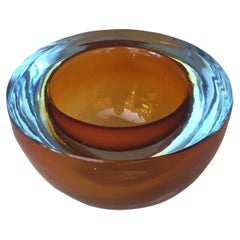
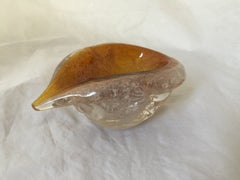
1940s Ashtrays

53 Results
to
5
53
22
16

Use search to find more

29
11
2
1
1
6
23
2,473
222
138
1,355
749
7
2
49
81
275
372
449
58
15
28
20
18
7
6

Use search to find more

3
3
2
2
2

Use search to find more

Period: 1940s
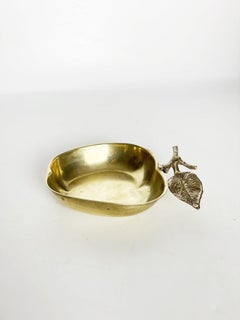
Brass Ashtray, France, 1940s

Brass Ashtray, France, 1940s

Located in Auribeau sur Siagne, FR

## Description Elegant French brass ashtray dating from the 1940s, featuring an organic, sculptural shape and a beautifully detailed botanical handle inspired by a natural branch an...

Category

French Art Deco Vintage 1940s Ashtrays

Materials

Brass

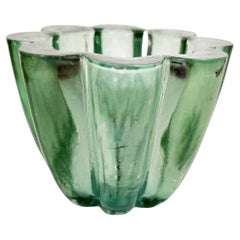
Art Deco glass ashtray, 1940

Art Deco glass ashtray, 1940

Located in Auribeau sur Siagne, FR

A 1940s Art Deco ashtray crafted from thick molded glass in a nuanced green hue. Its circular form is punctuated by faceted vertical panels, evoking a stylized flower or geometric ar...

Category

French Art Deco Vintage 1940s Ashtrays

Materials

Glass

1940s French Art Deco Green Ceramic Ashtray with Gilded Details, Four Cigarette

1940s French Art Deco Green Ceramic Ashtray with Gilded Details, Four Cigarette

Located in Auribeau sur Siagne, FR

1940s French Art Deco Green Ceramic Ashtray with Gilded Details, Four Cigarette Rests Description: This elegant Art Deco ceramic ashtray, crafted in France in the 1940s, beautifully...

Category

French Mid-Century Modern Vintage 1940s Ashtrays

Materials

Ceramic

Tiffany & Co. Sterling Silver Leaf Form Jewelry Trinket Dishes or Catchall Trays

Tiffany & Co. Sterling Silver Leaf Form Jewelry Trinket Dishes or Catchall Trays

By Tiffany & Co.

Located in South Bend, IN

A gorgeous pair of Art Deco period sterling silver leaf-shaped catchall trays or jewelry dishes By Tiffany & Co. (signed to the underside) USA, Circa 1940s Each measures: 3"W ...

Category

American Art Deco Vintage 1940s Ashtrays

Materials

Sterling Silver

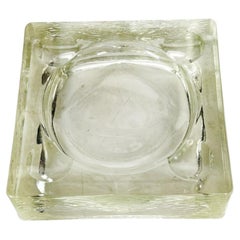
Square glass ashtray, Art Deco style, Saint-Gobain glass, France, 1940

Square glass ashtray, Art Deco style, Saint-Gobain glass, France, 1940

By Saint Gobain

Located in Auribeau sur Siagne, FR

Square molded glass ashtray, France, circa 1940, in the Art Deco style. Made of thick, slightly green-tinted glass, it features a simple and balanced geometric shape, characteristic of the design of the period. The sides are decorated with a wavy relief pattern, adding texture and dynamism to the piece, while the integrated notches at the corners emphasize its functionality. The transparency of the glass, combined with its variations in texture, creates subtle plays of light. Both robust and elegant, this ashtray perfectly illustrates French glassmaking expertise of the mid-20th century, ideal as a table accessory or decorative object. Key features: Thick molded glass ashtray French production, circa 1940 Art Deco style Geometric square shape Lightly green tinted glass Wavy relief decoration Integrated cigarette holders Functional and decorative object Keywords: art deco glass ashtray, vintage French ashtray...

Category

French Art Deco Vintage 1940s Ashtrays

Materials

Glass, Art Glass

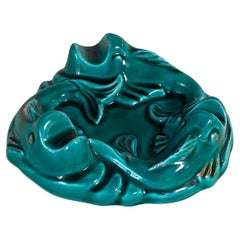
Ceramic Dish Ashtray in Ceramic Art Deco Green Color Fishes Patern

Ceramic Dish Ashtray in Ceramic Art Deco Green Color Fishes Patern

Located in Auribeau sur Siagne, FR

Art Deco ashtray or vide poche in ceramic. Green color. Made in France. Fishes Patern.

Category

French Art Deco Vintage 1940s Ashtrays

Materials

Ceramic

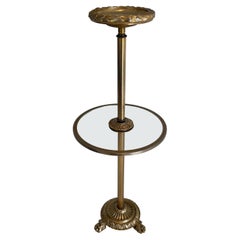
Bronze Standing Ashtray with Lily Flower Decor

Bronze Standing Ashtray with Lily Flower Decor

Located in Marcq-en-Barœul, Hauts-de-France

This standing ashtray is made of brass and bronze with lily flower decor. This is a French work. Circa 1940

Category

French Neoclassical Vintage 1940s Ashtrays

Materials

Bronze

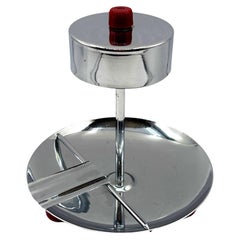
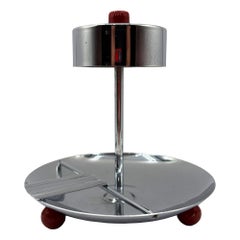
Early Mid-Century Chrome and Bakelite Ashtray W/ Pull-match Dispenser

Early Mid-Century Chrome and Bakelite Ashtray W/ Pull-match Dispenser

Located in Van Nuys, CA

Early mid-century ashtray features a polished chrome finish with a wide circular base tray and a vertical center column supporting an elevated, lidded compartment pull-match dispense...

Category

American Mid-Century Modern Vintage 1940s Ashtrays

Materials

Aluminum, Chrome

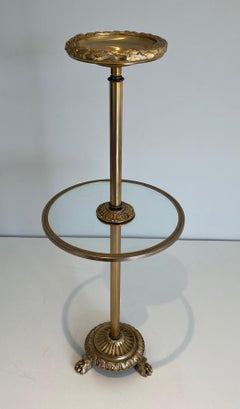
Bronze, Glass and Brass Ashtray on Stand by Maison Baguès

Bronze, Glass and Brass Ashtray on Stand by Maison Baguès

By Maison Baguès

Located in Marcq-en-Barœul, Hauts-de-France

This very nice and rare neoclassical style standing ashtray is made of bronze, glass and brass. The cut is formed by a laurel wreath and the tripod base with claw feet. On the center...

Category

French Neoclassical Vintage 1940s Ashtrays

Materials

Brass, Bronze

1940s Standing Ashtray, Black

1940s Standing Ashtray, Black

By Paul McCobb

Located in Miami, FL

Cool 1940s Standing Ashtray, Black.

Category

American Mid-Century Modern Vintage 1940s Ashtrays

Materials

Metal

Tiffany & Co. Sterling Silver Leaf Form Jewelry Trinket Dishes or Catchall Trays

Tiffany & Co. Sterling Silver Leaf Form Jewelry Trinket Dishes or Catchall Trays

By Tiffany & Co.

Located in South Bend, IN

A gorgeous set of three Art Deco period sterling silver leaf-shaped catchall trays or jewelry dishes By Tiffany & Co. (signed to the underside) USA, Circa 1940s Each measures:...

Category

American Art Deco Vintage 1940s Ashtrays

Materials

Sterling Silver

Pietro Chiesa Crystal ashtray for Fontana Arte, Italy 1940

Pietro Chiesa Crystal ashtray for Fontana Arte, Italy 1940

By Pietro Chiesa, Fontana Arte

Located in Conversano, IT

Exceptional solid crystal ashtray designed by Pietro Chiesa for Fontana Arte in the 1940s. The piece perfectly expresses the maestro’s poetics, capable of blending architectural rigo...

Category

Italian Mid-Century Modern Vintage 1940s Ashtrays

Materials

Crystal

Tiffany & Co. Sterling Silver Leaf Form Jewelry Trinket Dish or Catchall Tray

Tiffany & Co. Sterling Silver Leaf Form Jewelry Trinket Dish or Catchall Tray

By Tiffany & Co.

Located in South Bend, IN

A gorgeous Art Deco period sterling silver leaf-shaped catchall tray or jewelry dish By Tiffany & Co. (signed to the underside) USA, Circa 1940s Measures: 3"W x 3.25"D x 0.5"H...

Category

American Art Deco Vintage 1940s Ashtrays

Materials

Sterling Silver

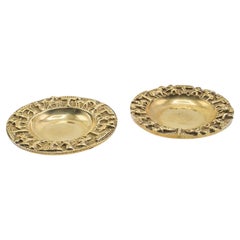
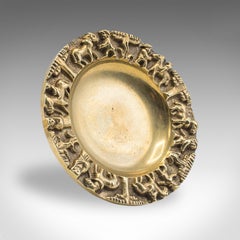
Pair of Vintage Casablanca Souk Ashtrays, Bronze Tobacco Dish, Art Deco, C.1940

Pair of Vintage Casablanca Souk Ashtrays, Bronze Tobacco Dish, Art Deco, C.1940

Located in Hele, Devon, GB

This is a pair of vintage Casablanca souk ashtrays. A North African, bronze tobacco dish, dating to the Art Deco period, circa 1940. Delightfully naive dishes with great colour and ...

Category

Moroccan Art Deco Vintage 1940s Ashtrays

Materials

Bronze

Art Deco Ashtray
Art Deco Ashtray

Art Deco Ashtray

Located in Mexico City, CDMX

Art deco ashtray c.1940s, USA. The ashtray has a button that opens as a 'trapdoor' to hide the ash.

Category

American Art Deco Vintage 1940s Ashtrays

Materials

Metal

Rare 1948 "Soweru of Florida" Drinking Pink Flamingo Ceramic Ashtray

Rare 1948 "Soweru of Florida" Drinking Pink Flamingo Ceramic Ashtray

Located in Van Nuys, CA

Mid-century Era pink and green "Soweru of Florida" ceramic ashtray with a drinking flamingo. The ashtray features a beautifully detailed pink flamingo standing on a lush green grassy...

Category

American Mid-Century Modern Vintage 1940s Ashtrays

Materials

Ceramic

"Vine & Tendril", High Style Art Deco Sterling Silver Dish w/ Pierced Lid, 1940

"Vine & Tendril", High Style Art Deco Sterling Silver Dish w/ Pierced Lid, 1940

By Erik Fleming

Located in Philadelphia, PA

One of the most elegant and sophisticated examples of Art Deco silver artisanry we have ever offered, this dish with a pierced lid (originally serving as an ashtray) features a curli...

Category

Swedish Art Deco Vintage 1940s Ashtrays

Materials

Silver

Italian Mid-century modern carved glass ashtray attr. to Fontana Arte

Italian Mid-century modern carved glass ashtray attr. to Fontana Arte

By Pietro Chiesa, Fontana Arte

Located in Varese, Lombardia

Ashtray in carved and ground glass of strong thickness. Rustic workmanship with chippings typical of Pietro Chiesa's productions in the 40s/50s. Conditions as per photo: visible scra...

Category

Italian Mid-Century Modern Vintage 1940s Ashtrays

Materials

Glass

Hermes Style Arm Ashtray

Hermes Style Arm Ashtray

Located in Beverly Hills, CA

Equestrian influenced leather ashtray, France, 1950s. Comes with two interchangeable ashtrays Rests on the arm of any chair with 2 solid brass stirrups

Category

French Vintage 1940s Ashtrays

Materials

Brass

Charles Dudouyt Style Ashtray / Catchall

Charles Dudouyt Style Ashtray / Catchall

Located in Beverly Hills, CA

French walnut standing ashtray / catchall with corkscrew base signature style of Charles dudouyt Great patina. France, 1940s

Category

French Vintage 1940s Ashtrays

Materials

Walnut

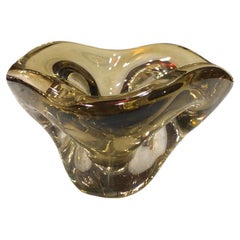
Murano , Art Deco Style, Italian, 1940, Elegant Design, Technique Hand-modeled

Murano , Art Deco Style, Italian, 1940, Elegant Design, Technique Hand-modeled

Located in Ciudad Autónoma Buenos Aires, C

Technique Hand-modeled. Without the use of rigid molds, the master glassmaker manipulates the thick, incandescent glass mass using pincers (pincette) and hot stretching/bending move...

Category

Italian Art Deco Vintage 1940s Ashtrays

Materials

Murano Glass

Murano, 1940, Italian, Attributed to Barovier Toso, Technique Aventurina, gold

Murano, 1940, Italian, Attributed to Barovier Toso, Technique Aventurina, gold

By Vetreria Artistica Barovier & C.

Located in Ciudad Autónoma Buenos Aires, C

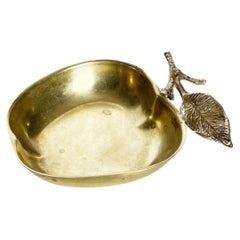
Technique Aventurina The aventurine is a glassmaking technique from Murano developed on the island of Murano in the 17th century. It was first mentioned in a document dating back to 1614 as 'a kind of stone with golden stars inside', at which point it was already mesmerizing people with its unusual and attractive appearance. The technique gets its name from the fact that its discovery happened by chance due to a fortunate coincidence, when it is said that a glass artisan accidentally dropped some metal shavings into the glass mixture. Italians say it happened 'all'avventura', which in Italian means 'by chance'. The first documented recipe for the technique dates back to 1644, when the Murano master glassmaker Giovanni Darduin described how to create aventurine glass. The recipe involves adding various metallic oxides such as copper and iron to the hot glass mixture, which will cause small particles of the metals to crystallize as the glass mixture cools. Complicating the process, for such crystallization to occur, the furnace had to be completely turned off, and the metallic particles would slowly separate from the glass base over a few days during the natural cooling of the glass. This was a very difficult process from a logistical perspective, as every time a glass furnace was turned off, it caused work to stop, and reigniting it was quite a large process, as it took time to heat it fully to the desired temperature. As the industrial revolution reached Murano in the 19th century, the process had a remake. Large volumes of fine aventurine paste were produced that were then skillfully stretched into glass rods, which were then remelted for jewelry making under a small flame, or for glass blowing. This aventurine paste received worldwide acclaim and revived the fame of the Murano glass workshops due to its use in Salviati mosaics and in other pieces of rare magnificence, such as vases, glasses, cups, and bowls produced in the Salviati workshop. Technique Gold Leaf Inclusion (Inclusione di Foglia d'Oro) Before casing the glass layers, the molten gather is rolled over a sheet of 24-karat gold leaf (foglia d'oro), which shatters into fine metallic flecks that remain suspended within the glass. Technique Hand-modeled. Without the use of rigid molds, the master glassmaker manipulates the thick, incandescent glass mass using pincers (pincette) and hot stretching/bending movements, creating dynamic organic lobes, folds, and waves. Attributed to Barovier Toso The company is one of the oldest family businesses in the world, founded in 1295 as Barovier. "The name Barovier derives from the term berroviere (highwayman/policman, which indicates the armigero (person entitled to bear arms) guarding the captain of the people. It is probable that some Barovier, originally from Treviso, settled in Murano around 1291, when a law of the Republic imposed the concentration on the island of all glass furnaces." Jacobello was the first member of the Barovier family to work glass at this time. It is thought that the company originated in Treviso[citation needed]. The Toso family had been established in Murano since around 1350. In the 1400s Angelo Barovier created glass objects which are currently preserved in various museums. Angelo is recognized as significant for uniting the knowledge which had been developed and handed down by family Barovier. He was not only considered and artist but a scientist. The company became Ferro Toso Vetrerie Artistiche Riunite S.A in 1936 when Vetreria Artistica Barovier merged with Ferro Toso, specializing in crystalline glass, mother-of-pearl glass, and gold-free cornelian red glass.. In 1942, the company was renamed Barovier & Toso. In 1919–1920, 30 year old designer Ercole Barovier began a 50-year career as the artistic director of Barovier & Toso.[9] "After studying medicine and working as a radio operator during World War One he joined the family firm in 1920 when he and his brother Nicolo took over the management from their father Benvenuto. From 1927 Ercole was the main designer and from 1934, when Nicolo left the company, (he was) also the sole owner." While Barovier did not have formal training as a glassblower, his artistic designs produced objets d'art that have become the most critically acclaimed in the history of Ercole - Barovier. In 1930 he produced his award-winning “Primavera” series. "The Primavera series ... is distinguished by a milky white 'craquelé' glass with the addition of black or blue pasta vitrea trim ("opaque colored glass whose consistency is made to appear like ceramic") and decoration. There was a very limited production of this series due to the fact that it was a result of a glass mixture obtained accidentally so it could never be replicated." One example of this series, a Primavera Pigeon, was sold at auction for GBP 275,000 (approximately $360,000 USD, not inclusive of the buyer’s premium) on October 16, 2019. Barovier continued to produce innovative designs of which the “Lenti” vase...

Category

Italian Art Deco Vintage 1940s Ashtrays
Materials

Gold

Murano, 1940, Italian, Technique: Bullicante, Hand-modeled, Iridescent.

Murano, 1940, Italian, Technique: Bullicante, Hand-modeled, Iridescent.

By Carlo Scarpa

Located in Ciudad Autónoma Buenos Aires, C

Iridescent or Pearlescent Effect (Iridescent Glass) o The outer surface of the clear/smoked glass has a smooth iridescent finish that reflects flashes of color when light hits it. o...

Category

Italian Art Deco Vintage 1940s Ashtrays

Materials

Murano Glass

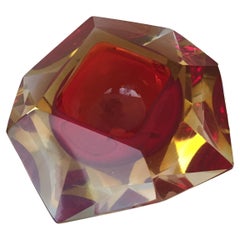
Murano, Attributed to Flavio Poli, Italian, Techniques: Sommerso, Cold Carving

Murano, Attributed to Flavio Poli, Italian, Techniques: Sommerso, Cold Carving

By Flavio Poli

Located in Ciudad Autónoma Buenos Aires, C

Murano Geometric Flat Cold-Cutting and Polishing (Molatura) Once the piece has cooled, the top rim and base are ground and rectified using abrasive stone wheels and polishing compou...

Category

Italian Art Deco Vintage 1940s Ashtrays

Materials

Murano Glass

Murano with bubbles, 1940, Italian

Murano with bubbles, 1940, Italian

Located in Ciudad Autónoma Buenos Aires, C

Logistics and International Shipping We provide a comprehensive export service so that your only concern is enjoying your acquisition. • Door-to-Door Service: Pieces located in our A...

Category

Italian Mid-Century Modern Vintage 1940s Ashtrays

Materials

Murano Glass

Murano, 1940 . Attributed to Seguso - Barovier, Italian, Sommerso technique

Murano, 1940 . Attributed to Seguso - Barovier, Italian, Sommerso technique

By Barovier Seguso & Ferro

Located in Ciudad Autónoma Buenos Aires, C

Sommerso technique Murano The sommerso technique was originally developed in the 1930s by Carlo Scarpa at Venini & Co. Sommerso (Italian for "submerged") is the Murano glassmaking technique that creates two or more contrasting layers of glass without mixing the colors. It is formed by submerging colored glass in molten glass of a different color, before blowing the glass into the required shape. The outer layer is usually clear. During the 1950s, the sommerso style became world-famous thanks to the work of Flavio Poli, artistic director of Seguso Vetri d'Arte. Attributed to Seguso - Barovier We have specialized in the sale of Art Deco and Art Nouveau and Vintage styles since 1982. If you have any questions we are at your disposal. Pushing the button that reads 'View All From Seller'. And you can see more objects to the style for sale. The history of "Seguso Vetri D' Arte" is directly linked to the "Vetreria Artistica­ Barovier" company. When the Barovier workshop was forced to reduce production in 1929, due to a financial crisis in America, the original group of ten partners had to separate and Antonio Seguso in 1931, assisted by his sons Ernesto and Archimede opened a small workshop of his own. They were joined by Luigi Olimpio Ferro and Napoleone Barovier the following year. Together the craftsmen establish the "Artistica Soffieria e Vetreria Barovier Seguso & Ferro" company as equal partners. In 1934 Flavio Poli joins the firm as artistic director and within only a brief period of time a distinct style of designs emerged. The close collaboration between Flavio Poli, Archimede Seguso and Alfredo Barbini played an important part in the success of the company. New glass techniques are developed which include never before seen color applications. The companies innovative designs constantly received awards and during the 1935 World Fair in Brussels and the 1936 Milan Triennale they did attract the interest of a new group of clientele. One of them is the French wholesale company "Veronese" from Paris which would play a defining role in the history of the company. The demand for an increase in production requires additional investments and the partners felt that there is a need to multiply their investment tenfold. Luigi Olimpio Ferro subsequently decided to withdraw from the company and his shares are acquired by Flavio Poli, which makes him a full partner. As a result, the company name is changed to Seguso Vetri D’ Arte and it is officially recognized in 1937. A period of great success and prosperity ensues, lasting until the outbreak of World War II. The post ­war period is a time of great change in Europe and the rebuilding of the economical structure in Italy requires major investments which result in the introduction of new import duties and taxes. To safeguard the copyright of the Seguso Vetri D'Arte designs an application for a second entry into the commercial registers of Venice is made by the partners in 1945. Strict export regulations curb international business relations for many years after the war and the company decides to focus on the domestic market instead. In 1946 a large retail location is opened at the Piazza Diaz in Milan where in addition to the art glass...

Category

Italian Art Deco Vintage 1940s Ashtrays

Materials

Murano Glass

Art Deco Vide Poche or Ashtray, in Purple Color, in Art Glass, from France 1940

Art Deco Vide Poche or Ashtray, in Purple Color, in Art Glass, from France 1940

Located in Auribeau sur Siagne, FR

It is an Art Deco ashtray, in glass, with purple color transparencies. It was made in Art glassworks, in France in the 1940s. It is a decorative Vide poche.

Category

French Art Deco Vintage 1940s Ashtrays

Materials

Art Glass

French Art Deco Ceramic Ashtray – Signed, with Cork Center – Circa 1930

French Art Deco Ceramic Ashtray – Signed, with Cork Center – Circa 1930

Located in Auribeau sur Siagne, FR

Description: This is a rare Art Deco ashtray made in France around 1930, signed on the back by the artist. Crafted in ceramic, it features a refined palette of brown, green, and whit...

Category

French Mid-Century Modern Vintage 1940s Ashtrays

Materials

Ceramic

Deep Red Cased Glass Bowl by Carlo Scarpa for Venini, Italy, 1942

Deep Red Cased Glass Bowl by Carlo Scarpa for Venini, Italy, 1942

By Carlo Scarpa, Venini

Located in London, GB

Rare deep red cased and iridized glass, bowl complete with stubber (cendrier / ashtray), designed by Carlo Scarpa (1906-1978) circa 1942, for Venini, with acid stamp on its underside 'Venini Murano MADE IN ITALY' From 1933 to 1947 Scarpa became the artistic consultant to Venini from 1933 to 1947 the glass manufacturer, one of the great celebrated glass works in the history of design. Carlo Scarpa’s highly inventive use of traditional Murano techniques resulted in this original sculptural and sensually formed crimson dish companied by its pestle. Scarpa's success was to look to the past with an innovative approach towards technique and creativity giving birth to the avant-garde. • Literature A Focused Obsession, Modern Italian Glass- The Martin Cohen Collection Helmut Ricke, Eva Schmitt, 'Italian Glass Murano: Milan...

Category

Italian Art Deco Vintage 1940s Ashtrays

Materials

Murano Glass

Art Deco Molded Glass Ashtray France 1940 transparent Color Signed

Art Deco Molded Glass Ashtray France 1940 transparent Color Signed

By Pierre D'Avesn

Located in Auribeau sur Siagne, FR

This vide poche or ashtray in in Glass. It has been done circa 1940, in France. Transparent Color. Original and iconic molded glass bowl; its shape is simple and decisive, skillfully...

Category

French Art Deco Vintage 1940s Ashtrays

Materials

Glass

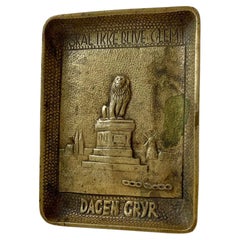
Danish Symbolic Lion Ashtray in Bronze, 1940s

Danish Symbolic Lion Ashtray in Bronze, 1940s

Located in Esbjerg, DK

A commemorative piece after a famous Danish painting by Jeppe Madsen-Ohlsen. Its front depicts the Isted Lion and in the background the church of Broager and Dybbøl Mølle / mill seen...

Category

Danish Victorian Vintage 1940s Ashtrays

Materials

Bronze

Ceramic Dish Ashtray or Centrepiece in Ceramic Art Deco Red Color

Ceramic Dish Ashtray or Centrepiece in Ceramic Art Deco Red Color

Located in Auribeau sur Siagne, FR

Art Deco ashtray or vide poche in ceramic. Red color. Made in France. Stamped.

Category

French Art Deco Vintage 1940s Ashtrays

Materials

Ceramic

Restored Rattan and Mahogany Standing Ashtray

Restored Rattan and Mahogany Standing Ashtray

Located in Van Nuys, CA

This beautifully restored Paul Frankl-inspired standing rattan ashtray is a sleek and functional accessory designed for convenience and style. Typically featuring a tall, slender bas...

Category

Vintage 1940s Ashtrays

Materials

Rattan

Jacques Adnet Leather Ashtray

Jacques Adnet Leather Ashtray

By Jacques Adnet

Located in Beverly Hills, CA

Handsome Jacques Adnet ashtray set in beautifully worn dark brown leather. Thick molded glass with crackle detailing Incredible piece. France 1940s.

Category

Vintage 1940s Ashtrays

Materials

Brass

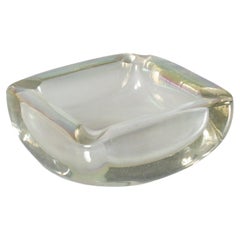
A. Seguso Thick Iridescent Murano Glass Ashtray 40s Italy

A. Seguso Thick Iridescent Murano Glass Ashtray 40s Italy

By Archimede Seguso

Located in Palermo, IT

Square ashtray in very thick iridescent Murano glass, with beveled edges and recesses for cigarettes at the corners. Murano manifacture by Archimede Seguso, 1940s. Wear consistent w...

Category

Italian Mid-Century Modern Vintage 1940s Ashtrays

Materials

Murano Glass

Jacques Adnet Ashtray

Jacques Adnet Ashtray

By Jacques Adnet

Located in Beverly Hills, CA

Handsome glass ashtray with leather belting and signature contrast stitching and brass buckle France 1940s.

Category

French Vintage 1940s Ashtrays

Materials

Brass

Murano 1940, Attributed to Flavio Poli, Italian, Technique Geometric Flat Cold

Murano 1940, Attributed to Flavio Poli, Italian, Technique Geometric Flat Cold

By Flavio Poli

Located in Ciudad Autónoma Buenos Aires, C

Murano Geometric Flat Cold-Cutting and Polishing (Molatura) Once the piece has cooled, the top rim and base are ground and rectified using abrasive stone wheels and polishing compoun...

Category

Italian Art Deco Vintage 1940s Ashtrays

Materials

Murano Glass

Murano, Italian, Attributed to Barovier Toso, 1940

Murano, Italian, Attributed to Barovier Toso, 1940

By Vetreria Artistica Barovier & C.

Located in Ciudad Autónoma Buenos Aires, C

Attributed to Barovier Toso We have specialized in the sale of Art Deco and Art Nouveau and Vintage styles since 1982. The company is one of the oldest family businesses in the world, founded in 1295 as Barovier. "The name Barovier derives from the term berroviere (highwayman/policman , which indicates the armigero (person entitled to bear arms guarding the captain of the people. It is probable that some Barovier, originally from Treviso, settled in Murano around 1291, when a law of the Republic imposed the concentration on the island of all glass furnaces." Jacobello was the first member of the Barovier family to work glass at this time. It is thought that the company originated in Treviso[citation needed]. The Toso family had been established in Murano since around 1350. In the 1400s Angelo Barovier created glass objects which are currently preserved in various museums. Angelo is recognized as significant for uniting the knowledge which had been developed and handed down by family Barovier. He was not only considered and artist but a scientist. The company became Ferro Toso Vetrerie Artistiche Riunite S.A in 1936 when Vetreria Artistica Barovier merged with Ferro Toso, specializing in crystalline glass, mother-of-pearl glass, and gold-free cornelian red glass. In 1942, the company was renamed Barovier & Toso. In 1919–1920, 30 year old designer Ercole Barovier began a 50-year career as the artistic director of Barovier & Toso. "After studying medicine and working as a radio operator during World War One he joined the family firm in 1920 when he and his brother Nicolo took over the management from their father Benvenuto. From 1927 Ercole was the main designer and from 1934, when Nicolo left the company, (he was) also the sole owner." While Barovier did not have formal training as a glassblower, his artistic designs produced objets d'art that have become the most critically acclaimed in the history of Ercole - Barovier.[9] In 1930 he produced his award-winning “Primavera” series. "The Primavera series ... is distinguished by a milky white 'craquelé' glass with the addition of black or blue pasta vitrea trim ("opaque colored glass whose consistency is made to appear like ceramic") and decoration. There was a very limited production of this series due to the fact that it was a result of a glass mixture obtained accidentally so it could never be replicated. Barovier continued to produce innovative designs of which the “Lenti” vase...

Category

Italian Art Deco Vintage 1940s Ashtrays
Materials

Murano Glass

Handcarved Pipe for Savinelli

Handcarved Pipe for Savinelli

By Savinelli design

Located in Sagaponack, NY

A hand carved wood smoking pipe, the handle circled by a silver band with etched decoration. Marked "Estella 316 EX".

Category

Italian Mid-Century Modern Vintage 1940s Ashtrays

Materials

Metal

Murano Centerpiece by Flavio Poli, Italy, 1940, Sommerso technique

Murano Centerpiece by Flavio Poli, Italy, 1940, Sommerso technique

By Flavio Poli

Located in Ciudad Autónoma Buenos Aires, C

Murano Sommerso technique The sommerso technique was originally developed in the 1930s by Carlo Scarpa at Venini & Co. Sommerso (Italian for "submerged") is the Murano glassmaking...

Category

Italian Art Deco Vintage 1940s Ashtrays
Materials

Murano Glass

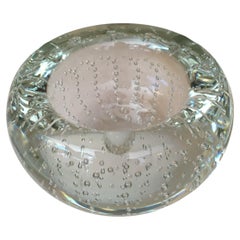
Murano Glass Ashtray, Art Deco Style, Italian, 1940, Murano Pulegoso

Murano Glass Ashtray, Art Deco Style, Italian, 1940, Murano Pulegoso

Located in Ciudad Autónoma Buenos Aires, C

The pulled glass is a type of crystal characterized by containing thousands of microscopic air bubbles and deliberately trapped impurities inside during melting. o Appearance: It gi...

Category

Italian Art Deco Vintage 1940s Ashtrays

Materials

Murano Glass

Murano Glass Centerpiece by Flavio Poli, Art Deco Style, Italy, 1940

Murano Glass Centerpiece by Flavio Poli, Art Deco Style, Italy, 1940

By Flavio Poli

Located in Ciudad Autónoma Buenos Aires, C

Flavio Poli (1900-1984) was an Italian artist, known for his designs in glass. Born in 1900, he was trained at the Istituto d'Arte di Venezia, then began work as a ceramicist. In 192...

Category

Italian Art Deco Vintage 1940s Ashtrays

Materials

Murano Glass

Murano Glass Ashtray, Art Deco Style, Italian, 1940, Murano Pulegoso

Murano Glass Ashtray, Art Deco Style, Italian, 1940, Murano Pulegoso

Located in Ciudad Autónoma Buenos Aires, C

Technique Pulegoso Ingles The pulled glass is a type of crystal characterized by containing thousands of microscopic air bubbles and deliberately trapped impurities inside during me...

Category

Italian Art Deco Vintage 1940s Ashtrays

Materials

Murano Glass

Murano 1940, Attributed to Flavio Poli, Italian

Murano 1940, Attributed to Flavio Poli, Italian

By Flavio Poli

Located in Ciudad Autónoma Buenos Aires, C

Murano Geometric Flat Cold-Cutting and Polishing (Molatura) Once the piece has cooled, the top rim and base are ground and rectified using abrasive stone wheels and polishing compo...

Category

Italian Art Deco Vintage 1940s Ashtrays

Materials

Murano Glass

Murano, 1940, Italian

Murano, 1940, Italian

Located in Ciudad Autónoma Buenos Aires, C

Logistics and International Shipping We provide a comprehensive export service so that your only concern is enjoying your acquisition. • Door-to-Door Service: Pieces located in our ...

Category

Italian Art Deco Vintage 1940s Ashtrays

Materials

Murano Glass