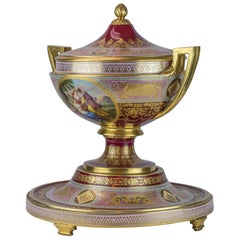
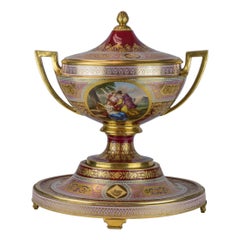
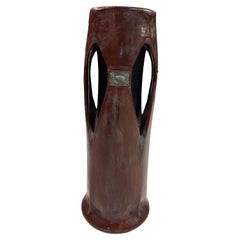
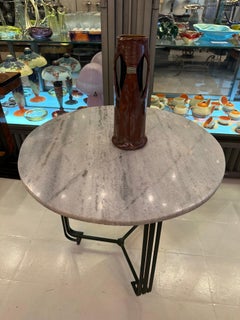
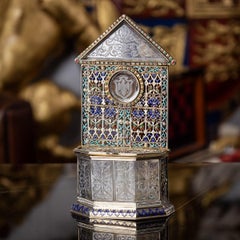
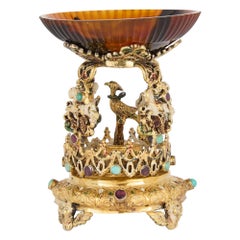
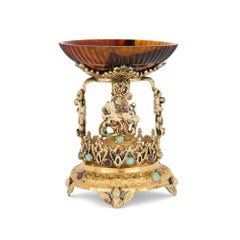
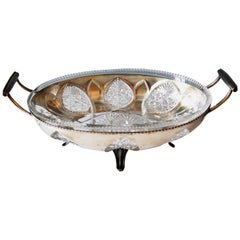
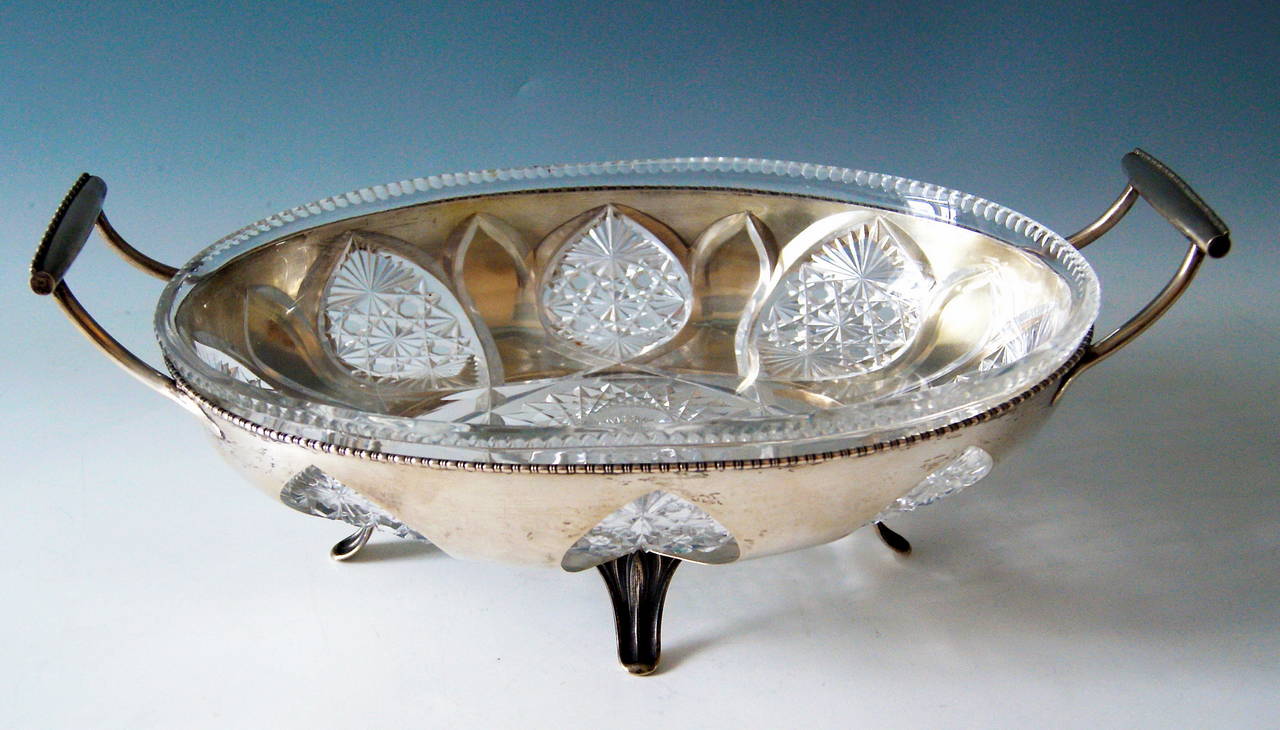
Located in Ciudad Autónoma Buenos Aires, C
The History of Julius Dressler
1. Origins and Foundation (1882 - 1888)
Although many pieces bear the "Austria" mark, the factory was not located in modern-day Vienna, but rather in the Northern Bohemia region. In the 1880s (specifically between 1882 and 1888, according to firing test records), Julius Dressler founded his company in Biela (near Tetschen-Bodenbach).
At that time, Bohemia belonged to the Austro-Hungarian Empire, which is why its products were legally labeled and exported as Austrian pottery ("Austria").
2. The Golden Age: The Jugendstil (1900 - 1914)
Dressler started by specializing in majolica (fine glazed earthenware) and decorative pottery. However, the factory achieved true international prestige at the beginning of the 20th century thanks to its adoption of two major avant-garde movements:
• Art Nouveau (known in the Germanic region as Jugendstil).
• The Vienna Secession (Secessionist ware).
The factory set itself apart from the competition by experimenting with matte glazes, shades of green, blue, and brown, featuring subtle golden highlights.
3. Geopolitical Changes and Post-War Era (1918 - 1945)
Following the end of World War I in 1918, the map of Europe changed completely. The Austro-Hungarian Empire dissolved, and the region of Bohemia became part of the newly created Czechoslovakia. Because of this, the town of Biela was renamed Bělá.
Even though the founder passed away or ceased to be actively involved in the company, the business continued under his widow, Hulda Dressler, and later his son, Karl Dressler.
• In 1920: To survive the post-war crisis, the factory joined EPIAG (Erste Porzellan-Industrie A.G.), a consortium of independent companies created to promote and export Bohemian ceramics worldwide.
• The Closure: The factory continued to operate under this commercial model until the end of World War II, permanently closing its doors between 1944 and 1945.
The Classic Mark: The most famous stamp consists of a tower engraved on a rock with the letters J.D.B. underneath (the initials stand for Julius Dressler, Biela). Many of them also feature the word "Austria" printed or stamped.
In these museums, pieces by the designer can be seen:
National Czech & Slovak Museum & Library
Wiener Museum of Decorative Arts (WMODA)
Herbert F. Johnson Museum of Art
Regional Museum in Děčín (Oblastní muzeum v Děčíně)
Museum of Decorative Arts in Prague (Uměleckoprůmyslové museum v Praze)
Logistics and International Shipping
We provide a comprehensive export service so that your only concern is enjoying your acquisition.
• Door-to-Door Service: Pieces located in our Argentina galleries are shipped directly to your address via air freight.
• Simplified Customs Management: We handle the processing of export permits and the payment of customs duties. You will receive your purchase without additional paperwork or surprise costs.
• High-Security Packaging: Following FedEx international standards, each piece is protected in custom-made wooden crates, designed to withstand 1-meter impacts and ensure the integrity of the object during transit.
• Note for shipments to the USA: To comply with shipping company regulations and ensure delivery at the destination, a valid tax ID (EIN, SSN, or ITIN) is required.
• Domestic US Shipping: For those pieces available in our United States storage, logistics are managed through 1stdibs.
Sign: 7104 Austria
Julio Dressler...
Category
1910s Vienna Secession Vintage Austrian Centerpieces