1940s Centerpieces

87 Results
to
5
87
35
18

Use search to find more

53
7
3
2
2
1
1
49
835
2,305
885
475
956
606
158
41
117
155
210
200
299
97
56
48
34
20
18
7

Use search to find more

6
2
1
1
1

Use search to find more

Period: 1940s
A stunning vintage centerpiece in gilded bronze, Napoleon III style, from the 1840s

A stunning vintage centerpiece in gilded bronze, Napoleon III style, from the 1840s

By Mice di rugiano domenico e c. s.n.c.

Located in Cantù, IT

A stunning decorative centerpiece in the Napoleon III style, crafted from fine gilded metal and featuring an elegant design of cherubs. A piece of great charm and elegance, characte...

Category

Italian Napoleon III Vintage 1940s Centerpieces

Materials

Bronze

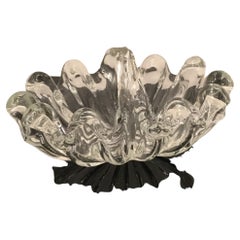
Art Deco Glass, wood and Metal Fruit Bowl, France, 1940s

Art Deco Glass, wood and Metal Fruit Bowl, France, 1940s

Located in Meulebeke, BE

France / 1940 / Fruit bowl / glass, metal, wood / Art Deco A beautiful French Art Deco fruit bowl from the 1940s, featuring a sculptural form that perfectly captures the glamour and...

Category

French Art Deco Vintage 1940s Centerpieces

Materials

Metal

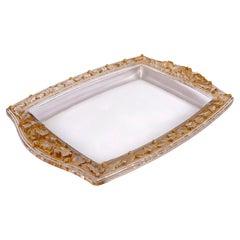
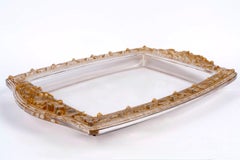
Italian mid-century modern metal tray, 1940s

Italian mid-century modern metal tray, 1940s

Located in MIlano, IT

Italian mid-century modern metal tray, 1940s Tray with an elongated oval shelf enclosed in an octagonal frame. The rim is embellished with raised geometric decorative elements such a...

Category

Italian Mid-Century Modern Vintage 1940s Centerpieces

Materials

Metal

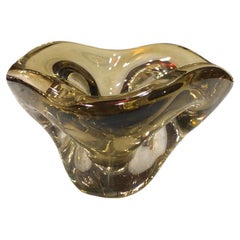
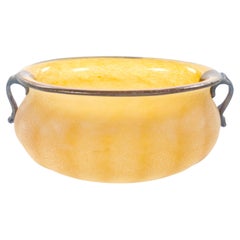
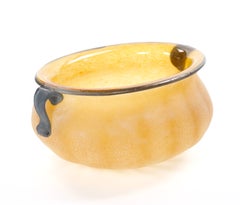
Sepia Calcedony Glass Trinket Bowl or Centerpiece by George Davidson, UK

Sepia Calcedony Glass Trinket Bowl or Centerpiece by George Davidson, UK

By George Davidson

Located in Bresso, Lombardy

Made in the UK by George Davidson, 1940s. This large oval bowl is made in sepia calcedony glass and features a rippled edge and an impressed star design on the base. It is a vintage ...

Category

British Art Nouveau Vintage 1940s Centerpieces

Materials

Glass

Saint-jean-du-desert French Fish or Shellfish Tureen, Late 1940s

Saint-jean-du-desert French Fish or Shellfish Tureen, Late 1940s

By Vallauris

Located in Saint-Amans-des-Cots, FR

French Ceramic “Bouillabaisse” Fish or Shellfish Tureen by Paulette Bailet, Saint-Jean-du-Désert, Marseille, Late 1940s A rare and beautifully crafted French ceramic tureen titled “...

Category

French French Provincial Vintage 1940s Centerpieces

Materials

Ceramic

Wilhelm Kage, Gustavsberg Argenta Ceramic Centrepiece Platter Applied Silver

Wilhelm Kage, Gustavsberg Argenta Ceramic Centrepiece Platter Applied Silver

By Wilhelm Kage

Located in Rothley, Leicestershire

Beautiful, understated Argenta round ceramic footed centrepiece platter by Wilhelm Kage for Gustavsberg, Sweden Applied silver trellis motif decorates the depressed centre, the oute...

Category

Swedish Art Deco Vintage 1940s Centerpieces

Materials

Silver

Natural Malachite Dish Bowl

Natural Malachite Dish Bowl

Located in Atlanta, GA

A decorative dish or bowl fashioned out of a large piece of all natural malachite mineral stone. Polished beautifully to display the natural swirly layerings and concentrics of the s...

Category

American Mid-Century Modern Vintage 1940s Centerpieces

Materials

Malachite

Vintage Murano Glass Centerpiece, Hand-Blown Aqua Green, Italy, 1940s

Vintage Murano Glass Centerpiece, Hand-Blown Aqua Green, Italy, 1940s

Located in Piacenza, Italy

A vintage Murano glass centerpiece in a soft aqua green tone, produced in Murano, Italy 1940s. The piece is hand-blown and features delicate floral and scroll motifs around the bowl,...

Category

Italian Mid-Century Modern Vintage 1940s Centerpieces

Materials

Glass, Blown Glass

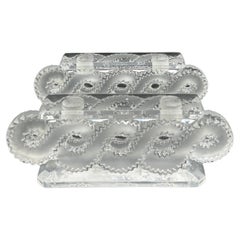
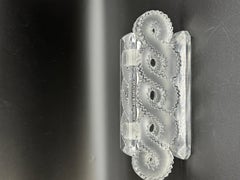
A Pair Of Maison Lalique 1940tys Auriac Candlesticks

A Pair Of Maison Lalique 1940tys Auriac Candlesticks

By Marc Lalique

Located in SAINT-OUEN-SUR-SEINE, FR

The Auriac candlesticks by Marc Lalique belong to the new style Marc Lalique introduced in the Lalique company in the early 1940tys. This style is still influenced by the Art Déco p...

Category

French Art Deco Vintage 1940s Centerpieces

Materials

Crystal

Rare Large Art Deco Centerpiece by Winterhalder Made in Cupertino, CA, 1947

Rare Large Art Deco Centerpiece by Winterhalder Made in Cupertino, CA, 1947

By Erwin Winterhalder

Located in Philadelphia, PA

Brilliantly glazed in chartreuse-yellow and Mediterranean blue-green, this unique and important Art Deco bowl was made by Erwin Winterhalder in Cupertino. The artist was born in Swit...

Category

American Art Deco Vintage 1940s Centerpieces

Materials

Ceramic

Platter in Brass, Candle Holder, Gold Color, by Josef Frank, 1940

Platter in Brass, Candle Holder, Gold Color, by Josef Frank, 1940

By Josef Frank

Located in Auribeau sur Siagne, FR

It is a tray from the Art Deco period, in brass with geometric patterns. It is equipped with two candle holders. It was made in Sweden around the 1940s. It is gold in color. The manu...

Category

Swedish Art Deco Vintage 1940s Centerpieces

Materials

Brass

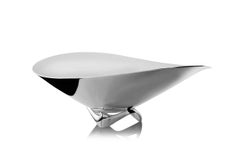
Georg Jensen Henning Koppel Sterling Silver Centerpiece Bowl 980B

Georg Jensen Henning Koppel Sterling Silver Centerpiece Bowl 980B

By Henning Koppel, Georg Jensen

Located in Hellerup, DK

An early impressive Mid-Century Georg Jensen sterling silver centerpiece bowl, design #980 by Henning Koppel from 1948. A large sculptural bowl that rests an a three pointed base whi...

Category

Danish Modern Vintage 1940s Centerpieces

Materials

Sterling Silver

Murano , Art Deco Style, Italian, 1940, Elegant Design, Technique Hand-modeled

Murano , Art Deco Style, Italian, 1940, Elegant Design, Technique Hand-modeled

Located in Ciudad Autónoma Buenos Aires, C

Technique Hand-modeled. Without the use of rigid molds, the master glassmaker manipulates the thick, incandescent glass mass using pincers (pincette) and hot stretching/bending move...

Category

Italian Art Deco Vintage 1940s Centerpieces

Materials

Murano Glass

Murano, 1940, Italian, Attributed to Barovier Toso, Technique Aventurina, gold

Murano, 1940, Italian, Attributed to Barovier Toso, Technique Aventurina, gold

By Vetreria Artistica Barovier & C.

Located in Ciudad Autónoma Buenos Aires, C

Technique Aventurina The aventurine is a glassmaking technique from Murano developed on the island of Murano in the 17th century. It was first mentioned in a document dating back to 1614 as 'a kind of stone with golden stars inside', at which point it was already mesmerizing people with its unusual and attractive appearance. The technique gets its name from the fact that its discovery happened by chance due to a fortunate coincidence, when it is said that a glass artisan accidentally dropped some metal shavings into the glass mixture. Italians say it happened 'all'avventura', which in Italian means 'by chance'. The first documented recipe for the technique dates back to 1644, when the Murano master glassmaker Giovanni Darduin described how to create aventurine glass. The recipe involves adding various metallic oxides such as copper and iron to the hot glass mixture, which will cause small particles of the metals to crystallize as the glass mixture cools. Complicating the process, for such crystallization to occur, the furnace had to be completely turned off, and the metallic particles would slowly separate from the glass base over a few days during the natural cooling of the glass. This was a very difficult process from a logistical perspective, as every time a glass furnace was turned off, it caused work to stop, and reigniting it was quite a large process, as it took time to heat it fully to the desired temperature. As the industrial revolution reached Murano in the 19th century, the process had a remake. Large volumes of fine aventurine paste were produced that were then skillfully stretched into glass rods, which were then remelted for jewelry making under a small flame, or for glass blowing. This aventurine paste received worldwide acclaim and revived the fame of the Murano glass workshops due to its use in Salviati mosaics and in other pieces of rare magnificence, such as vases, glasses, cups, and bowls produced in the Salviati workshop. Technique Gold Leaf Inclusion (Inclusione di Foglia d'Oro) Before casing the glass layers, the molten gather is rolled over a sheet of 24-karat gold leaf (foglia d'oro), which shatters into fine metallic flecks that remain suspended within the glass. Technique Hand-modeled. Without the use of rigid molds, the master glassmaker manipulates the thick, incandescent glass mass using pincers (pincette) and hot stretching/bending movements, creating dynamic organic lobes, folds, and waves. Attributed to Barovier Toso The company is one of the oldest family businesses in the world, founded in 1295 as Barovier. "The name Barovier derives from the term berroviere (highwayman/policman, which indicates the armigero (person entitled to bear arms) guarding the captain of the people. It is probable that some Barovier, originally from Treviso, settled in Murano around 1291, when a law of the Republic imposed the concentration on the island of all glass furnaces." Jacobello was the first member of the Barovier family to work glass at this time. It is thought that the company originated in Treviso[citation needed]. The Toso family had been established in Murano since around 1350. In the 1400s Angelo Barovier created glass objects which are currently preserved in various museums. Angelo is recognized as significant for uniting the knowledge which had been developed and handed down by family Barovier. He was not only considered and artist but a scientist. The company became Ferro Toso Vetrerie Artistiche Riunite S.A in 1936 when Vetreria Artistica Barovier merged with Ferro Toso, specializing in crystalline glass, mother-of-pearl glass, and gold-free cornelian red glass.. In 1942, the company was renamed Barovier & Toso. In 1919–1920, 30 year old designer Ercole Barovier began a 50-year career as the artistic director of Barovier & Toso.[9] "After studying medicine and working as a radio operator during World War One he joined the family firm in 1920 when he and his brother Nicolo took over the management from their father Benvenuto. From 1927 Ercole was the main designer and from 1934, when Nicolo left the company, (he was) also the sole owner." While Barovier did not have formal training as a glassblower, his artistic designs produced objets d'art that have become the most critically acclaimed in the history of Ercole - Barovier. In 1930 he produced his award-winning “Primavera” series. "The Primavera series ... is distinguished by a milky white 'craquelé' glass with the addition of black or blue pasta vitrea trim ("opaque colored glass whose consistency is made to appear like ceramic") and decoration. There was a very limited production of this series due to the fact that it was a result of a glass mixture obtained accidentally so it could never be replicated." One example of this series, a Primavera Pigeon, was sold at auction for GBP 275,000 (approximately $360,000 USD, not inclusive of the buyer’s premium) on October 16, 2019. Barovier continued to produce innovative designs of which the “Lenti” vase...

Category

Italian Art Deco Vintage 1940s Centerpieces
Materials

Gold

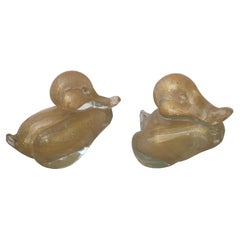
Ducks Murano, 1940, Italian, Attributed to Seguso, Barovier

Ducks Murano, 1940, Italian, Attributed to Seguso, Barovier

By Barovier Seguso & Ferro

Located in Ciudad Autónoma Buenos Aires, C

Gold application Attributed to Seguso - Barovier We have specialized in the sale of Art Deco and Art Nouveau and Vintage styles since 1982. If you have any questions we are at your disposal. The history of "Seguso Vetri D' Arte" is directly linked to the "Vetreria Artistica­ Barovier" company. When the Barovier workshop was forced to reduce production in 1929, due to a financial crisis in America, the original group of ten partners had to separate and Antonio Seguso in 1931, assisted by his sons Ernesto and Archimede opened a small workshop of his own. They were joined by Luigi Olimpio Ferro and Napoleone Barovier the following year. Together the craftsmen establish the "Artistica Soffieria e Vetreria Barovier Seguso & Ferro" company as equal partners. In 1934 Flavio Poli joins the firm as artistic director and within only a brief period of time a distinct style of designs emerged. The close collaboration between Flavio Poli, Archimede Seguso and Alfredo Barbini played an important part in the success of the company. New glass techniques are developed which include never before seen color applications. The companies innovative designs constantly received awards and during the 1935 World Fair in Brussels and the 1936 Milan Triennale they did attract the interest of a new group of clientele. One of them is the French wholesale company "Veronese" from Paris which would play a defining role in the history of the company. The demand for an increase in production requires additional investments and the partners felt that there is a need to multiply their investment tenfold. Luigi Olimpio Ferro subsequently decided to withdraw from the company and his shares are acquired by Flavio Poli, which makes him a full partner. As a result, the company name is changed to Seguso Vetri D’ Arte and it is officially recognized in 1937. A period of great success and prosperity ensues, lasting until the outbreak of World War II. The post ­war period is a time of great change in Europe and the rebuilding of the economical structure in Italy requires major investments which result in the introduction of new import duties and taxes. To safeguard the copyright of the Seguso Vetri D'Arte designs an application for a second entry into the commercial registers of Venice is made by the partners in 1945. Strict export regulations curb international business relations for many years after the war and the company decides to focus on the domestic market instead. In 1946 a large retail location is opened at the Piazza Diaz in Milan where in addition to the art glass, German porcelain and Italian pottery is offered. In 1950 Flavio Poli develops a new sommerso glass technique, which consists of an overlaying of transparent layers of glass. The overlapping creates new shades of color which prior to the introduction of this technique had not been seen. Flavio Poli's most iconic design is the "Valve", which resembles an upright, slightly opened clam shell. The design was introduced in 1951. Mario Pinzoni joins the company in 1953 as a personal assistant to Flavio Poli and his responsibilities as a draftsman included the compilation of archival and the existing production drawing s...

Category

Italian Art Deco Vintage 1940s Centerpieces
Materials

Gold

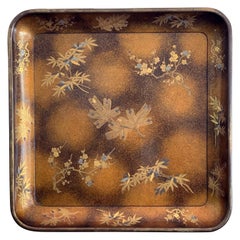
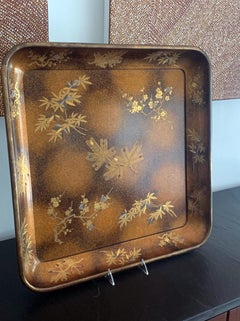
Large Vintage Japanese Maki-e Lacquer Kimono Tray

Large Vintage Japanese Maki-e Lacquer Kimono Tray

Located in Atlanta, GA

A large square lacquer presentation tray (likely for kimono) predated 1950 of the Showa period. Elaborately decorated with Maki-e that depicts the prunus blossom, bamboo and needle p...

Category

Japanese Japonisme Vintage 1940s Centerpieces

Materials

Wood, Lacquer

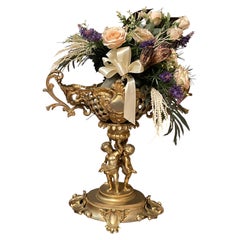
Murano cocktail muddler, 1940, Italian, Bubble technique

Murano cocktail muddler, 1940, Italian, Bubble technique

Located in Ciudad Autónoma Buenos Aires, C

Bullicante Controlled and symmetrical bubbles. The glass remains completely transparent, but inside it houses uniform and perfectly aligned rows of bubbles (a grid or three-dimensio...

Category

Italian Art Deco Vintage 1940s Centerpieces
Materials

Murano Glass

Murano Art Deco Vase, Italian Glass, 1940, Elegant Design, Italy

Murano Art Deco Vase, Italian Glass, 1940, Elegant Design, Italy

Located in Ciudad Autónoma Buenos Aires, C

Murano Technique Hand-modeled Without the use of rigid molds, the master glassmaker manipulates the thick, incandescent glass mass using pincers (pincette) and hot stretching/bending...

Category

Italian Art Deco Vintage 1940s Centerpieces
Materials

Murano Glass

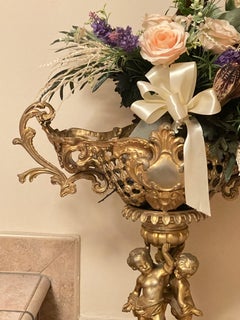
Murano, 1940, Italian, Technique: Bullicante, Hand-modeled, Iridescent.

Murano, 1940, Italian, Technique: Bullicante, Hand-modeled, Iridescent.

By Carlo Scarpa

Located in Ciudad Autónoma Buenos Aires, C

Iridescent or Pearlescent Effect (Iridescent Glass) o The outer surface of the clear/smoked glass has a smooth iridescent finish that reflects flashes of color when light hits it. o...

Category

Italian Art Deco Vintage 1940s Centerpieces

Materials

Murano Glass

Murano, Attributed to Flavio Poli, Italian, Techniques: Sommerso, Cold Carving

Murano, Attributed to Flavio Poli, Italian, Techniques: Sommerso, Cold Carving

By Flavio Poli

Located in Ciudad Autónoma Buenos Aires, C

Murano Geometric Flat Cold-Cutting and Polishing (Molatura) Once the piece has cooled, the top rim and base are ground and rectified using abrasive stone wheels and polishing compou...

Category

Italian Art Deco Vintage 1940s Centerpieces

Materials

Murano Glass

Murano Art Deco Vase, Italian, 1940, Elegant Design, Italy, Murano Massello

Murano Art Deco Vase, Italian, 1940, Elegant Design, Italy, Murano Massello

Located in Ciudad Autónoma Buenos Aires, C

Technique Murano Massello It is one of the most demanding and sculptural methodologies in the art of Murano glasswork. Unlike traditional blown glass (vetro soffiato), this technique...

Category

Italian Art Deco Vintage 1940s Centerpieces

Materials

Murano Glass

Gilt Bronze Art Nouveau Figural Centerpiece / Charles Korschann French 1872-1943

Gilt Bronze Art Nouveau Figural Centerpiece / Charles Korschann French 1872-1943

Located in Tarry Town, NY

A superb example of Art Nouveau bronze work by the renowned sculptor Charles Korschann, this beautifully crafted gilt bronze centerpiece/tray captures the essence of turn-of-the-cent...

Category

French Art Nouveau Vintage 1940s Centerpieces

Materials

Bronze

Elegant 1940s Italian Murano, Techniques: Massello, Sommerso, Hand-modeled

Elegant 1940s Italian Murano, Techniques: Massello, Sommerso, Hand-modeled

Located in Ciudad Autónoma Buenos Aires, C

Sommerso technique The sommerso technique was originally developed in the 1930s by Carlo Scarpa at Venini & Co. Sommerso (Italian for "submerged") is the Murano glassmaking tec...

Category

Italian Art Deco Vintage 1940s Centerpieces

Materials

Murano Glass

Murano, 1940 . Attributed to Seguso - Barovier, Italian, Sommerso technique

Murano, 1940 . Attributed to Seguso - Barovier, Italian, Sommerso technique

By Barovier Seguso & Ferro

Located in Ciudad Autónoma Buenos Aires, C

Sommerso technique Murano The sommerso technique was originally developed in the 1930s by Carlo Scarpa at Venini & Co. Sommerso (Italian for "submerged") is the Murano glassmaking technique that creates two or more contrasting layers of glass without mixing the colors. It is formed by submerging colored glass in molten glass of a different color, before blowing the glass into the required shape. The outer layer is usually clear. During the 1950s, the sommerso style became world-famous thanks to the work of Flavio Poli, artistic director of Seguso Vetri d'Arte. Attributed to Seguso - Barovier We have specialized in the sale of Art Deco and Art Nouveau and Vintage styles since 1982. If you have any questions we are at your disposal. Pushing the button that reads 'View All From Seller'. And you can see more objects to the style for sale. The history of "Seguso Vetri D' Arte" is directly linked to the "Vetreria Artistica­ Barovier" company. When the Barovier workshop was forced to reduce production in 1929, due to a financial crisis in America, the original group of ten partners had to separate and Antonio Seguso in 1931, assisted by his sons Ernesto and Archimede opened a small workshop of his own. They were joined by Luigi Olimpio Ferro and Napoleone Barovier the following year. Together the craftsmen establish the "Artistica Soffieria e Vetreria Barovier Seguso & Ferro" company as equal partners. In 1934 Flavio Poli joins the firm as artistic director and within only a brief period of time a distinct style of designs emerged. The close collaboration between Flavio Poli, Archimede Seguso and Alfredo Barbini played an important part in the success of the company. New glass techniques are developed which include never before seen color applications. The companies innovative designs constantly received awards and during the 1935 World Fair in Brussels and the 1936 Milan Triennale they did attract the interest of a new group of clientele. One of them is the French wholesale company "Veronese" from Paris which would play a defining role in the history of the company. The demand for an increase in production requires additional investments and the partners felt that there is a need to multiply their investment tenfold. Luigi Olimpio Ferro subsequently decided to withdraw from the company and his shares are acquired by Flavio Poli, which makes him a full partner. As a result, the company name is changed to Seguso Vetri D’ Arte and it is officially recognized in 1937. A period of great success and prosperity ensues, lasting until the outbreak of World War II. The post ­war period is a time of great change in Europe and the rebuilding of the economical structure in Italy requires major investments which result in the introduction of new import duties and taxes. To safeguard the copyright of the Seguso Vetri D'Arte designs an application for a second entry into the commercial registers of Venice is made by the partners in 1945. Strict export regulations curb international business relations for many years after the war and the company decides to focus on the domestic market instead. In 1946 a large retail location is opened at the Piazza Diaz in Milan where in addition to the art glass...

Category

Italian Art Deco Vintage 1940s Centerpieces

Materials

Murano Glass

1940s French Art Deco Ceramic Trivet, Geometric Interlocking Circle Motifs

1940s French Art Deco Ceramic Trivet, Geometric Interlocking Circle Motifs

Located in Auribeau sur Siagne, FR

940s French Art Deco Ceramic Trivet, Geometric Interlocking Circle Motifs Description: This elegant Art Deco ceramic trivet, crafted in France in the 1940s, is a timeless and stylis...

Category

French Art Deco Vintage 1940s Centerpieces

Materials

Ceramic

Mid-Century Modern Venetian Art Glass Large Tableware Centerpiece Bowl

Mid-Century Modern Venetian Art Glass Large Tableware Centerpiece Bowl

Located in Tarry Town, NY

A striking mid-century modern Venetian art glass tableware centerpiece, made in Venice, Italy, in the mid-20th century and executed in the distinctive Seguso style. This beautifully ...

Category

Italian Vintage 1940s Centerpieces

Materials

Art Glass

1943 René Lalique Centerpiece Bowl Platter Chene Oak Glass with Sepia Patina

1943 René Lalique Centerpiece Bowl Platter Chene Oak Glass with Sepia Patina

By René Lalique

Located in Boulogne Billancourt, FR

Centerpiece Bowl Platter "Chêne" (Oak) made in glass with sepia patina by Rene Lalique in 1943. Stamped signature. Perfect condition. Very rare and decorative model. height : 6 cm...

Category

French Art Deco Vintage 1940s Centerpieces

Materials

Blown Glass

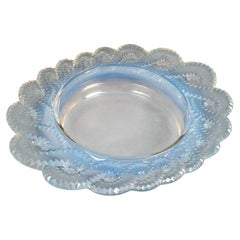
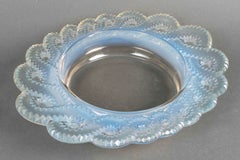
1944 René Lalique Centerpiece Bowl Jardiniere Auriac Opalescent Glass

1944 René Lalique Centerpiece Bowl Jardiniere Auriac Opalescent Glass

By René Lalique

Located in Boulogne Billancourt, FR

Centerpiece Bowl Jardiniere "Auriac" made in opalescent glass with blue patina by Rene Lalique in 1944. Stamped signature. Perfect condition. Very rare and decorative model. heigh...

Category

French Art Deco Vintage 1940s Centerpieces

Materials

Blown Glass

1940s Art Deco Green Opaline Vase Cup

1940s Art Deco Green Opaline Vase Cup

Located in Beuzevillette, FR

Green vase in frosted opaline glass with gilding at the neck and at the base. For big flowers, big stems circa 1940. Art Deco For an elegant and delicate interior decoration. ...

Category

French Art Deco Vintage 1940s Centerpieces

Materials

Opaline Glass

Murano, 1940, Italian, Technique Hand-modeled

Murano, 1940, Italian, Technique Hand-modeled

Located in Ciudad Autónoma Buenos Aires, C

Murano Technique Hand-modeled Without the use of rigid molds, the master glassmaker manipulates the thick, incandescent glass mass using pincers (pincette) and hot stretching/bending...

Category

Italian Art Deco Vintage 1940s Centerpieces

Materials

Murano Glass

Transparent "A Mugnoni" Murano Glass Vase attr. to Ercole Barovier, Italy

Transparent "A Mugnoni" Murano Glass Vase attr. to Ercole Barovier, Italy

By Ercole Barovier

Located in Bresso, Lombardy

Made in Italy, 1940. This is a vase attributable to the "A Mugnoni" series in transparent heavy blown glass, decorated with prunts containing air bubbles, which is a typical Ercole ...

Category

Italian Mid-Century Modern Vintage 1940s Centerpieces

Materials

Murano Glass

A Simple solid silver centre piece made by Dorothy E Vick

A Simple solid silver centre piece made by Dorothy E Vick

Located in London, GB

Simple solid silver centre piece made by Dorothy E Vick. Assay marks D.E.V. Birmingham 1945.

Category

English Mid-Century Modern Vintage 1940s Centerpieces

Materials

Silver

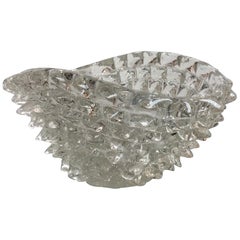
Circa 1940, Art Deco Panther Sculpture in Carved Wood

Circa 1940, Art Deco Panther Sculpture in Carved Wood

Located in Mexico City, CDMX

Elegant panther sculpture in the Art Deco style, finely carved in wood and finished with a sophisticated lacquer that emulates the depth and sheen of polished marble. The figure is ...

Category

Mexican Art Deco Vintage 1940s Centerpieces
Materials

Wood

Salviati Handblown Large Venetian Murano Iridescent Grape Leaf Centrepiece

Salviati Handblown Large Venetian Murano Iridescent Grape Leaf Centrepiece

By Salviati

Located in Great Barrington, MA

This large handblown Venetian centrepiece is large enough to be the focal point as a low centerpiece or used as a decorative piece on a sideboard or coffee table. The organic life-li...

Category

Italian Vintage 1940s Centerpieces

Materials

Art Glass

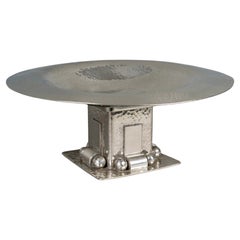
Large Royal Copenhagen Blue Crackle Glazed Centerpiece

Large Royal Copenhagen Blue Crackle Glazed Centerpiece

By Royal Copenhagen

Located in Kilmarnock, VA

An impressive overscale Royal Copenhagen porcelain centerpiece featuring elegantly fluted sides and elevated on a classic pedestal base. This piece showcases the distinctive crackle ...

Category

Danish Art Deco Vintage 1940s Centerpieces
Materials

Porcelain

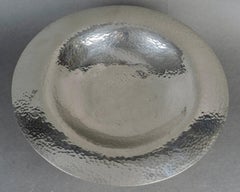
Vintage Brass Pestle & Mortar, Czechoslovakia Circa 1940s

Vintage Brass Pestle & Mortar, Czechoslovakia Circa 1940s

Located in Zohor, SK

Beautiful vintage pestle & mortar with charming age patina. Produced and used in Czechoslovakia in 1940s for spices and herbs. The item is made of a sol...

Category

Czech Art Deco Vintage 1940s Centerpieces
Materials

Brass

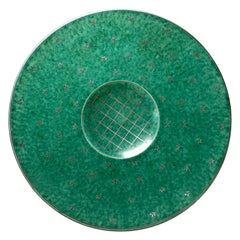
Antique Silver Overlay Glass Dishes for 25th Anniversary, Unattributed

Antique Silver Overlay Glass Dishes for 25th Anniversary, Unattributed

Located in Alessandria, Piemonte

Two American overlay silver glass dishes for "25th Anniversary", the most classic wedding anniversary dishes. They can also be for another anniversary: degree, acquaintance etc. Can ...

Category

American American Classical Vintage 1940s Centerpieces
Materials

Art Glass

Murano, 1940, Italian, Technique Hand-modeled.

Murano, 1940, Italian, Technique Hand-modeled.

Located in Ciudad Autónoma Buenos Aires, C

Murano -Technique Hand-modeled. Without the use of rigid molds, the master glassmaker manipulates the thick, incandescent glass mass using pincers (pincette) and hot stretching/bend...

Category

Italian Art Deco Vintage 1940s Centerpieces

Materials

Murano Glass

"Dragon Compotes, " Mid-Century Chinese-Inspired Centerpieces, Glass & Resin

"Dragon Compotes, " Mid-Century Chinese-Inspired Centerpieces, Glass & Resin

By Dorothy Thorpe

Located in Philadelphia, PA

This pair of stunning and unique compotes, composed of glass with resin bases and lids, was designed by Dorothy Thorpe, one of the most prolific and important women designers in Mid-...

Category

American Mid-Century Modern Vintage 1940s Centerpieces

Materials

Glass, Resin