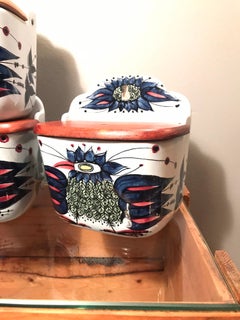
Carved Ceramics

13 Results
to
3
7
4
12
1
2
2
1
1
2
9
1
1
3
2
1
11
3
2
2
2
4
3
3
2
2
13
12
13
1
1
1
1
1
Technique: Carved
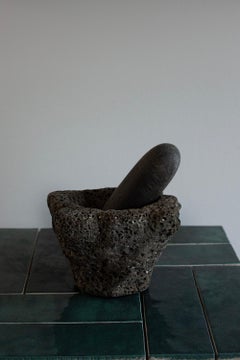
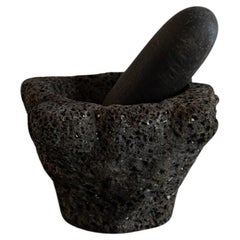
Small black French Stone Mortar with stone Pestle

Small black French Stone Mortar with stone Pestle

Located in Rümmingen, BW

This small French mortar was sourced in the south of France. It's an iconic and traditional kitchen object which is found all over France. Its traditional use was and still is to gri...

Category

Early 20th Century Unknown French Provincial Carved Ceramics

Materials

Stone

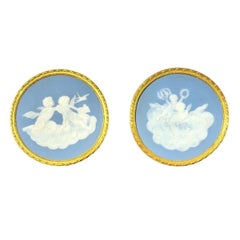
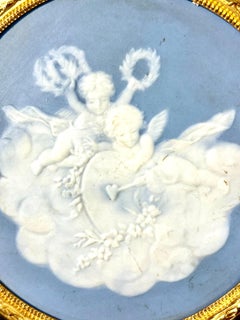
Pair of Limoges Ceramic Plaques with Cherubs, c.1880

Pair of Limoges Ceramic Plaques with Cherubs, c.1880

By Tharaud Limoges

Located in LA CIOTAT, FR

This elegant pair of oval decorative plaques represents the refined artistry of late 19th-century French porcelain production. Made in Limoges and bearing the mark of Tharaud – Limog...

Category

19th Century French Antique Carved Ceramics

Materials

Metal

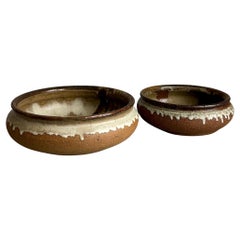
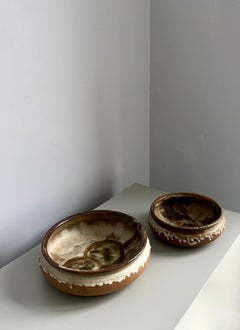
Set of Two Handmade Stoneware Bowls by Aksel Larsen, Denmark, 1970s

Set of Two Handmade Stoneware Bowls by Aksel Larsen, Denmark, 1970s

Set of two large unique handmade brutalist rustic stoneware bowls with hand-carved incised organic and geometric decorations and running glaze in earthy brown, lilac, light blue and ...

Category

Mid-20th Century Danish Mid-Century Modern Carved Ceramics

Materials

Ceramic, Pottery, Stoneware

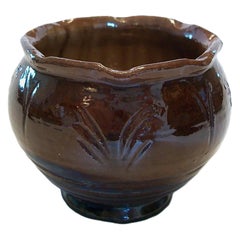
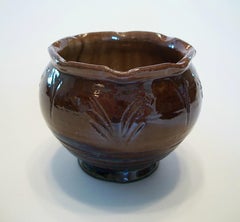
Vintage Studio Pottery Bowl - Incised Decoration - Unsigned - Mid 20th Century

Vintage Studio Pottery Bowl - Incised Decoration - Unsigned - Mid 20th Century

Located in Chatham, ON

Vintage - hand crafted - wheel thrown - terracotta studio pottery bowl with incised decoration to the exterior - crimped rim - brown gloss glaze - unsigned - Canada (likely) - mid 20...

Category

Mid-20th Century Canadian Folk Art Carved Ceramics

Materials

Ceramic, Terracotta

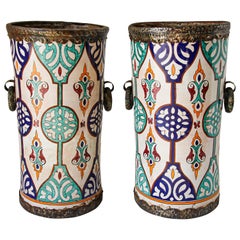
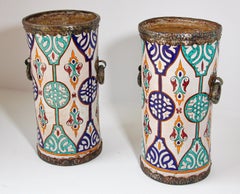
Handcrafted Moorish Ceramic Urns with Metal Handles, 20th Century

Handcrafted Moorish Ceramic Urns with Metal Handles, 20th Century

Located in Moreno Valley, CA

Pair of very decorative large handcrafted Moorish, Spanish style ceramic urns planters from Fez, Metal handles, bottom and top adorned with embossed metal. Great decorative large ce...

Category

20th Century Moroccan Moorish Carved Ceramics

Materials

Ceramic

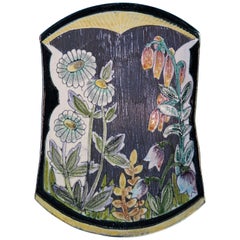
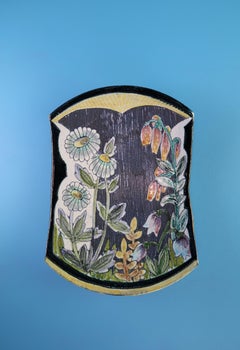
1950s Floral Ceramic Wall Plaque by Swedish Tilgmans

1950s Floral Ceramic Wall Plaque by Swedish Tilgmans

By Tilgmans Keramik

Located in Copenhagen, DK

Handmade Mid-Century Modern ceramic wall platter by Margit Lagerqvist for Swedish Tilgmans in 1957. Hand painted floral decor in white, yellow, orange, rose, light blue and green col...

Category

Mid-20th Century Swedish Mid-Century Modern Carved Ceramics

Materials

Ceramic, Pottery, Stoneware

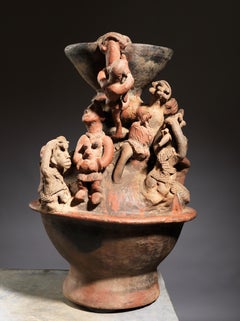
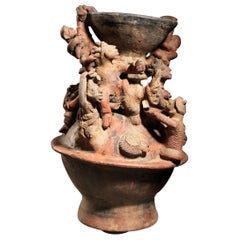
Bariba People, Benin, Rare Terracotta Ceremonial Vessel

Bariba People, Benin, Rare Terracotta Ceremonial Vessel

Located in Leuven , BE

This piece of a pottery vessel, embellished with high relief figures, was made by women of the ethnic group of the Bariba (or Baatonu) in the northern provinces of Benin. The Bariba potters passed their trade from mother to daughter. They didn’t make their vessels on a pottery wheel...

Category

20th Century Beninese Carved Ceramics

Materials

Terracotta

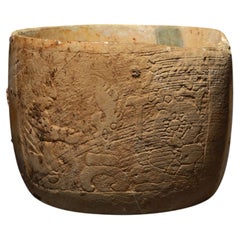
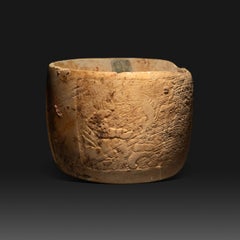
Cylindrical vase with figurative reliefs. Maya, 600 - 900 AD. 12 cm D. Alabaster

Cylindrical vase with figurative reliefs. Maya, 600 - 900 AD. 12 cm D. Alabaster

Located in BARCELONA, ES

Cylindrical vase with figurative reliefs Maya, Classic Period, 600 - 900 AD. Alabaster (Tecali stone). Diameter 12 cm and height 9.5 cm. Condition In good condition, it has a vertical crack on one side up to the middle of the base. It presents two holes parallel to the crack, a sign of an old restoration of the time. Inside, traces of polychromy and stucco are preserved in the more translucent areas of the vase. Provenance - Antique collection Le Corneur, France. Rémy Audoin, 1967. - Arts des Amériques Gallery, circa 1980. - Collection of Michel Vinaver, French writer and playwright (Paris, 1927 -2022). - To his children, Anouk, Barbara, Delphine and Ivan Vinaver, 2022. - French art market. Description Cylindrical vessel with slightly curved walls and base, with a straight and narrow mouth, without a lip. It presents two pairs of parallel holes around an old crack, which show an old restoration with staples. Currently, marks of the roots of the plants that grew around the piece when it was buried can be seen, irregular and asymmetric shapes that enrich the texture of the vase. It is made of tecali stone, a type of travertine also known as Mexican onyx or alabaster, although it is a different mineral from Egyptian alabaster. The stone presents a translucent vein, of regular width, which was probably the reason why the artist chose this specific piece of tecali, given its prominence at an ornamental level: it forms a vertical line, perpendicular to the mouth, which crosses the base, dividing it in two halves and finally rises from the opposite end of the glass, forming a meander. A similar effect can be observed, obtained in this case with varnish or pigment, in the ceramic vase cataloged by Kerr as K623. The formal importance of this vein is also reflected in the preserved remains of polychrome stucco, applied only to it and leaving the rest of the piece free. In the case of this glass, the translucent vein could represent a snake, an animal of great importance within the Mayan religion; vehicle for contact with heavenly bodies, it was a symbol of death and resurrection. One of the most important serpents in Mayan mythology, the Vision Serpent, was considered the gate between the natural and supernatural worlds, and was therefore often depicted on ritual vessels, usually carved stone. The glass is also decorated with a figurative scene that occupies approximately one third of its surface. It is worked in relief on two planes, and is framed by a smooth rectangular profile with rounded corners. It is a composition with two characters facing each other, usual to indicate dialogue, something that is also reflected in the conventional gestures of the hands. The formal style is synthetic: the background has been sunk, clearly delimiting the silhouettes of the characters, which are perfectly drawn. This linearity is repeated in the internal details of the figures, indicated by fine incisions. The schematism, however, is combined with a certain naturalism in the movement of the figures: slightly inclined heads, the position of an arm on the lap... One of the fundamental characteristics of Mayan figurative art was the search for naturalistic positions and compositions, dynamic, with bodies that rotate and elements that overlap, reaching between the 7th and 8th centuries a mastery unmatched by any other Mesoamerican culture. This search for naturalism was combined with a symbolic convention that never quite disappeared. The figure on the left appears seated in profile to the right, with a headdress tied in the front, a pectoral ornament, and a skirt typical of Mayan art, which forms parallel folds at the base of the back and whose end falls over the top. the hip. The figure extends her right hand towards the center of the composition, where an altar with an inverted C-shaped base is located. A fire seems to be burning on it with what could be offerings, two rounded shapes represented within the flames. The representation of the fire is strange, asymmetrical and crested, which could indicate that it is not flames but rather the representation of a scepter of the type known as a flint eccentric. On the right side is the second figure, seated facing forward with its head inclined towards the center of the composition, turned in profile to the left. With his legs crossed, he rests his left arm on his lap, pointing at his interlocutor with a clearly differentiated index finger, and extends his right, now lost due to erosion, towards the fire. She sports ankle, cheek and wrist ornaments, and a large headdress. On her chest she wears a medallion with a possibly solar motif, a central circle surrounded by six smaller ones. The character is seated on a throne, a symbol of authority; with seat, cushion and high, wide and open backrest, adorned with projections on both sides. The figure on the opposite side instead sits on a simple pedestal, indicating his inferior position relative to his companion, possibly a deity or ancestor. The circle on the cheek (allusive to the fur of the jaguar) and the pendant of the supernatural character allow a possible identification with the god of corn, one of the most important of the Mayan pantheon. He was a benevolent deity who represented life, prosperity, and abundance. He could be considered the creator of the world, and he was also associated with the change of seasons. Likewise, the story of his death and rebirth was a central metaphor for the belief in the apotheosis of Maya kings. Identified as Hun-Hunahpu in the Popol Vuh, a compendium of Maya lore put down in writing in the 16th century, the maize god achieved cultural hero status during the Classic period. The use of tecali, a precious material used to manufacture luxury and ritual objects, spread throughout Mesoamerica. The vases made of this stone are relatively rare, and for the most part they are painted, following the models of contemporary ceramic vases. Within the corpus of Mayan carved vessels, on the other hand, it is more common to find vessels made of this and other stones, although the majority will be ceramic. Among them, simple relief on two planes predominates, as in the case of the piece under study, with figurative motifs, inscriptions or geometric patterns, often combined. Some present compositions similar to that of this tecali stone vase, with one or more pairs of characters seated and facing each other, in an attitude of dialogue. Mayan vases...

Category

15th Century and Earlier Pre-Columbian Antique Carved Ceramics
Materials

Alabaster

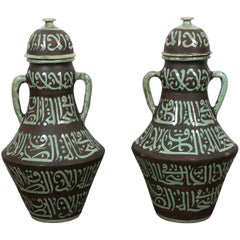
Pair of Moroccan Green and Brown Chiselled Ceramic Urns with Handles

Pair of Moroccan Green and Brown Chiselled Ceramic Urns with Handles

Located in Moreno Valley, CA

Pair of Moroccan green and brown ceramic urns with lid and handles. Great Moorish style handcrafted and chiselled decorative ceramic urns etched with Arabic calligraphy poetry writin...

Category

20th Century Moroccan Moorish Carved Ceramics

Materials

Ceramic

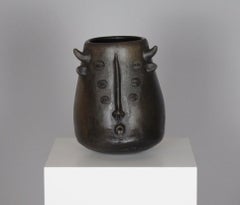
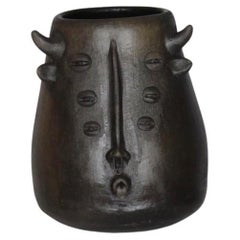
Black Clay Six-Eyed Minotaur Vessel

Black Clay Six-Eyed Minotaur Vessel

Located in Los Angeles, CA

Vintage Black Clay Minotaur Vessel. Mexico, circa 1980. Hand-built, wood-fired and signed.

Category

1980s Mexican Art Deco Vintage Carved Ceramics

Materials

Clay

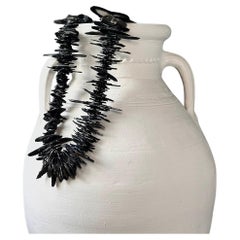
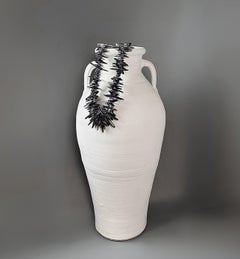
Tribal Clay Garland by George Lamiè, Hand-Carved, Black Ombre, USA

Tribal Clay Garland by George Lamiè, Hand-Carved, Black Ombre, USA

By George Lamiè

Located in Atlanta, GA

Inspired by the ceremonial neckwear of the Ndebele tribe of Southern Africa, this one-of-a-kind garland is a bold exploration of form and contrast. Hand-cut and high-fired in small b...

Category

2010s American Tribal Carved Ceramics

Materials

Clay

Related Items
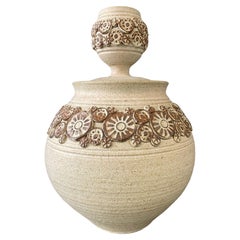
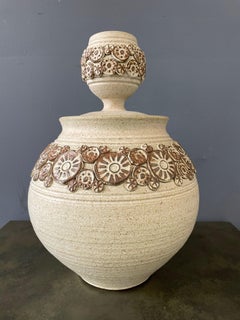
Wishon-Harrell Studio Art Pottery Ceramic Lidded Vase with Appliqué Decoration

Wishon-Harrell Studio Art Pottery Ceramic Lidded Vase with Appliqué Decoration

By Wishon-Harrell, Frank Willet

Located in Philadelphia, PA

Vessel is instantly recognizable as the work of Wishon-Harrell artist Frank Wilett. The circular appliqué pieces are instantly a giveaway. The lid is an unusual shape that mimics the...

Category

Late 20th Century North American Mid-Century Modern Carved Ceramics

Materials

Ceramic

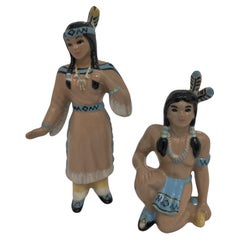
Ceramic Arts Studio Pair of Indian Figurines

Ceramic Arts Studio Pair of Indian Figurines

$292Sale Price / set|20% Off

H 6.63 in W 3.25 in D 1.5 in

Ceramic Arts Studio Pair of Indian Figurines

Located in Cincinnati, OH

Vintage 1940's Ceramic Arts Studio Indian Figurines Dimensions above are for Female Standing Indian. Kneeling Indian is 4.88 H. In excellent cond...

Category

1940s American Vintage Carved Ceramics

Materials

Ceramic

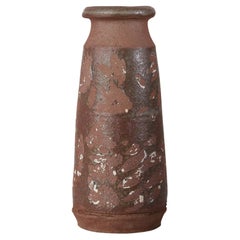
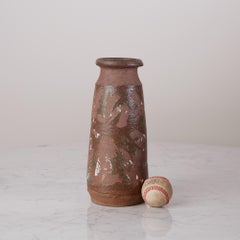
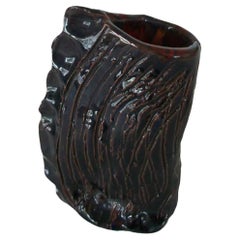
Mid-20th Century Brown Stoneware Studio Ceramic Vase, Modern Design

Mid-20th Century Brown Stoneware Studio Ceramic Vase, Modern Design

Located in Los Angeles, CA

A distinctive studio ceramic vase has a tall narrow shape, brown, with an outer glossy glaze and speckled white detailing. The cylindrical form contains an unglazed area at the neck ...

Category

Mid-20th Century American Mid-Century Modern Carved Ceramics

Materials

Ceramic, Pottery, Stoneware

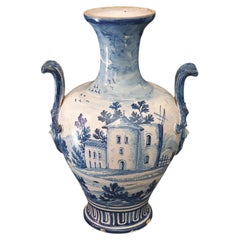
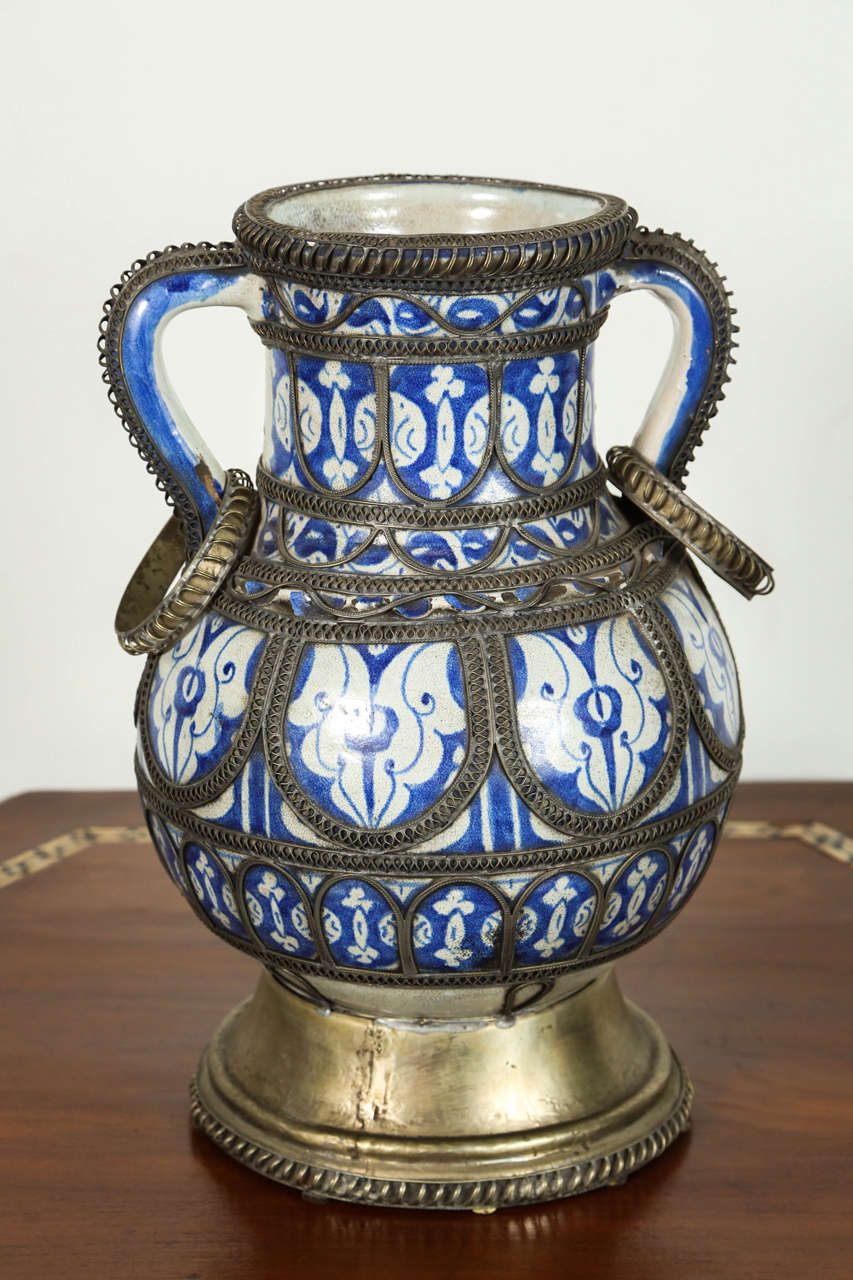
Antique Moroccan Footed Vase, Blue & White Ceramic, 20th Century

Antique Moroccan Footed Vase, Blue & White Ceramic, 20th Century

Located in Moreno Valley, CA

Antique Moroccan Fez Blue & White Ceramic Footed Vase with Filigree Metal Overlay, Early 20th Century. Dimensions: 10 in. x 14 inc. H. A striking antique Moroccan ceramic footed vase handcrafted in the historic city of Fez (Fès), renowned for producing some of Morocco's finest pottery for centuries. Dating to the early 20th century, this impressive vessel beautifully combines the celebrated ceramic traditions of Fez with the intricate artistry of Moroccan metalwork. Wheel-thrown from high-quality earthenware, the vase is decorated in the iconic "Bleu de Fès" palette, featuring richly painted cobalt blue floral and geometric motifs set against a luminous crackled white glaze. This distinctive blue-and-white decoration has long been associated with the master potters of Fez and reflects centuries of Andalusian, Moorish, and Islamic artistic influence. The ceramic body is enhanced by an elaborate handcrafted filigree metal overlay, composed of finely worked white metal and brass elements that wrap gracefully around the neck, body, handles, and pedestal foot. Decorative embossed bands, intricate openwork, and circular ring handles create a sophisticated interplay between ceramic and metal, showcasing the remarkable craftsmanship of Moroccan artisans. Its elegant baluster form, raised pedestal base, and twin ring handles evoke the refined decorative objects once found in traditional Moroccan riads and palaces. Originally created as an ornamental vase for displaying flowers or simply admired as a work of art, today it remains a stunning statement piece for both traditional and contemporary interiors. Rich in history and craftsmanship, this vase complements Moorish, Mediterranean, Spanish Colonial, Islamic, Hollywood Regency, Global, and Bohemian interiors, making it equally desirable for collectors and interior designers. Origin: Fez (Fès), Morocco Date: Early 20th Century Materials: Hand-thrown ceramic, white metal and brass filigree overlay Style: Moorish / Islamic / Moroccan Condition: Very good antique condition with age-appropriate wear consistent with use. Beautiful craquelure to the glaze and a rich patina to the metalwork, enhancing its authenticity and character. A superb example of traditional Moroccan craftsmanship, this antique Fez vase...

Category

1920s Moroccan Moorish Vintage Carved Ceramics

Materials

Ceramic

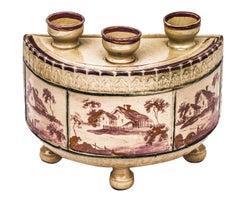
Early 19th Century English Demilune Lusterware Bough Pot With Cover

Early 19th Century English Demilune Lusterware Bough Pot With Cover

By Hackwood & Co.

Located in Roma, RM

This demilune flower pot or bough pot for forcing springtime bulbs, is adorned with three landscape panels. Each panel, painted in pink lustre, depicts the same cottage in a pastoral setting from three different vantage points. Moulded into the top and bottom rims are acanthus leaves. Pieces in this shape, color and style have been attributed to the Hackwood company, and usually pieces like these, are not marked. William Hackwood & Son was an earthenware factory in Shelton, England, from 1818 until 1853. In addition to lustre ware...

Category

Early 19th Century British Antique Carved Ceramics

Materials

Ceramic, Faience, Luster

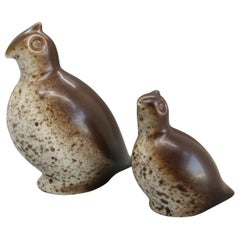
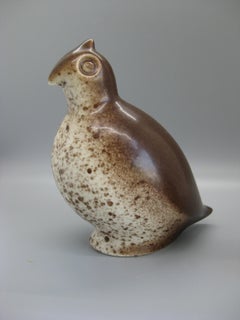
Pair of Mid Century 1950s Howard Pierce Ceramic Quail Bird Sculpture Figurine

Pair of Mid Century 1950s Howard Pierce Ceramic Quail Bird Sculpture Figurine

Located in San Diego, CA

Iconic pair of Howard Pierce ceramic quail bird figurines/sculptures dating from the 1950s. These are an iconic design. Great color and form. The larger ...

Category

Mid-20th Century Carved Ceramics

Materials

Ceramic

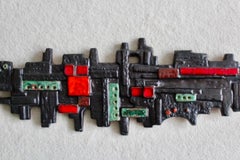
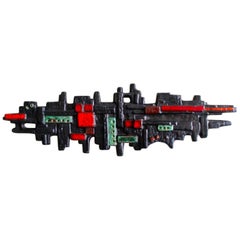
Ceramic Sculptural Wall Plaque by F. Sanchez for Peregnem

Ceramic Sculptural Wall Plaque by F. Sanchez for Peregnem

By Perignem

Located in Voorburg, NL

Unique 1950s sculptural Perignem ceramic wall plaque made by F. Sanchez (signed). This beauty comes in charcoal black with sophisticated red and green colors. Signed on the backside ...

Category

Mid-20th Century Dutch Mid-Century Modern Carved Ceramics

Materials

Ceramic

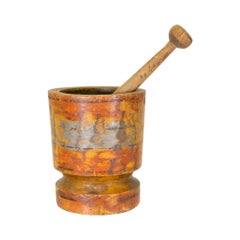
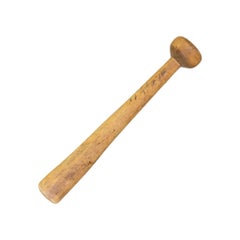
19th Century Mortar and Pestle

19th Century Mortar and Pestle

$600

H 6.5 in W 5.5 in D 5.5 in

19th Century Mortar and Pestle

Located in Coeur d'Alene, ID

19th century fruitwood mortar and pestle. Remnants of oxblood red and silver blue banded paint. Original pestle included. Origin: Eastern, United States Period: First half of the 19...

Category

Early 19th Century American Antique Carved Ceramics
Materials

Fruitwood

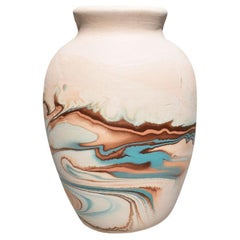
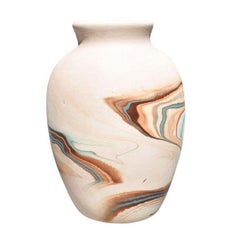
Ceramic Nemadji Vase in Turquoise Brown and Orange, 20th Century

Ceramic Nemadji Vase in Turquoise Brown and Orange, 20th Century

Located in Oklahoma City, OK

A beautiful ceramic nemadji vase. Marbled in unglazed turquoise, brown, and orange, this will be a beautiful piece to add to a current collection. Dim...

Category

20th Century American Native American Carved Ceramics

Materials

Ceramic

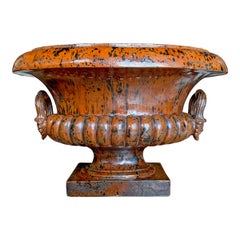
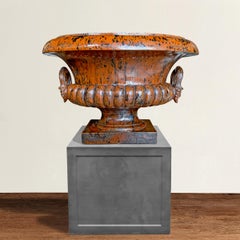
Monumental Mid-20th Century Italian Ceramic Urn

Monumental Mid-20th Century Italian Ceramic Urn

Located in Chicago, IL

A fantastic monumental Italian mid-20th century tortoise shell glazed ceramic urn of classical form with a thick lip, fluted body, narrow foot, and two applied handles each with two ...

Category

Mid-20th Century Italian Classical Roman Carved Ceramics

Materials

Ceramic

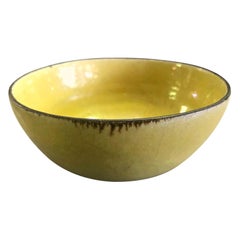
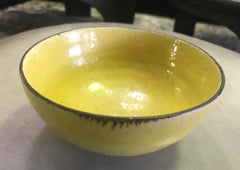
Lucie Rie & Hans Coper Signed Stamped Yellow Glazed Stoneware Bowl, circa 1950

Lucie Rie & Hans Coper Signed Stamped Yellow Glazed Stoneware Bowl, circa 1950

By Lucie Rie, Hans Coper

Located in Studio City, CA

A gorgeous mustard-yellow glazed stoneware bowl with manganese rim by famed European potters Lucie Rie & Hans Coper. The bowl is signed with each artist's impressed seals on t...

Category

1950s English Mid-Century Modern Vintage Carved Ceramics

Materials

Stoneware

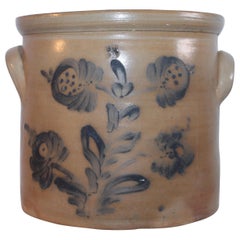
19th Century Decorated Stoneware Blue Decorated Crock

19th Century Decorated Stoneware Blue Decorated Crock

Located in Los Angeles, CA

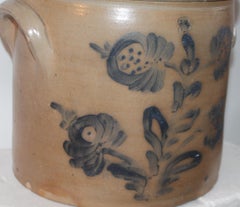
This fine double handled blue decorated stone ware crock is in good condition with minor chip on interior. There is an embossed three above the hand painted and decorated flowers on ...

Category

1850s American Folk Art Antique Carved Ceramics

Materials

Pottery

Previously Available Items
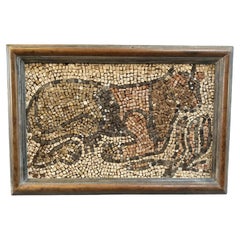
Roman Micro-Mosaic Portrait of a Bull

Roman Micro-Mosaic Portrait of a Bull

Sold

H 19 in W 28.5 in D 2.75 in

Roman Micro-Mosaic Portrait of a Bull

Located in Middleburg, VA

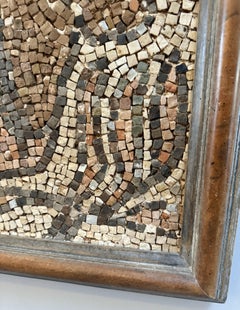
Roman Micro-Mosaic Portrait of a Bull. Originally part of a ceramic floor. Made in Italy, circa 200 AD. A rare and evocative Roman micro-mosaic fragment depicting a recumbent bull, ...

Category

15th Century and Earlier Italian Classical Roman Antique Carved Ceramics
Materials

Stone

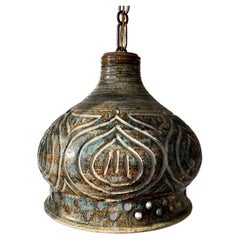
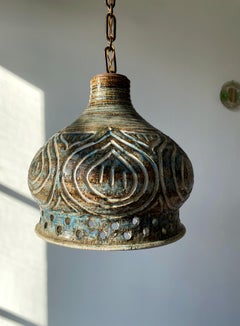
Vintage Bell Shaped Ceramic Pendant, Denmark, 1970s

Vintage Bell Shaped Ceramic Pendant, Denmark, 1970s

By Jette Hellerøe, Axella Stentøj

Located in Copenhagen, DK

Unique handmade ceramic pendant with hand-carved incised organic decorations. Bell shaped body with perforations on the lower and top part for the light to shine through. Glazed with...

Category

Mid-20th Century Danish Mid-Century Modern Carved Ceramics

Materials

Ceramic, Pottery, Stoneware

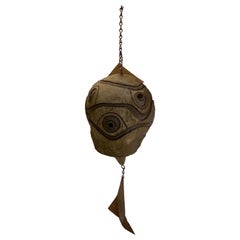
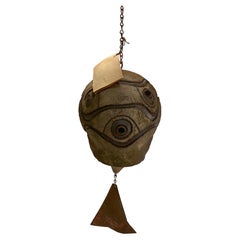
Paolo Soleri Brutalist Pottery Wind Bell for Hand of The Craftsman

Paolo Soleri Brutalist Pottery Wind Bell for Hand of The Craftsman

By Arcosanti, Paolo Soleri

Located in New Windsor, NY

An amazing example of a Paolo Soleri Arcosanti wind and earth bell. Comprised of a earthenware pottery bell, clapper with a copper "tail" and hanging chain. This work still retains i...

Category

1970s American Brutalist Vintage Carved Ceramics

Materials

Copper

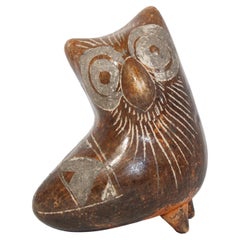
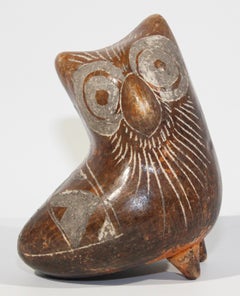
Vintage Peru Chimu Style Owl Sculpture

Vintage Peru Chimu Style Owl Sculpture

Located in Moreno Valley, CA

Vintage Peruvian pottery hand crafted owl sculpture. Beautiful vintage Peru Michu style hand made and hand carved Art Pottery. Decorative Collectible Pe...

Category

Mid-20th Century Peruvian Folk Art Carved Ceramics

Materials

Ceramic, Pottery

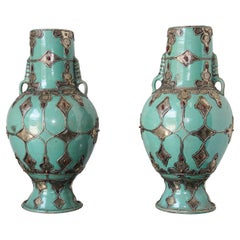
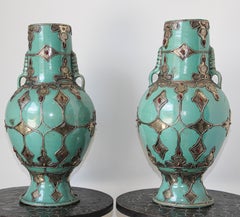
Handcrafted Large Moorish Ceramic Vases with Handles

Handcrafted Large Moorish Ceramic Vases with Handles

By Berber Tribes of Morocco

Located in Moreno Valley, CA

Pair of very decorative large handcrafted Moorish, Spanish style ceramic urns from Fez, Metal adorned handles, bottom and top adorned with embossed metal and red amber stones. Gre...

Category

20th Century Moroccan Moorish Carved Ceramics

Materials

Ceramic

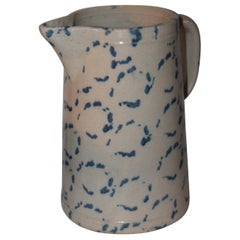
19Thc Sponge Ware Pottery Pitcher

19Thc Sponge Ware Pottery Pitcher

Sold

H 9 in W 5.5 in D 7.5 in

19Thc Sponge Ware Pottery Pitcher

Located in Los Angeles, CA

19Thc design sponge ware pottery pitcher. The condition is very good and most unusual.

Category

1890s American Adirondack Antique Carved Ceramics
Materials

Pottery

Terracotta Sketch Book Panels

Terracotta Sketch Book Panels

Sold

H 14 in W 11 in D 0.5 in

Terracotta Sketch Book Panels

Located in New Windsor, NY

Terracotta incised sketch book fired panels. Intricately detailed drawings and graphics on two terracotta panels that resemble a page from a sketch book. C...

Category

Late 20th Century American Post-Modern Carved Ceramics

Materials

Terracotta

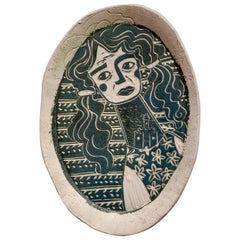
Sandcastle Sorrow, Carved porcelain

Sandcastle Sorrow, Carved porcelain

Sold

H 10 in W 15 in D 0.5 in

Sandcastle Sorrow, Carved porcelain

By Alex Hodge

Located in Miami Beach, FL

Sandcastle Sorrow Carved Porcelain One of a kind Her poetic porcelain plates examine and reimagine the history of art in a way that values women, not only in body, but in wholenes...

Category

2010s American Other Carved Ceramics

Materials

Porcelain

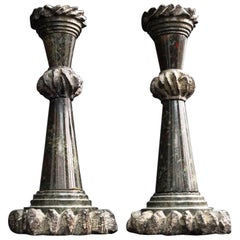
Cornish Serpentine Candlesticks c.1880

Cornish Serpentine Candlesticks c.1880

Sold

H 13 in W 6.3 in L 13 in

Cornish Serpentine Candlesticks c.1880

Located in London, GB

Pair of Cornish Turned Serpentine Candlesticks c. 1880 We are proud to offer a matching pair of Cornish turned, carved serpentine candlesticks dated circa 1880 – 1890. Green figured ...

Category

1880s British Folk Art Antique Carved Ceramics
Materials

Serpentine

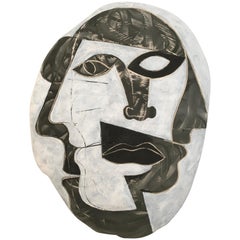
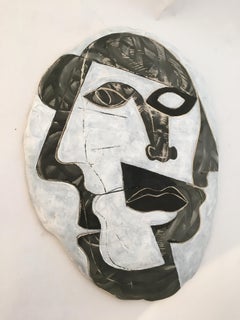
Doug Rochelle La Mano Pottery Cubist Mask

Doug Rochelle La Mano Pottery Cubist Mask

Sold

H 13 in W 9.88 in D 0.25 in

Doug Rochelle La Mano Pottery Cubist Mask

By Doug Rochelle

Located in New Windsor, NY

Doug Rochelle La Mano Bisque fired plaque in black, white and gray glazes, circa 2001. Excellent original condition. About the Artist Doug Rochelle c...

Category

Early 2000s American Other Carved Ceramics

Materials

Ceramic, Pottery

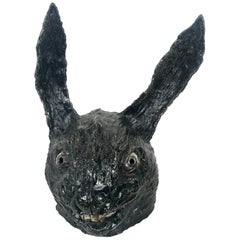
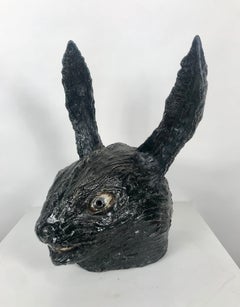
Large Stoneware Pottery Hand Crafted Sculpture 'Rabbit" by Richard Burkett

Large Stoneware Pottery Hand Crafted Sculpture 'Rabbit" by Richard Burkett

Located in Buffalo, NY

Large Stoneware Pottery handcrafted Sculpture 'Rabbit" by Richard Burkett, , Richard Burkett is a Professor of Art at San Diego State University, teaching all levels of ceramics for the past 28 years, and focusing on soda firing, glazes, and vessel forms – both functional and sculptural. He received the B.A. degree in Art from Lawrence University, and the M.F.A. degree in both ceramics and photography from Indiana University in 1986. From 1973 to 1983 he ran the Wild Rose Pottery in Bainbridge, Indiana. Richard Burkett has traveled extensively in Ecuador over the last 20 years with Joe Molinaro of Eastern Kentucky University, researching and photographing Ecuadorian potters and documenting indigenous pottery cultures in the Amazon basin. He recently designed and co- authored a book on Ecuadorian Kichwa pottery with Joe Molinaro: Mythical Figures & Mucawas: Ceramics from the Ecuadorian Amazon. One of the first ceramists to make extensive use of computers and the Internet, Burkett has lectured internationally on ceramics at events in Korea, Ecuador, Sweden, Turkey, and Finland. He is the author of HyperGlaze, educational glaze calculation software for artists, and the co-author of the sixth edition of Ceramics: A Potter’s Handbook, one of the most widely used ceramics textbooks. He selected porcelain artists and wrote essays for the Lark book Porcelain Masters: major works by leading artists. In his spare time he plays bluegrass music. Artist Statement: My work hovers between pottery and sculpture. Some pieces move in a sculptural direction, yet still derive some of their form from vestiges of my more utilitarian work. I find this a fascinating interplay, with one body of work informing the other and making both stronger for their interaction. My influences include a diverse range of mostly vessel-oriented forms, from the often mysterious chemical glassware and porcelain I grew up with in my father’s early 1900s-era chemical laboratory, to ancient South American pottery...

Category

1970s American Folk Art Vintage Carved Ceramics
Materials
Ceramic, Stoneware