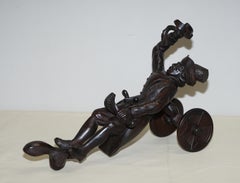
Late Victorian Folk Art

60 Results
to
12
51
8
60
2,266
1,023
736
377
286
246
234
103
100
99
55
34
31
18
16
11
7
5
50
10
9
1
2
1
2
1
45
32
28
28
8
50
34
7
6
6
60
60
60
1
1
Style: Late Victorian
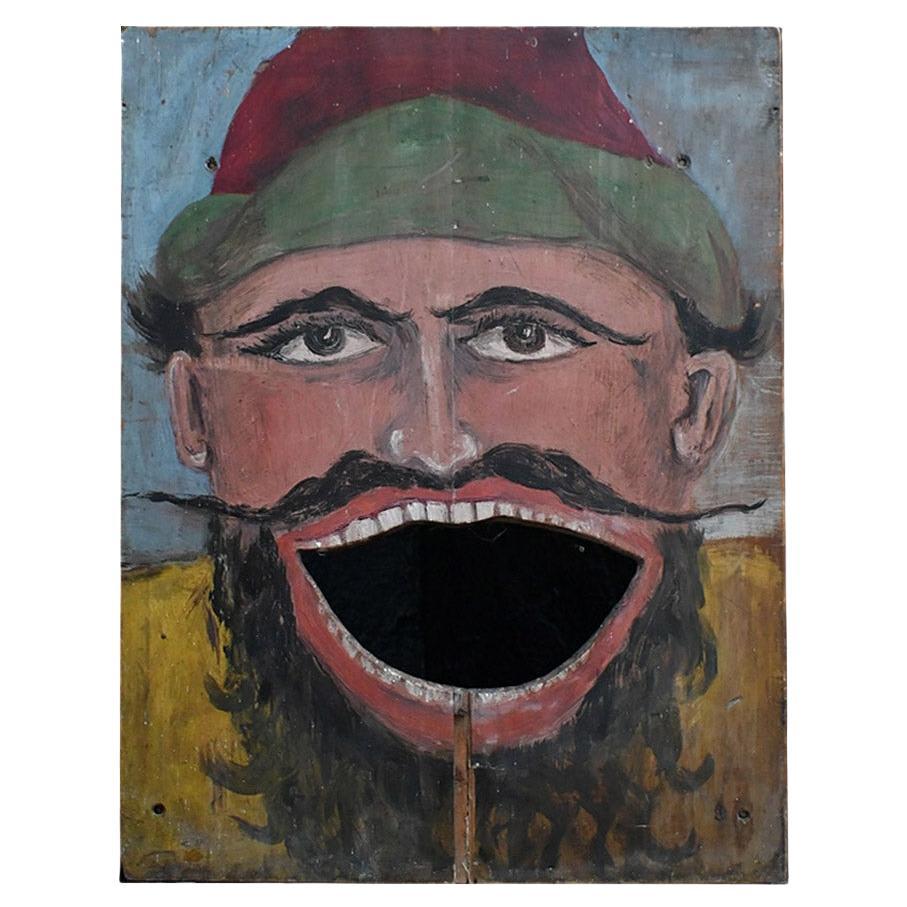
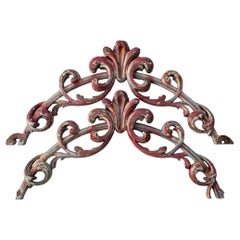
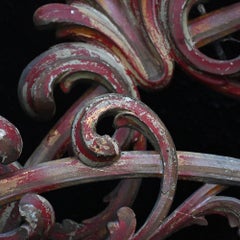
Early 20th century carnival fairground game panel

Early 20th century carnival fairground game panel

Located in London, GB

Early 20th century carnival / fairground game panel Dimensions in inches: H 29” x W 21” x D 4” Age: 1920 Origin: England Condition: Fair Overview A highly decorative example of an early 20th century English fairground / carnival shooting target...

Category

Early 20th Century British Late Victorian Folk Art

Materials

Pine

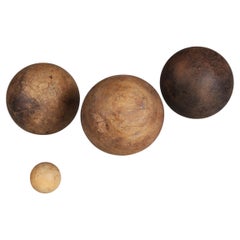
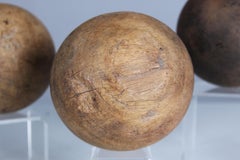
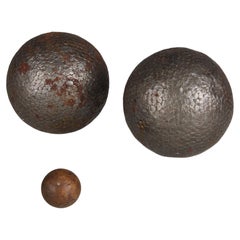
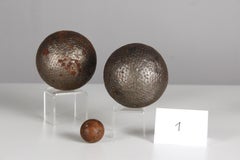
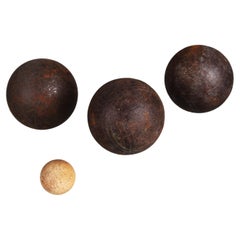
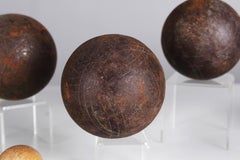
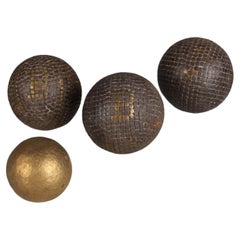
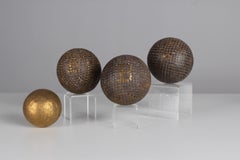
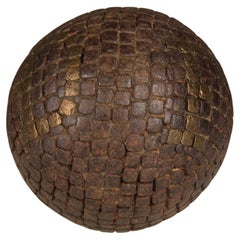
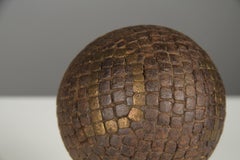
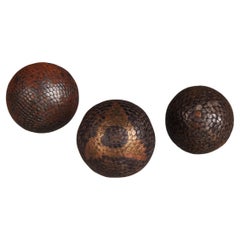
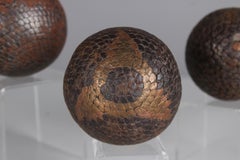
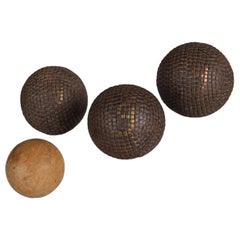
Antique Boule Set, Boule Balls, Pétanque, 1880s, France, Craftsmanship

Antique Boule Set, Boule Balls, Pétanque, 1880s, France, Craftsmanship

Located in Greven, DE

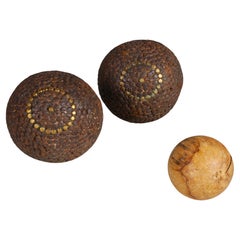
Beautiful, unique Boule set of three Boule balls and one target ball, France, late 19th century. In the 19th century, the manufacture of boule balls underwent significant developmen...

Category

Late 19th Century French Antique Late Victorian Folk Art

Materials

Olive

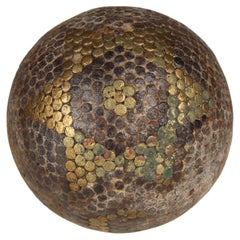
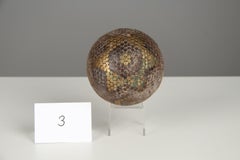
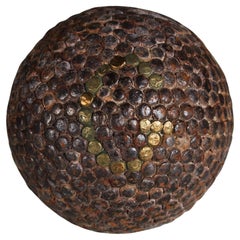
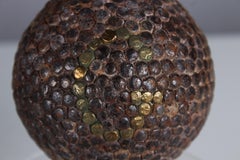
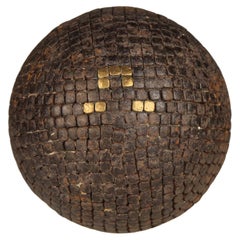
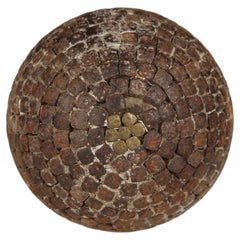
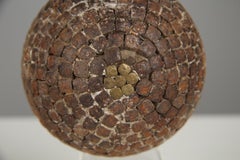
Antique Boule Ball With Star Decor And C, Pétanque, 1880s, France, Craftsmanship

Antique Boule Ball With Star Decor And C, Pétanque, 1880s, France, Craftsmanship

Located in Greven, DE

Beautiful, unique Boule ball, France, late 19th Century. In the 19th century, the manufacture of boules balls underwent significant development in France as the game of boules, part...

Category

Late 19th Century French Antique Late Victorian Folk Art

Materials

Metal, Brass

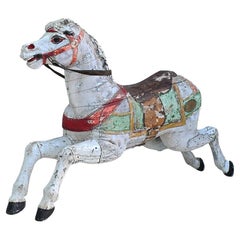
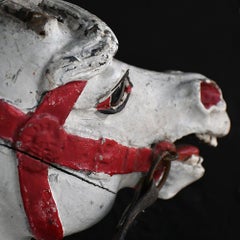
Early 20th century Limonaire Freres Paris fairground carousel horse

Early 20th century Limonaire Freres Paris fairground carousel horse

Located in London, GB

Early 20th century Limonaire Freres Paris fairground carousel horse Dimensions in inches: H 31” x W 50” x D 11” Age: 1920 Origin: France (Paris) Condition: Fair Overview A rare ear...

Category

Early 20th Century French Late Victorian Folk Art

Materials

Wood

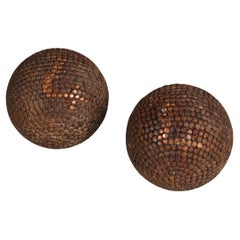
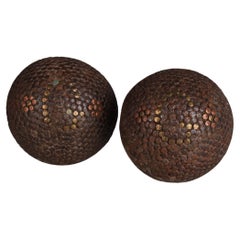
Pair Of Antique Boule Balls Circle, Pétanque, 1880s, France, Craftsmanship

Pair Of Antique Boule Balls Circle, Pétanque, 1880s, France, Craftsmanship

Located in Greven, DE

Beautiful, unique Boule ball pair and one target ball, France, late 19th Century. In the 19th century, the manufacture of boules balls underwent significant development in France as...

Category

Late 19th Century French Antique Late Victorian Folk Art

Materials

Olive

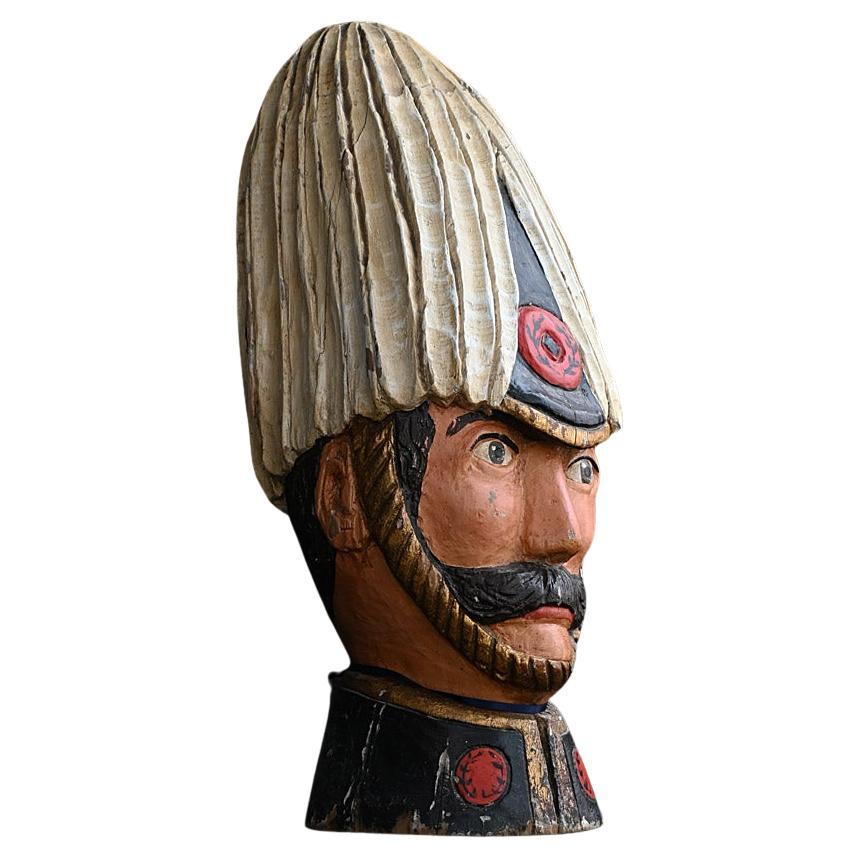
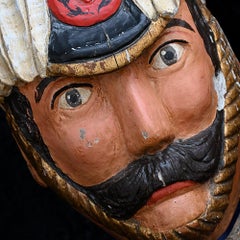
Circa 1900 English fairground hand carved timber bust

Circa 1900 English fairground hand carved timber bust

Located in London, GB

Circa 1900 English fairground hand carved timber bust An important piece of fairground history, in the form of a circa 1900 English fairground carved fragment of Field Marshal Hora...

Category

1920s British Vintage Late Victorian Folk Art

Materials

Wood

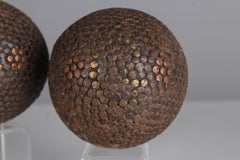
Pair Of Antique Boule Balls "4", Pétanque, 1880s, France, Craftsmanship

Pair Of Antique Boule Balls "4", Pétanque, 1880s, France, Craftsmanship

Located in Greven, DE

Beautiful, unique Boule ball pair, France, late 19th Century. Diameter 9,4 cm. In the 19th century, the manufacture of boules balls underwent significant development in France as th...

Category

Late 19th Century French Antique Late Victorian Folk Art

Materials

Olive

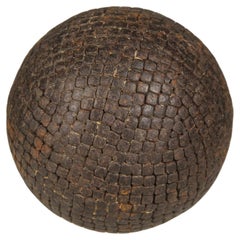
Antique Boule Ball "6", Pétanque, 1880s, France, Craftsmanship

Antique Boule Ball "6", Pétanque, 1880s, France, Craftsmanship

Located in Greven, DE

Beautiful, unique Boule ball, France, late 19th Century. In the 19th century, the manufacture of boules balls underwent significant development in France as the game of boules, part...

Category

Late 19th Century French Antique Late Victorian Folk Art

Materials

Metal, Brass

Antique Boule Set, Boule Balls, Pétanque, 1880s, France, Craftsmanship

Antique Boule Set, Boule Balls, Pétanque, 1880s, France, Craftsmanship

Located in Greven, DE

Beautiful, unique Boule set of three Boule balls, France, late 19th century. In the 19th century, antique metal boules balls experienced a renaissance that took the game of boules to a new level. These ornately crafted balls were not only instruments of the game, but also symbols of elegance and sophistication in leisure activities. Made from high-quality metals such as steel or brass, Boule balls were forged and polished by skilled craftsmen to ensure a smooth and even surface. The antique boules...

Category

Late 19th Century French Antique Late Victorian Folk Art

Materials

Metal

Early 20th century double sided English chemist sign

Early 20th century double sided English chemist sign

Located in London, GB

Early 20th century double sided English chemist sign Made from double sided glass with reflective silver illuminated text, this early 20th century example of an English chemist tra...

Category

1930s British Vintage Late Victorian Folk Art

Materials

Metal

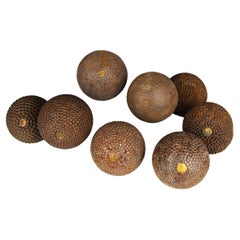
Complete Set Of Antique Boule Balls, 8 Pieces, Pétanque, 1880s, France

Complete Set Of Antique Boule Balls, 8 Pieces, Pétanque, 1880s, France

Located in Greven, DE

Complete Boule ball set of 8 pieces, France, late 19th Century. In the 19th century, the manufacture of boules balls underwent significant development in France as the game of boule...

Category

Late 19th Century French Antique Late Victorian Folk Art

Materials

Metal

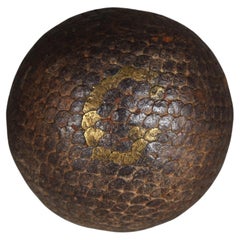
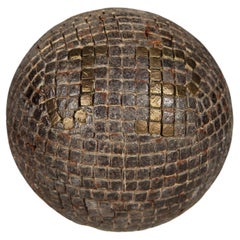
Antique Boule Ball "G", Pétanque, 1880s, France, Craftsmanship

Antique Boule Ball "G", Pétanque, 1880s, France, Craftsmanship

Located in Greven, DE

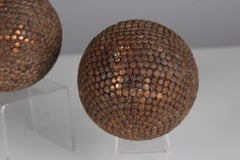
Beautiful, unique Boule ball, France, late 19th Century. In the 19th century, the manufacture of boules balls underwent significant development in France as the game of boules, particularly the pétanque variant, gained in popularity. The manufacture of boules balls during this period was a manual process that required expertise, precision and love to detail. In the late 19th and early 20th centuries, particularly in rural areas of France and other Mediterranean regions, olive wood was a commonly used source of material for making boules balls. This was not only due to the availability of the material, but also to the outstanding properties of olive wood, which was characterized by hardness, strength and a rich grain. First, the olive wood was carefully selected and shaped into raw balls, which were then sanded to the desired size and shape. The nails were then hammered into the balls one by one, making sure that they were evenly distributed and firmly anchored. Finally, the spheres were polished and coated with a protective varnish to enhance their natural beauty and protect them from the elements. The use of nails to decorate and reinforce olive wood boules was a traditional practice that not only gave the ball a rustic aesthetic, but also improved its durability and contributed to customization. Many balls were made according to the specific requirements and preferences of the players. Nails were driven at regular intervals around the ball, with each nail hole precisely placed so as not to affect the balance and weight distribution of the ball. These nails not only served as a decorative element, but also helped to strengthen the structure of the ball and make it more resistant to the hard knocks and wear and tear during play. Individual engravings or decorations were often applied to the balls to make them unique and identify the player. Antique boules...

Category

Late 19th Century French Antique Late Victorian Folk Art

Materials

Metal

Antique Boule Ball "B", Pétanque, 1880s, France, Craftsmanship

Antique Boule Ball "B", Pétanque, 1880s, France, Craftsmanship

Located in Greven, DE

Beautiful, unique Boule ball, France, late 19th Century. In the 19th century, the manufacture of boules balls underwent significant development in France as the game of boules, part...

Category

Late 19th Century French Antique Late Victorian Folk Art

Materials

Metal

Pair Of Antique Boule Balls, Pétanque, 1880s, France, Craftsmanship

Pair Of Antique Boule Balls, Pétanque, 1880s, France, Craftsmanship

Located in Greven, DE

Beautiful, unique Boule ball pair and one target ball, France, late 19th Century. In the 19th century, the manufacture of boules balls underwent significant development in France as...

Category

Late 19th Century French Antique Late Victorian Folk Art

Materials

Metal

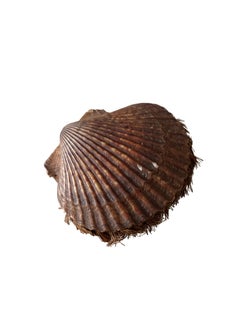
Rare Antique Victorian Natural Shell & Silk Needlework Pin Cushion C.1890s

Rare Antique Victorian Natural Shell & Silk Needlework Pin Cushion C.1890s

Located in Honolulu, HI

An authentic antique late Victorian era handmade pin cushion crafted from a natural scallop shell, dating to the late 19th century (circa 1890s). Embodying the popular Victorian tra...

Category

1890s British Antique Late Victorian Folk Art

Materials

Shell

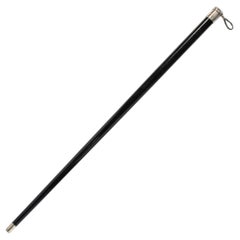
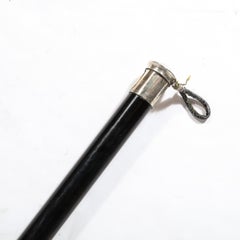
Classical Walking Stick in Ebonized Walnut & Sterling Pommel w/ Heraldic Crest

Classical Walking Stick in Ebonized Walnut & Sterling Pommel w/ Heraldic Crest

Located in New York, NY

This Classical Walking Stick in Ebonized Walnut & Sterling Pommel W/ Heraldic Crest originates from France during the Late 19th Century. Features a elegant and timeless profile with ...

Category

Late 19th Century French Antique Late Victorian Folk Art

Materials

Sterling Silver

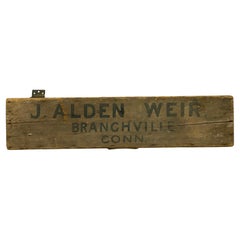
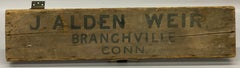
J. Alden Weir Hand Made Studio Sign Branchville Connecticut

J. Alden Weir Hand Made Studio Sign Branchville Connecticut

Located in New Windsor, NY

Recently purchased from a multi-generational Ridgefield, CT estate of the former President of Ridgefield Savings Bank. Our esteemed and avid collector found time in his off hours in Post World War II Connecticut to scour the countryside for just about anything that struck his fancy. He had an enormous passion for model trains, porcelain figurines and pattern Depression Era glass...

Category

Late 19th Century American Antique Late Victorian Folk Art

Materials

Iron

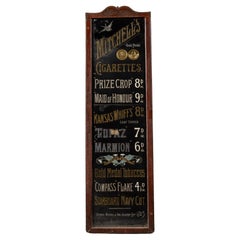
c. 1890 Reverse On Glass Gold Leaf Painted Mitchell's Cigarettes Sign

c. 1890 Reverse On Glass Gold Leaf Painted Mitchell's Cigarettes Sign

Located in Dekalb, IL

This tall turn-of-the-century reverse-painted glass advertising sign features richly rendered gold-leaf lettering promoting Stephen Mitchell & Son's cigarette and tobacco blends. Its...

Category

Late 19th Century American Antique Late Victorian Folk Art

Materials

Glass, Wood

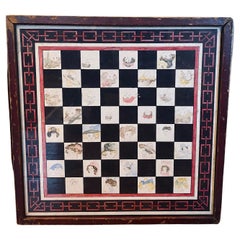
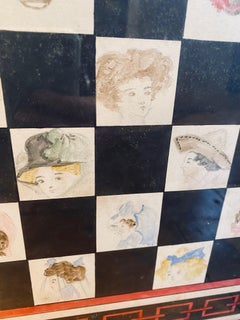
Late 19th Century Portrait Decorated Game Board

Late 19th Century Portrait Decorated Game Board

Located in Nantucket, MA

Late 19th century hand made and decoratively painted game board, circa 1890s to 1910, a checker or chess board with squares individually hand painted with miniature watercolor portra...

Category

Late 19th Century American Antique Late Victorian Folk Art

Materials

Wood

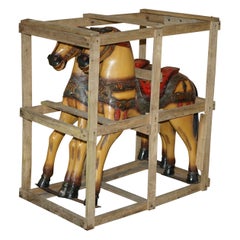
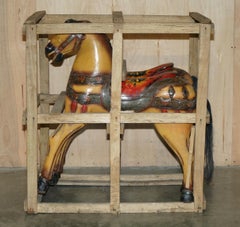
PAIR OF CIRCA 1890 ORiGINAL PAINT NEW OLD STOCK CRATED FAIRGROUND RIDE HORSES

PAIR OF CIRCA 1890 ORiGINAL PAINT NEW OLD STOCK CRATED FAIRGROUND RIDE HORSES

Located in West Sussex, Pulborough

Royal House Antiques Royal House Antiques is delighted to offer for sale this absolutely exquisite pair of new old stock Fairground ride horses Please note the delivery fee listed ...

Category

1890s Antique Late Victorian Folk Art

Materials

Wood

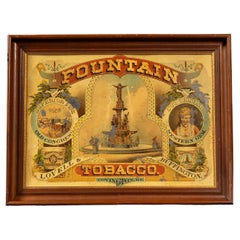
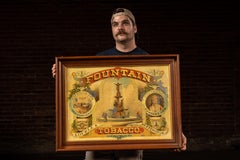
Late 19th Century Painted Tin Fountain Tobacco Advertising Sign

Late 19th Century Painted Tin Fountain Tobacco Advertising Sign

Located in Dekalb, IL

c. 1880s-1890s; mfd. by F. Tuchfarber & Co. for Lovell & Buffington Co. - Covington, KY Painted tin lithograph advertising sign for Fountain Tobacco, produced for Lovell &am...

Category

Late 19th Century American Antique Late Victorian Folk Art

Materials

Tin

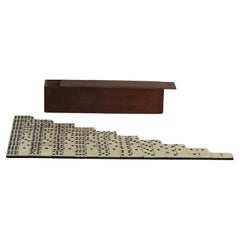
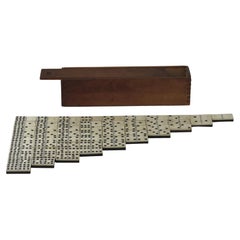
Victorian "9-Spot" Dominoe Game 55 Piece Set in Jointed Hardwood Box, 19th C.

Victorian "9-Spot" Dominoe Game 55 Piece Set in Jointed Hardwood Box, 19th C.

Located in Lincoln, Lincolnshire

This is a rare and original '9 Spot' Dominoe game of 55 individual dominoes, coming complete with its jointed wooden box or case. Dominoe sets are normally six-spot sets giving a to...

Category

Late 19th Century English Antique Late Victorian Folk Art

Materials

Bone, Wood

Antique Boule Set, Boule Balls, Pétanque, 1880s, France, Craftsmanship

Antique Boule Set, Boule Balls, Pétanque, 1880s, France, Craftsmanship

Located in Greven, DE

Beautiful, unique Boule set of three Boule balls and one target ball, France, late 19th Century. Fantastic colour and patina! In the 19th century, antique metal boules balls experienced a renaissance that took the game of boules to a new level. These ornately crafted balls were not only instruments of the game, but also symbols of elegance and sophistication in leisure activities. Made from high-quality metals such as steel or brass, Boule balls were forged and polished by skilled craftsmen to ensure a smooth and even surface. The antique boules...

Category

Late 19th Century French Antique Late Victorian Folk Art

Materials

Metal

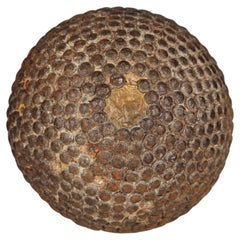
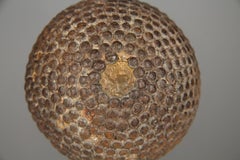
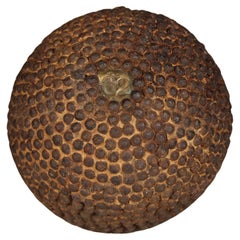
Antique Boule Ball, Pétanque, 1880s, France, Craftsmanship

Antique Boule Ball, Pétanque, 1880s, France, Craftsmanship

Located in Greven, DE

Beautiful, unique Boule ball, France, late 19th Century. In the 19th century, the manufacture of boules balls underwent significant development in France as the game of boules, part...

Category

Late 19th Century French Antique Late Victorian Folk Art

Materials

Metal

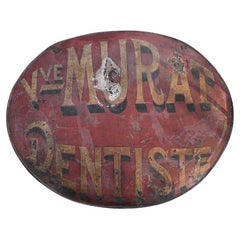
Early 20th Century Double Sided Toleware French Dentists Trade Sign

Early 20th Century Double Sided Toleware French Dentists Trade Sign

Located in London, GB

Early 20th Century Double Sided Toleware French Dentists Trade Sign An original untouched example of an early 20th Century toleware double sided Frenc...

Category

1910s French Vintage Late Victorian Folk Art

Materials

Sheet Metal

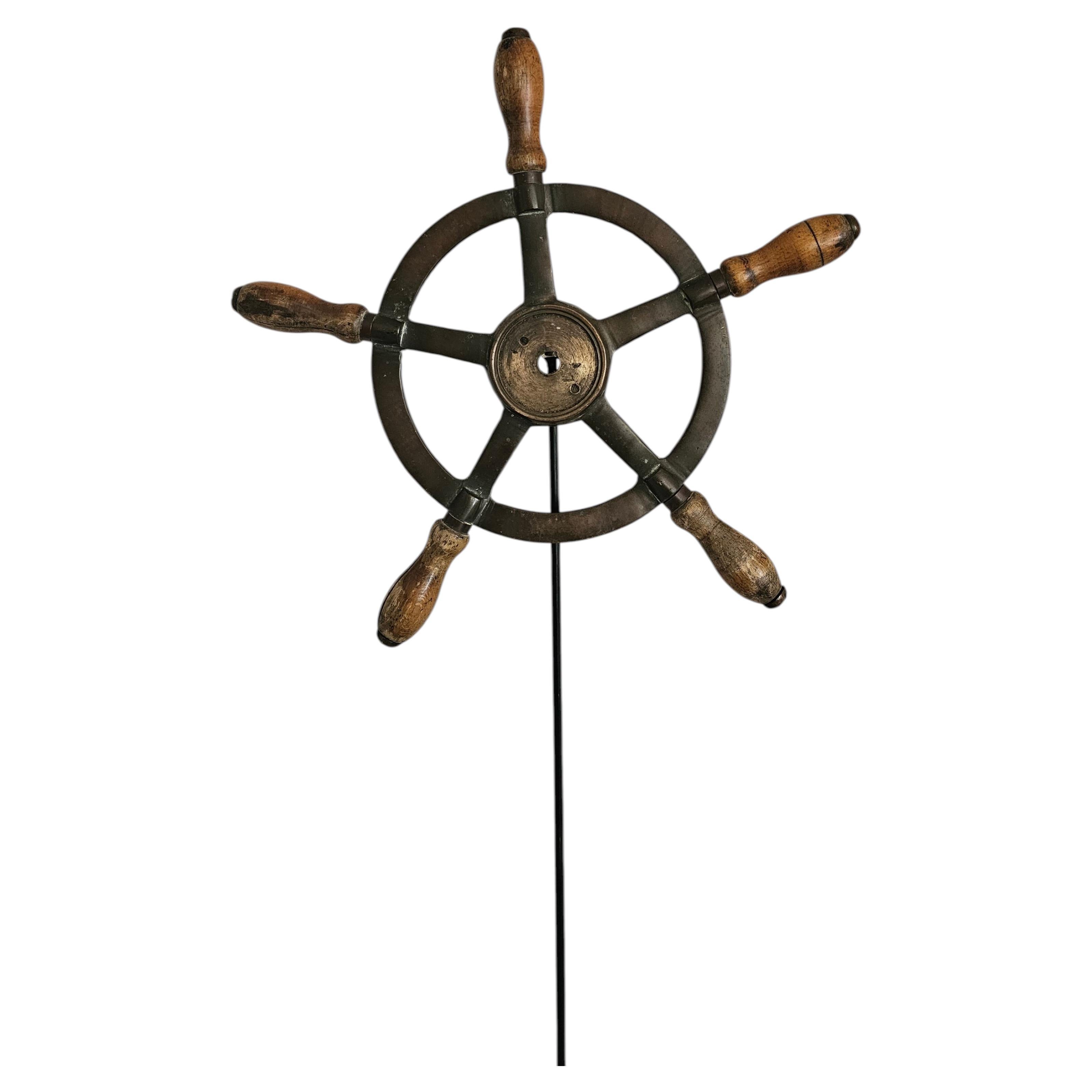
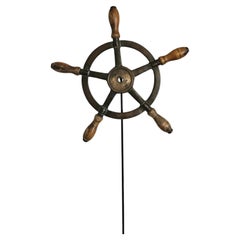
Ships Wheel
Ships Wheel

Ships Wheel

Located in Glasgow, GB

A fine Late Victorian Yacht wheel. Caste from Bronze with Bronze connecting bolts . All original fitments . In working order and could very simply be fitted to a working vessel.

Category

Late 19th Century Antique Late Victorian Folk Art

Materials

Bronze

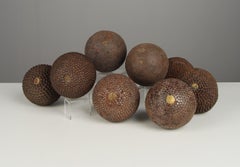
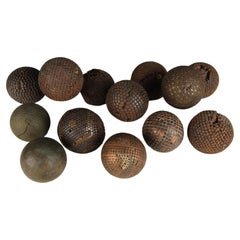
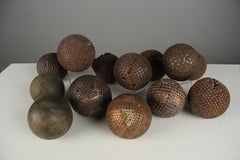
Large Set Of Antique Boule Balls, 13 Pieces, Pétanque, 1880s, France

Large Set Of Antique Boule Balls, 13 Pieces, Pétanque, 1880s, France

Located in Greven, DE

Large Boule ball set of 13 pieces, France, late 19th Century. Unrestored, original condition with signs of age and use. In the 19th century, the manufacture of boules balls underwen...

Category

Late 19th Century French Antique Late Victorian Folk Art

Materials

Metal, Copper, Steel

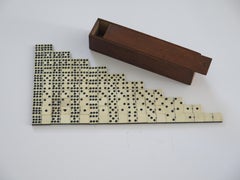
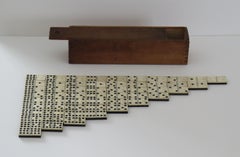
Late 19th Century "9-Spot" Dominoe Game 55 Piece Set in Jointed Hardwood Box

Late 19th Century "9-Spot" Dominoe Game 55 Piece Set in Jointed Hardwood Box

Located in Lincoln, Lincolnshire

This is a rare and original '9 Spot' Dominoe game of 55 individual dominoes, coming complete with its jointed wooden box or case. Dominoe sets are normally six-spot sets giving a to...

Category

Late 19th Century English Antique Late Victorian Folk Art

Materials

Bone, Wood

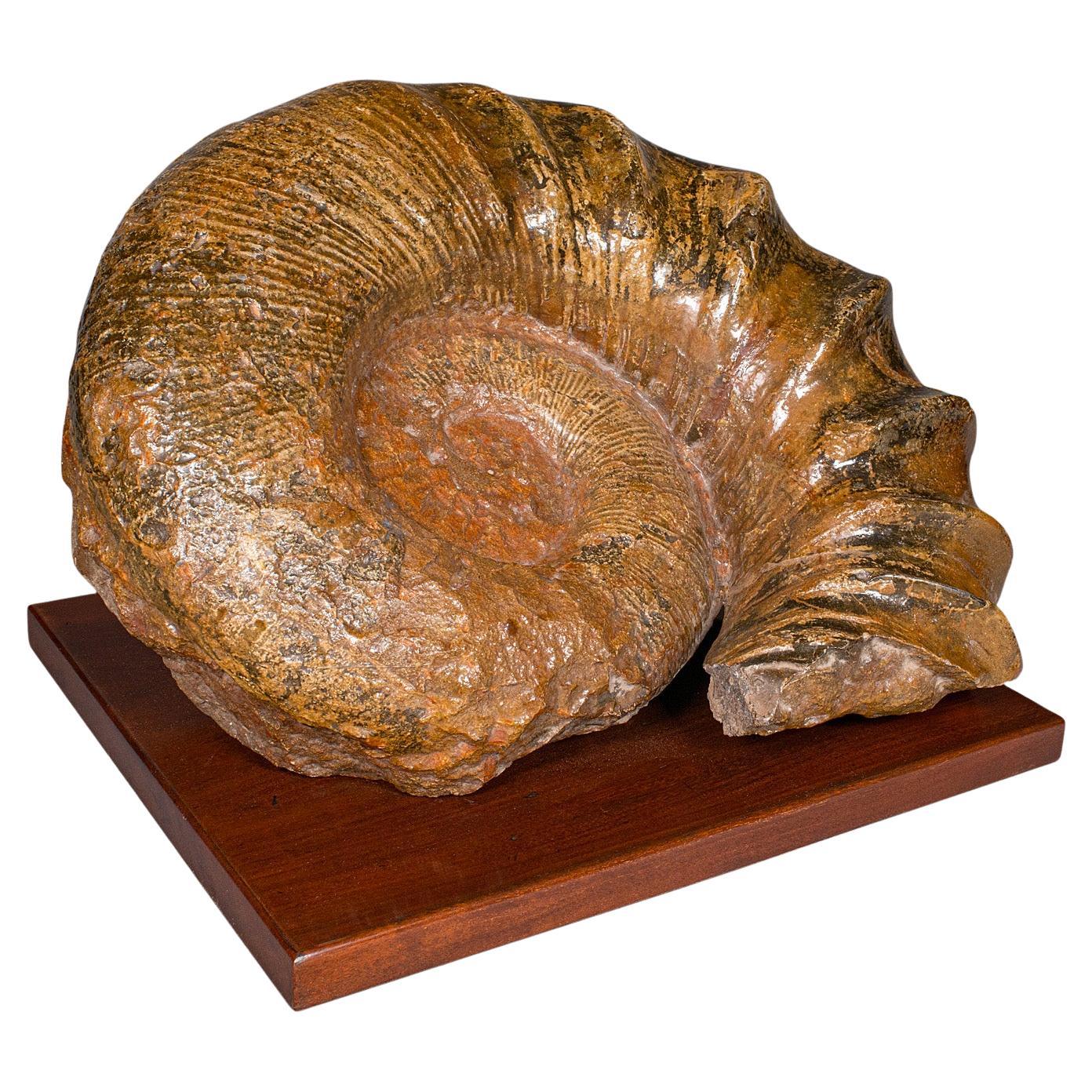
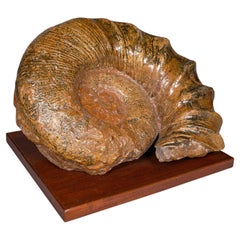
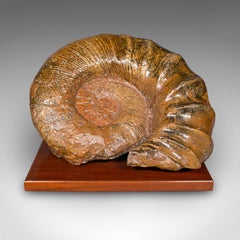
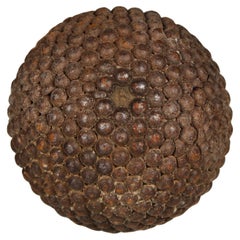
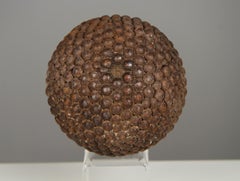
Large Ammonite Specimen, Natural History, Jurassic Fossil, Antique Presentation

Large Ammonite Specimen, Natural History, Jurassic Fossil, Antique Presentation

Located in Hele, Devon, GB

This is a large antique ammonite specimen, African in origin and mounted during the late Victorian period, circa 1890. A magnificent example of natural history, set upon a fine mahog...
Category

1890s South African Antique Late Victorian Folk Art

Materials

Stone

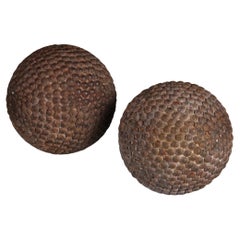
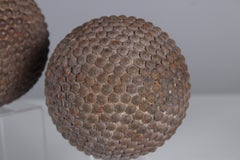
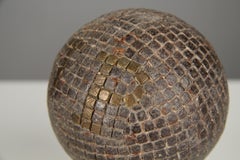
Pair Of Antique Boule Balls, Pétanque, 1880s, France, Craftsmanship

Pair Of Antique Boule Balls, Pétanque, 1880s, France, Craftsmanship

Located in Greven, DE

Beautiful, unique Boule ball pair, France, late 19th Century. Diameter 9,5 cm. In the 19th century, the manufacture of boules balls underwent significant development in France as the game of boules, particularly the pétanque variant, gained in popularity. The manufacture of boules balls during this period was a manual process that required expertise, precision and love to detail. In the late 19th and early 20th centuries, particularly in rural areas of France and other Mediterranean regions, olive wood was a commonly used source of material for making boules balls. This was not only due to the availability of the material, but also to the outstanding properties of olive wood, which was characterized by hardness, strength and a rich grain. First, the olive wood was carefully selected and shaped into raw balls, which were then sanded to the desired size and shape. The nails were then hammered into the balls one by one, making sure that they were evenly distributed and firmly anchored. Finally, the spheres were polished and coated with a protective varnish to enhance their natural beauty and protect them from the elements. The use of nails to decorate and reinforce olive wood boules was a traditional practice that not only gave the ball a rustic aesthetic, but also improved its durability and contributed to customization. Many balls were made according to the specific requirements and preferences of the players. Nails were driven at regular intervals around the ball, with each nail hole precisely placed so as not to affect the balance and weight distribution of the ball. These nails not only served as a decorative element, but also helped to strengthen the structure of the ball and make it more resistant to the hard knocks and wear and tear during play. Individual engravings or decorations were often applied to the balls to make them unique and identify the player. Antique boules...
Category

Late 19th Century French Antique Late Victorian Folk Art

Materials

Olive

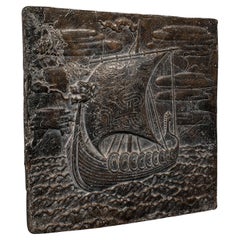
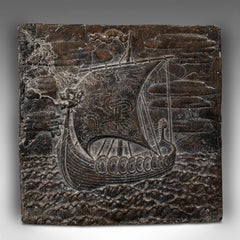
Antique Decorative Lead Plaque, Scandinavian, Viking, Arts and Crafts, Victorian

Antique Decorative Lead Plaque, Scandinavian, Viking, Arts and Crafts, Victorian

Located in Hele, Devon, GB

This is a heavy antique decorative lead plaque. A Scandinavian, relief panel with Viking long ship scene, dating to the Arts & Crafts movement of the late ...

Category

Late 19th Century Scandinavian Antique Late Victorian Folk Art

Materials

Lead

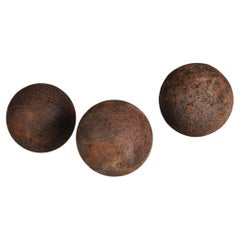
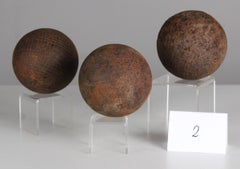
Antique Boule Balls Set "B", Pétanque, 1880s, France, Craftsmanship

Antique Boule Balls Set "B", Pétanque, 1880s, France, Craftsmanship

Located in Greven, DE

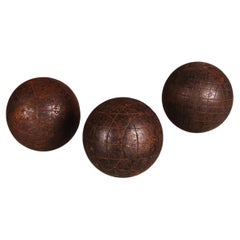
Beautiful, unique Boule set of three Boule balls and one target ball, France, late 19th century. In the 19th century, the manufacture of boules balls underwent significant development in France as the game of boules, particularly the pétanque variant, gained in popularity. The manufacture of boules balls during this period was a manual process that required expertise, precision and love to detail. In the late 19th and early 20th centuries, particularly in rural areas of France and other Mediterranean regions, olive wood was a commonly used source of material for making boules balls. This was not only due to the availability of the material, but also to the outstanding properties of olive wood, which was characterized by hardness, strength and a rich grain. First, the olive wood was carefully selected and shaped into raw balls, which were then sanded to the desired size and shape. The nails were then hammered into the balls one by one, making sure that they were evenly distributed and firmly anchored. Finally, the spheres were polished and coated with a protective varnish to enhance their natural beauty and protect them from the elements. The use of nails to decorate and reinforce olive wood boules was a traditional practice that not only gave the ball a rustic aesthetic, but also improved its durability and contributed to customization. Many balls were made according to the specific requirements and preferences of the players. Nails were driven at regular intervals around the ball, with each nail hole precisely placed so as not to affect the balance and weight distribution of the ball. These nails not only served as a decorative element, but also helped to strengthen the structure of the ball and make it more resistant to the hard knocks and wear and tear during play. Individual engravings or decorations were often applied to the balls to make them unique and identify the player. Antique boules...

Category

Late 19th Century French Antique Late Victorian Folk Art

Materials

Olive

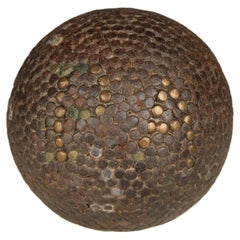
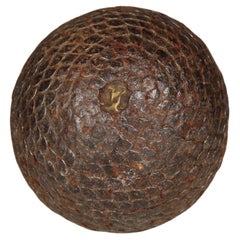
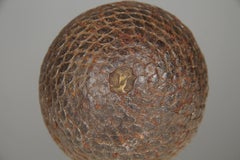
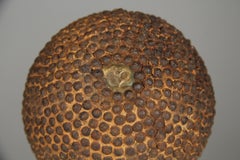
Antique Boule Ball Brass Decor, Pétanque, 1880s, France, Craftsmanship

Antique Boule Ball Brass Decor, Pétanque, 1880s, France, Craftsmanship

Located in Greven, DE

Beautiful, unique Boule ball, France, late 19th Century. In the 19th century, the manufacture of boules balls underwent significant development in France as the game of boules, part...

Category

Late 19th Century French Antique Late Victorian Folk Art

Materials

Metal, Brass

Antique Boule Ball "D F", Pétanque, 1880s, France, Craftsmanship

Antique Boule Ball "D F", Pétanque, 1880s, France, Craftsmanship

Located in Greven, DE

Beautiful, unique Boule ball, France, late 19th Century. In the 19th century, the manufacture of boules balls underwent significant development in France as the game of boules, part...

Category

Late 19th Century French Antique Late Victorian Folk Art

Materials

Metal, Brass

Antique Boule Ball "P A", Pétanque, 1880s, France, Craftsmanship

Antique Boule Ball "P A", Pétanque, 1880s, France, Craftsmanship

Located in Greven, DE

Beautiful, unique Boule ball, France, late 19th Century. In the 19th century, the manufacture of boules balls underwent significant development in France as the game of boules, part...

Category

Late 19th Century French Antique Late Victorian Folk Art

Materials

Metal

Antique Boule Balls Set "B", Pétanque, 1880s, France, Craftsmanship

Antique Boule Balls Set "B", Pétanque, 1880s, France, Craftsmanship

Located in Greven, DE

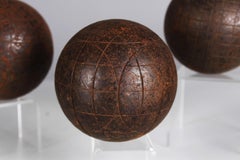
Beautiful, unique Boule set of three Boule balls, France, late 19th Century. In the 19th century, the manufacture of boules balls underwent significant development in France as the game of boules, particularly the pétanque variant, gained in popularity. The manufacture of boules balls during this period was a manual process that required expertise, precision and love to detail. In the late 19th and early 20th centuries, particularly in rural areas of France and other Mediterranean regions, olive wood was a commonly used source of material for making boules balls. This was not only due to the availability of the material, but also to the outstanding properties of olive wood, which was characterized by hardness, strength and a rich grain. First, the olive wood was carefully selected and shaped into raw balls, which were then sanded to the desired size and shape. The nails were then hammered into the balls one by one, making sure that they were evenly distributed and firmly anchored. Finally, the spheres were polished and coated with a protective varnish to enhance their natural beauty and protect them from the elements. The use of nails to decorate and reinforce olive wood boules was a traditional practice that not only gave the ball a rustic aesthetic, but also improved its durability and contributed to customization. Many balls were made according to the specific requirements and preferences of the players. Nails were driven at regular intervals around the ball, with each nail hole precisely placed so as not to affect the balance and weight distribution of the ball. These nails not only served as a decorative element, but also helped to strengthen the structure of the ball and make it more resistant to the hard knocks and wear and tear during play. Individual engravings or decorations were often applied to the balls to make them unique and identify the player. Antique boules...

Category

Late 19th Century French Antique Late Victorian Folk Art

Materials

Olive

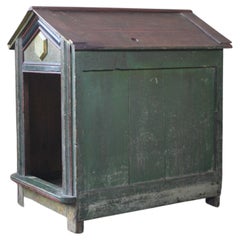
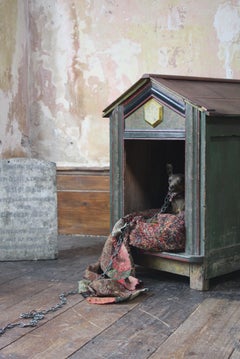
Late 19th Century Original Painted Green Faux Marble Dog Canine Kennel

Late 19th Century Original Painted Green Faux Marble Dog Canine Kennel

Located in Lowestoft, GB

A charming painted wooden dog kennel with pitched roof standing on styled feet. The original green painted body, with a faux marble painted pediment and red roof. The pediment als...

Category

Late 19th Century English Antique Late Victorian Folk Art

Materials

Pine

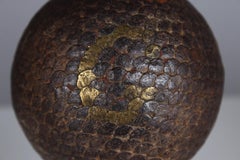
Antique Boule Ball "C" With Star Decor, Pétanque, 1880s, France, Craftsmanship

Antique Boule Ball "C" With Star Decor, Pétanque, 1880s, France, Craftsmanship

Located in Greven, DE

Beautiful, unique Boule ball, France, late 19th Century. In the 19th century, the manufacture of boules balls underwent significant development in France as the game of boules, part...

Category

Late 19th Century French Antique Late Victorian Folk Art

Materials

Metal, Brass

Antique Boule Ball "G", "J", Pétanque, 1880s, France, Craftsmanship

Antique Boule Ball "G", "J", Pétanque, 1880s, France, Craftsmanship

Located in Greven, DE

Beautiful, unique Boule ball, France, late 19th Century. Decorated with the initials "G" and "J". In the 19th century, the manufacture of boules balls underwent significant developm...

Category

Late 19th Century French Antique Late Victorian Folk Art

Materials

Olive

Early 20th Century English Hand Carved Fairground Fragments

Early 20th Century English Hand Carved Fairground Fragments

Located in London, GB

Early 20th Century English Hand Carved Fairground Fragments A closely matched pair of hand carved pine sectioned English fairground decorative fragments. Original paint still pres...

Category

1920s British Vintage Late Victorian Folk Art

Materials

Pine

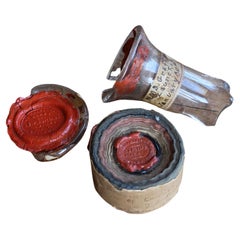
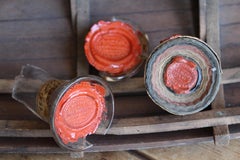
19th Century Maritime Curiosities Launch Bottle Shards Naval Sailors

19th Century Maritime Curiosities Launch Bottle Shards Naval Sailors

Located in Lowestoft, GB

Trio of 19th century maritime curiositys, two glass bottle neck shards from the launch bottles of two ships. Also an unused streamer from another ships maiden voyage All have the wax...

Category

19th Century English Antique Late Victorian Folk Art

Materials

Glass, Paper

Antique Boule Ball With Flower Decor, Pétanque, 1880s, France, Craftsmanship

Antique Boule Ball With Flower Decor, Pétanque, 1880s, France, Craftsmanship

Located in Greven, DE

Beautiful, unique Boule ball, France, late 19th Century. In the 19th century, the manufacture of boules balls underwent significant development in France as the game of boules, part...

Category

Late 19th Century French Antique Late Victorian Folk Art

Materials

Metal, Brass

Antique Boule Ball "G", Pétanque, 1880s, France, Craftsmanship

Antique Boule Ball "G", Pétanque, 1880s, France, Craftsmanship

Located in Greven, DE

Beautiful, unique Boule ball, France, late 19th Century. In the 19th century, the manufacture of boules balls underwent significant development in France as the game of boules, particularly the pétanque variant, gained in popularity. The manufacture of boules balls during this period was a manual process that required expertise, precision and love to detail. In the late 19th and early 20th centuries, particularly in rural areas of France and other Mediterranean regions, olive wood was a commonly used source of material for making boules balls. This was not only due to the availability of the material, but also to the outstanding properties of olive wood, which was characterized by hardness, strength and a rich grain. First, the olive wood was carefully selected and shaped into raw balls, which were then sanded to the desired size and shape. The nails were then hammered into the balls one by one, making sure that they were evenly distributed and firmly anchored. Finally, the spheres were polished and coated with a protective varnish to enhance their natural beauty and protect them from the elements. The use of nails to decorate and reinforce olive wood boules was a traditional practice that not only gave the ball a rustic aesthetic, but also improved its durability and contributed to customization. Many balls were made according to the specific requirements and preferences of the players. Nails were driven at regular intervals around the ball, with each nail hole precisely placed so as not to affect the balance and weight distribution of the ball. These nails not only served as a decorative element, but also helped to strengthen the structure of the ball and make it more resistant to the hard knocks and wear and tear during play. Individual engravings or decorations were often applied to the balls to make them unique and identify the player. Antique boules...

Category

Late 19th Century French Antique Late Victorian Folk Art

Materials

Metal

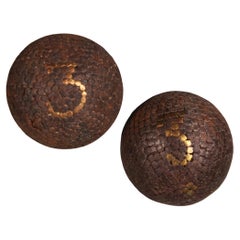
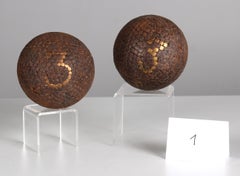
Pair Of Antique Boule Balls "3", "V", Pétanque, 1880s, France, Craftsmanship

Pair Of Antique Boule Balls "3", "V", Pétanque, 1880s, France, Craftsmanship

Located in Greven, DE

Beautiful, unique Boule ball pair, France, late 19th Century. Decorated with the numer "3" on each ball and with a "V" on one of the Boule balls. In the 19th century, the manufactur...

Category

Late 19th Century French Antique Late Victorian Folk Art

Materials

Olive

Antique Boule Set, Boule Balls, Pétanque, 1880s, France, Craftsmanship

Antique Boule Set, Boule Balls, Pétanque, 1880s, France, Craftsmanship

Located in Greven, DE

Beautiful, unique Boule set of three Boule balls and one target ball, France, late 19th Century. Diameter 8,5 cm. Fantastic colour and patina! In the 19th century, antique metal boules balls experienced a renaissance that took the game of boules to a new level. These ornately crafted balls were not only instruments of the game, but also symbols of elegance and sophistication in leisure activities. Made from high-quality metals such as steel or brass, Boule balls were forged and polished by skilled craftsmen to ensure a smooth and even surface. The antique boules...

Category

Late 19th Century French Antique Late Victorian Folk Art

Materials

Metal

Pair Of Antique Boule Balls "G", Pétanque, 1880s, France, Craftsmanship

Pair Of Antique Boule Balls "G", Pétanque, 1880s, France, Craftsmanship

Located in Greven, DE

Beautiful, unique Boule ball pair, France, late 19th Century. In the 19th century, the manufacture of boules balls underwent significant development in France as the game of boules,...

Category

Late 19th Century French Antique Late Victorian Folk Art

Materials

Olive

Antique Boule Ball "J P", Pétanque, 1880s, France, Craftsmanship

Antique Boule Ball "J P", Pétanque, 1880s, France, Craftsmanship

Located in Greven, DE

Beautiful, unique Boule ball, France, late 19th Century. In the 19th century, the manufacture of boules balls underwent significant development in France as the game of boules, part...

Category

Late 19th Century French Antique Late Victorian Folk Art

Materials

Metal, Brass

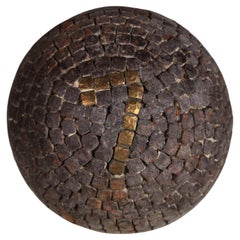
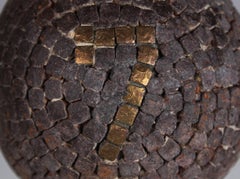
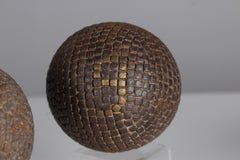
Antique Boule Ball "7", Pétanque, 1880s, France, Craftsmanship

Antique Boule Ball "7", Pétanque, 1880s, France, Craftsmanship

Located in Greven, DE

Beautiful, unique Boule ball, France, late 19th Century. In the 19th century, the manufacture of boules balls underwent significant development in France as the game of boules, particularly the pétanque variant, gained in popularity. The manufacture of boules balls during this period was a manual process that required expertise, precision and love to detail. In the late 19th and early 20th centuries, particularly in rural areas of France and other Mediterranean regions, olive wood was a commonly used source of material for making boules balls. This was not only due to the availability of the material, but also to the outstanding properties of olive wood, which was characterized by hardness, strength and a rich grain. First, the olive wood was carefully selected and shaped into raw balls, which were then sanded to the desired size and shape. The nails were then hammered into the balls one by one, making sure that they were evenly distributed and firmly anchored. Finally, the spheres were polished and coated with a protective varnish to enhance their natural beauty and protect them from the elements. The use of nails to decorate and reinforce olive wood boules was a traditional practice that not only gave the ball a rustic aesthetic, but also improved its durability and contributed to customization. Many balls were made according to the specific requirements and preferences of the players. Nails were driven at regular intervals around the ball, with each nail hole precisely placed so as not to affect the balance and weight distribution of the ball. These nails not only served as a decorative element, but also helped to strengthen the structure of the ball and make it more resistant to the hard knocks and wear and tear during play. Individual engravings or decorations were often applied to the balls to make them unique and identify the player. Antique boules...

Category

Late 19th Century French Antique Late Victorian Folk Art

Materials

Metal

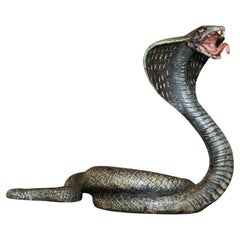
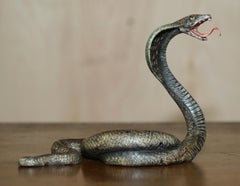
Antique Franz Bergman Vienna Cold Painted Bronze Cobra Snake Statue Watch Holder

Antique Franz Bergman Vienna Cold Painted Bronze Cobra Snake Statue Watch Holder

By Franz Bergmann

Located in West Sussex, Pulborough

We are delighted to offer for sale this stunning original Circa 1900 Austrian Vienna cold paint bronze Statue / Watch holder by the wonder that is Franz Bergman. Fully stamped to ...

Category

Early 1900s Italian Antique Late Victorian Folk Art

Materials

Bronze

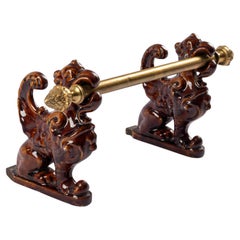
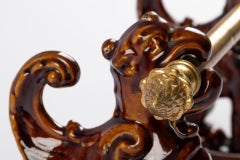
Antique 19th Century English Glazed Ceramic And Brass Fireplace Tool Rest

Antique 19th Century English Glazed Ceramic And Brass Fireplace Tool Rest

Located in Greven, DE

This eye-catching English antique is a fireplace tool rest - a desirable and common feature in Victorian homes. As the name suggests, its purpose is to hold fireplace tools such as b...

Category

Late 19th Century English Antique Late Victorian Folk Art

Materials

Brass

Antique Boule Ball "17", Pétanque, 1880s, France, Craftsmanship

Antique Boule Ball "17", Pétanque, 1880s, France, Craftsmanship

Located in Greven, DE

Beautiful, unique Boule ball, France, late 19th Century. In the 19th century, the manufacture of boules balls underwent significant development in France as the game of boules, part...

Category

Late 19th Century French Antique Late Victorian Folk Art

Materials

Metal

Antique Boule Ball "62", Pétanque, 1880s, France, Craftsmanship

Antique Boule Ball "62", Pétanque, 1880s, France, Craftsmanship

Located in Greven, DE

Beautiful, unique Boule ball, France, late 19th Century. In the 19th century, the manufacture of boules balls underwent significant development in France as the game of boules, part...

Category

Late 19th Century French Antique Late Victorian Folk Art

Materials

Metal

Antique Boule Balls Set "9", Pétanque, 1880s, France, Craftsmanship

Antique Boule Balls Set "9", Pétanque, 1880s, France, Craftsmanship

Located in Greven, DE

Beautiful, unique Boule set of three Boule balls and one target ball, France, late 19th century. In the 19th century, the manufacture of boules balls underwent significant development in France as the game of boules, particularly the pétanque variant, gained in popularity. The manufacture of boules balls during this period was a manual process that required expertise, precision and love to detail. In the late 19th and early 20th centuries, particularly in rural areas of France and other Mediterranean regions, olive wood was a commonly used source of material for making boules balls. This was not only due to the availability of the material, but also to the outstanding properties of olive wood, which was characterized by hardness, strength and a rich grain. First, the olive wood was carefully selected and shaped into raw balls, which were then sanded to the desired size and shape. The nails were then hammered into the balls one by one, making sure that they were evenly distributed and firmly anchored. Finally, the spheres were polished and coated with a protective varnish to enhance their natural beauty and protect them from the elements. The use of nails to decorate and reinforce olive wood boules was a traditional practice that not only gave the ball a rustic aesthetic, but also improved its durability and contributed to customization. Many balls were made according to the specific requirements and preferences of the players. Nails were driven at regular intervals around the ball, with each nail hole precisely placed so as not to affect the balance and weight distribution of the ball. These nails not only served as a decorative element, but also helped to strengthen the structure of the ball and make it more resistant to the hard knocks and wear and tear during play. Individual engravings or decorations were often applied to the balls to make them unique and identify the player. Antique boules...

Category

Late 19th Century French Antique Late Victorian Folk Art

Materials

Olive

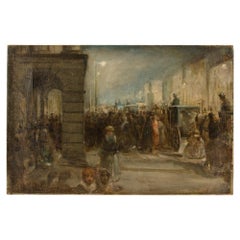
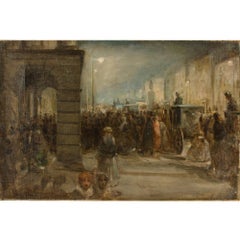
William Gordon Burn-Murdoch (British, 1862 - 1939)  European Street Scene

William Gordon Burn-Murdoch (British, 1862 - 1939) European Street Scene

Located in Philadelphia, PA

William Gordon Burn-Murdoch (British, 1862 - 1939) Busy European Street Scene with horse drawn carriage, many people, oil on canvas, signed lower left W.G. Burn-Murdoch circa 1902, ...

Category

Early 20th Century British Late Victorian Folk Art

Materials

Canvas, Paint

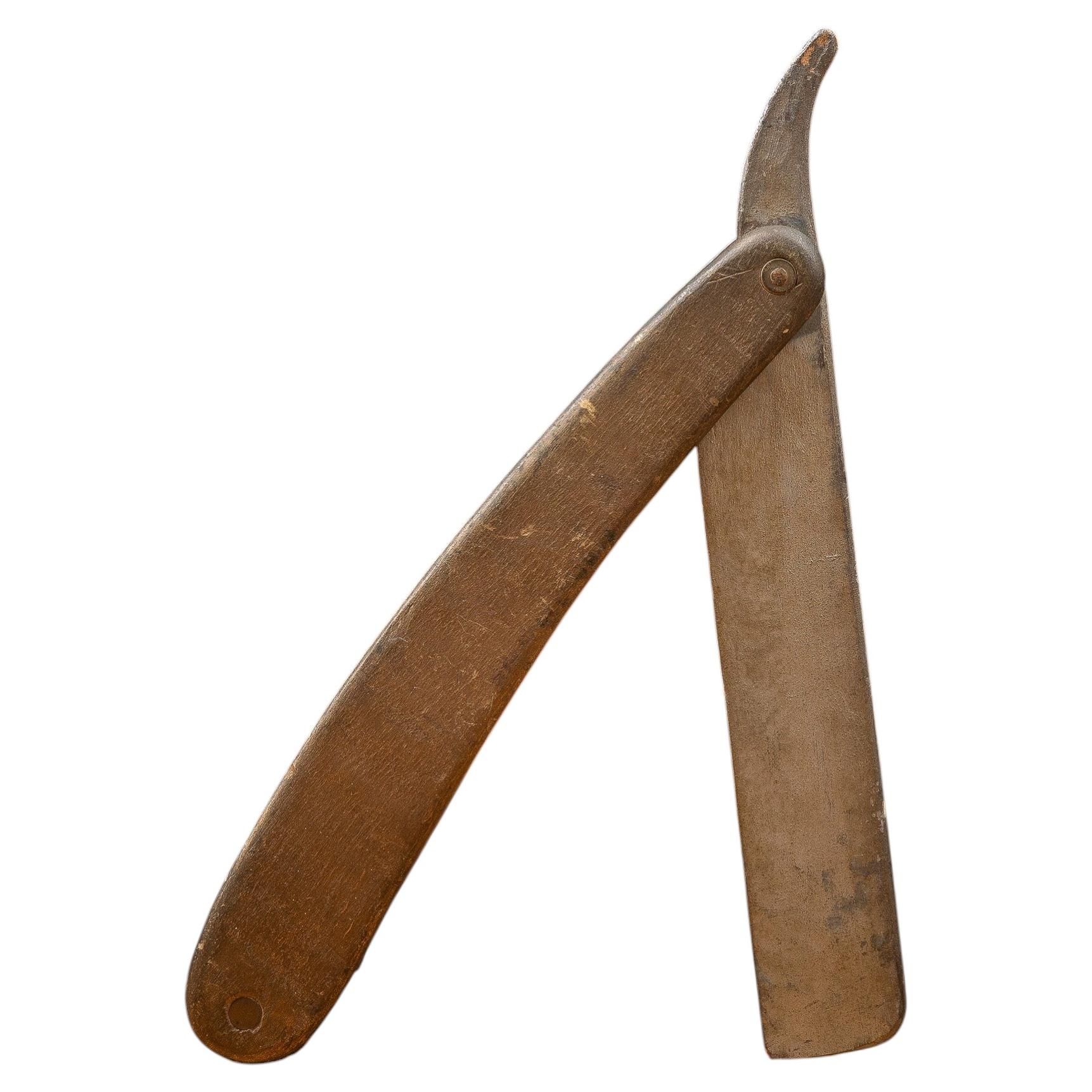
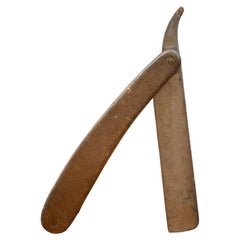
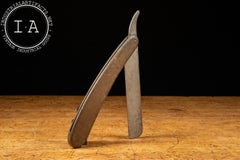
Antique Figural Straight Razor Barber Trade Sign

Antique Figural Straight Razor Barber Trade Sign

Located in Dekalb, IL

Large-scale figural barber trade sign fashioned in the form of an oversized folding straight razor. Constructed with a shaped wooden handle and steel blade, the piece closely replica...

Category

Early 20th Century American Late Victorian Folk Art

Materials

Steel

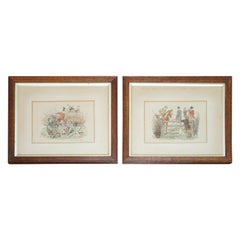
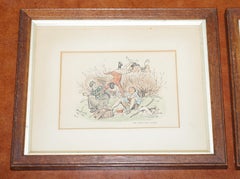
Pair of 1894 Watercolour Paintings by H Brock Univited Guest, a Lion in the Path

Pair of 1894 Watercolour Paintings by H Brock Univited Guest, a Lion in the Path

Located in West Sussex, Pulborough

We are delighted to offer for sale this lovely pair of late Victorian watercolors signed H Brock and dated Apr 1894 The first is titled “An Uninvited Guest” and the second “A Lion...

Category

1890s English Antique Late Victorian Folk Art

Materials

Wood

Lovely Late Victorian circa 1880 Hand Carved Black Forest Wine Bottle Holder

Lovely Late Victorian circa 1880 Hand Carved Black Forest Wine Bottle Holder

By Black Forest

Located in West Sussex, Pulborough

We are delighted to offer for sale this absolutely lovely original circa 1880 Black forest carved wine bottle holder A very good looking and decorative piece of folk art from the ...

Category

1880s German Antique Late Victorian Folk Art

Materials

Wood

Late Victorian folk art for sale on 1stDibs.

Find a broad range of unique Late Victorian folk art for sale on 1stDibs. Many of these items were first offered in the Mid-20th Century, but contemporary artisans have continued to produce works inspired by this style. If you’re looking to add vintage folk art created in this style to your space, the works available on 1stDibs include folk art, more furniture and collectibles, decorative objects and other home furnishings, frequently crafted with wood, metal and other materials. If you’re shopping for used Late Victorian folk art made in a specific country, there are Europe, United Kingdom, and England pieces for sale on 1stDibs. While there are many designers and brands associated with original folk art, popular names associated with this style include A. Lietz Co., Black Forest, and Franz Bergmann. It’s true that these talented designers have at times inspired knockoffs, but our experienced specialists have partnered with only top vetted sellers to offer authentic pieces that come with a buyer protection guarantee. Prices for folk art differ depending upon multiple factors, including designer, materials, construction methods, condition and provenance. On 1stDibs, the price for these items starts at $291 and tops out at $8,740 while the average work can sell for $1,560.