Bone Furniture

to
241
1,598
1,007
2,209
631
52
238
120
102
88
74
64
63
45
30
28
27
25
24
19
11
6
5
3
174
790
1,245
683
329
400
304
52
20
50
36
25
57
100
127
56
13
2,892
370,012
307,947
215,961
155,501
1,444
471
363
337
300
2,892
2,454
2,603
85
67
50
26
21
Material: Bone
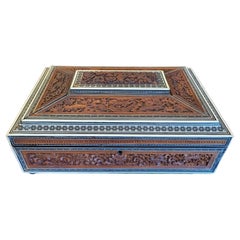
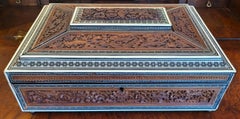
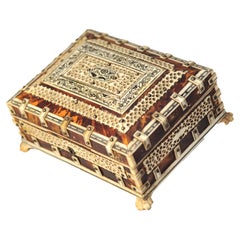
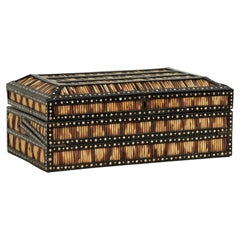
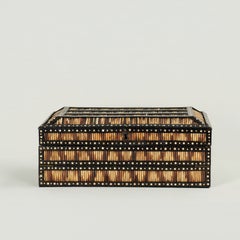
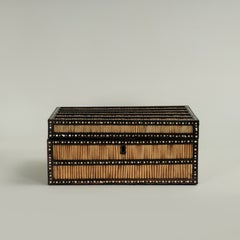
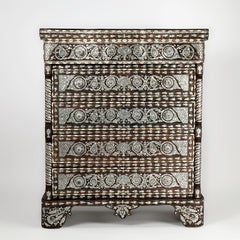
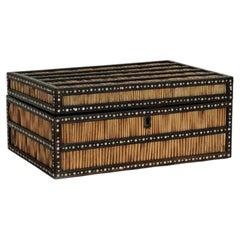
19C Anglo Indian Highly Carved Sadeli Mosaic Sarcophagus Sewing Box

19C Anglo Indian Highly Carved Sadeli Mosaic Sarcophagus Sewing Box

Located in Dallas, TX

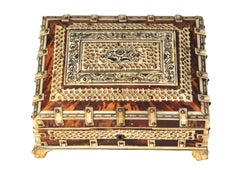
PRESENTING A GORGEOUS 19C Anglo Indian Highly Carved Sadeli Mosaic Sarcophagus Sewing Box. Made in Bombay, India circa 1860-80. Box made of sandalwood with highly carved teak wood reliefs and panels on all sides. Edged with bone and ebony veneers and glorious sadeli mosaic, made from tiny pieces of faux ivory, pewter, green semi-precious stone. The box is in a sarcophagus form with domed lid. The original brass carry handles are on the sides. The interior is in great condition and consists of a removeable mirror under the lid portion, with the original red velvet lining behind it. The base is removeable and contains a number of lidded compartments. 6 of the interior lids on the base, are each inlaid with sadeli mosaic banding. The rest are also carved and chased. The interior is fully complete with 7 lidded faux ivory/bone, thread canisters with sadeli domes and the original bone thimble. The box sits on 4 brass ball or bun feet with the original velvet lining on the base. Some minor repairs and losses, but this box is fully complete. This is ‘rare’ as many of these boxes have not survived in such condition! Included in the sale are 2 photos that were in the box (under the base tray). Interestingly, one of them is a view of downtown Nassau, New Providence (Bermuda) from the early 20C and stamped on the rear. What a ‘journey’ this piece has made! Made in India … travelled to Bermuda, probably via Britain … back to Ireland (where we bought it) …. then to Texas! These boxes were made by superb Indian craftsmen, specifically for sale to the ruling British elite. These types of boxes, carved padouk and sandalwood, (whilst beautiful and superbly crafted) were of a lesser quality, than the more profusely and intricately mosaic inlay, tortoiseshell and ivory boxes, made for the British ‘Upper Classes’ in the areas of Bombay and Vizagapatam. These type of boxes were much more affordable back in 1880 (and indeed today) and would probably have been bought by mid-level diplomats, civil servants or visitors. Sewing boxes (in general), were in EVERY Victorian home in Britain in the 19th Century and like other boxes etc were ‘status symbols’ of your place in society! The more ornate the box, the more ‘Upper Class’ you were! Of it’s type, this one, is one of the very higher quality one’s, than the norm! SADELI MOSAIC: “Anglo Indian boxes were made in India for the English residents from the early part of the 18th century. They were brought back or sent back to England usually by the people who had commissioned them. From the beginning of the nineteenth century they were imported more commercially, although not in any significant numbers until the middle decades. They were very highly valued, especially the early ones, to the extent that the designs were copied on late 19th and early 20th century tins. The ancient art of Sadeli Mosaic is said to have been introduced from Shiraz in Persia via Sind to Bombay, a long time before the Anglo Indian boxes were made. It was a technique, which required a high degree of skill and patience. It was executed very lavishly, in that the frequent cuts wasted a great amount of the precious materials used. The workmanship was however more than commensurable to the value of the materials. Ivory, silver, pewter (or other metals), wood and horn were cut into faceted rods which were bound together to form geometric patterns. When the glue has set, the rods were sliced in transverse sections. This gave the maker a number of angled circular pieces in the original pattern. Several variations of patterns could be achieved by combining the materials in different ways. The ivory was sometimes dyed green to give an extra color. The mosaic pieces in a combination of patterns, often separated by ivory, ebony, horn or silver stringing were used to veneer sandalwood boxes. In the early boxes, which date from the turn of the 18th to the 19th century, there are large panels of mosaic covering tops and sides of boxes. It took incredible skill to cover such large areas without any shakes or wavering of the pattern. The corners and joins on these boxes are impeccably matched. The makers (reputed to be Persian) of Sadeli mosaic made in the first two decades of the 19th century displayed a total understanding of the qualities of the different materials they used. They combined substances, which can expand and contract according to atmospheric conditions with others, which are hard and unyielding. The result was a sharp definition of the lines and patterns, which made up the whole design. On the early boxes the designs look deceptively simple. The fact is, they emerged from a culture, which had mastered geometry and understood how to generate a pattern from a set number of points. The patterns are so harmoniously combined that their incredible complexity is not immediately apparent. The earliest Sadeli boxes...

Category

19th Century Indian Anglo-Indian Antique Bone Furniture

Materials

Bone, Sandalwood, Teak
Marine Ivory Skull, 18th century

Marine Ivory Skull, 18th century

Located in Roma, IT

Marine ivory skull in sperm whale or killer whale (Physeter Linnaeus, 1758 or Orcinus orca, Linnaeus, 1758) designed to be worn as a pendant. The sculptur...

Category

18th Century Italian Antique Bone Furniture

Materials

Ivory

Exceptional C19th French Boulle Mantle Clock

Exceptional C19th French Boulle Mantle Clock

By André-Charles Boulle

Located in London, GB

A very Important French Ormolu Mounted Boulle Mantel Clock Inlaid Brass in The Regency Style Each Corner Decorated with Recumbent Horses Nice Large Dial 8 and a half inches surround...

Category

19th Century French Regency Antique Bone Furniture

Materials

Brass, Ormolu

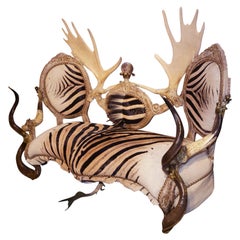
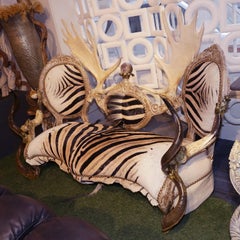
Zebra with Médaillons Sofa

Zebra with Médaillons Sofa

$60,971Sale Price|20% Off

Zebra with Médaillons Sofa

Located in Paris, FR

Sofa Zebra with Médaillons with structure in solid beech wood, upholstered and covered with Burchell zebra natural skin, with 3 backrest covered too with Burchell zebra natural skin. backrest is ornamented with 2 natural reindeer antlers...

Category

21st Century and Contemporary French Bone Furniture

Materials

Amethyst, Bronze

Antique Persian Khatam Micro Mosaic Inlaid Jewelry Box circa 1940s

Antique Persian Khatam Micro Mosaic Inlaid Jewelry Box circa 1940s

Located in Moreno Valley, CA

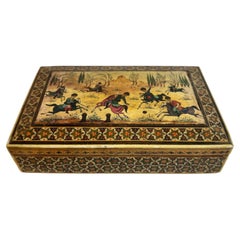
Antique Persian Khatam Micro Mosaic Inlaid Jewelry Box with Miniature Polo Scene, circa 1940s This exquisite Persian Khatam Kari trinket box is a rare example of masterful micro mosaic marquetry, handcrafted in the 1940s using the ancient Persian art of inlay. Featuring an intricately detailed geometric design and a miniature hand-painted equestrian scene on the lid, this museum-quality piece is a stunning representation of Indo-Persian and Moorish craftsmanship. Khatam Kari, or Persian marquetry, is a centuries-old decorative art that flourished during the Safavid dynasty. It involves the meticulous inlay of thousands of tiny pieces of wood and bone into intricate, repeating geometric patterns—each symbolic of harmony and cosmic order. The top of this box is adorned with a finely rendered painting of royal figures on horseback, possibly princes engaged in a ceremonial game of polo, echoing the refined court culture of the 19th-century Persian and Mughal aristocracy. The box’s micro mosaic surface is covered in richly detailed star and polygon motifs typical of Khatam and Sadeli mosaic traditions. These patterns require precise mathematical planning and exceptional artisanal skill, resulting in a surface that is as intellectually complex as it is visually stunning. Details: * Origin: Asia Indo-Persian * Date: Circa 1940s * Materials: Inlaid woods, camel bone, hand-painted miniature * Style: Islamic Art, Moorish, Anglo-Indian, Micro Mosaic * Dimensions: Height 1.5 in. x Width 6.5 in. x Depth 4.25 in. * Condition: antique condition with minor wear consistent with age These boxes were traditionally used to store writing instruments or jewelry, and today they serve as timeless collectors' pieces, suitable for display or thoughtful gifting. Comparable examples can be found in major Islamic art collections, including the Doris Duke Museum of Islamic Art. Keywords: Persian Khatam Box...

Category

Mid-20th Century Indian Anglo-Indian Bone Furniture

Materials

Bone, Fruitwood

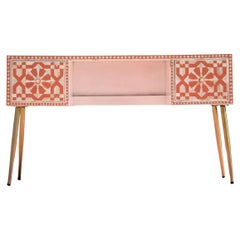
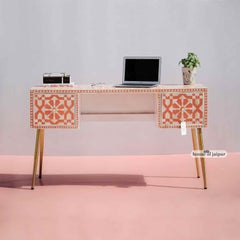
Bone Inlay Buffet Cabinet with Gold Legs & Brass Knobs by House of Jaipur

Bone Inlay Buffet Cabinet with Gold Legs & Brass Knobs by House of Jaipur

Located in New York, NY

Low, wide, and entirely covered in hand-set camel bone inlay, this buffet cabinet carries the full weight of the inlay tradition in a form that is as at home in a dining room as it i...

Category

2010s Indian Arts and Crafts Bone Furniture

Materials

Bone, Wood

Antique Set of Rustic Hunters Cutlery with Chamois Horn Handles

Antique Set of Rustic Hunters Cutlery with Chamois Horn Handles

Located in Berghuelen, DE

Antique set of rustic hunters cutlery with Chamois Horn Handles A rare antique set of knife and fork. The handles are made of genuine chamois horn. Tines and blade are made of galva...

Category

Late 19th Century German Black Forest Antique Bone Furniture

Materials

Metal

Ivory Sculpture Depicting Venus, 20th century

Ivory Sculpture Depicting Venus, 20th century

Located in Roma, IT

depicting the goddess Venus in a pose that directly recalls Sandro Botticelli's famous “Birth of Venus.” The goddess stands in a Venus Pudica pose. The distinctive element is the lar...

Category

20th Century Italian Modern Bone Furniture

Materials

Ivory

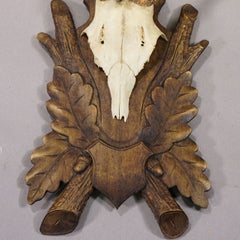
Two Chamois Taxidermy Trophy on Black Forest Carved Wood Plaque from Austria

Two Chamois Taxidermy Trophy on Black Forest Carved Wood Plaque from Austria

Located in Bad Säckingen, DE

This exquisite pair of chamois trophy mounts showcases beautifully preserved skulls and horns mounted on traditional Black Forest carved wooden plaques. Originating from Austria, the...

Category

1970s Austrian Folk Art Vintage Bone Furniture

Materials

Antler, Wood

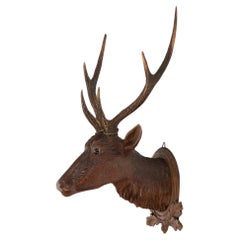
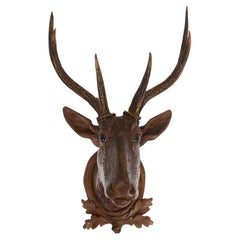
The Stag of the Black Forest: Early 19th Century Carved Deer Head w/ Real Antler

The Stag of the Black Forest: Early 19th Century Carved Deer Head w/ Real Antler

Located in New York, NY

Early 19th Century Black Forest Carved Wooden Deer Head with Antlers Carved from solid wood and mounted with naturally shed antlers, this expressive deer head exemplifies the rustic...

Category

19th Century German Black Forest Antique Bone Furniture

Materials

Wood, Antler

19th/20th Century Sterling Silver Overlaid Branch Carved Ivory Handled Corkscrew

19th/20th Century Sterling Silver Overlaid Branch Carved Ivory Handled Corkscrew

Located in Chapel Hill, NC

Late 19th / early 20th century sterling silver overlaid corkscrew in the "Rustic" taste, having a sterling overlay of scrolled leaves over ivory carved as a piece of a branch with ra...

Category

Early 20th Century American Edwardian Bone Furniture

Materials

Sterling Silver, Steel

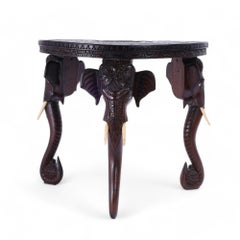
19th c. Anglo Indian Mughal Teak Bone Inlaid Round Side Table

19th c. Anglo Indian Mughal Teak Bone Inlaid Round Side Table

Located in Moreno Valley, CA

Antique 19th c. Anglo Indian Mughal teak with bone inlaid side table. Fine and elegant Moorish round side table hand carved and inlaid with bone in an elaborate Moorish geometric design. With elephant head decor on the feet with bone inlay figurative detail on the 3 supporting legs. Anglo Indian Mughal teak wood...

Category

19th Century Indian Anglo-Indian Antique Bone Furniture

Materials

Bone, Teak
Ivory sculpture depicting the Madonna of Trapani, 17th century

Ivory sculpture depicting the Madonna of Trapani, 17th century

Located in Roma, IT

Ivory sculpture depicting the Madonna of Trapani sculpted in the round, placed on a rich mother-of-pearl cloud decoration and resting on an alabaster base. The Virgin is depicted ac...

Category

17th Century Italian Modern Antique Bone Furniture

Materials

Coral

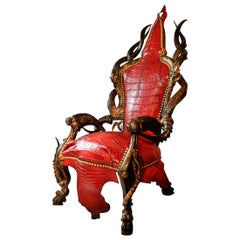
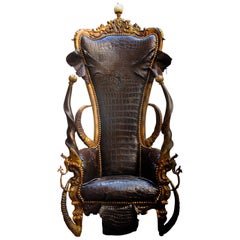
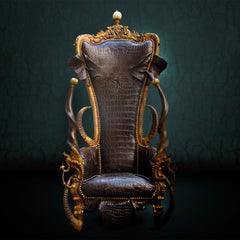
Royal Black Alligator Throne

Royal Black Alligator Throne

Located in Paris, FR

Throne Royal Black Alligator made with structure in solid beechwood. With very big alligator skin black tinted. Backrest with black genuine leather. W...

Category

21st Century and Contemporary French Bone Furniture

Materials

Bronze

Antique Anglo Indian Inlaid Table or Stand

Antique Anglo Indian Inlaid Table or Stand

Located in Palm Beach, FL

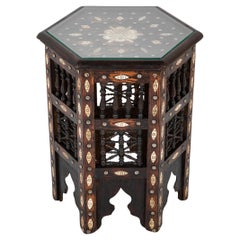
Impressive antique Anglo Indian stand or table crafted in mahogany in an octagon form featuring a mesmerizing kaleidoscopic pattern of floral bone inlays on a base with inlaid ebony ...

Category

20th Century Indian Anglo-Indian Bone Furniture

Materials

Bone, Ebony, Mahogany

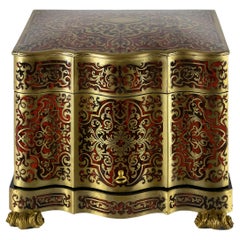
19th Century French Boulle / Napoleon III Liqueur Cave Box

19th Century French Boulle / Napoleon III Liqueur Cave Box

Located in Vilnius, LT

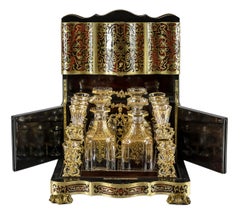
Antique French liqueur cave box with inlaid brass and and tortoise shell marquetry decor, a lift top door and swing side doors, polished surface, bronze legs. Inside there is a wood...

Category

Mid-19th Century French Antique Bone Furniture

Materials

Crystal, Bronze, Brass

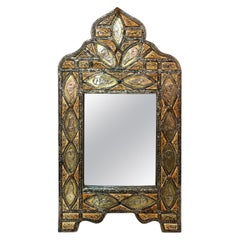
Vintage Moroccan Moorish Handmade Arched Vanity or Wall Mirror with Brass Inlay

Vintage Moroccan Moorish Handmade Arched Vanity or Wall Mirror with Brass Inlay

Located in Plainview, NY

Vintage Moroccan Moorish Handmade Arched Vanity or Wall Mirror with Brass Inlay This striking wall mirror is a celebration of centuries-old North African artistry, entirely shaped b...

Category

1980s Moroccan Bohemian Vintage Bone Furniture

Materials

Brass

Fossilized Whale Vertebrae

Fossilized Whale Vertebrae

Located in Bradenton, FL

Natural weathered antique Whale Vertebrae bone in beautiful naturally aged old surface. One section / specimen. Fantastic old natural history item. Likely 19th century.

Category

19th Century Organic Modern Antique Bone Furniture

Materials

Bone

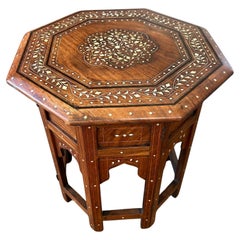
Anglo Indian Hoshiapur Octagonal table

Anglo Indian Hoshiapur Octagonal table

Located in Sherborne, GB

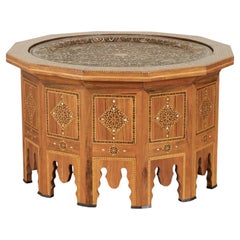
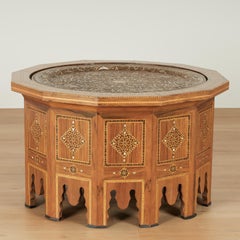
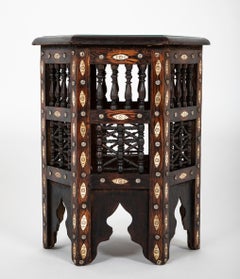
Anglo Indian Hoshiapur octagonal table circa 1880, profusely inlayed with bone and an ebony stringing line to the perimeter, the eight sided base each has an inset panel and below s...

Category

Late 19th Century Indian Anglo-Indian Antique Bone Furniture

Materials

Bone, Teak
Alfio Chess Table
Alfio Chess Table

Alfio Chess Table

$16,750 / item

Alfio Chess Table

By Arcahorn Srl.

Located in Milan, IT

This stunning Alfio Chess Table is crafted in dark horn and black lacquered wood and features a top in smoked tempered glass with a silver chessboard desi...

Category

2010s Italian Modern Bone Furniture

Materials

Horn, Wood

Antique Gun Powder & Drinking Horn's w. Wood & Bronze accents

Antique Gun Powder & Drinking Horn's w. Wood & Bronze accents

Located in Esbjerg, DK

A group of 3 decorative hunting horns. Two gun-powder horns with wooden accents and one drinking horn with chain and bronze accents. The two powder horns are of Scandinavian or Germa...

Category

Late 19th Century Victorian Antique Bone Furniture

Materials

Horn

Set of Six German Stag-Handled Knives by Wingen Solingen, West Germany

Set of Six German Stag-Handled Knives by Wingen Solingen, West Germany

Located in Northport, MI

A finely crafted mid-century set of six decorative knives by Wingen Solingen, made in West Germany. Each stainless-steel blade is richly etched and gilded with ornate scrolling motif...

Category

1950s German Vintage Bone Furniture

Materials

Stainless Steel

Gold piquet small tortoiseshell box with lover’s eye. France circa 1870.

Gold piquet small tortoiseshell box with lover’s eye. France circa 1870.

Located in Milan, IT

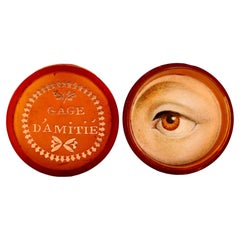
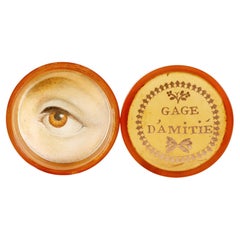
Small round box with lid, made of blond tortoiseshell with 18K gold intaglio finishes. On the lid is written, in French, the phrase Gage d’amitié (as a sign of friendship). Inside, o...

Category

Late 19th Century French Georgian Antique Bone Furniture

Materials

Gold

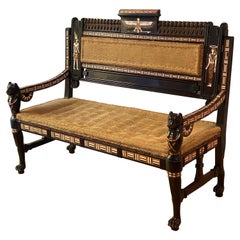
Rare Egyptian Revival Ebony and Inlaid Settee, Late 19th Century

Rare Egyptian Revival Ebony and Inlaid Settee, Late 19th Century

Located in Southampton, NY

Egyptian Revival ebony and inlaid settee, late 19th century "Of architectural form with geometric borders and inlaid with fruitwoods, ivory, mother of pearl and wire, the carved giltwood cresting rail in the form of serpents centred by a tablet inlaid with a winged bird, probably the symbol of the Egyptian Goddess, Nekhbet, clutching a payrus stalk, the padded back between two moulded cartouches depicting Horus and Iris, the arm supports in the form of Canopic jars surmounted by the head of Anubis, with a padded seat and shaped legs terminating in paw feet. Measures: 26" deep x 56" wide x 45.5" high x 18" seat height In the nineteenth century, the Egyptian Revival became fashionable following the Napoleonic campaigns in Egypt with the publication of Voyage (1802) by Vivant Denon...

Category

Late 19th Century British Egyptian Revival Antique Bone Furniture

Materials

Wire

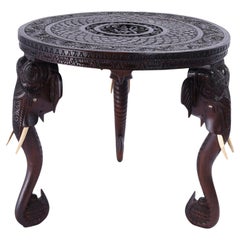
Antique Anglo Indian Carved Elephant Table or Stand

Antique Anglo Indian Carved Elephant Table or Stand

Located in Palm Beach, FL

Lofty antique Anglo Indian stand or occasional table handcrafted in mahogany with a round top having a figural center medallion inside elaborated f...

Category

Early 20th Century Indian Anglo-Indian Bone Furniture

Materials

Bone, Mahogany

Pompei Coffee Table Brown

Pompei Coffee Table Brown

By Arcahorn Srl.

Located in Milan, IT

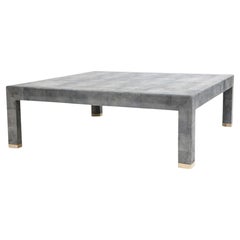
Pompei is the perfect coffee table to give your environment that little detail that makes the difference. This tobacco version is made of oak veneer, satin brass-plated steel feet an...

Category

2010s Italian Bone Furniture

Materials

Steel

Handcrafted Inlaid Armchair, Teak & Bone, Anglo-Indian Style
Handcrafted Inlaid Armchair, Teak & Bone, Anglo-Indian Style
Located in New York, NY

A beautiful armchair, handcrafted in India out of aged and naturally seasoned teak wood, inlaid with responsibly sourced bone and artisanally weaved cane. Round top, cane back, uphol...
Category

2010s Indian Anglo-Indian Bone Furniture

Materials

Muslin, Resin, Cane, Bone, Teak
Black Wooden Contemporary "Tomb" Bench in Plywood & Horn by Rick Owens, 2007

Black Wooden Contemporary "Tomb" Bench in Plywood & Horn by Rick Owens, 2007

By Rick Owens

Located in Stockholm, SE

Very rare contemporary wooden black stained "Tomb" bench in plywood and horn by Rick Owens produced in his studio in Paris, France 2007. In good original condition. Signed and number...

Category

Early 2000s French Modern Bone Furniture

Materials

Horn, Plywood

Ten Skull Bone Chandelier

Ten Skull Bone Chandelier

Located in Peekskill, NY

This hand made animal bone chandelier falls into the Oddity category. It features 10 skulls and 5 curved arms. The outer skulls have an E12 socket and bulb in each the 5 mouths.

Category

Mid-20th Century American Rustic Bone Furniture

Materials

Bone

A German 19th Century Louis XVI Style Burr Walnut Bechstein Concert Grand Piano

A German 19th Century Louis XVI Style Burr Walnut Bechstein Concert Grand Piano

By Bechstein Piano Company

Located in Los Angeles, CA

A Very Fine German 19th Century Louis XVI Style Burr Walnut Bechstein Concert Grand Piano, Serial No. 5655. The beautifully crafted Grand piano, raised on three tapered barrel shaped legs, with an intricately carved ornate music desk and original keys. Circa: 1872. Length: 80 inches (203.2 cm) Width: 59 inches: (149.9 cm) Height (top closed): 38 5/8 inches (98.1 cm) C. Bechstein Pianofortefabrik C. Bechstein Pianofortefabrik AG (also known as Bechstein) is a German manufacturer of pianos, established in 1853 by Carl Bechstein. Before Bechstein Young Carl Bechstein studied and worked in France and England as a piano craftsman, before he became an independent piano maker. His first pianos were made for other companies. C. Bechstein C. Bechstein piano factory was founded on 1 October 1853 by Carl Bechstein in Berlin, Germany. Carl Bechstein set out to manufacture a piano able to withstand the great demands imposed on the instrument by the virtuosi of the time, such as Franz Liszt. In 1857, Hans von Bülow (Liszt's son-in-law) gave the first public performance on a Bechstein grand piano by performing Liszt's Piano Sonata in B minor in Berlin By 1870, with endorsements from Franz Liszt and Hans von Bülow, Bechstein pianos had become a staple in many concert halls and private mansions. By that time three piano makers, all of which were founded in 1853, became established as the industry leaders across the world: Bechstein, Blüthner and Steinway & Sons. In 1881 Bechstein began supplying pianos to Queen Victoria. A gilded art-case piano was delivered to Buckingham Palace, followed by several more Bechstein pianos to Windsor Castle and other royal residences. By January 1886 they were among the piano manufacturers holding a Royal Warrant as a supplier to the Queen. Several British embassies across the world acquired Bechstein pianos. In 1885, Bechstein opened a branch in London, that eventually grew to become the largest showroom and dealership in Europe. By 1890 showrooms had been opened in Paris, Vienna, and Saint Petersburg. On 31 May 1901, Bechstein Hall, built at a cost of £100,000, was opened next to the company's London showroom at 36-40 Wigmore Street. Between 1901 and 1914, C. Bechstein was the largest piano dealership in London. At that time, Bechstein was patronized by the tsars of Russia, the royal families of Spain, Belgium, the Netherlands, Italy, Sweden, Norway, Austria and Denmark, and other royalty and aristocracy. The list of royal clients of Bechstein may be found on the soundboard of vintage Bechstein pianos made before the Second World War. The list is part of the original Bechstein trademark logo; it can be seen under the strings in the center of a piano's soundboard. The signature of Carl Bechstein The years from the 1870s through 1914 brought Bechstein their most dramatic increase in sales. In 1880 a second Bechstein factory was opened in Berlin, and the third factory was opened in 1897 in Berlin-Kreuzberg. Production reached 3,700 pianos annually in 1900, and 4,600 in 1910, making Bechstein the largest German manufacturer of high-end pianos. At that time, about three quarters of production went to international markets, especially Britain and the Commonwealth, and Russia. Carl Bechstein died in 1900, and the Bechstein company continued to operate under the management of his sons. Between 1900 and 1914 C. Bechstein was one of the leading piano makers in the world, employing 1,200 craftsmen and workers by 1913 and making five thousand pianos per year. First World War C. Bechstein suffered huge property losses in London, Paris, and St. Petersburg during World War I. The largest loss was in London. Although the company's position in the United Kingdom was initially unaffected, with the company still listed as holding a Royal Warrant in January 1915, Warrants to both King George V, and his wife Queen Mary were cancelled on 13 April 1915. Bechstein was not the only musical concern to be affected by growing anti-German sentiment: there were earlier attempts, led by William Boosey, to boycott German music altogether. In 1915, despite being a Baronet and Privy Counsellor, Sir Edgar Speyer, who was then funding the Proms, was forced to leave the country. Following the passing of the Trading with the Enemy Amendment Act 1916 the British arm of the company was wound-up on 5 June 1916, all Bechstein property, including the concert hall and showrooms full of pianos, were seized as "enemy property" and closed. In 1916 the hall was sold as alien property at auction to Debenhams for £56,500. It was renamed Wigmore Hall, and then re-opened under the new name in 1917. All 137 Bechstein pianos at the Bechstein showrooms were confiscated too, and became property of the new owner of the Hall. After a dispute with his brother, Edwin Bechstein left the company and was paid off. Eventually the Bechstein factory resumed full-scale production during the 1920s. At that time, technical innovations and inventions of new materials and tools, as well as improvements in piano design and construction, had allowed Bechstein to become one of the leading piano makers again. The most successful models were the updated "A"-185 and "B"-208 grand pianos. The upright pianos became more popular after the war, and C. Bechstein were successful with its upright pianos Model-8 and Model-9, both of which have been considered the finest upright pianos. As the company was changed into a joint-stock company 1923, Edwin Bechstein and his wife Helene, bought themselves back into the company as shareholders. In 1930 the company collaborated with German electrical goods manufacturer Siemens under Nobel laureate Walther Nernst to produce one of the first electric pianos...

Category

19th Century German Louis XVI Antique Bone Furniture

Materials

Bronze

19th Century Anglo-Indian Jewelry Box with Elephant Motif Inlay

19th Century Anglo-Indian Jewelry Box with Elephant Motif Inlay

Located in Moreno Valley, CA

19th Century Anglo-Indian Faux Tortoiseshell, Carved Bone and Ebony Inlaid Jewelry Box with Elephant Motif An exceptional 19th-century Anglo-Indian jewelry...

Category

Late 19th Century Indian Anglo-Indian Antique Bone Furniture

Materials

Bone

Small Exotic Ivory Shagreen and Macassar Ebony Box with Bone Inlay

Small Exotic Ivory Shagreen and Macassar Ebony Box with Bone Inlay

Located in New York, NY

Elegant, exotic, and unmistakably refined, shagreen has long captivated those with a discerning eye for luxury. Derived from stingray skin, this richly textured material first appea...

Category

2010s Modern Bone Furniture

Materials

Stainless Steel

Burmese Wood, Bone and Brass Tobacco Pipe, Late 19th Century

Burmese Wood, Bone and Brass Tobacco Pipe, Late 19th Century

Located in New York, NY

A large tobacco pipe from old Burma (Myanmar), circa 1850. Solid wood bowl, chamber and shank. The stem is made of bone, attached to the shank by a mor...

Category

1850s Burmese Other Antique Bone Furniture

Materials

Brass

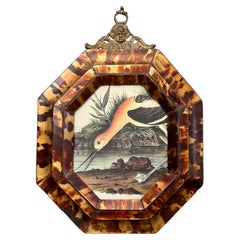
Octagonal Tortoiseshell Picture Frame

Octagonal Tortoiseshell Picture Frame

Located in New York, NY

Octagonal tortoiseshell picture frame. Antique octagonal frame in beautiful condition smoothly applied with antique Sicilian tortoiseshell and original brass hook; for favourite phot...

Category

Early 19th Century Italian Antique Bone Furniture

Materials

Metal

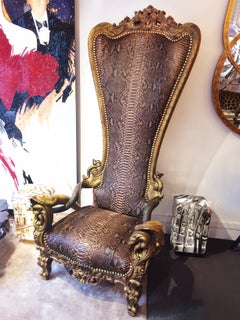
Python Throne
Python Throne

Python Throne

$65,698Sale Price|20% Off

Python Throne

Located in Paris, FR

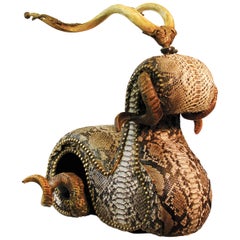
Throne python with structure in solid beech wood, covered with real python skin. Back with real python tail skin and genuine leather. With two real Aries horns, two real zebu horn...

Category

21st Century and Contemporary French Bone Furniture

Materials

Bronze

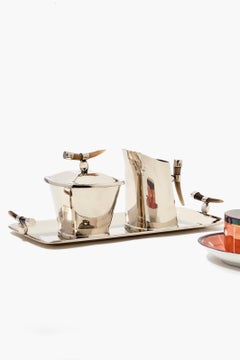
Cerro Set of Rectangular Small & Large Trays, Alpaca Silver

Cerro Set of Rectangular Small & Large Trays, Alpaca Silver

By AIREDELSUR

Located in Buenos Aires, AR

5,3 x 8,3 " // 13.5 x 21.6 cm 5,3 x 12" // 13.5 x 31 cm Not everything is organic in northern Argentinean hills. As we cast our eyes on the landscapes, we also find geometry tha...

Category

2010s Argentine Organic Modern Bone Furniture

Materials

Metal

Modern Handmade White Bone and Brass Keepsake Box from Spain

Modern Handmade White Bone and Brass Keepsake Box from Spain

Located in New York, NY

Handmade decorative keepsake, desk box clad in white bone and brass inlay pinstripes.

Category

21st Century and Contemporary Spanish Modern Bone Furniture

Materials

Brass

Deer Antler 8-Point Mount from Southern France c1960's

Deer Antler 8-Point Mount from Southern France c1960's

Located in Highwood, IL

Antler 8-Point Mount from the Southwest region of France presumably from the 1960's. What is particularly nice is the size while not being so large that the Antlers overwhelm the wal...

Category

1960s French Country Vintage Bone Furniture

Materials

Antler

Rare Antique Gothic Windlass Crossbow, 15th–16th Century, Germany

Rare Antique Gothic Windlass Crossbow, 15th–16th Century, Germany

Located in Doha, QA

This remarkable windlass crossbow, dating from the late 15th to early 16th century, is a striking example of early European military craftsmanship, originating from Germany. Measurin...

Category

15th Century and Earlier German Gothic Antique Bone Furniture

Materials

Iron

Bareek Fine Detailing Bone Inlay Antique End Table by House of Jaipur

Bareek Fine Detailing Bone Inlay Antique End Table by House of Jaipur

Located in New York, NY

Bareek — meaning fine, delicate, intricate in Urdu — is a word that describes not just a technique but an entire philosophy of making. In the Bareek approach to bone inlay, the fragm...

Category

2010s Indian Arts and Crafts Bone Furniture

Materials

Bone, Wood

Georgian Tortoiseshell Tea Caddy

Georgian Tortoiseshell Tea Caddy

$7,063Sale Price|20% Off

Georgian Tortoiseshell Tea Caddy

Located in Northampton, GB

Oval Tea Caddy with Silver Mounts From our Tea Caddy collection, we are delighted to offer this Georgian Silver and Tortoiseshell Tea Caddy. The Tea Caddy is of oval shape with a Tortoiseshell exterior mounted with engraved silver stringing, a silver shield plaque below the silver escutcheon and a silver looped handle. The interior features a floating tea shelf...

Category

Early 1800s English George III Antique Bone Furniture

Materials

Silver

Vintage African Cape Buffalo Skull European Mount on Wooden Plaque Taxidermy

Vintage African Cape Buffalo Skull European Mount on Wooden Plaque Taxidermy

Located in Philadelphia, PA

Vintage African Cape Buffalo Skull European Mount on Wooden Plaque Taxidermy. Circa Late 20th Century. Measurements (Overall): 27" H x 36" W x 13" D. Each antler approx. 19" Long. No...

Category

Late 20th Century Unknown Rustic Bone Furniture

Materials

Horn

19th Century English Blonde Tortoiseshell Tea Caddy

19th Century English Blonde Tortoiseshell Tea Caddy

Located in Atlanta, GA

19th Century English Blonde Tortoiseshell Tea Caddy

Category

19th Century English Antique Bone Furniture

Materials

Tortoise Shell

Antique Decorative Middle Eastern Islamic Box 1940s

Antique Decorative Middle Eastern Islamic Box 1940s

Located in Moreno Valley, CA

Antique 1940s Mosaic Shell Inlaid Decorative Middle Eastern Islamic Box. Mosaic Luxury Decorative Middle Eastern Islamic Vanity Box. Middle Eastern Asian Mosaic Wood Box with Inlays ...

Category

Mid-20th Century Lebanese Moorish Bone Furniture

Materials

Bone, Shell, Abalone, Fruitwood

English Regency Pagoda Form Tea Caddy

English Regency Pagoda Form Tea Caddy

Located in Lyndhurst, NJ

Unusual pagoda form caddy finely figured veneers. Interior lids are original and match the exterior of the caddy, resting on brass ball feet

Category

Early 19th Century English Regency Antique Bone Furniture

Materials

Tortoise Shell

Ebony Cabinet
Ebony Cabinet

Ebony Cabinet

$29,630 / item

Ebony Cabinet

By Arcahorn Srl.

Located in Milan, IT

The lavish, glossy ebony veneer characterizing this 4-door, horizontal cabinet bestows it a luxurious allure. Its structure comprises a central compartment with a suggestive LED ligh...

Category

2010s Italian Bone Furniture

Materials

Brass, Gold

Arcana Horn and Brass Sunburst Sideboard by House of Jaipur

Arcana Horn and Brass Sunburst Sideboard by House of Jaipur

By Sasmita Rout

Located in New York, NY

A bold interplay of natural horn and warm brushed brass defines this sculptural Arcana Credenza, conceived as both functional storage and a statement piece for contemporary interiors...

Category

2010s Indian Modern Bone Furniture

Materials

Brass

Chinese Qing Four Panel Carved Soapstone Coromandel Screen

Chinese Qing Four Panel Carved Soapstone Coromandel Screen

Located in Rio Vista, CA

Impressive Chinese late Qing dynasty four panel folding coromandel screen featuring carved soapstone. The lacquered panels are decorated with idyllic scenes of beauties in a pagoda p...

Category

20th Century Chinese Chinese Export Bone Furniture

Materials

Soapstone, Brass

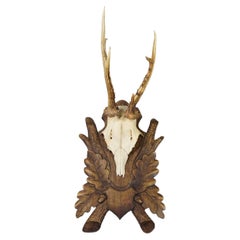
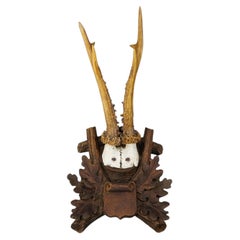
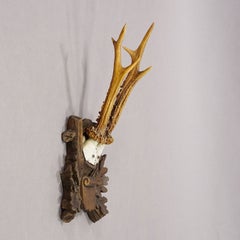
Vintage European Roe Deer Antlers on Hand-Carved Black Forest Plaque, circa 1930

Vintage European Roe Deer Antlers on Hand-Carved Black Forest Plaque, circa 1930

Located in Praha, CZ

A striking example of traditional European hunting decor, this vintage roe deer trophy features natural antlers mounted on a finely hand-carved Black Forest wooden plaque. The dark-s...

Category

1930s Czech Art Deco Vintage Bone Furniture

Materials

Bone

Coffee Set Vintage Tuscan England Bone China Pale Pink Enamel Gold Plate 1960s

Coffee Set Vintage Tuscan England Bone China Pale Pink Enamel Gold Plate 1960s

Located in Bastogne, BE

Elegant six-piece coffee set, crafted from pristine English bone china. Each piece showcases the delicate beauty of a pale pink enamel overlay, exquisitely accented with 24-karat go...

Category

1960s British Vintage Bone Furniture

Materials

Bone

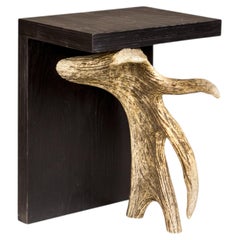
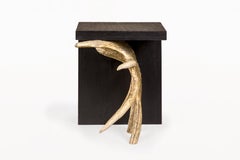
Stag T Side Table by Rick Owen, Circa 2000, France

Stag T Side Table by Rick Owen, Circa 2000, France

By Rick Owens

Located in Girona, Spain

DESCRIPTION: Stag T Side Table by Rick Owen, Circa 2000, France. This object is the Stag T Stool (also referred to as a side table), designed by the avant-garde fashion designer and...

Category

Early 2000s French Brutalist Bone Furniture

Materials

Antler, Wood

Vintage Marwari Horse Carved Wood Inlaid with Bone and Copper 26cm

Vintage Marwari Horse Carved Wood Inlaid with Bone and Copper 26cm

Located in Poperinge, BE

Vintage Marwari horse statue, sculpture of carved wood covered with copper and inlaid with pieces of bone, originating from India, circa mid 20th century. This beautiful statue is h...

Category

Mid-20th Century Indian Bone Furniture

Materials

Brass

Pair of Mounted Drinking Horns Drinking Glass on Stand Early 20th Century Silver

Pair of Mounted Drinking Horns Drinking Glass on Stand Early 20th Century Silver

Located in Wembley, GB

Pair of Early 20th-Century Nickel-Silver-Mounted Drinking Horns on Stands An exceptional and highly decorative pair of early 20th-century nickel silver mounted drinking horns, raised on elegant pedestal stands and crafted in the grand tradition of European ceremonial tableware. Each natural horn is beautifully curved and richly toned, displaying warm ivory, honey, and charcoal striations that highlight the organic character of the material. The rims are mounted with polished nickel silver collars, while the midsections feature finely worked metal mounts with engraved foliate detailing, adding refinement and historic gravitas. The horns are supported by sculptural nickel silver stems and circular stepped bases, creating a striking silhouette with impressive vertical presence. Drinking horns of this scale and quality were traditionally associated with Nordic, Germanic, and Continental European ceremonial traditions, often used in festive banquets, aristocratic gatherings, and historical revival interiors. By the early 20th century, such pieces became highly sought-after decorative objects, reflecting the Romantic fascination with medieval and Viking revival...

Category

1890s Georgian Hollywood Regency Antique Bone Furniture

Materials

Gold Plate, Silver Leaf, Brass, Sterling Silver, Silver Plate, Silver

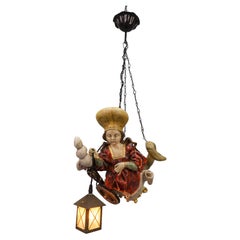
Antique Black Forest Carved Wood Lustermannchen Chandelier, Germany, ca. 1890

Antique Black Forest Carved Wood Lustermannchen Chandelier, Germany, ca. 1890

Located in Barntrup, DE

A rare Black Forest Lustermannchen chandelier combining expressive carved wood sculpture, natural horn elements, and a hanging lantern in a uniquely theatrical late 19th-century desi...

Category

Late 19th Century German Black Forest Antique Bone Furniture

Materials

Metal