By Pierre Jeanneret
Located in Los Angeles, CA
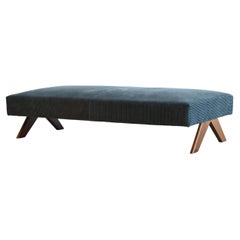
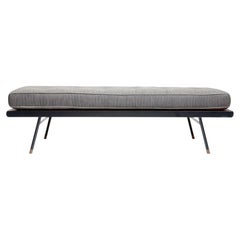
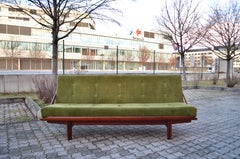
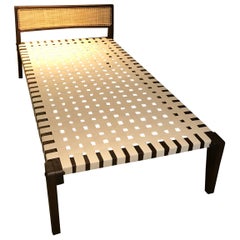
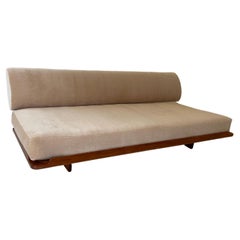
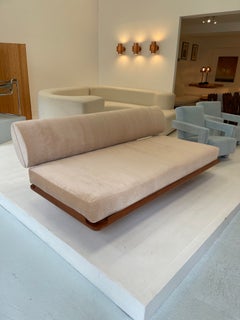
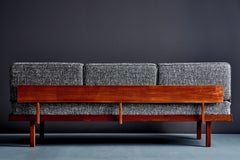
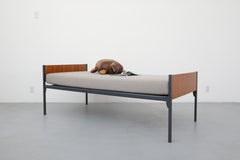
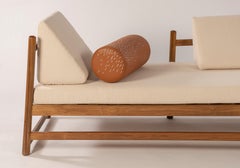
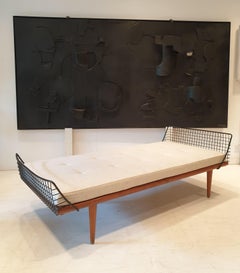
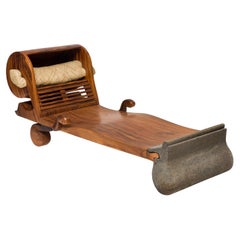
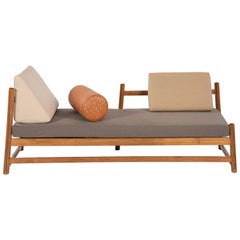
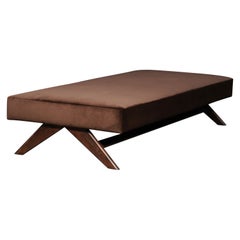
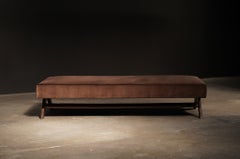
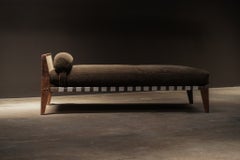
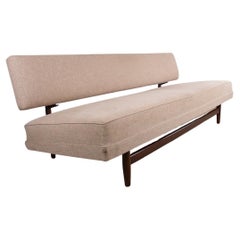
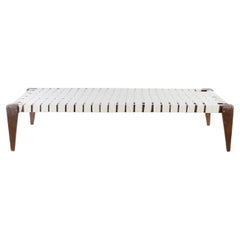
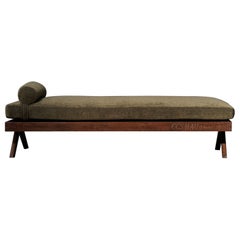
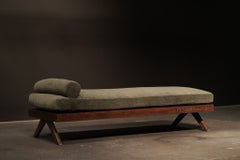
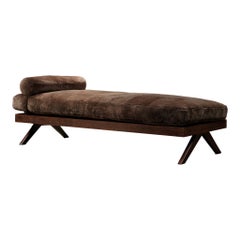
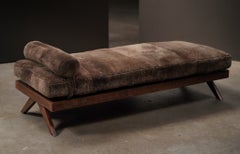
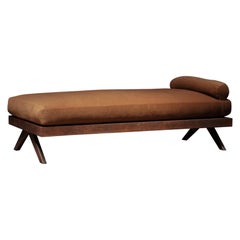
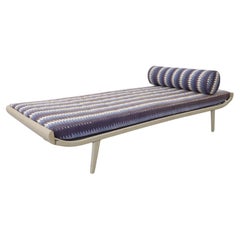
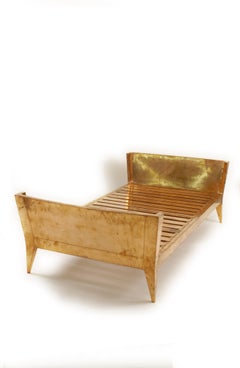
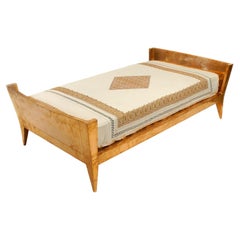
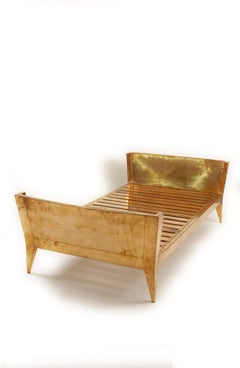
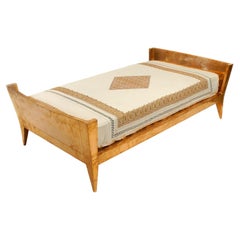
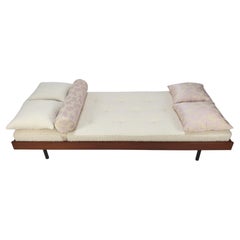
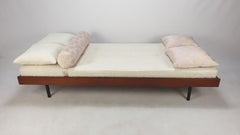
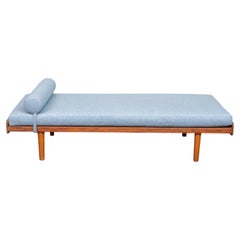
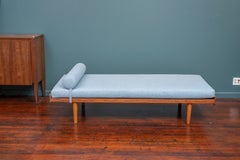
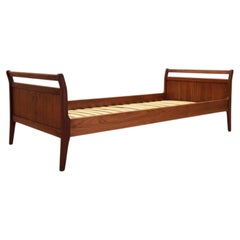
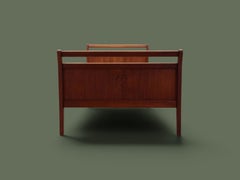
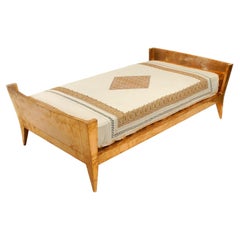
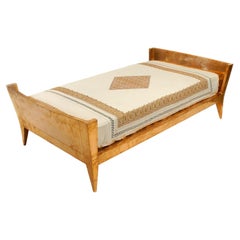
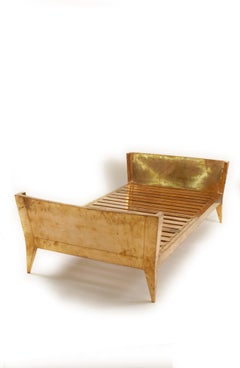
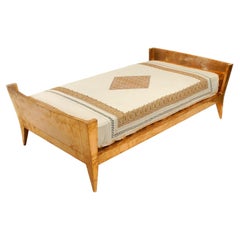
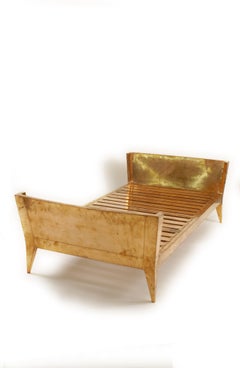
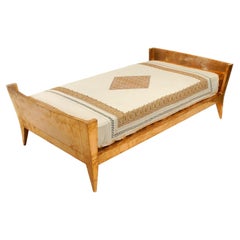
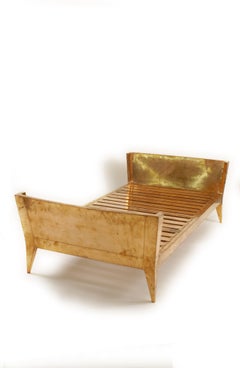
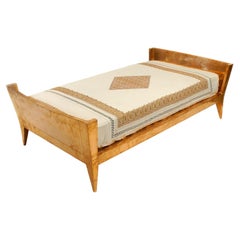
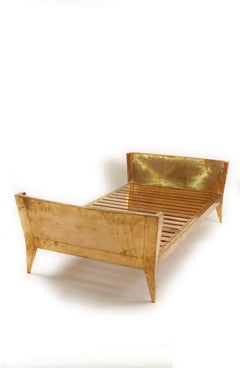
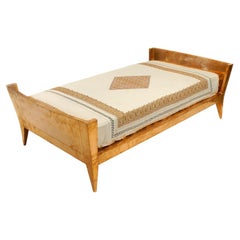
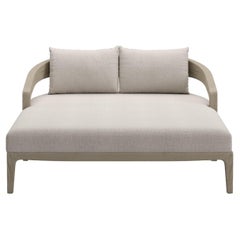
Upholstered teak daybed by Pierre Jeanneret from the Chandigarh furniture program, circa 1957–1958. A long, low platform and cylindrical bolster are presented in contemporary brown alpaca, whose soft surface contrasts with the angular timber base.
Jeanneret’s furniture formed part of the larger architectural project of Chandigarh, the new city developed in post-independence India. Alongside desks, chairs and storage furniture, his daybeds addressed the quieter activities of rest and informal seating. Their generous horizontal surfaces were supported by a practical timber framework made with local craftsmen. The design gives an everyday furnishing the clarity of a small architectural structure, with its proportions, visible joints and open spaces establishing a close relationship between useful construction and sculptural form.
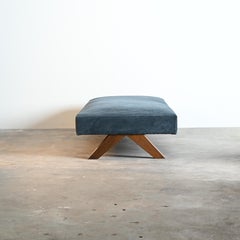
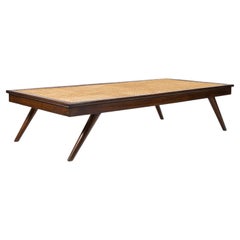
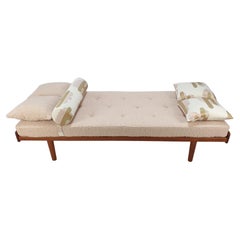
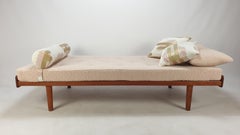
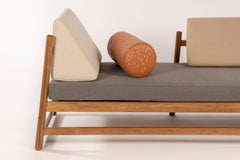
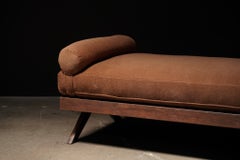
The rectangular upholstered plane rests above a narrow exposed seat rail. At either end, inclined teak members spread outward toward the floor, giving the base its characteristic compass profile. A low longitudinal stretcher links the supports and keeps the understructure visually open. The bolster introduces a rounded element within this otherwise rectilinear composition.
The generous length is balanced by a relatively narrow depth, preserving the daybed’s elongated proportions. Seen from the side, the continuous cushioned surface appears to float above the darker woodwork, while the end supports provide a strong visual anchor. Grain, worn edges and variations in the brown teak distinguish the vintage structure from the current covering.
Faint painted inventory lettering survives toward one end of the long teak side rail, including “CCS HAU” and “B. HOSTEL”. Studio Balestra associates these markings with the boys’ hostel furniture at Chaudhary Charan Singh Haryana Agricultural University in Hisar, Haryana. The university adopted the Chaudhary Charan Singh name in 1991, so the inscription records a later chapter of institutional use of the earlier daybed design. The worn lettering remains on this frame beneath the contemporary alpaca pad, giving its patinated timber a particular history alongside the daybed’s clear structural geometry.
The vintage teak retains variations in grain, color and surface wear, with softened edges and individual traces of use visible in the photographs. These details give the woodwork its material character and preserve the sense of a furnishing made for daily life in institutional or residential interiors. The present upholstery is a later treatment of the vintage structure.
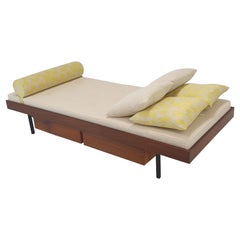
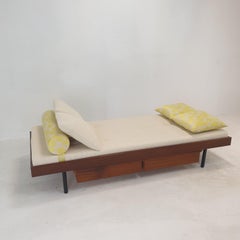
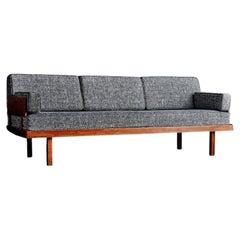
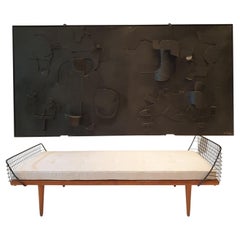
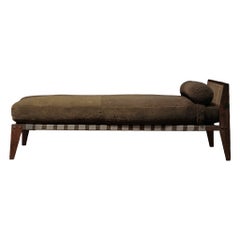
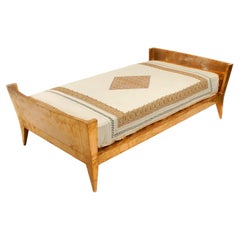
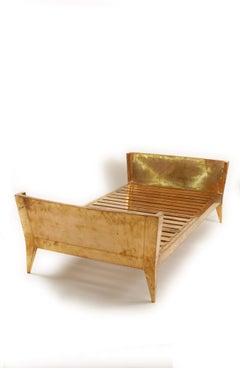
A related Chandigarh daybed...
Category
1950s Indian Mid-Century Modern Vintage Teak Daybeds