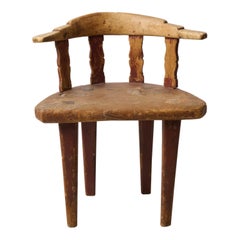
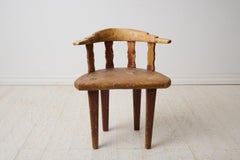
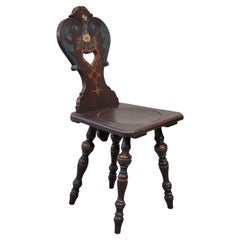
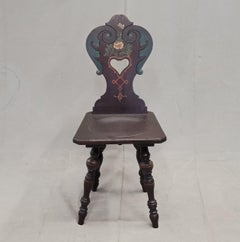
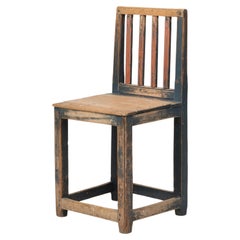
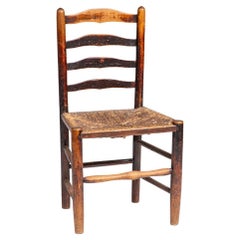
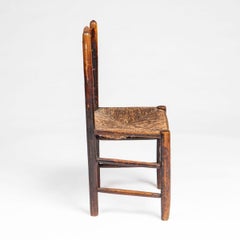
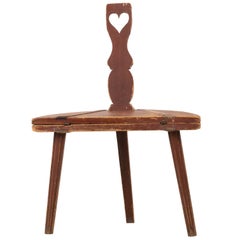
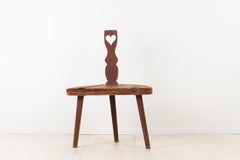
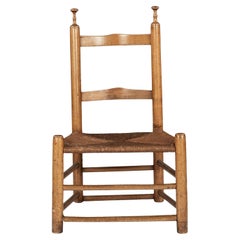
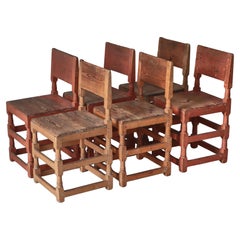
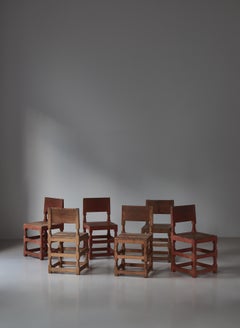
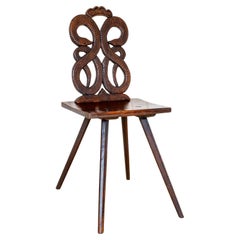
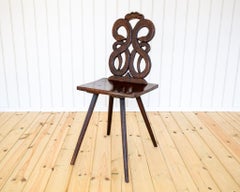
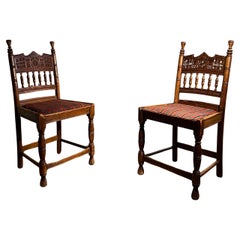
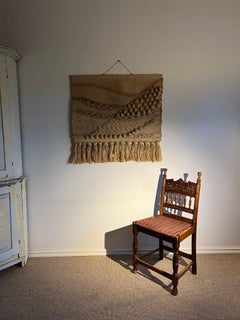
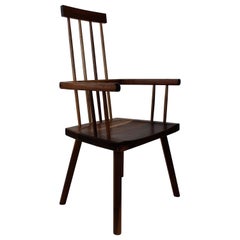
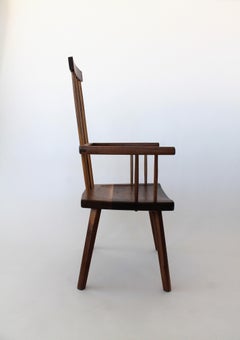
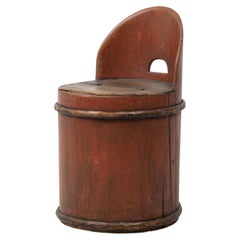
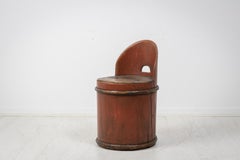
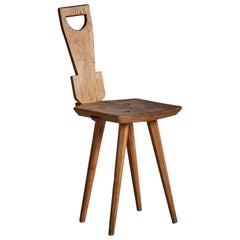
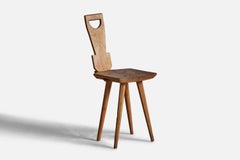
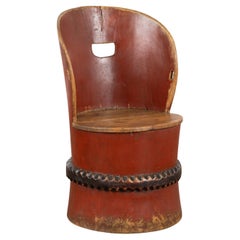
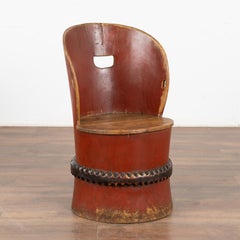
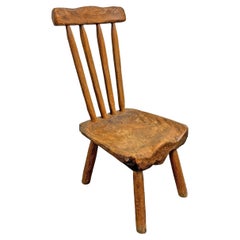
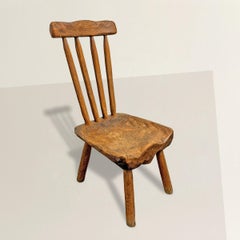
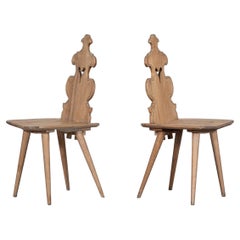
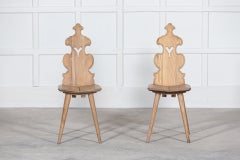
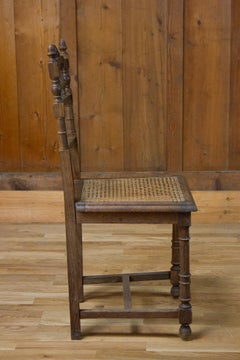
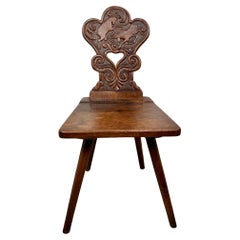
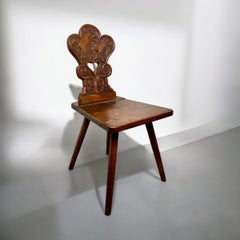
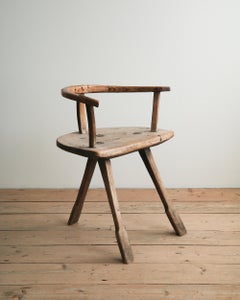
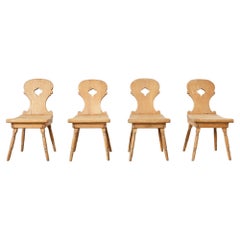
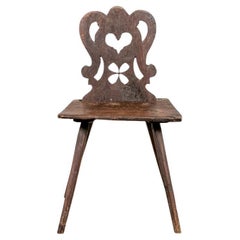
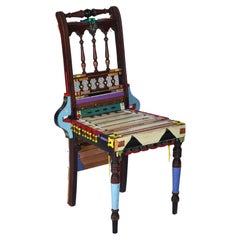
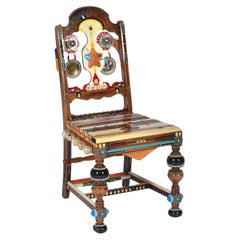
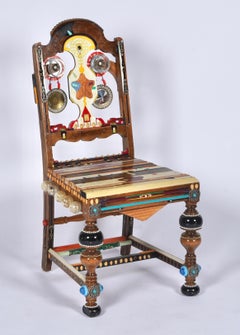
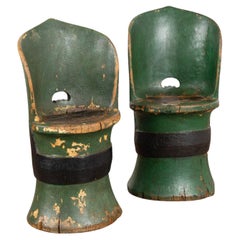
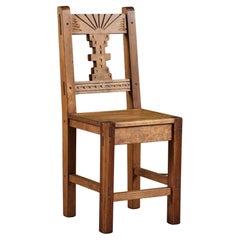
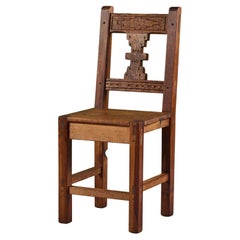
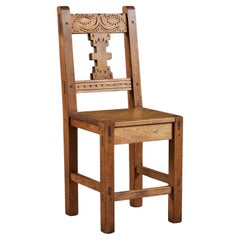
A special, remarkably decorative, extremely rare and wonderfully striking antique European folk-art carved chair in lovely antique condition. Most likely made around 1770 in the Swiss Alps, this fabulous museum-quality historical artefact is a stunningly carved and still very usable chair, which will add a fabulously rustic, Alpine folk-art aesthetic as well as cultural interest, artistic charm and historic fascination to any interior.
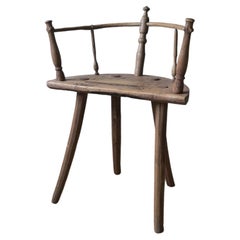
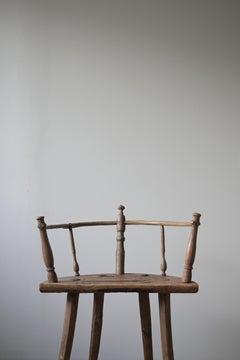
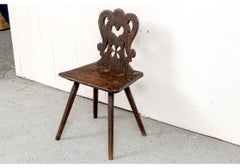
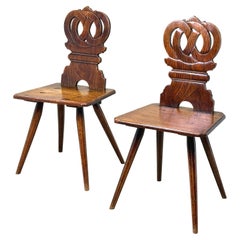
An incredibly rare and special chair, this was traditionally handcrafted from quality solid wood and has a charming walnut single-piece trapezoid seat displaying lovely grain, which the eight-sided legs slot into at an angle, and the back vertically. The legs are likely made from oak with the show-stopping back carved from fruitwood.
A truly captivating chair, the standout feature is its extraordinary pierce-relief carved back, which casts a stunning silhouette, and its carving depicts two intertwining figure-of-eight snakes set on a shapely plinth, topped by a carved and 1471 dated crown design. Crafted in two parts, the folk-art back carving is wonderfully detailed and vernacular in style, and the pierce-relief carving denotes it as being particularly old and rare and differentiates it from later Alpine chairs, which feature solid backs onto which decorations are carved.
HISTORICAL SIGNIFICANCE
The Middle Ages were particularly turbulent in the Swiss Alps, as post-Roman feudal factions competed for power for more than a millennium in this important land, which intersected the larger powers of Italy, France, Germany and Austria. We believe this chair was most likely made in 1771 and that its 1471 date carving commemorated three-hundred years of the Three Leagues Alliance, (1471-1779), a coalition of three political leagues of free peoples which was created to bring about strength, unity and peace to the people in the warring Swiss Alps region (think William Tell, the revolutionary Swiss folk hero, who stood up for the peasantry against tithe-taking feudal barons in the Swiss Alps, and who was first referenced in 1474.) The free people of the Swiss Alps would have well known that peace for them and their entire region was not only brought about by, but also largely depended on, the Three Leagues Alliance, and so commemorating its inauguration date of 1471 is more than fitting for a craftsman from this region. And as snakes symbolise healing and protection, their use in conjunction with the 1471 commemorative date perfectly displays what the Swiss Alp craftsman was memorializing when creating this fascinating chair.
Similar chairs can be referred to as Swiss, German, Alpine, Alsatian, Tyrolean, Sgabello or Escabelle chairs...
Category
Mid-18th Century Swiss Antique Folk Art Side Chairs
MaterialsFruitwood, Walnut, Oak