Want more images or videos?
Request additional images or videos from the seller.

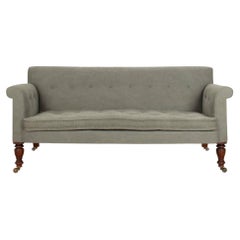
Duchal House Knole Settee

$20,213.63
£18,000VAT Included
€17,779.77
CA$28,597.33
A$28,819.08
CHF 16,761.38
MX$358,513.23
NOK 192,602.69
SEK 200,717.10
DKK 132,907.17

About the Item

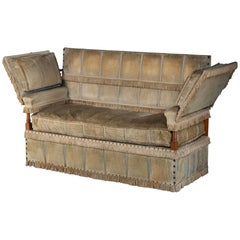
The Duchal House Knole Settee, retaining its original frame, castors and early 17th century Italian floral silk embroidered panels. This model of settee with single section side wings hinged from the seat originated in the late 19th century, inspired by the original couch at Knole. Its early aesthetic, comfort and draught exclusion from the high backs and wings made it a popular statement piece in Great Halls, bedrooms and galleries in large country houses. The rectangular, upholstered back and sides are surmounted with the original turned finials. The upper sections of the inside back and sides are upholstered in fine and rare, early-17th century, Italian floral silk hand-embroidered panels. The panels are finely stitched and, unusually, retain their original blue and green colouring. They have been cleaned, conserved and stabilised by Janie Lightfoot, a leading textile conservation workshop, and are in robust condition. The panels depict flowers that were fashionable in the 17th century such as peonies and tulips in garlands with classical acanthus leaves. The back, seat, outside back, sides and front have been re-upholstered in a modern mink, silk velvet by a specialist, French upholsterer as the original was threadbare. The silk velvet is a beautiful, mink colour that blends with most decorative schemes. Velvet is impossible to photograph accurately. It is a beige, earthy, ochre colour and the nearest pantone is 15-1217 PG Mojave Desert. The French silk trimmings are of the highest quality, harmonising the colours in the needlework panels and the velvet. The needlework panels are faced with a ruche, the sides and finials with braid, the front and sides with a shaped, tassel fringe and the sides are secured with tiebacks. The settee stands on its original castors. The French silk passmenterie, comprising ruche, braids, tassel fringe and tie backs blends the colours in the velvet and the needlework. The settee is versatile as the wings can be adjusted so they are open or closed. The settee is extremely comfortable. It is sturdy and suitable for everyday use. The velvet has 100 years of life in it and the needlework panels have also been conserved and stabilised. This settee has been in the same house since it was made and survives in incredible original condition. Settees of this type derive their name from the celebrated, original at Knole in Kent, the ancestral seat of the Sackvilles, which is thought to date from the first quarter of the 17th century. It combines the dual function of day-bed and settee, and is one of the earliest examples of English seat furniture incorporating fully upholstered seat, back and sides. During the late 16th to early 17th century a new form of day-bed was introduced to match the contemporary upholstered ‘X’ chairs and stools. They were padded and upholstered throughout and the ends were let down on a toothed steel ratchet to enable the occupant to repose at full length. They were generally destroyed when the coverings had worn out as the woodwork was of little value. Similar couches were plentiful in France under Louis XIII and can be seen in Abraham Bosse’s engravings of domestic interiors but they were only found at Court and in the houses of great noblemen in this country. When the contents of the Royal Palaces were dispersed after Charles I’s execution a number of couches were included in the sale. Lionel Cranfield, who became the 1st Earl of Middlesex, Lord Treasurer and Master of the Great Wardrobe to James I, amassed an outstanding collection of furniture and paintings which was inherited by his daughter Francis who was married to Richard Sackville, 5th Earl of Dorset in 1637 and subsequently her son Charles Sackville. Through his appointment as Lord Chamberlain to William III and Queen Mary, Sackville acquired beds, tapestries, chairs and stools from Whitehall, Hampton Court and Kensington Palace bringing the contents to Knole. As a perquisite or ‘perk’ of the role of Lord Chamberlain, Sackville was able to take any furniture which was deemed out of date or unsuitable from the royal palaces. Duchal House, Renfrewshire, is considered to be one of the loveliest Georgian mansions and estates in Scotland. Until recently, it was the home of the Maclay family for over 100 years. The settee was probably acquired by the shipping magnate Sir Joseph Maclay who played a key role in the outcome of the First World War after Lloyd George made him head of a new Ministry of Shipping. Made a baronet for his service to public life in Glasgow, he was nicknamed 'Holy Joe' as he made sure there was a Bible in every seaman's cabin. "He was always delighted when orders for more Bibles came through; little did he realise the seamen were using the rice-paper pages to roll cigarettes." Lloyd George visited the house and one of the bedrooms is named after him.
  • Dimensions:
    Height: 36.81 in (93.5 cm)Width: 68.9 in (175.01 cm)Depth: 34.65 in (88.02 cm)Seat Height: 18 in (45.72 cm)
  • Materials and Techniques:
  • Place of Origin:
  • Period:
  • Date of Manufacture:
    1860
  • Condition:
    Wear consistent with age and use. The back, seat, outside back, sides and front have been re-upholstered in a modern mink, silk velvet by a specialist, French upholsterer as the original was threadbare. The silk velvet is a beautiful, mink colour that blends with most decorative sche.
  • Seller Location:
    Mere, GB
  • Reference Number:
    1stDibs: LU11083252153932

More From This Seller

View All
Victorian carved rosewood dressing stool

Victorian carved rosewood dressing stool

Located in Mere, GB

Victorian carved Rosewood Dressing stool crisply carved legs on original castors. English 1840 Height 18" 46cm Width 36" 92cm Depth 23" 59cm All of the items that we advertise...

Category

Antique 1840s British Stools

Materials

Rosewood

Regency Period Penwork Sewing Table

Regency Period Penwork Sewing Table

Located in Mere, GB

A fine quality Regency period penwork sewing table with outstanding detail and design

Category

Antique 1820s British Game Tables

Materials

Pine

Late 16th century oak carved coffer

Late 16th century oak carved coffer

Located in Mere, GB

A fine late 16th century oak carved fluted coffer with very rare twin candle boxes and six plank construction c1575 Height 19" 49cm Width 41" 104cm Depth 13" 33cm All of...

Category

Antique 16th Century British Blanket Chests

Materials

Oak

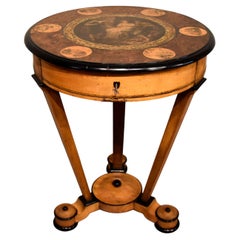
Rare Biedermeier dressing centre table

Rare Biedermeier dressing centre table

Located in Mere, GB

Extremely rare Biedermeier dressing centre table with decorated top in the Roman manner on tripod legs (some losses to the decoration. Satin Birch and ebony North Italian /Austrian. ...

Category

Antique 1830s Center Tables

Materials

Satin Birch

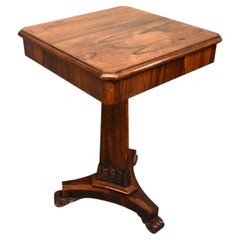
William IV Rosewood square top table

William IV Rosewood square top table

Located in Mere, GB

William IV Rosewood square top table with a carved tri-form base and a concealed drawer. English All of the items that we advertise for sale have been as accurately described as pos...

Category

Antique 1830s British Center Tables

Materials

Rosewood

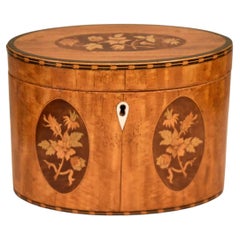
Late 18th century satinwood oval tea caddy

Late 18th century satinwood oval tea caddy

Located in Mere, GB

A very fine quality late 18th century satinwood tea caddy beautifully decorated. English 1790

Category

Antique 1790s Tea Caddies

Materials

Satinwood

You May Also Like

Settee Sofa Couch Knole Velvet Strie Olive 3-seater H44" Adjustable L67-101"

Settee Sofa Couch Knole Velvet Strie Olive 3-seater H44" Adjustable L67-101"

Located in BUNGAY, SUFFOLK

- This is an early 20th century interpretation of the infamous, sumptuously, upholstered, 17th century, couch with hinged arm rests, found at Knole Park, Sevenoaks, Kent, the ancestral seat of the Sackvilles made by the most eminent upholsterer of the early 20th century. - The original couch served the Dual purpose of bed and settee, and is one of the earliest examples of English, upholstered, seat furniture. In the late-19th century this model of settee was revived, particularly for Great Halls, bedrooms and galleries in large country houses for its early aesthetic, comfort and draught exclusion from the high backs. - These settees are extremely comfortable as well as injecting period atmosphere into the interior. They sit equally well within contemporary and historical interiors and jutapose with contemporary and modern pieces and art. - This is a particularly fine example, with a Grade II* listed Jacobean manor house provenance and almost certainly made by Morant & Co. It retains the original iron ratchets so the wings can be lowered to different heights. The inside and outside back, wings, seat and cushion are upholstered in a strie velvet and trimmed in the traditional manner with matching braid and fringe and studs. The strie velvet probably dates from the 1950's, as there is significant fading from the original pale green/aqua to a pale olive/old white. The adjustable padded wings are joined to the arms with original ratched iron hinges which are attached to the back. The arms are supported by oak turned uprights. The seat has a large loose cushion. Standing on original castors. English, circa 1900. During the late 16th-early 17th century a new form of daybed was introduced to match the contemporary upholstered 'X' chairs and stools. They were padded and upholstered throughout and the ends were let down on a toothed steel ratchet to enable the occupant to repose at full length. They were generally destroyed when the coverings had worn out at the woodwork was of little value. Similar couches were plentiful in France under Louis XIII and can be seen in Abraham Bosse's engravings of domestic interiors but they were only found at court and the houses of great noblemen in this country. When the contents of the Royal Palaces were dispersed after Charles I's execution a number of couches were included in the sale. PROVENANCE : Barrow Court, a Grade II* listed Jacobean manor house with origins dating back to the 13th century. MORANT & CO Upholsterers, Decorators. 91 New Bond St., London. With Royal Coat of Arms, dated 1825, 1831, 1837 and 1890, founded 1790. The dictionary of English furniture makers 1660-1840, published by the Furniture History Society informs that Morant Snr. was a maker of carved and gilded frames from early in the reign of George IVth, and his trade card describes the company as 'Ornamental Painter and Paper Hanging Manufacturer to their Royal Highnesses'. Work was executed for Sir Thomas Lawrence, Sir Robert Peel...

Category

Antique Early 1900s English Baroque Revival Settees
Materials

Velvet

Country House Sofa, England 1860

Country House Sofa, England 1860

Located in Culver City, CA

Country House Sofa England, 1860 Upholstered in scrim with sprung seat and squab cushion. Newly upholstered in graphic linen by McLaurin & Piercy. 73"L x 30"d x 36"h x 18"seat Re...

Category

Antique 1860s English Sofas

Materials

Linen

19th Century Country House Sofa By Morison & Co - Edinburgh

19th Century Country House Sofa By Morison & Co - Edinburgh

Located in Batley, GB

A 19th century country house sofa by renowned cabinet makers and upholsterers Morison & Co of Edinburgh Scotland Structurally in good solid order with tight joints. The upholstery ...

Category

Antique 19th Century Scottish Sofas

Materials

Mahogany

Mulberry Sofa, West Haddon Hall Collection

Mulberry Sofa, West Haddon Hall Collection

Located in Los Angeles, CA

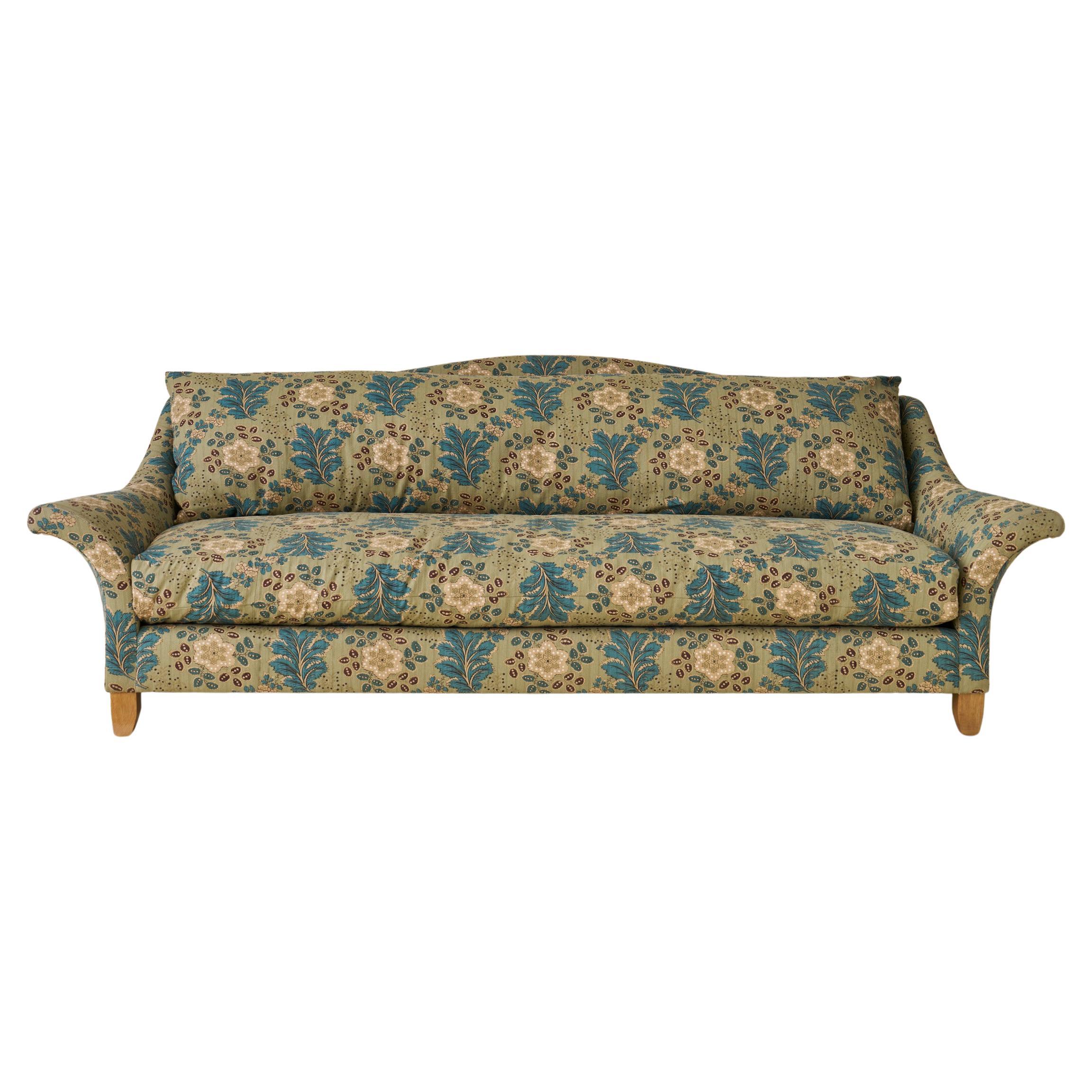
This classic camelback sofa with a dramatic, swept-out, flared arm and a flared solid oak leg. The solitary seat and back cushion create a seamless and clean look. The piece is const...

Category

2010s American Sofas

Materials

Linen, Foam, Oak, Upholstery

19th Century English Regency Settee / Sofa

19th Century English Regency Settee / Sofa

Located in Allerum, SE

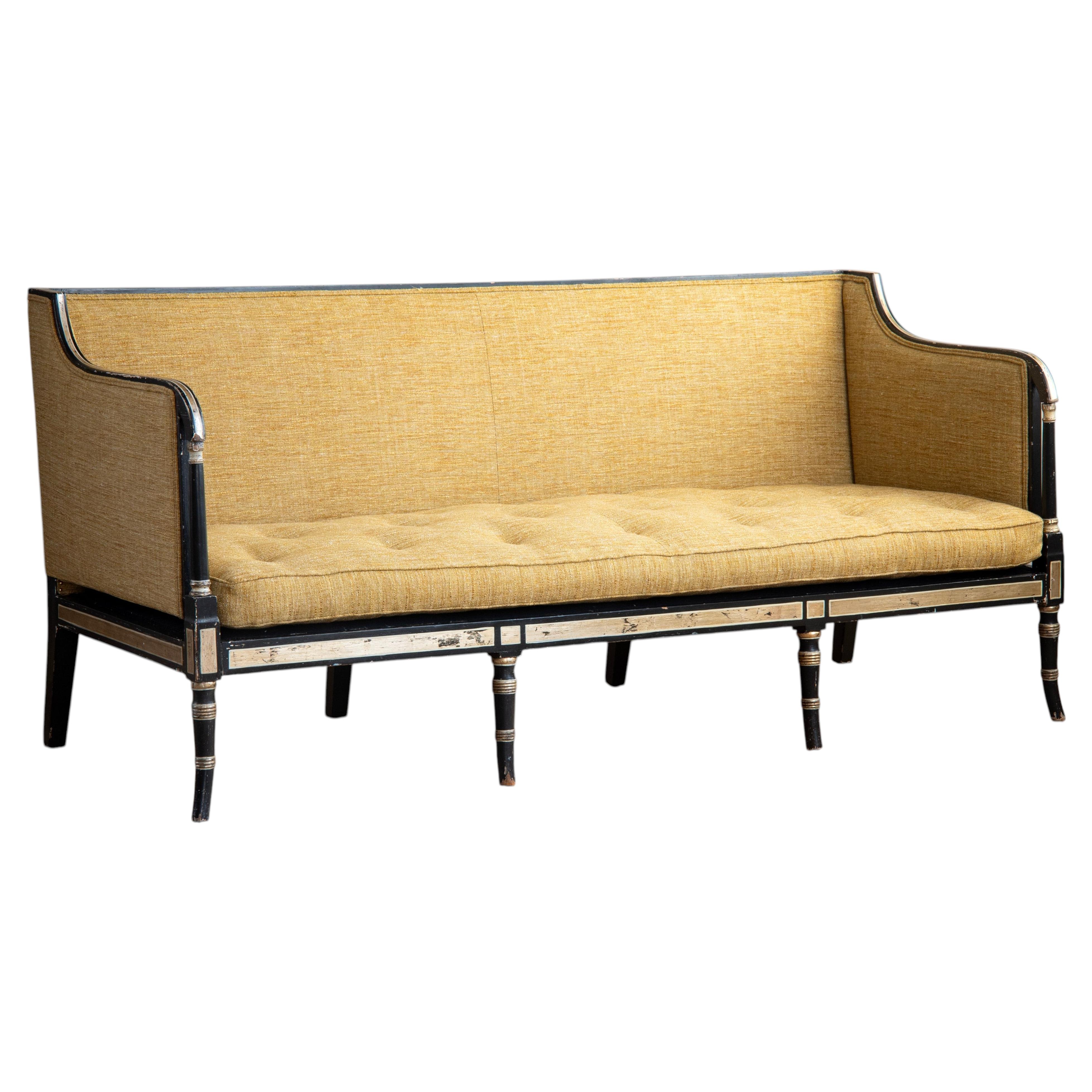
An early 19th-century English Regency settee in the neoclassical taste, circa 1810. The frame is constructed with sloping armrests and is supported by turned, tapered front legs. It ...

Category

Antique 1810s English Regency Sofas

Materials

Wood

Early 19th Century Scottish Upholstered Sofa

Early 19th Century Scottish Upholstered Sofa

Located in Gloucestershire, GB

Early 19th Century Scottish upholstered sofa. Circa 1800.

Category

Antique 19th Century Scottish Sofas

Materials

Upholstery, Wood