By Eugenio Quarti
Located in Vigonza, Padua
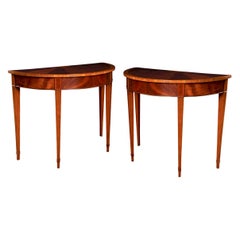
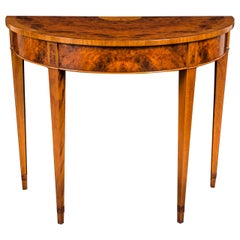
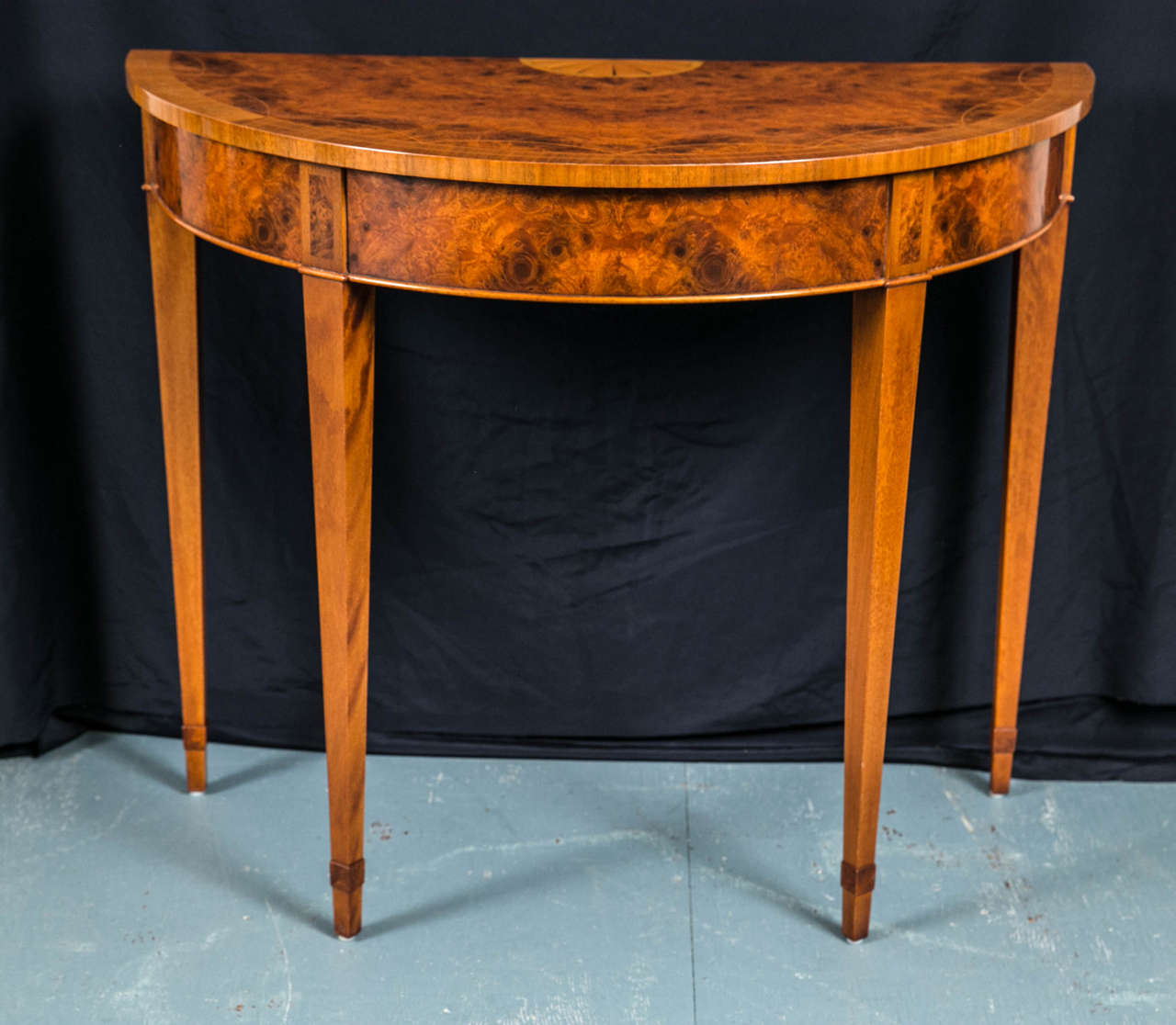
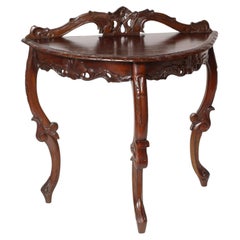
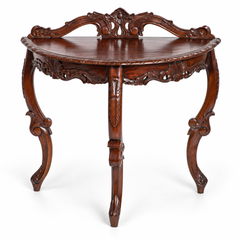
Elegant and highly decorative Venetian demilune console in carved mahogany, attributed to Eugenio Quarti and his workshop and associated with the original furnishings of the historic Hungaria Palace Hotel, Venice Lido, circa 1905–1907.
The console features a finely shaped half-moon top above a richly carved and pierced apron, decorated with scrolling vegetal motifs, acanthus leaves and fluid ornamental details inspired by the Venetian Baroque tradition. The three slender cabriole-style supports are deeply carved and animated by elegant curves, while the pierced rear crest creates a refined and distinctive silhouette.
The design combines historicist Venetian references with the sophisticated decorative language of high-quality Italian cabinetmaking from the early 20th century. Although more neo-Baroque in character than Quarti’s best-known Liberty furniture, the piece is consistent with the eclectic decorative programme developed for prestigious interiors such as the Hungaria Palace Hotel.
The attribution is further supported by the documented involvement of Eugenio Quarti in the furnishing of the Hungaria Palace Hotel and by comparison with an apparently identical demilune console from the same hotel provenance, also attributed to Quarti on the international design market.
The underside bears the handwritten pencil number “312”, likely an early workshop, furnishing or inventory reference associated with the original hotel commission.
A refined and highly decorative piece, suitable today as an entrance console, hall table, salon table or statement piece in both classical and contemporary interiors.
Measures: H 88 cm, W 90 cm, D 42 cm.
Provenance: Hungaria Palace Hotel, Venice Lido, Italy.
A&MYART Collection: since 1984.
Catalog Number: MA B37.
Period: circa 1905–1907.
Country: Italy.
Material: carved mahogany.
Attribution: Eugenio Quarti and workshop.
Style: Venetian Revival, Italian Liberty, Neo-Baroque.
Measures cm: H 88, W 90, D 42
About Eugenio Quarti
Eugenio Quarti, "prince of the cabinetmakers", was born in 1867 in Villa d'Almè, a small village in the province of Bergamo, from a family dedicated to wood crafts.
Eugenio QuartiA 14 years old is sent by his father to Paris where he works as an apprentice in a cabinet-making workshop. At the end of the 80's dell'800 comes back to Italy and settles in Milan where he works, for a short period, with Carlo Bugatti.
In the same year, he will then open his own workshop in via Donizetti.
The first furniture that draws and produces are clearly derived from Bugatti.
From 1894, the year in which he took part in the international exhibition in Antwerp and the international workers' exhibition in Milan, in 1898 Eugenio Quarti developed a personal IDEA of ??modernist furniture, thanks also to the spurs of Vittore Grubicy, finally freeing himself from the stylistic heritage bugattiani and finding new forms so as to define a totally personal style. In the same year he took part in the Turin exhibition presenting modernist furniture in predominantly dark wood decorated with "embedding" of metal, ivory, tortoise and mother of pearl...
Category
Early 1900s Italian Baroque Revival Antique Olive Demi-lune Tables