Needlework Paintings

to
2
3
1
19
2
Height
to
Width
to
2
1
1
1
1
18
2
3
10
5
2
2
3
2
1
20
19
17
17
17
17
17
16
2
1
21
21
21
16
15
1
1
Technique: Needlework
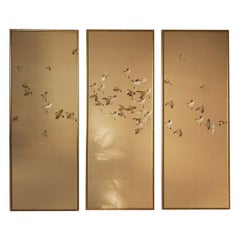
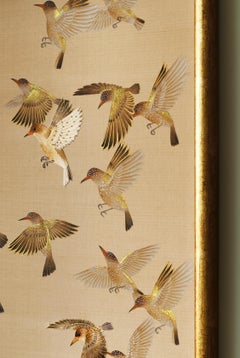
Set of 3 Chinoiserie Paintings, Watercolors and Hand-Embroidery on Silk

Set of 3 Chinoiserie Paintings, Watercolors and Hand-Embroidery on Silk

Located in Eskilstuna, SE

A set of three elegant silk paintings by the Swedish house Ennisance, creator of bespoke luxury wallcoverings. Entitled The Starling in its Winter Coat each piece is handpainted in ...

Category

2010s Chinese Mid-Century Modern Needlework Paintings

Materials

Silk

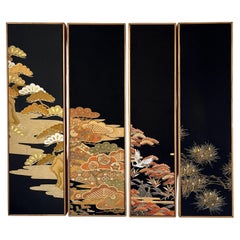
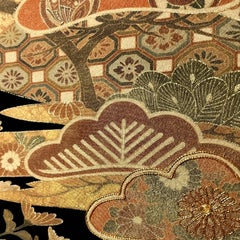
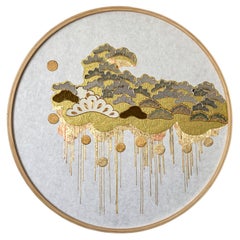
Vintage obi textile art " Pines Through Seasons " by ikasu Black Beige Japan

Vintage obi textile art " Pines Through Seasons " by ikasu Black Beige Japan

By Lena Okamoto, Kimono ikasu

Located in Setagaya City, JP

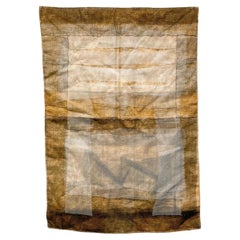
Certified Kimono Meister work / Certificate of Authenticity included. One-of-a-kind Japanese textile art made from vintage kimono fabrics. Sustainable artwork for modern interiors, ...

Category

1950s Japanese Japonisme Vintage Needlework Paintings

Materials

Reclaimed Wood, Yarn, Thread, String, Textile, Fabric, Silk, Wood

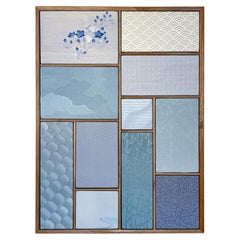
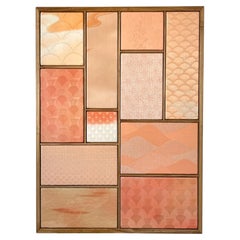
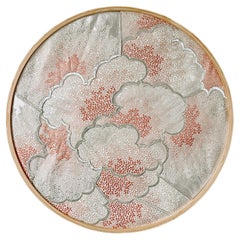
Antique kimono textile art " Kobachi ~Coral Collection~ II" by ikasu Japan

Antique kimono textile art " Kobachi ~Coral Collection~ II" by ikasu Japan

By Lena Okamoto, Kimono ikasu

Located in Setagaya City, JP

Certified Kimono Meister work / Certificate of Authenticity included. One-of-a-kind Japanese textile art made from vintage kimono fabrics. Sustainable artwork for modern interiors, ...

Category

Mid-20th Century Japanese Japonisme Needlework Paintings

Materials

Silk, Wood, Fabric, Textile, String, Thread, Yarn, Reclaimed Wood

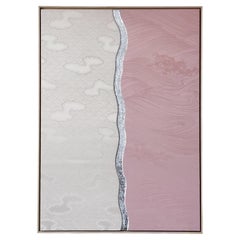
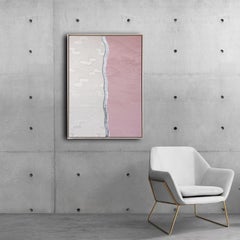
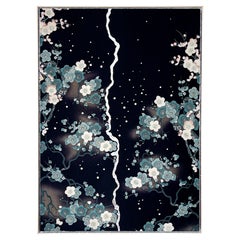
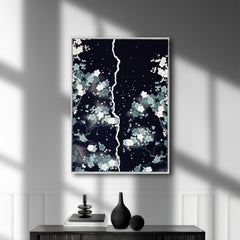
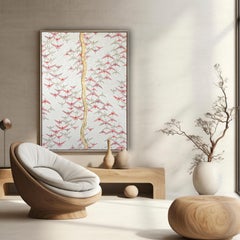
Vintage kimono textile art "Snow in Moonlight ~Kintsugi~" by ikasu Japan

Vintage kimono textile art "Snow in Moonlight ~Kintsugi~" by ikasu Japan

By Lena Okamoto, Kimono ikasu

Located in Setagaya City, JP

Certified Kimono Meister work / Certificate of Authenticity included. One-of-a-kind Japanese textile art made from vintage kimono fabrics. Sustainable artwork for modern interiors, ...

Category

Mid-20th Century Japanese Japonisme Needlework Paintings

Materials

Gold Leaf

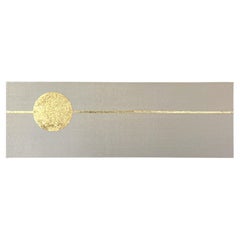
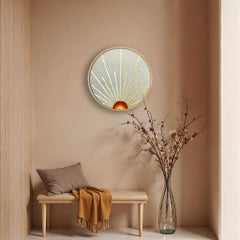
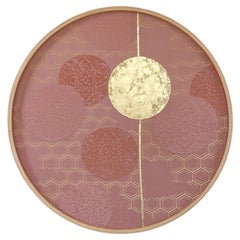
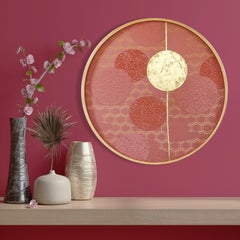
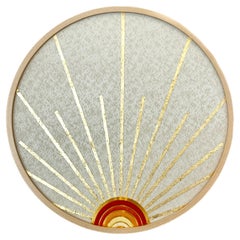
Early 20th Century kimono textile art " Rising Sun ~ Renewal ~ " by ikasu Japan

Early 20th Century kimono textile art " Rising Sun ~ Renewal ~ " by ikasu Japan

By Lena Okamoto, Kimono ikasu

Located in Setagaya City, JP

Certified Kimono Meister work / Certificate of Authenticity included. One-of-a-kind Japanese textile art made from vintage kimono fabrics. Sustainable artwork for modern interiors, ...

Category

1960s Japanese Japonisme Vintage Needlework Paintings

Materials

Gold Leaf

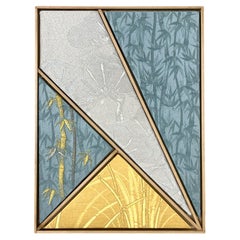
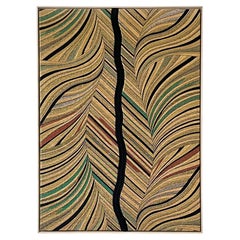
Antique kimono textile art "Geometry ~Kintsugi~" by ikasu Japan

Antique kimono textile art "Geometry ~Kintsugi~" by ikasu Japan

By Lena Okamoto, Kimono ikasu

Located in Setagaya City, JP

Certified Kimono Meister work / Certificate of Authenticity included. One-of-a-kind Japanese textile art made from vintage kimono fabrics. Sustainable artwork for modern interiors, ...

Category

Mid-20th Century Japanese Japonisme Needlework Paintings

Materials

Gold Leaf

Early 20th Century kimono textile art "Sakura ~Ephemerality~" by ikasu Japan

Early 20th Century kimono textile art "Sakura ~Ephemerality~" by ikasu Japan

By Kimono ikasu, Lena Okamoto

Located in Setagaya City, JP

Certified Kimono Meister work / Certificate of Authenticity included. One-of-a-kind Japanese textile art made from vintage kimono fabrics. Sustainable artwork for modern interiors, ...

Category

1950s Japanese Japonisme Vintage Needlework Paintings

Materials

Silk, Wood, Fabric, Textile, String, Thread, Yarn

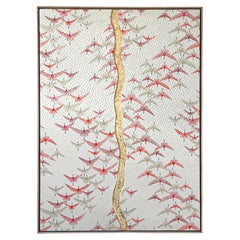
Vintage kimono textile art " Cranes ~ Kintsugi ~ II" White Red Gold Japan

Vintage kimono textile art " Cranes ~ Kintsugi ~ II" White Red Gold Japan

By Kimono ikasu

Located in Setagaya City, JP

Certified Kimono Meister work / Certificate of Authenticity included. One-of-a-kind Japanese textile art made from vintage obi fabrics. Sustainable artwork for modern interiors, collectors, boutique hotels, and lovers of Japanese aesthetics. [Size] 73 x 53 x 5 cm [Materials] Silk for the outside layer, wooden frame for the under layer, and gold leaf [Story behind the work] This is the second version of "Cranes: Kintsugi," created from the same kimono using a different section of the textile. Each artwork is handmade, and no two pieces are identical. The frame for this work is made of paulownia wood taken from antique Kiritansu, which are traditional chests of drawers for kimonos. I use antique kiritansu that can no longer be used as furniture to create the basis and frames for my works. It adds an even more authentic atmosphere of the traditional wabi-sabi spirit. Can you feel it? The piece uses the concept of kintsugi. It unites the pieces of antique kimono back together with golden leaf to give it a second wind as an artwork. [Period and Story] The kimono used in this piece was originally crafted during the late Showa period, around the 1960s to 1980s. [Explanation and meaning of pattern and colors] The Japanese saying goes, "A crane lives a thousand years, a tortoise lives ten thousand years," making cranes a symbol of longevity. Cranes are also known for staying with the same partner for their entire lives, which is why they are often used at weddings and other celebrations to symbolize marital bliss and the desire for harmony between husband and wife. On this particular piece, cranes are flying through snow woven on the fabric, as if they are overcoming all disasters to get to their beloved ones. The color scarlet, or deeply dyed red, used for most of the cranes here, has long been associated with the meaning of warding off evil. It is believed to possess the power to repel malevolent forces and invite good fortune. During the Heian period, from 794 to 1185, scarlet was reserved for sacred buildings and ceremonial objects that held great significance. Ordinary people were prohibited from wearing scarlet red kimonos, which made it a highly special color. [Characteristics of the fabric] Cranes, going up and down, are generously decorated by kimpaku here. Kimpaku refers to gold leaf or foil in Japanese. Gold leaf is a traditional material used in various aspects of Japanese culture, including art, crafts, and even in culinary applications. In traditional Japanese art, gold leaf is often applied to religious objects, sculptures, paintings, and lacquerware to create a luxurious and decorative effect. The use of gold leaf in art dates back centuries and is associated with a sense of wealth, prestige, and the divine. Traditional kimpaku technique is used here to make an accent decoration in the middle. [About the frame] This artwork frame is crafted from paulownia wood, a uniquely Japanese material closely tied to the world of kimonos, and it serves to convey the refined beauty of Japanese nature. Paulownia wood is known as the lightest wood in Japan, praised for its natural luster, resistance to moisture, and resilience against cracking. Since ancient times, it has been used in crafting furniture, chests, and musical instruments. Paulownia wood is closely linked to kimono culture. During the Edo period, it became customary to store cherished kimonos in paulownia chests...

Category

Late 20th Century Japanese Japonisme Needlework Paintings

Materials

Gold Leaf, Silver Leaf
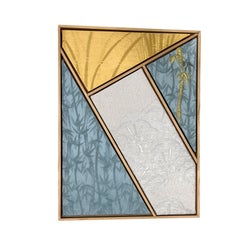
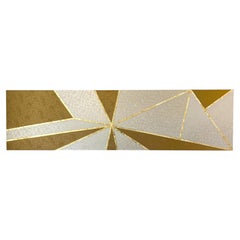
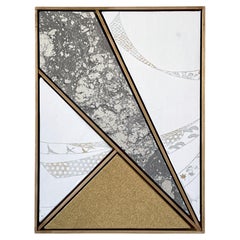
VIntage kimono textile art " Geometry ~ Marble ~" by ikasu Gold White Grey Japan

VIntage kimono textile art " Geometry ~ Marble ~" by ikasu Gold White Grey Japan

By Lena Okamoto, Kimono ikasu

Located in Setagaya City, JP

Certified Kimono Meister work / Certificate of Authenticity included. One-of-a-kind Japanese textile art made from vintage obi fabrics. Sustainable artwork for modern interiors, col...

Category

1960s Japanese Folk Art Vintage Needlework Paintings

Materials

Reclaimed Wood, Wood, Fabric, Textile, String, Thread, Yarn, Silk, Compo...

Vintage kimono textile art " Sunset Timelapse ~ Ephemerality ~" ikasu Red Japan

Vintage kimono textile art " Sunset Timelapse ~ Ephemerality ~" ikasu Red Japan

By Lena Okamoto, Kimono ikasu

Located in Setagaya City, JP

Certified Kimono Meister work / Certificate of Authenticity included. One-of-a-kind Japanese textile art made from vintage obi fabrics. Sustainable artwork for modern interiors, collectors, boutique hotels, and lovers of Japanese aesthetics. [Story behind the work] The art piece uses two sides - front and reverse - of the same kimono, to show beautiful sea surrounding Japan, in hues and in late sunset, as a timelapse. The frame for this work is made of paulownia wood taken from antique Kiritansu - chest-of-drawers for kimono. I use antique kiritansu that can’t be used as furniture anymore to create basis and frames for my works. It adds them even more authentic atmosphere of traditional wabisabi spirit. Can you feel it? [Period / Story] The kimono used in this piece was originally crafted during the late Showa period (1960-80ies). [Explanation and meaning of pattern and colors] Sea waves, depicted in two color variations here, are a symbol of transience and Impermanence in Japanese culture. The ebb and flow of the tides, the ever-changing currents, and the relentless motion of the waves serve as reminders of the fleeting nature of life. This artwork featuring the sea convey themes of impermanence, reminding viewers to cherish the present moment and appreciate the beauty of life's fleeting moments. The theme of impermanence is strengthen by two colors of the sea - the lighter in early hues and the darker when the sun is just about to set in the sea. [About the frame] This artwork frame is crafted from paulownia wood, a uniquely Japanese material closely tied to the world of kimonos, and it serves to convey the refined beauty of Japanese nature. Paulownia wood is known as the lightest wood in Japan, prased for its natural luster, resistance to moisture, and resilience against cracking. Since ancient times, it has been used in crafting furniture, chests, and musical instruments. Paulownia wood is closely linked to kimono culture. During the Edo period (17th cent.~), it became customary to store cherished kimonos in paulownia chests...

Category

1960s Japanese Japonisme Vintage Needlework Paintings

Materials

Gold Leaf, Silver Leaf
In the Sky a Fashionable Melancholy I, by Mike Berg

In the Sky a Fashionable Melancholy I, by Mike Berg

By Mike Berg 1

Located in Istanbul, TR

Silk embroidery on silk canvas, 2007. Mike Berg. CV. (b. 1956 Portland, Oregon USA). Lives and works in Istanbul, Turkey and New York, NY. Education. 1971 BA University of Washington, Seattle 1972 BFA, Fort Wright College, Spokane, WA. 1972 Resident, Skowhegan School of Painting and Sculpture, MA. Solo exhibitions. 2016 upcoming solo September show: The Stremmel Gallery, Reno, Nevada 2015 Kocaman Kafes, at Galeri Nev, Istanbul, Turkey. 2013-14 Recent Textiles, Museum of Contemporary Art, San Diego. 2013 Mike Berg: Taking Chances, Museum of Contemporary Art, San Diego 2012 Simple Geometry, Galeri Nev, Istanbul, Turkey. 2012 Believing in Impossible Things, Ankara, Turkey 2011 5/3 Insane, PGArtSpace, Istanbul, Turkey. 2010 Heavy Metal, Galeri Nev, İstanbul, Turkey. 2008 The Aftermath of Sunny Days, Galeri Nev, İstanbul, Turkey. 2006 Run My Hand Around The Font, Center for Contemporary Art, Seattle, WA You Can’t Say It That Way Anymore, Galeri Nev, İstanbul, Turkey. 2005 Galleons And Towers, Kadir Has Üniversitesi, İstanbul, Turkey. 2004 Mistaking Street Lamps for Planets, Lorinda Knight Gallery, Spokane, WA 2003 Mike Berg at the Hagia Sofia Museum, İstanbul, Turkey. Bronze Age, Galeri Nev, İstanbul, Turkey 2001 Florence DeVoldere Salon, Paris, France. 2000 Little House of Our Desire, Dulcinea, İstanbul, Turkey What Days Are For, Sling Shot Gallery, New York, NY. What Days Are For, Heriard/Cimino Gallery, New Orleans, LA. 1999 Now It Goes Smoothly, Gina Fiore Salon of Fine Arts, Chelsea Hotel, New York, NY Now It Goes Smoothly, Eastern Washington University, Cheney, WA. 1998 A Family of Stories, Boulder Museum of Contemporary Art, Boulder, CO 1997 A Haven of Serenity and Unreachable, Rule Gallery, Denver, CO. Patterns in Time, Maria Henle Studio, St. Croix, USVI. 1995 Visions Fugitives, Elaine Kaufman Cultural Center, New York, NY A History of Backward Glances, Lee Arthur Studio, New York, NY. 1993 Lee Arthur Studio, New York, NY 1991 Sharon Truax Gallery, Venice, CA 1990 McGrath Gallery, Los Angeles, CA. 1989 Earl McGrath Gallery, Los Angeles, CA 56 Bleecker Gallery, New York, NY. 1988 Mike Berg in the Tin Room, 56 Bleecker Gallery, New York, NY 1987 Inaugural Exhibition, The Queens Museum, New York, NY. The Donald Wren Gallery, New York, NY. Interior/Exterior: Architectural Fantasies, Untitled, The Queens Museum, New York, NY 1986 Guid'Arte Gallery, Rome, Italy. 1985 Louisiana State University, School of Art Gallery, Baton Rouge 1984 Noel Butcher Gallery, Philadelphia, PA. -1- Group exhibitions: 2014 3rd Mardin Bienal, Mitolojiler, Turkey. 2014 Path of Sculptures That Lead to Miro, Baksi Museum, Bayburt, Turkey 2010 Delirium: Wave Two, Illiterate Media, Denver, CO. Türbülans, Galeri Nev, İstanbul, Turkey. 2009 Delirium: Wave One, Illiterate Media, Denver, CO 2006 The El Paseo Exhibition, Palm Desert, CA. New Visions, The Harrison Gallery, Williamstown, MA 2002 Group Exhibition, Galeri Nev, İstanbul. Turkey. After 10 Years, Maria Henle Gallery, St. Croix, USA 2001 Layers, Anita Friedman Fine Arts, New York, NY. 1998 LA Current, Armand Hammer Museum, Los Angeles, CA 1997 Collaboration, Montgomery Gallery, Pomona College, CA 1996 Red, Rule Galley, Denver, CO. Mike Berg, Stephane Herbelin, and Andre Raffin...

Category

21st Century and Contemporary American Modern Needlework Paintings

Materials

Silk

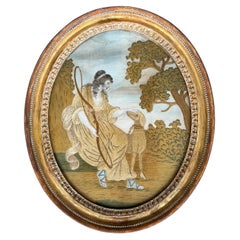
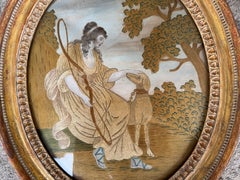
Antique 18th Century Oil Painting Silk Embroidery Diana The Huntress with Dog

Antique 18th Century Oil Painting Silk Embroidery Diana The Huntress with Dog

Located in Munich, DE

This exquisite embroidered painting was created in the 1770's. The painting depicts a huntress and her dog in the countryside. We may iidentify the huntress as the goddess Diana who ...

Category

1770s French Louis XVI Antique Needlework Paintings

Materials

Canvas, Silk

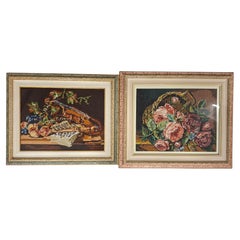
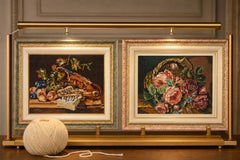
Pair of Vintage 80s Paintings - Handcrafted Wool Embroidery

Pair of Vintage 80s Paintings - Handcrafted Wool Embroidery

Located in Manzano, IT

Precious embroideries made entirely of wool, with a dense and detailed weave that gives depth and relief to the subjects. Description of subjects: Musical Still Life: A classical co...

Category

Late 20th Century Italian Modern Needlework Paintings

Materials

Wool, Glass, Wood

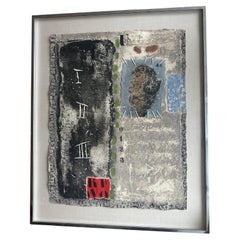
Signed color aquatint, etching, carborundum, and collage by James Coignard

Signed color aquatint, etching, carborundum, and collage by James Coignard

Located in New York City, NY

This dynamic mixed-media by James Coignard, exemplifies the artist’s innovative approach to abstraction. A perfect fusion of color aquatint, etching, carborundum, and collage, the pi...

Category

1970s Vintage Needlework Paintings

Materials

Thread, Paper

Vintage obi textile art " Broken Vase ~ kintsugi ~" by ikasu Black Gold Japan

Vintage obi textile art " Broken Vase ~ kintsugi ~" by ikasu Black Gold Japan

By Lena Okamoto, Kimono ikasu

Located in Setagaya City, JP

Certified Kimono Meister work / Certificate of Authenticity included. One-of-a-kind Japanese textile art made from vintage obi fabrics. Sustainable artwork for modern interiors, collectors, boutique hotels, and lovers of Japanese aesthetics. [Story behind the work] This work uses a vintage obi dated around 1980ies, with a feather motif, and arranges it so that it looks like a vase. Antique obi, just as it is a broken vase, is united back again with black obijime - a string used to tie up obi when it’s worn. Framed in kiritansu (antique chest) paulownia wood. It is elegantly framed with paulownia wood originally used for kimono chest-of-drawers, and is filled with storytelling and sense of luxury. I used pieces of kimono that could no longer be used as clothing and kiritansu chest-of-drawers that would normally be discarded to create the ultimate upcycled piece. [Explanation and meaning of pattern and colors] Feathers hold various meanings and symbolism in Japanese traditional culture, often reflecting themes of spirituality, symbolism, and folklore. Here are some of the meanings associated with feathers in Japanese tradition: ・Divine Protection: Feathers are often seen as symbols of divine protection and spiritual guidance. Feathers, especially those from birds, are considered to be imbued with the protective energy, offering spiritual guardianship and safeguarding against negative forces. ・Connection to the Spirit World: Feathers are sometimes associated with the spirit world and the realm of the divine. In folklore and mythology, feathers are depicted as messengers between the earthly realm and the celestial realms. ・Symbol of Beauty and Elegance: Feathers are admired for their natural beauty, grace, and elegance. In traditional Japanese arts such as Noh theater, Kabuki, and dance performances like Kagura, actors and performers often use feathered costumes or accessories to enhance their appearance and convey a sense of refinement and sophistication. ・Sign of Good Luck and Prosperity: In Japanese folklore, certain birds like cranes and pheasants are considered symbols of good fortune, longevity, and prosperity. Feathers from these birds are often depicted in art and craftwork as auspicious symbols believed to bring blessings and positive energy to the bearer. [About the frame] Kiritansu - chest-of-drawers for kimono, is traditionally made from paulownia wood, a uniquely Japanese material closely tied to the world of kimonos. Paulownia wood is known as the lightest wood in Japan, prased for its natural luster, resistance to moisture, and resilience against cracking. Since ancient times, it has been used in crafting furniture, chests, and musical instruments. During the Edo period, it became customary to store cherished kimonos in paulownia chests...

Category

1980s Japanese Japonisme Vintage Needlework Paintings

Materials

String, Composite, Reclaimed Wood, Yarn, Thread, Textile, Fabric, Wood, ...

Related Items
Pair Chinese Asian Silk Watercolor Framed Paintings

Pair Chinese Asian Silk Watercolor Framed Paintings

Located in Palm Springs, CA

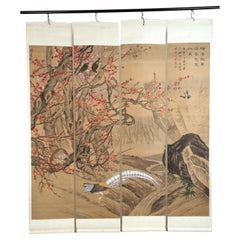
Pair tall framed and matted Chinese silk water color paintings depicting exotic birds and flowers and shrubbery. Both with calligraphy inscription and red seal. Expertly crafted with...

Category

1930s Chinese Vintage Needlework Paintings

Materials

Silk, Wood

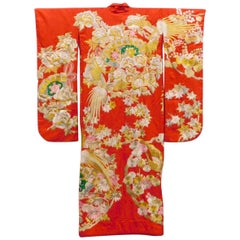
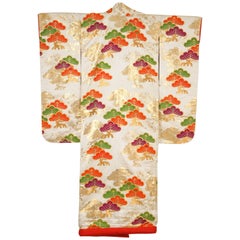
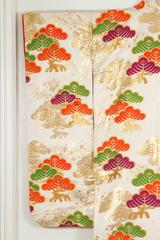
Vintage Kimono Silk Brocade Japanese Ceremonial 1970

Vintage Kimono Silk Brocade Japanese Ceremonial 1970

Located in Moreno Valley, CA

A vintage Mid-Century ivory color silk brocade collectable Japanese ceremonial kimono. One of a kind. Fabulous museum quality ceremonial kimono in pure silk with intricate detailed h...

Category

20th Century Japanese Japonisme Needlework Paintings

Materials

Silk

Japanese Edo Six-Panel Haboku Landscapes of Seasons

Japanese Edo Six-Panel Haboku Landscapes of Seasons

Located in Rio Vista, CA

19th century Japanese Edo period six-panel screen painted in Haboku (splashed ink) style. Depicts Four Seasons landscape scenes with two portraits of Chinese sages. One sage is trave...

Category

19th Century Japanese Edo Antique Needlework Paintings

Materials

Gold Leaf
Japanese Screen, Early 20th Century Wagtail & Chrysanthemum by Ishizaki Koyo

Japanese Screen, Early 20th Century Wagtail & Chrysanthemum by Ishizaki Koyo

Located in Kyoto, JP

Ishizaki Koyo (1884-1947) Wagtail & Chrysanthemum Early 20th century Folding screen in two-panels. Ink, pigments and gofun on gold leaf. Sign: Koyo Seal: Koyo This ...

Category

Early 20th Century Japanese Taisho Needlework Paintings

Materials

Gold Leaf
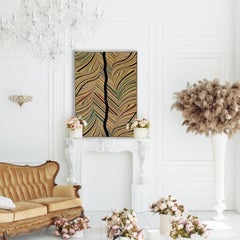
1979 Cui Tang Pheasants Love Birds Painting on Silk Flowers Peonies Chinoiserie

1979 Cui Tang Pheasants Love Birds Painting on Silk Flowers Peonies Chinoiserie

Located in Dayton, OH

1979 Cui Tang Korean painting on silk showing brightly colored male and female pheasants in front of a bush of pink and white peonies. This art was made in 1979...

Category

1970s Korean Chinoiserie Vintage Needlework Paintings

Materials

Silk, Paint

Early American Late 19th Early 20th Century Folk Art Painting in Tramp Art Frame

Early American Late 19th Early 20th Century Folk Art Painting in Tramp Art Frame

Located in Fort Collins, CO

Exceptional and never before seen Early American folk art oil painting. The scene appears to depict a man telling a woman bad news, presumably of her husband's passing. The subject p...

Category

Early 20th Century American Folk Art Needlework Paintings

Materials

Wood, Paint

Framed Japanese Watercolor Painting of Bird on Flowering Branch

Framed Japanese Watercolor Painting of Bird on Flowering Branch

Located in Yonkers, NY

This delicate Japanese painting on paper captures a bright yellow bird perched among flowering branches in full bloom. Executed in watercolor with expressive brushwork and fluid ink ...

Category

Mid-20th Century Japanese Needlework Paintings

Materials

Glass, Paper

Framed Hand Painted Indian Gouache Painting of Horse on Silk in Pink - India

Framed Hand Painted Indian Gouache Painting of Horse on Silk in Pink - India

Located in Oklahoma City, OK

A magnificent large traditional Indian gouache painting of a royal horse on silk. This Rajasthani piece is unique in that it is very large. We typically ...

Category

20th Century Indian Anglo Raj Needlework Paintings

Materials

Fabric, Wood, Paint, Paper

Early 20th Century Pair of Japanese Folding Screens, Deer Under Maple Trees

Early 20th Century Pair of Japanese Folding Screens, Deer Under Maple Trees

Located in Kyoto, JP

Deer under maples Late Taisho period, circa 1925-1930 Pair of two-panel screens. Ink and pigment on silk. Signature: Goho Seal: Goho A pair of two-fold Japanese silk screens...

Category

1920s Japanese Taisho Vintage Needlework Paintings

Materials

Wood, Paper, Silk

Pair of Signed Antique Watercolor Paintings in Hand Carved Gilt Wooden Frames

Pair of Signed Antique Watercolor Paintings in Hand Carved Gilt Wooden Frames

Located in Hamilton, Ontario

This pair of antique watercolor paintings are done by an unknown artist, likely from France or Italy in circa 1880 in a Renaissance style. The paintings each depict a couple in a ballroom setting dressed in period Renaissance costumes...

Category

Late 19th Century French Renaissance Revival Antique Needlework Paintings

Materials

Softwood, Paper

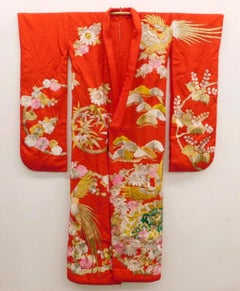
Vintage Japanese Formal Black Silk Kimono

Vintage Japanese Formal Black Silk Kimono

$1,600

H 64 in W 52 in D 0.2 in

Vintage Japanese Formal Black Silk Kimono

Located in Atlanta, GA

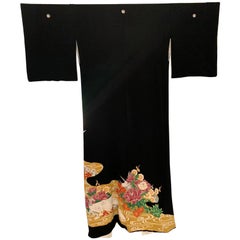
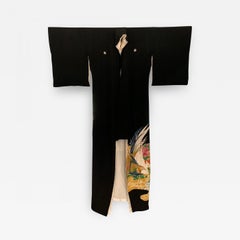
A vintage Japanese silk Kuro Tomesode Kimono, circa 1960s-1980s. Kuro Tomesode is a dress for married woman for the most formal occasions, equivalent of the evening gowns in the west. It is overall black, decorated only with patterns of bright colors on the bottom. This kimono has three Mon family crests on the front and back shoulder. It is lined with white silk in its interior. On the front, it features exposed white stitches around neck and breast, a very subtle and elegant touch. The bottom part of the kimono is decorated with lavish woven design with embroidery accents that depicts a group of pheasants among peonies and other blossoms along a flowing stream. Great contrast in the colors and attention to details. An very elegant textile for wall...

Category

Mid-20th Century Japanese Japonisme Needlework Paintings

Materials

Silk

Previously Available Items
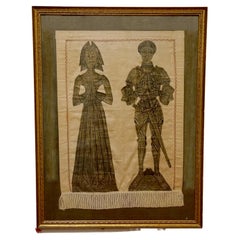
English or Continental Gothic Revival Rubbing of Knight and Lady

English or Continental Gothic Revival Rubbing of Knight and Lady

Located in Lomita, CA

A Gothic Revival style engraved brass rubbing, English or Continental, from the 19th Century. This is a beautiful piece with two figures who are dressed in elaborate clothing reserve...

Category

Late 19th Century Gothic Revival Antique Needlework Paintings

Materials

Silk

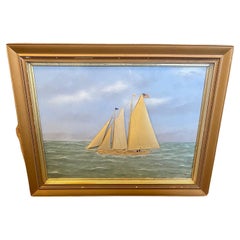
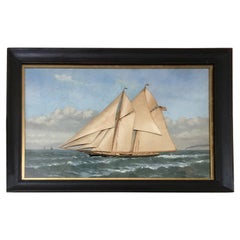
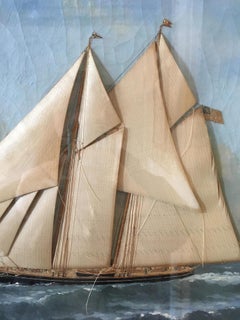
Silk Embroidered Hand Painted Seascape by Thomas Willis, circa 1890

Silk Embroidered Hand Painted Seascape by Thomas Willis, circa 1890

By Thomas Willis

Located in Nantucket, MA

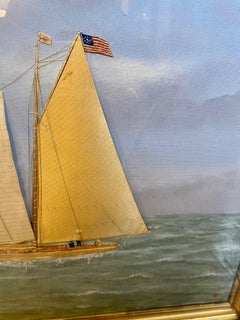
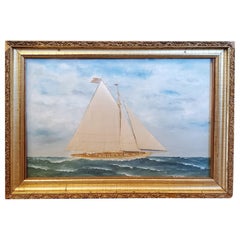
19th century silk embroidered and hand painted oil on canvas seascape by Thomas Willis (1850 - 1925), depicting a schooner-rigged racing yacht closely ha...

Category

1890s American Late Victorian Antique Needlework Paintings

Materials

Canvas, Silk

Thomas Willis Silk Embroidered Seascape, circa 1890

Thomas Willis Silk Embroidered Seascape, circa 1890

By Thomas Willis

Located in Nantucket, MA

19th century silk embroidered and hand painted oil on canvas seascape by Thomas Willis (1850 - 1925), depicting a gaff-rigged racing yacht closely hauled...

Category

1890s American Late Victorian Antique Needlework Paintings

Materials

Canvas, Silk

Japanese Two-Panel Screen, Embroidered Pine at Water's Edge

Japanese Two-Panel Screen, Embroidered Pine at Water's Edge

Located in Hudson, NY

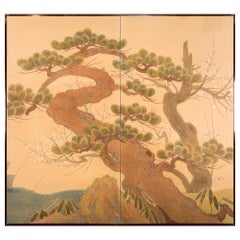
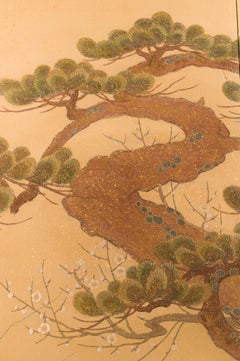
Masterfully executed embroidery over painted silk renders a beautifully shaped venerable pine. Extraordinary details such as pine needles, lichen, ripples in the water, and texture o...

Category

Mid-20th Century Japanese Showa Needlework Paintings

Materials

Gold Leaf
Thomas Willis Silk Embroidered Yacht Seascape, circa 1890

Thomas Willis Silk Embroidered Yacht Seascape, circa 1890

By Thomas Willis

Located in Nantucket, MA

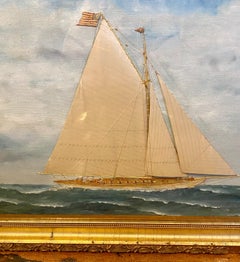
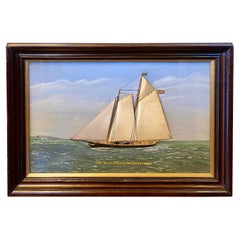
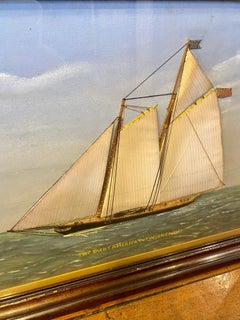
Antique silk embroidered yacht portrait by Thomas Willis (1850-1925), depicting the schooner-rigged racing yacht America, the winner of the 1851 America'...
Category

1890s American Folk Art Antique Needlework Paintings

Materials

Canvas, Silk

Large Early 19th Century Painted and Silkwork Picture 'The Good Samaritan'

Large Early 19th Century Painted and Silkwork Picture 'The Good Samaritan'

Located in Henley-on-Thames, Oxfordshire

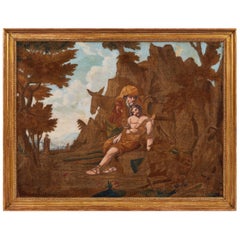
The picture retains its original gilt frame. The image is rendered in a mixture of silkwork and hand painted decoration and depicts the injured traveler on the roadside being aided by the Samaritan while the Levite and the Priest are seen in the distance. This parable is told by Jesus in the Gospel of Luke. A certain man was going down from Jerusalem to Jericho, and he fell among robbers, who both stripped him and beat him, and departed, leaving him half dead. By chance a certain priest was going down that way. When he saw him, he passed by on the other side. In the same way a Levite also, when he came to the place, and saw him, passed by on the other side. But a certain Samaritan, as he travelled, came where he was. When he saw him, he was moved with compassion, came to him, and bound up his wounds, pouring on oil and wine. He set him on his own animal, and brought him to an inn, and took care of him. On the next day, when he departed, he took out two denarii, gave them to the host, and said to him, 'Take care of him. Whatever you spend beyond that, I will repay you when I return.' Now which of these three do you think seemed to be a neighbor to him who fell among the robbers?" This work is vastly bigger than 19th century silkwork pictures...

Category

Early 19th Century English George IV Antique Needlework Paintings

Materials

Silk, Giltwood

Silk Mounted Oil on Canvas Seascape by Thomas Willis, circa 1880

Silk Mounted Oil on Canvas Seascape by Thomas Willis, circa 1880

By Thomas Willis

Located in Nantucket, MA

Silk mounted and embroidered portrait of a Schooner-Rigged Yacht, hand tied onto an oil on canvas Seascape, by Thomas Willis (Danish-American: circa 1850...

Category

1880s American Late Victorian Antique Needlework Paintings

Materials

Canvas, Silk

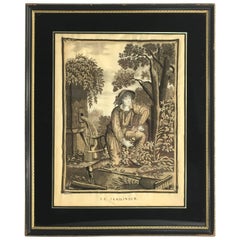
18th Century Garden Themed Needlepoint Portrait

18th Century Garden Themed Needlepoint Portrait

Located in Doylestown, PA

A late 18th century French needlepoint portrait or a gardener, circa 1780, with watering can, fountain, rake and other garden tools, titled "Le Ja...

Category

Late 18th Century French Louis XVI Antique Needlework Paintings

Materials

Fabric