Technique: Tempera and oil on wood
Dimensions: 25 x 11 x 8 cm
Description:
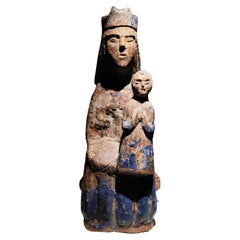
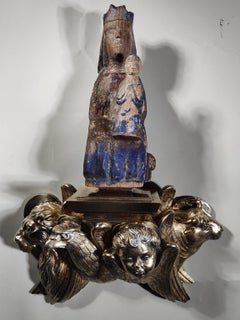
This exceptional work from the 12th century represents the Seated Virgin with Child (Sedes Sapientiae), standing out as an artistic treasure from medieval Spain. The portrayal of the Virgin enthroned with the Child on her lap is emblematic of Romanesque art, and this particular piece is a valuable and authentic example of that era.
The current polychromy belongs to the Gothic period and overlays the original Romanesque layer. It is crucial to highlight that the current state of the artwork is the original, without any cleaning interventions, imparting a unique authenticity.
The work exhibits architectural characteristics typical of Romanesque art, evident in the sides of the throne. The rigidity and symmetry characteristic of this style are reflected in the firm presentation of the Baby Jesus, noticeable in his gesture while holding his son. The Virgin wears a crown, symbolizing her royal character as the Queen of Heaven and Creation. Both figures retain traces of polychromy on the face and attire, adding layers of history and authenticity.
While similar Romanesque Virgin...
Category
15th Century and Earlier Antique Madrid