Madrid

to
591
995,500
713,943
2,104
1,739
1,015
948
867
782
584
457
332
299
277
275
230
178
132
106
97
77
70
68
63
62
61
60
56
41
39
36
32
26
26
24
21
17
16
15
13
11
11
10
9
9
6
6
5
4
4
3
3
3
3
2
2
2
2
1
1
1
131
83
66
25
24
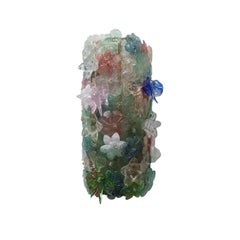
Vase Mod. Indian Summer Designed By Gaetano Pesce, Italy
By Gaetano Pesce
Located in Madrid, ES
Contemporary vase designed by Gaetano Pesce in 1995 and edited by Fish design. Made of colored soft resin. Unique piece. Italy Measurements: Diameter 22cm x H 36cm Bibliography ...
Category

2010s Italian Mid-Century Modern Madrid

Materials

Resin

19th Century Demi-Lune Directoire Oak Wood and Veneer Dining Room Table
Located in Madrid, ES
Elegant French demilune Directoire dining room table. Made in oak wood and veneer the legs end in bronze sabot, when the table is open they are 130 cm in diameter.
Category

19th Century French Directoire Antique Madrid

Materials

Bronze

Charles Rennie Mackintosh Black Ashwood Willow Italian Armchair
By Charles Rennie Mackintosh
Located in Madrid, ES
Armchair model "Willow" designed by Charles Rennie Mackintosh for the "Willow Tea Room" in 1903 in Glasgow. Made of black lacquered ashwood structure and upholstered in leather. In its original configuration, the high, semicircular backrest of this solid wood throne served as a divider between the entrance and the tea room behind it. Complex series of lines and shapes reflect the style of Mackintosh. Charles Rennie Mackintosh (7 June 1868 – 10 December 1928) was a Scottish architect, designer, water colourist and artist. His artistic approach had much in common with European Symbolism. His work, alongside that of his wife Margaret Macdonald...
Category

1970s Italian Mid-Century Modern Vintage Madrid

Materials

Leather, Ash

18th Century Portuguese " Azulejos " Saint Antony"
Located in Madrid, ES
Largest collection of Portuguese tiles in the world 18th Century Portuguese "Saint Antony" Measures: 266 cm x 280 cm Important note: This panel is with the tiles restored 18th ce...
Category

18th Century Portuguese Baroque Antique Madrid

Materials

Ceramic

TWENTY-FOUR POINT DEER HUNTING TROPHY 20th century
Located in Madrid, ES
TWENTY-FOUR POINT DEER HUNTING TROPHY Chest mount 234 points "CIC Gold Medal" Bulgaria. Approx. length: 170 cm. very good condition
Category

20th Century South African Modern Madrid

Materials

Animal Skin

19th-Century Bronze Bust of the Greek Poetess Sappho
Located in Madrid, ES
his sophisticated bronze bust depicts the ancient Greek poetess Sappho (620 B.C. - 550 B.C.), known for her lyrical poetry. Crafted in dark green patinated bronze with plaster eyes, ...
Category

1860s Antique Madrid

Materials

Bronze

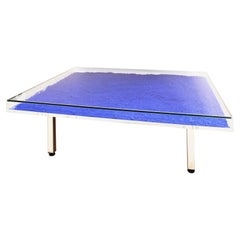
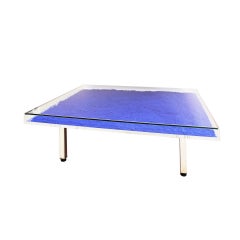
Yves Klein Contemporary Mod Klein Blue French Square Coffee Table
By Yves Klein Archives
Located in Madrid, ES
“IKB” model coffee table designed by the French artist Yves Klein (1928-1962). Table composed of a box made of perplex with a glass top lid inside which Klein blue pigments are distr...
Category

1960s French Modern Vintage Madrid

Materials

Steel

Midcentury Angelo Mangiarotti Italian Eros Console Red Marble for Skipper
By Angelo Mangiarotti, Skipper
Located in Madrid, ES
Eros console designed by Angelo Mangiarotti (Milán, 1921 – 2012) for Skipper. Stunning rosso sardo marble console with top fitted on two conical bases, Italy, 1971 Angelo Mangiarott...
Category

1970s Italian Mid-Century Modern Vintage Madrid

Materials

Marble

Camaleonda Modular Sofa by Mario Bellini, Italy 70s, White Bouclé Reupholstered
By Mario Bellini
Located in Madrid, ES
Camaleonda modular sofa designed by Mario Bellini (1935) for C&B Italia in 1972. Composed of 4 large modular seats with backrest, 3 small modular seats with backrest, 1 small module without backrest and 1 shoe remover chair. White bouclé wool upholstery. Measurements of large seats (5): W 96 x D 96 x H 40/65 cm. Measures small seats...
Category

1970s Italian Mid-Century Modern Vintage Madrid

Materials

Bouclé, Wood

19th Century English Silvered Metal Ship Model with Unidentified Hallmarks
Located in Madrid, ES
19th Century English Silvered Metal Ship Model with Unidentified Hallmarks Description: Decorative and finely crafted 19th-century English ship model, inspired by Renaissance-era na...
Category

1880s Antique Madrid

Materials

Metal

19th Century Large French Trumeau Mirror
Located in Madrid, ES
A large antique French trumeau mirror with grey paint and decor with musical trophy and the top, made in hand carved in pine.
Category

Mid-19th Century French Louis XVI Antique Madrid

Materials

Wood

Contemporary Mod Ekstrem Armchair Designed by Terje Ekstrom
By Terje Ekstrom
Located in Madrid, ES
Mod Ekstrem armchair designed by Terje Ekstrom. Structure made of steel covered with woolen knit foam, and upholstered with grey wool fabric. Every i...
Category

21st Century and Contemporary Norwegian Modern Madrid

Materials

Metal

Italian Sculpture "Lisippea Apoxiomenos" Head Begin 20th Century Marble
Located in Madrid, ES
Italian sculpture "Lisippea Apoxiomenos" Head Begin 20th century Marble Measure: H: 46cm including the base Perfect condition.
Category

Early 20th Century Italian Baroque Madrid

Materials

Marble

Hand-Carved Solid Oak Italian Sideboard with Four Doors, Brutalist Style
Located in Madrid, ES
This sideboard is crafted from solid oak and features a hand-carved front with a continuous geometric pattern that adds depth and strong material presence. The cabinet is composed of...
Category

2010s Italian Mid-Century Modern Madrid

Materials

Oak

Marine Surgeon's Box" Louis MATHIEU 1816-1879
Located in Madrid, ES
Marine Surgeon's Box" Louis MATHIEU 1816-1879 Navy Surgeon's Box with two superimposed trays presenting the different instruments (including saw, scalpels, trepanning tools, box...
Category

19th Century French Baroque Antique Madrid

Materials

Metal

19th Century Grand Tour Bronze Sculpture of the Discobolus
Located in Madrid, ES
Elegant Grand Tour bronze sculpture representing the Discobolus (Discus Thrower), after the celebrated ancient Greek original. Mounted on a serpentine marble base, this finely cast 1...
Category

Mid-19th Century Antique Madrid

Materials

Bronze

English School 17th Century "Portrait of George Villiers Duke of Buckingham"
Located in Madrid, ES
English School 17th Century "Portrait of George Villiers Duke of Buckingham" Oil on canvas 66X53 cm size without frame George Villiers, 1st Duke of Buckingham (Brooksby, 28 August 1...
Category

17th Century English Baroque Antique Madrid

Materials

Paint

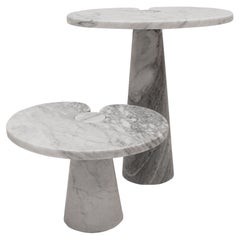
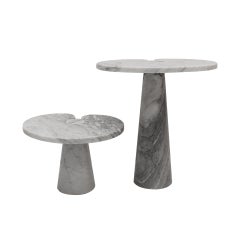
Angelo Mangiarotti Mid-Century Modern Serie Eros Marble Italian Side Table
By Angelo Mangiarotti
Located in Madrid, ES
Arabescato marble side table designed by Angelo Mangiarotti. The table belong to the "Eros" series that he designed for Skipper in Italy in the 1970s. Original label. Angelo Mangiarotti was born in Milan on 26th of February 1921. He graduated in Architecture in 1948 at Politecnico di Milano. In 1953-1954 he works in the United States, participating also to the competition for Chicago "LOOP". While leaving abroad he knew Frank Lloyd Wright, Walter Gropius, Mies van der Rohe and Konrad Wachsmann...
Category

1670s Italian Mid-Century Modern Antique Madrid

Materials

Marble

Picasso Ceramic, Visage (A.R. 288)
By Pablo Picasso
Located in Madrid, ES
PABLO PICASSO (1881-1973) Visage (A.R. 288) stamped and marked 'Edition Picasso / Madoura Plein Feu / Edition Picasso / Madoura' (underneath) white earthenware ceramic pitcher with c...
Category

1950s Modern Madrid

Materials

Ceramic

Albert Rafols Casamada - ESTRUCTURES 2 Spanish Abstraction Contemporary Art
By Albert Rafols Casamada
Located in Madrid, Madrid
Albert Rafols Casamada - ESTRUCTURES 2 Date of creation: 2006 Medium: Lithograph on paper Edition: 75 Size: 41 x 31 cm Observations: Condition: In very good conditions and never fram...
Category

2010s Modern Madrid

Materials

Lithograph

ALBERT ERNEST CARRIER-BELLEUSE (1824-1887) 20th Century Model Sculpture
By Albert-Ernest Carrier-Belleuse
Located in Madrid, ES
ALBERT ERNEST CARRIER-BELLEUSE (1824-1887) 20th Century Model Sculpture in bronze with ivory face and hands. Signed. Mounted on a marble base. Dimensions: Height (sculpture) 43.7 c...
Category

Early 20th Century French Art Deco Madrid

Materials

Bronze

Rolex Two tone Oyster Semi Bubbleback Super patina Dial reference 6286
By Rolex
Located in MADRID, ES
This is a collector piece from the 1950s. A Rolex Oyster Semi Bubbleback Super patina Dial, case in gold and steel and leather bracelet, reference 6286.
Category

1950s Swiss Contemporary Vintage Madrid

Materials

Gold, Steel

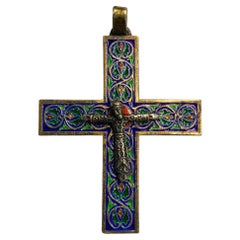
Christ Crucified in Silver 16th Century Italian School
Located in Madrid, ES
Christ crucified in silver 16th Century Italian school Measure: height: 40cm. very good condition.
Category

16th Century Italian Baroque Antique Madrid

Materials

Silver

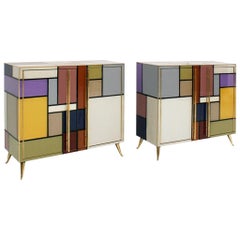
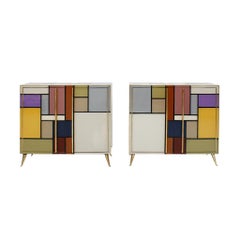
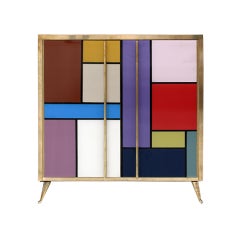
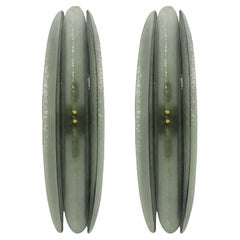
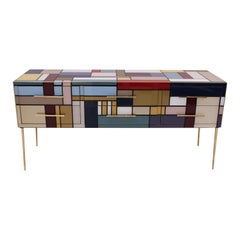
Mid-Century Modern Solid Wood and Colored Glass Italian Pair of Sideboards
By L.A. Studio
Located in Madrid, ES
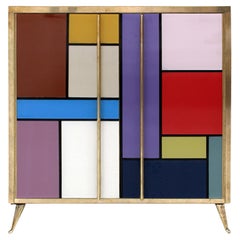
Pair of sideboards with two folding doors made of solid wood structure and coated with colored glass. Details and handles and legs made of brass. Production can last between 5 and 6...
Category

1950s Italian Mid-Century Modern Vintage Madrid

Materials

Brass

Fireplace Plate with Picador, Bullfighting, Cast Iron, Spain, 20th Century
Located in Madrid, ES
Fireplace plate with Picador. Molten iron, Spain, early 20th century Fireplace background plate made of cast iron with a rectangular shape and decorated with reliefs on the front. The upper part presents a composition of leaves flanking a smooth shield, and is prolonged on the sides and the lower area thanks to a series of lines and more leaves with a classicist influence in the corners. The front shows a figurative fighting scene, with a picador (or pole vaulter...
Category

Early 20th Century Spanish Other Madrid

Materials

Iron

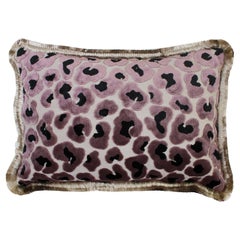
Contemporary Pillow Pair in Velvet Tiger Mountain edited by Deda
Located in Madrid, ES
Cushions made of velvet and cotton fabric. Design edited by Dedar, Tiger Mountain. Finished with fringes and zip at the back. Every item LA Studio offers is checked by our team of 1...
Category

21st Century and Contemporary European Madrid

Materials

Cotton, Velvet

Tapestry Royal Manufacture of Aubusson, Louis XVI period 1738 at the Gobelins
By Aubusson Manufacture
Located in Madrid, ES
Tapestry from the Royal Manufacture of Aubusson, Louis XVI period , made in 1738 at the Gobelins One panel from a series of Gobelins tapestries depicting the History of Esther, illustrating Esther seated and attended by handmaidens, one washing her feet in golden basin, another fastening a bracelet, another offering a mirror, all observed by Mordecai, woven in the workshop of Michele Audran after a design by J. F. de Troy. The Toilet of Esther c.1778-85.Royal Collection Trust-Queens Audience Chamber Windsor Castle The Sketches for the Esther Cycle by Jean-François de Troy (1736) “and the maid was fair and beautiful; whom Mor’decai, ..., took for his own daughter.” (Est. 2:7) A supple and undulating genius, both a flattering portraitist and a prolix history painter, as well as a brilliant genre painter, in a gallant or worldly vein, Jean-François de Troy (Paris, 1679 – Rome, 1752), solicited, although he had passed the threshold of old age, a new royal commission up to his ambitions. To obtain it, he submitted – successfully - for the approval of the Bâtiments du roi (administration), seven modelli painted in 1736 with his usual alacrity. Inspired by one of the most novelistic texts of the Old Testament, the Book of Esther, these sketches in a rapid and virtuoso manner were transformed by the artist, between 1737 and 1740 into large cartoons intended to serve as models for the weavers of the Gobelins factory. Showing undeniable ease and skill in the composition in perfect harmony with the sensitivities of the times, the tapestry set met with great success. The Story of Esther perfectly corresponded to the plan of the Bâtiments du roi to renew the repertoire of tapestry models used for the weavers of the royal factories while it also conformed to the tastes of Louis XV’s subjects for a fantastical Orient, the set for a dramatic tale in which splendour, love and death were combined. Indeed, no tapestry set was woven in France during the 18th century as often as that of Esther. The series of modelli painted by de Troy during the year 1736 looks to the history of French painting and decoration under Louis XV as much as it does the history of the Gobelins. It probably counts among the most important rococo pictorial groups to have remained in private hands. First the Biblical source illustrated by De Troy which constitutes the base of one of the richest iconographical traditions of Western art will be considered. Then the circumstances and specific character of French civilisation during the reigns of Louis XIV and Louis XV which contributed to making the theme of Esther a relevant subject, both attractive to contemporaries and remarkably in line with the sensitivities of the time will be elucidated. An examination of the exceptional series of sketches united here, the cartoons and the tapestries that they anticipate as well as a study of their reception will close this essay. The Book of Esther: A scriptural source at the source of rich iconography. The origin of the Esther tapestry set by Jean-François de Troy – origin and creation of a masterpiece According to the evidence of one of the artist’s early biographers, the chevalier de Valory, author of a posthumous elegy of the master, read at the Académie royale de peinture et de sculpture on 6 February 1762, it was apparently due to early16 rivalry with François Lemoyne (1688-1737), his younger colleague who had precisely just been appointed First Painter to the King in 1736, that had encouraged François de Troy to seek a commission allowing him to show off his ease and his promptitude at the expense of a rival who was notoriously laborious: “M. De Troy, retaining some resentment of the kind of disadvantage which he believed to have suffered compared with his emulator looked to regain some territory by making use of the facility his rival did not possess. Lemoyne was excessively long in the creation of his works,and M. De Troy of a rare celerity: consequently, with this particular talent, the latter offered to the court to make paintings appropriate to be executed at the Gobelins Factory; and it is to this circumstance that we owe the beautiful series of the Story of Esther, which would be sufficient alone to give him a great reputation.”17 Beyond the suspicion inspired by the topos, which still constitutes, more or less, a tale of rivalries between artists in ancient literature, there is probably some truth in what Valory reports although A.-J. Dezalier d’Argenville (who indicates rather spitefully that de Troy did not hesitate to “cut prices” to impose himself, benefitting from the productivity assured by the unlikely rapidity of his brush)18 proves to be more evasive: “As he looked to busy himself, he had offered to make the paintings that serve as models for the King’s tapestries cheaply: which did not please his colleagues. He was given a choice of two tapestry series to be made and he took the Story of Esther and that of Jason”.19 Whether or not the choice was actually left to de Troy (which would appear rather casual on the royal administration’s part all the same), it seems likely that the artist, whose contemporaries extol his “fire”, as the faculty of invention was then called, must have ardently aspired to the possibility of using on a very large scale the “creative genius” with which Dezallier d’Argenville credits him. The decoration of the private apartments, the fashion for which Louis XV had promoted at Versailles and Fontainebleau, offered little opportunity to excel in this area. Other than painting for altarpieces, only tapestries could allow comparison with Lemoyne who had been granted – unfortunately for him – a major decoration: the enormous ceiling of the Hercules Room at Versailles. Favoured by the recent improvement in France’s financial situation, the revival of patronage offered de Troy a commission fitting for him, in a field in which, however, he had hardly any experience. Anxious to renew the repertoire of models available to the Gobelins factory, the Duc d’Antin, surintendant des Bâtiments du roi from 1708 to 1736 followed by his successor, Philibert Orry comte de Vignory, gave him the task of producing seven large cartoons inspired by the Book of Esther corresponding to the brilliant sketches or modelli which de Troy had produced in one go, or almost (very few preparatory drawings can in fact be linked to the Esther cycle and all seem to be at the execution stage of the cartoons).20 Subjected to the approval of the Administration des Bâtiments according to the procedure in use for projects being planned for the Gobelins, sketches made rapidly during 1736 were approved and the project launched immediately. Thereupon came the news of François Lemoyne’s death, who, ground down by work and a victim of his private torment, committed suicide on 4 June 1737. Against all expectations, de Troy did not replace his rival in the position of First Painter (which remained vacant until the appointment of Charles Coypel in January 1747), which would perhaps have made him too obviously the beneficiary of the drama. The awarding of the position of Director of the French Academy in Rome came to console him while he had already produced (or he was in the process of finishing), in Paris, three of the seven cartoons of the cycle (The Fainting of Esther finished in 1737 and the Toilet and Coronation of Esther, both finished in 1738). De Troy, we can see, did not follow the order of the narrative but began with the subjects which apparently offered the least difficulty because he had already depicted them, or because they fall into a strong pictorial tradition (such is the case especially for the Fainting of Esther). He had hardly settled at the Palazzo Mancini in August 1738, when his first task which awaited the new director of the French Academy naturally consisted of honouring the royal commission and finishing without delay the final cartoons of the Story of Esther after the sketches he must have taken with him. As prompt as ever, de Troy discharged himself of the execution of the four remaining cartoons in only two years, by beginning with the largest format which allowed him to strike the imagination and to impose himself as soon as he arrived on the Roman stage: the Triumph of Mor’decai which was finished in 1739 (like Esther’s Banquet). The following year, the Mor’decai's Disdain and The Sentencing of Haman were brought to an end in the same Neo-Venetian style, obviously tributary to Veronese with its choice of “open” monumental architecture which is characteristic of the entire cycle.21 The series, it should be noted, was almost augmented with some additional scenes in the mid 1740s. Indeed, the first tapestry set finished at the Gobelins in 1744 proved to be unsuitable for the arrangement of the Dauphine’s apartments at Versailles for which it had been intended to decorate the walls the following year (cf infra). Informed of this, de Troy, considering that the story of Esther offered “several good subjects,” immediately offered to illustrate one or new subject among those “which could appear to be the most interesting”. The directeur des Bâtiments Orry, who managed the State’s accounts, obviously judged it less costly to have one of the tapestries widened to fill in the end of the Dauphine’s bedroom,22 which has probably deprived us of very original compositions, because de Troy had already illustrated the most famous themes, those that benefitted from a strongly established iconographical tradition and from which it was not easy to deviate The Tapestry Set of the Story of Esther Placed on the tapestry looms of the Gobelins at the end of the 1730s in Michel Audran’s workshop, the cycle created by de Troy aroused true infatuation. The few hundred tapestries made between 1738 and 1797 – all in high-warp tapestry and woven in wool and silk except for four in low-warp made in Neilson’s workshop – show the impressive success of a tapestry set that was without any doubt the most frequently woven of the 18th century in France. 29 Only three cartoons had been delivered by de Troy in 1738 when the first tapestry set was begun by Audran under the expert eye of Jean-Baptiste Oudry to whom the Directeur général des bâtiments, Philibert Orry had assigned the (weekly) supervision of the weaving. During the summer of 1738, the piece of the Fainting of Esther, which Oudry judged to be admirable, was finished. During the winter of 1742, Oudry informed Orry that about two ells of the Triumph of Mor’decai had been made “with no faults”,that the Coronation of Esther was finished and that the Esther at her Toilet “a very gracious tapestry” was “a little over half” finished. Exhibited at Versailles in 1743, these two last pieces were admired by Louis XV and the Court. On 3 December 1744, the set of seven tapestries was finally delivered to the Garde Meuble. It was intended, the honour was not slight, to decorate the apartments of the Infanta Maria Teresa Rafaela of Spain whose marriage to the young Dauphin Louis-Ferdinand had been fixed for the following year (it took place on 23 February 1745). Apparently it was thought that the theme of Esther the biblical heroine and wife of a foreign sovereign was appropriate for the apartments of the Spanish Dauphine. As early as the month of March, the architect Ange-Jacques Gabriel informed de Troy that her grand cabinet was decorated with the “Esther tapestry set” specifying however that “for lack of two small or one large piece, we have not been able to decorate the end of the room”. This difficulty led immediately to the Banquet episode being woven a second time in two parts (they were delivered to the Garde-Meuble on 30 December 1746) to garnish the panels on each side of the bed of the Dauphine who would hardly enjoy them (she died on 22 July 1746 and the decoration was installed for the new Dauphine Maria Josepha of Saxony). The appearance of the set’s remarkable border, which imitated a richly sculpted wooden frame, should be mentioned. Conceived in 1738 by the ornamentalist Pierre Josse-Perrot and used in the later weavings until 1768, it tended to reinforce the resolutely painterly appearance of the tapestry set which, in this regard, pushed the art of tapestry as far as its ultimate mimetic possibilities. With the exception of Mor’decai's Disdain which had been removed earlier, the “editio princeps” of the story of Esther (from then on in nine pieces) remained at Versailles until the Revolution. Of the eight surviving tapestries, four are at the chateau of Compiègne and four belong today to the Mobilier National. No less than seven tapestry sets reputed to be complete (one of them in fact only had six tapestries) would be produced officially at the Gobelins up to 1772. Literature: 1- The Œuvres mêlées of an emulator of Racine, the Abbé Augustin NADAL thus include an Esther. Divertissement spiritual which is exactly contemporary with Jean François de Troy’s cycle since it was performed in 1735 and published in Paris three years later. 2-Le Siècle de Louis XIV, 1751, 1785 ed., p. 96-97 for French ed. 3- Lemoyne and de Troy had been obliged to share the First Prize in the competition organised in 1727 between the most prominent history painters of the Académie Royale. 4- Mémoires…, pub. L. DUSSIEUX et al., 1854, II, p.265. 5-The fact that de Troy, at the risk of falling out with his colleagues, did not hesitate to make use of prices in order to convince the new directeur des Bâtiments Philibert Orry, is confirmed by Mariette who adds tersely “it caused much shouting” (pub. 1851-1860, II, p. 103). 6- Abrégé de la vie des plus fameux peintres…, ed. 1762, IV, p. 368-369 20 Early comments on the painter are inclined to present him as a kind of “pure painter”, doing without the medium of drawing, a few intermediary studies between the Esther sketches and the large cartoons at the Louvre nevertheless show that de Troy used red chalk (see in the catalogue, the notice for the Meal of Esther and Ahasuerus under the entry drawing) to change one or other figure. 7-C. GASTINEL-COURAL (cat. exp. PARIS, 1985, p. 9-13) as well as the article by J. VITTET, exh. cat. LA ROCHE-GUYON, 2001, p. 51-55. 8-The Hermitage in St. Petersburg conserves five tapestries of these two royal gifts whose provenance still awaits elucidation (as far as we are aware). In 1766, the Grand Marshal of Russia, Count Razumovski (or Razamowski), acquired the Fainting and the Banquet extracted from the sixth weaving (J. VITTET, 2001, p. 53). 9- Lettres écrites de Suisse, d’Italie…,quoted by J. VITTET, op. cit., p. 54. 10-The tapestry set remained in the hands of a branch of the Hapsburg-Lorraine family until 1933 (ibid. P. 54). 11-Quoted by Chr. LERIBAULT, 2002, p. 97, note 269. 12-Y. CANTAREL-BESSON, 1992, p. 241. Catalogue The Esther at her Toilet Oil on canvas, 57 x 51 cm Provenance: Painted in 1736 at the same time as the six other modelli of the Story of Esther intended to be presented, for approval, to the direction des Bâtiments du Roi; perhaps identifiable among a lot of sketches by Jean-François de Troy in the post mortem inventory of the amateur, historian and critic Claude-Henri Watelet (1718-1786) drawn up on 13 January 1786 and following days (A.N. T 978, n° 30) then in the sale of the property of the deceased, Paris, 12 June 1786, n° 33; Paris, François Marcille Collection (who owned a series of six sketches from which the Triumph of Mor’decai was missing, see infra); Paris, Marcille Sale, Hôtel Drouot, 12-13 January 1857, n° 36; Asnières, Mme de Chavanne de Palmassy ( ?) collection; Paris, Galerie Cailleux; Paris, Humbert de Wendel collection (acquired from the Galerie Cailleux in 1928); by inheritance in the same family; Paris, Sotheby’s, 23 June 2011, n° 61. In order not to add unnecessarily to the technical commentary on each work, the catalogue raisonné by Chr. Leribault which contains a substantial bibliography on the series should be referred to. The other bibliographical references only concern the publications and exhibitions to have appeared and been presented more recently. Bibliography and Exhibitions: Chr. LERIBAULT, 2002, n° P. 247 (repr.); E. LIMARDO DATURI, 2004, p. 28; Exh. cat. NANTES, 2011, p. 138, n° 34, referred to in note 1; Sotheby’s catalogue, Tableaux anciens et du XIXe siècle, 23 June 2011, n° 61 (repr.). Related Works: Tapestry cartoon: The cartoon (oil on canvas, 329 x 320 cm), the third made by the artist in Paris after the sketches had been approved by the direction des Bâtiments, is in the Louvre (Inv. 8315). It previously bore the painter’s signature and the date 1738 (inscriptions which are found on the tapestries). The royal administration paid 1600 livres for it on 21 June 1738 and it was exhibited at the Salon in the year of its creation. Summary Biography 1679 (27 January): Baptism in Paris (Parish of St. Nicolas du Chardonnet) of Jean-François de Troy, son of the painter François de Troy and Jeanne Cotelle, sister of the painter Jean II Cotelle. 1696-1698: Studies (apparently rather turbulent) at the Académie royale de peinture et de sculpture. 1698-1708: First trip to Italy. Is obliged to leave Rome in January 1711 after a tempestuous affair (a duel?), de Troy extends the traditional Roman experience as a pensionnaire at the Académie de France by also visiting Tuscany where he stays for a long time, Venice (his art in face has a strongly Venetian character) and Genoa. 1708: De Troy (whose father had been elected Director of the Académie royale de peinture et de sculpture on 7 July) is agréé and immediately received at the Académie with Apollo and Diana Piercing with their Arrows the Children of Niobe (Montpellier, Musée Fabre) on 28 July. 1710: First royal commission, paid for on 10 May (a sketch representing “the Promotion of the Order of the Holy Spirit” for the tapestry series of the History of the King). 1716: Jean-François de Troy is elected Assistant Professor at the Academy. 1720: He is appointed Professor. 1723: The artist creates the double portrait of Louis XV...
Category

Early 18th Century French Baroque Antique Madrid

Materials

Wool, Silk

PAIR OF FRENCH COLUMNS EMPIRE Napoleon III 19th Century
Located in Madrid, ES
PAIR OF FRENCH COLUMNS EMPIRE Napoleon III 19th Century in mahogany wood and others, with applications in relief bronze. Marble tops. Minor flaws. Dim.: 147 x 48 cm good conditions
Category

19th Century French Napoleon III Antique Madrid

Materials

Mahogany

Italian Iron and Marble Table, 20th Century
Located in Madrid, ES
Title: Italian iron and marble table Date/Period: XX century Dimension: 51cm x 111cm x 51cm Materials: iron and marble. Additional information: Original Italian table from the 900´s ...
Category

Early 20th Century Italian Baroque Madrid

Materials

Iron

Set Of 2 Peaches Stools by Patricia Bustos de la Torre
Located in Geneve, CH
Set Of 2 Peaches Stools by Patricia Bustos de la Torre Dimensions: D 38 x W 38 x H 84 cm. Materials: Rattan, pink Portuguese marble, velvet and iron. Ta...
Category

2010s Spanish Modern Madrid

Materials

Marble, Iron

"Bermuda" Chairs Designed by Carlos Miret for Amat, Spain, 1986
Located in Madrid, ES
The "Bermuda" chairs were designed by Carlos Miret and edited by Amat in 1986 in Spain, This Memphis-style tripod chair is composed of a black lacquered m...
Category

1980s Italian Mid-Century Modern Vintage Madrid

Materials

Iron

Lara Model Sofa by Roberto Pamio and Renato Toso for Stilwood
By Roberto Pamio & Renato Toso
Located in Madrid, ES
The “Lara” sofa, designed by Roberto Pamio and Renato Toso for Stilwood in the 1960s, is a notable example of Italian design linked to the Space Age movement. The model is composed o...
Category

1660s Italian Mid-Century Modern Antique Madrid

Materials

Bouclé

Silver Box Austria-Hungary 18th Century
Located in Madrid, ES
SILVER BOX Austria-Hungary 18th Century in silver with profuse decoration inspired by the Crimean War, in which Russia lost to an alliance of the Ottoman Empire, France, United K...
Category

18th Century Austrian Baroque Antique Madrid

Materials

Silver

Contemporary 20th-century, 2.5ct Emerald and 0.80ct Diamonds Yellow Gold Ring
Located in MADRID, ES
Contemporary 20th Century 18k yellow gold ring with emerald center and diamonds. Weight: 7.40 grams Size: ES 14/ EU 54 / US 7 (resizable) Gemological description: • Emerald center w...
Category

Late 20th Century Colombian Contemporary Madrid

Materials

Emerald, Yellow Gold, 18k Gold

Medium Soft Box MS2 Table Lamp by Marre Moerel
Located in Geneve, CH
Medium Soft Box MS2 Table Lamp by Marre Moerel Dimensions: D 25 x W 24.5 x H 42 cm. Materials: Earthenware Ceramic. Polished matte finish. Details: E14 Max. 40W 1.7m flat white cab...
Category

2010s Spanish Post-Modern Madrid

Materials

Ceramic

Modern Style Bronze Lamp
Located in Madrid, ES
Modernist lamp in patinated bronze. No screen. No adapters. A circular shape that is not completely closed forms the base of the piece, and its extension is what, after rotating it ...
Category

20th Century European Other Madrid

Materials

Bronze, Other

Oriental side table in wood and metal, 19th-20th Centuries
Located in Madrid, ES
Oriental table. Carved wood, metal. Twentieth century. Side table made of carved wood, with a rectangular top board decorated with two highlights on its smaller sides and a drawer i...
Category

20th Century Asian Other Madrid

Materials

Metal, Other

Montblanc Sport Chronograph steel case and leather bracelet
By Montblanc
Located in MADRID, ES
This timepiece, featuring a chronograph and calendar, features a silver-tone sunburst dial. The sunburst dial is a decorative finish applied to a watch face, giving the impression of...
Category

2010s Swiss Contemporary Madrid

Materials

Steel

Massimo Iosa Ghini for Moroso Black Leather and Steel Chaise Longue
By Massimo Iosa Ghini, Moroso
Located in Madrid, ES
Sleek chaise lounge designed by Massimo Iosa Ghini (born 1959) and manufactured by Moroso, Italian design of the 1980s. Adjustable construction made of chromed flat and round steel. ...
Category

Late 20th Century Italian Mid-Century Modern Madrid

Materials

Steel

Speedmaster Classic Heritage Gold BA1660285
By Omega
Located in MADRID, ES
These watches do not have Speedmaster written on them anywhere but the official name that also appears in the Omega Vintage Database is Speedmaster Classic (Heritage).
Category

Early 2000s Swiss Contemporary Madrid

Materials

Gold

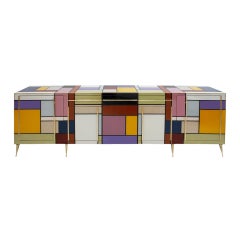
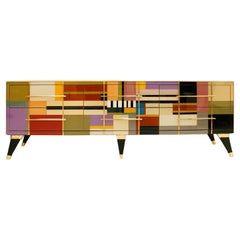
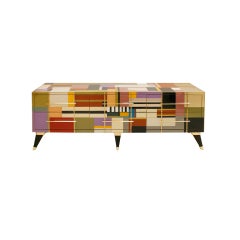
Italain Sideboard Made Of Solid Wood And Covered With Colored Glass 1950S
Located in Madrid, ES
Stunning mid-century Italian sideboard with a striking design from the 1950s. This exquisite piece features a solid wood structure, elegantly covered with colored glass panels that b...
Category

1950s French Mid-Century Modern Vintage Madrid

Materials

Brass

PORTUGUESE LAVENDER AND GOMIL D. MARIA IN SILVER 18th Century
Located in Madrid, ES
PORTUGUESE LAVENDER AND GOMIL D. MARIA IN SILVER 18th Century in 750 thousandths silver, with a smooth body and decorated on the edge with a pearl frieze. Contrast mark of c. 1784 ...
Category

18th Century Portuguese Renaissance Antique Madrid

Materials

Silver

19th-Century Tortoiseshell Side Table – Spanish with Arabic Influence
Located in Madrid, ES
19th-Century Tortoiseshell Side Table – Spanish with Arabic Influence Elegant 19th-century side table crafted from tortoiseshell, ebony, silv...
Category

19th Century Antique Madrid

Materials

Fruitwood

Mid Century Style Grey Murano Glass and Brass Italian Table Lamps
Located in Ibiza, Spain
Elevate your space with this exquisite pair of sculptural Italian table lamps. Crafted from polished brass and adorned with elegant grey Murano glass spheres, these lamps exude luxur...
Category

21st Century and Contemporary Italian Mid-Century Modern Madrid

Materials

Brass

2.86ct Emerald and Diamond Nature-Inspired Cocktail Ring 18K Gold
Located in Sant Josep de sa Talaia, IB
2.86ct Emerald and Diamond Nature-Inspired Cocktail Ring in 18K Gold – Handmade Floral Design Inspired by the quiet poetry of nature, this handcrafted 18K yellow gold cocktail ring ...
Category

21st Century and Contemporary European Contemporary Madrid

Materials

Diamond, Emerald, 18k Gold, Yellow Gold

"OUR LADY OF GLORY WITH ORATORY" Brazilian sculpture of the 19th century
Located in Madrid, ES
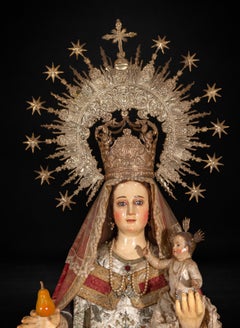
OUR LADY OF GLORY WITH ORATORY Brazilian sculpture of the 19th century , in polychrome and gilded wood. Oratory in painted and gilded wood. Small defects. Dim.: (sculpture) 42 cm; (...
Category

19th Century Brazilian Baroque Antique Madrid

Materials

Wood

Blue Concave Murano Glass Small Mirror with Brass Back, Italy, 2022
Located in Madrid, ES
This small sculptural mirror was hand crafted in Italy in 2022 using traditional Murano glassmaking techniques. Executed in turquoise blue Murano glass, the mirror features a distinc...
Category

2010s Italian Mid-Century Modern Madrid

Materials

Brass

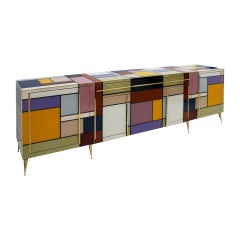
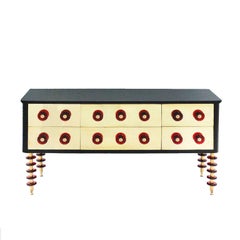
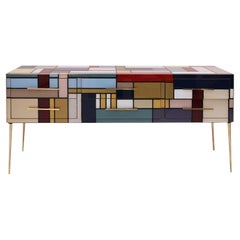
Mid Modern Style Italian Sideboard, Solid Wood & Colored Glass, Six Drawers
By L.A. Studio
Located in Madrid, ES
Italian sideboard designed by L.A. Studio. Made of solid wood structure, covered in colored glass. Brass profiles and handles. Composed of six drawers. Made in Italy. This elegant I...
Category

21st Century and Contemporary Italian Mid-Century Modern Madrid

Materials

Brass

Art Deco Aquamarine and Diamond Platinum Ring
Located in MADRID, ES
This Art Deco-style ring is crafted in Platinum 950 and features an aquamarine and diamonds. It has a weight of 11.2 grams and is sized ES 13.5 / EU 53.5 / US 6.5 / 17 mm. The ring i...
Category

1930s Unknown Art Deco Vintage Madrid

Materials

Aquamarine, Diamond, Platinum

Art Deco 0.60ct Diamonds & 1 ct Natural Sapphire 18k gold Ring
Located in MADRID, ES
A stunning Art Deco ring from 1935, crafted in 18k gold and featuring brilliant-cut diamonds and a natural sapphire, perfect for collectors or those who appreciate vintage elegance. ...
Category

1930s Unknown Art Deco Vintage Madrid

Materials

Diamond, Sapphire, 18k Gold

Pair of Monumental Sculpted Panels from the Eighteenth Century
Located in Madrid, ES
PAIR OF MONUMENTAL CARVED PANELS FROM THE 18TH CENTURY IMPORTANT SPANISH BAROQUE 18TH CENTURY WOODEN PANELS ATTRIBUTED TO: Luis Bonifás y...
Category

18th Century Antique Madrid

Materials

Fruitwood

Large Solid Wood Carved Elephant - India, Early 1900s
Located in Madrid, ES
We present to you a large solid wood carved elephant from India dating from the early 1900s. This exceptional piece is made from a dense, dark wood similar to ebony and is adorned with ivory marquetry inlay work. This masterpiece reflects the finesse and complexity of Indian craftsmanship of the time. Key Features: Quality Solid Wood: Carved from a dense, noble wood similar to ebony, this elephant has a natural beauty and remarkable durability. The dark wood provides a striking contrast to the delicate ivory inlays. Intricate Ivory Marquetry: The marquetry work, of great precision, is a testament to Indian craftsmanship. Each piece of ivory is meticulously inlaid into the wood, forming intricate patterns that emphasize the majesty of the elephant. Condition: Despite its age, this sculpture is in good condition. It has stood the test of time while retaining its charm and structural integrity. Specifications: Materials: Solid wood (similar to ebony) and ivory inlays Era: Early 20th century (1900s) Dimensions: 60 cm high x 46 cm wide x 30 cm deep A Masterpiece of Indian Craftsmanship: This large solid wood elephant...
Category

Early 20th Century Madrid

Materials

Fruitwood

Napoleon III Crystal Vase, Empire, France 19th Century with Video
By Empire Furniture
Located in Madrid, ES
Napoleon III Crystal Vase - Empire - France 19th century with gilt bronze and diamond padding on the bases. Classic proportions and design. H-35cm. Width: 20cm, Height: 35cm, Depth: ...
Category

19th Century French Empire Antique Madrid

Materials

Crystal, Bronze

18th Century Set Six Swedish Chairs Gustavian Period
By Melchior Lundberg
Located in Madrid, ES
A set of six elegant and exceptional Swedish chairs from the Gustavian period, two of which are marked by Melchior Lundberg, a chairmaker in Stockholm (1714-1816). Woodcut decoration...
Category

Late 18th Century Swedish Gustavian Antique Madrid

Materials

Pine

18th Century Portuguese " Azulejos " Saint Antony"
Located in Madrid, ES
Largest collection of Portuguese tiles in the world 18th Century Portuguese " Saint Antony " Measures: 266 cm x 168 cm Important note: This panel is with the tiles restored 18th c...
Category

18th Century Portuguese Baroque Antique Madrid

Materials

Ceramic

Nuke Duke by Marcelo Martin Burgos - Bronze sculpture, golden, fantastic monster
By Marcelo Martin Burgos
Located in Paris, FR
Nuke Duke is a polished bronze sculpture by contemporary artist Marcelo Martin Burgos, dimensions are 70 × 92 × 24 cm (27.6 × 36.2 × 9.4 in). The sculpture is signed and numbered, i...
Category

2010s Contemporary Madrid

Materials

Bronze, Steel

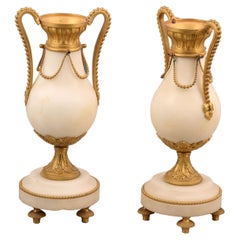
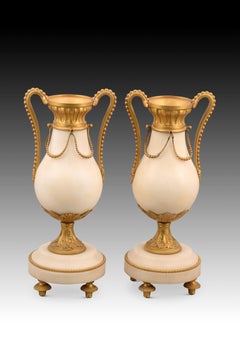
Magnificent Pair of Vases on Pedestals
Located in Madrid, ES
Discover a touch of elegance and history with our stunning Pair of Stone Vases on Pedestals from the 20th Century. These exquisite pieces are not only in excellent condition but also...
Category

1950s Vintage Madrid

Materials

Stone

Extremly Rare Mexican Silver Miquelet-Lock Blunderbuss Belt Pistol Flintlock
Located in Madrid, ES
Extremly Rare South American Silver-Mounted Miquelet-Lock Blunderbuss Belt Pistol Late 18th century, Mexican With a roped silver band around the turned and belled muzzle, the forward sections polygonal and inlaid with silver fronds, octagonal breeches with silver foliage on the flats either side, a broad silver band at the rear, foliate engraved tangs, characteristic locks with fluted mount beneath the pan enclosing the steel-spring, full stocks inlaid with silver panels secured by silver pins and pierced and engraved with foliage inhabited by monsters, birds and a pair of rabits, the last forward of the trigger-guards, and studded with further silver pins. The fore-ends en suite and each inlaid with a silver panel pierced and engraved as a double-headed eagle, foliate engraved silver side-plates each pierced for an iron belt hook...
Category

18th Century Antique Madrid

Materials

Sterling Silver

Armchair Mod. Wink Designed by Toshiyuki Kita for Cassina, 1980s
By Toshiyuki Kita
Located in Ibiza, Spain
Armchair - Chaise longue mod. Wink 111 designed by Toshiyuki Kita in the 80's and edited by Cassina. Structure made in steel and upholstered in cotton fabric with striped pattern in ...
Category

1980s Italian Mid-Century Modern Vintage Madrid

Materials

Steel

Porcelain Sculpture by Javier Calleja and Lladró, Limited Edition
By Javier Calleja
Located in Madrid, ES
Javier Calleja collaborates for the second time with the Spanish company Lladró. As a result of this collaboration, they have created this sculptural piece featuring three figures fr...
Category

21st Century and Contemporary Spanish Madrid

Materials

Pottery, Porcelain, Glass