By John Glick 1
Located in Detroit, MI
SALE ONE WEEK ONLY
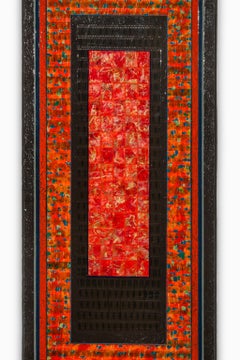
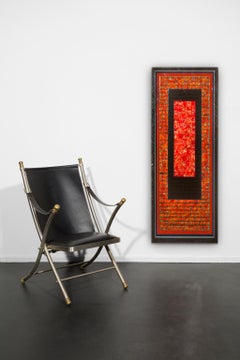
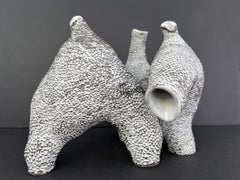
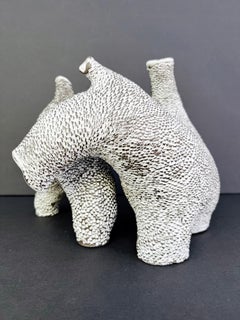
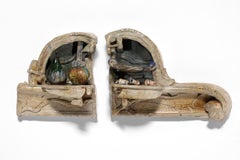
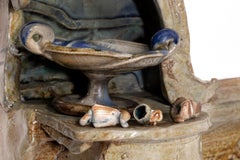
John Glick is well-known for his beautifully rendered functional pieces of art. His decorative pieces, especially his large pots, are breathtakingly powerful objects. Glick's creative genius, however, is most exquisitely shown in this unique grouping of objets d'art. The Wall Hanging has a lovely classical scroll shelf. The objets on the shelf include an apple and pear - both fruits frequently rendered by artists from the Dutch Masters to Cezanne because of their perfectly balanced shape and rich colors. In addition is a small Greek or Roman styled dish used as an oil lamp. The other three objets are mysterious twisted tube-like organic shapes. John Glick, at one of his richest, creative bests. The objets are of various sizes, movable and can be displayed as desired. The size given is the overall size of both pieces and the objets d'art.
"The works in John Glick’s “Mantel Series” are still life tableaux comprised of ordinary, yet intriguing objects that imply a history of people interacting with objects and each other over time. Imagine a lettr or poem from a loved one, once read, tucked among other fabourite things for safekeeping. Or a salty treasure carried in a dampened pocket and later deposited on a cottage shelf to dry, crackle and change. In essence, the mantels hold suggestive collections in which most people can find a part of themselves a link to a personal memory and a connection to a lost moment in time.
His body of work, The Mantel Series, was partially inspired by a memory of a salt box that hung near his grandmother’s kitchen wood stove. For Glick, the unassuming little box, with its pleasing enigmatic shape and wooden lid, conjured pleasant boyhood memories, nostalgia for home and hearth, and vivid awareness of history. Upon his wall-based mantels, the artist placed a well-honed repertoire of distinct objects, all deftly crafted of clay, that become characters in his unspoken drama, each form playing off the others in the ensemble.” Plum Tree Pottery...
Category
1990s American Modern Michigan - Art