Wisconsin - Art

to
43
790
584
471
345
405
Overall Width
to
Overall Height
to
63
195
1,290
1,047
28
19
36
64
50
92
163
161
183
377
16
805
297
136
62
49
48
41
39
36
33
11
3
2
1,120
976
120
870
476
320
312
269
173
156
147
140
136
118
99
97
87
76
73
72
65
59
57
881
406
375
328
316
235
231
80
71
70
726
662
231,346
157,626
Item Ships From: Wisconsin
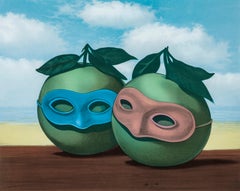
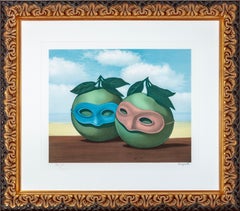
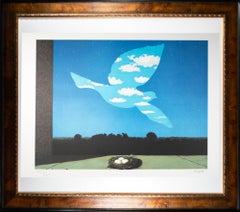
Le Séducteur (The Tempter) Surrealist Lithograph, Framed and Signed

Le Séducteur (The Tempter) Surrealist Lithograph, Framed and Signed

By René Magritte

Located in Milwaukee, WI

Framed 34.25 x 38.50 in Color lithograph after the 1951 oil on canvas by René Magritte, plate-signed by Magritte and numbered from the edition of 300.

Category

Early 2000s Surrealist Wisconsin - Art

Materials

Lithograph

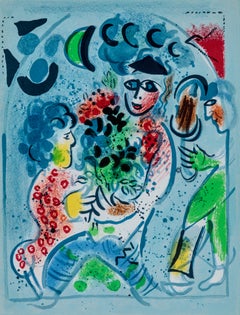
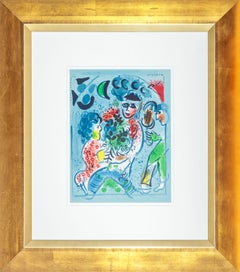
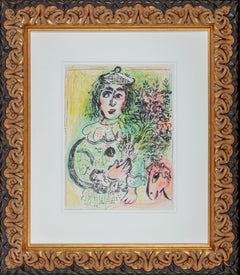
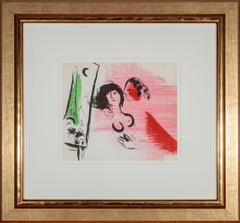
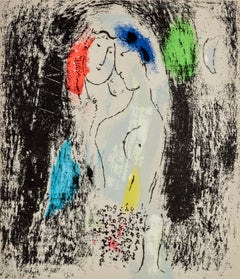
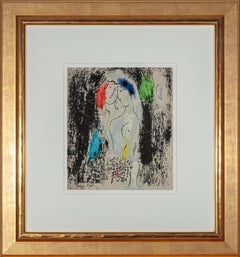
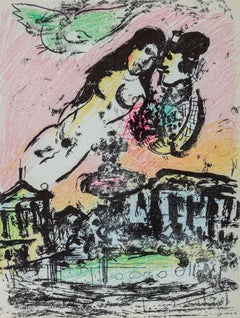
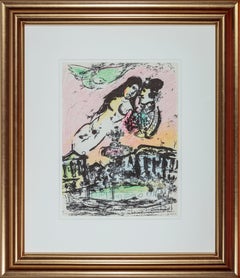
Les Amoureux en Gris Lithograph, Framed, 1950s, Signed, 19x17.75 in

Les Amoureux en Gris Lithograph, Framed, 1950s, Signed, 19x17.75 in

By Marc Chagall

Located in Milwaukee, WI

Framed 19 x 17.75 in No. 194 in the Catalogue Raisonne of Chagall's lithographs This lithograph was created by Chagall especially for this edition of the book "Chagall" by Jacques ...

Category

1950s Wisconsin - Art

Materials

Lithograph

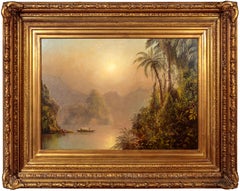
Morning in the Tropics: Late 19th Century Hudson River School Painting

Morning in the Tropics: Late 19th Century Hudson River School Painting

By Frederic Edwin Church

Located in Milwaukee, WI

According to the catalogue raisonne of Church's work, the artist only produced one painting titled Morning in the Tropics (1858). This painting currently resides at the Walters Art M...

Category

Late 19th Century Hudson River School Wisconsin - Art

Materials

Oil, Canvas

Out of the Blue, blue abstract expressionist painting on canvas, textured

Out of the Blue, blue abstract expressionist painting on canvas, textured

By Lisa Fellerson

Located in New York, NY

Lisa Fellerson’s paintings provoke an interplay and tension between line, shape, and color. With no preconceived idea in mind, she begins by dripping, scrapping, and gouging acrylic ...

Category

2010s Abstract Wisconsin - Art

Materials

Canvas, Acrylic

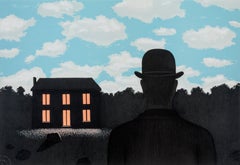
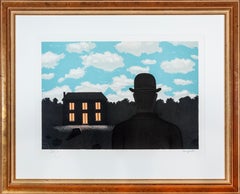
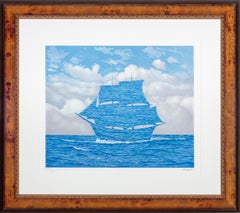
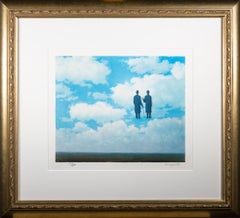
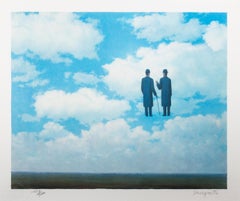
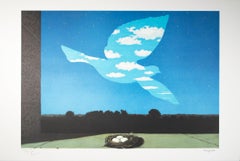
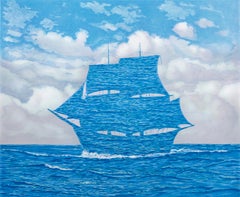
L'Empire des Lumières Lithograph, Surrealist, Signed, Edition of 275

L'Empire des Lumières Lithograph, Surrealist, Signed, Edition of 275

By René Magritte

Located in Milwaukee, WI

Framed 25.38 x 31.38 in Color lithograph after the 1964 oil on canvas by René Magritte, plate-signed by Magritte and numbered from the edition of 275. The lithograph features the ...

Category

2010s Surrealist Wisconsin - Art

Materials

Lithograph

Kees Van Dongen Circus Performers 1900s Vintage Vibrant Figure Fauvist Signed

Kees Van Dongen Circus Performers 1900s Vintage Vibrant Figure Fauvist Signed

By Kees van Dongen

Located in Milwaukee, WI

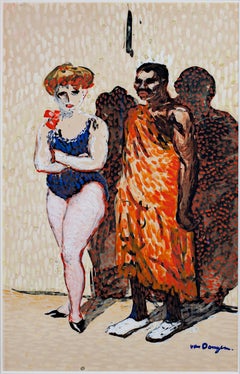
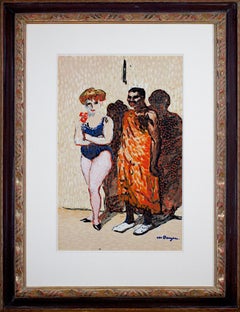
"Les Artistes du Cirque" is an original painting in ink, watercolor, and gouache on paper by leading Fauvist artist Kees Van Dongen, signed in the lower right. In the piece, two circus performers stand against against a wall. On the left, a pale woman in a blue leotard with red flowers on the shoulder stands with her arms crossed, looking out at the viewer. The painter fills in her tights with delicate white brushstrokes, lending them an almost iridescent appearance. Her strawberry blond hair is piled on top of her hair according to the fashion of the period. On the right, an African man stands in a vivid orange toga, looking somewhere off to the left. His feet are clad in bright white shoes...

Category

Early 1900s Fauvist Wisconsin - Art

Materials

Paper, Ink, Watercolor, Gouache

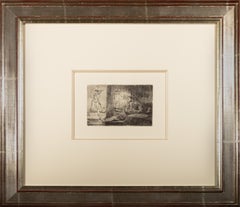
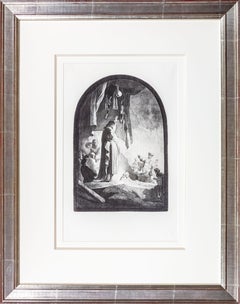
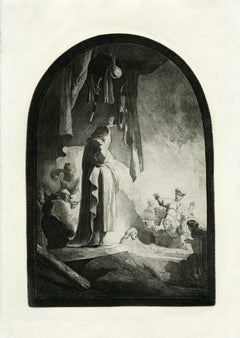
The Raising of Lazarus Etching, Dutch School, Circa 1632, Framed

The Raising of Lazarus Etching, Dutch School, Circa 1632, Framed

By Rembrandt van Rijn

Located in Milwaukee, WI

Etching on Ingres D'arches off-white laid paper, with burin, signed Tenth and final state Posthumous Impression, 1998 14.25 x 10 in (36.2 x 25.4 cm) Framed 25.13 x 32 in The Raising...

Category

1630s Dutch School Wisconsin - Art

Materials

Etching

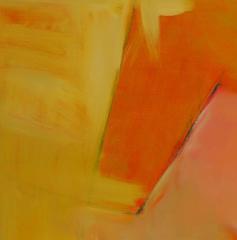
Coralina, pink, orange and coral abstract expressionist painting on canvas

Coralina, pink, orange and coral abstract expressionist painting on canvas

By Lisa Fellerson

Located in New York, NY

Lisa Fellerson’s paintings provoke an interplay and tension between line, shape, and color. With no preconceived idea in mind, she begins by dripping, scrapping, and gouging acrylic ...

Category

2010s Abstract Wisconsin - Art

Materials

Canvas, Acrylic

'Sketching Wisconsin' original oil painting, Signed

'Sketching Wisconsin' original oil painting, Signed

By John Steuart Curry

Located in Milwaukee, WI

John Steuart Curry "Sketching Wisconsin," 1946 oil on canvas 31.13 x 28 inches, canvas 39.75 x 36.75 x 2.5 inches, frame Signed and dated lower right Overall excellent condition Presented in a 24-karat gold leaf hand-carved wood frame John Steuart Curry (1897-1946) was an American regionalist painter active during the Great Depression and into World War II. He was born in Kansas on his family’s farm but went on to study art in Chicago, Paris and New York as young man. In Paris, he was exposed to the work of masters such as Peter Paul Rubens, Eugène Delacroix and Jacques-Louis David. As he matured, his work showed the influence of these masters, especially in his compositional decisions. Like the two other Midwestern regionalist artists that are most often grouped with him, Grant Wood (American, 1891-1942) and Thomas Hart Benton (American, 1889-1975), Curry was interested in representational works containing distinctly American subject matter. This was contrary to the popular art at the time, which was moving closer and closer to abstraction and individual expression. Sketching Wisconsin is an oil painting completed in 1946, the last year of John Steuart Curry’s life, during which time he was the artist-in-residence at the University of Wisconsin in Madison. The painting is significant in Curry’s body of work both as a very revealing self-portrait, and as a landscape that clearly and sensitively depicts the scenery of southern Wisconsin near Madison. It is also a portrait of the artist’s second wife, Kathleen Gould Curry, and is unique in that it contains a ‘picture within a picture,’ a compositional element that many early painting masters used to draw the eye of the viewer. This particular artwork adds a new twist to this theme: Curry’s wife is creating essentially the same painting the viewer is looking at when viewing Sketching Wisconsin. The triangular composition of the figures in the foreground immediately brings focus to a younger Curry, whose head penetrates the horizon line and whose gaze looks out towards the viewer. The eye then moves down to Mrs. Curry, who, seated on a folding stool and with her hand raised to paint the canvas on the easel before her, anchors the triangular composition. The shape is repeated in the legs of the stool and the easel. Behind the two figures, stripes of furrowed fields fall away gently down the hillside to a farmstead and small lake below. Beyond the lake, patches of field and forest rise and fall into the distance, and eventually give way to blue hills. Here, Curry has subverted the traditional artist’s self-portrait by portraying himself as a farmer first and an artist second. He rejects what he sees as an elitist art world of the East Coast and Europe. In this self-portrait he depicts himself without any pretense or the instruments of his profession and with a red tractor standing in the field behind him as if he was taking a break from the field work. Here, Curry’s wife symbolizes John Steuart Curry’s identity as an artist. Compared with a self-portrait of the artist completed a decade earlier, this work shows a marked departure from how the artist previously presented and viewed himself. In the earlier portrait, Curry depicted himself in the studio with brushes in hand, and with some of his more recognizable and successful canvases behind him. But in Sketching Wisconsin, Curry has taken himself out of the studio and into the field, indicating a shift in the artist’s self-conception. Sketching Wisconsin’s rural subject also expresses Curry’s populist ideals, that art could be relevant to anyone. This followed the broad educational objectives of UW’s artist-in-residence program. Curry was appointed to his position at the University of Wisconsin in 1937 and was the first person to hold any such position in the country, the purpose of which was to serve as an educational resource to the people of the state. He embraced his role at the University with zeal and not only opened the doors of his campus studio in the School of Agriculture to the community, but also spent a great deal of time traveling around the state of Wisconsin to visit rural artists who could benefit from his expertise. It was during his ten years in the program that Curry was able to put into practice his belief that art should be meaningful to the rural populace. However, during this time he also struggled with public criticism, as the dominant forces of the art market were moving away from representation. Perhaps it was Curry’s desire for public acceptance during the latter part of his career that caused him to portray himself as an Everyman in Sketching Wisconsin. Beyond its importance as a portrait of the artist, Sketching Wisconsin is also a detailed and sensitive landscape that shows us Curry’s deep personal connection to his environment. The landscape here can be compared to Wisconsin Landscape of 1938-39 (the Metropolitan Museum of Art), which presents a similar tableau of rolling hills with a patchwork of fields. Like Wisconsin Landscape, this is an incredibly detailed and expressive depiction of a place close to the artist’s heart. This expressive landscape is certainly the result of many hours spent sketching people, animals, weather conditions and topography of Wisconsin as Curry traveled around the state. The backdrop of undulating hills and the sweeping horizon, and the emotions evoked by it, are emphatically recognizable as the ‘driftless’ area of south-central Wisconsin. But while the Metropolitan’s Wisconsin Landscape conveys a sense of uncertainty or foreboding with its dramatic spring cloudscape and alternating bands of light and dark, Sketching Wisconsin has a warm and reflective mood. The colors of the foliage indicate that it is late summer and Curry seems to look out at the viewer approvingly, as if satisfied with the fertile ground surrounding him. The landscape in Sketching Wisconsin is also revealing of what became one of Curry’s passions while artist-in-residence at UW’s School of Agriculture – soil conservation. When Curry was a child in Kansas, he saw his father almost lose his farm and its soil to the erosion of The Dust Bowl. Therefore, he was very enthusiastic about ideas from UW’s School of Agriculture on soil conservation methods being used on Wisconsin farms. In Sketching Wisconsin, we see evidence of crop rotation methods in the terraced stripes of fields leading down the hillside away from the Curry’s and in how they alternate between cultivated and fallow fields. Overall, Sketching Wisconsin has a warm, reflective, and comfortably pastoral atmosphere, and the perceived shift in Curry’s self-image that is evident in the portrait is a positive one. After his rise to favor in the art world in the 1930’s, and then rejection from it due to the strong beliefs presented in his art, Curry is satisfied and proud to be farmer in this self-portrait. Curry suffered from high blood...

Category

1940s American Realist Wisconsin - Art

Materials

Canvas, Oil

"Moche Owl Pot, " Animalic Ceramic Vessel created in Pre-Columbian Peru

"Moche Owl Pot, " Animalic Ceramic Vessel created in Pre-Columbian Peru

Located in Milwaukee, WI

This piece is a pot made by an unknown artist in Pre-Columbian Peru. It takes the shape of an owl and has a circular handle with the opening on its back. This pot is a light beige an...

Category

15th Century and Earlier Wisconsin - Art

Materials

Ceramic

17th century etching Rembrandt biblical scene crucifixion figures

17th century etching Rembrandt biblical scene crucifixion figures

By Rembrandt van Rijn

Located in Milwaukee, WI

Rembrandt's print 'Christ Crucified Between Two Thieves: an oval plate' is one of the most captivating of the artist's oeuvre. Etched to an oval rather than a rectangular plate and t...

Category

1640s Dutch School Wisconsin - Art

Materials

Paper, Etching, Printer's Ink, Drypoint

"Requiem/Let Them Be, " Etching and Aquatint signed by Joan Snyder

"Requiem/Let Them Be, " Etching and Aquatint signed by Joan Snyder

By Joan Snyder

Located in Milwaukee, WI

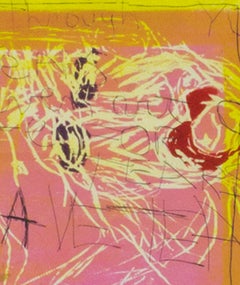
"Requiem" is an original etching and aquatint by Joan Snyder. The artist signed the piece, and the edition is of 120. This piece features abstract, expressionist text and an striking portrait of a woman with red lipstick on a pink background. 25 5/8" x 20" art 32" x 26" frame Joan Snyder was born on April 16, 1940, in Highland Park, New Jersey. She received her AB from Douglass College in New Brunswick, New Jersey (1962), and an MFA from Rutgers University in New Brunswick, New Jersey (1966). She was the recipient of a National Endowment for the Arts Fellowship (1974) and a John Simon Guggenheim Memorial Fellowship (1983). Snyder lives in Brooklyn and Woodstock, New York. Although Snyder’s paintings are often placed under various art-movement umbrellas—Abstract...

Category

1990s Contemporary Wisconsin - Art

Materials

Etching, Aquatint

"Silence and Distance, " an Abstract Oil Painting on Canvas by Dierdre Schanen

"Silence and Distance, " an Abstract Oil Painting on Canvas by Dierdre Schanen

By Deirdre Schanen

Located in Milwaukee, WI

"Silence and Distance" is a contemporary abstract painting of light green, pink, black and gold. Oil on canvas, 2016. The artist signed the artwork on the verso. 48" x 36" canvas ...

Category

2010s Abstract Expressionist Wisconsin - Art

Materials

Canvas, Oil

"22k Gold Leaf Handmade Photo Frame, " Wood 4 x 6 in from Romania

"22k Gold Leaf Handmade Photo Frame, " Wood 4 x 6 in from Romania

Located in Milwaukee, WI

This photo frame was hand-made in Romania and features 22K gold leafing. It is made out of wood and includes archival plexiglass to protect anything displayed in it from fading or ot...

Category

2010s Wisconsin - Art

Materials

Gold Leaf

"From the Series Cheval et Chevalier, " a Lithograph signed by Marino Marini

"From the Series Cheval et Chevalier, " a Lithograph signed by Marino Marini

By Marino Marini

Located in Milwaukee, WI

"From the Series Cheval et Chevalier" is an original color lithograph signed in the lower right by the artist, Marino Marini. It depicts three red abstracted horses and their riders ...

Category

1970s Post-Modern Wisconsin - Art

Materials

Lithograph

Ultramarine Oval (Colorful Abstract Three Dimensional Wood Wall Sculpture)

Ultramarine Oval (Colorful Abstract Three Dimensional Wood Wall Sculpture)

By Peter Hoffman

Located in Hudson, NY

Large vertical abstract three-dimensional wood wall sculpture with colorful pops of acrylic paint in blue, red, yellow, and red "Ultramarine Oval" by Hudson Valley artist, Peter Hoff...

Category

2010s Abstract Wisconsin - Art

Materials

Wood, Acrylic

19th century color lithograph landscape figures horseback house scene trees sky

19th century color lithograph landscape figures horseback house scene trees sky

By Nathaniel Currier

Located in Milwaukee, WI

The present print is one of several examples produced for Nathaniel Currier by his longtime collaborator Frances F. "Fanny" Palmer. Harry T. Peters wrote of her: "There is no more interesting and appealing character among the group of artists who worked for Currier & Ives than Fanny Palmer. In an age when women, well-bred women in particular, did not generally work for a living Fanny Palmer for years did exacting, full-time work in order to support a large and dependent family ... Her work ... had great charm, homeliness, and a conscientious attention to detail." One of a series of four prints showing American country life in different seasons, the image presents the viewer with a picturesque view of a successful American farm. In the foreground, a gentleman rides a horse with a young boy before a respectable Italianate country house. Two women and a young girl pick flowers in the garden and several farm workers attend to their duties. Beyond are other homes and a city on the coast. 16.63 x 23.75 inches, artwork 28.13 x 33.38 inches, frame Entitled bottom center "American Country Life - May Morning" Signed in the stone, lower left "F.F. Palmer, Del." Signed in the stone, lower right "Lith. by N. Currier" Copyrighted lower center "Entered according to Act of Congress in the year 1855 by N. Currier in the Clerk's office of the Southern District of N.Y." Inscribed bottom center "New York, Published by N. Currier 152 Nassau Street" Framed to conservation standards using silk-lined 100 percent rag matting and Museum Glass with a gold gilded liner, all housed in a stained wood moulding. Nathaniel Currier was a tall introspective man with a melancholy nature. He could captivate people with his piercing stare or charm them with his sparkling blue eyes. Nathaniel was born in Roxbury, Massachusetts on March 27th, 1813, the second of four children. His parents, Nathaniel and Hannah Currier, were distant cousins who lived a humble yet spartan life. When Nathaniel was eight years old, tragedy struck. Nathaniel’s father unexpectedly passed away leaving Nathaniel and his eleven-year-old brother Lorenzo to provide for the family. In addition to their mother, Nathaniel and Lorenzo had to care for six-year-old sister Elizabeth and two-year-old brother Charles. Nathaniel worked a series of odd jobs to support the family, and at fifteen, he started what would become a life-long career when he apprenticed in the Boston lithography shop of William and John Pendleton. A Bavarian gentleman named Alois Senefelder invented lithography just 30 years prior to young Nat Currier’s apprenticeship. While under the employ of the brothers Pendleton, Nat was taught the art of lithography by the firm’s chief printer, a French national named Dubois, who brought the lithography trade to America. Lithography involves grinding a piece of limestone flat and smooth then drawing in mirror image on the stone with a special grease pencil. After the image is completed, the stone is etched with a solution of aqua fortis leaving the greased areas in slight relief. Water is then used to wet the stone and greased-ink is rolled onto the raised areas. Since grease and water do not mix, the greased-ink is repelled by the moisture on the stone and clings to the original grease pencil lines. The stone is then placed in a press and used as a printing block to impart black on white images to paper. In 1833, now twenty-years old and an accomplished lithographer, Nat Currier left Boston and moved to Philadelphia to do contract work for M.E.D. Brown, a noted engraver and printer. With the promise of good money, Currier hired on to help Brown prepare lithographic stones of scientific images for the American Journal of Sciences and Arts. When Nat completed the contract work in 1834, he traveled to New York City to work once again for his mentor John Pendleton, who was now operating his own shop located at 137 Broadway. Soon after the reunion, Pendleton expressed an interest in returning to Boston and offered to sell his print shop to Currier. Young Nat did not have the financial resources to buy the shop, but being the resourceful type he found another local printer by the name of Stodart. Together they bought Pendleton’s business. The firm ‘Currier & Stodart’ specialized in "job" printing. They produced many different types of printed items, most notably music manuscripts for local publishers. By 1835, Stodart was frustrated that the business was not making enough money and he ended the partnership, taking his investment with him. With little more than some lithographic stones, and a talent for his trade, twenty-two year old Nat Currier set up shop in a temporary office at 1 Wall Street in New York City. He named his new enterprise ‘N. Currier, Lithographer’ Nathaniel continued as a job printer and duplicated everything from music sheets to architectural plans. He experimented with portraits, disaster scenes and memorial prints, and any thing that he could sell to the public from tables in front of his shop. During 1835 he produced a disaster print Ruins of the Planter's Hotel, New Orleans, which fell at two O’clock on the Morning of the 15th of May 1835, burying 50 persons, 40 of whom Escaped with their Lives. The public had a thirst for newsworthy events, and newspapers of the day did not include pictures. By producing this print, Nat gave the public a new way to “see” the news. The print sold reasonably well, an important fact that was not lost on Currier. Nat met and married Eliza Farnsworth in 1840. He also produced a print that same year titled Awful Conflagration of the Steamboat Lexington in Long Island Sound on Monday Evening, January 18, 1840, by which melancholy occurrence over One Hundred Persons Perished. This print sold out very quickly, and Currier was approached by an enterprising publication who contracted him to print a single sheet addition of their paper, the New York Sun. This single page paper is presumed to be the first illustrated newspaper ever published. The success of the Lexington print launched his career nationally and put him in a position to finally lift his family up. In 1841, Nat and Eliza had their first child, a son they named Edward West Currier. That same year Nat hired his twenty-one year old brother Charles and taught him the lithography trade, he also hired his artistically inclined brother Lorenzo to travel out west and make sketches of the new frontier as material for future prints. Charles worked for the firm on and off over the years, and invented a new type of lithographic crayon which he patented and named the Crayola. Lorenzo continued selling sketches to Nat for the next few years. In 1843, Nat and Eliza had a daughter, Eliza West Currier, but tragedy struck in early 1847 when their young daughter died from a prolonged illness. Nat and Eliza were grief stricken, and Eliza, driven by despair, gave up on life and passed away just four months after her daughter’s death. The subject of Nat Currier’s artwork changed following the death of his wife and daughter, and he produced many memorial prints and sentimental prints during the late 1840s. The memorial prints generally depicted grief stricken families posed by gravestones (the stones were left blank so the purchasers could fill in the names of the dearly departed). The sentimental prints usually depicted idealized portraits of women and children, titled with popular Christian names of the day. Late in 1847, Nat Currier married Lura Ormsbee, a friend of the family. Lura was a self-sufficient woman, and she immediately set out to help Nat raise six-year-old Edward and get their house in order. In 1849, Lura delivered a son, Walter Black Currier, but fate dealt them a blow when young Walter died one year later. While Nat and Lura were grieving the loss of their new son, word came from San Francisco that Nat’s brother Lorenzo had also passed away from a brief illness. Nat sank deeper into his natural quiet melancholy. Friends stopped by to console the couple, and Lura began to set an extra place at their table for these unexpected guests. She continued this tradition throughout their lives. In 1852, Charles introduced a friend, James Merritt Ives, to Nat and suggested he hire him as a bookkeeper. Jim Ives was a native New Yorker born in 1824 and raised on the grounds of Bellevue Hospital where his father was employed as superintendent. Jim was a self-trained artist and professional bookkeeper. He was also a plump and jovial man, presenting the exact opposite image of his new boss. Jim Ives met Charles Currier through Caroline Clark, the object of Jim’s affection. Caroline’s sister Elizabeth was married to Charles, and Caroline was a close friend of the Currier family. Jim eventually proposed marriage to Caroline and solicited an introduction to Nat Currier, through Charles, in hopes of securing a more stable income to support his future wife. Ives quickly set out to improve and modernize his new employer’s bookkeeping methods. He reorganized the firm’s sizable inventory, and used his artistic skills to streamline the firm’s production methods. By 1857, Nathaniel had become so dependent on Jims’ skills and initiative that he offered him a full partnership in the firm and appointed him general manager. The two men chose the name ‘Currier & Ives’ for the new partnership, and became close friends. Currier & Ives produced their prints in a building at 33 Spruce Street where they occupied the third, fourth and fifth floors. The third floor was devoted to the hand operated printing presses that were built by Nat's cousin, Cyrus Currier, at his shop Cyrus Currier & Sons in Newark, NJ. The fourth floor found the artists, lithographers and the stone grinders at work. The fifth floor housed the coloring department, and was one of the earliest production lines in the country. The colorists were generally immigrant girls, mostly German, who came to America with some formal artistic training. Each colorist was responsible for adding a single color to a print. As a colorist finished applying their color, the print was passed down the line to the next colorist to add their color. The colorists worked from a master print displayed above their table, which showed where the proper colors were to be placed. At the end of the table was a touch up artist who checked the prints for quality, touching-in areas that may have been missed as it passed down the line. During the Civil War, demand for prints became so great that coloring stencils were developed to speed up production. Although most Currier & Ives prints were colored in house, some were sent out to contract artists. The rate Currier & Ives paid these artists for coloring work was one dollar per one hundred small folios (a penny a print) and one dollar per one dozen large folios. Currier & Ives also offered uncolored prints to dealers, with instructions (included on the price list) on how to 'prepare the prints for coloring.' In addition, schools could order uncolored prints from the firm’s catalogue to use in their painting classes. Nathaniel Currier and James Merritt Ives attracted a wide circle of friends during their years in business. Some of their more famous acquaintances included Horace Greeley, Phineas T. Barnum, and the outspoken abolitionists Rev. Henry Ward, and John Greenleaf Whittier (the latter being a cousin of Mr. Currier). Nat Currier and Jim Ives described their business as "Publishers of Cheap and Popular Pictures" and produced many categories of prints. These included Disaster Scenes, Sentimental Images, Sports, Humor, Hunting Scenes, Politics, Religion, City and Rural Scenes, Trains, Ships, Fire Fighters, Famous Race Horses, Historical Portraits, and just about any other topic that satisfied the general public's taste. In all, the firm produced in excess of 7500 different titles, totaling over one million prints produced from 1835 to 1907. Nat Currier retired in 1880, and signed over his share of the firm to his son Edward. Nat died eight years later at his summer home 'Lion’s Gate' in Amesbury, Massachusetts. Jim Ives remained active in the firm until his death in 1895, when his share of the firm passed to his eldest son, Chauncey. In 1902, faced will failing health from the ravages of Tuberculosis, Edward Currier sold his share of the firm to Chauncey Ives...

Category

Mid-19th Century Romantic Wisconsin - Art

Materials

Watercolor, Lithograph

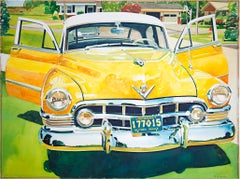
Contemporary watercolor photorealist car closeup painting reflection signed

Contemporary watercolor photorealist car closeup painting reflection signed

By Bruce McCombs

Located in Milwaukee, WI

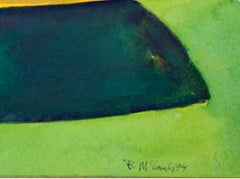
"Yellow Cadillac" is an original watercolor painting by Bruce McCombs. The artist signed the piece lower right. It reatures a shiny yellow car with its doors open sitting on a suburb...

Category

1990s Photorealist Wisconsin - Art

Materials

Watercolor

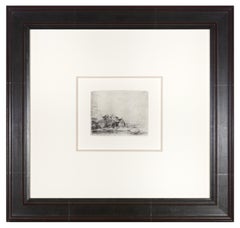
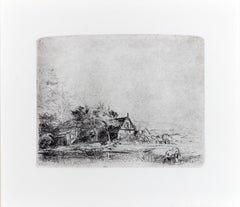
17th century etching Rembrandt landscape house trees field sky cow

17th century etching Rembrandt landscape house trees field sky cow

By Rembrandt van Rijn

Located in Milwaukee, WI

This piece is from a collection of originally designed etchings with drypoints by Rembrandt. It is printed on Ingres D'arches off-white laid paper. The prints are the sixth and final state Posthumous Impression. Printing plates were made in 1650, this collection was printed in 1998. Rembrandt van Rijn was one of the masters of the landscape genre in his prints and drawings. In his etching, "Landscape with a Cow...

Category

17th Century Renaissance Wisconsin - Art

Materials

Etching

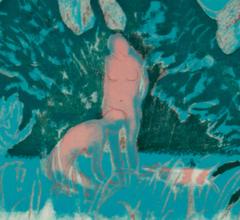
Nude Oil Female Figure Realism Expressionism Contemporary Signed

Nude Oil Female Figure Realism Expressionism Contemporary Signed

By Christiane Bouret

Located in Milwaukee, WI

Christiane Bouret is a painter that works with oil paint to create figurative artworks and portraits, and the present painting is an excellent example of her work. In the image, we s...

Category

2010s Naturalistic Wisconsin - Art

Materials

Canvas, Oil

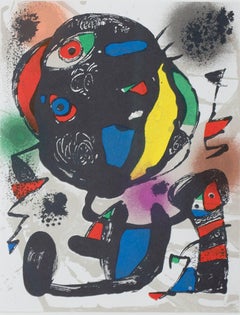
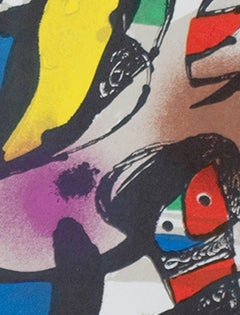
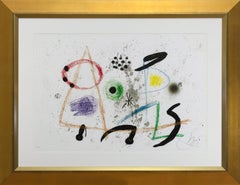
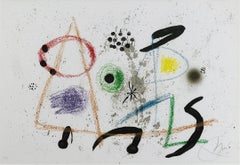
Maravillas con variaciones acrósticas en el jardín de Miró, 1975, (VI/XV)

Maravillas con variaciones acrósticas en el jardín de Miró, 1975, (VI/XV)

By Joan Miró

Located in Milwaukee, WI

Joan Miró produced this original color lithograph especially for Rafael Alberti's text 'Maravillas con Variaciones Acrósticas en el Jardín de Miró' (Wonders with Acrostic Variations ...

Category

Late 20th Century Wisconsin - Art

Materials

Lithograph

Center Stage

Lisa FellersonCenter Stage, 2023

$6,000Sale Price|30% Off

Center Stage

By Lisa Fellerson

Located in New York, NY

Acrylic on canvas

Category

2010s Abstract Expressionist Wisconsin - Art

Materials

Canvas, Acrylic

Touissant L'Ouverture and Noblemen on Horseback, Mid-20th Century

Touissant L'Ouverture and Noblemen on Horseback, Mid-20th Century

Located in Milwaukee, WI

Framed 24.50 x 28.50 in Signed Lower Right Artist bio: Born in 1950 in Trou du Nord, Jean is a Haitian painter who typically paints humorous scenes of common people. He has been a m...

Category

Mid-20th Century Wisconsin - Art

Materials

Acrylic, Masonite

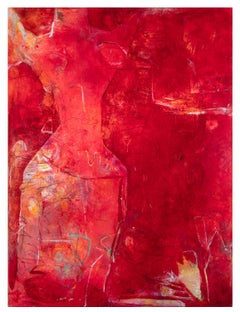
colorful contemporary abstract oil painting expressionist red figure signed

colorful contemporary abstract oil painting expressionist red figure signed

By Alayna Rose

Located in Milwaukee, WI

"And She Was Red" is an original oil painting on canvas created by Alayna Rose. Layers of red with expressionist mark making, this contemporary abstract painting depicts the complexi...

Category

2010s Abstract Wisconsin - Art

Materials

Oil

La Tempete Etching by Claude Lorrain, Old Masters, Early 17th Century

La Tempete Etching by Claude Lorrain, Old Masters, Early 17th Century

By Claude Lorrain

Located in Milwaukee, WI

"La Tempete" is an original etching by Claude Lorrain (Claude Gellee). This is Claude's earliest dated etching (1630). The work depicts a storm-tossed sea with ships on the verge of ...

Category

Early 17th Century Old Masters Wisconsin - Art

Materials

Etching

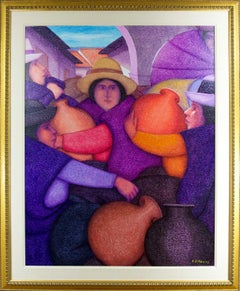
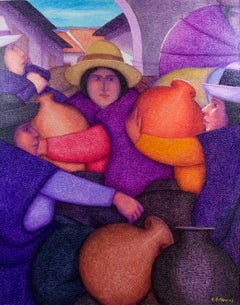
Contemporary figurative textured oil painting women in hats colorful signed

Contemporary figurative textured oil painting women in hats colorful signed

By Ernesto Gutierrez (b.1941)

Located in Milwaukee, WI

"Feria De Sombreros (The Hat Market)" by Peruvian artist Ernesto Gutierrez is a 2008 oil on jute painting, signed lower right. 36" x 46" art 48" x 58" framed Ernesto Gutierrez was ...

Category

Early 2000s Contemporary Wisconsin - Art

Materials

Jute, Oil

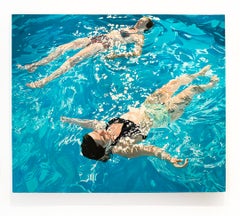
Weightless, Timeless: Oil Painting of Two Women Swimming in Pool

Weightless, Timeless: Oil Painting of Two Women Swimming in Pool

By Samantha French

Located in Hudson, NY

Horizontal figurative photo-realist painting of women swimming in an aqua blue pool "Weightless, Timeless," painted by Hudson Valley artist, Samantha French, is 2019 oil on canvas, 48 x 60 inches Sides are cleanly painted white so additional framing is optional Excellent condition and ready to hang as is This photorealist figurative painting captures a peaceful water scene of a women leisurely floating in a crisp, aqua blue pool. The sunlight reflecting off their sun kissed skin complements the cool color palette, making for a serene visual experience. The brush work is highly detailed with little texture (impasto) on the surface. The horizontal painting on canvas is currently unframed and has clean, white painted sides, so additional framing is optional. About the Artist: Born and raised in north central Minnesota, Samantha French graduated from the Minneapolis College of Art and Design in 2005. French’s current body of work explores the idea of escape, the tranquility and nostalgia for the lazy summer days of her childhood. The series is inspired by Samantha’s own reflections and memories of her childhood summers spent in the lakes of Northern Minnesota. French actively exhibits her paintings and is included in many private and public collections throughout the country while her work has garnered extensive international and national press. She is a full-time painter and keeps a studio in New York’s Hudson Valley. "My current body of work is focused on swimmers underwater and above. Using vague yet consuming memories from my childhood summers spent immersed in the tepid lakes of northern Minnesota, I attempt to recreate the quiet tranquility of water and nature; of days spent sinking and floating, still and peaceful. These paintings are a link to my home and continual search for the feeling of the sun on my face and warm summer days at the lake. They are my escape, a subtle reprieve from the day-to-day. At the same time, I am drawn to an idealistic time before my own, where swim caps and wool swimsuits were commonplace. This combination of memory, observation and photography has allowed me to preserve the transitory qualities of water and remembrance." Artist Resume: 2019 Winter Swim, Rubine Red...

Category

2010s Photorealist Wisconsin - Art
Materials

Canvas, Oil

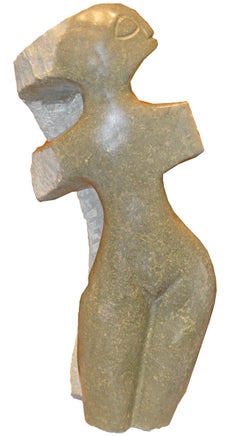
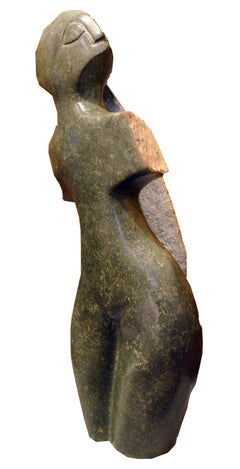
"Giving a Sign (C-33)" Black Serpentine Stone Sculpture by Colleen Madamombe

"Giving a Sign (C-33)" Black Serpentine Stone Sculpture by Colleen Madamombe

By Colleen Madamombe

Located in Milwaukee, WI

"Giving a Sign (C-33)" is an original black serpentine stone sculpture by Colleen Madamombe. The artist signed the piece at the base. This artwork features a woman in a large, textured dress gesturing to her side. 11" x 11" x 6" art Colleen Madamombe was born in 1964 in Harare, Zimbabwe. Considered to be among the finest new talents from Zimbabwe, she has won the award of Best Female Artist of Zimbabwe for the past three consecutive years, and is quickly becoming an established figure of the Second Generation of Zimbabwean stone...

Category

Early 2000s Contemporary Wisconsin - Art

Materials

Stone

Kinderfest (Wie die Alten sungen, so zwitschern die Jungen)

Kinderfest (Wie die Alten sungen, so zwitschern die Jungen)

Located in Milwaukee, WI

Framed 46 x 57.50 in13 Printed by L. Angerer. Engraved by Paul Sigmund Habelmann after the original oil painting by Ludwig Knaus. The inscription "Wie die Alten sungen, so zwitschern...

Category

1860s Wisconsin - Art

Materials

Engraving

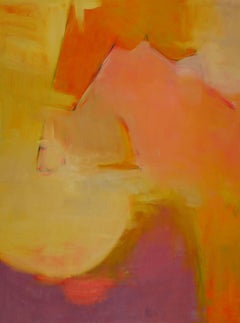
Violet in Violet, purple and lilac abstract expressionist painting

Violet in Violet, purple and lilac abstract expressionist painting

By Lisa Fellerson

Located in New York, NY

Lisa Fellerson’s paintings provoke an interplay and tension between line, shape, and color. With no preconceived idea in mind, she begins by dripping, scrapping, and gouging acrylic ...

Category

2010s Abstract Expressionist Wisconsin - Art

Materials

Canvas, Acrylic

'Red Karo Sphere' original hand-blown glass signed by Ioan Nemtoi

'Red Karo Sphere' original hand-blown glass signed by Ioan Nemtoi

By Ioan Nemtoi

Located in Milwaukee, WI

Ioan Nemtoi's 'Red Karo Sphere' could easily become a centerpiece of any space or of any collection of glass art. The large oval form of the vase and the bright red color has a commanding presence. In addition, the artist's use of a grid-like pattern in the vase is striking, while regions of green and yellow remind of gestural Abstract Expressionist painting. 16 x 15 x 15 inches Signed 'Nemtoi' along the base Ioan Nemtoi was born in 1964 on a farm in Trusesti near Dorohoi, in North-Eastern Romania, as the eldest son of a large family. When Nemtoi was in the fifth grade, one of his teachers noticed his artistic talent and sent him to art school. Later he went on to the art branch...

Category

Early 2000s Contemporary Wisconsin - Art

Materials

Glass, Blown Glass

Contemporary figurative textured oil painting family and child colorful signed

Contemporary figurative textured oil painting family and child colorful signed

By Ernesto Gutierrez (b.1941)

Located in Milwaukee, WI

"La Familia" (The Family) is an original oil painting on jute by Ernesto Gutierrez. The artist signed the piece in the lower right. It depicts a family of people walking through a de...

Category

Early 2000s Contemporary Wisconsin - Art

Materials

Jute, Oil

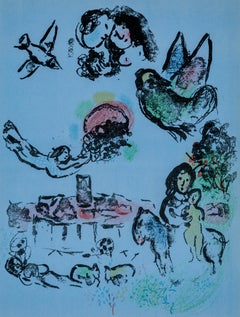
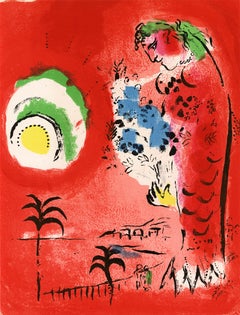
La Baie des Anges Lithograph Print, Framed, Circa 1960, Excellent

La Baie des Anges Lithograph Print, Framed, Circa 1960, Excellent

By Marc Chagall

Located in Milwaukee, WI

Framed 25.75 x 21.75 in No. 286 in the Catalogue Raisonne of Chagall's lithographs This lithograph came from "The Lithographs of Chagall: Volume I" by Fernand Mourlot and Marc Cha...

Category

1960s Wisconsin - Art

Materials

Lithograph

"Satan" from "Je Reve" portfolio, Surrealist Lithograph, Signed

"Satan" from "Je Reve" portfolio, Surrealist Lithograph, Signed

By André Masson

Located in Milwaukee, WI

"Satan" is an original color lithograph by Andre Masson. This piece is from the "Je Reve" (I Dream) portfolio of 1975. The edition number, written lower left, is H.C. XXV/XXV. The ar...

Category

1970s Surrealist Wisconsin - Art
Materials

Lithograph, Paper

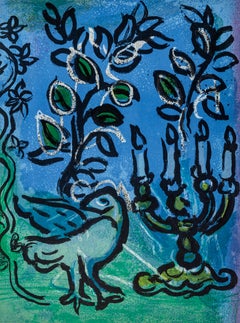
Le Chandelier Lithograph Print, Framed, 1960s, Museum Quality, No. 366

Le Chandelier Lithograph Print, Framed, 1960s, Museum Quality, No. 366

By Marc Chagall

Located in Milwaukee, WI

Framed 24.50 x 21 in No. 366 in the Catalogue Raisonne of Chagall's lithographs Framed with museum-quality archival materials, including museum glass which filters out 99% of harmf...

Category

1960s Wisconsin - Art

Materials

Lithograph

Allure, bright purple abstract painting on canvas

Allure, bright purple abstract painting on canvas

By Lisa Fellerson

Located in New York, NY

Lisa Fellerson’s paintings provoke an interplay and tension between line, shape, and color. With no preconceived idea in mind, she begins by dripping, scrapping, and gouging acrylic ...

Category

2010s Abstract Expressionist Wisconsin - Art
Materials

Canvas, Acrylic

Time for Lime, bright green abstract expressionist painting on canvas

Time for Lime, bright green abstract expressionist painting on canvas

By Lisa Fellerson

Located in New York, NY

Lisa Fellerson’s paintings provoke an interplay and tension between line, shape, and color. With no preconceived idea in mind, she begins by dripping, scrapping, and gouging acrylic ...

Category

2010s Abstract Wisconsin - Art
Materials

Canvas, Acrylic

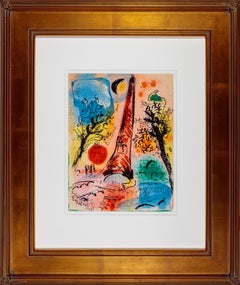
Le Bouquet noir et bleu (The black and blue bouquet)

Le Bouquet noir et bleu (The black and blue bouquet)

By Marc Chagall

Located in Milwaukee, WI

Framed 19 x 17.75 in No. 202 in the Catalogue Raisonne of Chagall's lithographs This lithograph was created by Chagall especially for this edition of the book "Chagall" by Jacques ...

Category

1950s Wisconsin - Art
Materials

Lithograph

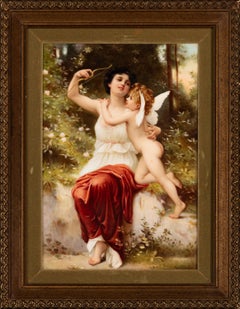
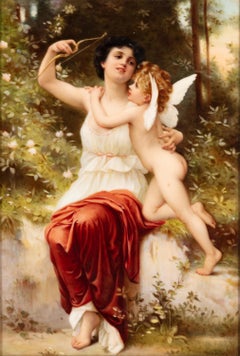
Cupid and Aphrodite: Late 19th Century Porcelain Painting

Cupid and Aphrodite: Late 19th Century Porcelain Painting

Located in Milwaukee, WI

This painting on porcelain depicts the Greek legends Aphrodite and Cupid in radiant light. In this playful scene, Aphrodite holds Cupid's bow just out of his reach. This painting is ...

Category

Late 19th Century Academic Wisconsin - Art
Materials

Porcelain, Oil