362 results for "diego rivera"

to
61
332
26
143
47
218
120
7
104
87
72
39
59
Overall Height
to
Overall Width
to
124
94
46
12
7
3
2
1
1
1
152
77
74
54
30
29
27
26
21
20
14
7
6
6
5
5
4
4
4
4
1
4
277
80
1
4
17
61
28
16
22
24
11
32
1
37
24
21
14
10
135
108
67
62
60
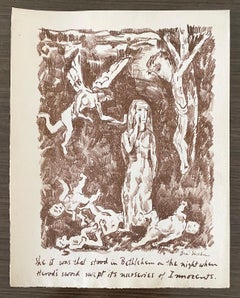
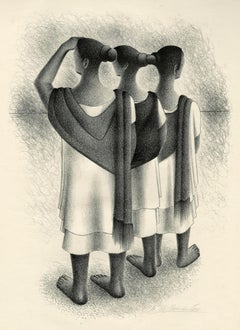
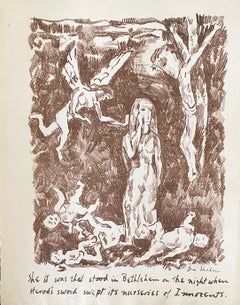
Ben Shahn Original Lithograph From Portfolio - Levana & Our Ladies Of Sorrow

Ben Shahn Original Lithograph From Portfolio - Levana & Our Ladies Of Sorrow

By Ben Shahn

Located in Surfside, FL

SCARCE EARLY WORK. BEN SHAHN Levana and our Lady's Sorrows. lithograph printed in sepia on Papier Ancien, 1931. 13 1/8x9 7/8 inches (sheets), full margins, loose as issued. One of o...

Category

Mid-20th Century American Modern Figurative Prints

Materials

Lithograph

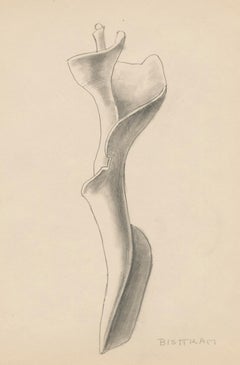
Untitled, Still Life of Shell

Untitled, Still Life of Shell

Located in Fairlawn, OH

Untitled, Still Life of Shell Graphite on paper, 1945-1951 Signed lower right in pencil "Bisttram" (see photo) Condition: Excellent Sheet size: 9.63 x 7 .5 inches EMIL BISTTRAM (189...

Category

1940s American Modern Still-life Drawings and Watercolors

Materials

Graphite

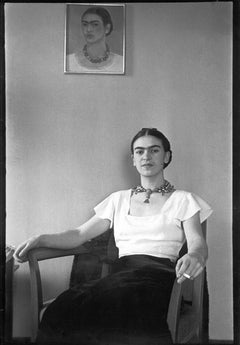
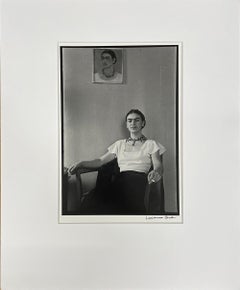
Frida at the Barbizon Plaza Hotel - Black and White Portrait, Celebrity, Woman

Frida at the Barbizon Plaza Hotel - Black and White Portrait, Celebrity, Woman

By Lucienne Bloch

Located in Denton, TX

Frida at the Barbizon Plaza Hotel by Lucienne Bloch is a black and white portrait of Mexican painter Frida Kahlo sitting in a chair under her self portrait hanging on the wall. Im...

Category

1930s Modern Black and White Photography

Materials

Silver Gelatin

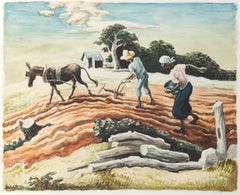
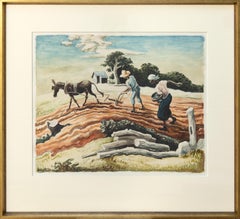
Planting (Spring Plowing) - Watercolor Landscape Painting with Figures, c. 1939

Planting (Spring Plowing) - Watercolor Landscape Painting with Figures, c. 1939

By Thomas Hart Benton

Located in Palm Desert, CA

"Planting (Spring Plowing)", a vibrant watercolor and graphite on paper by Thomas Hart Benton, circa 1939-40, embodies the artist's signature Regionalist style. The work depicts a ru...

Category

Mid-20th Century American Impressionist Figurative Drawings and Watercolors

Materials

Paper, Watercolor, Graphite

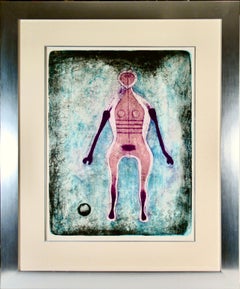
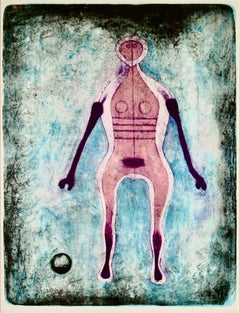
La Negra (The Black Woman)

La Negra (The Black Woman)

By Rufino Tamayo

Located in San Francisco, CA

This artwork titled "La Negra (The Black Woman)" from the suite "The Mujeres File" 1969 is an original colors lithograph on B.F.K. Rives paper by renown Mexican artist Rufino Tamayo, 1899-1991. It is hand signed and numbered 150/150 in pencil by the artist. The image size is 26.85 x 21.25 inches, sheet size is 29.5 x 22.15 inches, framed size is 42 x 35 inches. Published by Touchtone Publisher, New York, printed by Ateliers Desjobert, Paris. Referenced and pictured in the artist's catalogue raisonne by Pereda, plate #109 page 107. Custom framed in a wooden silver frame, with silver spacer and fabric matting. It is in excellent condition. About the artist: A native of Oaxaca in Southern Mexico, Rufino Tamayo's father was a shoemaker, and his mother a seamstress. Some accounts state that he was descended from Zapotec Indians, but he was actually 'mestizo' - of mixed indigenous/European ancestry. (Santa Barbara Museum of Art). He began painting at age 11. Orphaned at the age of 12, Tamayo moved to Mexico City, where he was raised by his maternal aunt who owned a wholesale fruit business. In 1917, he entered the San Carlos Academy of Fine Arts, but left soon after to pursue independent study. Four years later, Tamayo was appointed the head designer of the department of ethnographic drawings at the National Museum of Archaeology in Mexico City. There he was surrounded by pre-Colombian objects, an aesthetic inspiration that would play a pivotal role in his life. In his own work, Tamayo integrated the forms and tones of pre-Columbian ceramics into his early still lives and portraits of Mexican men and women. In the early 1920s he also taught art classes in Mexico City's public schools. Despite his involvement in Mexican history, he did not subscribe to the idea of art as nationalistic propaganda. Modern Mexican art at that time was dominated by 'The Three Great Ones' : Diego Rivera, Jose Clemente Orozco, and David Alfaro Siqueros, but Tamayo began to be noted as someone 'new' and different' for his blending of the aesthetics of post Revolutionary Mexico with the vanguard artists of Europe and the United States. After the Mexican Revolution, he focused on creating his own identity in his work, expressing what he thought was the traditional Mexico, and refusing to follow the political trends of his contemporary artists. This caused some to see him as a 'traitor' to the political cause, and he felt it difficult to freely express himself in his art. As a result, he decided to leave Mexico in 1926 and move to New York, along with his friend, the composer Carlos Chavez. The first exhibition of Tamayo's work in the United States was held at the Weyhe Gallery, New York, in that same year. The show was successful, and Tamayo was praised for his 'authentic' status as a Mexican of 'indigenous heritage', and for his internationally appealing Modernist aesthetic. (Santa Barbara Museum of Art). Throughout the late thirties and early forties New York's Valentine Gallery gave him shows. For nine years, beginning in 1938, he taught at the Dalton School in New York. In 1929, some health problems led him to return to Mexico for treatment. While there he took a series of teaching jobs. During this period he became romantically involved with the artist Maria Izquierdo...

Category

Mid-20th Century Modern Figurative Prints

Materials

Lithograph

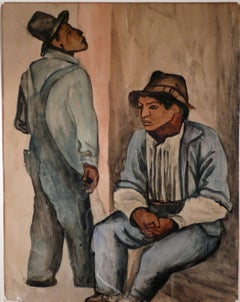
UNTITLED (TWO MEN)

UNTITLED (TWO MEN)

By Pablo O'Higgins

Located in Portland, ME

O'Higgins, Paul or Pablo (Mexican, born USA, 1904-1983). UNTITLED DRAWING (TWO MEN). Watercolor on paper, not dated. Signed "Paul O'Higgins," lower right, so ...

Category

Mid-20th Century Figurative Drawings and Watercolors

Materials

Watercolor

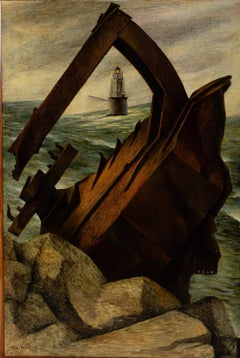
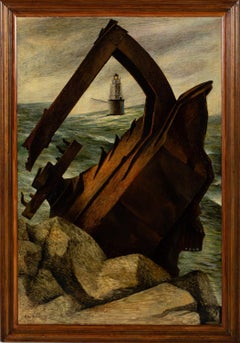
"Motion, " Victor Arnautoff, San Francisco Lighthouse, World's Fair WPA Painting

"Motion, " Victor Arnautoff, San Francisco Lighthouse, World's Fair WPA Painting

By Victor Michail Arnautoff

Located in New York, NY

Victor Mikhail Arnautoff (1896 - 1979) Motion (Mile Rocks Lighthouse), San Francisco, 1939 Oil and tempera on board 60 x 40 inches Signed lower left Provenance: The artist California School of Fine Arts (CFSA) John & Lynne Bolen Fine Arts, Huntington Beach, California Exhibited: New York, World's Fair, Exhibition of Contemporary American Art, 1939. San Francisco Museum of Art, 1962. Literature: American Art from the New York World's Fair 1939, Poughkeepsie, 1987, no. 11, p. 41, illustrated. Robert W. Cherny, Victor Arnautoff and the Politics of Art, Urbana, Illinois, 2017. The lighthouse in the distance is the Mile Rocks Lighthouse in San Francisco Bay, built in 1906 after many shipwrecks made the lighthouse necessary. In 1962 the lighthouse was reduced in size to make room for a helipad. Arnautoff was the son of a Russian Orthodox priest. He showed a talent for art from an early age and hoped to study art after graduating from the gymnasium in Mariupol. With the outbreak of World War I, he enrolled in the Yelizavetgrad Cavalry School. He went on to hold military leadership positions in the army of Nicholas II and the White Siberian army. With the defeat of the Whites in Siberia, he crossed into northeastern China and surrendered his weapons. Arnautoff remained in China for five years. He again tried to pursue art, but was impoverished and took a position training the cavalry of the warlord Zhang Zuolin. He met and married Lydia Blonsky and they had two sons, Michael and Vasily. In November 1925 Arnautoff went to San Francisco on a student visa to study at the California School of Fine Arts. There he studied sculpture with Edgar Walter and painting with several instructors. His wife and children joined him, and they all continued to Mexico in 1929, where, on Ralph Stackpole...

Category

1930s American Realist Landscape Paintings

Materials

Canvas, Oil, Tempera

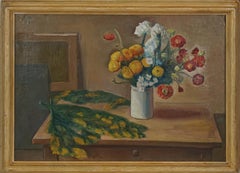
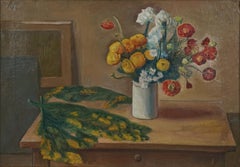
1911 Modern Floral Still Life of Ranunculus and Mustard Oil Painting on Linen

1911 Modern Floral Still Life of Ranunculus and Mustard Oil Painting on Linen

By Walter Pach

Located in Soquel, CA

Wonderful modern floral still life oil painting of ranunculus in white vase and mustard weed on table by acclaimed artist and art critic Walter Pach (American, 1883-1958), 1911. Pach...

Category

1910s Modern Still-life Paintings

Materials

Linen, Oil

Post Office WPA Mural Study American Scene Social Realism Modern 20th Century

Post Office WPA Mural Study American Scene Social Realism Modern 20th Century

By Carlos Lopez

Located in New York, NY

Post Office WPA Mural Study American Scene Social Realism Modern 20th Century Carlos Lopez (1910-1953) "Bounty" WPA Mural Study for Michigan Post Office 19 ½ x 22 ½ inches Oil on B...

Category

1940s American Realist Figurative Paintings

Materials

Oil, Board

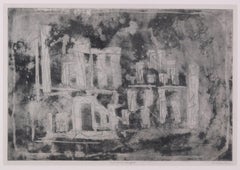
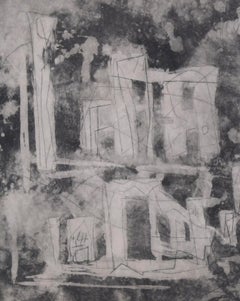
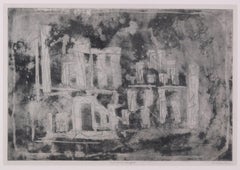
Ancient Landscape II Etching and Drypoint, American Modern, 1953-55

Ancient Landscape II Etching and Drypoint, American Modern, 1953-55

By Louise Nevelson

Located in Fairlawn, OH

Ancient Landscape II (Ancient City) Etching and drypoint, 1953-55 Signed and titled in pencil by the artist (see photos) Annotated: "E130 A/1" in pencil lower right Estate stamp vers...

Category

1950s American Modern Landscape Prints

Materials

Drypoint

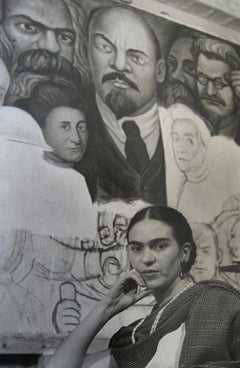
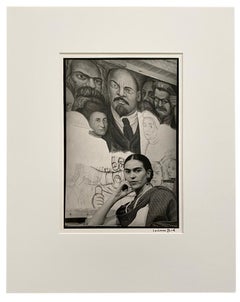
Frida in front of the Unfinished Unity Panel, New Workers School, NY

Frida in front of the Unfinished Unity Panel, New Workers School, NY

By Lucienne Bloch

Located in Denton, TX

Frida in front of the Unfinished Unity Panel by Lucienne Bloch is a black a white portrait of Mexican painter Frida Kahlo, posing in front of Diego Rivera's half painted mural. Ima...

Category

20th Century Modern Portrait Photography

Materials

Silver Gelatin

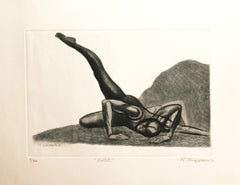
" Ballet "  Raul Anguiano original etching 1970

" Ballet " Raul Anguiano original etching 1970

By Raul Anguiano

Located in Paonia, CO

Ballet is a black and white etching of a ballet dancer performing a modern dance. Raul Anguiano ( 1915 - 2006 ), born in Guadalajara, Mexico was a painter, a muralist , printmake...

Category

1970s Figurative Prints

Materials

Etching

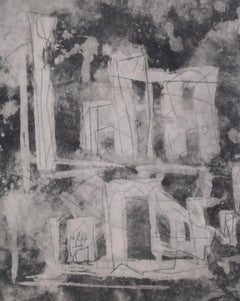
Ancient Landscape II Etching, Abstract Expressionist, Signed, 1950s

Ancient Landscape II Etching, Abstract Expressionist, Signed, 1950s

By Louise Nevelson

Located in Fairlawn, OH

Ancient Landscape II (Ancient City) Etching and drypoint, 1953-1955 Signed and titled in pencil by the artist; (see photo) Annotated: "E130 A/1" in pencil lower right Estate stamp v...

Category

1950s Abstract Expressionist Abstract Prints

Materials

Etching

"Dusk in August" from the Portfolio of Nine

"Dusk in August" from the Portfolio of Nine

By Louise Nevelson

Located in Hinsdale, IL

NEVELSON, LOUISE (1899-1988) "Dusk in August" Lithograph in colors, 1967 Signed, dated, titled, and numbered in pencil lower margin This impression is XVIII/XX Sheet Size: 17” x 22” Published by Hollander’s Workshop with their blindstamp This lithograph by Louise Nevelson was made in collaboration with eight other artists in 1967. The other artists included in this portfolio collaboration are Roy Lichtenstein, Louise Nevelson, Willem de Kooning, Robert Motherwell, Henry Pearson, Sam Francis, Richard Lindner, and Saul Steinberg. Louise Nevelson is one of American’s foremost artists, Nevelson’s sculpted wood assemblages transcended space and transformed the viewer’s perception of art. She was an American sculptor best known for her monochromatic wooden assemblages. During the 1950s, she began to create unique arrangements contained in wooden frames amassed from a range of found objects—usually woodcuts or bits of furniture—that were then painted a uniform black, white, or gold, as seen in her seminal work Royal Tide I (1960). Louise Nevelson emerged in the art world amidst the dominance of the Abstract Expressionist movement. In her most iconic works, she utilized wooden objects that she gathered from urban debris piles to create her monumental installations - a process clearly influenced by the precedent of Marcel Duchamp's found object sculptures and "readymades." Nevelson’s prints share with her sculpture an interest in silhouetted forms and the layering of elements, but distinguish themselves by their vivid color, depth and movement.. Louise Nevelson experimented in several different print mediums. A 1963 Ford Foundation grant enabled June Wayne of the Tamarind Lithography Workshop, Los Angeles, to extend an invitation to Nevelson. This initial collaboration led to twenty six lithographs, mostly black with dark blue or red, which combined hand-drawn elements with printed lace. Nevelson returned to Tamarind in 1967 to complete sixteen large scale lithographs know as Double Imagery. In these lithographs Nevelson played with landscapes of shadows and reflections using irregular shaped papers and a limited palette of black, red, grey and blue. For her brilliant compositions in varied mediums critics hailed her as the leading sculptor of the twentieth century. A pioneering grand dame of the art works, Nevelson’s iconic persona was characterized by her skilled mixing and matching of ethnic clothing...

Category

1960s Abstract Expressionist Abstract Prints

Materials

Lithograph

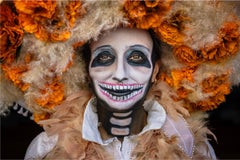
La Catrina, Oaxaca, Mexico by Cristina Mittermeier

La Catrina, Oaxaca, Mexico by Cristina Mittermeier

By Cristina Mittermeier

Located in Chicago, IL

"La Catrina" Oaxaca, Mexico - 2023 20 x 30 in / Edition of 6 - $4,500 Also available: 32 x 48 in / Edition of 6 - $7,500 40 x 60 in / Edition of 6 - $10,500 50 x 75 in / Edition ...

Category

21st Century and Contemporary Contemporary Color Photography

Materials

Archival Pigment

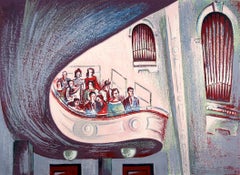
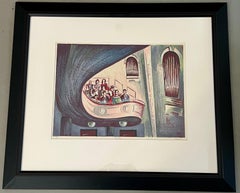
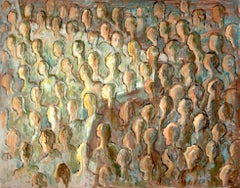
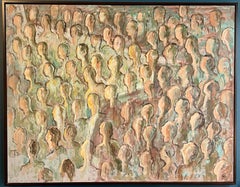
"Audience" Mid 20th Century American Figurative Theatre Performance Contemporary

"Audience" Mid 20th Century American Figurative Theatre Performance Contemporary

By Leon Bibel

Located in New York, NY

"Audience" Mid 20th Century American Figurative Theatre Performance Contemporary Leon Bibel (1912 - 1995) "The Audience," 52 ½ x 41 ¼ inches. Oil on canvas, c. 1963. Signed lower right. Framed. BIO Painter, printmaker and sculptor, Leon Bibel was born in San Francisco in 1913. He trained at the California School of Fine Arts and received a scholarship to study under the German Impressionist Maria Riedelstein. He worked in collaboration with Bernard Zackheim, a student of Diego Rivera, to create frescoes for the San Francisco Jewish Community Center and the University of California Medical School. In 1936 Bibel moved from California to join the Federal Art Project at Harlem Art...

Category

1960s American Modern Figurative Paintings

Materials

Canvas, Oil

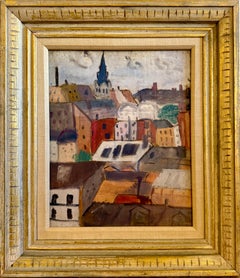
1930's Modernist Oil Painting Paris Rooftops Hazel Guggenheim Mckinley Fauvist

1930's Modernist Oil Painting Paris Rooftops Hazel Guggenheim Mckinley Fauvist

By Hazel Guggenheim McKinley

Located in Surfside, FL

Hazel Guggenheim King-Farlow McKinley (American, London, New Orleans, 1903-1995), "Paris Rooftops" c. 1930 Oil paint on wood panel Attributed, dated and titled verso (I am not sure in whose hand not signed by the artist herself). Dimensions H.- 18 in., W.- 15 in., Framed- H.- 26 1/2 in., W.- 23 in. Provenance: From an estate New Orleans, Louisiana. Hazel Guggenheim King-Farlow McKinley (born Barbara Hazel Guggenheim; April 30, 1903 – June 10, 1995) was an American painter, art collector, and art benefactor. Hazel Guggenheim was born in New York City to Benjamin Guggenheim and Fleurette (Seligman) Guggenheim. The marriage united two wealthy German-Jewish families. Born into the well-known Guggenheim family, a niece of Solomon Guggenheim who founded the Guggenheim Museum, she grew up in New York, alongside her sisters Benita Guggenheim and Marguerite Peggy Guggenheim who would become the influential gallery proprietor, art collector, museum founder, and midwife to the Abstract Expressionism art movement. Her father Benjamin gave up much of his financial interest in the family's mining business to start his own business in Paris. With his business failing, in 1912 he set out to return to the United States in time for McKinley's ninth birthday on the Titanic. Following the shipwreck, he drowned aged 46; his body was not recovered. McKinley inherited $450,000. She later inherited money on the deaths of her mother, and of her older sister, Benita, who died in childbirth. The loss of her father haunted McKinley for the rest of her life, and in 1969 she recorded "In Memoriam, Titanic Lifeboat Blues." McKinley began painting as a teenager and was a prolific artist throughout her life. When she fled New York for Paris at age 19 she studied at the Sorbonne and became part of 1920's bohemian Paris, France, where she was taught by key modernism artists of the time. Her primary mediums were ink, water color, tempera, and crayon. Some of her work is hand signed and some is not. In 1928 her sister Peggy moved to London and mar­ried the British writer John Holmes. In 1931, McKinley married the Englishman Denys King-Farlow. They settled in Sussex, UK, and had two children, John King-Farlow, who became a philosopher and poet, and Barbara Benita King-Farlow, who became an artist in her own right. In 1938 Peggy opened Guggenheim Jeune, a London gallery of mod­ern art, starring Wassily Kandinsky, Henry Moore, Salvador dali, Constantin Brancusi, Max Ernst, Pablo Pic­asso and Jean Miro with whom they socialized. Whilst living in the south of England with Denys King-Farlow in the 1930s, McKinley was influenced by a group of avant-garde artists, and had her first solo exhibition in London in April 1937 at the Coolings Gallery. She received instruction from British artists Rowland Suddaby, Raymond Coxon, and Edna Ginesi, becoming associated with the London Group and the Euston Road School. She painted primarily in watercolor. Her work included still-life, portraits, townscapes and landscapes. Although her first work was done in a "slightly plain palette," her later work in the 1930s brightened, sometimes falling within the realm of fauvism. "Under the influence of the Surrealist artists, Hazel's paintings after the 1930's became freer, though her work was far more whimsical and humorous than many artists more closely associated with the surrealism movement." In 1939 McKinley fled Europe due to the impending war and returned to the US, living mostly in California. She took brief art lessons from her sister Peggy's one-time husband Max Ernst and much later attended several summer schools taught by muralist and renowned teacher Xavier Gonzalez. In her life in the United States and abroad, McKinley met many prominent artists of the Paris, London, and New York art scenes including Jackson Pollock. McKinley continued to paint, and ran a small gallery of her own in the late 1950s and early 1960s in West Cornwall, Connecticut. One show at her gallery featured the works of British and Irish painters including Rowland Suddaby, Frank Beteson, Tom Nisbett, and Patrick Swift. McKinley showed two of her own works in the same exhibit, a watercolor painted at Positano, Italy and one painted at the Tuileries, Paris. Another featured work was a surrealistic water color portrait of McKinley by London artist Mervyn Peake. McKinley exhibited her work both in Europe and the United States throughout her long career, mostly at smaller venues. An incomplete listing of her exhibits and museum acquisitions of her work include: Berkshire Museum, the Galerie Raymond Duncan in Paris, Stendahl Galleries, the Jake Zeitlin Gallery, the Montgomery Museum of Fine Art, the Artists' Own Gallery in London, the Manchester City Art Gallery, and Santa Fe Art Museum. McKinley's work was only once included in a show by her sister Peggy. In 1943 McKinley was selected to exhibit a painting in Peggy's infamous show Exhibition by 31 Women in her New York gallery Art of This Century. The exhibition was radical at the time for being one of the first all-woman exhibitions, as well as showing only abstract or Surrealist works. The Exhibition by 31 Women was conceived by Peggy Guggenheim in collaboration with Marcel Duchamp, who is usually credited with suggesting the idea. The participating artists were selected by a jury that included André Breton, Max Ernst Duchamp, and Guggenheim. Advice was sought from Alfred H. Barr Jr., first director of the Museum of Modern Art in New York, who provided Guggenheim with five names, of which three were included in the exhibition, Suzy Frelinghuysen, Irene Rice Pereira, and Esphyr Slobodkina. Those already known to Guggenheim through their partners included Xenia Cage, wife of the composer John Cage, Frida Kahlo, wife of Diego Rivera, who was noted for his frescoes, Sophie Taeuber-Arp, wife of the sculptor, Hans Jean Arp, and Jacqueline Lamba, ex-wife of the surrealist André Breton. Guggenheim’s sister, Hazel Guggenheim McKinley and her daughter, Pegeen Vail Guggenheim exhibited. Also in the exhibition was the burlesque dancer, Gypsy Rose Lee, another friend of Guggenheim, who was possibly included more to help publicise the event than for her artistic skills. Other artists were friends of Guggenheim or of Max Ernst. One, Dorothea Tanning, was Ernst's lover, leading Guggenheim to say: "I realized that I should have only had thirty women in the show". Only one artist is known to have refused the invitation to submit works, Georgia O'Keeffe, who reportedly responded that she wished to be identified as a painter, and not singled out because of her gender. In the late 1950s, McKinley moved back to Europe for a while, before returning to the United States in 1969. She lived in New Orleans until her death in 1995. On her death, her only living son, John King-Farlow, wrote a poem in his mother's honor, entitled "Eulogy For My Mother (Hazel Guggenheim McKinley, Artist)." A short obituary distributed by the Associated Press noted she was a member of the illustrious New York Guggenheim family, that she was determined to make a name for herself as an artist, that her art works were shown in museums in the United States and Europe, and were in the collections of such celebrities as Greer Garson, Benny Goodman, and Jason Robards. In 1998 after her death, one of her paintings was exhibited in Peggy Guggenheim's Venice home museum the Palazzo Venier dei Leoni. Guggenheim’s work in various media and her connections to influential artists and collectors provide glimpses into the complex tapestry of the art world in the first half of the 20th century. In her later life she settled in New Orleans, where she continued painting, exhibiting, and studying art into her eighties at Newcomb College, New Orleans. She was part of a regional art scene that included Ida Kohlmeyer, George Rodrigue, Noel Rockmore and Hunt Slonem. Towards the end of her life while confined to bed, her last works were colored pen drawings and sketches. McKinley collected major contemporary artworks and she donated many of these works to public institutions. She donated over 15 works to Wakefield Art Gallery, UK, in the 1930s, and in 1938 presented the painting Cossacks...

Category

1930s Modern Figurative Paintings

Materials

Oil, Panel

Figure by Robin Endsley-Fenn Gouache

Figure by Robin Endsley-Fenn Gouache

Located in Pasadena, CA

Robin Endsley-Fenn Robin Endsley-Fenn received her BFA from The San Francisco Art Institute. She paints with Gouache and Oils on canvas and cotton rag paper. Her style and imagery ha...

Category

1970s Figurative Drawings and Watercolors

Materials

Gouache

Large Mid Century Modern Texas Artist Abstract Expressionist Action Painting

Large Mid Century Modern Texas Artist Abstract Expressionist Action Painting

By Duanye Hatchett

Located in Buffalo, NY

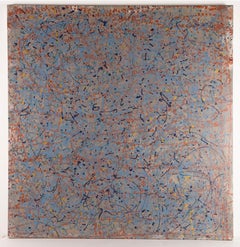
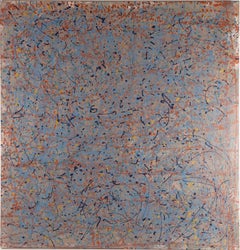
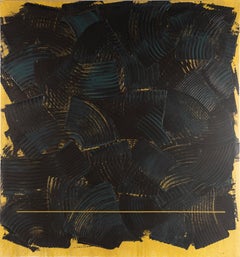
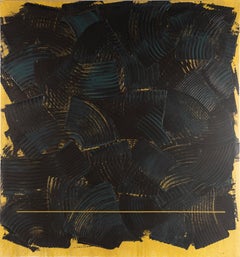
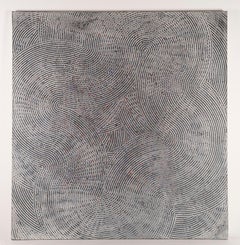
An abstract expressionist painting by Duayne Hatchett . Oil on canvas, circa 1990. Signed verso. Framed. Image size, 60"H x 56"L. Duayne Hatchett was a visual artist whose work...

Category

1990s Abstract Abstract Paintings

Materials

Canvas, Acrylic

Conceptual Contemporary Art Color Photograph, Social Commentary

Conceptual Contemporary Art Color Photograph, Social Commentary

By Carole Conde & Karl Beveridge

Located in Surfside, FL

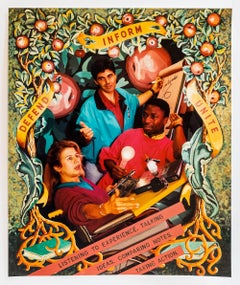
Provenance: Deaccessioned from a New York University. Condé + Beveridge Carole Condé and Karl Beveridge Condé born in Hamilton in 1940. Beveridge born in Ottawa in 1945. Both live an...

Category

Late 20th Century Conceptual Color Photography

Materials

C Print, Color

"Metropolis" contemporary surrealist bronze sculpture by Noe Katz

"Metropolis" contemporary surrealist bronze sculpture by Noe Katz

By Noé Katz

Located in Greenwich, CT

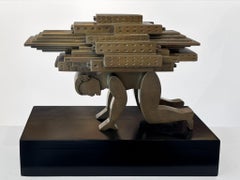
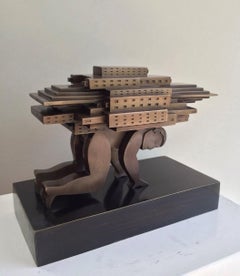
Edition 3/7 Born in Mexico City in 1953, artist Noé Katz lives and works in the U.S., and his paintings and sculptures can be found around the world. He received his formal training...

Category

2010s Contemporary Figurative Sculptures

Materials

Bronze

Bridge Contemporary African American Urban Landscape 20th Century Alvin Ailey NY

Bridge Contemporary African American Urban Landscape 20th Century Alvin Ailey NY

By Romare Bearden

Located in New York, NY

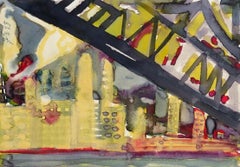
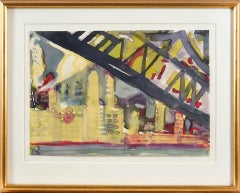
"Bridge" Contemporary African American Urban Landscape 20th Century Alvin Ailey NYC ROMARE BEARDEN (American, 1914-1988) The Bridge, 1982 signed 'Romare Bearden' (upper left); with...

Category

1980s Contemporary Landscape Drawings and Watercolors

Materials

Paper, Watercolor

Portrait of David Belasco

Portrait of David Belasco

By Nickolas Muray

Located in Santa Monica, CA

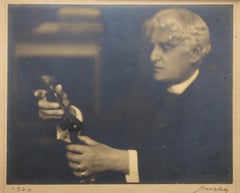
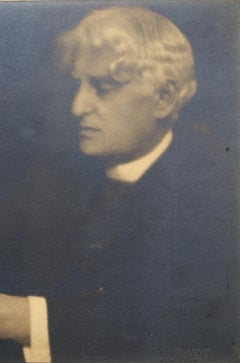
NICKOLAS MURAY (Hungary 1892 – 1965 New York) PORTRAIT OF DAVID BELASCO, 1922 Photograph. Signed and dated, 1922. Muray’s embossed stamp lower right. 7 5/8 x 9 ½ inches. Mount 11 ...

Category

1920s American Modern Portrait Photography

Materials

Photographic Paper

Portrait of David Belasco

Portrait of David Belasco

By Nickolas Muray

Located in Santa Monica, CA

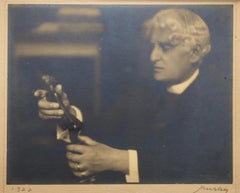
NICKOLAS MURAY (Hungary 1892 – 1965 New York) PORTRAIT OF DAVID BELASCO, 1922 Photograph. Signed and dated, 1922. Muray’s embossed stamp lower right. 7 5/8 x 9 ½ inches. Mount 11 ...

Category

1920s American Modern Portrait Photography

Materials

Photographic Paper

Large Mid Century Modern Textural Abstract Expressionist Action Oil Painting

Large Mid Century Modern Textural Abstract Expressionist Action Oil Painting

By Duanye Hatchett

Located in Buffalo, NY

An abstract expressionist painting by Duayne Hatchett . Oil on canvas, circa 1991. Signed verso. Duayne Hatchett was a visual artist whose work included prints, paintings, scul...

Category

1990s Abstract Abstract Paintings

Materials

Canvas, Oil, Acrylic

'Surrealist Boats' Federico Castellon - Surrealism American, Oil on paper, 1950

'Surrealist Boats' Federico Castellon - Surrealism American, Oil on paper, 1950

By Federico Castellon

Located in New York, NY

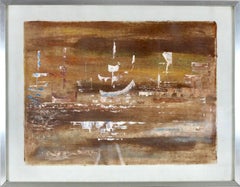
Federico Castellon Boats in the harbor, ca. 1950 Oil on paper 25 1/5 × 17 3/10 in l 64 × 44 cm (without frame) Signed lower right Frame included Federico Castellón (1914–1971) was a...

Category

1950s Surrealist Abstract Paintings

Materials

Paper, Oil

SHOUT Signed Lithograph 2004, Preacher Black Church, African American Culture

SHOUT Signed Lithograph 2004, Preacher Black Church, African American Culture

By Samella Lewis

Located in Union City, NJ

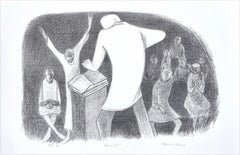
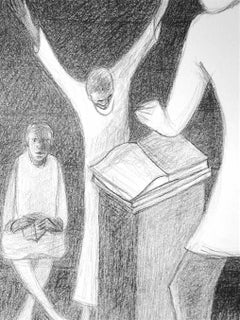
SHOUT by the African American woman artist Samella Lewis, is an original hand drawn lithograph printed using hand lithography techniques on archival Rives BFK paper, 100% acid free. ...

Category

Early 2000s Contemporary Figurative Prints

Materials

Lithograph

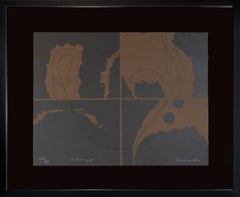
Wifredo Lam - Original Handsigned Lithograph -El ultimo viaje del buque fantasma

Wifredo Lam - Original Handsigned Lithograph -El ultimo viaje del buque fantasma

By Wifredo Lam

Located in Collonge Bellerive, Geneve, CH

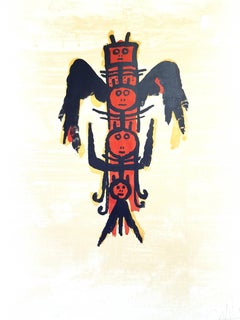
Original lithograph, hand-signed and hand-numbered in pencil by the artist. Edition: 56/99 Excellent Conditions Dimensions: 76 x 56 cm Reference : Catalogue raisonné Tonneau-Ryckely...

Category

1970s Post-Modern Figurative Prints

Materials

Lithograph

Large Mid Century Modern Texas Artist Abstract Expressionist Action Painting

Large Mid Century Modern Texas Artist Abstract Expressionist Action Painting

By Duanye Hatchett

Located in Buffalo, NY

An abstract expressionist painting by Duayne Hatchett . Oil on canvas, circa 1990. Signed verso. Framed. Image size, 60"H x 56"L. Duayne Hatchett was a visual artist whose work included prints, paintings, sculpture, and found objects. He was born on May 12, 1925 in Shawnee, Oklahoma. He enlisted in the Air Force where he trained to become a fighter pilot. After leaving the militrary he studied design at the University of Oklahoma. His highly technical military training combined a mathematical intelligence with a love for physics and a daring embrace of new experience, all of which would soon be the tools for his evolution through art. Two major influences interacted on his early development at OU. Emelio Omero, a colleague and close friend of Diego Rivera, introduced him to the revolutionary art ideas of Mexico City, while teaching him a wide range of printing techniques that would culminate in a Masters Degree in Painting in 1952. During this time he met Bruce Goff, a renowned Wright disciple, who was teaching architecture at OU and befriended Hatchett, introducing him to the most avant-garde architecture of that time. He spent his summers while at OU designing for a small sign shop, which introduced him to new materials used for building neon, plastic, and metal signs. The use of new materials and a keen sense for design would soon become invaluable building blocks for future sculpture. During this time he met and married Mary Ellen Jeffries. They would spend their lives together and raise three children, David (me), my brother Dana, and my sister Jeffri. As children, they were immersed in art from childhood and benefited greatly from this loving art and domestic environment. Hatchett was always interested in the techniques of construction, often watching different tradesmen working, understanding how materials are put together to create the manmade environment that surrounded him. While teaching printmaking at Oklahoma City University from 1951 through ‘54, he began to build sculpture employing some of the materials and techniques that he saw workers using. He was beginning to draw the attention of architects and he became interested in their work-trade processes, moving from blue prints to construction. He accepted an invitation from Alexander Hogue...

Category

1990s Abstract Abstract Paintings

Materials

Canvas, Oil, Acrylic

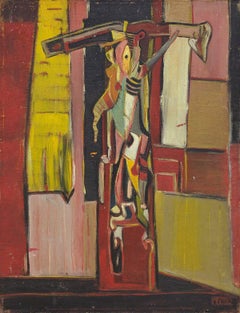
Jewish Mexican Avant Garde Fiesta of Guadalupe Expressionist Oil Painting

Jewish Mexican Avant Garde Fiesta of Guadalupe Expressionist Oil Painting

By Yonia Fain

Located in Surfside, FL

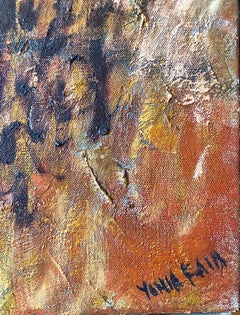
Genre: Avant-Garde Subject: Abstract Mexican Landscape Medium: Oil Surface: Canvas Country: Mexico Dimensions: Yonia Fain Oil, 1947 Although this oil painting’s subject is predom...

Category

1940s Expressionist Abstract Paintings

Materials

Canvas, Oil

Pink Lady
Pink Lady

Pink Lady

Located in San Francisco, CA

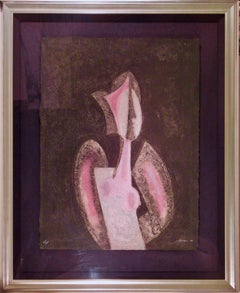
THis artwork "Pink Lady" 1989, is an acrylograph on hand made paper by noted Mexican artist Byron Galves, 1941-2009. It is hand signed, dated and numbered 64/150 in white pencil by the artist.The artwork size is 28.5 x 15.5 inches, paper sheet size is 32 x 23.85 inches, framed size is 44 x 36 inches. Beautifully custom framed in a wooden silver frame, with dark purple backing and bevel. It is in excellent condition, the frame have some small minor restorations, barely visible. About the artist: Byron Gálvez (October 28, 1941 – October 27, 2009) was a Mexican artist who was primarily known for his painting but also created sculpture, including monumental works. He was born in rural Hidalgo state, to a father who played jazz music and read literature, a rarity in 1930s rural Mexico. However, it exposed Gálvez to culture, even though this led to an interest in visual art rather than musing or writing. He went to Mexico City to study art at both the undergraduate and graduate level, but never completed his degrees, opting instead to begin career after his coursework. Before his first individual exhibition, his work was criticized by Justino Fernández, but all of the paintings were sold in advance to foreign buyers including American actor Vincent Price, who called Gálvez a “Mexican Picasso.” Gálvez then managed to replace the forty five paintings for the exhibition in a week. Since then he had individual and collective exhibitions in Mexico, the United States and other parts of the world. He concentrated on painting, which he is better known for, in the 1970s and 1980s, but moved on to sculpture, including monumental works later in his career. Recognitions for Gálvez's work include membership in the Salón de la Plástica Mexicana, a retrospective at the Palacio de Bellas Artes and two books published about his life. Gálvez was born in Mixquiahuala, Hidalgo and described his childhood as happy, and would not have changed it. His father, Roberto Gálvez, was a farmer and merchant, who was a music and literature enthusiast, a rarity is 1930s rural Mexico. His father played the violin in the town's jazz band, which had almost all classical instruments, making it similar to bands in New Orleans. They even composed new pieces. The artist was named after Lord Byron, and his brothers, Eliot, Aníbal and Dante, after his father's reading preferences This meant that Gálvez grew up in an environment that encouraged the enjoyment of the arts. However, instead of music or literature, Gálvez stated that his earliest memories related to his attraction to art and that he always wanted to be a painter. The difficulties of farm life convinced him that he needed an education and would have to move to Mexico City in order to go to school. At age sixteen he left home for the capital to study painting at the Escuela Nacional de Artes Plásticas, not knowing what the study would entail. It was far more rigorous than he expected, with thirteen-hour school days leaving only weekends to earn money to live on.[3] He did his undergraduate studies from 1958 to 1962, then continued with the graduate courses from 1962 to 1964, specializing in painting. He did much of his studies under teachers such as Luis Nishizawa, Fernando Castro Pacheco, Francisco Moreno Capdevila, Santos Balmori, Antonio Rodríguez Luna and Antonio Ramírez. The last teacher taught him to love his studies above all else and he submitted himself to the academic rigor. This led him to become attracted to the Cubism of Picasso, and felt that the artist has opened roads which could be taken and widened. Although he specialized in painting, his interest in sculpture was also evident at this time as he was a founding member of a metal sculpture workshop at the institution along with Armando Ortega and Baltazar Martinez.[2][5] Although he completed his coursework, he did not finish the other requirements needed for the degree, instead opting to start his career. Gálvez married once to art dealer Eva Beloglovsky.The couple first met in 1973, but did not meet again until two years later, when Beloglovsky bought one of his paintings and sold two more through her art gallery. At first it was a working relationship, and then evolved into a romantic one. During their marriage, they worked on a number of projects together such as multi-media presentations and charity benefits. The couple remained together until Galvez's death. Although he began and developed much of his career in Mexico City, in his later life, the artist moved back to his rural hometown. Gálvez constructed a house and studio on the edge of a ravine in which flows the Moctezuma River. The structure has glass walls positioned for maximum light and a privileged view of a local landmark, a hill called El Elefante. Gálvez's work included painting, sculpture, etching, lithography, and drawing.[4] For Galvez, art was spiritual and disconnected with physical logic, when only aesthetics mattered. Female figures are common, and often are sensual. He work has been influenced by the Cubism of Picasso and Georges Braque, by African and Oceanic folk art and by pre-Columbian sculpture. He preferred large scale works often bigger than seven by seven feet. He painted while listening to classical, jazz and occasionally, rock music. Galvez's work experienced periods in which different artistic currents dominated including expressionism, abstract art and mixtures of the two. In his work, he tried to achieve a balance between figurative and abstract expression. The first stage of his painting was figurative expressionism, then abstract expressionism, under strong influence of Carlos Mérida, Rufino Tamaho, Santos Balmori, Kandinsky, Wifredo Lam and Picasso, along with some from classical painters such as Rembrandt and Caravaggio. Then for some time, he practiced abstract art, but then felt the need to draw human bodies again, especially female ones because he felt it allowed him better expression. Around 1980, he moved on to geometric figurativism, marked by the “Woman” exhibit at the Museum of Modern Art. This has also been describes as “pure chromatic constructivism. He considered himself primarily a sculptor and painted in that fashion. The work of Byron Galves is held in numerous corporate and private collections Galvez died at age 67 at Inglés Observatorio Hospital from a heart attack. His ashes were deposited a year after his death to the side of one of the sculptures at his home in Mixquiahuala. During his career, he exhibited individually and collectively in over sixty venues in Mexico, various cities in the United States, Europe and Latin America. In 1964, he had his first individual exhibition at the ENAP Gallery, after showing in collective exhibitions at the Palacio de Bellas Artes and private galleries along with more prominent painters such as José Chávez Morado, Alfredo Zalce, José Clemente Orozco, Diego Rivera, Carlos Orozco Romero and David Alfaro Siqueiros. Before the opening of this exhibit, his work was severely criticized by art historian Justino Fernández. Despite this, the paintings for the exhibit were bought in advance, most by American actor Vincent Price, who called Gálvez a “Mexican Picasso.” The paintings were taken out of the country one week before the exhibit, but Gálvez was not concerned about not having paintings for the show, rather he was satisfied about his work being recognized and supported.He managed to create forty five more paintings in the remaining time in order to have the exhibit. After this individual exhibit, Gálvez had over 55 more over he career, along with participated in other 75 collective exhibits. Important exhibits include the Solar 68 collective exhibition at the Palacio de Bellas Artes (1968), the Sterenberg Galleries, Chicago (1972), Eye Corporation in various US cities (1973), Polyforum Cultural Siqueiros (1978), Museo de Arte Moderno in Mexico City (1982), Harcourts Contemporary Gallery in San Francisco (1983, 1990), Art-Forum Gallery in Mexico City (1984), Bishop Gallery in Phoenix (1989), Merryl Chase Gallery in Washington, DC (1991, 1992), Suhan Galleries in San Diego (1992), Misrachi Gallery (1994) and San Francisco Theater in Pachuca (1995) .[4][2] After his death, the Secretaría de Relaciones Exteriores sponsored an exhibition of his work in Tainan, Taiwan in 2011. His works can be found in major collections in both Mexico and the United States. The strongest demand has been for his figurative work especially that produced later in his life. Gálvez also created murals and sculptures, both small and monumental. His first mural was sculpted done in 1968 in Los Angeles. However, most of his monumental work was produced later in his career as he concentrated on painting in the 1970s and 1980s. These include a mural at the National Conservatory of Music in Mexico City (1970), a thirty-foot high sculpture in Unidad Morelos in Mexico City (1971), a hand hammered copper triptych for a private residence in Mexico City (1984), a sculpted door for a private residence (1985), a sculpture for a private home in New York (1986), Reclined Torso at the Hotel Nikko Mexico (1998), Torso I a five-foot high sculpture for the city of Pachuca (1999), Torso II a nineteen foot high sculpture at the Altiva Building, Mexico City (1999), Millenium, a bronze sculpture/fountain at the highway entrance to Pachuca (2000), a sculpture garden for Mixquiahuala, Hidalgo (2005) and the master plan and central mosaic for the David Ben Gurion Cultural Park in Pachuca (2007). The park project, the last before his death, included not only the creation of the central mosaic, the largest pedestrian mural in the world at 345,000f, but also the design of the 65-acre park itself. His other activities included the teaching of drawing at his alma mater, the creation of a program for the radio ministry of Mexico in 1973, participation in a documentary about lithography in Mexico in 1980 and the creation of several special programs for the office Radio...

Category

Late 20th Century Modern Nude Prints
Materials

Other Medium

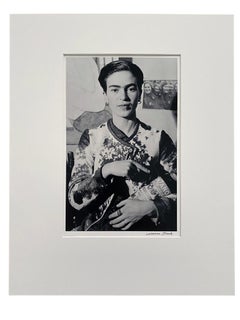
Frida with Cinzano Bottle New York City, NY - Frida Kahlo, icon, painter, artist

Frida with Cinzano Bottle New York City, NY - Frida Kahlo, icon, painter, artist

By Lucienne Bloch

Located in Denton, TX

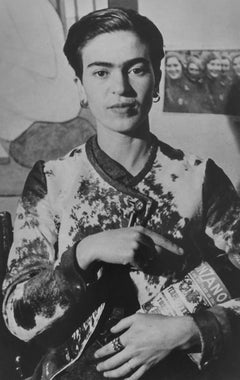
Gelatin Silver Print Signed in black ink on print margin. Paper size: 14 x 11 in. Image size: 9 1/2 x 6 1/4 in. *Framing not included “Frida caught Diego having an affair with her f...

Category

Mid-20th Century Modern Portrait Photography

Materials

Silver Gelatin

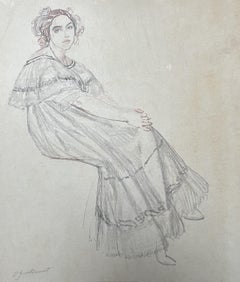
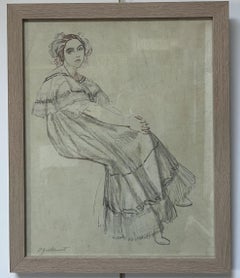
Octave Denis Victor Guillonnet (1872 - 1967)  A woman seated, drawing signed

Octave Denis Victor Guillonnet (1872 - 1967) A woman seated, drawing signed

By Octave Guillonnet

Located in Paris, FR

Octave Denis Victor Guillonnet (1872 - 1967) A young woman seated signed lower leftt Charcoal, red and white chalks on thin paper transfered on cardboard 49 x 39 cm Framed : 55.5 x ...

Category

1930s Art Deco Portrait Drawings and Watercolors

Materials

Chalk, Charcoal

Los Carpinteros Cuban Art Photograph Tuneles Populares Silver Gelatin Photo

Los Carpinteros Cuban Art Photograph Tuneles Populares Silver Gelatin Photo

By Los Carpinteros

Located in Surfside, FL

Los Carpinteros (Cuban, 1992-present). Silver gelatin print photograph, large format. From the series "Tuneles Populares" (The People's Tunnels) 1999 Edition 1/5 Provenance: Bliss Fi...

Category

1990s Conceptual Landscape Photography

Materials

Silver Gelatin

Huge Mid Century Modern Texas Artist Abstract Expressionist Action Painting

Huge Mid Century Modern Texas Artist Abstract Expressionist Action Painting

By Duanye Hatchett

Located in Buffalo, NY

An abstract expressionist painting by Duayne Hatchett . Oil on canvas, circa 1990. Signed verso. Framed. Image size, 60"H x 56"L. Duayne Hatchett was a visual artist whose work...

Category

1990s Abstract Abstract Paintings

Materials

Canvas, Acrylic

Mexican Art Abstract Brutalist Gilt Steel Geometric Sculpture Mathias Goeritz

Mexican Art Abstract Brutalist Gilt Steel Geometric Sculpture Mathias Goeritz

By Mathias Goeritz

Located in Surfside, FL

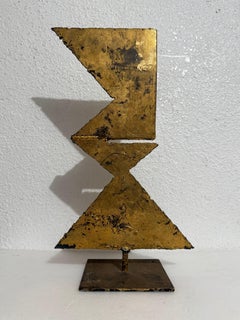
Mathias Goeritz (German Mexican, 1915-1990) Geometric Torch-cut Steel or Iron Sculpture with gold leaf gilding. Welded signature, MG. This came from an estate and is signed with his ...

Category

20th Century Modern Abstract Sculptures

Materials

Iron, Gold Leaf, Steel

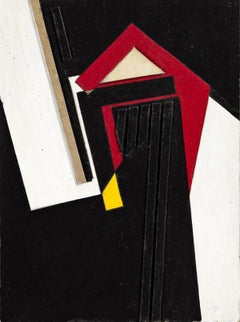
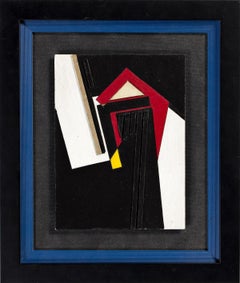
"Untitled, " Seymour Fogel, Geometric Abstraction, Texas Hard-Edge

"Untitled, " Seymour Fogel, Geometric Abstraction, Texas Hard-Edge

By Seymour Fogel

Located in New York, NY

Seymour Fogel Untitled Oil on illustration board construction 10 x 7 1/2 inches Provenance: Estate of the artist Charles and Faith McCracken Larry and Trish Heichel Private Collection Seymour Fogel was born in New York City on August 24, 1911. He studied at the Art Students League and at the National Academy of Design under George Bridgeman and Leon Kroll. When his formal studies were concluded in the early 1930s he served as an assistant to Diego Rivera who was then at work on his controversial Rockefeller Center mural. It was from Rivera that he learned the art of mural painting. Fogel was awarded several mural commissions during the 1930s by both the Works Progress Administration (WPA) and the Treasury Section of Fine Arts, among them his earliest murals at the Abraham Lincoln High School in Brooklyn, New York in 1936, a mural in the WPA Building at the 1939-1940 New York World's Fair, a highly controversial mural at the U.S. Post Office in Safford, Arizona (due to his focus on Apache culture) in 1941 and two murals in what was then the Social Security Building in Washington, D.C., also in 1941. Fogel's artistic circle at this time included Phillip Guston, Ben Shahn, Franz Kline, Rockwell Kent and Willem de Kooning. In 1946 Fogel accepted a teaching position at the University of Texas at Austin and became one of the founding artists of the Texas Modernist Movement. At this time he began to devote himself solely to abstract, non-representational art and executed what many consider to be the very first abstract mural in the State of Texas at the American National Bank in Austin in 1953. He pioneered the use of Ethyl Silicate as a mural medium. Other murals and public works of art done during this time (the late 1940s and 1950s) include the Baptist Student Center at the University of Texas (1949), the Petroleum Club in Houston (1951) and the First Christian Church, also in Houston (1956), whose innovative use of stained glass panels incorporated into the mural won Fogel a Silver Medal from the Architectural League of New York in 1958. Fogel relocated to the Connecticut-New York area in 1959. He continued the Abstract Expressionism he had begun exploring in Texas, and began experimenting with various texturing media for his paintings, the most enduring of which was sand. In 1966 he was awarded a mural at the U.S. Federal Building in Fort Worth, Texas. The work, entitled "The Challenge of Space", was a milestone in his artistic career and ushered in what has been termed the Transcendental/Atavistic period of his art, a style he pursued up to his death in 1984. Painted and raw wood sculpture...

Category

Mid-20th Century Abstract Geometric Abstract Paintings

Materials

Oil, Board

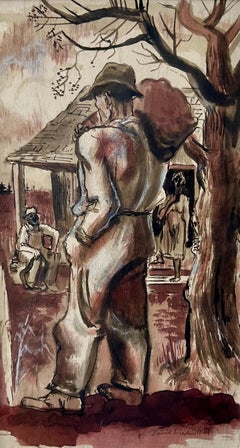
TOBACCO ROAD Mid 20th Century Realism 1940 Drawing from the Novel WPA Literary 2

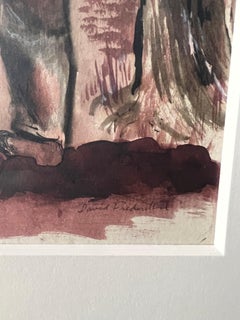
TOBACCO ROAD Mid 20th Century Realism 1940 Drawing from the Novel WPA Literary 2

By David Fredenthal

Located in New York, NY

TOBACCO ROAD Mid 20th Century Realism 1940 Drawing from the Novel WPA Literary 2 10 1/2 x 6 (sight), Signed David Fredenthal lower right. Framed by Lowy....

Category

1930s American Realist Figurative Drawings and Watercolors

Materials

Paper, Ink, Watercolor

Monumental Mid Century Modernist Texas Artist Abstract Expressionist Painting

Monumental Mid Century Modernist Texas Artist Abstract Expressionist Painting

By Duanye Hatchett

Located in Buffalo, NY

An abstract expressionist painting by Duayne Hatchett . Oil on canvas, circa 1990. Signed verso. Framed. Image size, 60"H x 56"L. Duayne Hatchett was a visual artist whose work included prints, paintings, sculpture, and found objects. He was born on May 12, 1925 in Shawnee, Oklahoma. He enlisted in the Air Force where he trained to become a fighter pilot. After leaving the militrary he studied design at the University of Oklahoma. His highly technical military training combined a mathematical intelligence with a love for physics and a daring embrace of new experience, all of which would soon be the tools for his evolution through art. Two major influences interacted on his early development at OU. Emelio Omero, a colleague and close friend of Diego Rivera, introduced him to the revolutionary art ideas of Mexico City, while teaching him a wide range of printing techniques that would culminate in a Masters Degree in Painting in 1952. During this time he met Bruce Goff, a renowned Wright disciple, who was teaching architecture at OU and befriended Hatchett, introducing him to the most avant-garde architecture of that time. He spent his summers while at OU designing for a small sign shop, which introduced him to new materials used for building neon, plastic, and metal signs. The use of new materials and a keen sense for design would soon become invaluable building blocks for future sculpture. During this time he met and married Mary Ellen Jeffries. They would spend their lives together and raise three children, David (me), my brother Dana, and my sister Jeffri. As children, they were immersed in art from childhood and benefited greatly from this loving art and domestic environment. Hatchett was always interested in the techniques of construction, often watching different tradesmen working, understanding how materials are put together to create the manmade environment that surrounded him. While teaching printmaking at Oklahoma City University from 1951 through ‘54, he began to build sculpture employing some of the materials and techniques that he saw workers using. He was beginning to draw the attention of architects and he became interested in their work-trade processes, moving from blue prints to construction. He accepted an invitation from Alexander Hogue...

Category

1990s Abstract Abstract Paintings

Materials

Canvas, Oil, Acrylic

Modernist Beach Scene Painting, Playing Ball in Surf, WPA Jewish Woman Artist

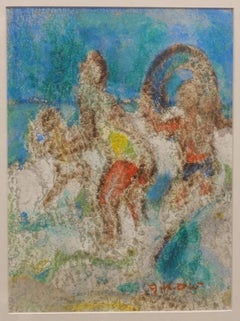
Modernist Beach Scene Painting, Playing Ball in Surf, WPA Jewish Woman Artist

By Ruth Gikow

Located in Surfside, FL

Modernist beach scene; signed lower right; image size is 11.5 x 8.5 inches, framed it measures Ruth Gikow (January 6, 1915 Ukraine - 1982 New York City) was an Important American Jewish woman visual artist known primarily for her work as a genre painter. Her paintings often depict human figures interacting with an urban environment. Ruth Gikow was born in 1915 in the Ukraine. Her father, Boris, was a photographer and her mother was named Lena. In 1920 she emigrated to New York City due to civil war and pogroms against the Jewish community. The pilgrimage took around two years. Once in New York City, the Gikow family found themselves in poverty, rather than the middle-class comfort they enjoyed in Ukraine. Ruth Gikow's skill was prominent even in youth, as she excelled in drawing in elementary school and entered Washington Irving High School at age thirteen in which she furthered her art prowess. Later, she studied at the Cooper Union Art School, where she studied under school director Austin Purvis, Jr. and regional artist John Steuart Curry. In her second year of Art School, she was awarded a scholarship which she used to work with fellow painter Raphael Soyer. She joined the New York City WPA Federal Art Project in 1935, where she was allowed to dedicate herself to her artwork full-time. In 1939, inspired by the muralists Diego Rivera and José Clemente Orozco, she applied and later won a commission to paint murals for Bronx Hospital, Rockefeller Center and the New York World's Fair. After the events of Pearl Harbor and once the Federal Arts Project was abandoned, Gikow's murals were sought after by New York department stores wishing to commission wall paintings. Gikow became disillusioned with mural painting due to the commercial aspect of these commissions. With other associates, she founded the American Serigraph Society (along with Anthony Velonis, Lena Gurr, Robert Gwathmey, Leonard Pytlak, Harry Shoulberg, Russell Twiggs...

Category

1960s American Modern Figurative Paintings

Materials

Paint, Paper

Mayan Trio
Mayan Trio

Mayan Trio

By Francisco Dosamantes

Located in Fairlawn, OH

Mayan Trio Lithograph, 1950 Signed in pencil lower right (see photo) Edition 250 for Associated American Artists Publsihed 1950 Reference: AAA Cat.: 1950‑05; 1958‑01 AAA Index 1087 Condition: Excellent Image size: 13 x 9 1/2 inches Francisco Dosamantes (b. October 4, 1911 - d. July 18.1986) was a Mexican artist and educator who is best known for is educational illustrations and graphic work against fascism. He was a founding member of the Taller de Gráfica Popular and the Salón de la Plástica Mexicana. Life Francisco Dosamantes was born in Mexico City on October 4, 1911. His father was Daniel Dosamantes who was a builder, interior decorator and painter. He was not registered into the civil registry until he was about twenty years old on March 6, 1939. His mother’s name is not listed on the certificate. As a child, he demonstrated a strong interest in drawing and color, influenced by his father and his uncle Juan. The Mexican Revolution occurred while he was a young child and he stated that he remembered events such as soldiers on horses charging as well as the execution of rural farm workers. He attended primary and high school in Mexico City but stated that his education was irregular and deficient. He then entered the Escuela Nacional de Artes Plásticas, where he studied for five years. Initially, however, he was disappointed with the inexperience of the young professors and he left for a short time to study on his own. During this time, some of the dissatisfied professors organized the 30 30 group against the academic system of the school and which whom he sympathized. The effort gained the attention of established artists such as Diego Rivera who intervened. He died on Mexico City on July 18, 1986 Career After he graduated, he worked with the cultural missions of the Secretaría de Educación Pública in Oaxaca, Michoacán, Guerrero, Colima, Coahuila and Chihuahua (state) from 1932 to 1937 then again from 1941 to 1945. He stated that this experience was vital to his conscience as he worked with rural farm workers and others he stated were worthy of dignity and respect, but victims of deceit and exploitation. When he returned to Mexico City, he gave classes in high schools from 1937 to 1941. In 1945 he founded and directed the Taller Escuela de Dibujo y Pintura “Joaquín Claussell” in Campeche, Campeche. Dosamantes was a politically and culturally active artist with most of his work and affiliations related to such. He was a member of the Liga de Escritores y Artistas Revolucionarios from 1934 to 1938. He was a founding member of the Taller de Gráfica Popular, serving as administrator in 1940 and remaining a member until his death except for one short hiatus. He created posters for conferences about fascism and Nazism such as Alemania bajo bayonetas (Germany under bayonets) in 1938. In 1940 he became the secretary general of the Sindicato de Maestros de Artes Plásticas. He was also a member of the Sociedad para el Impulso de las Artes Plásticas en 1948, a founding member of the Salón de la Plástica Mexicana in 1949 and a member of the Frente Nacional de Artes Plásticas from 1952. He painted a number of murals in rural areas of Mexico generally when he was there on cultural missions. His main mural is at the former home of José María Morelos in Carácuaro, Michoacán, but there are a number at various rural schools. These were all painted between 1941 and 1946. As a book illustrator he mostly worked for the Secretaría de Educación Pública working on books for literacy campaigns. He exhibited his works, which included engravings, oils, tempuras and lithographs in Mexico and abroad. His first individual exhibition was in 1930 at the Galeria de Arte Moderno in Mexico City. His major exhibitions include the Excelsior Gallery in Mexico City in 1932, various exhibitions in New York, Washington, Philadelphia and Los Angeles in 1937; the Nelson Gallery of Art in Kansas City, Missouri in late 1947, and the Gallery of Mexican Art in...

Category

1950s American Modern Figurative Prints
Materials

Lithograph

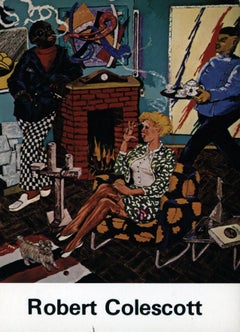
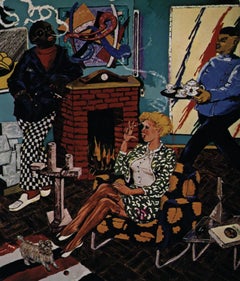
Robert Colescott Semaphore gallery 1980 (announcement)

Robert Colescott Semaphore gallery 1980 (announcement)

By Robert Colescott

Located in NEW YORK, NY

Robert Colescott Semaphore 1980: Rare original 1980s announcement card published on the occasion of Robert Colescott's exhibition at Semaphore Gallery from January 6 - January 31, 1980; 462 West Broadway, New York, NY. Features an offset illustration of Colescott's work "The Collector (Tea for Two)" from 1980. Medium: Offset printed gallery announcement card. Approximate Dimensions: 4 x 6 inches Good overall vintage condition. Post marked on the reverse. Unsigned from an edition of unknown. Robert Colescott was an African-American artist known for his expressionistic paintings which dealt with his identity and Black history. In his work George Washington Carver Crossing the Delaware: Page from an American History Textbook (1975), Colescott humorously conflated the famous Emanuel Gottlieb Leutze painting of George Washington with the pioneering African-American chemist. Born Robert H. Colescott on August 26, 1925 in Oakland, CA, he played instruments and saw the work of his parents’ friend Sargent Johnson as well as Diego Rivera painting...

Category

1980s Pop Art More Art

Materials

Paper, Offset

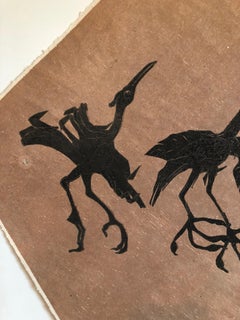
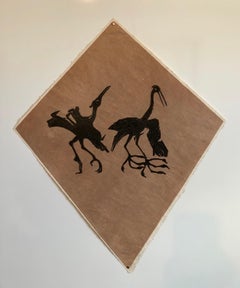
Mexican Modernist Kite Painting, Stencil, Woodcut Print Hand Signed

Mexican Modernist Kite Painting, Stencil, Woodcut Print Hand Signed

By Francisco Toledo

Located in Surfside, FL

Francisco Benjamín López Toledo (born July 17, 1940, Juchitán, Oaxaca) is a Mexican painter, sculptor, and graphic artist. He studied at the Escuela de Bellas Artes de Oaxaca and the...

Category

21st Century and Contemporary Modern Mixed Media

Materials

Paint, Woodcut, Stencil

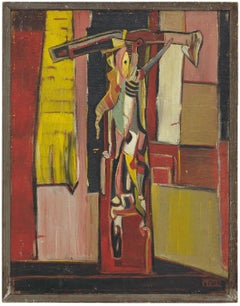
Important "The Victim" Avant Garde 1947 Judaica Expressionist Oil Painting

Important "The Victim" Avant Garde 1947 Judaica Expressionist Oil Painting

By Yonia Fain

Located in Surfside, FL

Genre: Avant-Garde Subject: Abstract Medium: Oil Surface: Canvas Country: Mexico Dimensions: 25 3/4" x 19 3/4" x 3/4" Dimensions w/Frame: 27" x 21 1/4" It is signed at the lower righ...

Category

1940s Expressionist Abstract Paintings

Materials

Canvas, Oil

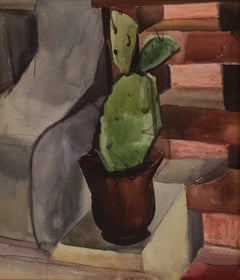
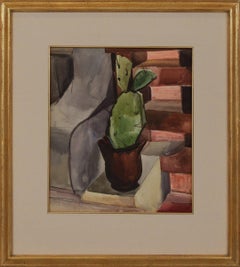
Cactus (Mexico), Early 20th Century Cubist Still Life by Woman Cleveland Artist

Cactus (Mexico), Early 20th Century Cubist Still Life by Woman Cleveland Artist

By Clara Deike

Located in Beachwood, OH

Clara Deike (American, 1881-1964) Cactus (Mexico), 1930 Watercolor on paper Signed lower right, titled and dated on label verso 15.25 x 13.25 inches 25 x 22.5 inches, framed A gradu...

Category

1930s Cubist Still-life Drawings and Watercolors

Materials

Watercolor

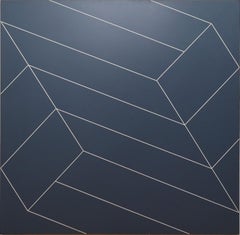
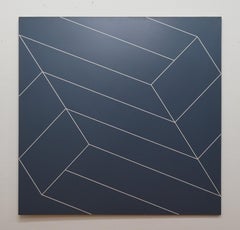
Monumental Mid Century Modern Abstract Minimalist Sleek Design Oil Painting

Monumental Mid Century Modern Abstract Minimalist Sleek Design Oil Painting

By Duanye Hatchett

Located in Buffalo, NY

An abstract mid century painting by Duayne Hatchett . Oil on canvas, circa 1973. Signed verso. Framed. Duayne Hatchett was a visual artist whose work included prints, painting...

Category

1970s Abstract Abstract Paintings

Materials

Canvas, Oil, Acrylic

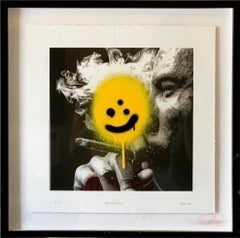
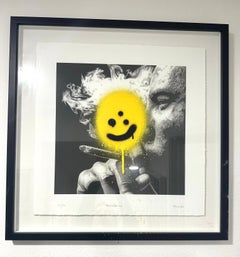
"Reflection " (FRAMED) Print 15" x 15" in by Antonio Pelayo x Isaac Pelayo

"Reflection " (FRAMED) Print 15" x 15" in by Antonio Pelayo x Isaac Pelayo

By Antonio Pelayo

Located in Culver City, CA

"Reflection " (FRAMED) Print 15" x 15" in by Antonio Pelayo x Isaac Pelayo Artist Antonio Pelayo, born in Glendale, California, and yet raised for most of his childhood in the Mexic...

Category

21st Century and Contemporary Contemporary Figurative Prints
Materials

Spray Paint, Digital

Large Mid Century Modern Texas Artist Abstract Geometric Minimalist Oil Painting

Large Mid Century Modern Texas Artist Abstract Geometric Minimalist Oil Painting

By Duanye Hatchett

Located in Buffalo, NY

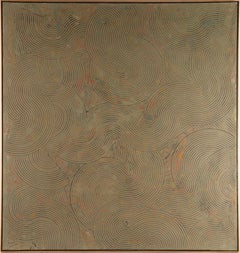
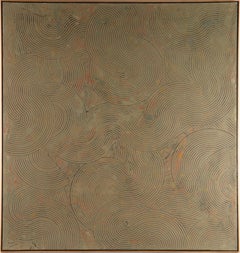
An abstract expressionist painting by Duayne Hatchett . Oil on canvas, circa 1990. Signed verso. Framed. Image size, 60"H x 50"L. Duayne Hatchett was a visual artist whose work included prints, paintings, sculpture, and found objects. He was born on May 12, 1925 in Shawnee, Oklahoma. He enlisted in the Air Force where he trained to become a fighter pilot. After leaving the militrary he studied design at the University of Oklahoma. His highly technical military training combined a mathematical intelligence with a love for physics and a daring embrace of new experience, all of which would soon be the tools for his evolution through art. Two major influences interacted on his early development at OU. Emelio Omero, a colleague and close friend of Diego Rivera, introduced him to the revolutionary art ideas of Mexico City, while teaching him a wide range of printing techniques that would culminate in a Masters Degree in Painting in 1952. During this time he met Bruce Goff, a renowned Wright disciple, who was teaching architecture at OU and befriended Hatchett, introducing him to the most avant-garde architecture of that time. He spent his summers while at OU designing for a small sign shop, which introduced him to new materials used for building neon, plastic, and metal signs. The use of new materials and a keen sense for design would soon become invaluable building blocks for future sculpture. During this time he met and married Mary Ellen Jeffries. They would spend their lives together and raise three children, David (me), my brother Dana, and my sister Jeffri. As children, they were immersed in art from childhood and benefited greatly from this loving art and domestic environment. Hatchett was always interested in the techniques of construction, often watching different tradesmen working, understanding how materials are put together to create the manmade environment that surrounded him. While teaching printmaking at Oklahoma City University from 1951 through ‘54, he began to build sculpture employing some of the materials and techniques that he saw workers using. He was beginning to draw the attention of architects and he became interested in their work-trade processes, moving from blue prints to construction. He accepted an invitation from Alexander Hogue...
Category

1990s Abstract Abstract Paintings
Materials

Canvas, Oil, Acrylic

Monumental Mid Century Modern Abstract Minimalist Sleek Design Oil Painting

Monumental Mid Century Modern Abstract Minimalist Sleek Design Oil Painting

By Duanye Hatchett

Located in Buffalo, NY

An abstract mid century painting by Duayne Hatchett . Oil on canvas, circa 1973. Signed verso. Framed. Duayne Hatchett was a visual artist whose work included prints, painting...

Category

1990s Abstract Abstract Paintings

Materials

Canvas, Oil, Acrylic

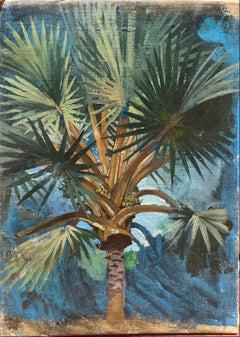
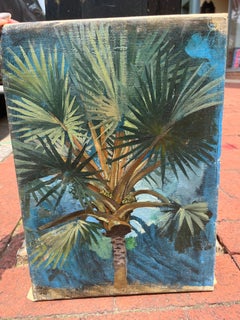
Oil Landscape of Palm Tree, Abstract Expressionist, Mid-19th Century

Oil Landscape of Palm Tree, Abstract Expressionist, Mid-19th Century

By Eugene Savage

Located in Fredericksburg, VA

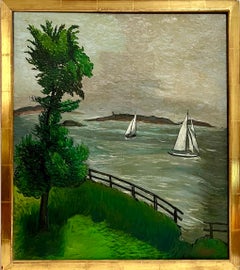
This painting was bought from the artist's estate in Woodberry, CT and is signed verso. Eugene Savage studied at the Chicago Art Institute, the American Academy in Rome, and received his Masters of Art at Yale University. He taught at Yale for almost 30 years in Art and Architecture. Eugene Savage had many latin influences such as Diego Rivera and José Clemente Orozco. In the 1940s he spent his time painting Hawaiian murals of people and of more abstract Hawaiian...

Category

Mid-19th Century Abstract Expressionist Abstract Paintings

Materials

Canvas, Oil