Questions & Answers
Our trusted network of 1stDibs sellers answer common questions
What is cloisonné jewelry?
1 Answer
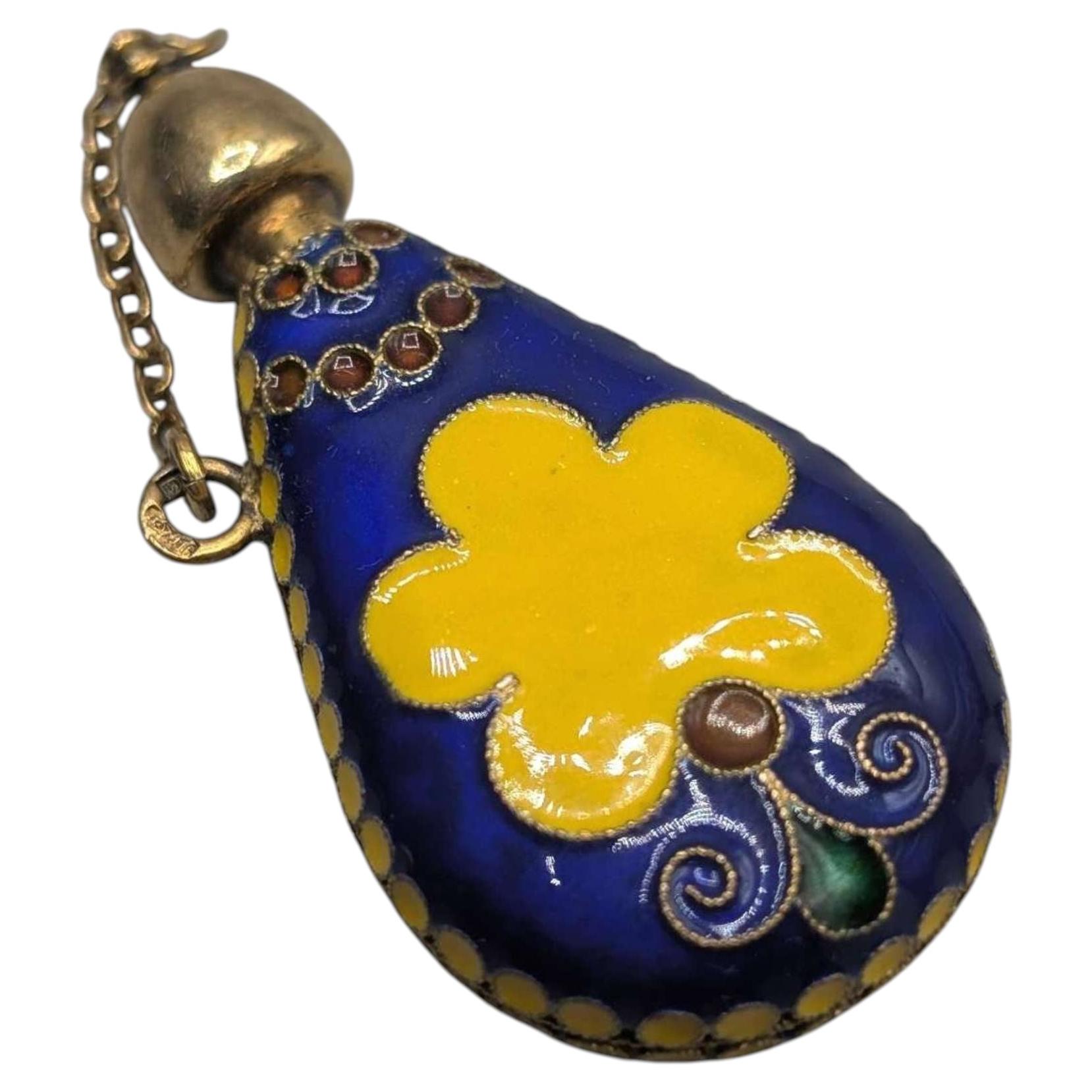
Cloisonné jewelry is jewelry that has been decorated with a distinctive enameling technique.
Cloisonné (“cell” in French) is a technique in which thin wires of fine silver or gold are used to outline a design, which is then filled with enamel. The piece is subsequently placed in a kiln where the enamel is melted. Cloisonné is distinct because the individual wires remain visible, forming an outline of the motif.
Over the years, enameling has become an art form. This is partly because of its durability: Although the colors may change during firing, once cooled, they’re set and never fade. They can also be made either opaque or translucent — just one example of the flexibility that is another reason artists are attracted to the medium.
When it comes to jewelry design and other disciplines, cloisonné enamel was popular during the Byzantine Empire (artisans living in France and Germany in the Middle Ages preferred champlevé). By the 7th century, Lombard craftsmen in northern Italy were using enamel to emulate Byzantine objects. In the 12th and 13th centuries, artisans in China imported the technique and made it so much their own that enameled objects have long been associated with Eastern aesthetics and motifs rather than Western ones.
Find cloisonné jewelry on 1stDibs.
Cloisonné (“cell” in French) is a technique in which thin wires of fine silver or gold are used to outline a design, which is then filled with enamel. The piece is subsequently placed in a kiln where the enamel is melted. Cloisonné is distinct because the individual wires remain visible, forming an outline of the motif.
Over the years, enameling has become an art form. This is partly because of its durability: Although the colors may change during firing, once cooled, they’re set and never fade. They can also be made either opaque or translucent — just one example of the flexibility that is another reason artists are attracted to the medium.
When it comes to jewelry design and other disciplines, cloisonné enamel was popular during the Byzantine Empire (artisans living in France and Germany in the Middle Ages preferred champlevé). By the 7th century, Lombard craftsmen in northern Italy were using enamel to emulate Byzantine objects. In the 12th and 13th centuries, artisans in China imported the technique and made it so much their own that enameled objects have long been associated with Eastern aesthetics and motifs rather than Western ones.
Find cloisonné jewelry on 1stDibs.
1stDibs ExpertApril 8, 2024
Shop for Russia Cloisonne on 1stDibs
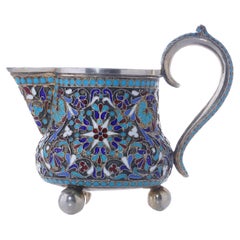
Antique Russian Cloisonné Enamel and Silver Gilt Milk Jug
Located in Braintree, GB
Antique Russian Cloisonné Enamel and Silver Gilt Milk Jug.
Category
Antique 1890s Russian Sterling Silver
Materials
Silver, Enamel
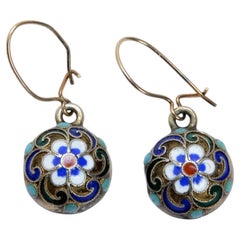
Pair of Imperial Russian Cloisonné Silver Pendant Drop Earrings c1900
Located in valatie, NY
Pair of Imperial Russian Cloisonné Silver Pendant Drop Earrings c1900, with Bombé Form Pendant Drops Attributed to Aleksandr Dmitriev.
Category
Early 20th Century Russian Drop Earrings
Materials
Silver
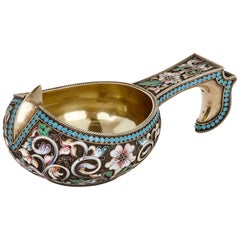
Russian Cloisonné Enamel and Silver-Gilt Kovsh
Located in London, GB
Kovshes have been created in Russia for centuries, often from precious materials, such as silver, gold, gemstones and jewels.
Category
Early 20th Century Russian Sterling Silver
Materials
Silver, Enamel
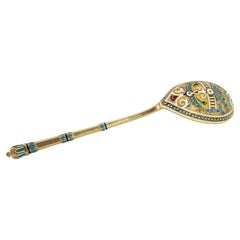
Antique Large Silver Imperial Russian Cloisonne Spoon Alexi Kitovsky Moscow 1886
Located in Portland, OR
Antique Imperial Russian large silver-gilt cloisonne spoon by Alexi Fyodorovich Kitovsky, Moscow, 1886.
Category
Antique 1880s Russian Victorian Serving Pieces
Materials
Silver, Enamel
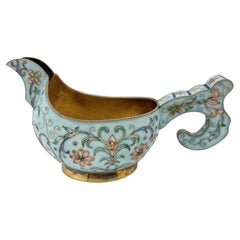
Russian Blue Cloisonne Enamel Silver Kovsh in Faberge Style
Located in New York, NY
Russian, cloisonne enamel on 0.84 silver kovsh in Faberge style, measuring 4 3/4'' in length by 2 1/8'' in depth by 2 1/2'' in height, weighing 3.3 troy ounces (102.6 grams), and bea...
Category
Antique 19th Century Russian Sterling Silver
Materials
Silver, Enamel
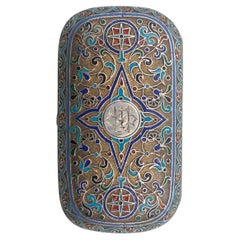
Antique Russian Silver & Cloisonné Enamel Cigarette Case Circa 1900
Located in Buenos Aires, Argentina
A remarkable antique Russian silver cigarette case dating to the late Imperial Russian period, circa 1900, distinguished by its elegant craftsmanship, colorful cloisonné enamel decor...
Category
Antique Early 1900s Russian Empire Cigar Boxes and Humidors
Materials
Silver, Enamel